This topic has a poll so we can all find out who is and who is not baptized of water and the Holy Ghost.You realize there is already a Thread discussing these issues, right?
What Does "Born of Water" Mean?

Do You Believe/Are You Baptized of Water and the Holy Ghost?
- Thread starter Conformed
- Start date
-
Christian Chat is a moderated online Christian community allowing Christians around the world to fellowship with each other in real time chat via webcam, voice, and text, with the Christian Chat app. You can also start or participate in a Bible-based discussion here in the Christian Chat Forums, where members can also share with each other their own videos, pictures, or favorite Christian music.
If you are a Christian and need encouragement and fellowship, we're here for you! If you are not a Christian but interested in knowing more about Jesus our Lord, you're also welcome! Want to know what the Bible says, and how you can apply it to your life? Join us!
To make new Christian friends now around the world, click here to join Christian Chat.
You are using an out of date browser. It may not display this or other websites correctly.
You should upgrade or use an alternative browser.
You should upgrade or use an alternative browser.
Do You believe/Are you baptized of water and the Holy Ghost?You kinda ignored the full statement of Jesus in the 3rd Chapter of John. To fully understand His statement you need to understand "all" He said concerning this issue. Again, there is already a Thread discussing this issue.......
So...........
I think this says everything we need to see.The Douay-Rheims Bible is the original Bible God ordained.


ChatGPT
Most Reformed churches do practice water baptism, but the form and understanding of baptism may differ from other Christian traditions. Reformed theology generally recognizes two sacraments: baptism and the Lord’s Supper. However, there may be different practices or emphases regarding how baptism is carried out. Here’s why some Christian Reformed churches might appear not to emphasize water baptism as strongly as other denominations:
1. Infant Baptism vs. Believer’s Baptism:
• Reformed churches often practice infant baptism (paedobaptism), viewing it as a sign of God’s covenant with His people, similar to circumcision in the Old Testament. In this tradition, infants of believing parents are baptized to signify their inclusion in the covenant community, even though the child has not made a personal profession of faith.
• In contrast, some Christian traditions practice believer’s baptism, where only those who have made a personal profession of faith are baptized. Because Reformed churches often baptize infants, it might seem like there are fewer baptisms occurring, particularly if one is expecting baptisms to follow a profession of faith.
2. Baptism as a Sign and Seal:
• In Reformed theology, baptism is seen as a sign and seal of God’s covenant of grace, rather than a means of salvation itself. It symbolizes spiritual cleansing, union with Christ, and entry into the covenant community. This sacramental understanding differs from traditions that view baptism as a necessary step for salvation or a public declaration of personal faith.
• Because of this view, the emphasis is placed on the meaning of the sacrament rather than the act itself, which may make water baptism seem less central in some Reformed church services.
3. Understanding of Regeneration:
• Many Reformed churches teach that regeneration (being born again) is a work of the Holy Spirit that can occur independently of the act of baptism. While baptism is important and commanded, it is not viewed as the moment when regeneration necessarily happens. This can differ from other Christian groups that place a stronger emphasis on baptism as the moment of salvation.
4. Variations in Reformed Practice:
• There may also be differences within Reformed traditions. For example, some may perform baptism by sprinkling or pouring rather than full immersion. This may be based on their understanding of biblical passages and historical practices, which can differ from denominations that exclusively practice immersion.
In summary, while Reformed churches do practice water baptism, their theological understanding and emphasis may differ, which can sometimes give the impression that it is not as central as in other traditions. They see baptism as an important covenantal sign, but not as the sole act that brings about salvation or spiritual renewal.
Jesus said, "Go therefore and make disciples of all the nations, baptizing them . . . " Leave it to institutional religion to turn it into an incoherent bunch of nonsense.
I was baptized twice.
Once by God when I believed.
Once in water a year later as a profession of my faith, by my pastor
Once by God when I believed.
Once in water a year later as a profession of my faith, by my pastor
Luke 4:1
And Jesus being full of the Holy Ghost, returned from the Jordan, and was led by the Spirit into the desert,
Though I prefer the KJV, I have found that some translations are closer to the original Greek than others...
Have you ever tried to read the 1611 KJV? Yiikes!

I prefer the original. I mostly try to stay away from anything KJV.Though I prefer the KJV, I have found that some translations are closer to the original Greek than others...
Have you ever tried to read the 1611 KJV? Yiikes!

Like the 120 which was men and woman who were all saved. Christ had already died and rose amen! Yet they were told to wait for the promise. They all were filled with the sweet sweet holy Spirit. I was saved.... and one day asked the Father for the holy Spirit Luke 11:13. Yes .. it was like day and night.. it is exactly as Christ said "But you shall receive power, after that the Holy Ghost is come upon you: and you shall be witnesses unto me both in Jerusalem, and in all Judaea, and in Samaria, and unto the uttermost part of the earth."
God has never changed. He is out side of time. What He spoke is out side of time it can not age. Why care what some say or believe why not just read what GOD said and believe. Stop looking around at others and what they say is true or not and find all this true for your self. Like the song right now.. knowing I can trust you is a treasure. We limit God by what we believe or won't believe. Know that GOD will never got against our will. As long as we keep telling GOD what is gone or dead blah blah blah.. that is exactly what you will see... nothing. Dead are still raised.. blind see deaf hear lame walk. Yeah. God has not changed. God still keeps His word.
God has never changed. He is out side of time. What He spoke is out side of time it can not age. Why care what some say or believe why not just read what GOD said and believe. Stop looking around at others and what they say is true or not and find all this true for your self. Like the song right now.. knowing I can trust you is a treasure. We limit God by what we believe or won't believe. Know that GOD will never got against our will. As long as we keep telling GOD what is gone or dead blah blah blah.. that is exactly what you will see... nothing. Dead are still raised.. blind see deaf hear lame walk. Yeah. God has not changed. God still keeps His word.
you read greek hebrew and chaldean? Where is this origional bible (scrolls) at? I did not know there were any origionals left.I prefer the original. I mostly try to stay away from anything KJV.
you read greek hebrew and chaldean? Where is this origional bible (scrolls) at? I did not know there were any origionals left.
Lesson 1. Bible Definitions
Lesson 2. Inspiration of the Bible
Lesson 3. Dates and Division of the Bible
Lesson 4. The Old Testament
Lesson 5. The New Testament
Lesson 6. The Canon of Sacred Scripture
Lesson 7. The Bible and Tradition
Lesson 8. The Languages of the Bible
Lesson 9. The Septuagint Version
Lesson 10. The Vulgate
Lesson 11. The Douay Bible
Lesson 12. The Bible and Science
Lesson 13. The Bible and History
Lesson 14. Interpreting the Bible
Lesson 15. Reading the Bible
Lesson 16. Differences between Catholic and Protestant versions
Lesson 17. Materials used in composing the Bible
This did not answer my questionLesson 1. Bible Definitions
Lesson 2. Inspiration of the Bible
Lesson 3. Dates and Division of the Bible
Lesson 4. The Old Testament
Lesson 5. The New Testament
Lesson 6. The Canon of Sacred Scripture
Lesson 7. The Bible and Tradition
Lesson 8. The Languages of the Bible
Lesson 9. The Septuagint Version
Lesson 10. The Vulgate
Lesson 11. The Douay Bible
Lesson 12. The Bible and Science
Lesson 13. The Bible and History
Lesson 14. Interpreting the Bible
Lesson 15. Reading the Bible
Lesson 16. Differences between Catholic and Protestant versions
Lesson 17. Materials used in composing the Bible
are you able to answer my question?

op: baptism in water & Holy Ghost?
No, not today, Under Grace:
Three baptisms, Rightly Divided
&
ONE Baptism!
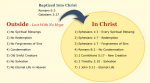
Amen.
No, not today, Under Grace:
Three baptisms, Rightly Divided
&
ONE Baptism!
Amen.
This did not answer my question
are you able to answer my question?
Yes it did.This did not answer my question
are you able to answer my question?
The Douay-Rheims Bible is the original Bible God ordained.
Too bad for you.op: baptism in water & Holy Ghost?
No, not today, Under Grace:
Three baptisms, Rightly Divided
&
ONE Baptism!
View attachment 268279
Amen.
John 3:5op: baptism in water & Holy Ghost?
No, not today, Under Grace:
Three baptisms, Rightly Divided
&
ONE Baptism!
View attachment 268279
Amen.
Jesus answered: Amen, amen I say to thee, unless a man be born again of water and the Holy Ghost, he cannot enter into the kingdom of God.
Mark 16:16
He that believeth and is baptized, shall be saved: but he that believeth not shall be condemned.
 do not believe/are not baptized of water and the Holy Ghost?
 actually no it did not. There was not even any linksYes it did.
The Douay-Rheims Bible is the original Bible God ordained.
the douay-Reims bible is translated from the Latin vulgate which was not even around in when God formed the church and scripture was created.
you have been fooled
and your catholic bias is wreaking.

Well why not say so? We are in the 21st century, not the 17th. I shunned the baptism of the Holy Spirit at first because I know more than enough about ghosts.The Holy Ghost is the Holy Spirit.
The original Bible is in Greek and Hebrew. Lord Jesus spoke Aramaic.Yes it did.
The Douay-Rheims Bible is the original Bible God ordained.

How many people have you discipled and baptized?Jesus said, "Go therefore and make disciples of all the nations, baptizing them . . . " Leave it to institutional religion to turn it into an incoherent bunch of nonsense.
