In your opinion is the entire Bible "inerrant" or "infallible" as it relates to scripture?

  • Christian Chat is a moderated online Christian community allowing Christians around the world to fellowship with each other in real time chat via webcam, voice, and text, with the Christian Chat app. You can also start or participate in a Bible-based discussion here in the Christian Chat Forums, where members can also share with each other their own videos, pictures, or favorite Christian music.

    If you are a Christian and need encouragement and fellowship, we're here for you! If you are not a Christian but interested in knowing more about Jesus our Lord, you're also welcome! Want to know what the Bible says, and how you can apply it to your life? Join us!

    To make new Christian friends now around the world, click here to join Christian Chat.
Good point, why do all the people who dislike and distrust science so much bother to use computers which are based on science, or are they total hypocrities.
Why would amyone who denies the Holy Bible be on a christian site? Other than trying to shake the faith of believers I see no reason for you to be here. Im going to ignore you now and hopefully you will be banned soon to avoid you steering new christians away from the truth.
 
Why would amyone who denies the Holy Bible be on a christian site? Other than trying to shake the faith of believers I see no reason for you to be here. Im going to ignore you now and hopefully you will be banned soon to avoid you steering new christians away from the truth.
Where have I denied the Holy Bible? In fact, I have maintained that contains truth. Or are you suggesting that when occasionally Paul states that is it his word, not God's that he is passing along that someone is lying? If ALL scripture is God's word, as you seem to be maintaining, any time Paul claims to be giving his word, not God's, someone is lying, and since it is all God's word, the only possible liar becomes?

Now by my acknowledging that the Holy Bible contains truth, I have no problem with Paul claiming to be speaking for himself, not God, thus avoiding this dilemma that you must find a way to twist yourself into a pretzel to avoid.

As to the "obviously not all science", how does one distinguish? Is the science that YOU perceive as not contradicting YOUR specific understanding of the Bible the only valid science or is it up to every individual to make their own assumptions about the value of science. Are you the God appointed arbitrator of scientific knowledge and by what means that all may be aware of did this happen? Can you support your position with clear scripture, bearing in mind that one of the words that is of unclear exact meaning is in 2 Timothy 3:16 so that verse is ambiguous, as are various other verses, including many in John which appears to have been edited from its original text (appears to have two different endings), much like Mark clearly has been (four known different endings).

Or, of course, you can bury your head in the sand, cover your ears and chant "I cannot see you, I cannot hear you". But I think we all knoiw how mature such an attitude is.
 
There is actually only one Truth; that which you find in Scripture in the NC.

Man is not the head, only Christ is the head of the church. We shouldn’t follow men’s creed and dogma, but follow Christ through the apostles doctrine.
Does imply that those Christians that disagree with your interpretation of the bible are wrong? Does that make them non-Christian or False Christians?
 
I’m sure I don’t agree with most, because I’m non denominational. I try to follow the 1st century gospel from Scripture. Whatever you read in the NT Scripture is what we believe.

So what is your point, after all is said and done?
If I have a metanarrative in all this, I want all Christians to better understand what they believe, why they believe it and how that faith impacts their day to day lives and their relationship to the world-wide scope of Christianity that will differ from the faith we claim. As a secondary perspective, I want each Christian to view their sacred dogmas as an inheritance of historic events dating back hundreds of years. None of us come to Christianity but through a single door of historically created dogmas. I believe it important to know the history that we were handed and how those dogmas play in the broader reality of world-wide Christianity.
 
If I have a metanarrative in all this, I want all Christians to better understand what they believe, why they believe it and how that faith impacts their day to day lives and their relationship to the world-wide scope of Christianity that will differ from the faith we claim.
As I said, we base our belief only in the apostles doctrine from the 1st century.
As a secondary perspective, I want each Christian to view their sacred dogmas as an inheritance of historic events dating back hundreds of years. None of us come to Christianity but through a single door of historically created dogmas. I believe it important to know the history that we were handed and how those dogmas play in the broader reality of world-wide Christianity.
Dogma?? This is a secular, humanistic term. I don’t really care about the historical evolution of Christianity. I’m sure it faltered over the centuries, but what matters is the restoration of the 1st century apostolic doctrine (the original).
 
  • Like
Reactions: DeanM
We all walk by faith, not proof or absolute certainty (2Cor. 5:7).
No popes allowed!
As of early 2026, there are over 2.67 billion Christians globally, representing roughly 32% of the world's population. This population is divided between the 1.422 billion members of the Roman Catholic Church and approximately 1.25 billion non-Catholic Christians. Subtract from that figure about 300,000 Eastern Orthodox Catholics who do not consider the Pope an authority.

Thus the reformation remains the event that created the non-Catholic world. That being said, much of Protestant theology has many little but super powerful popes. These are people, due to the popularity of their theology, personality and dogmas, have gained followers as intensely and as faithfully as Roman Catholics follow the leadership of their Pope. Names like Martin Luter, John Calvin, Jacobus Arminius, John Westley, Huldrych Zwingli, Philipp Melanchthon, Thomas Cranmer, Jonathan Edwards, Friedrich Schleiermacher, Karl Barth, Dietrich Bonhoeffer. Most, not all perspectives about non-Roman Catholic theology that are expressed in this forum are the theological and dogmatic children of these and other men. The growth of these little popes, we call them religious leaders, in the last 50 yrs are almost too numerous to name.

Each championed a methodology and or a perspective of biblical interpretation that those on this forum repeat with great passion but with little understanding of where our most deeply believed doctrines and dogmas come from. Few grow up "just reading the bible." We grow up in or later become adherents to the interpretive biblical lens invented by our theological forefathers and in one case, foremothers. We are taught that the bible must be accepted and interpreted through these ancient lens as only then can you "know the Truth." Thus we have a growing gulf between non-Catholic christians that gets wider over time. All in a quest to be true to the doctrines and interpretive lenses invented not so long ago that we claim as our own.

Our intuition is that we "discovered" our biblical interpretations, priorities, theologies and commitments by ourselves. It's like sitting down to a sumptuous meal and arguing about the taste of the food without realizing the number of chefs that developed the religious ingredients we so treasure as "our own."

This reality should give 21s Century Christianity a sense of grace for other Christian traditions that simply had different little popes defining their beliefs. Beliefs we defend as if we are defending God's truth. There is no doubt our little popes were just defending their unique take on the Truth of God, but of course according their unique take. What we inherit is the interpretive lens through which everything looks to us exactly like it did for those invented those lenses. Much of what passes for 21st century Christianity was invented after the 16fth century with big changes in the 18th, 20th and 21st centuries.

We live in age where anyone wanting perspective on what they believe and how we came to believe it can easily find that information. It can be liberating to explore the definition of Christianity coming to us from the 1st and 2nd centuries as Christianity began to create form after the death of those who knew Jesus personally died. The more we know about the diversity of accepted beliefs before Christianity was taken over by the State, the more we can see Christian diversity today through a more ancient and more accepting lens. That journey comes with a warning that what you find may illuminate our current Christian world uncomfortably.

 
As of early 2026, there are over 2.67 billion Christians globally, representing roughly 32% of the world's population. This population is divided between the 1.422 billion members of the Roman Catholic Church and approximately 1.25 billion non-Catholic Christians. Subtract from that figure about 300,000 Eastern Orthodox Catholics who do not consider the Pope an authority.

Thus the reformation remains the event that created the non-Catholic world. That being said, much of Protestant theology has many little but super powerful popes. These are people, due to the popularity of their theology, personality and dogmas, have gained followers as intensely and as faithfully as Roman Catholics follow the leadership of their Pope. Names like Martin Luter, John Calvin, Jacobus Arminius, John Westley, Huldrych Zwingli, Philipp Melanchthon, Thomas Cranmer, Jonathan Edwards, Friedrich Schleiermacher, Karl Barth, Dietrich Bonhoeffer. Most, not all perspectives about non-Roman Catholic theology that are expressed in this forum are the theological and dogmatic children of these and other men. The growth of these little popes, we call them religious leaders, in the last 50 yrs are almost too numerous to name.

Each championed a methodology and or a perspective of biblical interpretation that those on this forum repeat with great passion but with little understanding of where our most deeply believed doctrines and dogmas come from. Few grow up "just reading the bible." We grow up in or later become adherents to the interpretive biblical lens invented by our theological forefathers and in one case, foremothers. We are taught that the bible must be accepted and interpreted through these ancient lens as only then can you "know the Truth." Thus we have a growing gulf between non-Catholic christians that gets wider over time. All in a quest to be true to the doctrines and interpretive lenses invented not so long ago that we claim as our own.

Our intuition is that we "discovered" our biblical interpretations, priorities, theologies and commitments by ourselves. It's like sitting down to a sumptuous meal and arguing about the taste of the food without realizing the number of chefs that developed the religious ingredients we so treasure as "our own."

This reality should give 21s Century Christianity a sense of grace for other Christian traditions that simply had different little popes defining their beliefs. Beliefs we defend as if we are defending God's truth. There is no doubt our little popes were just defending their unique take on the Truth of God, but of course according their unique take. What we inherit is the interpretive lens through which everything looks to us exactly like it did for those invented those lenses. Much of what passes for 21st century Christianity was invented after the 16fth century with big changes in the 18th, 20th and 21st centuries.

We live in age where anyone wanting perspective on what they believe and how we came to believe it can easily find that information. It can be liberating to explore the definition of Christianity coming to us from the 1st and 2nd centuries as Christianity began to create form after the death of those who knew Jesus personally died. The more we know about the diversity of accepted beliefs before Christianity was taken over by the State, the more we can see Christian diversity today through a more ancient and more accepting lens. That journey comes with a warning that what you find may illuminate our current Christian world uncomfortably.

I assume you are familiar with the expression about paying attention to the signal, not the noise.
Do not be distracted by denominational noise, but discern the signal/truth, which is simple enough for a child
to understand: Love the Lord revealed via Messiah Jesus and everyone else, as you would have them love you
(Matt. 22:37-40, 7:12, Acts 16:31, Rom. 5:5, 2Thes. 2:10).
 
As of early 2026, there are over 2.67 billion Christians globally, representing roughly 32% of the world's population. This population is divided between the 1.422 billion members of the Roman Catholic Church and approximately 1.25 billion non-Catholic Christians. Subtract from that figure about 300,000 Eastern Orthodox Catholics who do not consider the Pope an authority.

Thus the reformation remains the event that created the non-Catholic world. That being said, much of Protestant theology has many little but super powerful popes. These are people, due to the popularity of their theology, personality and dogmas, have gained followers as intensely and as faithfully as Roman Catholics follow the leadership of their Pope. Names like Martin Luter, John Calvin, Jacobus Arminius, John Westley, Huldrych Zwingli, Philipp Melanchthon, Thomas Cranmer, Jonathan Edwards, Friedrich Schleiermacher, Karl Barth, Dietrich Bonhoeffer. Most, not all perspectives about non-Roman Catholic theology that are expressed in this forum are the theological and dogmatic children of these and other men. The growth of these little popes, we call them religious leaders, in the last 50 yrs are almost too numerous to name.

Each championed a methodology and or a perspective of biblical interpretation that those on this forum repeat with great passion but with little understanding of where our most deeply believed doctrines and dogmas come from. Few grow up "just reading the bible." We grow up in or later become adherents to the interpretive biblical lens invented by our theological forefathers and in one case, foremothers. We are taught that the bible must be accepted and interpreted through these ancient lens as only then can you "know the Truth." Thus we have a growing gulf between non-Catholic christians that gets wider over time. All in a quest to be true to the doctrines and interpretive lenses invented not so long ago that we claim as our own.

Our intuition is that we "discovered" our biblical interpretations, priorities, theologies and commitments by ourselves. It's like sitting down to a sumptuous meal and arguing about the taste of the food without realizing the number of chefs that developed the religious ingredients we so treasure as "our own."

This reality should give 21s Century Christianity a sense of grace for other Christian traditions that simply had different little popes defining their beliefs. Beliefs we defend as if we are defending God's truth. There is no doubt our little popes were just defending their unique take on the Truth of God, but of course according their unique take. What we inherit is the interpretive lens through which everything looks to us exactly like it did for those invented those lenses. Much of what passes for 21st century Christianity was invented after the 16fth century with big changes in the 18th, 20th and 21st centuries.

We live in age where anyone wanting perspective on what they believe and how we came to believe it can easily find that information. It can be liberating to explore the definition of Christianity coming to us from the 1st and 2nd centuries as Christianity began to create form after the death of those who knew Jesus personally died. The more we know about the diversity of accepted beliefs before Christianity was taken over by the State, the more we can see Christian diversity today through a more ancient and more accepting lens. That journey comes with a warning that what you find may illuminate our current Christian world uncomfortably.
Maybe, but this doesn’t make it any more correct. None of those follow apostolic doctrine of the 1st century.
 
I assume you are familiar with the expression about paying attention to the signal, not the noise.
Do not be distracted by denominational noise, but discern the signal/truth, which is simple enough for a child
to understand: Love the Lord revealed via Messiah Jesus and everyone else, as you would have them love you
(Matt. 22:37-40, 7:12, Acts 16:31, Rom. 5:5, 2Thes. 2:10).
…Or u can be like the noble Berean to see if what is taught is correct! If not, move on….
 
This reality should give 21s Century Christianity a sense of grace for other Christian traditions that simply had different little popes defining their beliefs...

Lots of words and false assumptions made, but it all boils down to the same thing. Knowing that you push for a rejection of Sola Scriptura and that your post is written in response to GWH's "No popes allowed" comment, your argument seems to be something like -

1. RCC has a pope.
2. Non-RCC denominations have 'little popes'.
3. See? We're all the same! Now let's just all celebrate our diversity and get along, set aside sola scriptura, and unite under one umbrella of compromised beliefs.

Hard pass.

Where are those 50,000 churches that aggressively deny the validity of other churches as Christian, by the way? If you're going to make such a ridiculous statement, you really need to back it up with facts.
 
Ecumenism: It's crap.

Unite in spirit, faith, and truth. Separate from the false.

Jn 17:20 “My prayer is not for them [the disciples] alone. I pray also for those who will believe in Me through their message, 21 that all of them may be one, Father, just as you are in Me and I am in You. May they also be in Us so that the world may believe that you have sent Me.

Jn 4:23 “Yet a time is coming and has now come when the true worshipers will worship the Father in spirit and truth, for they are the kind of worshipers the Father seeks. 24 God is spirit, and His worshipers must worship in spirit and in truth.”

Eph 4:3 Make every effort to keep the unity of the Spirit through the bond of peace. 4 There is one body and one Spirit – just as you were called to one hope when you were called – 5 one Lord, one faith, one baptism; 6 one God and Father of all, who is over all and through all and in all.

Rom 16:17 I urge you, brothers, to watch out for those who cause divisions and put obstacles in your way that are contrary to the teaching you have learned. Keep away from them. 18 For such people are not serving our Lord Christ, but their own appetites. Keep away from them.

2 Jn 1:9 Anyone who runs ahead and does not continue in the teaching of Christ does not have God; whoever continues in the teaching has both the Father and the Son. 10 If anyone comes to you and does not bring this teaching, do not take him into your house or welcome him. 11 Anyone who welcomes him shares in his wicked work.

1 Cor 5:6 Your boasting is not good. Do you not know that a little leaven leavens the whole lump of dough? 7 Clean out the old leaven so that you may be a new lump, just as you are in fact unleavened. For Christ our Passover also has been sacrificed. 8 Therefore let us celebrate the feast, not with old leaven, nor with the leaven of malice and wickedness, but with the unleavened bread of sincerity and truth.

Rev 2:14 “Nevertheless, I have a few things against you: You have people there who hold to the teaching of Balaam, who taught Balak to entice the Israelites to sin by eating food sacrificed to idols and by committing sexual immorality. 15 Likewise you also have those who hold on to the teaching of the Nicolaitans. 16 Repent Therefore! Otherwise, I will soon come to you and will fight against them with the sword of my mouth.”
 
God's Bible was, is & always will be infallible, perfect in other words. how could God's omniscience, omnipotence & omnipresence characteristics prove otherwise? Hebrews 13:8- "Jesus the same yesterday, today & forever"!
 
As of early 2026, there are over 2.67 billion Christians globally, representing roughly 32% of the world's population. This population is divided between the 1.422 billion members of the Roman Catholic Church and approximately 1.25 billion non-Catholic Christians. Subtract from that figure about 300,000 Eastern Orthodox Catholics who do not consider the Pope an authority.

Thus the reformation remains the event that created the non-Catholic world. That being said, much of Protestant theology has many little but super powerful popes. These are people, due to the popularity of their theology, personality and dogmas, have gained followers as intensely and as faithfully as Roman Catholics follow the leadership of their Pope. Names like Martin Luter, John Calvin, Jacobus Arminius, John Westley, Huldrych Zwingli, Philipp Melanchthon, Thomas Cranmer, Jonathan Edwards, Friedrich Schleiermacher, Karl Barth, Dietrich Bonhoeffer. Most, not all perspectives about non-Roman Catholic theology that are expressed in this forum are the theological and dogmatic children of these and other men. The growth of these little popes, we call them religious leaders, in the last 50 yrs are almost too numerous to name.

Each championed a methodology and or a perspective of biblical interpretation that those on this forum repeat with great passion but with little understanding of where our most deeply believed doctrines and dogmas come from. Few grow up "just reading the bible." We grow up in or later become adherents to the interpretive biblical lens invented by our theological forefathers and in one case, foremothers. We are taught that the bible must be accepted and interpreted through these ancient lens as only then can you "know the Truth." Thus we have a growing gulf between non-Catholic christians that gets wider over time. All in a quest to be true to the doctrines and interpretive lenses invented not so long ago that we claim as our own.

Our intuition is that we "discovered" our biblical interpretations, priorities, theologies and commitments by ourselves. It's like sitting down to a sumptuous meal and arguing about the taste of the food without realizing the number of chefs that developed the religious ingredients we so treasure as "our own."

This reality should give 21s Century Christianity a sense of grace for other Christian traditions that simply had different little popes defining their beliefs. Beliefs we defend as if we are defending God's truth. There is no doubt our little popes were just defending their unique take on the Truth of God, but of course according their unique take. What we inherit is the interpretive lens through which everything looks to us exactly like it did for those invented those lenses. Much of what passes for 21st century Christianity was invented after the 16fth century with big changes in the 18th, 20th and 21st centuries.

We live in age where anyone wanting perspective on what they believe and how we came to believe it can easily find that information. It can be liberating to explore the definition of Christianity coming to us from the 1st and 2nd centuries as Christianity began to create form after the death of those who knew Jesus personally died. The more we know about the diversity of accepted beliefs before Christianity was taken over by the State, the more we can see Christian diversity today through a more ancient and more accepting lens. That journey comes with a warning that what you find may illuminate our current Christian world uncomfortably.
Verses to ponder, and reasons why many of us have a particular mindset; and reasons why we are not so accepting:

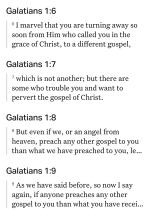
“I marvel that you are turning away so soon from Him who called you in the grace of Christ, to a different gospel, which is not another; but there are some who trouble you and want to pervert the gospel of Christ. But even if we, or an angel from heaven, preach any other gospel to you than what we have preached to you, let him be accursed. As we have said before, so now I say again, if anyone preaches any other gospel to you than what you have received, let him be accursed.”
‭‭Galatians‬ ‭1‬:‭6‬-‭9‬ ‭NKJV‬‬
 

Attachments

  • 1782246365953.png
    1782246365953.png
    200.9 KB · Views: 1
Verses to ponder, and reasons why many of us have a particular mindset; and reasons why we are not so accepting:

“I marvel that you are turning away so soon from Him who called you in the grace of Christ, to a different gospel, which is not another; but there are some who trouble you and want to pervert the gospel of Christ. But even if we, or an angel from heaven, preach any other gospel to you than what we have preached to you, let him be accursed. As we have said before, so now I say again, if anyone preaches any other gospel to you than what you have received, let him be accursed.”
‭‭Galatians‬ ‭1‬:‭6‬-‭9‬ ‭NKJV‬‬
Seems to me you choose not to be aware of scripture other than to condemn what scares you. What of my post scares you so much?
 
  • Like
Reactions: rewriter
Ecumenism: It's crap.

Unite in spirit, faith, and truth. Separate from the false.

Jn 17:20 “My prayer is not for them [the disciples] alone. I pray also for those who will believe in Me through their message, 21 that all of them may be one, Father, just as you are in Me and I am in You. May they also be in Us so that the world may believe that you have sent Me.

Jn 4:23 “Yet a time is coming and has now come when the true worshipers will worship the Father in spirit and truth, for they are the kind of worshipers the Father seeks. 24 God is spirit, and His worshipers must worship in spirit and in truth.”

Eph 4:3 Make every effort to keep the unity of the Spirit through the bond of peace. 4 There is one body and one Spirit – just as you were called to one hope when you were called – 5 one Lord, one faith, one baptism; 6 one God and Father of all, who is over all and through all and in all.

Rom 16:17 I urge you, brothers, to watch out for those who cause divisions and put obstacles in your way that are contrary to the teaching you have learned. Keep away from them. 18 For such people are not serving our Lord Christ, but their own appetites. Keep away from them.

2 Jn 1:9 Anyone who runs ahead and does not continue in the teaching of Christ does not have God; whoever continues in the teaching has both the Father and the Son. 10 If anyone comes to you and does not bring this teaching, do not take him into your house or welcome him. 11 Anyone who welcomes him shares in his wicked work.

1 Cor 5:6 Your boasting is not good. Do you not know that a little leaven leavens the whole lump of dough? 7 Clean out the old leaven so that you may be a new lump, just as you are in fact unleavened. For Christ our Passover also has been sacrificed. 8 Therefore let us celebrate the feast, not with old leaven, nor with the leaven of malice and wickedness, but with the unleavened bread of sincerity and truth.


Rev 2:14 “Nevertheless, I have a few things against you: You have people there who hold to the teaching of Balaam, who taught Balak to entice the Israelites to sin by eating food sacrificed to idols and by committing sexual immorality. 15 Likewise you also have those who hold on to the teaching of the Nicolaitans. 16 Repent Therefore! Otherwise, I will soon come to you and will fight against them with the sword of my mouth.”
All those verses are Truth, but when churches don’t follow the Truth then you can’t unite with them.

It’s like when Jesus was told that His mom and blood brothers and sisters were waiting for Him, He told them, ‘Who are My family members (paraphrasing here)? Those who do His will are His brothers, sisters, and mothers. Do His will!! Are all these churches following the apostolic doctrine, or are they following a different gospel??
 
Verses to ponder, and reasons why many of us have a particular mindset; and reasons why we are not so accepting:

“I marvel that you are turning away so soon from Him who called you in the grace of Christ, to a different gospel, which is not another; but there are some who trouble you and want to pervert the gospel of Christ. But even if we, or an angel from heaven, preach any other gospel to you than what we have preached to you, let him be accursed. As we have said before, so now I say again, if anyone preaches any other gospel to you than what you have received, let him be accursed.”
‭‭Galatians‬ ‭1‬:‭6‬-‭9‬ ‭NKJV‬‬
Exactly how does the recounting of history threaten you so much? If you do not track your beliefs to these little popes, please explain where your interpretation of the New Testament is at variance with human history?
 
  • Like
Reactions: rewriter
Seems to me you choose not to be aware of scripture other than to condemn what scares you. What of my post scares you so much?
It’s sad that you don’t understand the verses, they seem to go over your head. This has nothing to do with fear, dear, otherwise I wouldn’t be on this forum. Lol