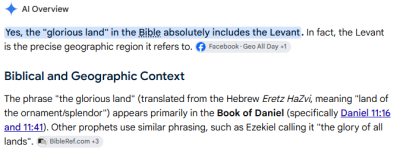
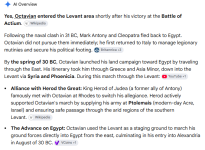
I disagree. The phrase 'time of the end' precisely matches events of past history. Specifically, the time of the end began at the battles of Actium and Alexandria. It ended in 70 AD.
The main players were Octavian, Mark Antony, Cleopatra and King Herod.
That would be Octavian/Augustus. Look up the history. It matches precisely.
12:1 refers to the Crucifixion and the destruction of Jerusalem in 70 AD.
| Matthew 27:52 - And the graves were opened; and many bodies of the saints which slept arose |
Daniel 11–12: what the text actually says
1. The king of the north in Daniel 11:40
You say Daniel 11:40 is Octavian/Augustus.
But Daniel 11:40–45 describes:
“the king of the north” pushing at “him,”
overflowing and passing over,
entering “the glorious land,”
Planting his palace between the seas and the glorious holy mountain,
and then coming to his end with none to help him.
Augustus never did that.
The text keeps the “north” terminology consistent with the earlier Seleucid line, then escalates beyond it.
There is no historical match that exhausts this description.
2. Daniel 12:1 and 70 AD
You say 12:1 is crucifixion and 70 AD.
But 12:1 says:
“a time of trouble, such as never was since there was a nation even to that same time,”
and “at that time thy people shall be delivered, every one that shall be found written in the book.”
70 AD was horrific, but it did not result in the deliverance of “everyone written in the book.” Most Jews perished; the church suffered; the nations continued.
Jesus uses similar language in Matthew 24, but He pushes it to the end (Matt 24:21–31), not to 70 AD alone.
3. Daniel 12:2 and Matthew 27:52
You say Daniel 12:2 is fulfilled in Matthew 27:52. But compare the texts:
Daniel 12:2: “Many of them that sleep in the dust of the earth shall awake, some to everlasting life, and some to shame and everlasting contempt.”
Matthew 27:52–53: “The graves were opened; and many bodies of the saints which slept arose, and came out of the graves after his resurrection, and went into the holy city, and appeared unto many.”
Matthew describes saints only, with no mention of the wicked, no “everlasting contempt,” no final judgment, no separation of righteous and wicked.
Daniel explicitly includes both categories and their eternal destinies.
That is not a “small sample”; it is the climactic resurrection pattern echoed in John 5:28–29 and Revelation 20:11–15.
You are shrinking Daniel’s language to fit a partial event.
4. The sealing of the book (Daniel 12:4, 9)
You say the sealing is “the end of the Old Testament at the end of that age.”
But Daniel 12:4 says:
“shut up the words, and seal the book, even to the time of the end: many shall run to and fro, and knowledge shall be increased.”
And 12:9:
“the words are closed up and sealed till the time of the end.”
That is not “end of the OT era”; it is “time of the end” in Daniel’s own eschatological vocabulary (cf. 11:35, 40; 12:4, 9, 13).
Revelation picks this up when the sealed scroll is opened by the Lamb (Rev 5), not by the Maccabees or by 70 AD.
5. The purifying of the wise (Daniel 11:35; 12:10)
You say 11:35 and 12:10 are simply “the finished work on the Cross.” The cross is indeed the ground of all purification, but Daniel 11:35 says:
“some of them of understanding shall fall, to try them, and to purge, and to make them white, even to the time of the end.”
And 12:10:
“Many shall be purified, and made white, and tried; but the wicked shall do wickedly; and none of the wicked shall understand; but the wise shall understand.”
This is an ongoing process “even to the time of the end,” not a single past event.
The New Testament agrees: sanctification and testing continue until Christ’s return (1 Thess 3:13; 1 Pet 1:6–7).
Daniel 8 and the little horn
You say the little horn of Daniel 8 is early Rome/Herod.
But Daniel 8 is explicit:
The ram is Media and Persia (8:20).
The goat is Greece (8:21).
The four horns are four kingdoms out of that nation (8:22).
The little horn arises “out of one of them” (8:9).
Rome does not arise out of one of the four Greek successor kingdoms.
Herod is a client king under Rome, not a Greek successor.
The text itself locates the little horn within the Greek aftermath, not the Roman beast.
You are overriding Daniel’s own identifications.
Past and future in Daniel
You say, “Daniel 11 and 12 is done.”
But Daniel 12:2–3, 7, 13 speak of:
a resurrection to everlasting life and everlasting contempt,
the shining of the wise “as the brightness of the firmament,”
the shattering of the power of the holy people,
and Daniel himself standing in his lot “at the end of the days.”
None of that has been exhausted in history. The New Testament repeatedly treats resurrection, final judgment, and the shining of the righteous as future (Matt 13:43; John 6:39–40; 1 Cor 15; Rev 20–22).
If Daniel 12 were fully past, the entire NT eschatology would be misaligned.
Some of Daniel is indeed past; I agree with you there.
But Daniel 11:40–45 and 12:1–3 push beyond Antiochus, beyond Rome, beyond 70 AD, into a final climactic period that has not yet unfolded.
When I let the text speak in its own terms, I cannot compress those chapters into completed history without tearing the fabric of both Daniel and the New Testament.