Seeing Jesus and beholding His pure love with Parah flowing is something I can't image Satan cant copy.I was given a dream - a vision of what turned out to be the Bible college I attended ten years before stepping on campus.
When I had the the vision ten years before?
It was not there!
You are kicking against the wrong guy!
I understand the supernatural....
And, it taught me to learn to have discernment!
For demonic psychics have premonitions and visions too.
Some think they see Jesus!
.......

Tongues and Fruit of the Spirit...
- Thread starter Wansvic
- Start date
-
Christian Chat is a moderated online Christian community allowing Christians around the world to fellowship with each other in real time chat via webcam, voice, and text, with the Christian Chat app. You can also start or participate in a Bible-based discussion here in the Christian Chat Forums, where members can also share with each other their own videos, pictures, or favorite Christian music.
If you are a Christian and need encouragement and fellowship, we're here for you! If you are not a Christian but interested in knowing more about Jesus our Lord, you're also welcome! Want to know what the Bible says, and how you can apply it to your life? Join us!
To make new Christian friends now around the world, click here to join Christian Chat.
You are using an out of date browser. It may not display this or other websites correctly.
You should upgrade or use an alternative browser.
You should upgrade or use an alternative browser.

the Gifts of the Holy Spirit are not the fruits of the Spirit.
The Fruits of the Spirit are produced in the believer that testify to the Character and divine nature of Christ in the person who is saved. They are developed and continue over time in the sanctification process.
Gal:
19; Now the works of the flesh are evident, which are: fornication, uncleanness, lewdness, 20; idolatry, sorcery, hatred, contentions, jealousies, outbursts of wrath, selfish ambitions, dissensions, heresies, 21; envy, murders, drunkenness, revelries, and the like; of which I tell you beforehand, just as I also told you in time past, that those who practice such things will not inherit the kingdom of God.
22 But the fruit of the Spirit is love, joy, peace, longsuffering, kindness, goodness, faithfulness, 23 gentleness, self-control. Against such there is no law. 24 And those who are Christ’s have crucified the flesh with its passions and desires. 25 If we live in the Spirit, let us also walk in the Spirit. 26 Let us not become conceited, provoking one another, envying one another.
The fruits of the Spirit is a lifestyle of the believer.
The gifts of the Holy Spirit listed in 1corthians chapter 12 through 14 are from the Holy Spirit to the Church for empowerment , edifying, comfort of each other in the church setting.
1cor 12:1, 4-6
1Now concerning spiritual gifts, brethren, I do not want you to be ignorant:
4There are diversities of gifts, but the same Spirit. 5There are differences of ministries, but the same Lord. 6 And there are diversities of activities, but it is the same God who works all in all.
The Fruits of the Spirit are produced in the believer that testify to the Character and divine nature of Christ in the person who is saved. They are developed and continue over time in the sanctification process.
Gal:
19; Now the works of the flesh are evident, which are: fornication, uncleanness, lewdness, 20; idolatry, sorcery, hatred, contentions, jealousies, outbursts of wrath, selfish ambitions, dissensions, heresies, 21; envy, murders, drunkenness, revelries, and the like; of which I tell you beforehand, just as I also told you in time past, that those who practice such things will not inherit the kingdom of God.
22 But the fruit of the Spirit is love, joy, peace, longsuffering, kindness, goodness, faithfulness, 23 gentleness, self-control. Against such there is no law. 24 And those who are Christ’s have crucified the flesh with its passions and desires. 25 If we live in the Spirit, let us also walk in the Spirit. 26 Let us not become conceited, provoking one another, envying one another.
The fruits of the Spirit is a lifestyle of the believer.
The gifts of the Holy Spirit listed in 1corthians chapter 12 through 14 are from the Holy Spirit to the Church for empowerment , edifying, comfort of each other in the church setting.
1cor 12:1, 4-6
1Now concerning spiritual gifts, brethren, I do not want you to be ignorant:
4There are diversities of gifts, but the same Spirit. 5There are differences of ministries, but the same Lord. 6 And there are diversities of activities, but it is the same God who works all in all.

In an effort to avoid confusion, please note that this thread has nothing to do with the Spiritual Gift of Tongues referenced in 1 Cor. 12.the Gifts of the Holy Spirit are not the fruits of the Spirit.
The Fruits of the Spirit are produced in the believer that testify to the Character and divine nature of Christ in the person who is saved. They are developed and continue over time in the sanctification process.
Gal:
19; Now the works of the flesh are evident, which are: fornication, uncleanness, lewdness, 20; idolatry, sorcery, hatred, contentions, jealousies, outbursts of wrath, selfish ambitions, dissensions, heresies, 21; envy, murders, drunkenness, revelries, and the like; of which I tell you beforehand, just as I also told you in time past, that those who practice such things will not inherit the kingdom of God.
22 But the fruit of the Spirit is love, joy, peace, longsuffering, kindness, goodness, faithfulness, 23 gentleness, self-control. Against such there is no law. 24 And those who are Christ’s have crucified the flesh with its passions and desires. 25 If we live in the Spirit, let us also walk in the Spirit. 26 Let us not become conceited, provoking one another, envying one another.
The fruits of the Spirit is a lifestyle of the believer.
The gifts of the Holy Spirit listed in 1corthians chapter 12 through 14 are from the Holy Spirit to the Church for empowerment , edifying, comfort of each other in the church setting.
1cor 12:1, 4-6
1Now concerning spiritual gifts, brethren, I do not want you to be ignorant:
4There are diversities of gifts, but the same Spirit. 5There are differences of ministries, but the same Lord. 6 And there are diversities of activities, but it is the same God who works all in all.
What the thread does address is the difference between the initial evidence that confirms the reception of the Holy Spirit, and the enduring evidence that reveals the continuing work of the Spirit within the life of the believer.
"If you use only the text of the Bible to discover what is normative, the 2-3 witnesses principle dictates that:This passage concerns human witnesses. More than one is required because man cannot be trusted. God is not a man that He should lie, and every word from God is true, even if He says it only once.
I would not suggest that anyone discard the clear sayings of Scripture even if only given once.
Much love!
- A standard pattern cannot be built on a single narrative; it requires a cloud of multiple historical occurrences (Acts 2, Acts 10, Acts 19).
- An invisible spiritual experience must be corroborated by a secondary, external witness (audible/visible signs) so that the reality of the infilling is legally and spiritually "established" to those observing it.
When isolating the Bible alone without denominational bias, the "two or three witnesses" principle (Deuteronomy 19:15; 2 Corinthians 13:1) serves as a strict structural rule. In Scripture, a normative experience (a standard pattern) cannot be built on a single, isolated verse or a unique, one-time occurrence. Instead, it must be established by multiple Biblical writers or sequential historical events confirming the exact same phenomenon.
The Bible uses this principle in two distinct ways to define what is normative when being filled with the Holy Ghost: through The Witness of Multiple Historical Accounts and The Witness of Sensory Confirmation.
1. The Witness of Multiple Historical Accounts (Textual Norm)
According to biblical hermeneutics—interpreted strictly by the text—one instance of an event does not make it a mandatory pattern for all believers. To establish a "normative" standard, the Bible provides multiple distinct historical "witnesses" (events) in the Book of Acts that demonstrate a repeating pattern of how the infilling occurs.
The Bible presents three distinct, major historical witnesses where groups of people were initially filled with the Holy Ghost, showing identical observable characteristics:
- Witness 1: The Original Outpouring (Acts 2:4) – The disciples in Jerusalem are filled, and the immediate result is they "began to speak with other tongues, as the Spirit gave them utterance".
- Witness 2: The Gentile Outpouring (Acts 10:44-46) – Years later, at Cornelius’s house, the Holy Ghost falls on a completely different demographic. The text explicitly notes that the Jewish onlookers knew they received the Holy Ghost because "they heard them speak with tongues".
- Witness 3: The Ephesian Outpouring (Acts 19:6) – Decades after Pentecost, Paul lays hands on disciples in Ephesus. The text records that "the Holy Ghost came on them; and they spake with tongues, and prophesied".
2. The Witness of Sensory Confirmation (Experiential Norm)
The law of witnesses requires external testimony—something that can be cross-examined by independent observers. When establishing the truth of an invisible spiritual event (the Holy Ghost entering a person), the Bible does not rely on the subjective testimony of the recipient alone. It requires the concurrent witness of sight and hearing by outside observers.
In the Bible, when a person was initially filled, onlookers were always able to act as eyewitnesses to the physical evidence:
- The Witness of Hearing: In Acts 2:6, the multitude came together because "every man heard them speak in his own language." In Acts 10:46, the evidence was absolute because the onlookers "heard them speak with tongues."
- The Witness of Sight: In Acts 2:33, Peter explains the spiritual event to the crowd by anchoring it to physical observations: "He [Jesus] hath shed forth this, which ye now see and hear."
In an effort to avoid confusion, please note that this thread has nothing to do with the Spiritual Gift of Tongues referenced in 1 Cor. 12.The Bible is very clear concerning the gifts of the Spirit:
[1Co 12:7-11, 28-30 KJV] 7 But the manifestation of the Spirit is given to every man to profit withal. 8 For to one is given by the Spirit the word of wisdom; to another the word of knowledge by the same Spirit; 9 To another faith by the same Spirit; to another the gifts of healing by the same Spirit; 10 To another the working of miracles; to another prophecy; to another discerning of spirits; to another [divers] kinds of tongues; to another the interpretation of tongues: 11 But all these worketh that one and the selfsame Spirit, dividing to every man severally as he will. ... 28 And God hath set some in the church, first apostles, secondarily prophets, thirdly teachers, after that miracles, then gifts of healings, helps, governments, diversities of tongues. 29 [Are] all apostles? [are] all prophets? [are] all teachers? [are] all workers of miracles? 30 Have all the gifts of healing? do all speak with tongues? do all interpret?
If you trust your Bible you can’t be deceived.
What the thread does address is the difference between the initial evidence that confirms the reception of the Holy Spirit, and the enduring evidence that reveals the continuing work of the Spirit within the life of the believer.
"In an effort to avoid confusion, please note that this thread has nothing to do with the Spiritual Gift of Tongues referenced in 1 Cor. 12."In an effort to avoid confusion, please note that this thread has nothing to do with the Spiritual Gift of Tongues referenced in 1 Cor. 12.
What the thread does address is the difference between the initial evidence that confirms the reception of the Holy Spirit, and the enduring evidence that reveals the continuing work of the Spirit within the life of the believer.
Interesting The thread label is :
Tongues and Fruit of the Spirit
Yet you said the very same thing I did in the opening thread. Which is it Tongues and Fruit of the Spirit or address is the difference between the initial evidence that confirms the reception of the Holy Spirit, and the enduring evidence that reveals the continuing work of the Spirit within the life of the believer.

For instance, here is something only said one time in the Bible."If you use only the text of the Bible to discover what is normative, the 2-3 witnesses principle dictates that:
John 13:34 KJV
A new commandment I give unto you, That ye love one another; as I have loved you, that ye also love one another.
This simple statement sublimated the entire OT Covenant of Law (save 1 commandment only) by a new commandment, yet it is only stated one time.
Under the Covenant of Law God made with Israel, according to Jesus, the two greatest laws were to Love God with mind heart soul strength, and love your neighbor as yourself. In these are summed up the entirety of the Law.
Now we are to love others, not only as we love ourselves, but now, as Jesus loves us.
We only read this in this passage. Should we ignore it? I say no.
Much love!

You are presenting this verse as an all-encompassing and universal axiom, it is not.2 Cor. 13:1 records the biblical principle for confirming truth: “In the mouth of two or three witnesses shall every word be established.” This teaches that God’s principles are not founded upon isolated statements, but are confirmed through consistent witness and agreement throughout Scripture.
Finding two or three people who say sometime is true does not make a claim valid.
The very verbiage Paul uses; "two or three" should tell you this is not a set in stone rule.
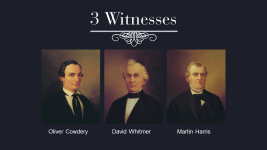
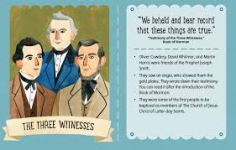
Pick up any Book of Mormon and you will see the "Testimony of the Three Witnesses" confirming its validity.
I apologize for the confusion. I meant no disrespect."In an effort to avoid confusion, please note that this thread has nothing to do with the Spiritual Gift of Tongues referenced in 1 Cor. 12."
Interesting The thread label is :
Tongues and Fruit of the Spirit
Yet you said the very same thing I did in the opening thread. Which is it Tongues and Fruit of the Spirit or address is the difference between the initial evidence that confirms the reception of the Holy Spirit, and the enduring evidence that reveals the continuing work of the Spirit within the life of the believer.
The point I was trying to make is that speaking in tongues as the initial sign of receiving the Holy Spirit differs from the Spiritual Gift of Tongues that serves to present a prophetic message from God directly to a congregation. That manifestation relies upon the Spiritual Gift of Interpretation in operation so that the entire assembly can understand the message and be edified.
Ok, I hear ya now would agree that each of those works of the Holy Spirit are nothing to do with the fruit of the Spirit?I apologize for the confusion. I meant no disrespect.
The point I was trying to make is that speaking in tongues as the initial sign of receiving the Holy Spirit differs from the Spiritual Gift of Tongues that serves to present a prophetic message from God directly to a congregation. That manifestation relies upon the Spiritual Gift of Interpretation in operation so that the entire assembly can understand the message and be edified.
There are not two functions of tongues, one evidence and another for the assembly. That view is read into Scripture not out of it. Paul writes that tongues is given, with interpretation, for the edification of the assembly."In an effort to avoid confusion, please note that this thread has nothing to do with the Spiritual Gift of Tongues referenced in 1 Cor. 12."
Interesting The thread label is :
Tongues and Fruit of the Spirit
Yet you said the very same thing I did in the opening thread. Which is it Tongues and Fruit of the Spirit or address is the difference between the initial evidence that confirms the reception of the Holy Spirit, and the enduring evidence that reveals the continuing work of the Spirit within the life of the believer.
Tongues is neither the initial evidence nor to be used as a private prayer language. These ideas cannot be found in Scripture.
is that what 1cor 14 says?There are not two functions of tongues, one evidence and another for the assembly. That view is read into Scripture not out of it. Paul writes that tongues is given, with interpretation, for the edification of the assembly.
Tongues is neither the initial evidence nor to be used as a private prayer language. These ideas cannot be found in Scripture.
I think many miss some very important things contextually.
2 For he who speaks in a tongue does not speak to men but to God, for no one understands him; however,
in the spirit he speaks mysteries.
3 But he who prophesies speaks edification and exhortation and comfort to men.
4 He who speaks in a tongue edifies himself, but he who prophesies edifies the church.
5I wish you all spoke with tongues, but even more that you prophesied; for he who prophesies is greater than he who speaks with tongues, unless indeed he interprets, that the church may receive edification.
6 But now, brethren, if I come to you speaking with tongues, what shall I profit you unless I speak to you either by revelation, by knowledge, by prophesying, or by teaching?
7 Even things without life, whether flute or harp, when they make a sound, unless they make a distinction in the sounds, how will it be known what is piped or played? 8 For if the trumpet makes an uncertain sound, who will prepare for battle? 9 So likewise you, unless you utter by the tongue words easy to understand, how will it be known what is spoken? For you will be speaking into the air. 10 There are, it may be, so many kinds of languages in the world, and none of them is without significance.
11 Therefore, if I do not know the meaning of the language, I shall be a foreigner to him who speaks, and he who speaks will be a foreigner to me. 12 Even so you, since you are zealous for spiritual gifts, let it be for the edification of the church that you seek to excel.
13 Therefore let him who speaks in a tongue pray that he may interpret. 14 For if I pray in a tongue, my spirit prays, but my understanding is unfruitful. 15 What is the conclusion then?
I will pray with the spirit, and I will also pray with the understanding. I will sing with the spirit, and I will also sing with the understanding. 16 Otherwise, if you bless with the spirit, how will he who occupies the place of the uninformed say “Amen” at your giving of thanks, since he does not understand what you say? 17 For you indeed give thanks well, but the other is not edified.
Much is said that many miss.
1. For he who speaks in a tongue does not speak to men but to God,in the spirit he speaks mysteries. speak unknown things
2. He who speaks in a tongue edifies himself,
3 Tongues and interpretation are equal with prophesying in the church setting: for he who prophesies is greater than he who speaks with tongues, unless indeed he interprets, that the church may receive edification.
4. Those who are desiring and zealous for spiritual gifts the motivation must be to edify all not for you just to demonstrate "
Even so you, since you are zealous for spiritual gifts, let it be for the edification of the church that you seek to excel.
5. Those who speak in tongues are to pray that they interpret the people judge it according to the word of God.

"If you use only the text of the Bible to discover what is normative, the 2-3 witnesses principle dictates that:You are presenting this verse as an all-encompassing and universal axiom, it is not.
Finding two or three people who say sometime is true does not make a claim valid.
The very verbiage Paul uses; "two or three" should tell you this is not a set in stone rule.
Pick up any Book of Mormon and you will see the "Testimony of the Three Witnesses" confirming its validity.
View attachment 291057 View attachment 291058
- A standard pattern cannot be built on a single narrative; it requires a cloud of multiple historical occurrences (Acts 2, Acts 10, Acts 19).
- An invisible spiritual experience must be corroborated by a secondary, external witness (audible/visible signs) so that the reality of the infilling is legally and spiritually "established" to those observing it.
When isolating the Bible alone without denominational bias, the "two or three witnesses" principle (Deuteronomy 19:15; 2 Corinthians 13:1) serves as a strict structural rule. In Scripture, a normative experience (a standard pattern) cannot be built on a single, isolated verse or a unique, one-time occurrence. Instead, it must be established by multiple Biblical writers or sequential historical events confirming the exact same phenomenon.
The Bible uses this principle in two distinct ways to define what is normative when being filled with the Holy Ghost: through The Witness of Multiple Historical Accounts and The Witness of Sensory Confirmation.
1. The Witness of Multiple Historical Accounts (Textual Norm)
According to biblical hermeneutics—interpreted strictly by the text—one instance of an event does not make it a mandatory pattern for all believers. To establish a "normative" standard, the Bible provides multiple distinct historical "witnesses" (events) in the Book of Acts that demonstrate a repeating pattern of how the infilling occurs.
The Bible presents three distinct, major historical witnesses where groups of people were initially filled with the Holy Ghost, showing identical observable characteristics:
- Witness 1: The Original Outpouring (Acts 2:4) – The disciples in Jerusalem are filled, and the immediate result is they "began to speak with other tongues, as the Spirit gave them utterance".
- Witness 2: The Gentile Outpouring (Acts 10:44-46) – Years later, at Cornelius’s house, the Holy Ghost falls on a completely different demographic. The text explicitly notes that the Jewish onlookers knew they received the Holy Ghost because "they heard them speak with tongues".
- Witness 3: The Ephesian Outpouring (Acts 19:6) – Decades after Pentecost, Paul lays hands on disciples in Ephesus. The text records that "the Holy Ghost came on them; and they spake with tongues, and prophesied".
2. The Witness of Sensory Confirmation (Experiential Norm)
The law of witnesses requires external testimony—something that can be cross-examined by independent observers. When establishing the truth of an invisible spiritual event (the Holy Ghost entering a person), the Bible does not rely on the subjective testimony of the recipient alone. It requires the concurrent witness of sight and hearing by outside observers.
In the Bible, when a person was initially filled, onlookers were always able to act as eyewitnesses to the physical evidence:
- The Witness of Hearing: In Acts 2:6, the multitude came together because "every man heard them speak in his own language." In Acts 10:46, the evidence was absolute because the onlookers "heard them speak with tongues."
- The Witness of Sight: In Acts 2:33, Peter explains the spiritual event to the crowd by anchoring it to physical observations: "He [Jesus] hath shed forth this, which ye now see and hear."
Therefore say I unto you, The kingdom of God shall be taken from you, and given to a nation bringing forth the fruits thereof."
— Matthew 21:43 (KJV)
— Matthew 21:43 (KJV)
And it shall come to pass in that day, that his burden shall be taken away from off thy shoulder, and his yoke from off thy neck, and the yoke shall be destroyed because of the anointing.Therefore say I unto you, The kingdom of God shall be taken from you, and given to a nation bringing forth the fruits thereof."
— Matthew 21:43 (KJV)