You sound like the PhariseesNot only is a gap demanded in Daniel 9, you are literally living in this gap.
Furthermore, the Hebrew wedding protocol (into which the Bride the Church resides) DEMANDS this very gap.
None of this you comprehend. Your woefully faulty Greek thinking patterns and egregious ignorance of all things Jewish leave you stranded in a shabby fantasy of your own design.
Only after you recognize the Biblical PATTERNS and TYPES and fully embrace the Hebrew mindset will you be emancipated from your doctrinal prison.
Oh and BTW, the "Last Supper" (the Passover Seder Jesus shared with His disciples) corresponds to the Shidduchin (specifically the betrothal/engagement phase) in the ancient Hebrew wedding customs.
In this context, we likewise associate the Last Supper with the establishment of the Ketubah (the marriage contract) and the sealing of the covenant through the Cup of the Covenant (the Kos Habrit).
Furthermore, Jesus and Paul (and every other NT writer) cannot POSSIBLY be more precise, specific, intentional, florid, passionate and clear in declaring ENDLESS times that we are literally existing, abiding and being sanctified within this Shidduchin/Ketubah/Kos Habrit "gap".
These last three remaining steps:
The Nissuin/harpazo (The Procession)
The Huppah (Consummation)
The Seudat Mitzvah (marriage supper celebration)
Are inevitable, yet (very near) future, and absolutely necessary to usher in the 70th week redemption of Gomer aka Naomi aka Samson's philistine wife aka the Nation Israel by Messiah Jesus the Kinsman redeemer the Goel (גּוֹאֵל).
Yes, all of this is lost upon you.
And yes, I also understand perfect well of exactly why you haven't the slightest idea of what you are talking about regarding this topic.

Daniel’s “Final Week” (70th Week) Has ALREADY Been Fulfilled
- Thread starter JacobGilbert
- Start date
-
Christian Chat is a moderated online Christian community allowing Christians around the world to fellowship with each other in real time chat via webcam, voice, and text, with the Christian Chat app. You can also start or participate in a Bible-based discussion here in the Christian Chat Forums, where members can also share with each other their own videos, pictures, or favorite Christian music.
If you are a Christian and need encouragement and fellowship, we're here for you! If you are not a Christian but interested in knowing more about Jesus our Lord, you're also welcome! Want to know what the Bible says, and how you can apply it to your life? Join us!
To make new Christian friends now around the world, click here to join Christian Chat.
You are using an out of date browser. It may not display this or other websites correctly.
You should upgrade or use an alternative browser.
You should upgrade or use an alternative browser.
Why the papal interpretation fails textually
1. Daniel says “king,” not priesthood, church, bishopric, or succession
Daniel 7:24 supplies the interpretation: the horns are kings, and the little horn is another king. A papal succession lasting more than a millennium must be imported into the text.
2. The ten kings exist before the little horn rises
The sequence is:
- fourth kingdom;
- ten kings;
- another king arises after them;
- he overthrows three;
- the remaining kings submit;
- he rules for three and one-half years;
- Christ destroys him.
Historicist schemes ordinarily turn the ten horns into early European kingdoms spread across complex historical developments. Revelation 17, however, says the ten kings:
They are contemporaries of the final beast, not merely a sequence of medieval kingdoms.
3. The stated period is three and one-half years
Daniel 7 gives “a time and times and the dividing of time.” Revelation interprets the equivalent period as forty-two months.
Turning 1,260 days into 1,260 years requires the historicist “day-year” conversion. But Revelation already expresses the same period in three interchangeable literal forms:
- forty-two months — Revelation 11:2; 13:5;
- 1,260 days — Revelation 11:3; 12:6;
- time, times, and half a time — Revelation 12:14.
Those expressions mutually explain one another as approximately three and one-half ordinary years.
4. The horn is active immediately before Christ’s kingdom
Daniel does not portray a long gap between the horn’s destruction and the Messianic kingdom:
- the horn wages war;
- the Ancient of Days judges;
- the horn loses dominion;
- the kingdom is given to the saints.
The final ruler is therefore an eschatological contemporary of Christ’s return.
5. The beast and the religious harlot are distinct—and eventually enemies
Revelation 17 distinguishes:
- the beast, the political ruler and empire;
- the woman, the corrupt religious system.
The beast and ten kings ultimately destroy the woman:
In Fruchtenbaum’s system, the first-half religious system—“Ecclesiastical Babylon”—is destroyed by the Antichrist and the ten kings when he assumes total religious control. Therefore, the corrupt ecclesiastical system cannot simply be identical with the beast who destroys it.
The complete identity chain
The argument can be expressed as a cumulative chain:
Daniel 7: the little horn
- a king;
- among ten kings;
- overthrows three;
- blasphemes God;
- persecutes saints;
- rules three and one-half years;
- destroyed when the kingdom comes.
Daniel 9: the prince/desolator
- a ruler;
- confirms a seven-year covenant;
- breaks it at the midpoint;
- stops sacrifice;
- causes the abomination;
- receives decreed destruction.
Daniel 11: the willful king
- does according to his own will;
- magnifies himself above every god;
- speaks against God;
- enters the glorious land;
- comes to his end without help.
2 Thessalonians 2: the man of sin
- a revealed man;
- exalts himself above God;
- occupies the temple;
- proclaims himself divine;
- operates through Satanic power;
- destroyed by Christ’s appearing.
Revelation 13: the beast
- emerges with ten horns;
- speaks great blasphemies;
- receives Satan’s authority;
- persecutes saints;
- receives worship;
- rules forty-two months.
Revelation 19: the final condemned ruler
- gathers against Christ;
- is personally captured;
- is cast into the lake of fire;
- his defeat accompanies Christ’s return.
These are not unrelated prophetic villains. They possess the same political setting, the same chronological period, the same blasphemous claims, the same persecution, the same relationship to Satan, the same temple crisis, and the same destruction at Christ’s coming.
Conclusion
The strongest formulation is:
Fruchtenbaum reaches precisely this conclusion. His list treats all eleven names as different descriptions of the one future world dictator, and his Daniel outline explicitly identifies Daniel 7:24–26 as the Antichrist stage.
The one necessary refinement is that Daniel 8 initially portrays Antiochus Epiphanes as a personal little horn and prophetic prototype, before its interpretation reaches forward—on Fruchtenbaum’s reading—to the final king of fierce countenance. That qualification actually strengthens the central point: in neither Daniel 7 nor Daniel 8 is the little horn naturally interpreted as a perpetual ecclesiastical office.
I do not believe another lengthy exchange will be productive. You have made it clear that you regard Fruchtenbaum’s futurist framework as the only possible interpretation and that anyone who disagrees is a “biblically illiterate hack.” That is not a basis for a serious discussion of the text. And unfortunately, this does seem to be your "go to" style.
My position is not that every interpretation is equally true. My position is that your conclusions are not all expressly stated in Daniel. Daniel does not explicitly say that the little horn, the prince of Daniel 9, the willful king, Paul’s man of sin, John’s antichrist, and Revelation’s beast are eleven titles for one future individual. That is Fruchtenbaum’s synthesis.
You are free to believe that synthesis, but repeatedly restating it—and insulting anyone who questions it—is not the same as proving each link from Scripture.
I have explained why Daniel’s use of “king” can be representative, why personal language does not exclude a corporate or institutional power, and why Daniel 7:24 does not grammatically settle the issue in the way you claim. Yet rather than addressing those points directly, you have continued to repeat Fruchtenbaum’s conclusions which are, in many ways, quite weak and unsupported, but very strong in opinion. Repeating another man’s interpretation is not the same as demonstrating it from the text, and it doesn't seem as though you can offer more than a parroting of his conclusions. I believe this may cause you to become very angry when asked to discuss or comment those statements made by him, and this causes you to respond in the manner that you find acceptable. It gives me little reason to believe that further discussion will be productive. Consequently, I will move on and will not respond to any further posts or replies from you.

I am a gentile nobody. Grow up.You sound like the Pharisees
That is not a basis for a serious discussion of the ***TEXT***.I do not believe another lengthy exchange will be productive. You have made it clear that you regard Fruchtenbaum’s futurist framework as the only possible interpretation and that anyone who disagrees is a “biblically illiterate hack.” That is not a basis for a serious discussion of the text. And unfortunately, this does seem to be your "go to" style.
My position is not that every interpretation is equally true. My position is that your conclusions are not all expressly stated in Daniel. Daniel does not explicitly say that the little horn, the prince of Daniel 9, the willful king, Paul’s man of sin, John’s antichrist, and Revelation’s beast are eleven titles for one future individual. That is Fruchtenbaum’s synthesis.
You are free to believe that synthesis, but repeatedly restating it—and insulting anyone who questions it—is not the same as proving each link from Scripture.
I have explained why Daniel’s use of “king” can be representative, why personal language does not exclude a corporate or institutional power, and why Daniel 7:24 does not grammatically settle the issue in the way you claim. Yet rather than addressing those points directly, you have continued to repeat Fruchtenbaum’s conclusions which are, in many ways, quite weak and unsupported, but very strong in opinion. Repeating another man’s interpretation is not the same as demonstrating it from the text, and it doesn't seem as though you can offer more than a parroting of his conclusions. I believe this may cause you to become very angry when asked to discuss or comment those statements made by him, and this causes you to respond in the manner that you find acceptable. It gives me little reason to believe that further discussion will be productive. Consequently, I will move on and will not respond to any further posts or replies from you.
What you cannot grasp is what the text is intended to illustrate are PATTERNS and TYPES.
If you breach the PATTERN and/or the TYPE, you WILL be wrong. 100% of the time.
For example this preposterous zany nuttery that the papacy is the little horn/anti-christ.
The multitude of the TYPES of the little horn aka son of perdition are ALL and ALWAYS ****individual**** kings/chiefs/warriors without exception.

No there isn't, such gap was absolutely invented. The "abomination of desolation" in this 70 week prophecy is exactly what it means literally, the desolation of Jerusalem, and the abomination that has taken place in its site, throughout the church age, ever since 70AD. It has nothing to do the antichrist or third temple or all that political thriller.Not only is a gap demanded in Daniel 9, you are literally living in this gap.
Furthermore, the Hebrew wedding protocol (into which the Bride the Church resides) DEMANDS this very gap.
None of this you comprehend. Your woefully faulty Greek thinking patterns and egregious ignorance of all things Jewish leave you stranded in a shabby fantasy of your own design.
Only after you recognize the Biblical PATTERNS and TYPES and fully embrace the Hebrew mindset will you be emancipated from your doctrinal prison.
Oh and BTW, the "Last Supper" (the Passover Seder Jesus shared with His disciples) corresponds to the Shidduchin (specifically the betrothal/engagement phase) in the ancient Hebrew wedding customs.
In this context, we likewise associate the Last Supper with the establishment of the Ketubah (the marriage contract) and the sealing of the covenant through the Cup of the Covenant (the Kos Habrit).
Furthermore, Jesus and Paul (and every other NT writer) cannot POSSIBLY be more precise, specific, intentional, florid, passionate and clear in declaring ENDLESS times that we are literally existing, abiding and being sanctified within this Shidduchin/Ketubah/Kos Habrit "gap".
These last three remaining steps:
The Nissuin/harpazo (The Procession)
The Huppah (Consummation)
The Seudat Mitzvah (marriage supper celebration)
Are inevitable, yet (very near) future, and absolutely necessary to usher in the 70th week redemption of Gomer aka Naomi aka Samson's philistine wife aka the Nation Israel by Messiah Jesus the Kinsman redeemer the Goel (גּוֹאֵל).
Yes, all of this is lost upon you.
And yes, I also understand perfect well of exactly why you haven't the slightest idea of what you are talking about regarding this topic.

So what you are really saying is the "Last Supper" (the Passover Seder Jesus shared with His disciples), which corresponds to the Shidduchin, Ketubah and Kos Habrit never happened?No there isn't, such gap was absolutely invented. The "abomination of desolation" in this 70 week prophecy is exactly what it means literally, the desolation of Jerusalem, and the abomination that has taken place in its site, throughout the church age, ever since 70AD. It has nothing to do the antichrist or third temple or all that political thriller.
Welp.....it happened. Definitely. It happened.
Quite the contrary, Jesus fulfilled Dan. 9:27 at the last supper, with the "strong covenant" he made with his disciples (Matt. 26:28). What happened with the dispensationalists' interpretation is to have changed the "He" therein from Christ to antichrist.So what you are really saying is the "Last Supper" (the Passover Seder Jesus shared with His disciples), which corresponds to the Shidduchin, Ketubah and Kos Habrit never happened?
Welp.....it happened. Definitely. It happened.

Are you Catholic by any chance ? Because the futurist view was promoted to rid the Papacy of the stigma of being called the Anti-Christ.So what you are really saying is the "Last Supper" (the Passover Seder Jesus shared with His disciples), which corresponds to the Shidduchin, Ketubah and Kos Habrit never happened?
Welp.....it happened. Definitely. It happened.
It is also used to promote Zionism.
Just wondering what camp you're trying to aggressively defend
The futurist view was promoted by Moses, Isaiah, Joel, Hosea, Zechariah, Christ Jesus, Peter and Paul.Are you Catholic by any chance ? Because the futurist view was promoted to rid the Papacy of the stigma of being called the Anti-Christ.
It is also used to promote Zionism.
Just wondering what camp you're trying to aggressively defend
In fact Genesis 3 proves futurist dispensationalism indubitably.
Yes, YHVH is a futurist dispensationalist. No doubt about that.

You;re putting God in a box. God is the past, the present and the future, He is beyond time, therefore He is neither pretermist or futurist or any other "ist'.The futurist view was promoted by Moses, Isaiah, Joel, Hosea, Zechariah, Christ Jesus, Peter and Paul.
In fact Genesis 3 proves futurist dispensationalism indubitably.
Yes, YHVH is a futurist dispensationalist. No doubt about that.

So what you are really saying is the "Last Supper" (the Passover Seder Jesus shared with His disciples), which corresponds to the Shidduchin, Ketubah and Kos Habrit never happened?
Welp.....it happened. Definitely. It happened.
Hi @cv5 . I am curious as to your thoughts on this answer:
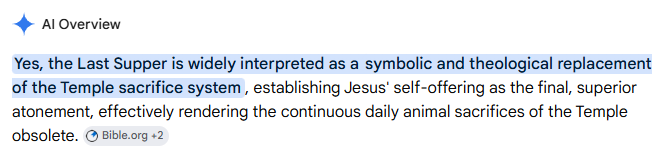
Are they correct?
Also, would the Last Supper correspond to the phrase 'shall take away the daily sacrifice' in this verse:
Daniel 11:31 - And arms shall stand on his part, and they shall pollute the sanctuary of strength, and shall take away the daily sacrifice, and they shall place the abomination that maketh desolate.
Thanks.
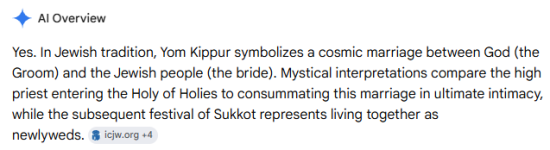
You obviously really believe that, and of course you are Zionist, so no amount of scripture will convince you otherwiseThe futurist view was promoted by Moses, Isaiah, Joel, Hosea, Zechariah, Christ Jesus, Peter and Paul.

He is a creationist thoughYou;re putting God in a box. God is the past, the present and the future, He is beyond time, therefore He is neither pretermist or futurist or any other "ist'.
 Just joking
No, he's the creatOR.He is a creationist though
Eeeerrrrr Moses was a "Zionist". And I like Moses, who is a type of Christ.You obviously really believe that, and of course you are Zionist, so no amount of scripture will convince you otherwise
Interestingly, Moses makes an appearance at the transfiguration, and will be seen here:
Rev 11:3
And I will give power unto my two witnesses, and they shall prophesy a thousand two hundred and threescore days, clothed in sackcloth.
Indeed, Jesus God is outside of time, created time, and manages time.You;re putting God in a box. God is the past, the present and the future, He is beyond time, therefore He is neither pretermist or futurist or any other "ist'.
But its clear that, as far as we time-bound creatures are concerned, He chose futurist dispensationalism to mete out His plan of Salvation.
BTW, the term "dispensationalism" is only a buzzword. We use it for lack of a better term.
I am astounded that people cannot grasp the fact that the Genesis 3 saga and prophecy proves "dispensationalism" quite beyond doubt. What did you think? That when God specifies a future redemption, somehow its not future for us?
Well, it most certain is. Sorry fake sorry.
The biblical narrative is consistent, God is the same God; dispensationalism is guilty of slicing and dicing the bible into different time eras, i.e. "dispensations" and assigning different message and different characters of God to each era; they can even further divided into little sub-eras, so you can pick the sections of the bible in your tailored "sub-era" and dismiss others.Indeed, Jesus God is outside of time, created time, and manages time.
But its clear that, as far as we time-bound creatures are concerned, He chose futurist dispensationalism to mete out His plan of Salvation.
BTW, the term "dispensationalism" is only a buzzword. We use it for lack of a better term.
I am astounded that people cannot grasp the fact that the Genesis 3 saga and prophecy proves "dispensationalism" quite beyond doubt. What did you think? That when God specifies a future redemption, somehow its not future for us?
Well, it most certain is. Sorry fake sorry.
To be honest, I really admire most most dispensationalist pastors for their courage and convition in what other churches ignore, namely the end time prophecies and discernment of the present age; but this seven-year tribulation narrative is their own invention, they add this church age gap, the Antichrist, the third temple, the deal with the devil, all those stuff into a single verse, and have the audacity to lecture on us that these stuffs are already in there, they just discovered it. Please forgive me for not buying it.

we also have an increased knowledge Biblical since Daniels time - The New covenant and knowledge contained within the NT
This is really the key of how to understand the words of Jesus.
If people are not using a standard consistent hermeneutic then there really is no way to find common ground,
old testament symbolism,
audience relevance,
time indicators and
the historical sources
are the correct interpretative method not literal reading when needed and other methods when not needed.
The absolute disregard of time indicators clearly stated in scripture is shocking.
Eeeerrrrr Moses was a "Zionist". And I like Moses, who is a type of Christ.
Interestingly, Moses makes an appearance at the transfiguration, and will be seen here:
Rev 11:3
And I will give power unto my two witnesses, and they shall prophesy a thousand two hundred and threescore days, clothed in sackcloth.
Moses led Israel through the sea toward an earthly land, but Jesus led His people through death into the everlasting Kingdom of God. (1 Corinthians 10:1-4; Colossians 1:13)
The greatest Exodus wasn't merely from one country to another.
It was the covenantal deliverance from slavery under the Law into freedom, life, and direct access to God through Christ.
(Galatians 4:4-7; Hebrews 10:19-22)
The first Exodus brought Israel to Mount Sinai, but the greater Exodus brought believers to Mount Zion and the heavenly Jerusalem. (Hebrews 12:18-24)
Moses mediated the Old Covenant at Sinai, but Jesus became the Mediator of the New Covenant. (Hebrews 8:6; Hebrews 12:24)
The writer did not say believers would someday come to Mount Zion. He said, "ye are come," showing that this was already a present covenant reality. (Hebrews 12:22-24)
The first Exodus ended at Mount Sinai with the giving of the Law, but the greater Exodus brings believers to Mount Zion under the New Covenant. (Exodus 19:20; Hebrews 12:22-24)
I would highly suggest moving into this Age of the New Covenant.