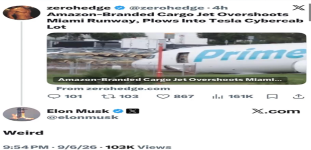
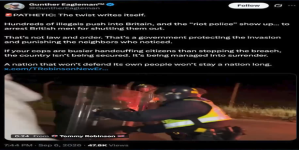
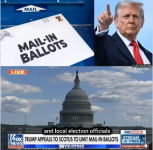
More and more indications that the Election Will Be Protected!!!
The Patriots are in Control!!!

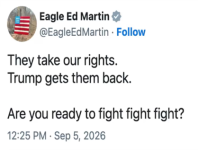

More and more indications that the Election Will Be Protected!!!

CONTINUED...MKULTRA IS REAL.
AND SO IS THE SCIENCE OF CONTROLLING HUMAN BEHAVIOR.
View attachment 295378
Lindy Werwa
MKULTRA IS REAL.
AND SO IS THE SCIENCE OF CONTROLLING HUMAN BEHAVIOR.
People hear the words “mind control” and immediately laugh.
Maybe that’s because they don’t know their history.
MKUltra is not a conspiracy theory.
It happened.
The CIA conducted an extensive program involving behavioral modification, drugs, hypnosis and experiments designed to understand whether human thought and behavior could be manipulated.
Some people were experimented on without even knowing it.
Congress eventually investigated it.
There were Senate hearings.
There are government records.
So spare me the eye rolls about powerful institutions being interested in controlling human behavior.
We already know they were. But here’s what fascinates me.
You don’t need LSD.
You don’t need hypnosis.
You don’t need someone strapped to a chair in a secret laboratory.
There are much simpler ways to influence human behavior.
FEAR.
REPETITION.
AUTHORITY.
CONFORMITY.
ISOLATION.
SOCIAL PRESSURE.
REWARD.
PUNISHMENT.
And then came COVID.
The DS Facade is coming to an END!!!
The DS Facade is coming to an END!!!
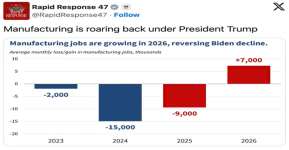
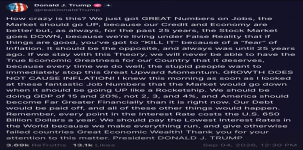
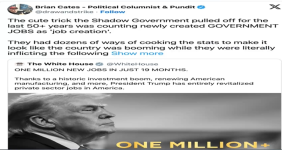
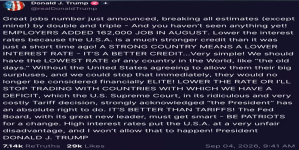
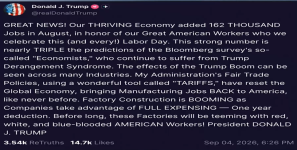
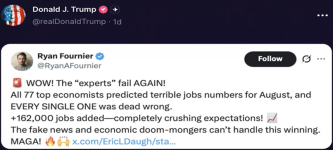
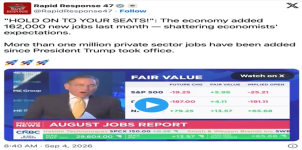
Happy Labor Day - 162 Thousand New Jobs Added in August!!!
ECONOMIST are getting it Wrong - because they DON'T understand how to factor in the REMOVAL of the DS's FAKE Jobs with the addition of REAL JOBS!!!
View attachment 295379
View attachment 295380
View attachment 295381
View attachment 295382
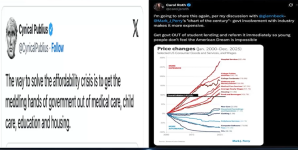
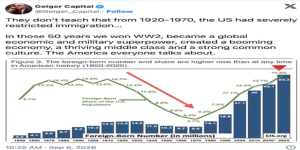
The DS Players have been Building their Corrupt System longer than we can imagine...
Iran's Currency is Destroyed and Oil Exports are Crashing!!!
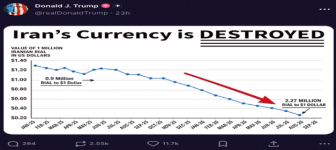
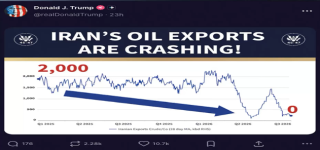
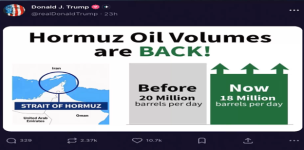

The amount of oil is no longer the issue. The amount of damage to refineries in Russia, Ukraine, Iran, Saudi Arabia and the Middle East is. With those refineries down for the next 18 months there is going to be a huge decrease in refined products available.Iran's Currency is Destroyed and Oil Exports are Crashing!!!
Hormuz Oil Volumes ARE BACK to 18 Million Barrels Transiting via ESCORTS PER DAY!!!
IRAN is NOT IN CONTROL!!!
The Iranian regime is PANICKING after Scott Bessent reveals they only have 30 million barrels of oil or less are left!!!
View attachment 295394
View attachment 295395
View attachment 295396
Iran's Currency is Destroyed and Oil Exports are Crashing!!!
Hormuz Oil Volumes ARE BACK to 18 Million Barrels Transiting via ESCORTS PER DAY!!!
IRAN is NOT IN CONTROL!!!
The Iranian regime is PANICKING after Scott Bessent reveals they only have 30 million barrels of oil or less are left!!!
View attachment 295394
View attachment 295395
View attachment 295396

Yep - they declared a new " restricted zone " outside the strait - is JUST PROPOGANDA ...iran has declared a new " restricted zone " outside the strait.
but, sure, their economy is failing, their solders are not getting paid, they can't export any oil..
just propaganda..

Iran's Currency is Destroyed and Oil Exports are Crashing!!!
Hormuz Oil Volumes ARE BACK to 18 Million Barrels Transiting via ESCORTS PER DAY!!!
IRAN is NOT IN CONTROL!!!
The Iranian regime is PANICKING after Scott Bessent reveals they only have 30 million barrels of oil or less are left!!!
View attachment 295394
View attachment 295395
View attachment 295396

Yes, you listen to one side and everything is roses and then you listen to a different poster and everything the other one said is lies listen to a third and their is deception, etc.it is not my lack of understanding of " irregular warfare".
it is my understanding of seeing what is happening and seeing what is being said and NOT happening.
lol, it's hilarious because you actually still believe that NOTHING IS HAPPENING!!!it is not my lack of understanding of " irregular warfare".
it is my understanding of seeing what is happening and seeing what is being said and NOT happening.
iran has declared a new " restricted zone " outside the strait.
but, sure, their economy is failing, their solders are not getting paid, they can't export any oil..
just propaganda..
Iran's Currency is Destroyed and Oil Exports are Crashing!!!
Hormuz Oil Volumes ARE BACK to 18 Million Barrels Transiting via ESCORTS PER DAY!!!
IRAN is NOT IN CONTROL!!!
The Iranian regime is PANICKING after Scott Bessent reveals they only have 30 million barrels of oil or less are left!!!
View attachment 295394
View attachment 295395
View attachment 295396