

AMA/FDA: Cancer
- Thread starter PoxEclipse
- Start date
-
Christian Chat is a moderated online Christian community allowing Christians around the world to fellowship with each other in real time chat via webcam, voice, and text, with the Christian Chat app. You can also start or participate in a Bible-based discussion here in the Christian Chat Forums, where members can also share with each other their own videos, pictures, or favorite Christian music.
If you are a Christian and need encouragement and fellowship, we're here for you! If you are not a Christian but interested in knowing more about Jesus our Lord, you're also welcome! Want to know what the Bible says, and how you can apply it to your life? Join us!
To make new Christian friends now around the world, click here to join Christian Chat.
You are using an out of date browser. It may not display this or other websites correctly.
You should upgrade or use an alternative browser.
You should upgrade or use an alternative browser.
[video=youtube;lGwkt1CWhhw]https://www.youtube.com/watch?v=lGwkt1CWhhw[/video]
Burzynski is the story of a medical doctor and Ph.D biochemist named Dr. Stanislaw Burzynski who won the largest and possibly the most convoluted and intriguing legal battle against the Food an Drug Administration in American history.
His victorious battles with the United States government were centered on Dr. Burzynski's belief in and commitment to his gene-targeted cancer medicines he discovered in the 1970′s called Antineoplastons, which have currently completed Phase II FDA-supervised clinical trials in 2009 and could begin the final phase of testing in 2011-barring the ability to raise the $25 million to fund the first one.
When Antineoplastons are approved, it will mark the first time in history a single scientist, not a pharmaceutical company, will hold the exclusive patent and distribution rights on a paradigm-shifting, life-saving medical breakthrough. Antineoplastons are responsible for curing some of the most incurable forms of terminal cancer. Various cancer survivors are presented in the film that chose his treatment instead of surgery, chemotherapy or radiation -- with full disclosure of original medical records to support their diagnosis and recovery.
One form of cancer -- diffuse, intrinsic, childhood brainstem glioma has never before been cured in any experimental clinical trial in the history of medicine. Antineoplastons hold the first cures in history -- dozens of them. Burzynski takes the audience through the treacherous, yet victorious, 14-year journey both Dr. Burzynski and his patients have had to endure in order to obtain FDA-approved clinical trials of Antineoplastons.
However, what was revealed a few years after Dr. Burzynski won his freedom, helps to paint a more coherent picture regarding the true motivation of the U.S. government's relentless prosecution of Stanislaw Burzysnki.
Burzynski is the story of a medical doctor and Ph.D biochemist named Dr. Stanislaw Burzynski who won the largest and possibly the most convoluted and intriguing legal battle against the Food an Drug Administration in American history.
His victorious battles with the United States government were centered on Dr. Burzynski's belief in and commitment to his gene-targeted cancer medicines he discovered in the 1970′s called Antineoplastons, which have currently completed Phase II FDA-supervised clinical trials in 2009 and could begin the final phase of testing in 2011-barring the ability to raise the $25 million to fund the first one.
When Antineoplastons are approved, it will mark the first time in history a single scientist, not a pharmaceutical company, will hold the exclusive patent and distribution rights on a paradigm-shifting, life-saving medical breakthrough. Antineoplastons are responsible for curing some of the most incurable forms of terminal cancer. Various cancer survivors are presented in the film that chose his treatment instead of surgery, chemotherapy or radiation -- with full disclosure of original medical records to support their diagnosis and recovery.
One form of cancer -- diffuse, intrinsic, childhood brainstem glioma has never before been cured in any experimental clinical trial in the history of medicine. Antineoplastons hold the first cures in history -- dozens of them. Burzynski takes the audience through the treacherous, yet victorious, 14-year journey both Dr. Burzynski and his patients have had to endure in order to obtain FDA-approved clinical trials of Antineoplastons.
However, what was revealed a few years after Dr. Burzynski won his freedom, helps to paint a more coherent picture regarding the true motivation of the U.S. government's relentless prosecution of Stanislaw Burzysnki.

The AMA and FDA have a cure for cancer. They dont want us to know that, though, because if we relied on God and natural cures (in that order) to heal us, then there would be no need for doctors, or pills, or appointments, etc, etc. TRUE healing comes from God, not a phony manufactured pill, nor a phony, misleading doctor either. It's all about the money. Innocent people die for the billions of dollars the pharmaceutical industry brings in each day.

A
AgeofKnowledge
Guest
Modern medicine is a BENEFIT to humanity. So is biblical supernatural healing when you can obtain it. The truth is that the natural and the supernatural go together. It's not one or the other but both together for the benefit of humanity.
Simple Cancer Cure w/Baking Soda by Dr. Simoncini Oncologist Discovers - Sodium Bicarbonate.wmv - YouTube
Dr simoncini an Italian Oncologist found that cancer is fungus. He treat the patient with the sodium bicarbonate
after I read some or the expert, what I understand is a fungus not going to survive in the high concentrate of oxygen.
the blood will absorb oxygen if the pH is higher.
Sodium bicarbonate push the pH up but to high is not to good because it will not absorb mineral to the system.
So vegetable, or what ever food with high pH is good for cancer.
Chemo is acid. It cure too because fungus also die in extreme low acid.
Fungus die in low pH and high pH.
Chemo is very profitable industry, that why a big people who make big money didn't want a cheap cure take over his profit.
Dr simoncini an Italian Oncologist found that cancer is fungus. He treat the patient with the sodium bicarbonate
after I read some or the expert, what I understand is a fungus not going to survive in the high concentrate of oxygen.
the blood will absorb oxygen if the pH is higher.
Sodium bicarbonate push the pH up but to high is not to good because it will not absorb mineral to the system.
So vegetable, or what ever food with high pH is good for cancer.
Chemo is acid. It cure too because fungus also die in extreme low acid.
Fungus die in low pH and high pH.
Chemo is very profitable industry, that why a big people who make big money didn't want a cheap cure take over his profit.
A
AgeofKnowledge
Guest
Yet the National Cancer Institute says there is no evidence that Burzynski has cured a single patient, or even helped one live longer. He has not backed up his claims by publishing results from a randomized, controlled trial — considered the gold standard of medical evidence — in a respected, peer-reviewed journal.
And Burzynski's drugs pose a risk of serious harm, including coma, swelling near the brain and death, according to the NCI and informed consent documents that patients sign before beginning treatment. While Burzynski has touted his treatments as an alternative to chemotherapy, a 1999 NCI study found that antineoplastons can cause many of the same side effects as conventional chemo: nausea, vomiting, headaches, muscle pain, confusion and seizures.
Many blame the system for failing to protect patients.
"He's a snake oil salesman," says pediatric oncologist Peter Adamson, a professor of pediatrics and pharmacology at Children's Hospital of Philadelphia. "This has gone on for so many years, it's really unbelievable."
For 36 years, critics say, Burzynski has been selling false hope to desperate families at the most vulnerable time of their lives.
Doctor accused of selling false hope to families
"Conclusion: There is no evidence that the cancer of any of the patients presented in the movie was cured or even improved with antineoplaston therapy, and based on Burzynski’s “evidence” it seems only fair that some are trying to put him out of business."
Burzynski The Movie: Does It Prove The Efficacy of Antineoplastons Against Cancer? | Anaximperator blog

And Burzynski's drugs pose a risk of serious harm, including coma, swelling near the brain and death, according to the NCI and informed consent documents that patients sign before beginning treatment. While Burzynski has touted his treatments as an alternative to chemotherapy, a 1999 NCI study found that antineoplastons can cause many of the same side effects as conventional chemo: nausea, vomiting, headaches, muscle pain, confusion and seizures.
Many blame the system for failing to protect patients.
"He's a snake oil salesman," says pediatric oncologist Peter Adamson, a professor of pediatrics and pharmacology at Children's Hospital of Philadelphia. "This has gone on for so many years, it's really unbelievable."
For 36 years, critics say, Burzynski has been selling false hope to desperate families at the most vulnerable time of their lives.
Doctor accused of selling false hope to families
"Conclusion: There is no evidence that the cancer of any of the patients presented in the movie was cured or even improved with antineoplaston therapy, and based on Burzynski’s “evidence” it seems only fair that some are trying to put him out of business."
Burzynski The Movie: Does It Prove The Efficacy of Antineoplastons Against Cancer? | Anaximperator blog
A
AgeofKnowledge
Guest
A Critical Look at Gary Null's Activities and Credentials:
A Critical Look at Gary Null's Activities and Credentials
Encyclopedia of American Loons: #302: Gary Null
"In 2010 Null nearly died from overdosing on Vitamin D through eating his own branded “Ultimate Power Meal” twice a day. This shows that he’s not merely a fraud but actually believes his own claims, I guess. His response was to sue the company making it for him for making it exactly in accordance with his recommendations. Apparently six other people were hospitalized as well. At least Null assures us that “all his other products are fine".
Diagnosis: One of the most dangerous people alive, Null is actually taken seriously by millions of people; he has the potential of doing real harm to the world and has in fact already done so."
A Critical Look at Gary Null's Activities and Credentials
Encyclopedia of American Loons: #302: Gary Null
"In 2010 Null nearly died from overdosing on Vitamin D through eating his own branded “Ultimate Power Meal” twice a day. This shows that he’s not merely a fraud but actually believes his own claims, I guess. His response was to sue the company making it for him for making it exactly in accordance with his recommendations. Apparently six other people were hospitalized as well. At least Null assures us that “all his other products are fine".
Diagnosis: One of the most dangerous people alive, Null is actually taken seriously by millions of people; he has the potential of doing real harm to the world and has in fact already done so."
[video=youtube;h0CQrL5nzwo]https://www.youtube.com/watch?v=h0CQrL5nzwo[/video]
twice Nobel price winner said fermentation of sugar is prime cause of cancer.
Fermentation done by fungus, so Dr Warburg inline with Dr Simoncini.
[h=3]Nobel Peace Prize Winner Dr Otto Heinrich Warburg: The ...[/h]michael2108.wordpress.com/.../nobel-peace-prize-winner-dr-otto-heinric...
Two-time Nobel Peace Prize Winner Dr Otto Heinrich Warburg Links The Fermentation of Sugar As The Prime Cause Of Cancer
 Dr Otto Heinrich Warburg In Berlin Labratory
Dr Otto Heinrich Warburgfrom a lecture delivered by Otto personally at the 1966 annual meeting of Nobelists at Lindau, Germany:
“…nobody today can say that one does not know what cancer and its prime cause [may] be. On the contrary, there is no disease whose prime cause is better known, so that today ignorance is no longer an excuse that one cannot do more about prevention.”
Fermentation done by fungus, so Dr Warburg inline with Dr Simoncini.
[h=3]Nobel Peace Prize Winner Dr Otto Heinrich Warburg: The ...[/h]michael2108.wordpress.com/.../nobel-peace-prize-winner-dr-otto-heinric...
Two-time Nobel Peace Prize Winner Dr Otto Heinrich Warburg Links The Fermentation of Sugar As The Prime Cause Of Cancer
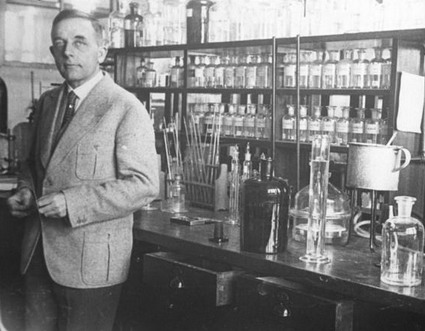 Dr Otto Heinrich Warburg In Berlin Labratory
“…nobody today can say that one does not know what cancer and its prime cause [may] be. On the contrary, there is no disease whose prime cause is better known, so that today ignorance is no longer an excuse that one cannot do more about prevention.”
A
AgeofKnowledge
Guest
Now that is a different story. The Warburg Hypothesis Warburg hypothesis - Wikipedia, the free encyclopedia
"Warburg articulated his hypothesis in a paper entitled The Prime Cause and Prevention of Cancer which he presented in lecture at the meeting of the Nobel-Laureates on June 30, 1966 at Lindau, Lake Constance, Germany. In this speech, Warburg presented additional evidence supporting his theory that the elevated anaerobiosis seen in cancer cells was a consequence of damaged or insufficient respiration. Put in his own words, "the prime cause of cancer is the replacement of the respiration of oxygen in normal body cells by a fermentation of sugar."[SUP][7]
[/SUP]
In recent years, Warburg's hypothesis has re-gained attention due to several discoveries linking impaired mitochondrial function as well as impaired respiration to the growth, division and expansion of tumor cells. In a study by Michael Ristow and co-workers, colon cancer lines were modified to overexpress frataxin. The results of their work suggest that an increase in oxidative metabolism induced by mitochondrial frataxin may inhibit cancer growth in mammals.[SUP][8][/SUP]
Subsequent work has shown that the Warburg effect, indeed, might lead to a promising approach in the treatment of solid tumors. The chemical dichloroacetic acid (DCA), which promotes respiration and the activity of mitochondria, has been shown to kill cancer cells in vitro and in some animal models.[SUP][9][/SUP] The body often kills damaged cells by apoptosis, a mechanism of self-destruction that involves mitochondria, but this mechanism fails in cancer cells where the mitochondria are shut down. The reactivation of mitochondria in cancer cells restarts their apoptosis program.[SUP][10][/SUP] Besides promising human research at the Department of Medicine, University of Alberta led by Dr Evangelos Michelakis, other glycotic inhibitors besides DCA that hold promise include 3-BrOP being researched at The University of Texas M. D. Anderson Cancer Center, 2-deoxyglucose (2-DG) at Emory University School of Medicine, and lactate dehydrogenase A [SUP][11][/SUP] at Johns Hopkins University."
"Warburg articulated his hypothesis in a paper entitled The Prime Cause and Prevention of Cancer which he presented in lecture at the meeting of the Nobel-Laureates on June 30, 1966 at Lindau, Lake Constance, Germany. In this speech, Warburg presented additional evidence supporting his theory that the elevated anaerobiosis seen in cancer cells was a consequence of damaged or insufficient respiration. Put in his own words, "the prime cause of cancer is the replacement of the respiration of oxygen in normal body cells by a fermentation of sugar."[SUP][7]
[/SUP]
In recent years, Warburg's hypothesis has re-gained attention due to several discoveries linking impaired mitochondrial function as well as impaired respiration to the growth, division and expansion of tumor cells. In a study by Michael Ristow and co-workers, colon cancer lines were modified to overexpress frataxin. The results of their work suggest that an increase in oxidative metabolism induced by mitochondrial frataxin may inhibit cancer growth in mammals.[SUP][8][/SUP]
Subsequent work has shown that the Warburg effect, indeed, might lead to a promising approach in the treatment of solid tumors. The chemical dichloroacetic acid (DCA), which promotes respiration and the activity of mitochondria, has been shown to kill cancer cells in vitro and in some animal models.[SUP][9][/SUP] The body often kills damaged cells by apoptosis, a mechanism of self-destruction that involves mitochondria, but this mechanism fails in cancer cells where the mitochondria are shut down. The reactivation of mitochondria in cancer cells restarts their apoptosis program.[SUP][10][/SUP] Besides promising human research at the Department of Medicine, University of Alberta led by Dr Evangelos Michelakis, other glycotic inhibitors besides DCA that hold promise include 3-BrOP being researched at The University of Texas M. D. Anderson Cancer Center, 2-deoxyglucose (2-DG) at Emory University School of Medicine, and lactate dehydrogenase A [SUP][11][/SUP] at Johns Hopkins University."
Modern medicine is a BENEFIT to humanity. So is biblical supernatural healing when you can obtain it. The truth is that the natural and the supernatural go together. It's not one or the other but both together for the benefit of humanity.
I trusted in Jesus and God to cure my cancer.
 I refused to do chemo or rads (if I had to). Turns out I did'nt need to (and would not have anyway) because the doctors got it all when they did my hysterectomy. Personally, I dont understand doing chemo/rads, I mean why make myself SICKER to make myself BETTER? It doesn't make sense to me, and that is why I choose to not do chemo if my cancer ever returns. This is just my own personal opinion--I am NOT saying that nobody should do chemo! It's each person's personal choice.