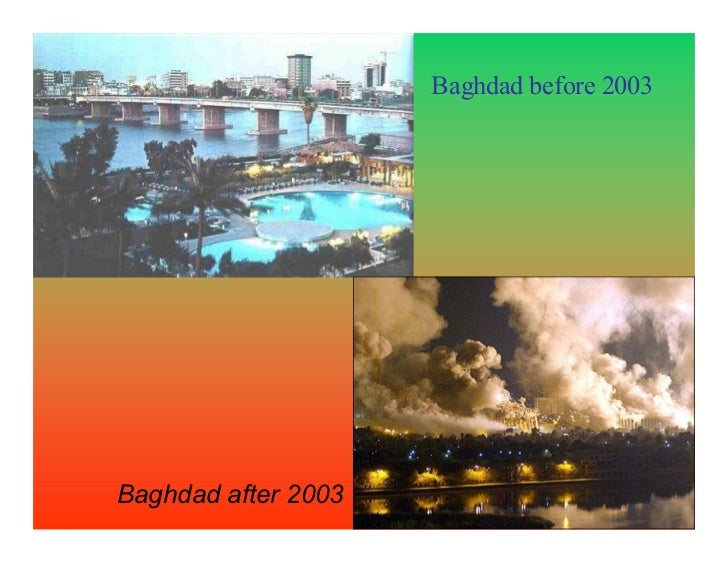
Studies show almost half of Iraq's population in areas around where the United States and Britain dropped some 300 tons of depleted uranium will get cancer. These crimes await prosecution. But who will demand it?, asks Pilger.
From Iraq, a Tragic Reminder to Prosecute the War Criminals
'Depleted' uranium is in many ways a misnomer. 'Depleted' sounds weak. The only weak thing about depleted uranium is its price. It is dirt cheap, toxic, waste from nuclear power plants and bomb production.
Doctors in Iraq have estimated that birth defects have increased by 2-6 times, and 3-12 times as many children have developed cancer and leukemia since 1991. Moreover, a report published in The Lancet in 1998 said that as many as 500 children a day are dying from these sequels to war and sanctions and that the death rate for Iraqi children under 5 years of age increased from 23 per 1000 in 1989 to 166 per thousand in 1993. Overall, cases of lymphoblastic leukemia more than quadrupled with other cancers also increasing 'at an alarming rate.' In men, lung, bladder, bronchus, skin, and stomach cancers showed the highest increase. In women, the highest increases were in breast and bladder cancer, and non-Hodgkin lymphoma.
The Lancet volume 351, issue 9103, 28 February 1998.
From Iraq, a Tragic Reminder to Prosecute the War Criminals
'Depleted' uranium is in many ways a misnomer. 'Depleted' sounds weak. The only weak thing about depleted uranium is its price. It is dirt cheap, toxic, waste from nuclear power plants and bomb production.
Doctors in Iraq have estimated that birth defects have increased by 2-6 times, and 3-12 times as many children have developed cancer and leukemia since 1991. Moreover, a report published in The Lancet in 1998 said that as many as 500 children a day are dying from these sequels to war and sanctions and that the death rate for Iraqi children under 5 years of age increased from 23 per 1000 in 1989 to 166 per thousand in 1993. Overall, cases of lymphoblastic leukemia more than quadrupled with other cancers also increasing 'at an alarming rate.' In men, lung, bladder, bronchus, skin, and stomach cancers showed the highest increase. In women, the highest increases were in breast and bladder cancer, and non-Hodgkin lymphoma.
The Lancet volume 351, issue 9103, 28 February 1998.