Logic vs The Bible

  • Christian Chat is a moderated online Christian community allowing Christians around the world to fellowship with each other in real time chat via webcam, voice, and text, with the Christian Chat app. You can also start or participate in a Bible-based discussion here in the Christian Chat Forums, where members can also share with each other their own videos, pictures, or favorite Christian music.

    If you are a Christian and need encouragement and fellowship, we're here for you! If you are not a Christian but interested in knowing more about Jesus our Lord, you're also welcome! Want to know what the Bible says, and how you can apply it to your life? Join us!

    To make new Christian friends now around the world, click here to join Christian Chat.
What you are suggesting, whether you realize it or not, is that scripture is somehow subject to man's use of logic and reason in order to derive meaning from the text. This is not how scripture engages the human mind.

Please explain.

 
Because though it contains the word of God, it was scribed through human minds. People should always be skeptical of other people. One should never consider another persons testimony over their own without first being skeptical or they are suseptable to being deceived. One should be skeptical of their own thoughts as well, but more skeptical of the thoughts of others.
 
Because though it contains the word of God, it was scribed through human minds. People should always be skeptical of other people. One should never consider another persons testimony over their own without first being skeptical or they are suseptable to being deceived. One should be skeptical of their own thoughts as well, but more skeptical of the thoughts of others.

Do you believe scripture suffers from inadequacies because of the human element?
 
Because of divine influence. These men are recording what God directed them to write, not their understanding or interpretation of what God gave them.

Aside the Bible saying so. Why should I believe that?

Sorry for the third degree, but I'm curious.
 
Aside the Bible saying so. Why should I believe that?

Well, understanding this is going to be exclusively determined by what scripture has to say about itself. It would seem that you have not yet full addressed this issue. If you do not believe that scripture is exclusively a divine document, what possible value could it have? If some of it is unreliable, what confidence can we place in any of it? Do you understand how the principle of punctuated logic applies to the reading of scripture?
 
Aside the Bible saying so. Why should I believe that?

Sorry for the third degree, but I'm curious.

The Holy Spirit also testifies of it being true, However only those who are saved in Christ have this inner witness.

I remember in 8th grade a student picked up a Bible in my science's class bookshelf and saw something written in Indian (I guess that is the language) my teacher was from India and was asked to read it and in her thick accent and monotone voice, I heard the most powerful rendition of John 3:16 that I have ever heard. The Holy Spirit testified of its truth and power to me and they were not simply words, but life.

How I wish you could see the life that the Holy Spirit gives through Scripture!
 
yeah its awesome only a few know how it feels to be truly saved!!!!
 
Aside the Bible saying so. Why should I believe that?

Sorry for the third degree, but I'm curious.

If it's anything other than completely true, then God can be made into whatever anyone wants Him to be.....which makes for a pretty puny God. Wouldn't you say?
 
Sure, but that would be a subjective opinion not an objective opinion. Everything God does is objective in nature not subjective so your analogy is moot.

Are you using human finite reasoning which has boundaries to try and understand our infinite creator who has no boundaries?
We are told not to rely upon our own understanding
That even Gods foolishness (as if there were any other than ones own skewed perception) far outweighs the knowledge of any man. The created is not smarter than the creator.
This is the reason one must be born again, undergo a renewing of the mind through Gods word and understanding from his holy spirit.
This is perhaps why you are found wanting.
By the definition of subjective I believe your logic is off which is one reason one is not to use human logic to try and understand God.
Subjective:
1. belonging to, proceeding from, or relating to the mind of the thinking subject and not the nature of the object being considered
Everything is subject to God and his will which proceeded from his own thoughts.
God is not subject to the nature of the created objects.

Objective:
not influenced by personal feelings, interpretations, or prejudice; based on facts; unbiased: an objective opinion.

God does not change due to our influence. he is the same yesterday today and forever and therefore is not Objective to his own will by the created objects which subjectively proceeded from his thoughts.


God knew they would eat it... It was his intention or it wouldn't have happened. Or God is imperfect.

Actually it's more like when you tell a kid not to cross the street because they might get hit by a car.
And you know there's the possibility they could disobey and seek their own will and do it anyway.
But you put trust in them that they will listen to you who knows better for them and do the right thing by following your instructions.
If God is the creator and designer, his instructions are to be followed and obeyed.
Never once does God suggest to learn by making a mistake.
Instead he warns that there are adverse consequences for choosing to make mistakes by not listening to his instruction.

Seek God and his instruction, let him renew your mind, you cannot teach yourself.
 
Last edited:
Well, understanding this is going to be exclusively determined by what scripture has to say about itself. It would seem that you have not yet full addressed this issue. If you do not believe that scripture is exclusively a divine document, what possible value could it have? If some of it is unreliable, what confidence can we place in any of it? Do you understand how the principle of punctuated logic applies to the reading of scripture?

Hi Oldhermit, liking your input here and what you're saying.
Do you mind if I ask for myself as well by 'punctuated logic' do you mean:

It doesn't have to make sense...it's just the way it is.
 
Hi Oldhermit, liking your input here and what you're saying.
Do you mind if I ask for myself as well by 'punctuated logic' do you mean:

It doesn't have to make sense...it's just the way it is.

There are the three rules of punctuated logic. This is my explanation of the three rules of punctuated logic as thy apply to the reading of scripture

Rule One: The Non commutation Rule

Something that is non-commutative is directionally confined or fixed. This rule, as it applies to punctuated logic, describes the directional flow that logic takes from the invisible to the visible. Revelation moves unidirectionally. It begins in the mind of God and terminates in the world of man. Commutative interpretation of revelation on the other hand, operates according to human intelligence. Man's appraisal of material circumstances gives definition to what human experience has to say about the Word of God. We attempt to create a synthesis between what we know of our natural experiences and what the scripture says about these things. Frankly, this will never do. The problem is that our experiences do not tell us the truth about divine revelation. If we are to have a true understanding of reality, we must never start with anything in the temporal dimension whether it is the self, human intelligence, or situations. Because of the limitations of human intelligence, the threshold of the eternal cannot be breeched from the temporal side. Consequently, we must rely upon God to reach beyond the eternal horizon to project His will onto our consciousness. This he does through the revelation of scripture. Since we cannot know the mind of God by empirical observation of anything in the material world, we must seek exposure to the intelligence of God from beyond the eternal threshold. We can only know the thoughts of God when they are made known to us by God Himself. This He does through a system of representations in the form of a revealed grammar - the Bible.

In order for the revelation of God to impact the mind of man, it must be first be converted into a set of symbols on the temporal side. This is given form in at least two ways to communicate the will of God to the human mind. The linguistic form of eternal logic is scripture. The anthropomorphic form of eternal logic is Jesus in the flesh. Since the nature of scripture is non-commutative upon the human mind, we must start with the grammatical structure of the revelation if we are to have a true picture of reality. This means that we must bring the intelligence of man into a subordinate position to the will of God. Human conformity to this non commutative logic then shapes and transforms human psychology and behavior. This produces change in the way one thinks, speaks, and behaves. The Word of God allows us to see things in our experience in ways that we could never have otherwise seen.

Rule Two: The Textual Phenomena Rule.

The text of scripture presents itself as pan temporal phenomena. Scripture is not subject to temporal or cultural considerations. It is not confined to a specific historical or cultural frame of reference. Thus, we would say that scripture is generationally equidistant to both time and cultural. This being true, we must always allow the generalizations of the text of scripture to come to bear upon the human experience of all generations and cultures.

Rule Three: The Spanning Rule.

The scientific world would have us believe that reality is confined only to those things that lend themselves to empirical observation. Scripture, on the other hand, would invite us to see reality from quite a different perspective. To understand the nature of the relationship between the eternal and the temporal we must understand that reality is triadic in structure. There is the invisible and eternal side of reality represented by God, the visible side of reality represented in Jesus, and the indexical agent of the Holy Spirit who links the two parts of reality into a singularity.

What this model shows us is that reality begins in the eternal mind of God. The will of God is then imprinted onto the material reality in the person of Jesus and the Holy Spirit links the will of God to the observable, temporal side of reality and brings the causal to bear upon the visible. This brings things in the natural world into conformity with the abstract will of God. Man's part in reality will always is accidental to the will of God because God will bring about His will even without our participation or involvement. Man's only authorized position in this picture of reality is to stand in the index position and to link the eternal reality to his experiences on the material side.
 

There are the three rules of punctuated logic. This is my explanation of the three rules of punctuated logic as thy apply to the reading of scripture

Rule One: The Non commutation Rule

Something that is non-commutative is directionally confined or fixed. This rule, as it applies to punctuated logic, describes the directional flow that logic takes from the invisible to the visible. Revelation moves unidirectionally. It begins in the mind of God and terminates in the world of man. Commutative interpretation of revelation on the other hand, operates according to human intelligence. Man's appraisal of material circumstances gives definition to what human experience has to say about the Word of God. We attempt to create a synthesis between what we know of our natural experiences and what the scripture says about these things. Frankly, this will never do. The problem is that our experiences do not tell us the truth about divine revelation. If we are to have a true understanding of reality, we must never start with anything in the temporal dimension whether it is the self, human intelligence, or situations. Because of the limitations of human intelligence, the threshold of the eternal cannot be breeched from the temporal side. Consequently, we must rely upon God to reach beyond the eternal horizon to project His will onto our consciousness. This he does through the revelation of scripture. Since we cannot know the mind of God by empirical observation of anything in the material world, we must seek exposure to the intelligence of God from beyond the eternal threshold. We can only know the thoughts of God when they are made known to us by God Himself. This He does through a system of representations in the form of a revealed grammar - the Bible.

In order for the revelation of God to impact the mind of man, it must be first be converted into a set of symbols on the temporal side. This is given form in at least two ways to communicate the will of God to the human mind. The linguistic form of eternal logic is scripture. The anthropomorphic form of eternal logic is Jesus in the flesh. Since the nature of scripture is non-commutative upon the human mind, we must start with the grammatical structure of the revelation if we are to have a true picture of reality. This means that we must bring the intelligence of man into a subordinate position to the will of God. Human conformity to this non commutative logic then shapes and transforms human psychology and behavior. This produces change in the way one thinks, speaks, and behaves. The Word of God allows us to see things in our experience in ways that we could never have otherwise seen.

Rule Two: The Textual Phenomena Rule.

The text of scripture presents itself as pan temporal phenomena. Scripture is not subject to temporal or cultural considerations. It is not confined to a specific historical or cultural frame of reference. Thus, we would say that scripture is generationally equidistant to both time and cultural. This being true, we must always allow the generalizations of the text of scripture to come to bear upon the human experience of all generations and cultures.

Rule Three: The Spanning Rule.

The scientific world would have us believe that reality is confined only to those things that lend themselves to empirical observation. Scripture, on the other hand, would invite us to see reality from quite a different perspective. To understand the nature of the relationship between the eternal and the temporal we must understand that reality is triadic in structure. There is the invisible and eternal side of reality represented by God, the visible side of reality represented in Jesus, and the indexical agent of the Holy Spirit who links the two parts of reality into a singularity.

What this model shows us is that reality begins in the eternal mind of God. The will of God is then imprinted onto the material reality in the person of Jesus and the Holy Spirit links the will of God to the observable, temporal side of reality and brings the causal to bear upon the visible. This brings things in the natural world into conformity with the abstract will of God. Man's part in reality will always is accidental to the will of God because God will bring about His will even without our participation or involvement. Man's only authorized position in this picture of reality is to stand in the index position and to link the eternal reality to his experiences on the material side.

Someone told me these three rules (broadly similar ones, maybe?):

Before doing something, you need to figure three things:

1) Where are you going?

2) How will you get there?

3) How will you know when you have arrived?

Blessings.
 
Someone told me these three rules (broadly similar ones, maybe?):

Before doing something, you need to figure three things:

1) Where are you going?

2) How will you get there?

3) How will you know when you have arrived?

Blessings.
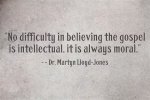
What relevance would these three questions have in the reading of scripture?