I have been reading over some radio-dating stuff the past few days. It seems to me a big flaw I am seeing over and over again is that those that have blind faith in radio-dating hold the notion that certain particles have decay rates that are extremely long and that the decay process is constant. Yet the study of radioactivity itself is only slightly over 100 years old. Note even the arbitrary guesses in some literature and artwork that certain particles have decay rates in the thousands of years. Yet no one in truth could possibly know such for certainty unless it was observed and tested for thousands of years.
This idea that radioactive elements might have had different decay rates in the past is a common mistake made by young earth creationists (encouraged by false statements made by professional huskers like Ken Ham).
There are five scientific facts to disprove it, and one biblical.
The biblical counter argument is that we are taught by the Bible that God is trustworthy; we are taught that the physical creation is a testament to God (eg.
Psalm 19, Psalm 85, Job 12); we are taught that God will not lie (eg. James 1:13). For the decay constants of the universe to be arbitrarily changed, and in a way that hides the true nature of the universe would be a perversion of the biblical message. God is neither arbitrary, nor inconstant and neither can the universe be.
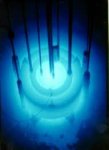
The first three scientific arguments are even easier to understand. The first is that radioactive decay rates are determined directly in two easy ways. The first is to take a very carefully measured amount of an pure sample of an element, put it somewhere safe and periodically measure the released radiation. This is the way that our creationist friend has suggested as the only possibility. He is wrong in two ways. The first is that by starting with a large amount of the isotope, we can directly measure the change measured radioactivity in a short amount of time. The second error is that there are isotopes that have very short half-lifes and yield a lot of energy rapidly. The physics of radioactivity are identical for short and long half-life elements. So an easy method is to make a radioactive isotope and measure its decay until the activity has entirely dissipated. I have personally done this many hundreds of times. Here is a photo of the nuclear reactor, a General Atomics TRIGA Mark IV, that I used. The blue glow is the light emitted at critical called Cherenkov radiation. I earned my radioisotope producer license before I could vote.
View attachment 92114
The third conclusive piece of evidence is that we can measure the concentrations of isotopes that can only be caused by radioactive decay. At the same time, we find that radioactive isotopes that produced these decay products are totally missing. For a list of these "missing isotopes," see;
Dalrymple, G. Brent
2005 “Ancient Earth, Ancient Skies: The age of the earth and its cosmic surroundings” Berkley: University of California Press
The fourth is that physical events have consequences. Simply put, for the radioactive decay to have been so fast that a young earth could be measured to be 4.5 billion years old, the heat generated would have melted the Earth into a glowing ball of gas. We have measured how long it took to cool down from that state to when the Earth had liquid water. That took 300 million years.
The fifth is the measurement of the speed of light, and the Fine Structure Constant, Alpha. This is a little bit complicated so I'll give a link to a short item I wrote on it a few years ago.
Stones and Bones: Are Constants Constant?