
I want to understand the Catholic faith so....
- Thread starter Blain
- Start date
-
Christian Chat is a moderated online Christian community allowing Christians around the world to fellowship with each other in real time chat via webcam, voice, and text, with the Christian Chat app. You can also start or participate in a Bible-based discussion here in the Christian Chat Forums, where members can also share with each other their own videos, pictures, or favorite Christian music.
If you are a Christian and need encouragement and fellowship, we're here for you! If you are not a Christian but interested in knowing more about Jesus our Lord, you're also welcome! Want to know what the Bible says, and how you can apply it to your life? Join us!
To make new Christian friends now around the world, click here to join Christian Chat.
You are using an out of date browser. It may not display this or other websites correctly.
You should upgrade or use an alternative browser.
You should upgrade or use an alternative browser.
- Status
- Not open for further replies.
Dr. Scott Hahn Explains the Mass
Scott received his Bachelor of Arts degree with a triple-major in Theology, Philosophy and Economics from Grove City College, Pennsylvania, in 1979, his Masters of Divinity from Gordon-Conwell Theological Seminary in 1982, and his Ph.D. in Biblical Theology from Marquette University in 1995. Scott has ten years of youth and pastoral ministry experience in Protestant congregations (in Pennsylvania, Ohio, Massachusetts, Kansas and Virginia) and is a former Professor of Theology at Chesapeake Theological Seminary. He was ordained in 1982 at Trinity Presbyterian Church in Fairfax, Virginia. He entered the Catholic Church at the Easter Vigil, 1986. more here
[video=youtube;0uL_IAJWvX0]https://www.youtube.com/watch?v=0uL_IAJWvX0[/video]
Scott received his Bachelor of Arts degree with a triple-major in Theology, Philosophy and Economics from Grove City College, Pennsylvania, in 1979, his Masters of Divinity from Gordon-Conwell Theological Seminary in 1982, and his Ph.D. in Biblical Theology from Marquette University in 1995. Scott has ten years of youth and pastoral ministry experience in Protestant congregations (in Pennsylvania, Ohio, Massachusetts, Kansas and Virginia) and is a former Professor of Theology at Chesapeake Theological Seminary. He was ordained in 1982 at Trinity Presbyterian Church in Fairfax, Virginia. He entered the Catholic Church at the Easter Vigil, 1986. more here
[video=youtube;0uL_IAJWvX0]https://www.youtube.com/watch?v=0uL_IAJWvX0[/video]
It does not matter how many degree's a person has if they reject what God says.
Its not the number of degree's or the kinds of degree's that counts. What matters is has that person received Jesus as his Lord and Savior and has that person received the Indwelling of the Holy Spirit.
Matthew 7:15-20
[SUP]15 [/SUP]"Beware of false prophets, who come to you in sheep's clothing, but inwardly they are ravenous wolves.
[SUP]16 [/SUP] You will know them by their fruits. Do men gather grapes from thornbushes or figs from thistles?
[SUP]17 [/SUP] Even so, every good tree bears good fruit, but a bad tree bears bad fruit.
[SUP]18 [/SUP] A good tree cannot bear bad fruit, nor can a bad tree bear good fruit.
[SUP]19 [/SUP] Every tree that does not bear good fruit is cut down and thrown into the fire.
[SUP]20 [/SUP] Therefore by their fruits you will know them.
Matthew 7:21-23
[SUP]21 [/SUP] "Not everyone who says to Me, 'Lord, Lord,' shall enter the kingdom of heaven, but he who does the will of My Father in heaven.
[SUP]22 [/SUP] Many will say to Me in that day, 'Lord, Lord, have we not prophesied in Your name, cast out demons in Your name, and done many wonders in Your name?'
[SUP]23 [/SUP] And then I will declare to them, 'I never knew you; depart from Me, you who practice lawlessness!'
2 Corinthians 11:13
[SUP]13 [/SUP] For such are false apostles, deceitful workers, transforming themselves into apostles of Christ.
2 Peter 2:1
[SUP]1 [/SUP] But there were also false prophets among the people, even as there will be false teachers among you, who will secretly bring in destructive heresies, even denying the Lord who bought them, and bring on themselves swift destruction.
1 John 4:1
[SUP]1 [/SUP] Beloved, do not believe every spirit, but test the spirits, whether they are of God; because many false prophets have gone out into the world.
Just because a person has a ton of degrees means nothing if that person is a False prophet or a False teacher!
We can tell who is a false teacher and who is a false prophet. Every person who teaches Mary was born without sin IS a False teacher. Everyone who teaches Mary is our Mediator IS a false teacher and a False Prophet.
These people have never received Salvation nor the Indwelling of the Holy Spirit. These people are the Tares in our Churches. These are the one's who will never enter into Heaven with us.
Its not the number of degree's or the kinds of degree's that counts. What matters is has that person received Jesus as his Lord and Savior and has that person received the Indwelling of the Holy Spirit.
Matthew 7:15-20
[SUP]15 [/SUP]"Beware of false prophets, who come to you in sheep's clothing, but inwardly they are ravenous wolves.
[SUP]16 [/SUP] You will know them by their fruits. Do men gather grapes from thornbushes or figs from thistles?
[SUP]17 [/SUP] Even so, every good tree bears good fruit, but a bad tree bears bad fruit.
[SUP]18 [/SUP] A good tree cannot bear bad fruit, nor can a bad tree bear good fruit.
[SUP]19 [/SUP] Every tree that does not bear good fruit is cut down and thrown into the fire.
[SUP]20 [/SUP] Therefore by their fruits you will know them.
Matthew 7:21-23
[SUP]21 [/SUP] "Not everyone who says to Me, 'Lord, Lord,' shall enter the kingdom of heaven, but he who does the will of My Father in heaven.
[SUP]22 [/SUP] Many will say to Me in that day, 'Lord, Lord, have we not prophesied in Your name, cast out demons in Your name, and done many wonders in Your name?'
[SUP]23 [/SUP] And then I will declare to them, 'I never knew you; depart from Me, you who practice lawlessness!'
2 Corinthians 11:13
[SUP]13 [/SUP] For such are false apostles, deceitful workers, transforming themselves into apostles of Christ.
2 Peter 2:1
[SUP]1 [/SUP] But there were also false prophets among the people, even as there will be false teachers among you, who will secretly bring in destructive heresies, even denying the Lord who bought them, and bring on themselves swift destruction.
1 John 4:1
[SUP]1 [/SUP] Beloved, do not believe every spirit, but test the spirits, whether they are of God; because many false prophets have gone out into the world.
Just because a person has a ton of degrees means nothing if that person is a False prophet or a False teacher!
We can tell who is a false teacher and who is a false prophet. Every person who teaches Mary was born without sin IS a False teacher. Everyone who teaches Mary is our Mediator IS a false teacher and a False Prophet.
These people have never received Salvation nor the Indwelling of the Holy Spirit. These people are the Tares in our Churches. These are the one's who will never enter into Heaven with us.
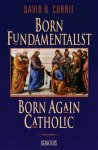
David Currie was raised in a devout Christian family whose father was a fundamentalist preacher and both parents teachers at Moody Bible Institute. Currie's whole upbringing was immersed in the life of fundamentalist Protestantism - theology professors, seminary presidents and founders of evangelical mission agencies were frequent guests at his family dinner table. Currie received a degree from Trinity International University and studied in the Masters of Divinity program.
This book was written as an explanation to his fundamentalist and evangelical friends and family about why he became a Roman Catholic. Currie presents a very lucid, systematic and intelligible account of the reasons for his conversion to the ancient Church that Christ founded. He gives a detailed discussion of the important theological and doctrinal beliefs Catholic and evangelicals hold in common, as well as the key doctrines that separate us, particularly the Eucharist, the Pope, and Mary.
"David Currie has written what may turn out to be the work on this nettlesome topic of Evangelicals being received into the Catholic Church. With great charity and lucidity, he pursues every conceivable topic - biblical, ecclesiological, theological, and historical - that arises in the discussions on this matter."
Thomas Howard, Author, Evangelical is Not Enough
"Currie has given us a work which is eminently intelligible, readable and personal. This book makes an especially happy marriage of the 'head' and the 'heart' in explaining the when, the why and the how of his pilgrimage. It should serve as a paradigm for the movement of 'Everyman' toward God and the Church His divine Son founded."
Rev. Peter M.J. Stravinskas, Editor, The Catholic Answer
"Currie's book is a must read. Seldom is something so deep explained so clearly as Currie does in this wonderful work. Get it and get a copy for a friend."
Scott Hahn, Author, Rome Sweet Home
I find it interesting that David B. Currie has admitted that Pope John Paul II had a very big influence on his beliefs.
You do know epostle that Pope John Paul II Worshiped Mary as his God?
I would have to read the book but so far from the parts i have seen quoted on line David B. Currie does not follow what God says in the Scriptures. David B. Currie believes and teaches Salvation is received by Baptism.
If he believes this, then i really question if he was really ever born again like he claims.
He also attacks the Rapture which is to be expected since he does claim to be a Catholic.
Like God said in the Scriptures:
Matthew 7:15
[SUP]15 [/SUP] "Beware of false prophets, who come to you in sheep's clothing, but inwardly they are ravenous wolves.
You do know epostle that Pope John Paul II Worshiped Mary as his God?
I would have to read the book but so far from the parts i have seen quoted on line David B. Currie does not follow what God says in the Scriptures. David B. Currie believes and teaches Salvation is received by Baptism.
If he believes this, then i really question if he was really ever born again like he claims.
He also attacks the Rapture which is to be expected since he does claim to be a Catholic.
Like God said in the Scriptures:
Matthew 7:15
[SUP]15 [/SUP] "Beware of false prophets, who come to you in sheep's clothing, but inwardly they are ravenous wolves.
G
Goodness11
Guest
David Currie was raised in a devout Christian family whose father was a fundamentalist preacher and both parents teachers at Moody Bible Institute. Currie's whole upbringing was immersed in the life of fundamentalist Protestantism - theology professors, seminary presidents and founders of evangelical mission agencies were frequent guests at his family dinner table. Currie received a degree from Trinity International University and studied in the Masters of Divinity program.
This book was written as an explanation to his fundamentalist and evangelical friends and family about why he became a Roman Catholic. Currie presents a very lucid, systematic and intelligible account of the reasons for his conversion to the ancient Church that Christ founded. He gives a detailed discussion of the important theological and doctrinal beliefs Catholic and evangelicals hold in common, as well as the key doctrines that separate us, particularly the Eucharist, the Pope, and Mary.
"David Currie has written what may turn out to be the work on this nettlesome topic of Evangelicals being received into the Catholic Church. With great charity and lucidity, he pursues every conceivable topic - biblical, ecclesiological, theological, and historical - that arises in the discussions on this matter."
Thomas Howard, Author, Evangelical is Not Enough
"Currie has given us a work which is eminently intelligible, readable and personal. This book makes an especially happy marriage of the 'head' and the 'heart' in explaining the when, the why and the how of his pilgrimage. It should serve as a paradigm for the movement of 'Everyman' toward God and the Church His divine Son founded."
Rev. Peter M.J. Stravinskas, Editor, The Catholic Answer
"Currie's book is a must read. Seldom is something so deep explained so clearly as Currie does in this wonderful work. Get it and get a copy for a friend."
Scott Hahn, Author, Rome Sweet Home
All of the reviews are supporters in the Catholic faith. Thomas Howard, Rev. Peter Stravinskas, and Scott Hahn all Catholics; all patting themselves on the back. This book came out in 1996...almost twenty years ago. Curious how he still feels?
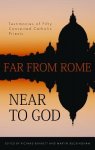
Read this book; (2004) Far From Rome about FIFTY Roman Catholic PRIESTS Testimonies leaving the Catholic doctrine.
https://carm.org/testimonies-ex-roman-catholic-priests


I agree, Somewhat, but to be fair, in context, I believe Jesus was indirectly chastising religious leaders for long-winded prayers that have no substance, praying only to be heard and applauded by others, and warning us not to be like that...Not necessarily a warning against repetition, per say. (imho)- I see nothing wrong with asking, and keep on asking, if one's heart is so burdened to seek the Lord, ...knock and keep on knocking...seek and keep on seeking...!
Indeed. Actually, if we are to be mean, the verse of Matthew about how pagans prayed fits more the style of pentecostal leaders where the prayer itself becomes a sort of empty speech instead of a honest prayer from the heart. I gave this example because I used to be a pentecostal. I rarely heard the Lord's prayer being prayed.
I don't have a problem that Catholics pray to saints AND to other christians for intercession: after all, the church is ekklesia of both the living and those that passed out.
What disturbs me very much is the sculptures and paintings of saints, of Jesus Christ and of the Holy Trinity. If you search deep in the catholic history you will see that they didn't always depicted Saint Mary and Jesus Christ in such sensual way. They used to have icons too. But they gave them up and embraced the secular art. Or rather say, the secular art is the daughter of catholicism. Because culture comes from the Church. They paint from imagination and not according to the view of the unseparated Church.
Why do they depict God the Father as this old man? I don't understand. Based on what?
All of the reviews are supporters in the Catholic faith. Thomas Howard, Rev. Peter Stravinskas, and Scott Hahn all Catholics; all patting themselves on the back. This book came out in 1996...almost twenty years ago. Curious how he still feels?
Read this book; (2004) Far From Rome about FIFTY Roman Catholic PRIESTS Testimonies leaving the Catholic doctrine.
https://carm.org/testimonies-ex-roman-catholic-priests
Then don't read "Born Fundamentalist, Born Again Catholic". It's not meant for hostile anti-Catholics. 20 years and its still a popular book. If I wanted to do research on African-American history, I wouldn't go to the Ku Klux Klan for information. Similarly, if a person wanted to make an honest inquiry into the Catholic faith, it stands to reason to get reliable information from the source, not bigoted hate cultists who preach lies.
Your book has nothing to do with understanding the Catholic faith, which is what the thread title says. Bashing is not understanding.
In addition, many of the stories of people who leave the RCC will try to blaze a trail behind them, and attack the Church for this or that. This directly points to the fact that there is more to the story than simple doctrinal differences. Anyone who does this has had a negative experience that is clouding their judgment. By contrast, the majority of converts to the RCC speak glowingly of their previous faiths. This is more convincing, because it means they converted not because of something bad that happened in their other Church, but because of increased understanding of the Catholic Church. Anyone who converts from RCC, and then is bound and determined to take the Church down with them has other issues and should not be trusted. Converts to Catholicism are not bitter towards their former faith. In fact, it's embellished, not supplanted or replaced. But an ex-Catholic often becomes anti-Catholic, which says enough in itself.
The co-author, Richard Bennett, is like the guy who breaks up with his girlfriend and spends the rest of his life bad mouthing her.
Sola Scriptura: An Unbiblical Tradition: Refutation of Dr. Richard Bennett
Richard Bennett's words will be in blue. The sub-titles are his, from the original paper (the Roman numerals have been added, for reference purposes). They will be colored brown.
My Experience in the CARM Forum
A few years ago I was in Matt Slick's CARM discussion board:
-he starts threads challenging Catholics to correct his material, and when Catholics refute him, he deletes the thread.
-he imposes strict rules just on Catholics that nobody else is expected to keep, including himself.
-Catholics are banned from the forum on trumped up rule violations
-posts get deleted when his arguments get demolished
-anyone can bash Catholicism with the most vile hate speech, but if you identify it as hate speech, you get a rule infraction, and your post gets deleted.
He is the most dishonest Calvinist on the Internet.
debate : Fr. Joseph and Matt Slick
Books promoted by CARM cannot be trusted.
[h=3]MATT SLICK AND CARM FALSE ACCUSATION ANSWERED[/h]

Thanks onlinebuddy, it's refreshing to see a positive reply. Do you prefer videos over text? I prefer text myself. I speed-read.
I'm fine with both...
Reading the book by David B. Currie does give us a full picture of how far the Catholics have walked away from God in the last 1900 years.
His book is basically anti-Christian and pro-Catholic. From what i have seen online about what he believes i have to question if he really was ever a True Christian. He believes and teaches we receive Salvation only by Baptism.
You can say all you want epostle about how you believe True Christians are wrong. But, until you accept Jesus as your Lord and Savior and receive the Indwelling of the Holy Spirit, you will never enter into Heaven.
The only one you are hurting here epostle is you, not me. I will enter into Heaven. Nothing can keep me from entering into Heaven.
What you are doing is fighting against God. Its God you are fighting against, not me. You cannot practice Idolatry and enter into Heaven. You cannot practice your sins and expect to enter into Heaven. You need to reject Mary and walk with God because you cannot serve two masters. God clearly says to Worship Him only. You cannot Worship God and Mary. Its God only who you are to Worship.
And yes epostle you are Worshiping Mary. Every time you pray the Hail Mary you are Worshiping Mary as your God. Every time you bow down to Mary you are Worshiping Mary. Every time you pray the Rosary you are Worshiping Mary.
Repent epostle and reject Mary. Follow God only and enter into Heaven with us True Christians.
His book is basically anti-Christian and pro-Catholic. From what i have seen online about what he believes i have to question if he really was ever a True Christian. He believes and teaches we receive Salvation only by Baptism.
You can say all you want epostle about how you believe True Christians are wrong. But, until you accept Jesus as your Lord and Savior and receive the Indwelling of the Holy Spirit, you will never enter into Heaven.
The only one you are hurting here epostle is you, not me. I will enter into Heaven. Nothing can keep me from entering into Heaven.
What you are doing is fighting against God. Its God you are fighting against, not me. You cannot practice Idolatry and enter into Heaven. You cannot practice your sins and expect to enter into Heaven. You need to reject Mary and walk with God because you cannot serve two masters. God clearly says to Worship Him only. You cannot Worship God and Mary. Its God only who you are to Worship.
And yes epostle you are Worshiping Mary. Every time you pray the Hail Mary you are Worshiping Mary as your God. Every time you bow down to Mary you are Worshiping Mary. Every time you pray the Rosary you are Worshiping Mary.
Repent epostle and reject Mary. Follow God only and enter into Heaven with us True Christians.
Pentecostal communities have strengths and weaknesses in varying degrees from one to another, as do most communities. The Lord's Prayer is recited in every Catholic Mass.Indeed. Actually, if we are to be mean, the verse of Matthew about how pagans prayed fits more the style of pentecostal leaders where the prayer itself becomes a sort of empty speech instead of a honest prayer from the heart. I gave this example because I used to be a pentecostal. I rarely heard the Lord's prayer being prayed.
Agreed.I don't have a problem that Catholics pray to saints AND to other christians for intercession: after all, the church is ekklesia of both the living and those that passed out.
"Christian iconography expresses in images the same Gospel message that Scripture communicates by words. Image and word illuminate each other" (CCC 1160).What disturbs me very much is the sculptures and paintings of saints, of Jesus Christ and of the Holy Trinity. If you search deep in the catholic history you will see that they didn't always depicted Saint Mary and Jesus Christ in such sensual way. They used to have icons too. But they gave them up and embraced the secular art. Or rather say, the secular art is the daughter of catholicism. Because culture comes from the Church. They paint from imagination and not according to the view of the unseparated Church.
We haven't given up icons, although there may be some churches that don't display them. Paleo-Christian art of the 2nd century has essential elements of modern art. The difference is they didn't have photoshop.
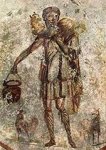
For many centuries—from the beginnings of Christianity in the catacombs, through the Middle Ages and the Renaissance, to at least the Counter-Reformation—art played an indispensable role in the faith formation and life of the average believer. Art was the "Bible of the illiterate." It was by looking at mosaics, icons, paintings, frescos, stained glass, and sculptures that people who could not read, long the majority of the population, learned about the life of Christ, of Mary and the Saints, and the basic tenets of Christianity.
Through most of Christian history, visual signs and symbols, like the fish, anchor, and cross, were used to establish Christian identity. Stories from the Old and New Testaments were brought to life in narrative illustrations filled with graceful shapes and beautiful colors. Even the physical form of the church building was used to instruct the unlettered faithful: the cruciform plan was a reminder of Jesus’ death and resurrection, the upward sweep of the columns and arches directed one’s eyes and thoughts heavenward, trefoils admirably distilled the essence of Trinitarian doctrine. Everywhere one looked there was a visible, material reminder of a fundamental Christian truth, communicated without words.
However, esteeming art exclusively as the illiterates’ Bible may lead to some unfortunate perceptions about it and its function in the life of the Church. First, it suggests that art is simply a concession to ignorance, a second-rate account of the faith that is, in the end, expendable. Art is only needed in the Church because people are illiterate. Once they are able to read and enjoy "direct" contact with the Bible, their need for art should whither away. The presumption is that reading is superior to seeing, and that images cannot communicate as effectively as words can.
This was part of the Reformers’ critique of the Catholic Church. Protestants accused the Church of willfully keeping the faithful in ignorance so as to deny them access to the Scriptures. Being unable to read the Bible for themselves, simple Christians could not discover the true message of the Gospel, nor could they see how far the Church had departed from it. Clearly, since Catholics believed non-Biblical and superstitious falsehoods, the pretty pictures in Catholic churches were not doing the work of instilling a "saving faith" in the believer; only reading the Scriptures could accomplish that. At best, art might be a distraction, but in reality, it was a cheat and a subterfuge.
But worse still, in the Reformers’ eyes, art in the Church was the object of disgraceful and illicit worship: Catholic veneration of images and statues had become Popish idolatry, to be rooted out in iconoclastic fury. Statues were pulled down, windows smashed, paintings whitewashed, leaving a legacy of denuded churches and a dematerialized Christianity. The faith could be read about, but not seen...
...This is because beauty, one of the transcendent qualities of God, cannot be put into words; it must be seen. The Catechism of the Catholic Church, talking about truth, beauty, and sacred art, admits that while "truth in words . . . is necessary to man," it "can also find other complementary forms of human expression, above all when it is a matter of evoking what is beyond words: the depths of the human heart, the exaltations of the soul, the mystery of God" (CCC 2500). A purely verbal apologetics will find that some of the profoundest mysteries of the faith are forever beyond its reach.
Images express the same Gospel revelation that words do. Art (or at least some kinds of art—sacred art or icons) is as much a part of God’s revelation as Scripture is. It’s possible that this idea will actually sound heretical to some, but this is simply a demonstration of how far words—or the Word—have prevailed over images—or the Image—in our (Western) theology. The Eastern Churches have never forgotten the power of images, but the Western churches, Catholic and Protestant alike, contending with iconoclasm, Modernism, and the secularization of culture, among other forces, have seen images deprived of their rightful role in the divine economy. Thus, while we aren’t surprised that a writer would begin his account of Jesus’ life by proclaiming, "In the beginning was the Word," we must acknowledge that an artist could have asserted with equal force and validity, "In the beginning was the Image, and the Image was with God, and the Image was God." Jesus is the Word and the Image of God, and it is this truth that establishes the place of art as an equal partner with words in our faith and in apologetics.
A beautifully simple depiction of this harmonious relationship can be seen in a painting of St. Luke made by El Greco
(Domenikos Theotokopolous) between 1605 and 1610.
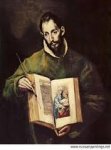 Tradition says that Luke, besides being the author of the Gospel that bears his name, was an artist. Who better to appreciate the equality of words and images? Here he holds a book in one hand, and a brush—or is it a pen?—in the other. The book is open to reveal a page of text, presumably his Gospel, which so vividly describes in words the Annunciation and Nativity of Christ; on the facing page, there is a painted representation of the Madonna and Child. "Word and image illuminate each other." Luke himself is portrayed against a dark backdrop, with slightly diverging eyes that lend him an air of reverie or abstraction; perhaps he is contemplating the word with one eye and the image with another. Overall, El Greco’s sensuous, expressive technique reminds us of the physical, sacramental quality of art. source
That was after the 15th century. "It may be a literal interpretation of the Genesis fragment in which God creates humans at his image and a literal interpretation of the concept of Father. If we are an image of God, God might look like a human, not a holy Cow. If he is a father, he looks like a male human older than Christ. But the official Christian interpretation of the concept of Father is simply a metaphor for the Creator of the universe. And humans as an image of God refers to the essence of humans, not their appearance : God is supposed to have no visual appearance and to be invisible. Furthermore, representing God as an old wrinkly man (an image of weakness) could have been regarded as sinful and a misinterpretation of the Bible: it neglects that the Christian God is immortal and powerful. But choosing to depict God as a healthy delicate man, he would have been confused with Jesus." sourceWhy do they depict God the Father as this old man? I don't understand. Based on what?
World Meeting of Families Icon
The Holy Family Iconic Painting for the World Meeting of Families – Philadelphia 2015, can help us think about, and feel emotions around, God and family. Neilson Carlin of Kennett Square, PA has been asked to create the Icon of the World Meeting of Families – Philadelphia 2015.
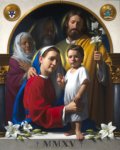
“What came to be through him was life, and this life was the light of the human race.” – John 1:4
As planets find perfect balance and harmony revolving around the sun, so do we find perfect order when we establish Christ at the center of our families. His light illuminates our hearts and minds, and our interactions with others. Consequently, the piece was designed to focus the viewer on the centrality of Christ in the image, and remind us of the necessity of his role as the focal point of our lives.From front to back, the figures have been intentionally layered to indicate the proximity of their relationship to Christ. In the extreme foreground, practically walking out of the canvas, stands the infant, his eyes fixed firmly on the viewer, extending a sign of blessing situated in the exact center of the painting. Next to him, the Blessed Mother, with a gaze slightly beyond her son as she looks toward his passion, fully aware of the trial yet to begin for her family for the sake of all families. Just behind stands St. Joseph, gently resting a loving and protective hand on his wife; his hand completes the chain of connection that begins with Christ’s hand, which rests gently on his mother’s. Behind all stand Mary’s mother and father, SS. Ann and Joachim. They, along with Mary and Joseph, all turn in the direction of Christ. With pensive faces, their joy comes not from the removal of suffering with the coming of Our Lord, but from a firm and steadying reliance on Christ as their morning star, guiding them through the storms of life.Surrounding the figures is an architectural framework loosely mimicking the ciborium over the altar at the Cathedral Basilica of SS. Peter & Paul in Philadelphia. This framework contains elements very specific to the time and place of the event for which the piece was commissioned. On the upper left is a depiction of the coat-of-arms of the Archdiocese of Philadelphia where the 2015 World Meeting of Families will convene. On the upper right is the coat-of-arms of His Holiness, Pope Francis, under whose pontifical aegis the meeting will be guided. On the bottom, a reminder of the year in which the World Meeting of Families will be celebrated. Situated all around are white lilies, a reminder of the purity of the Holy Mother.
It still does not matter what you or the Catholic Church says epostle because we do know that you and the Catholics Church Worships Mary as your God.
Its the Worship of Mary this is keeping you from entering into Heaven epostle.
Galatians 5:16-18
[SUP]16 [/SUP] But I say, walk by the Spirit, and you will not gratify the desires of the flesh.
[SUP]17 [/SUP] For the desires of the flesh are against the Spirit, and the desires of the Spirit are against the flesh, for these are opposed to each other, to keep you from doing the things you want to do.
[SUP]18 [/SUP] But if you are led by the Spirit, you are not under the law.
What is the main desire of the flesh for the Catholics? Its the Worshiping of Mary as their God.
Galatians 5:19-21
[SUP]19 [/SUP] Now the works of the flesh are evident: sexual immorality, impurity, sensuality,
[SUP]20 [/SUP]IDOLATRY, sorcery, enmity, strife, jealousy, fits of anger, rivalries, dissensions, divisions,
[SUP]21 [/SUP] envy, drunkenness, orgies, and things like these. I warn you, as I warned you before, that those who do such things will not inherit the kingdom of God
Idolatry:
the worship of a physical object as a god , immoderate attachment or devotion to something
Being devoted to Mary IS Idolatry which will keep you epostle and the rest of the Catholics from inheriting the Kingdom of God.
Repent epostle, reject Mary, accept Jesus as your Lord and Savior and enter into Heaven with us Christians.
Its the Worship of Mary this is keeping you from entering into Heaven epostle.
Galatians 5:16-18
[SUP]16 [/SUP] But I say, walk by the Spirit, and you will not gratify the desires of the flesh.
[SUP]17 [/SUP] For the desires of the flesh are against the Spirit, and the desires of the Spirit are against the flesh, for these are opposed to each other, to keep you from doing the things you want to do.
[SUP]18 [/SUP] But if you are led by the Spirit, you are not under the law.
What is the main desire of the flesh for the Catholics? Its the Worshiping of Mary as their God.
Galatians 5:19-21
[SUP]19 [/SUP] Now the works of the flesh are evident: sexual immorality, impurity, sensuality,
[SUP]20 [/SUP]IDOLATRY, sorcery, enmity, strife, jealousy, fits of anger, rivalries, dissensions, divisions,
[SUP]21 [/SUP] envy, drunkenness, orgies, and things like these. I warn you, as I warned you before, that those who do such things will not inherit the kingdom of God
Idolatry:
the worship of a physical object as a god , immoderate attachment or devotion to something
Being devoted to Mary IS Idolatry which will keep you epostle and the rest of the Catholics from inheriting the Kingdom of God.
Repent epostle, reject Mary, accept Jesus as your Lord and Savior and enter into Heaven with us Christians.


We are told NOT to have any images of anything in the Heaven, on the Earth, in the sea.
Exodus 20:4-5
[SUP]4 [/SUP] “You shall not make for yourself a carved image, or any likeness of anything that is in heaven above, or that is in the earth beneath, or that is in the water under the earth.
[SUP]5 [/SUP] You shall not bow down to them or serve them, for I the LORD your God am a jealous God, visiting the iniquity of the fathers on the children to the third and the fourth generation of those who hate me,
A statue of Mary IS a carved image!
The Catholics HATE the Truth that God says we are NOT to have images of Mary, and we are NOT to bow down to them like Pope John Paul II did!
Pope John Paul II will never be allowed into Heaven because he Worshiped Mary as his God.
Exodus 20:4-5
[SUP]4 [/SUP] “You shall not make for yourself a carved image, or any likeness of anything that is in heaven above, or that is in the earth beneath, or that is in the water under the earth.
[SUP]5 [/SUP] You shall not bow down to them or serve them, for I the LORD your God am a jealous God, visiting the iniquity of the fathers on the children to the third and the fourth generation of those who hate me,
A statue of Mary IS a carved image!
The Catholics HATE the Truth that God says we are NOT to have images of Mary, and we are NOT to bow down to them like Pope John Paul II did!
Pope John Paul II will never be allowed into Heaven because he Worshiped Mary as his God.
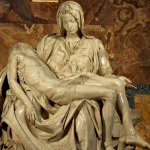
Some time ago I read a meditation somewhere on motherhood and Michelangelo’s Pieta. It was by a mother who was, if I recall correctly, enjoying that wonderful stage of parenting a newborn, spending hours cuddling her little baby and pressing her nose into the sweet-smelling head. She said something to the effect that the Pieta struck her as being a little wrong because Mary, she thought, would have at that moment remembered Jesus as a baby. She would have remembered those moments of putting her face down and smelling the tiny head, that joyful closeness of mother and child. And she would have been unable to resist pressing him close in just that way one last time. No mother, she said, would hold her precious child as Michelangelo’s Mary does in that stiff formal pose. (I wish I could recall where I saw the original of this. I’m afraid I’m misremembering and doing the original author an injustice. this is just my best effort at reconstructing a hazy memory.)
Those words came to me early this morning as I tried to nurse a fussy Ben back to sleep. There is indeed something to what that mother says. It would have been a lovely statue had Michelangelo chosen to portray that moment of the older mother remembering the baby in the stable and tenderly pressing her face to his. But the sculptor has chosen a different moment and I think perhaps a better one… at least in terms of theology if not in terms of capturing the humanity of the Blessed Mother.
But before I explain what I see in Michelangelo’s Pieta, let me say that Mary’s pose still does speak to me as a mother because I do see in the tender way she holds his body the way I hold my baby when he is so limp, so deeply asleep he hardly knows he is in my arms. But it is evident that while there is a hint of that, Michelangelo was thinking along different lines when he composed this statue. For as her right hand holds his body, her left hand is outstretched to present him to the viewer.
First, as I look at this statue I do actually see that young mother of the stable, of Nazareth, though not in her pose so much as in her face. Just look at it: Michelangelo depicts the smooth, sweet features of a young woman, more the maiden of the Annunciation or of the Nativity rather than the careworn visage of the much older Lady of Sorrows who has accompanied her Son on his via dolorosa and watched him die as she stood at the foot of the cross.
Instead, the juxtaposition of the young face with Mary’s pose speaks to me of the young woman who said to the angel: Behold the handmaid of the Lord, be it done to me according to your word. This woman holding the lifeless body of her son knows the man she hold is not only her precious baby, He is something more. No, she is the woman who pondered these things in her heart. She is the woman who told the servants: Do whatever he tells you. She is the woman who presents her son to us and echoes his words, those other words she must also have pondered: Take, eat. For the body she holds was not given for her only but for all of us.
Pieta, An Early Morning Reflection - The Wine-Dark Sea
Last edited:
Mary is not worshiped as a goddess. Those statues are not of idols. They are of the human mother of Jesus Christ the Messiah.
Jesus gave honor to His Mother and as Catholics we do the same thing.
It is this failure to understand Catholicism that leaves many in conflict with what we understand about Mary.
It is unfortunate that they choose to belong to a group and to read books that put down the Mother of the Lord in such a shameless fashion.
Scripture is very specific about what constitutes an idol. It is the image of a creature (bird or animal) that is worshiped as a god. One has to look at when the Law was given to the people to find the clue as to God's original meaning. The Hebrew had been rescued from Egypt by God. If you look closely at the ten plagues for instance you cansee that each plague represented the destruction of the gods ofEgypt. By bringing the plagues upon Egypt God was showing that He was mightier than any human understanding of a god. The Hebrew had been affected by these gods in Egypt and in their hearts they wanted to continue to follow these gods. The history of Israel is full ofexamples of the apostasy of Israel as it fell into this form of idolworship and was punished for doing so.
The Golden Calf incident wasan attempt by the Hebrew to worship the false gods that they had leftbehind in Egypt. Before the Golden Calf incident the Hebrew did nothave to offer animal sacrifices, yet after that incident they had todo so. Why? Because God wanted to make sure that the Israeliteswere forced to renounce animal worship.
The false idols that we have today are not the statues of Jesus and Mary that one sees in a Church. For starters, Mary was truly a human person and the early Christians depicted both Mary and Jesus in their human image, as they saw them. The idols of paganism, on the other Hand were idols that come from the imagination of the human mind.What we are confronted with today are the images of pop stars, moviestars, consumerism, materialism, flag worship, of sport stars,worship of the body. Where is God in any of these images? These are the false gods of today. It is the false god called "ego"that is in conflict with the real image of God.
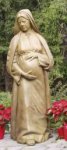
REDEEMER IN THE WOMB
Jesus gave honor to His Mother and as Catholics we do the same thing.
It is this failure to understand Catholicism that leaves many in conflict with what we understand about Mary.
It is unfortunate that they choose to belong to a group and to read books that put down the Mother of the Lord in such a shameless fashion.
Scripture is very specific about what constitutes an idol. It is the image of a creature (bird or animal) that is worshiped as a god. One has to look at when the Law was given to the people to find the clue as to God's original meaning. The Hebrew had been rescued from Egypt by God. If you look closely at the ten plagues for instance you cansee that each plague represented the destruction of the gods ofEgypt. By bringing the plagues upon Egypt God was showing that He was mightier than any human understanding of a god. The Hebrew had been affected by these gods in Egypt and in their hearts they wanted to continue to follow these gods. The history of Israel is full ofexamples of the apostasy of Israel as it fell into this form of idolworship and was punished for doing so.
The Golden Calf incident wasan attempt by the Hebrew to worship the false gods that they had leftbehind in Egypt. Before the Golden Calf incident the Hebrew did nothave to offer animal sacrifices, yet after that incident they had todo so. Why? Because God wanted to make sure that the Israeliteswere forced to renounce animal worship.
The false idols that we have today are not the statues of Jesus and Mary that one sees in a Church. For starters, Mary was truly a human person and the early Christians depicted both Mary and Jesus in their human image, as they saw them. The idols of paganism, on the other Hand were idols that come from the imagination of the human mind.What we are confronted with today are the images of pop stars, moviestars, consumerism, materialism, flag worship, of sport stars,worship of the body. Where is God in any of these images? These are the false gods of today. It is the false god called "ego"that is in conflict with the real image of God.
REDEEMER IN THE WOMB
Last edited:
J
James4redemption
Guest
When we die, I have a strange feeling we're going to be surprised at some of the things that will be classified as Idols in our lives. There's a reason why Jesus told that dude to sell everything and follow him. Also I vaguely remember various scripture how God was upset at the people who fell in love with the things that their hands had built. I don't think that was just statues dedicated to God's.
I also remember hearing a testimony that it's useless to pray to Mary since Jesus alone saves and that Mary basically resides in Heaven and can't hear the prayers. I don't know though. I'm jussssst sayin'.
I also remember hearing a testimony that it's useless to pray to Mary since Jesus alone saves and that Mary basically resides in Heaven and can't hear the prayers. I don't know though. I'm jussssst sayin'.
- Status
- Not open for further replies.