

PARASHA: “Pinchas” NUMBERS 25:10-29:40
This Torah portion starts with a somewhat surprising promotion in rank for an execution committed, and rather suddenly. Pinchas, the grandson of Aaron was a Levite, and during the time of the “weakness and falling away of the men of Israel, He took matters into his own hands, and slew Zimri and Cozbi, who were committing fornication in the sight of all Israel, yet Adonai rewarded him for this and gave him an “everlasting covenant of peace and an everlasting priesthood” because he was “Zealous” for his God, because he made an “atonement” for the Children of Israel”.
to understand this, we must go back to the story of "Balak". King Balak wanted Balaam to curse Israel, But God did not allow Bilaam to do this. Adonai had already blessed Israel, and whoever Adonai has blessed, no one can curse. However, through the evil counsel of Bilaam, he let Balak know that the Israelites could bring a curse upon themselves by going after the pagan gods of Moab and Midian, which would be through the enticing invitations of the women of Moab. Illicit Sexual practices were almost always part of pagan worship rites.
The Torah says that the Children of Israel went after the Moabite prostitutes and went to worship their god “Baal-Peor,” thus bringing down the wrath of YHVH. The result was a plague that killed 24,000 Israelites until Pinchas took action by taking a lance and thrusting it through the bellies of Zimri and Cozbi, thus “staying” the plague.
Zimri and Cozbi were a "prince" and "princess." Zimri was an Israelite, and Cozbi a Midianite. They dared to come into the camp of Israel and have illicit sex in their "tent" in front of a weeping congregation, while the plague was taking lives. They are "enjoying life!." Now, "which tent?" The scripture points out that Moses and the leaders of Israel were weeping in front of the "Tent of Meeting" (The Tabernacle), so when Zimri and Cozbi came into the camp, the words are "El Kubah" (Hebrew), used for (Zimri's private princely domed tent). The two went inside to have sex, and "Pinchas" went in after them with a lance! and speared them both!.
As Adonai called it, “making an atonement for the children of Israel. "Blood for Blood." God gave Pinchas "A covenant of Peace." "Brit Shalom". What is interesting is that the "Vav" (or the letter "o") in the original Hebrew in the word "Shalom" is broken in half. What could this mean? One explanation is that Israel "Was" at peace before the Moabite women came to entice the men of Israel to go worship their gods, but the peace was "broken" through the worship of Baal and the fornication until Pinchas made "blood atonement."
Our Messiah Yeshua had never been separate from the love and fellowship of the Father, yet that "Shalom" was "broken" temporarily when he hung on that cross and bore our sins, as he cried "Eli, Eli, Lama Sabachtani" (My God, My God, why have you forsaken me)
Another thing we must remember is that we ALL have two natures, the “Yetzer Hara” (The evil inclination, or the sin nature) and the “Born again” spirit-filled nature that comes when we accept Yeshua as Messiah and LORD. Both live inside us, and something can “trigger” that old sinful nature and cause havoc and misery in our lives. In the case of the Israelite men, it was the arrival of the Midianite and Moabite prostitutes of Baal-Peor, and not only did they bring a curse upon the encampment of the Israelites, but they also brought death to 24,000 of the population.
Now, it seems like a large number, but if we realize that the Israelites probably numbered 2 or 3 million, then that number is quite small. We also need to realize that not ALL of Israel went after “Baal-Peor,” only the ones that went after the prostitutes. Yet the whole nation of Israel was affected.
Another Prophet who showed "Kana" (zeal) for God was Elijah, who slew the 450 prophets of Baal after God accepted the sacrifice on the altar, and all the people saw that. They were convinced, and many turned from Baal worship.
Later on, in this study, we see that Moshe intercedes for Israel when Adonai tells him to go up Har Abiram and take a look around, because he will die there. Adonai appoints “Yehoshua” as Moshe’s successor to lead the people into the promised land. We see two leaders now, “Pinchas,” who is granted the title and inheritance of “High Priest” for his action; he symbolizes the “Kana” (Zeal) for Adonai, and Yehoshua, who is given the “Spirit of Elohim” to lead the people. Yehoshua is the same as “Yeshua” for HE is the one who leads US in our lives today.
Yeshua also showed “Kana” when he drove out the money changers in the temple. He used a bit of violence, yet not for “religious” reasons, but for the “love” of HIS father and for respect for HIS HOUSE. Today, HIS HOUSE consists of all “Kehilot” (assemblies) of born-again believers all over the world, not buildings
There are other ways one can show “zeal” for YHVH today: loving His WORD, obeying his commandments, teaching His Word to those who would listen, loving our neighbors, supporting our local body of believers, and voting for government officials who also uphold biblical standards. Pointing out sinful ways to sinners (in a loving, not condemning way) and pointing them to a personal relationship with Yeshua, our Messiah.
Chapters 28 and 29 deal with the review of the sacrifices and offerings that the Israelites would offer to YHVH. Remember that they are about to cross over the Jordan to possess the promised land. There, they would be “permanent residents,” and the fight would continue to cast out the Canaanites (another reason for the census) to see how many “fighting men” the nation consisted of. Every element of the offerings and sacrifices illustrates who YESHUA is and what he stands for.
2 lambs per day, fine flour with oil; Yeshua, who is the Lamb of God, who is the BREAD of Life, who has the Ruach HaKodesh (The Holy Spirit) within him. The oil symbolizes the Spirit of Elohim, and the “anointing by the Spirit on ALL believers. Wine was also used to pour over the sacrifices; the “wine” symbolizes the blood of Yeshua that ran down the cross, out of his veins for an atonement for all who believe and accept his sacrifice for sin. Bullocks were also sacrificed; the bullock symbolizes “strength” as the ancient symbol of the letter “Alef” was in the form of a bull. Adonai is “strength,” yet he allowed himself to become “lower than the angels” to walk as a man and be a willing sacrifice for sin. The goats remind us of Yom Kippur, one was set free and the other sacrificed, reminding us that our sins were “cast away” from us as well as dealt with on the cross. The sacrificed rams remind us of the “ram” that was in the thicket when Abraham offered his son Isaac as a sacrifice. That ram was sacrificed instead of Isaac, just as Yeshua was offered as a blood sacrifice in our place.
The sacrifice of Yeshua was ALL SUFFICIENT, for ALL TIME. Nothing lacking. His sacrifice for sin fulfilled ALL of the animal sacrifices of the Old Testament. We need to accept HIS sacrifice and atonement for sin in THIS LIFE, because our decision in THIS LIFE will determine where we will spend our NEXT LIFE.
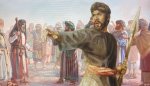
"How dare they! Not on my watch!"
This Torah portion starts with a somewhat surprising promotion in rank for an execution committed, and rather suddenly. Pinchas, the grandson of Aaron was a Levite, and during the time of the “weakness and falling away of the men of Israel, He took matters into his own hands, and slew Zimri and Cozbi, who were committing fornication in the sight of all Israel, yet Adonai rewarded him for this and gave him an “everlasting covenant of peace and an everlasting priesthood” because he was “Zealous” for his God, because he made an “atonement” for the Children of Israel”.
to understand this, we must go back to the story of "Balak". King Balak wanted Balaam to curse Israel, But God did not allow Bilaam to do this. Adonai had already blessed Israel, and whoever Adonai has blessed, no one can curse. However, through the evil counsel of Bilaam, he let Balak know that the Israelites could bring a curse upon themselves by going after the pagan gods of Moab and Midian, which would be through the enticing invitations of the women of Moab. Illicit Sexual practices were almost always part of pagan worship rites.
The Torah says that the Children of Israel went after the Moabite prostitutes and went to worship their god “Baal-Peor,” thus bringing down the wrath of YHVH. The result was a plague that killed 24,000 Israelites until Pinchas took action by taking a lance and thrusting it through the bellies of Zimri and Cozbi, thus “staying” the plague.
Zimri and Cozbi were a "prince" and "princess." Zimri was an Israelite, and Cozbi a Midianite. They dared to come into the camp of Israel and have illicit sex in their "tent" in front of a weeping congregation, while the plague was taking lives. They are "enjoying life!." Now, "which tent?" The scripture points out that Moses and the leaders of Israel were weeping in front of the "Tent of Meeting" (The Tabernacle), so when Zimri and Cozbi came into the camp, the words are "El Kubah" (Hebrew), used for (Zimri's private princely domed tent). The two went inside to have sex, and "Pinchas" went in after them with a lance! and speared them both!.
As Adonai called it, “making an atonement for the children of Israel. "Blood for Blood." God gave Pinchas "A covenant of Peace." "Brit Shalom". What is interesting is that the "Vav" (or the letter "o") in the original Hebrew in the word "Shalom" is broken in half. What could this mean? One explanation is that Israel "Was" at peace before the Moabite women came to entice the men of Israel to go worship their gods, but the peace was "broken" through the worship of Baal and the fornication until Pinchas made "blood atonement."
Our Messiah Yeshua had never been separate from the love and fellowship of the Father, yet that "Shalom" was "broken" temporarily when he hung on that cross and bore our sins, as he cried "Eli, Eli, Lama Sabachtani" (My God, My God, why have you forsaken me)
Another thing we must remember is that we ALL have two natures, the “Yetzer Hara” (The evil inclination, or the sin nature) and the “Born again” spirit-filled nature that comes when we accept Yeshua as Messiah and LORD. Both live inside us, and something can “trigger” that old sinful nature and cause havoc and misery in our lives. In the case of the Israelite men, it was the arrival of the Midianite and Moabite prostitutes of Baal-Peor, and not only did they bring a curse upon the encampment of the Israelites, but they also brought death to 24,000 of the population.
Now, it seems like a large number, but if we realize that the Israelites probably numbered 2 or 3 million, then that number is quite small. We also need to realize that not ALL of Israel went after “Baal-Peor,” only the ones that went after the prostitutes. Yet the whole nation of Israel was affected.
Another Prophet who showed "Kana" (zeal) for God was Elijah, who slew the 450 prophets of Baal after God accepted the sacrifice on the altar, and all the people saw that. They were convinced, and many turned from Baal worship.
Later on, in this study, we see that Moshe intercedes for Israel when Adonai tells him to go up Har Abiram and take a look around, because he will die there. Adonai appoints “Yehoshua” as Moshe’s successor to lead the people into the promised land. We see two leaders now, “Pinchas,” who is granted the title and inheritance of “High Priest” for his action; he symbolizes the “Kana” (Zeal) for Adonai, and Yehoshua, who is given the “Spirit of Elohim” to lead the people. Yehoshua is the same as “Yeshua” for HE is the one who leads US in our lives today.
Yeshua also showed “Kana” when he drove out the money changers in the temple. He used a bit of violence, yet not for “religious” reasons, but for the “love” of HIS father and for respect for HIS HOUSE. Today, HIS HOUSE consists of all “Kehilot” (assemblies) of born-again believers all over the world, not buildings
There are other ways one can show “zeal” for YHVH today: loving His WORD, obeying his commandments, teaching His Word to those who would listen, loving our neighbors, supporting our local body of believers, and voting for government officials who also uphold biblical standards. Pointing out sinful ways to sinners (in a loving, not condemning way) and pointing them to a personal relationship with Yeshua, our Messiah.
Chapters 28 and 29 deal with the review of the sacrifices and offerings that the Israelites would offer to YHVH. Remember that they are about to cross over the Jordan to possess the promised land. There, they would be “permanent residents,” and the fight would continue to cast out the Canaanites (another reason for the census) to see how many “fighting men” the nation consisted of. Every element of the offerings and sacrifices illustrates who YESHUA is and what he stands for.
2 lambs per day, fine flour with oil; Yeshua, who is the Lamb of God, who is the BREAD of Life, who has the Ruach HaKodesh (The Holy Spirit) within him. The oil symbolizes the Spirit of Elohim, and the “anointing by the Spirit on ALL believers. Wine was also used to pour over the sacrifices; the “wine” symbolizes the blood of Yeshua that ran down the cross, out of his veins for an atonement for all who believe and accept his sacrifice for sin. Bullocks were also sacrificed; the bullock symbolizes “strength” as the ancient symbol of the letter “Alef” was in the form of a bull. Adonai is “strength,” yet he allowed himself to become “lower than the angels” to walk as a man and be a willing sacrifice for sin. The goats remind us of Yom Kippur, one was set free and the other sacrificed, reminding us that our sins were “cast away” from us as well as dealt with on the cross. The sacrificed rams remind us of the “ram” that was in the thicket when Abraham offered his son Isaac as a sacrifice. That ram was sacrificed instead of Isaac, just as Yeshua was offered as a blood sacrifice in our place.
The sacrifice of Yeshua was ALL SUFFICIENT, for ALL TIME. Nothing lacking. His sacrifice for sin fulfilled ALL of the animal sacrifices of the Old Testament. We need to accept HIS sacrifice and atonement for sin in THIS LIFE, because our decision in THIS LIFE will determine where we will spend our NEXT LIFE.
"How dare they! Not on my watch!"

