
Divine Election or Free Will
- Thread starter Solitude
- Start date
-
Christian Chat is a moderated online Christian community allowing Christians around the world to fellowship with each other in real time chat via webcam, voice, and text, with the Christian Chat app. You can also start or participate in a Bible-based discussion here in the Christian Chat Forums, where members can also share with each other their own videos, pictures, or favorite Christian music.
If you are a Christian and need encouragement and fellowship, we're here for you! If you are not a Christian but interested in knowing more about Jesus our Lord, you're also welcome! Want to know what the Bible says, and how you can apply it to your life? Join us!
To make new Christian friends now around the world, click here to join Christian Chat.
You are using an out of date browser. It may not display this or other websites correctly.
You should upgrade or use an alternative browser.
You should upgrade or use an alternative browser.

Which came first?
God decreed both simultaneously, because election and MFW are mutually operative.
God predestined to elect those who would choose to cooperate with His plan of salvation,
which was to save all who repent of sins and accept Christ as Lord.
God established categories (such as people could be saved through the sacrifice of Jesus) and those who enter this category could be called "elect". They were predestined in that it was predetermined that some would be saved. This is not the same as determining each individual.
God established categories (such as people could be saved through the sacrifice of Jesus) and those who enter this category could be called "elect". They were predestined in that it was predetermined that some would be saved. This is not the same as determining each individual.
Yes, and "could be" elect connotes "could not be" elect, which indicates MFW.

Divine Election or Free Will
It is not Divine Election______ OR ____Free Will
It is Divine Election and Free Will --- ------You are chosen by God because God knows who's heart is ready and willing to be changed to be receptive to hearing the Gospel which inbirths His Saving Faith in them ---to be saved --
God Gave free will to His Angels and human creation to choose to obey Him or Rebel against Him ----we have Free Will to choose God's Drawing on our Hearts or Reject that Draw -----
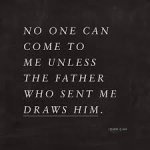
Many has accepted the Draw and are Saved ---But Many --- Many have refused that Draw ---and remain unbelievers today ----
It is not Divine Election______ OR ____Free Will
It is Divine Election and Free Will --- ------You are chosen by God because God knows who's heart is ready and willing to be changed to be receptive to hearing the Gospel which inbirths His Saving Faith in them ---to be saved --
God Gave free will to His Angels and human creation to choose to obey Him or Rebel against Him ----we have Free Will to choose God's Drawing on our Hearts or Reject that Draw -----
Many has accepted the Draw and are Saved ---But Many --- Many have refused that Draw ---and remain unbelievers today ----
Divine Election or Free Will
It is not Divine Election______ OR ____Free Will
It is Divine Election and Free Will --- ------You are chosen by God because God knows who's heart is ready and willing to be changed to be receptive to hearing the Gospel which inbirths His Saving Faith in them ---to be saved --
God Gave free will to His Angels and human creation to choose to obey Him or Rebel against Him ----we have Free Will to choose God's Drawing on our Hearts or Reject that Draw -----
View attachment 280992
Many has accepted the Draw and are Saved ---But Many --- Many have refused that Draw ---and remain unbelievers today ----
Well, I would state it a little differently: We become chosen by God when our hearts repent of being unwilling to be changed,
whereupon God's HS indwells us. (Matt. 4:17, 1Tim. 2:3-4, Rev. 3:20, Rom. 5:5-8)

Well it doesn't say that though it says we were chosen to be holy and unspotted which is something he calls for all of huminityHere is concrete proof Divine Election came before Free Will!
Ephesians 1:4
As he chose us in him before the foundation of the world, that we should be holy and unspotted in his sight in charity.
"chose us in him before the foundation of the world " is Divine Election.Well it doesn't say that though it says we were chosen to be holy and unspotted which is something he calls for all of huminity

"chose us in him before the foundation of the world " is Divine Election.
No, because a study of Paul's writings reveals that "us" and "we" refers potentially to all humanity.
Do not proof-text!
The OT indicates that God chose the Jewish culture for the purpose of providing Messiah, through whom the world would be blessed or saved (Gen. 22:18, Isa. 42:6, 49:6, Joel 2:28& 32, Mic. 4:2-3, Zeph. 3:8-9, Zech. 2:11, 14:9&16), and the NT proclaims that Jesus of Nazareth is the promised Messiah or Christ (Acts 2:36, Rom. 1:1-4, Heb. 1:1-4, 3:3-6). It is tragic that the person God has ordained to be the head of one worldwide body of believers (JN 17:20-23, Eph. 1:9-10 & 3:6, Col. 1:18-20, Phil. 2:9-11) is rejected by so many who claim to be theists. And it is ironic that this gemstone, which is the foundation and cornerstone of ultimate reality (Eph. 2:20), is the stumbling-stone (1Pet. 2:6-8) to faith in GRFS for many souls (1Cor. 1:22-25). The reason (per 2Cor. 4:3-4) is that the god of this world or Satan blinds their minds (cf. 1Cor. 2:14). Messiah/Christ is the key stone.
Paul and Silas said, “Believe in the Lord Jesus” (Acts 16:31), which is GRFS in a nutshell. Jesus Himself expressed GRFS even more succinctly using three, four and five letter words: “Ask… seek… knock…” (Matt. 7:7). This indicates that God graces every sinful soul with the ability or opportunity to seek salvation (cf. 1Tim. 2:3-4, Ezek. 33:11), which might be called “seeking grace” (Tit. 2:11). As Hebrews 11:6 states: “he [God] rewards those who earnestly seek him” (cf. Isa. 45:19). Seeking God is the beginning of saving faith, and not seeking God or rejecting His salvation in Christ is the essence of evil atheism or faith in I-dolatry (Rom. 3:11, 1:18-23). All humans sin, but every sinner has the opportunity to repent/have saving faith (per Rom. 1:20, 2:7, 3:21-22, 4:16 & 5:8-19).
Thus, sinful humanity retains the image of God or moral free will, so every normal adult soul is able by faith to choose to seek salvation–or not (cf. Deut. 30:19). That is why Paul went “every Sabbath to the synagogue, trying to persuade Jews and Greeks” (Acts 18:4)! “He witnessed to them from morning till evening, explaining about the kingdom of God, and from the Law of Moses and from the Prophets he tried to persuade them about Jesus.” (Acts 28:23b) “Some were convinced by what he said, but others would not believe.” (Acts 28:24) “They disagreed among themselves and began to leave after Paul made this final statement: The Holy Spirit spoke the truth to your ancestors when he said through Isaiah the prophet, ‘You will be ever hearing but never understanding; you will be ever seeing but never perceiving, for this people’s heart has become calloused.'” (Acts 28:25-27a, cf. 2Tim. 3:7)
Regarding the human heart, we can see that it is “deceitful… and beyond cure” (Jer. 17:9) when it becomes calloused (cf. Matt. 23:37), but the uncalloused heart is enabled to seek salvation and find God (per Matt. 7:7 & Heb. 11:6). God’s enabling of seeking is not irresistible, it does not pry open a hardened heart, and it does not continue forever (Rom. 10:10-13, Heb. 3:12-19).

Election occurred before the foundation of the world because God foreknew who would believe. Free will doesn't exist until a man is born.
Only the elect are chosen in Him.No, because a study of Paul's writings reveals that "us" and "we" refers potentially to all humanity.
Do not proof-text!
The OT indicates that God chose the Jewish culture for the purpose of providing Messiah, through whom the world would be blessed or saved (Gen. 22:18, Isa. 42:6, 49:6, Joel 2:28& 32, Mic. 4:2-3, Zeph. 3:8-9, Zech. 2:11, 14:9&16), and the NT proclaims that Jesus of Nazareth is the promised Messiah or Christ (Acts 2:36, Rom. 1:1-4, Heb. 1:1-4, 3:3-6). It is tragic that the person God has ordained to be the head of one worldwide body of believers (JN 17:20-23, Eph. 1:9-10 & 3:6, Col. 1:18-20, Phil. 2:9-11) is rejected by so many who claim to be theists. And it is ironic that this gemstone, which is the foundation and cornerstone of ultimate reality (Eph. 2:20), is the stumbling-stone (1Pet. 2:6-8) to faith in GRFS for many souls (1Cor. 1:22-25). The reason (per 2Cor. 4:3-4) is that the god of this world or Satan blinds their minds (cf. 1Cor. 2:14). Messiah/Christ is the key stone.
Paul and Silas said, “Believe in the Lord Jesus” (Acts 16:31), which is GRFS in a nutshell. Jesus Himself expressed GRFS even more succinctly using three, four and five letter words: “Ask… seek… knock…” (Matt. 7:7). This indicates that God graces every sinful soul with the ability or opportunity to seek salvation (cf. 1Tim. 2:3-4, Ezek. 33:11), which might be called “seeking grace” (Tit. 2:11). As Hebrews 11:6 states: “he [God] rewards those who earnestly seek him” (cf. Isa. 45:19). Seeking God is the beginning of saving faith, and not seeking God or rejecting His salvation in Christ is the essence of evil atheism or faith in I-dolatry (Rom. 3:11, 1:18-23). All humans sin, but every sinner has the opportunity to repent/have saving faith (per Rom. 1:20, 2:7, 3:21-22, 4:16 & 5:8-19).
Thus, sinful humanity retains the image of God or moral free will, so every normal adult soul is able by faith to choose to seek salvation–or not (cf. Deut. 30:19). That is why Paul went “every Sabbath to the synagogue, trying to persuade Jews and Greeks” (Acts 18:4)! “He witnessed to them from morning till evening, explaining about the kingdom of God, and from the Law of Moses and from the Prophets he tried to persuade them about Jesus.” (Acts 28:23b) “Some were convinced by what he said, but others would not believe.” (Acts 28:24) “They disagreed among themselves and began to leave after Paul made this final statement: The Holy Spirit spoke the truth to your ancestors when he said through Isaiah the prophet, ‘You will be ever hearing but never understanding; you will be ever seeing but never perceiving, for this people’s heart has become calloused.'” (Acts 28:25-27a, cf. 2Tim. 3:7)
Regarding the human heart, we can see that it is “deceitful… and beyond cure” (Jer. 17:9) when it becomes calloused (cf. Matt. 23:37), but the uncalloused heart is enabled to seek salvation and find God (per Matt. 7:7 & Heb. 11:6). God’s enabling of seeking is not irresistible, it does not pry open a hardened heart, and it does not continue forever (Rom. 10:10-13, Heb. 3:12-19).

Election occurred before the foundation of the world because God foreknew who would believe. Free will doesn't exist until a man is born.
No, a study of Ephesians reveals the following:
EPH 1:3, “Blessed/Praised be the Father/God of our Lord Jesus Christ, who has blessed us with all/every spiritual blessings in the heavenly realms in Christ.”
The OT says that God is worthy of being praised (2Sam. 22:4, 1Chron. 16:25, Psa. 48:1), and Psalms says it is fitting for people to praise God (33:1), because He is good (34:8) and forgives those who confess their sin (32:5). Praising is akin to thanksgiving (Psa. 100:4) for God’s blessings of love and justice (Psa. 101:1). The primary blessing is heaven, and spiritual blessings includes the fruit listed in Gal. 5:22-23 and other goodness. “Us” here and in the rest of the passage refers to those who are “in Christ”, which means oneness with Christ via faith as in Eph. 1:1b (cf. Eph. 4:13 & 5:31-32).
EPH 1:4, “For he chose us in him before the creation of the world to be holy and blameless in his sight.”
The reason God created the entire universe was to serve as the stage upon which to enact His plan of salvation (POS): setting apart human sinful souls whose faith satisfies the condition for crediting them with the righteousness of Christ, as in Rom. 3:20 (cf. Phil. 3:7-9).
EPH 1:5, “In love he predestined us to be adopted as his sons through Jesus Christ, in accordance with his pleasure and will.”
God is love (1John 4:8, cf. Rom 5:5-8). and He preplanned those in him (v. 4) to be spiritual children by receiving the Holy Spirit and becoming co-heirs with Christ (cf. Rom. 8:23 & 9:4) per His will for saints to be holy, as in v.4.
EPH 1:6, “to the praise of his glorious grace, which he has freely given us in the One he loves.”
This harps back to v.3. and refers to God’s blessing (cf. Eph. 2:8-10), which is not merited but instead credited, as in v.4. by virtue of being “in the Anointed One or Messiah/Christ. “One” connoted God in Jewish scriptures ever since Moses wrote what is called the Shema (Deut. 6:4).
EPH 1:7, “In him we have redemption through his blood, the forgiveness of sins, in accordance with the abundance/riches of God’s grace”.
This refers to salvation promised in the Law and Prophets because of Christ’s death on the cross, and to the redemption that is valued as spiritual wealth, echoing v. 5 and connecting with v. 3 as well as with the grace of God in v.6, even though some may reject it (cf. Eph. 3:8 & 16).
EPH 1:8, “that he lavished on us with all wisdom and understanding”,
This denotes generosity or fullness, and wisdom and prudence will be mentioned again in Eph. 3:10.
EPH 1:9, “and he revealed to us the mystery of his will according to his good pleasure which he himself purposed,”
This mystery/POS will be explained later in this epistle, and per God’s pleasure echoes or parallels 1:5, a technique used throughout this passage.
EPH 1:10, “to be put into effect when the times will have reached their fulfillment—to bring all things in heaven and on earth together under one head, even Christ.”
This refers again to God’s POS and mystery, explained later in Ephesians, and the time of fulfillment indicates God’s timing and would have mean the “last days” (in ACTS 2:17, 2TM 3:1 and 2PT 3:3) or “end of the age” (MT 24:3, 10, 19, 21, etc.), when all things are brought together under one head/Jesus, seemingly indicating world unification–but other passages indicate that “all” does not include God’s enemies (1Cor. 15:25). Christ’s first advent was for the purpose of creating his spiritual body/church, but his second coming will be on Judgment Day (Heb. 9:26-28)
EPH 1:11, “In him we were also chosen, having been predestined according to the plan of him who works out everything in conformity with the purpose of his will.”
“Chosen” means saved by faith in Christ, including Paul, and predestined repeats the term used in v.5 to refer to “from creation” per v.4. according to God’s POS or will as in v. 9-10. God’s sovereignty is stressed by the repetition and means that God is in control of history so that His plan will be achieved as He determines.
EPH 1:12, “in order that we, who were the first to hope in Christ, might be for the praise of his glory.”
This refers to Paul and other apostles or disciples of Jesus who received the Gospel before the Ephesians, whose lives should be a reason for praising deity because of the Christlike behavior/love.
EPH 1:13-14, “And you also were included in Christ when you heard the word of truth, the gospel of your salvation. Having believed, you were marked in him with a seal, the promised Holy Spirit, who is a deposit guaranteeing our inheritance until the redemption of those who are God’s possession—to the praise of his glory.”
The believers being addressed heard Paul’s Gospel and believed, so they received the Holy Spirit, who is like a seal stamped on a letter or an advance deposit on an account, guaranteeing their future in heaven, again so that God would be praised, echoing v.12. EPH 1:3-14 is one sentence in the Greek.
EPH 1:15-16, “For this reason, ever since I heard about your faith in the Lord Jesus and your love for all the saints, I have not stopped giving thanks for you, remembering you in my prayers.
Faith in Jesus as Lord implies love for all including fellow saved sinners. Paul exemplifies what he teaches in 1Thes. 5:17: Pray continually.
EPH 1:17, “I keep asking that the God of our Lord JC, the glorious Father, may give you the Spirit of wisdom and revelation, so that you may know him better.”
Paul prays to the Father as Jesus taught in MT 6:9 (glory being mentioned again as a sort of a sub-theme). The Spirit of wisdom is not different from the HS, but rather continuing sanctification, because learning more about God takes a lifetime. Revelation beyond the Gospel must refer to doctrines that build upon the foundational Gospel (Eph. 2:20).
EPH 1:18-19a, “I pray also that the eyes of your heart may be enlightened in order that you may know the hope to which he has called you, the riches of his glorious inheritance in the saints, and his incomparably great power for us who believe.”
This reverence to the “eyes of the heart” must mean the enlightening of the mind, so that they may not remain in the darkened or ignorant of the hope of salvation or resurrection to heaven which Jesus has promised. Jesus said he came to call sinners (Matt. 9:13), that many are invited but few are chosen (Matt. 22:14), and that few find the narrow gate (Matt. 7:14). In Eph. 4:1 Paul will exhort those who are called to be worthy of it. Again the blessing of heaven is called a rich inheritance and also power.
EPH 1:19b-21, “That power is like the working of his mighty strength which he exerted in Christ when he raised him from the dead and seated him at his right hand in the heavenly realms, far above all rule and authority, power and dominion, and every title that can be given, not only in this age but also in the one to come.”
God’s power for believers is the same as His power when He resurrected Jesus from the grave and placed Him in charge of heaven–over all and forever on earth and in eternity in heaven.
EPH 1:22-23, “And God placed all things under his feet and appointed him to be the head over everything for the church, which is his body, the fullness of him who fills everything in every way.”
This quote of Psa. 8:6 is found also in 1Cor. 15:27a, and it echoes 1Cor. 15:27b as well as Col. 1:15-19.
EPH 2:1-3, “As for you, you were dead in your transgressions and sins wherein you walked when you followed the ways of this world and of the ruler of the kingdom of the air, the spirit who is now at work in the children of unbelief. All of us lived among them at one time, participating in the lusts of our sinful flesh and mind, and we were by nature children of wrath, like the rest.”
Sinners are spiritually dead and bound for hell before being saved, when they practiced the morality of the ungodly that is the environment of sinners, and the ruler of the ungodly is the devil or Satan, who indwells atheists and works evil using them.
EPH 2:4-6, “But because of his great love for us, God, being rich in mercy, makes us who are dead in transgressions alive with Christ, saved and being saved by grace. And He raises us up with Him and seats us with Him in the heavens.”
God’s love and for all sinners (per Rom.5:5-8 and 1Tim.2:3-4) and mercy for those who repent transforms those who whose wages were is death (per Rom.6:23) into those who are alive because of faith in Jesus as Lord (per 2Cor.4:5 & Col.2:6). Conversion and sanctification are not by works (per Eph.2:8-10). The future resurrection when the saints will share Christ’s blessings is viewed as being present.
EPH 2:7-10, “In order that in the coming ages he might show the incomparable riches of his grace, expressed in his kindness to us in Christ Jesus. For it is by grace you have been saved, through faith—and this not from yourselves, it is the gift of God—not by works, so that no one can boast. For we are God’s workmanship, created in Christ Jesus to do good works, which God prepared in advance for us to do.”
No, a study of Ephesians reveals the following:
EPH 1:3, “Blessed/Praised be the Father/God of our Lord Jesus Christ, who has blessed us with all/every spiritual blessings in the heavenly realms in Christ.”
The OT says that God is worthy of being praised (2Sam. 22:4, 1Chron. 16:25, Psa. 48:1), and Psalms says it is fitting for people to praise God (33:1), because He is good (34:8) and forgives those who confess their sin (32:5). Praising is akin to thanksgiving (Psa. 100:4) for God’s blessings of love and justice (Psa. 101:1). The primary blessing is heaven, and spiritual blessings includes the fruit listed in Gal. 5:22-23 and other goodness. “Us” here and in the rest of the passage refers to those who are “in Christ”, which means oneness with Christ via faith as in Eph. 1:1b (cf. Eph. 4:13 & 5:31-32).
EPH 1:4, “For he chose us in him before the creation of the world to be holy and blameless in his sight.”
The reason God created the entire universe was to serve as the stage upon which to enact His plan of salvation (POS): setting apart human sinful souls whose faith satisfies the condition for crediting them with the righteousness of Christ, as in Rom. 3:20 (cf. Phil. 3:7-9).
EPH 1:5, “In love he predestined us to be adopted as his sons through Jesus Christ, in accordance with his pleasure and will.”
God is love (1John 4:8, cf. Rom 5:5-8). and He preplanned those in him (v. 4) to be spiritual children by receiving the Holy Spirit and becoming co-heirs with Christ (cf. Rom. 8:23 & 9:4) per His will for saints to be holy, as in v.4.
EPH 1:6, “to the praise of his glorious grace, which he has freely given us in the One he loves.”
This harps back to v.3. and refers to God’s blessing (cf. Eph. 2:8-10), which is not merited but instead credited, as in v.4. by virtue of being “in the Anointed One or Messiah/Christ. “One” connoted God in Jewish scriptures ever since Moses wrote what is called the Shema (Deut. 6:4).
EPH 1:7, “In him we have redemption through his blood, the forgiveness of sins, in accordance with the abundance/riches of God’s grace”.
This refers to salvation promised in the Law and Prophets because of Christ’s death on the cross, and to the redemption that is valued as spiritual wealth, echoing v. 5 and connecting with v. 3 as well as with the grace of God in v.6, even though some may reject it (cf. Eph. 3:8 & 16).
EPH 1:8, “that he lavished on us with all wisdom and understanding”,
This denotes generosity or fullness, and wisdom and prudence will be mentioned again in Eph. 3:10.
EPH 1:9, “and he revealed to us the mystery of his will according to his good pleasure which he himself purposed,”
This mystery/POS will be explained later in this epistle, and per God’s pleasure echoes or parallels 1:5, a technique used throughout this passage.
EPH 1:10, “to be put into effect when the times will have reached their fulfillment—to bring all things in heaven and on earth together under one head, even Christ.”
This refers again to God’s POS and mystery, explained later in Ephesians, and the time of fulfillment indicates God’s timing and would have mean the “last days” (in ACTS 2:17, 2TM 3:1 and 2PT 3:3) or “end of the age” (MT 24:3, 10, 19, 21, etc.), when all things are brought together under one head/Jesus, seemingly indicating world unification–but other passages indicate that “all” does not include God’s enemies (1Cor. 15:25). Christ’s first advent was for the purpose of creating his spiritual body/church, but his second coming will be on Judgment Day (Heb. 9:26-28)
EPH 1:11, “In him we were also chosen, having been predestined according to the plan of him who works out everything in conformity with the purpose of his will.”
“Chosen” means saved by faith in Christ, including Paul, and predestined repeats the term used in v.5 to refer to “from creation” per v.4. according to God’s POS or will as in v. 9-10. God’s sovereignty is stressed by the repetition and means that God is in control of history so that His plan will be achieved as He determines.
EPH 1:12, “in order that we, who were the first to hope in Christ, might be for the praise of his glory.”
This refers to Paul and other apostles or disciples of Jesus who received the Gospel before the Ephesians, whose lives should be a reason for praising deity because of the Christlike behavior/love.
EPH 1:13-14, “And you also were included in Christ when you heard the word of truth, the gospel of your salvation. Having believed, you were marked in him with a seal, the promised Holy Spirit, who is a deposit guaranteeing our inheritance until the redemption of those who are God’s possession—to the praise of his glory.”
The believers being addressed heard Paul’s Gospel and believed, so they received the Holy Spirit, who is like a seal stamped on a letter or an advance deposit on an account, guaranteeing their future in heaven, again so that God would be praised, echoing v.12. EPH 1:3-14 is one sentence in the Greek.
EPH 1:15-16, “For this reason, ever since I heard about your faith in the Lord Jesus and your love for all the saints, I have not stopped giving thanks for you, remembering you in my prayers.
Faith in Jesus as Lord implies love for all including fellow saved sinners. Paul exemplifies what he teaches in 1Thes. 5:17: Pray continually.
EPH 1:17, “I keep asking that the God of our Lord JC, the glorious Father, may give you the Spirit of wisdom and revelation, so that you may know him better.”
Paul prays to the Father as Jesus taught in MT 6:9 (glory being mentioned again as a sort of a sub-theme). The Spirit of wisdom is not different from the HS, but rather continuing sanctification, because learning more about God takes a lifetime. Revelation beyond the Gospel must refer to doctrines that build upon the foundational Gospel (Eph. 2:20).
EPH 1:18-19a, “I pray also that the eyes of your heart may be enlightened in order that you may know the hope to which he has called you, the riches of his glorious inheritance in the saints, and his incomparably great power for us who believe.”
This reverence to the “eyes of the heart” must mean the enlightening of the mind, so that they may not remain in the darkened or ignorant of the hope of salvation or resurrection to heaven which Jesus has promised. Jesus said he came to call sinners (Matt. 9:13), that many are invited but few are chosen (Matt. 22:14), and that few find the narrow gate (Matt. 7:14). In Eph. 4:1 Paul will exhort those who are called to be worthy of it. Again the blessing of heaven is called a rich inheritance and also power.
EPH 1:19b-21, “That power is like the working of his mighty strength which he exerted in Christ when he raised him from the dead and seated him at his right hand in the heavenly realms, far above all rule and authority, power and dominion, and every title that can be given, not only in this age but also in the one to come.”
God’s power for believers is the same as His power when He resurrected Jesus from the grave and placed Him in charge of heaven–over all and forever on earth and in eternity in heaven.
EPH 1:22-23, “And God placed all things under his feet and appointed him to be the head over everything for the church, which is his body, the fullness of him who fills everything in every way.”
This quote of Psa. 8:6 is found also in 1Cor. 15:27a, and it echoes 1Cor. 15:27b as well as Col. 1:15-19.
EPH 2:1-3, “As for you, you were dead in your transgressions and sins wherein you walked when you followed the ways of this world and of the ruler of the kingdom of the air, the spirit who is now at work in the children of unbelief. All of us lived among them at one time, participating in the lusts of our sinful flesh and mind, and we were by nature children of wrath, like the rest.”
Sinners are spiritually dead and bound for hell before being saved, when they practiced the morality of the ungodly that is the environment of sinners, and the ruler of the ungodly is the devil or Satan, who indwells atheists and works evil using them.
EPH 2:4-6, “But because of his great love for us, God, being rich in mercy, makes us who are dead in transgressions alive with Christ, saved and being saved by grace. And He raises us up with Him and seats us with Him in the heavens.”
God’s love and for all sinners (per Rom.5:5-8 and 1Tim.2:3-4) and mercy for those who repent transforms those who whose wages were is death (per Rom.6:23) into those who are alive because of faith in Jesus as Lord (per 2Cor.4:5 & Col.2:6). Conversion and sanctification are not by works (per Eph.2:8-10). The future resurrection when the saints will share Christ’s blessings is viewed as being present.
EPH 2:7-10, “In order that in the coming ages he might show the incomparable riches of his grace, expressed in his kindness to us in Christ Jesus. For it is by grace you have been saved, through faith—and this not from yourselves, it is the gift of God—not by works, so that no one can boast. For we are God’s workmanship, created in Christ Jesus to do good works, which God prepared in advance for us to do.”
Put it into your own words
In other words, GWH believes in being created before being created.No, a study of Ephesians reveals the following:
EPH 1:3, “Blessed/Praised be the Father/God of our Lord Jesus Christ, who has blessed us with all/every spiritual blessings in the heavenly realms in Christ.”
The OT says that God is worthy of being praised (2Sam. 22:4, 1Chron. 16:25, Psa. 48:1), and Psalms says it is fitting for people to praise God (33:1), because He is good (34:8) and forgives those who confess their sin (32:5). Praising is akin to thanksgiving (Psa. 100:4) for God’s blessings of love and justice (Psa. 101:1). The primary blessing is heaven, and spiritual blessings includes the fruit listed in Gal. 5:22-23 and other goodness. “Us” here and in the rest of the passage refers to those who are “in Christ”, which means oneness with Christ via faith as in Eph. 1:1b (cf. Eph. 4:13 & 5:31-32).
EPH 1:4, “For he chose us in him before the creation of the world to be holy and blameless in his sight.”
The reason God created the entire universe was to serve as the stage upon which to enact His plan of salvation (POS): setting apart human sinful souls whose faith satisfies the condition for crediting them with the righteousness of Christ, as in Rom. 3:20 (cf. Phil. 3:7-9).
EPH 1:5, “In love he predestined us to be adopted as his sons through Jesus Christ, in accordance with his pleasure and will.”
God is love (1John 4:8, cf. Rom 5:5-8). and He preplanned those in him (v. 4) to be spiritual children by receiving the Holy Spirit and becoming co-heirs with Christ (cf. Rom. 8:23 & 9:4) per His will for saints to be holy, as in v.4.
EPH 1:6, “to the praise of his glorious grace, which he has freely given us in the One he loves.”
This harps back to v.3. and refers to God’s blessing (cf. Eph. 2:8-10), which is not merited but instead credited, as in v.4. by virtue of being “in the Anointed One or Messiah/Christ. “One” connoted God in Jewish scriptures ever since Moses wrote what is called the Shema (Deut. 6:4).
EPH 1:7, “In him we have redemption through his blood, the forgiveness of sins, in accordance with the abundance/riches of God’s grace”.
This refers to salvation promised in the Law and Prophets because of Christ’s death on the cross, and to the redemption that is valued as spiritual wealth, echoing v. 5 and connecting with v. 3 as well as with the grace of God in v.6, even though some may reject it (cf. Eph. 3:8 & 16).
EPH 1:8, “that he lavished on us with all wisdom and understanding”,
This denotes generosity or fullness, and wisdom and prudence will be mentioned again in Eph. 3:10.
EPH 1:9, “and he revealed to us the mystery of his will according to his good pleasure which he himself purposed,”
This mystery/POS will be explained later in this epistle, and per God’s pleasure echoes or parallels 1:5, a technique used throughout this passage.
EPH 1:10, “to be put into effect when the times will have reached their fulfillment—to bring all things in heaven and on earth together under one head, even Christ.”
This refers again to God’s POS and mystery, explained later in Ephesians, and the time of fulfillment indicates God’s timing and would have mean the “last days” (in ACTS 2:17, 2TM 3:1 and 2PT 3:3) or “end of the age” (MT 24:3, 10, 19, 21, etc.), when all things are brought together under one head/Jesus, seemingly indicating world unification–but other passages indicate that “all” does not include God’s enemies (1Cor. 15:25). Christ’s first advent was for the purpose of creating his spiritual body/church, but his second coming will be on Judgment Day (Heb. 9:26-28)
EPH 1:11, “In him we were also chosen, having been predestined according to the plan of him who works out everything in conformity with the purpose of his will.”
“Chosen” means saved by faith in Christ, including Paul, and predestined repeats the term used in v.5 to refer to “from creation” per v.4. according to God’s POS or will as in v. 9-10. God’s sovereignty is stressed by the repetition and means that God is in control of history so that His plan will be achieved as He determines.
EPH 1:12, “in order that we, who were the first to hope in Christ, might be for the praise of his glory.”
This refers to Paul and other apostles or disciples of Jesus who received the Gospel before the Ephesians, whose lives should be a reason for praising deity because of the Christlike behavior/love.
EPH 1:13-14, “And you also were included in Christ when you heard the word of truth, the gospel of your salvation. Having believed, you were marked in him with a seal, the promised Holy Spirit, who is a deposit guaranteeing our inheritance until the redemption of those who are God’s possession—to the praise of his glory.”
The believers being addressed heard Paul’s Gospel and believed, so they received the Holy Spirit, who is like a seal stamped on a letter or an advance deposit on an account, guaranteeing their future in heaven, again so that God would be praised, echoing v.12. EPH 1:3-14 is one sentence in the Greek.
EPH 1:15-16, “For this reason, ever since I heard about your faith in the Lord Jesus and your love for all the saints, I have not stopped giving thanks for you, remembering you in my prayers.
Faith in Jesus as Lord implies love for all including fellow saved sinners. Paul exemplifies what he teaches in 1Thes. 5:17: Pray continually.
EPH 1:17, “I keep asking that the God of our Lord JC, the glorious Father, may give you the Spirit of wisdom and revelation, so that you may know him better.”
Paul prays to the Father as Jesus taught in MT 6:9 (glory being mentioned again as a sort of a sub-theme). The Spirit of wisdom is not different from the HS, but rather continuing sanctification, because learning more about God takes a lifetime. Revelation beyond the Gospel must refer to doctrines that build upon the foundational Gospel (Eph. 2:20).
EPH 1:18-19a, “I pray also that the eyes of your heart may be enlightened in order that you may know the hope to which he has called you, the riches of his glorious inheritance in the saints, and his incomparably great power for us who believe.”
This reverence to the “eyes of the heart” must mean the enlightening of the mind, so that they may not remain in the darkened or ignorant of the hope of salvation or resurrection to heaven which Jesus has promised. Jesus said he came to call sinners (Matt. 9:13), that many are invited but few are chosen (Matt. 22:14), and that few find the narrow gate (Matt. 7:14). In Eph. 4:1 Paul will exhort those who are called to be worthy of it. Again the blessing of heaven is called a rich inheritance and also power.
EPH 1:19b-21, “That power is like the working of his mighty strength which he exerted in Christ when he raised him from the dead and seated him at his right hand in the heavenly realms, far above all rule and authority, power and dominion, and every title that can be given, not only in this age but also in the one to come.”
God’s power for believers is the same as His power when He resurrected Jesus from the grave and placed Him in charge of heaven–over all and forever on earth and in eternity in heaven.
EPH 1:22-23, “And God placed all things under his feet and appointed him to be the head over everything for the church, which is his body, the fullness of him who fills everything in every way.”
This quote of Psa. 8:6 is found also in 1Cor. 15:27a, and it echoes 1Cor. 15:27b as well as Col. 1:15-19.
EPH 2:1-3, “As for you, you were dead in your transgressions and sins wherein you walked when you followed the ways of this world and of the ruler of the kingdom of the air, the spirit who is now at work in the children of unbelief. All of us lived among them at one time, participating in the lusts of our sinful flesh and mind, and we were by nature children of wrath, like the rest.”
Sinners are spiritually dead and bound for hell before being saved, when they practiced the morality of the ungodly that is the environment of sinners, and the ruler of the ungodly is the devil or Satan, who indwells atheists and works evil using them.
EPH 2:4-6, “But because of his great love for us, God, being rich in mercy, makes us who are dead in transgressions alive with Christ, saved and being saved by grace. And He raises us up with Him and seats us with Him in the heavens.”
God’s love and for all sinners (per Rom.5:5-8 and 1Tim.2:3-4) and mercy for those who repent transforms those who whose wages were is death (per Rom.6:23) into those who are alive because of faith in Jesus as Lord (per 2Cor.4:5 & Col.2:6). Conversion and sanctification are not by works (per Eph.2:8-10). The future resurrection when the saints will share Christ’s blessings is viewed as being present.
EPH 2:7-10, “In order that in the coming ages he might show the incomparable riches of his grace, expressed in his kindness to us in Christ Jesus. For it is by grace you have been saved, through faith—and this not from yourselves, it is the gift of God—not by works, so that no one can boast. For we are God’s workmanship, created in Christ Jesus to do good works, which God prepared in advance for us to do.”

In other words, GWH believes in being created before being created.
No, IOW GW teaches God created humans with MFW, not robots.
Election occurred before the foundation of the world because God foreknew who would believe. Free will doesn't exist until a man is born.Election occurred before the foundation of the world because God foreknew who would believe. Free will doesn't exist until a man is born.
O how they wish Free Will came before Divine Election. 
No it just means all who come to salvation were chosen don't forget that the scriptures say this 1 Timothy 2:4, which states that God "wants all people to be saved and to come to a knowledge of the truth," and 2 Peter 3:9, which says God is "not wishing that any should perish, but that all should come to repentance". 1 Timothy 2:6 further explains this by saying Christ "gave himself as a ransom for al"chose us in him before the foundation of the world " is Divine Election.