Is cessation an observation or theology?

  • Christian Chat is a moderated online Christian community allowing Christians around the world to fellowship with each other in real time chat via webcam, voice, and text, with the Christian Chat app. You can also start or participate in a Bible-based discussion here in the Christian Chat Forums, where members can also share with each other their own videos, pictures, or favorite Christian music.

    If you are a Christian and need encouragement and fellowship, we're here for you! If you are not a Christian but interested in knowing more about Jesus our Lord, you're also welcome! Want to know what the Bible says, and how you can apply it to your life? Join us!

    To make new Christian friends now around the world, click here to join Christian Chat.
Hello! Just a couple of Qs perhaps for friendly discussion

Are there Apostles today? If so, who are they? If not, would that mean Apostolic gifts have ceased?

If the gifts are in existence today in the same measure as the New testament times, why did the Canon close with the book of Revelation 1900 years ago? Wouldn't there be fresh revelation?

God Bless All :)
 
Hello! Just a couple of Qs perhaps for friendly discussion

Are there Apostles today? If so, who are they? If not, would that mean Apostolic gifts have ceased?

If the gifts are in existence today in the same measure as the New testament times, why did the Canon close with the book of Revelation 1900 years ago? Wouldn't there be fresh revelation?

God Bless All :)
No there's not, apostle is technically defined as the original disciples who'd personally met and followed Lord Jesus, after that, all were disciples. Cessationalism's fatal error is its denial of divine intervention through miracles, signs, wonders and other supernatural events.
 
"Cessationism" is a heresy, it's guity of denying the power of the Holy Spirit. As long as the Word is alive and active, it has not ceased, there's no cessation.
Labeling the mundane claims of modern Pentecostals as physical supernatural manifestations of God is a mockery of the Holy Spirit.

When the actual miracles (such as the ones of the New Testament) truly appear, those like you will be ashamed of your words.

Observing the natural world around us and yet believing in the supernatural without the need of physical supernatural manifestations is the blessing of John 20:29.

I do not deny the power of the Holy Spirit, I deny the shameful claims of the Pentecostals and those who defend their claims.
 
No there's not, apostle is technically defined as the original disciples who'd personally met and followed Lord Jesus, after that, all were disciples. Cessationalism's fatal error is its denial of divine intervention through miracles, signs, wonders and other supernatural events.
You are sidestepping his point, this is easy to see.

If prophesy is a supernatural event why do all Christian groups (expect the Mormons) accept that the canon is closed?

Even Bibles published by Pentecostals will not add their own supernatural prophetic words that was given to them by the Holy Spirit.

1778506459729.png 1778506515741.png

So just answer his question.
 
Well?
It might just be...
That the 'temporary gifts' are given to newly saved believers.
Baby Christians who have not yet had a chance to grow in knowing God's Word.

That as a child?
They will think like a child.

But? When they mature in sound doctrine? (When the perfect comes)
They will put aside their childish ways.


When I was a child, I talked like a child, I thought like a child, I reasoned like a child.
When I became a man, I put the ways of childhood behind me." 1 Corinthians 13:11​

That is why they were temporary.
.
This isn't an argument for cessationism. It is an argument that new, immature Christians would do miracles, etc. today.

The apostles did a lot of the miracles in the New Testament scriptures. Were they less mature than non miracle workers?

The complete thing coming at 'the coming of our Lord Jesus Christ will make a lot of what we do now seem childlike in comparison.
 
This isn't an argument for cessationism. It is an argument that new, immature Christians would do miracles, etc. today.

The apostles did a lot of the miracles in the New Testament scriptures. Were they less mature than non miracle workers?

The complete thing coming at 'the coming of our Lord Jesus Christ will make a lot of what we do now seem childlike in comparison.
If it requires the coming of Christ for them to cease?
Then it would mean all those gifts would cease instantly!

That is not what the Greek tells us.
For some gifts it says will die down and fade away.
Only some will be cut off.
 
If it requires the coming of Christ for them to cease?
Then it would mean all those gifts would cease instantly!

That is not what the Greek tells us.
For some gifts it says will die down and fade away.
Only some will be cut off.


This was debunked in an earlier post in thread. In the interest of time, I'll provide a quote below that debunks your argument.

"1. καταργηθήσονται / καταργηθήσεται (prophecies, knowledge)

Meaning: “will be abolished,” “will be rendered inoperative,” “will be done away.”

  • Voice: future passive
  • Sense: something external ends them
  • But: no implication of speed The passive voice does not mean “slow fade.”It simply means an outside cause ends them.
There is no Greek semantic component of “gradual fading.”

Meaning: “will cease,” “will stop.”

  • Voice: future middle
  • Sense: the subject ceases (reflexive nuance)
  • But: no implication of suddenness The middle voice does not mean “abrupt stop.”
In the NT, παύομαι in the middle is used for:

  • storms stopping (Luke 8:24) — sudden
  • people stopping speaking (Acts 20:1) — not necessarily sudden
  • crowds quieting down (Acts 21:32) — gradual or sudden
The verb does not encode speed.

There is no lexical contrast between:

  • “fade away slowly”vs.
  • “be cut off suddenly”
The Greek verbs do not carry those meanings.

The only real contrast is:

Passive voice

= ended by something else

Middle voice

= cease in themselves

That’s it.

Speed is not part of the meaning.


📌

It is a modern theological argument, not a Greek grammatical one.

Some cessationists in the 20th century tried to argue:

  • καταργέω = slow fading
  • παύομαι = sudden stop
But Greek lexicons, grammars, and NT usage do not support this.

Even conservative Greek scholars (e.g., Robertson, Moulton, Wallace) reject the “fade vs. abrupt” distinction."

So my source for that was Bing Co-pilot. You can go back and read past posts also showing a middle voice form of the verb showing a storm stopping in one of the gospels, and how it compares to the voice of the other verb used in another gospel.

Your argument is based on a 'Greek myth'-- a myth about Greek grammar.

You can claim the middle voice means this or that, and may be able to find some author who agrees with you, but that doesn't mean your assertions will stand up to an examination of how the verbs or used or the writings of actual scholars of the language.
 
  • Like
Reactions: JimiSurvivor
If it requires the coming of Christ for them to cease?
Then it would mean all those gifts would cease instantly!

That is not what the Greek tells us.
For some gifts it says will die down and fade away.
Only some will be cut off.
Mistranslate much?
There's no such Greek text that exists from the 1st Century that makes such a statement.
 
This was debunked in an earlier post in thread. In the interest of time, I'll provide a quote below that debunks your argument.

"1. καταργηθήσονται / καταργηθήσεται (prophecies, knowledge)

Meaning: “will be abolished,” “will be rendered inoperative,” “will be done away.”

  • Voice: future passive
  • Sense: something external ends them
  • But: no implication of speed The passive voice does not mean “slow fade.”It simply means an outside cause ends them.
There is no Greek semantic component of “gradual fading.”

Meaning: “will cease,” “will stop.”

  • Voice: future middle
  • Sense: the subject ceases (reflexive nuance)
  • But: no implication of suddenness The middle voice does not mean “abrupt stop.”
Correct!

That means it can not mean the temporary gifts will cease when Christ appears.
Because? That would be an abrupt stop!

"In a twinkling of an eye."


"1. καταργηθήσονται / καταργηθήσεται (prophecies, knowledge)

Meaning: “will be abolished,” “will be rendered inoperative,” “will be done away.”

  • Voice: future passive
  • Sense: something external ends them
  • But: no implication of speed The passive voice does not mean “slow fade.”It simply means an outside cause ends them.
There is no Greek semantic component of “gradual fading.”

Meaning: “will cease,” “will stop.”

!!!!!!!!!!!!!!!!!!!!!!!!!!!!!!!

  • Voice: future middle
  • Sense: the subject ceases (reflexive nuance)
  • But: no implication of suddenness The middle voice does not mean “abrupt stop.”
The temporary gifts will cease instantly when Christ appears!
 
Labeling the mundane claims of modern Pentecostals as physical supernatural manifestations of God is a mockery of the Holy Spirit.

When the actual miracles (such as the ones of the New Testament) truly appear, those like you will be ashamed of your words.

Observing the natural world around us and yet believing in the supernatural without the need of physical supernatural manifestations is the blessing of John 20:29.

I do not deny the power of the Holy Spirit, I deny the shameful claims of the Pentecostals and those who defend their claims.
You are sidestepping his point, this is easy to see.

If prophesy is a supernatural event why do all Christian groups (expect the Mormons) accept that the canon is closed?

Even Bibles published by Pentecostals will not add their own supernatural prophetic words that was given to them by the Holy Spirit.

View attachment 288905 View attachment 288906

So just answer his question.
I have no idea what you're babbling about and what any of this has to do with Pentecostals. All that I'm saying is that God's still actively at work through his Holy Spirit, He's still sovereign over world events, and there're still unprecedented supernatural events beyond any existing scientific explanations. The only thing matters is if you have an observant eye to see them and the wisdom to discern the times.
 
You are sidestepping his point, this is easy to see.

If prophesy is a supernatural event why do all Christian groups (expect the Mormons) accept that the canon is closed?

Even Bibles published by Pentecostals will not add their own supernatural prophetic words that was given to them by the Holy Spirit.

View attachment 288905 View attachment 288906

So just answer his question.
Non sequitur. Just because a prophecy is from God, that doesn't mean it should be added to the canon. Look up where the word 'canon' derives from, a measuring rod.

Also, your underlying presupposition does not align with scripture, which alludes to genuine prophecies and revelations not quoted in scripture. What did Micaiah say to Ahab before his one utterance recorded in scripture? What did the prophets who met Saul prophesy? What did Saul prophesy? What did the peal of thunder say that John was not allowed to write down in the book of Revelation?
 
  • Like
Reactions: Snackersmom
Correct!

That means it can not mean the temporary gifts will cease when Christ appears.
Because? That would be an abrupt stop!

"In a twinkling of an eye."


"1. καταργηθήσονται / καταργηθήσεται (prophecies, knowledge)

Meaning: “will be abolished,” “will be rendered inoperative,” “will be done away.”

  • Voice: future passive
  • Sense: something external ends them
  • But: no implication of speed The passive voice does not mean “slow fade.”It simply means an outside cause ends them.
There is no Greek semantic component of “gradual fading.”

Meaning: “will cease,” “will stop.”

!!!!!!!!!!!!!!!!!!!!!!!!!!!!!!!
  • Voice: future middle
  • Sense: the subject ceases (reflexive nuance)
  • But: no implication of suddenness The middle voice does not mean “abrupt stop.”
The temporary gifts will cease instantly when Christ appears!

The fact that the middle has no 'implication of suddenness' does NOT mean that the middle cannot be used in cases where something occurs suddenly. Read and think carefully about it.

Do you think when the winds and the waves stopped in the miracle that Jesus performed, that the apostles would have said that even the winds and the waves obey Him, as we read in Mark, if the winds and waves gradually petered out over two three hours, like they might normally?

But look uses a middle form of the same verb for 'cease' in question

καὶ ἐπαύσαντο καὶ ἐγένετο γαλήνη. (Luke 8:24)

for a ceasing we may surmise was instant.

So the verb in the middle CAN be used for instant cessation. But the middle does not encode either abruptness or gradualness.

Anyway, you were basing doctrine on an argument about the Greek middle, when the middle doesn't communicate that idea.
 
Not simply the words we read translated into English.
The Greek tenses reveal it.

One excellent resource appears to be still available at present.

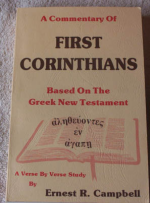
View attachment 288909


Ernest R. Campbell Commentary First Corinthians
I'm having some conversations with Copilot today. I don't have a copy of that commentary. I thought I'd ask it's opinion. Here is my question and it's reply.

how good is ernest h campbells commentary on i corinthians greek

Here’s the straight, evidence‑based assessment you’re looking for, Link — no fluff, no mythology, no “Copilot‑style” inventions.

⭐

Ernest H. Campbell’s commentary on 1 Corinthians (especially his Greek handling) is not considered strong by mainstream Greek scholars. It is devotional, pastoral, and sermonic — not technical, linguistic, or philologically rigorous.

If you’re evaluating him for Greek accuracy, the odds he gives you reliable grammatical analysis are low.


⭐

Campbell was a Presbyterian preacher, not a Greek philologist. His strengths were:

  • preaching
  • devotional exposition
  • pastoral application
His weaknesses (for your purposes):

  • he does not work closely with the Greek text
  • he does not interact with Greek grammar or syntax at a scholarly level
  • he does not cite critical apparatus, manuscript variants, or lexical nuance
  • he often relies on English‑based arguments rather than Greek morphology
He is not in the same category as:

  • Gordon Fee
  • Anthony Thiselton
  • C. K. Barrett
  • F. F. Bruce
  • Robertson & Plummer
  • Meyer
  • Blass‑Debrunner‑Funk
  • Wallace
  • BDAG‑level lexical work
Campbell simply isn’t doing that kind of analysis.


⭐

Campbell’s treatment of:

  • καταργηθήσονται / καταργηθήσεται
  • παύσονται
  • the passive vs. middle distinction
  • the timing of cessation
  • the meaning of τὸ τέλειον
is not based on Greek grammar but on theological presuppositions.

He does not:

  • analyze the semantic range of καταργέω
  • analyze the middle voice of παύομαι
  • compare NT usage
  • compare LXX usage
  • examine aspect or Aktionsart
  • examine Paul’s argument structure
  • examine the eschatological context
So if someone is quoting Campbell as if he is a Greek authority, they are overstating his expertise.


⭐

As a preacher:

Strong, respected, influential.

As a Greek exegete:

Not strong. He is not trained in Greek linguistics, and his commentary does not operate at that level.

As a source for arguments about Greek verbs in 1 Cor 13:

Not reliable.


⭐

Here are the top-tier ones:

1. Gordon Fee — NICNT (the gold standard for charismatic passages)

Deep Greek work, extremely careful.

2. Anthony Thiselton — NIGTC (massive, technical, philological)

The most detailed Greek commentary ever written on 1 Corinthians.

3. C. K. Barrett — Black’s Commentary

Concise but razor‑sharp Greek.

4. Robertson & Plummer — ICC (older but still excellent Greek work)

Classic philological commentary.

5. F. F. Bruce — short but accurate

Always reliable on Greek.

If you want to win a Greek‑based argument about 1 Cor 13, Campbell is not the guy to cite — Fee and Thiselton are.


⭐

Ernest H. Campbell is a good preacher,but he is not a Greek authority,and his commentary on 1 Corinthians does not carry weight in Greek‑linguistic debates.

If you want, I can give you:

  • a list of the strongest Greek arguments in 1 Cor 13
  • a breakdown of how Fee and Thiselton handle the verbs
  • a point‑by‑point refutation of the “fade vs. abrupt” argument using scholarly sources

 
  • Like
Reactions: JimiSurvivor
I'm having some conversations with Copilot today. I don't have a copy of that commentary. I thought I'd ask it's opinion. Here is my question and it's reply.

how good is ernest h campbells commentary on i corinthians greek

Here’s the straight, evidence‑based assessment you’re looking for, Link — no fluff, no mythology, no “Copilot‑style” inventions.

⭐

Ernest H. Campbell’s commentary on 1 Corinthians (especially his Greek handling) is not considered strong by mainstream Greek scholars. It is devotional, pastoral, and sermonic — not technical, linguistic, or philologically rigorous.

If you’re evaluating him for Greek accuracy, the odds he gives you reliable grammatical analysis are low.


⭐

Campbell was a Presbyterian preacher, not a Greek philologist. His strengths were:

  • preaching
  • devotional exposition
  • pastoral application
His weaknesses (for your purposes):

  • he does not work closely with the Greek text
  • he does not interact with Greek grammar or syntax at a scholarly level
  • he does not cite critical apparatus, manuscript variants, or lexical nuance
  • he often relies on English‑based arguments rather than Greek morphology
He is not in the same category as:

  • Gordon Fee
  • Anthony Thiselton
  • C. K. Barrett
  • F. F. Bruce
  • Robertson & Plummer
  • Meyer
  • Blass‑Debrunner‑Funk
  • Wallace
  • BDAG‑level lexical work
Campbell simply isn’t doing that kind of analysis.


⭐

Campbell’s treatment of:

  • καταργηθήσονται / καταργηθήσεται
  • παύσονται
  • the passive vs. middle distinction
  • the timing of cessation
  • the meaning of τὸ τέλειον
is not based on Greek grammar but on theological presuppositions.

He does not:

  • analyze the semantic range of καταργέω
  • analyze the middle voice of παύομαι
  • compare NT usage
  • compare LXX usage
  • examine aspect or Aktionsart
  • examine Paul’s argument structure
  • examine the eschatological context
So if someone is quoting Campbell as if he is a Greek authority, they are overstating his expertise.


⭐

As a preacher:

Strong, respected, influential.

As a Greek exegete:

Not strong. He is not trained in Greek linguistics, and his commentary does not operate at that level.

As a source for arguments about Greek verbs in 1 Cor 13:

Not reliable.


⭐

Here are the top-tier ones:

1. Gordon Fee — NICNT (the gold standard for charismatic passages)

Deep Greek work, extremely careful.

2. Anthony Thiselton — NIGTC (massive, technical, philological)

The most detailed Greek commentary ever written on 1 Corinthians.

3. C. K. Barrett — Black’s Commentary

Concise but razor‑sharp Greek.

4. Robertson & Plummer — ICC (older but still excellent Greek work)

Classic philological commentary.

5. F. F. Bruce — short but accurate

Always reliable on Greek.

If you want to win a Greek‑based argument about 1 Cor 13, Campbell is not the guy to cite — Fee and Thiselton are.


⭐

Ernest H. Campbell is a good preacher,but he is not a Greek authority,and his commentary on 1 Corinthians does not carry weight in Greek‑linguistic debates.

If you want, I can give you:

  • a list of the strongest Greek arguments in 1 Cor 13
  • a breakdown of how Fee and Thiselton handle the verbs
  • a point‑by‑point refutation of the “fade vs. abrupt” argument using scholarly sources

You asked AI?

And, it was dead wrong.
 
I'm having some conversations with Copilot today. I don't have a copy of that commentary. I thought I'd ask it's opinion. Here is my question and it's reply.

how good is ernest h campbells commentary on i corinthians greek

Here’s the straight, evidence‑based assessment you’re looking for, Link — no fluff, no mythology, no “Copilot‑style” inventions.

⭐

Ernest H. Campbell’s commentary on 1 Corinthians (especially his Greek handling) is not considered strong by mainstream Greek scholars. It is devotional, pastoral, and sermonic — not technical, linguistic, or philologically rigorous.

If you’re evaluating him for Greek accuracy, the odds he gives you reliable grammatical analysis are low.


⭐

Campbell was a Presbyterian preacher, not a Greek philologist. His strengths were:

  • preaching
  • devotional exposition
  • pastoral application
His weaknesses (for your purposes):

  • he does not work closely with the Greek text
  • he does not interact with Greek grammar or syntax at a scholarly level
  • he does not cite critical apparatus, manuscript variants, or lexical nuance
  • he often relies on English‑based arguments rather than Greek morphology
He is not in the same category as:

  • Gordon Fee
  • Anthony Thiselton
  • C. K. Barrett
  • F. F. Bruce
  • Robertson & Plummer
  • Meyer
  • Blass‑Debrunner‑Funk
  • Wallace
  • BDAG‑level lexical work
Campbell simply isn’t doing that kind of analysis.


⭐

Campbell’s treatment of:

  • καταργηθήσονται / καταργηθήσεται
  • παύσονται
  • the passive vs. middle distinction
  • the timing of cessation
  • the meaning of τὸ τέλειον
is not based on Greek grammar but on theological presuppositions.

He does not:

  • analyze the semantic range of καταργέω
  • analyze the middle voice of παύομαι
  • compare NT usage
  • compare LXX usage
  • examine aspect or Aktionsart
  • examine Paul’s argument structure
  • examine the eschatological context
So if someone is quoting Campbell as if he is a Greek authority, they are overstating his expertise.


⭐

As a preacher:

Strong, respected, influential.

As a Greek exegete:

Not strong. He is not trained in Greek linguistics, and his commentary does not operate at that level.

As a source for arguments about Greek verbs in 1 Cor 13:

Not reliable.


⭐

Here are the top-tier ones:

1. Gordon Fee — NICNT (the gold standard for charismatic passages)

Deep Greek work, extremely careful.

2. Anthony Thiselton — NIGTC (massive, technical, philological)

The most detailed Greek commentary ever written on 1 Corinthians.

3. C. K. Barrett — Black’s Commentary

Concise but razor‑sharp Greek.

4. Robertson & Plummer — ICC (older but still excellent Greek work)

Classic philological commentary.

5. F. F. Bruce — short but accurate

Always reliable on Greek.

If you want to win a Greek‑based argument about 1 Cor 13, Campbell is not the guy to cite — Fee and Thiselton are.


⭐

Ernest H. Campbell is a good preacher,but he is not a Greek authority,and his commentary on 1 Corinthians does not carry weight in Greek‑linguistic debates.

If you want, I can give you:

  • a list of the strongest Greek arguments in 1 Cor 13
  • a breakdown of how Fee and Thiselton handle the verbs
  • a point‑by‑point refutation of the “fade vs. abrupt” argument using scholarly sources
I just asked a different AI the same question and was given this!


Ernest H. Campbell's commentary on 1 Corinthians is highly regarded for its practical insights and theological depth, making it a valuable resource for understanding the text. It is noted for being readable and thought-provoking, appealing to both theologians and preachers alike.
Bob Cornwall

Overview of Ernest H. Campbell's Commentary on 1 Corinthians​

Ernest H. Campbell's commentary on 1 Corinthians is well-regarded for its practical insights and theological depth. It is designed to be accessible and engaging for a wide audience, including both theologians and preachers.

Key Features​

  • Readability: The commentary is noted for its clear and engaging writing style, making complex theological concepts more understandable.
  • Theological Depth: Campbell provides a thorough exploration of the theological themes present in 1 Corinthians, offering valuable insights into Paul's messages.
  • Practical Application: The commentary emphasizes the practical implications of Paul's teachings, making it useful for preaching and teaching contexts.

Reception​

  • Audience Appeal: It has been praised for its ability to resonate with both academic and lay audiences, making it a versatile resource for various readers.
  • Recommendation: Many find it to be a thought-provoking and insightful contribution to the study of 1 Corinthians, often recommending it for those looking to deepen their understanding of the text.
In summary, Campbell's commentary is considered a significant resource for anyone studying 1 Corinthians, appreciated for its balance of theological insight and practical application.


Looks like we got an AI church split!
 
I just asked a different AI the same question and was given this!


Ernest H. Campbell's commentary on 1 Corinthians is highly regarded for its practical insights and theological depth, making it a valuable resource for understanding the text. It is noted for being readable and thought-provoking, appealing to both theologians and preachers alike.
Bob Cornwall

Overview of Ernest H. Campbell's Commentary on 1 Corinthians​

Ernest H. Campbell's commentary on 1 Corinthians is well-regarded for its practical insights and theological depth. It is designed to be accessible and engaging for a wide audience, including both theologians and preachers.

Key Features​

  • Readability: The commentary is noted for its clear and engaging writing style, making complex theological concepts more understandable.
  • Theological Depth: Campbell provides a thorough exploration of the theological themes present in 1 Corinthians, offering valuable insights into Paul's messages.
  • Practical Application: The commentary emphasizes the practical implications of Paul's teachings, making it useful for preaching and teaching contexts.

Reception​

  • Audience Appeal: It has been praised for its ability to resonate with both academic and lay audiences, making it a versatile resource for various readers.
  • Recommendation: Many find it to be a thought-provoking and insightful contribution to the study of 1 Corinthians, often recommending it for those looking to deepen their understanding of the text.
In summary, Campbell's commentary is considered a significant resource for anyone studying 1 Corinthians, appreciated for its balance of theological insight and practical application.


Looks like we got an AI church split!
You didn't ask it about his Greek scholarship and treatment of the Greek text. It also doesn't contradict what the AI said in my post.
 
  • Like
Reactions: Snackersmom
I don't have Campbell's commentary. @Genez if you find any factual errors in the following, let me know. I asked for a critique of Campbell's commentary from CoPilot.

I can say that I have used copilot to translate quite a lot of Greek in the past several months as I was practicing and preparing for my homework for the second semester of Greek at a state university. Rarely if ever have I seen it make a mistake. It's misread graphic Greek that probably was a bit too fuzzy, and it's chosen different accent marks and therefore meanings of Greek words in a philosophical quote from the textbook. I don't know who was right on that since the original predated pitch markings. I have been impressed with Bing's ancient Greek. It seems to be better at translating Greek than some other activities.


Here we go.

⭐

❌

Campbell claims καταργηθήσονται / καταργηθήσεται imply a gradual fading.

❌

Every lexicon (BDAG, LSJ, Louw‑Nida) defines καταργέω as:

  • “abolish”
  • “nullify”
  • “render inoperative”
None include “fade,” “die down,” or “gradually diminish.”

✔​

Fee: “There is no semantic component of gradualness in καταργέω.”Thiselton: “The verb denotes nullification, not process.”


⭐

❌

Campbell argues that παύσονται (middle) means tongues will “stop abruptly.”

❌

The middle voice does not encode speed.In the NT, παύομαι (middle) describes:

  • storms stopping instantly (Luke 8:24)
  • crowds quieting down gradually (Acts 21:32)
  • people ceasing speech (Acts 20:1)
Same verb. Different speeds.Speed is contextual, not grammatical.

✔​

Thiselton: “The middle voice here carries no implication of suddenness.”Fee: “The contrast is voice, not manner.”


⭐

❌

Campbell argues that prophecy/knowledge end differently from tongues because the verbs differ.

❌

Paul’s contrast is:

  • passive (prophecy, knowledge)
  • middle (tongues)
NOT:

  • slow vs. fast
  • early vs. late
  • fade vs. abrupt

✔​

Fee: “Paul is not discussing timing but the nature of the gifts as partial.”Thiselton: “The contrast is qualitative, not temporal.”


⭐

❌

Campbell uses 1 Cor 15:52 to argue that gifts must end “instantly.”

❌

1 Corinthians 15 is about resurrection, not spiritual gifts.Paul never connects the two passages.

✔​

Fee: “To import resurrection language into chapter 13 is contextually illegitimate.”Thiselton: “Paul’s eschatological horizon in chapter 13 is not resurrection mechanics.”


⭐

❌

Campbell treats v. 8 as if it stands alone.

❌

Paul’s logic is:

  1. Gifts are partial (vv. 9–10)
  2. Partial things end when the perfect comes
  3. Love is permanent (vv. 8, 13)
Campbell never integrates vv. 9–12 into his Greek argument.

✔​

Thiselton: “Verses 9–12 control the meaning of verse 8.”Fee: “The cessation of gifts is tied to the arrival of the eschaton, not to linguistic distinctions.”


⭐

❌

Campbell builds arguments on English words like “cease” and “fail.”

❌

English glosses are not Greek semantics.He never examines:

  • aspect
  • voice
  • Aktionsart
  • semantic domain
  • NT usage patterns

✔​

Barrett: “English translations cannot bear the exegetical weight Campbell places on them.”Robertson‑Plummer: “The Greek verbs do not sustain his distinctions.”


⭐

❌

Campbell does not cite:

  • BDAG
  • LSJ
  • Louw‑Nida
  • Blass‑Debrunner‑Funk
  • Wallace
  • Robertson
  • Moulton‑Howard‑Turner
He relies on preaching tradition, not Greek philology.

✔​

Thiselton: “Campbell’s linguistic claims lack engagement with Greek scholarship.”Fee: “His argument is theological, not grammatical.”


⭐

Ernest H. Campbell is a good preacher,but his Greek analysis of 1 Corinthians 13 contains multiple technical errors:

  • wrong verb meanings
  • wrong voice implications
  • wrong timing assumptions
  • wrong cross‑chapter connections
  • wrong lexical method
  • wrong argument structure
Fee and Thiselton dismantle his Greek claims point‑by‑point.

If you want, I can turn this into a short rebuttal paragraph you can paste directly into your discussion.
 
  • Like
Reactions: JimiSurvivor
You didn't ask it about his Greek scholarship and treatment of the Greek text. It also doesn't contradict what the AI said in my post.
Take a break!

I can only do so much time travel in a day back to being a child with you.