
I would need to see it in context.
It is about the ancient culture and how they expressed themselves.

I would need to see it in context.
Claiming Adam only brought physical death to the human race is a historic error that completely ignores the direct grammar and context of Scripture. Let's look at the text:The wages of sin is death - it is this physical death Adam brought to the human race.
Claiming Adam only brought physical death to the human race is a historic error that completely ignores the direct grammar and context of Scripture. Let's look at the text:
Adam didn't just give us a gravesite; he gave us a dead heart. If human nature remained morally neutral and spiritually alive after the fall, Ephesians 2:1 would be an outright lie.
- 1. Romans 5 says Adam made us legal sinners: You quoted Romans 5:12 but stopped before the explanation. Romans 5:18–19 explicitly states that by Adam's offense “judgment came upon all men to condemnation” and “many were made sinners.” Condemnation and being legally constituted as a sinner are spiritual, judicial realities—not just physical conditions like physical death or pulling weeds.
- 2. Genesis proves spiritual death happened instantly: In Genesis 2:17, God warned, “in the day that thou eatest thereof thou shalt surely die.” Adam did not drop dead physically that day; he lived for hundreds of years. What died instantly was his spiritual relationship with God. He immediately hid in fear, shame, and hostility (Genesis 3:8)—the exact definition of spiritual and moral death.
- 3. Ephesians explicitly links this to all children: You claim there is no reference to Adam's children inheriting a moral curse. But Ephesians 2:1–3 states that all human beings are born “by nature the children of wrath” and are “dead in trespasses and sins.” You cannot be an object of God's judicial wrath merely for having a mortal, physical body. We are under wrath because we inherit Adam's ruined, spiritually dead nature from birth.
Both - they died spiritually that day - then 900 plus years later physically
Psalms 58:3 The wicked are estranged from the womb: they go astray as soon as they be born, speaking lies.Claiming Adam only brought physical death to the human race is a historic error that completely ignores the direct grammar and context of Scripture. Let's look at the text:
Adam didn't just give us a gravesite; he gave us a dead heart. If human nature remained morally neutral and spiritually alive after the fall, Ephesians 2:1 would be an outright lie.
- 1. Romans 5 says Adam made us legal sinners: You quoted Romans 5:12 but stopped before the explanation. Romans 5:18–19 explicitly states that by Adam's offense “judgment came upon all men to condemnation” and “many were made sinners.” Condemnation and being legally constituted as a sinner are spiritual, judicial realities—not just physical conditions like physical death or pulling weeds.
- 2. Genesis proves spiritual death happened instantly: In Genesis 2:17, God warned, “in the day that thou eatest thereof thou shalt surely die.” Adam did not drop dead physically that day; he lived for hundreds of years. What died instantly was his spiritual relationship with God. He immediately hid in fear, shame, and hostility (Genesis 3:8)—the exact definition of spiritual and moral death.
- 3. Ephesians explicitly links this to all children: You claim there is no reference to Adam's children inheriting a moral curse. But Ephesians 2:1–3 states that all human beings are born “by nature the children of wrath” and are “dead in trespasses and sins.” You cannot be an object of God's judicial wrath merely for having a mortal, physical body. We are under wrath because we inherit Adam's ruined, spiritually dead nature from birth.

Yes all born in sin. Ive never seen any scripture that tells me, or alludes to, that free will died as well.Adam had free will before he fell.
Every single person born of him, after he fell, was born in ADAMS fallen, spiritual condition.
Yes, you are correct, thanks for clarifying.Are you sure about your definitions? Sin is not the issue. We are sinners before and after being born again. So sin can't be the deciding factor.
"I was found by those who did not seek Me" implies God visited the gentiles by means of Paul when they weren't seeking God. If Jesus came to seek and save those who were lost, it means God sought us and not we. So, we cannot make a choice in the unknown. Only when someone introduces Jesus to us, we can make a choice. In the case of Paul's conversion, the encounter was so convincing that he did not need a choice to be made, because that encounter convinced Paul that Jesus is the Messiah.I am not proving your point at all. Paul quotes God's words in Isaiah, "I was found by those who did not seek Me: I was made manifest to those who did not ask for Me." They were not seeking God, or asking for Him. They didn't think to themselves, "I know, I'll choose to believe God!" Paul himself knew of this. He was converted on the road on the way to Damascus, where he was going, still breathing threats and murder against the disciples of the Lord. He wasn't seeking God. He thought he was serving Him by attacking/capturing Christians. That all changed when the risen Jesus Christ spoke to him, saying, "Saul, Saul, why are you persecuting Me?" No hint that Saul had a choice on whether to believe on the Lord Jesus Christ.
As I said everyone were called, but only the Christians responded. So, when Paul is addressing to the Christians weren't they the called people? Definitely yes. What about the rest? Weren't they called as well? Yes, but why should Paul be concerned about them because they rejected the call.But in the context of the verses I quoted, Paul is applying the word "called" to the Christians he is writing to.
So why say this later ? @WayneNSOFYI......he clearly stated both in another post.
but spiritual death or moral death whatever term you want to use was not passed on at Adam and Eves judgement .....
Okay, mans initial going astray was in Adam, Adam was the covenant head of the natural man. When he sinned and died spiritually, all for whom He represented did alsoPsalms 58:3 The wicked are estranged from the womb: they go astray as soon as they be born, speaking lies.
Isaiah 53:6 All we like sheep have gone astray; we have turned every one to his own way; and the Lord hath laid on him the iniquity of us all.
Coming to Christ is a struggle in which the old mind in bondage to its desires [in alliance with demonic captors] tries to maintain its centrality against the influence of the Holy Spirit whose work is to CONVICT us of our sin of unbelief and establish the rule of God in our hearts. The two ways of thinking strive against each other and peace only comes when one of the two sides dies. John Chrysostom said that the scripture "no one can come unless the Father draws Him" is not saying we are UNABLE to come, only that we require much assistance but that is why the Spirit is involved. The natural mind cannot be reformed but it can be can be put to death and reborn.Context. You are ignoring contextual harmony that must exist in this discussion.
Any time any people are referenced for Salvation,they are only those whom God has predestined for his call.
(No one can come to me unless the father calls the.) The only way they need the call is if Holy Spirit has entered and is open g their consciousness to heed the call. Because otherwise the natural mind of man cannot heed the call. They cannot understand the things,that call,of God. (1Corinthians 2)
You are using John Chrysostom to invent a cooperative wrestling match that the text of Scripture completely denies. Let's look at the absolute linguistic and logical failure of your timeline.Coming to Christ is a struggle in which the old mind in bondage to its desires [in alliance with demonic captors] tries to maintain its centrality against the influence of the Holy Spirit whose work is to CONVICT us of our sin of unbelief and establish the rule of God in our hearts. The two ways of thinking strive against each other and peace only comes when one of the two sides dies. John Chrysostom said that the scripture "no one can come unless the Father draws Him" is not saying we are UNABLE to come, only that we require much assistance but that is why the Spirit is involved. The natural mind cannot be reformed but it can be can be put to death and reborn.
As usual, quoting Gods Word is the best way to deal with those who preach another gospel. Romans 9:6-8 sums it up and it should silence those oppose the doctrine of election onto salvation.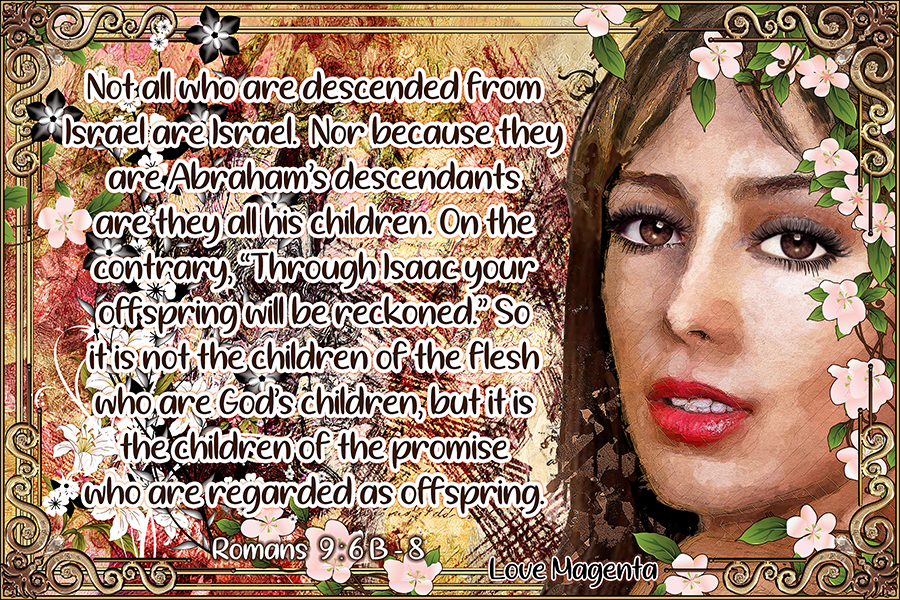
Romans 9 verses 6b-8 Not all who are descended from Israel are Israel... It is the children of promise who are regarded as offspring.

God uses certain means to accomplish His purposes. He never revealed why, or whom, or when, or by what means He would save or leave a sinner dead in their sin.Why would He want a light for the world if He already decided who He would save and who He wouldnt?

You are using John Chrysostom to invent a cooperative wrestling match that the text of Scripture completely denies. Let's look at the absolute linguistic and logical failure of your timeline.
First, your claim that John 6:44 does not mean we are unable to come completely contradicts the explicit vocabulary of Jesus Christ. In John 6:44, Jesus says that no man can come to me except the Father draw him. The Greek word for can is dynatai, which means power, ability, or capacity. By adding the negative particle, Jesus is stating a total, absolute lack of moral ability. He is not saying man needs a lot of help or much assistance to walk; He is saying man has zero capacity to take a single step toward Him until the drawing occurs.
Second, look at the word Jesus chooses for draw. The Greek word is helkyō. It does not mean to give assistance, to persuade, or to gently influence a wrestling mind. In first-century Greek literature and elsewhere in the New Testament, helkyō means to drag by force. It is the exact word used in John 21:11 for dragging a heavy net full of fish to the shore. It is the exact word used in Acts 16:19 when Paul and Silas are dragged into the marketplace before the rulers. A net of fish does not strive or assist the fisherman; the fisherman drags it by his own strength.
Third, your timeline is a logical impossibility. You admit that the natural mind cannot be reformed but must be put to death and reborn. If the natural mind is currently in absolute bondage to its desires and allied with demonic captors, how can that corrupted mind choose to put itself to death? A prisoner cannot execute himself. A corpse cannot perform its own resurrection. To say a man must struggle against his demonic captors using his old mind to allow the Spirit to kill him is to claim the old mind wants to destroy itself.
Finally, this brings us right back to the unanswerable reality of 1 Corinthians 4:7. If coming to Christ is a struggle between two ways of thinking, and God gives the exact same assisting Spirit to Sinner A and Sinner B, why does Sinner A successfully yield and die while Sinner B fights and goes to hell? It cannot be the Spirit, because both had the same Spirit. Therefore, Sinner A won the struggle because Sinner A possessed a better, wiser, or more cooperative free will.
The Bible does not present salvation as a struggle where the Holy Spirit helps a prisoner break out of jail. It presents salvation as a sovereign jailbreak where the King walks into the cell, binds the strong man, breaks the chains, and carries the helpless captive out into the light. The text has spoken, and the power belongs entirely to the Resurrector, not the corpse in the grave.
As I said everyone were called, but only the Christians responded. So, when Paul is addressing to the Christians weren't they the called people? Definitely yes. What about the rest? Weren't they called as well? Yes, but why should Paul be concerned about them because they rejected the call.
The Bible does not differentiate between an effectual call and a general call. There is only one call, and that is through the preaching of the gospel. You said, "only the person who has been made alive by the Spirit is able to choose Christ". Your "Ordo Salutis" is wrong. No one is made alive until they first hear the gospel and respond to that call. Your statement comes from the false premise of "total depravity". Bible does not teach "total depravity". When Adam fell into sin, only his spirit died, but his soul was very much alive. Through his soul, he was able to think, feel, and make decisions. So, when people hear the gospel, they are able to hear, think, and make decisions.You do not seem to be defining the difference between the "effectual" call and the "general" call of the Gospel or did I miss your point?
In your previous post, you stated: "Only when someone introduces Jesus to us, we can make a choice." This statement, taken literally, would be incorrect. The Bible clearly teaches, only the person who has been made alive by the Spirit is able to choose Christ. This then, is the effectual call of the Gospel because the ground (our heart) has been prepared for the planting of the Word; therefore, the Word will have a converting effect. The natural man, possesses no desire for Christ because his fallen nature is at enmity with God; therefore, this ground has not been prepared for the Word. The Word having no root withers and dies. It possesses no conversion effect. This is the general call of the Gospel.
Your claim that the Bible does not distinguish between a general call and an effectual call completely ignores the explicit vocabulary of the New Testament. No one disputes that the outward preaching of the gospel goes out generally to everyone who hears it. But the Apostle Paul explicitly outlines a specific, sovereign call that is distinct from the mere sound of a preacher's voice.The Bible does not differentiate between an effectual call and a general call. There is only one call, and that is through the preaching of the gospel. You said, "only the person who has been made alive by the Spirit is able to choose Christ". Your "Ordo Salutis" is wrong. No one is made alive until they first hear the gospel and respond to that call. Your statement comes from the false premise of "total depravity". Bible does not teach "total depravity". When Adam fell into sin, only his spirit died, but his soul was very much alive. Through his soul, he was able to think, feel, and make decisions. So, when people hear the gospel, they are able to hear, think, and make decisions.
1 Corinthians 2:14 is self explanatory, "But the natural man does not receive the things of the Spirit of God, for they are foolishness to him; nor can he know them, because they are spiritually discerned."See you guys just pull out proof texts but never really deal with the verses in context, exegetic, hermeneutics.
Please exegete 1 Cor. 2:14 according to the full context of letters, are you able to do that?
The fact that all of your proof texts have each and everyone have been debunked completely over and over again for years now
informs me that man is not BORN unable to Believe IN /Trust IN the good faith offer of Christ Jesus for salvation.


