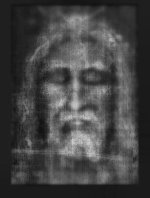
How do preachers or teachers explain this?

  • Christian Chat is a moderated online Christian community allowing Christians around the world to fellowship with each other in real time chat via webcam, voice, and text, with the Christian Chat app. You can also start or participate in a Bible-based discussion here in the Christian Chat Forums, where members can also share with each other their own videos, pictures, or favorite Christian music.

    If you are a Christian and need encouragement and fellowship, we're here for you! If you are not a Christian but interested in knowing more about Jesus our Lord, you're also welcome! Want to know what the Bible says, and how you can apply it to your life? Join us!

    To make new Christian friends now around the world, click here to join Christian Chat.
I agree.

Am I correct in understanding your answer? Do you agree that anyone who does not know the one true God also does not know the Holy Spirit?


Yes, that is what I said. John explains in verse 21 that in verse 19, Jesus had been using picture-language. But both verses are in God's word. A special revelation from God is not necessary to tell us that Jesus meant His body, not the temple of stone.

This is where human pride toward God becomes evident. Because once something is written, people assume that they already know its meaning. Yet this is merely a demonstration of how God intended the language of parables.
So how is the explanation that Jesus was speaking of His body "the language of parables?" That's rather like saying that Jesus explaining to His disciples the parable of the sower was itself a parable.
 
  • Like
Reactions: Dino246
So how is the explanation that Jesus was speaking of His body "the language of parables?" That's rather like saying that Jesus explaining to His disciples the parable of the sower was itself a parable.
When Jesus said, “Destroy this temple” (John 2:19), He was speaking in parable or dark saying about the temple.
However, because they were inside the literal temple, the Jews understood Him to be referring to the literal temple (John 2:20).
But when He revealed that the temple actually referred to His own body (John 2:21), it was no longer a parable.

The Lord’s purpose in presenting this demonstration was to emphasize how He speaks through parables. It was meant to teach those who read and believe the Holy Scriptures to humble themselves and ask the Lord for mercy, so that He Himself would reveal the meaning of His parabolic words (Mark 4:34).

But the opposite happened. Instead of humbling themselves, the people became proud, claiming that they already understood what was written and therefore insisting that the words were not parables at all. Without realizing it, they became like the disciples or the multitude who, after being fed by the Lord and failing to understand His parabolic teaching, walked away and left Him (John 6:60, 66).
 
Except where we have good reason not to take a literal meaning (for example, when Jesus used word-pictures, like saying He is the door, the light of the world, etc.) why should we not take the Bible literally? John wrote:

1Jn 5:13 NKJV These things I have written to you who believe in the name of the Son of God, that you may know that you have eternal life, and that you may continue to believe in the name of the Son of God.

Would you claim that those words have a non-literal meaning?


We certainly need the Holy Spirit to make God's word clear to us, but that does not involve private revelations.

Yes, verse 21 makes clear what Jesus meant:

Jhn 2:19 Jesus answered and said to them, "Destroy this temple, and in three days I will raise it up."
Jhn 2:20 Then the Jews said, "It has taken forty-six years to build this temple, and will You raise it up in three days?"
Jhn 2:21 But He was speaking of the temple of His body.

So the context itself makes clear that by "temple" Jesus meant His body.

Yes, but that also is written in the Bible. It isn't an extra revelation given to some Christians and not others.
 
Except where we have good reason not to take a literal meaning (for example, when Jesus used word-pictures, like saying He is the door, the light of the world, etc.) why should we not take the Bible literally? John wrote:

1Jn 5:13 NKJV These things I have written to you who believe in the name of the Son of God, that you may know that you have eternal life, and that you may continue to believe in the name of the Son of God.

Would you claim that those words have a non-literal meaning?


We certainly need the Holy Spirit to make God's word clear to us, but that does not involve private revelations.

Yes, verse 21 makes clear what Jesus meant:

Jhn 2:19 Jesus answered and said to them, "Destroy this temple, and in three days I will raise it up."
Jhn 2:20 Then the Jews said, "It has taken forty-six years to build this temple, and will You raise it up in three days?"
Jhn 2:21 But He was speaking of the temple of His body.

So the context itself makes clear that by "temple" Jesus meant His body.

Yes, but that also is written in the Bible. It isn't an extra revelation given to some Christians and not others.
Would you claim that those words have a non-literal meaning?

The words of God have a literal meaning. People assume that this is all there is to them, so they understand them in the same way that the Jews understood the word “temple” (John 2:20). This was because the Lord said it while they were inside the temple (John 2:19).

But without realizing it, this is where people are deceived. For the literal meaning kills.
2 CORINTHIANS 3:6
6 Who also hath made us able ministers of the new testament; not of the letter, but of the spirit: for the letter killeth, but the spirit giveth life.

As an example, let me ask you this: What did John the Baptist use in his baptism?
 
Again you, who do not know me, are claiming that I do not know the true God. You claim that I am being evasive. Show me what I have written that has been evading the issue, then. You then go on to write as if you know the difference between physical life and spiritual life, and I don't. However, I do know that there is such a difference, because it is taught in the Bible, not by some private revelation to me from God. I have told you before that I agree that truth comes from God. As Jesus said in His high-priestly prayer, the word of God is truth:

Jhn 17:17 Sanctify them by Your truth. Your word is truth.

You say that I am exposing myself as someone who does not know the one true God. You seem to be revealing yourself as somebody who makes public judgements as to the spiritual state of others here whom you do not know personally. I hardly ever report people, but if these sorts of accusations continue, I shall indeed report the posts in which they occur.
We are here to seek the truth, and the word of God is sacred.
Therefore, it should not be treated as something to be debated.
If, according to your belief, what you are reading is not the truth, would it not be better to simply disregard it?
For God is the One who sees and knows all things.

I will share with you who Saul of Tarsus was.

Because he wanted to love and serve God, he studied the word of God in a Bible school.
As a result, he became a Pharisee preacher.
Because he did not know the one true God, he is hurt by the truth being shared by the Lord’s disciples.
Therefore he persecuted the followers, or the chosen ones, of the Lord Jesus.
And because he also did not know the one true God, instead of reporting to God, whom he should have reported to, he reported to men.
ACTS 9:1-2
9 And Saul, yet breathing out threatenings and slaughter against the disciples of the Lord, went unto the high priest,
2 And desired of him letters to Damascus to the synagogues, that if he found any of this way, whether they were men or women, he might bring them bound unto Jerusalem.

The truth is that the word of God never passes away (Ecclesiastes 1:9; Matthew 24:35).
Therefore, what Saul of Tarsus did in the past concerning God and His words is still happening today.
This is what you are doing now.

Therefore, concerning God and His words, anyone who does not know the one true God reports to men.

But we who know the one true God report directly to God Himself, and not to men.
And our report is not intended to stop or silence people from speaking, but rather so that they may be forgiven by God.
LUKE 23:34
34 Then said Jesus, Father, forgive them; for they know not what they do. And they parted his raiment, and cast lots.

ACT 7:60
60 And he kneeled down, and cried with a loud voice, Lord, lay not this sin to their charge. And when he had said this, he fell asleep.

 
When Jesus said, “Destroy this temple” (John 2:19), He was speaking in parable or dark saying about the temple.
Not a parable, but a metaphor, or picture-language.
However, because they were inside the literal temple, the Jews understood Him to be referring to the literal temple (John 2:20).
But when He revealed that the temple actually referred to His own body (John 2:21), it was no longer a parable.
John 2:21 is not Jesus speaking to the disciples, but John's words, inspired by God, to explain what Jesus had said:

NKJV Jhn 2:21 But He was speaking of the temple of His body.

The Lord’s purpose in presenting this demonstration was to emphasize how He speaks through parables. It was meant to teach those who read and believe the Holy Scriptures to humble themselves and ask the Lord for mercy, so that He Himself would reveal the meaning of His parabolic words (Mark 4:34).

But the opposite happened. Instead of humbling themselves, the people became proud, claiming that they already understood what was written and therefore insisting that the words were not parables at all. Without realizing it, they became like the disciples or the multitude who, after being fed by the Lord and failing to understand His parabolic teaching, walked away and left Him (John 6:60, 66).
Not everything that Jesus said was in parables. He sometimes spoke in straightforward language. When He said, "Little girl, arise" to the daughter of Jairus, that was no parable, but a direct command. When He told the money-changers in the temple, "My house shall be called a house of prayer, but you have made it a den of thieves," that was direct, clear speech, quoting the Old Testament, and was not a parable. When He said:

NKJV Jhn 3:16 For God so loved the world that He gave His only begotten Son, that whoever believes in Him should not perish but have everlasting life.

that was not a parable, but straghtforward words.
 
  • Like
Reactions: Dino246
Would you claim that those words have a non-literal meaning?

The words of God have a literal meaning. People assume that this is all there is to them, so they understand them in the same way that the Jews understood the word “temple” (John 2:20). This was because the Lord said it while they were inside the temple (John 2:19).

But without realizing it, this is where people are deceived. For the literal meaning kills.
2 CORINTHIANS 3:6
6 Who also hath made us able ministers of the new testament; not of the letter, but of the spirit: for the letter killeth, but the spirit giveth life.

As an example, let me ask you this: What did John the Baptist use in his baptism?
When Paul writes "for the letter killeth," he doesn't mean "for the literal meaning killeth." Thje context shows that he is talking about the law - the very next verse talks of it being "engraved on stones" ands being the ministry of death. He contrasts that with the ministry of the Spirit:

2Co 3:6 who also made us sufficient as ministers of the new covenant, not of the letter but of the Spirit; for the letter kills, but the Spirit gives life.
2Co 3:7 But if the ministry of death, written and engraved on stones, was glorious, so that the children of Israel could not look steadily at the face of Moses because of the glory of his countenance, which glory was passing away,
2Co 3:8 how will the ministry of the Spirit not be more glorious?

He is not contrasting the literal with the parabolic.
 
  • Like
Reactions: Dino246
Thank you. I agree. It is (or should be) perfectly possible to engage in discussion on Christian topics about which there are various views, without becoming rude or judgemental to those with who we disagree. Like you, I hope that if ever I seem to be being rude or judgemental to somebody, I hope they will let me know (nicely) and I will apologise.
The truth found in the word of God.
From a human perspective, the words of God may be pleasant to accept.
But from God’s perspective, the truth can be painful to accept.
Nevertheless, the truth can never be denied.
HEBREWS 4:12
12 For the word of God is quick, and powerful, and sharper than any twoedged sword, piercing even to the dividing asunder of soul and spirit, and of the joints and marrow, and is a discerner of the thoughts and intents of the heart.

This is like when the Lord Jesus, in His role as the Son of the living God, spoke to the Scribes and Pharisees in Matthew chapter 23.
From a human perspective, it may appear that the Lord was judging them.
But from God’s perspective, the Lord was simply speaking the truth.

And He was not judging them, but rebuking them openly, which is an expression of love.
PROVERBS 27:5
5 Open rebuke is better than secret love.
 
JOHN 14:12
12 Verily, verily, I say unto you, He that believeth on me, the works that I do shall he do also; and greater works than these shall he do; because I go unto my Father.
When we carry the Holy Spirit within us we are guided by his wisdom.
Those who link as one to that power, as Jesus said,will be able to do as he did.

Immanuel,God with us,was Holy God Spirit manifest in flesh.
Now,he is indwelling us.
 
Not a parable, but a metaphor, or picture-language.

John 2:21 is not Jesus speaking to the disciples, but John's words, inspired by God, to explain what Jesus had said:

NKJV Jhn 2:21 But He was speaking of the temple of His body.


Not everything that Jesus said was in parables. He sometimes spoke in straightforward language. When He said, "Little girl, arise" to the daughter of Jairus, that was no parable, but a direct command. When He told the money-changers in the temple, "My house shall be called a house of prayer, but you have made it a den of thieves," that was direct, clear speech, quoting the Old Testament, and was not a parable. When He said:

NKJV Jhn 3:16 For God so loved the world that He gave His only begotten Son, that whoever believes in Him should not perish but have everlasting life.

that was not a parable, but straghtforward words.
When He said, "Little girl, arise" to the daughter of Jairus,

Yes, this is a parable.

When He told the money-changers in the temple, "My house shall be called a house of prayer, but you have made it a den of thieves," that was direct, clear speech, quoting the Old Testament, and was not a parable. When He said:

Because you understand the words of God only in their literal sense, you cannot demonstrate the truth of what the Lord said in Matthew 24:35, that His words will never pass away.
Therefore, you do not see that this is still happening in our time.

But we who have come to know the one true God can clearly see that this is still taking place and continues to take place even today.
 
We are here to seek the truth, and the word of God is sacred.
Agreed.
Therefore, it should not be treated as something to be debated.
Why then are you debating it?
If, according to your belief, what you are reading is not the truth, would it not be better to simply disregard it?
For God is the One who sees and knows all things.
But I do believe that what I read in God's word is the truth.
I will share with you who Saul of Tarsus was.

Because he wanted to love and serve God, he studied the word of God in a Bible school.
As a result, he became a Pharisee preacher.
Because he did not know the one true God, he is hurt by the truth being shared by the Lord’s disciples.
Therefore he persecuted the followers, or the chosen ones, of the Lord Jesus.
And because he also did not know the one true God, instead of reporting to God, whom he should have reported to, he reported to men.
ACTS 9:1-2
9 And Saul, yet breathing out threatenings and slaughter against the disciples of the Lord, went unto the high priest,
2 And desired of him letters to Damascus to the synagogues, that if he found any of this way, whether they were men or women, he might bring them bound unto Jerusalem.
Yes, I agree that before his conversion, Saul/Paul was a Pharisee, and though he was serving God by doing all he could to silence Christians by persecuting them.
The truth is that the word of God never passes away (Ecclesiastes 1:9; Matthew 24:35).
Therefore, what Saul of Tarsus did in the past concerning God and His words is still happening today.
This is what you are doing now.
I am not doing what Saul/Paul did before his conversion. I am not persecuting anybody. Like him on the road to Damascus, I have been brought by God's grace to know and believe on the Lord Jesus Christ and be saved.
Therefore, concerning God and His words, anyone who does not know the one true God reports to men.

But we who know the one true God report directly to God Himself, and not to men.
And our report is not intended to stop or silence people from speaking, but rather so that they may be forgiven by God.
LUKE 23:34
34 Then said Jesus, Father, forgive them; for they know not what they do. And they parted his raiment, and cast lots.

ACT 7:60
60 And he kneeled down, and cried with a loud voice, Lord, lay not this sin to their charge. And when he had said this, he fell asleep.
I know the one true God too. If you are referring to what I said about reporting your posts if you continued making unfounded allegations, that is part of the way a discussion form like this works. It's not intended as a punishment or as me persecuting you, and is nothing like what Saul/Paul was doing to the church before his conversion.
 
When Paul writes "for the letter killeth," he doesn't mean "for the literal meaning killeth." Thje context shows that he is talking about the law - the very next verse talks of it being "engraved on stones" ands being the ministry of death. He contrasts that with the ministry of the Spirit:

2Co 3:6 who also made us sufficient as ministers of the new covenant, not of the letter but of the Spirit; for the letter kills, but the Spirit gives life.
2Co 3:7 But if the ministry of death, written and engraved on stones, was glorious, so that the children of Israel could not look steadily at the face of Moses because of the glory of his countenance, which glory was passing away,
2Co 3:8 how will the ministry of the Spirit not be more glorious?

He is not contrasting the literal with the parabolic.
ROMANS 7:14
14 For we know that the law is spiritual: but I am carnal, sold under sin.
 
When He said, "Little girl, arise" to the daughter of Jairus,

Yes, this is a parable.
Of course it isn't. He said to the dead little girl, "Arise," and she immediately arose. Straightforward words.
When He told the money-changers in the temple, "My house shall be called a house of prayer, but you have made it a den of thieves," that was direct, clear speech, quoting the Old Testament, and was not a parable. When He said:

Because you understand the words of God only in their literal sense, you cannot demonstrate the truth of what the Lord said in Matthew 24:35, that His words will never pass away.
But God's words will never pass away, and that means the whole word of God, both parables and straightforward words.
Therefore, you do not see that this is still happening in our time.

But we who have come to know the one true God can clearly see that this is still taking place and continues to take place even today.
Sorry, what is still happening today? If you mean that God's word is still not passing away, I fully agree.
 
ROMANS 7:14
14 For we know that the law is spiritual: but I am carnal, sold under sin.
Yes, God's law is spiritual. But the Jews imagined that it was just concerned with outward observance, which is why Jesus had to tell them (in plain words, not a parable) that it was spiritual, applying to our hearts:

NKJV Mat 5:21 "You have heard that it was said to those of old, 'YOU SHALL NOT MURDER, and whoever murders will be in danger of the judgment.'
Mat 5:22 But I say to you that whoever is angry with his brother without a cause shall be in danger of the judgment. And whoever says to his brother, 'Raca!' shall be in danger of the council. But whoever says, 'You fool!' shall be in danger of hell fire.
 
Agreed.

Why then are you debating it?

But I do believe that what I read in God's word is the truth.

Yes, I agree that before his conversion, Saul/Paul was a Pharisee, and though he was serving God by doing all he could to silence Christians by persecuting them.

I am not doing what Saul/Paul did before his conversion. I am not persecuting anybody. Like him on the road to Damascus, I have been brought by God's grace to know and believe on the Lord Jesus Christ and be saved.

I know the one true God too. If you are referring to what I said about reporting your posts if you continued making unfounded allegations, that is part of the way a discussion form like this works. It's not intended as a punishment or as me persecuting you, and is nothing like what Saul/Paul was doing to the church before his conversion.
Why then are you debating it?

You are the only one saying that I am debating. I am simply sharing the truth.
And indeed, the truth can be painful. Hebrews 4:12.


I know the one true God too. If you are referring to what I said about reporting your posts if you continued making unfounded allegations, that is part of the way a discussion form like this works. It's not intended as a punishment or as me persecuting you, and is nothing like what Saul/Paul was doing to the church before his conversion.

Because of what you have said, God has revealed it, so I am simply conveying this to you.
However, if you choose to continue holding on to your belief, you will not be forced to change.
God has given people the freedom to make their own decisions.
That is why the multitude were not forced to stay; they were allowed to leave and abandon the Lord, as recorded in John 6:66.
 
Could you provide examples of ways in which Paul is said to have surpassed the works of the Lord Jesus?"
Paul did not do so. Nor did he credit himself thus.

*That above is what I posted in my first reply to you.
Something in the system here is adding words,or garbling words ,even after proof reading before posting so to appear after a reply is committed to post.
 
Of course it isn't. He said to the dead little girl, "Arise," and she immediately arose. Straightforward words.

But God's words will never pass away, and that means the whole word of God, both parables and straightforward words.

Sorry, what is still happening today? If you mean that God's word is still not passing away, I fully agree.
His words will never pass away.

"In the beginning was the word,and the word was with God and the word was God....
...and the word became flesh and dwelt among us."

1786263505366.jpeg
 
Of course it isn't. He said to the dead little girl, "Arise," and she immediately arose. Straightforward words.

But God's words will never pass away, and that means the whole word of God, both parables and straightforward words.

Sorry, what is still happening today? If you mean that God's word is still not passing away, I fully agree.
Of course it isn't. He said to the dead little girl, "Arise," and she immediately arose. Straightforward words.

The term “little girl” has a corresponding meaning in the Lord’s understanding. It refers to a spiritual characteristic of a person, whether literally male or female, young or old.

For example, Lazarus, the brother of Martha and Mary Magdalene, was raised by the Lord in the same way as the little girl. Although Lazarus was a man and was no longer a child, in the presence of the Lord, Lazarus was a “little girl.” Otherwise, the Lord would not have raised him.


Sorry, what is still happening today? If you mean that God's word is still not passing away, I fully agree.

We who are chosen by God, from the time we came to know the one true God, have had the blindness of our spiritual eyes healed by Him. Therefore, we can see that the events of the past, particularly those concerning God and His words, are still taking place today.
 
Of course it isn't. He said to the dead little girl, "Arise," and she immediately arose. Straightforward words.

The term “little girl” has a corresponding meaning in the Lord’s understanding. It refers to a spiritual characteristic of a person, whether literally male or female, young or old.
Yet we are told that she was indeed a young girl:

NKJV Luk 8:41 And behold, there came a man named Jairus, and he was a ruler of the synagogue. And he fell down at Jesus' feet and begged Him to come to his house,
Luk 8:42 for he had an only daughter about twelve years of age, and she was dying. But as He went, the multitudes thronged Him.

True, Jesus also raised Lazarus, an adult, and the widow's son at Nain, described in Luke as a "dead man." But the passage telling us about the daughter of Jairus, though it shows us that Jesus had power to raise the dead, is not referring to some spiritual characteristic common to the widow's son at Nain and Lazarus.

For example, Lazarus, the brother of Martha and Mary Magdalene, was raised by the Lord in the same way as the little girl. Although Lazarus was a man and was no longer a child, in the presence of the Lord, Lazarus was a “little girl.” Otherwise, the Lord would not have raised him.
Lazarus did not have to be a little girl for Jesus to raise him. He was dead, and could not display child-like characteristics.
Sorry, what is still happening today? If you mean that God's word is still not passing away, I fully agree.

We who are chosen by God, from the time we came to know the one true God, have had the blindness of our spiritual eyes healed by Him. Therefore, we can see that the events of the past, particularly those concerning God and His words, are still taking place today.
Some events of the past are still taking place today, but by no means all of them. God is not destroying the world with a flood, as He did in Noah's day. He is not still parting the Red Sea, or bring plagues upon Pharaoh and Egypt. He is not still causing His Holy Spirit to come down like tongues of fire. However, I do agree that God's word will never pass away. As Peter wrote:

NKJV 1Pe 1:24 because "ALL FLESH IS AS GRASS, AND ALL THE GLORY OF MAN AS THE FLOWER OF THE GRASS. THE GRASS WITHERS, AND ITS FLOWER FALLS AWAY,
1Pe 1:25 BUT THE WORD OF THE LORD ENDURES FOREVER." Now this is the word which by the gospel was preached to you.