On the contrary, the problem is not that answers don't come from politics. The problem is that there are too many wrong answers, and many people are not even asking the right questions to the right people.
They don't have to be the ones in charge. Right now there are three third party/independent congressmen when their should be 300. And I bet you've done absolutely nothing about that have you?
These November Elections are SAFE GUARDED!!!And yet the joke is STILL on all who think there will be answers coming from politics.
If you think they are all going to suddenly get born again and start being led of the Lord you're mistaken.
Why would I waste my time involving my self in any political clown shows?
It's all leading to the one world government and the one world leader that all the politicians in the US will bow down to when the time come so I'm not interested in involving myself in other people's sin.
The D's WILL NOT be able to STEAL THESE ELECTIONS!!!
POTUS still holds the TRUMP Card for EOs for the Save America Act and Insurrection Act!!!
Key safeguards protecting the legality and integrity of the November 2026 U.S. midterm elections (Election Day: November 3) operate primarily at the state and local level, with federal support focused on cybersecurity, foreign interference, and critical infrastructure protection. Elections remain decentralized, which itself limits the scale of any single point of failure.
1. Decentralized Administration and Paper-Based Records
Elections are run by thousands of state and local jurisdictions under state law, not a national system. Most voters cast paper ballots (or use systems that produce a voter-verifiable paper record). These enable post-election manual audits, risk-limiting audits, and recounts to confirm that electronic tallies match the paper. Chain-of-custody procedures, bipartisan handling teams, sealed storage, and observer access during counting further protect the process.2. Cybersecurity and Infrastructure Protection
- CISA’s 2026 Election Infrastructure Security Plan (“Securing the Next 250,” released September 24, 2026) offers free, voluntary services to state and local officials: vulnerability scanning, on-site penetration testing, tabletop exercises, multi-factor authentication guidance (especially for voter registration databases), network monitoring/anomaly detection, logging, and threat information sharing. It emphasizes paper ballots for auditability, timely patching of systems, and insider-threat mitigations.
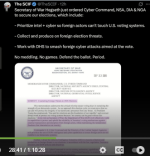
- Military and intelligence cyber support: Defense Secretary Pete Hegseth directed U.S. Cyber Command, the National Security Agency (NSA), Defense Intelligence Agency, and other defense intelligence assets to prioritize defense of election systems against foreign cyber threats and malign influence through Election Day. This builds on the longstanding designation of election infrastructure as critical infrastructure (2017).
3. Voter Eligibility, Identification, and Registration Safeguards
- As of late 2026, 36 states require some form of identification to vote in person (24 of them photo ID, with variations and exceptions such as provisional ballots). Many states also require ID or identifying numbers for mail/absentee ballots.
- Multiple states have ballot measures or laws in 2026 reinforcing citizenship requirements for voting and strengthening ID rules. Federal efforts (including executive actions) promote use of databases such as the Systematic Alien Verification for Entitlements (SAVE) program and related tools to help verify eligibility and clean voter rolls. Provisional ballots allow voters without immediate ID to cast a ballot that is later verified.
4. Procedural, Physical, and Observational Layers
- Bipartisan or multipartisan teams for ballot handling and counting.
- Official poll watchers/observers from parties and campaigns.
- Physical security at polling places, storage facilities, and election offices (addressing threats such as bomb threats seen in prior cycles).
- Strict timelines and transparent canvass/certification processes under state law.
- Department of Justice plans to deploy substantial numbers of personnel for observation of polling places.
- Ongoing litigation readiness and court oversight of election administration disputes.
5. Federal Coordination and Support Roles
The Election Assistance Commission (EAC) continues day-to-day support (funding formulas, testing/certification processes under existing standards) even while currently operating without a full quorum of commissioners. DHS/CISA regional advisers and fusion-center information sharing remain available. Military cyber resources supplement civilian efforts against foreign actors.These layered measures—paper trails and audits, decentralized control, cyber defenses (civilian and military), ID/eligibility checks, chain-of-custody rules, and observation—form the primary protections for lawful, verifiable elections. Implementation details vary by state, and officials continue refining them closer to Election Day. Official sources such as state election offices, CISA, and the EAC provide the most current jurisdiction-specific guidance.