lol, so says our friendly resident (Glass is still Empty) pessimist... no surprise, I knew that you couldn't resist taking that bait...

Well, as our resident Optimist - here's a brief recap of Major Economic Achievements and Successes to show that our Cup'iths are certainly Filling Up and once we get on the other side of these EPIC MID-TERMS our cups will most certainly begin to be over-filling...
Math Made Easier when Math Matters!!!
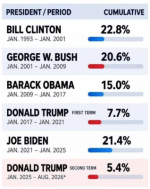
Interesting comparison of inflation rates since 1993. Isn't it interesting that somehow the public is being led to believe that Trump's inflation rates are disastrous? How many of you took the bait?
View attachment 297183
https://x.com/WikiLeaksQ/status/2108075047453593726
View attachment 297182
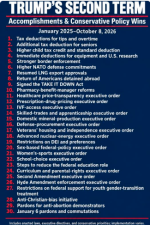
Major economic achievements claimed by the Trump administration (second term, inaugurated January 2025), as of late 2026, center on tax relief, investment inflows, manufacturing/energy gains, deregulation, and related metrics. These are drawn primarily from White House releases and related official sources; independent data (e.g., BLS, BEA, FactCheck.org) show solid but more moderate growth overall, with some variability due to external factors like energy prices and geopolitics.
Tax Cuts and Relief for Workers/Families
The flagship “One Big Beautiful Bill” (also called Working Families Tax Cuts or H.R. 1), signed July 4, 2025, made key 2017 Tax Cuts and Jobs Act individual provisions permanent and added new ones. Key elements include:
- Permanent lower individual income tax rates/brackets and higher standard deduction.
- Temporary “No Tax on Tips,” “No Tax on Overtime,” and related deductions (e.g., for certain auto loan interest).
- Additional senior deduction (around $6,000 for those 65+ through 2028, with income limits).
- Expanded Child Tax Credit (to $2,200).
- Permanent full expensing/bonus depreciation for business investment, higher Section 179 limits, and other business provisions.
- Raised SALT deduction cap temporarily in some versions.
Administration claims: 97% of filers received a tax cut in the first filing season; families/workers claimed over $82 billion in direct individual relief; average refunds were higher in some states; provisions protected jobs/wages in analyses. “Trump Accounts” (tax-advantaged investment accounts for children, with government seed contributions) enrolled tens of millions of kids, with billions funded.
Independent analyses note the package’s large scale (trillions in tax cuts over a decade, partially offset by spending changes), with benefits concentrated more heavily at higher incomes in some distributional estimates, though middle-income workers also saw gains from the extensions and targeted deductions.
Investment, Jobs, and Manufacturing
- Investment commitments: Over $11 trillion in announced U.S. and foreign investment this term (factories, energy, AI), including large figures from Apple (~$600 billion), Amazon (~$340 billion), UAE (~$1.4 trillion), and others. Specific projects include a $15 billion steel complex in Iowa and major advanced manufacturing/defense industrial investments.
- Jobs: More than 1 million private-sector jobs claimed in the second term (with all net growth described as private-sector and concentrated among native-born workers in administration statements). Manufacturing and construction added tens of thousands of jobs in recent periods; federal workforce reduced. Total nonfarm payrolls reached high levels (~159 million).
- Manufacturing PMI expansion for multiple consecutive months after prior contraction; industrial production gains; record or strong commercial contracts won via advocacy (~$244 billion in one reported year supporting hundreds of thousands of jobs).
Independent data (BLS through mid/late 2026): Job gains continued but at a slower pace than the prior administration’s later years in some comparisons (hundreds of thousands cumulative rather than millions at peak rates); unemployment rate hovered around 4.1–4.3%; prime-age labor force participation relatively strong. Real wages for private-sector and blue-collar workers rose modestly above inflation in reported periods.
Energy Dominance and Prices
Record domestic oil and gas production (2025 highs, with 2026 on pace to exceed); record LNG exports (first country over 100 million metric tons in a year); major oil deals (including reported large Venezuelan reserves control); deregulation of drilling/leases, coal support, nuclear advances, and withdrawal from certain climate frameworks. Projected multi-trillion-dollar deregulatory savings economy-wide.
Gas prices reached multi-year lows at points (under $3 nationally at times) but fluctuated higher amid Middle East developments. Egg and some household prices declined notably from peaks in administration reporting.
Broader Metrics and Other Wins
- Markets and wealth: S&P 500 total return ~+31% from early term through mid/late 2026 (with multiple record highs); record household net worth (~$196 trillion); inflation-adjusted median household income at series highs; official poverty rate at or near recent lows (~10.2% in 2025 data).
- Growth: Real GDP growth around 2%+ annually in available estimates (quarterly variations, e.g., stronger mid-periods); strong capital spending and productivity in some reports; corporate profits at highs.
- Trade and efficiency: Multiple new trade agreements; reduced goods trade deficits with some partners (including China); high tariff revenues; government efficiency/fraud crackdowns claimed to save hundreds of billions and shrink federal workforce to multi-decade lows.
- Related: Lower prescription drug prices in some claims; grocery chain price commitments; Ratepayer Protection measures tied to AI/energy demand.
Context from independent trackers: Growth has been resilient amid shocks (e.g., energy/geopolitical), with inflation moderating overall after earlier spikes but not uniformly low (CPI readings in the 2–3.5% range in various 2026 updates). Job growth and some real-wage gains occurred, but cumulative nonfarm additions were more modest than peak prior periods, and external factors (conflicts, prior trends) influence outcomes. Stock gains continued a multi-year upward trend.
These are the primary economic pillars highlighted by the administration through official channels as of October 2026. Outcomes continue to evolve with data releases, and full long-term effects of tax, trade, energy, and investment policies will become clearer over time. For the most current official tallies, see whitehouse.gov achievements and releases pages.























 www.thegatewaypundit.com