Knowing God Through Jesus: What Did Jesus Actually Teach?

  • Christian Chat is a moderated online Christian community allowing Christians around the world to fellowship with each other in real time chat via webcam, voice, and text, with the Christian Chat app. You can also start or participate in a Bible-based discussion here in the Christian Chat Forums, where members can also share with each other their own videos, pictures, or favorite Christian music.

    If you are a Christian and need encouragement and fellowship, we're here for you! If you are not a Christian but interested in knowing more about Jesus our Lord, you're also welcome! Want to know what the Bible says, and how you can apply it to your life? Join us!

    To make new Christian friends now around the world, click here to join Christian Chat.

2Christ

Well-known member
May 30, 2026
471
312
63
Many people know about Jesus, but far fewer truly know what He taught and what He asks of those who follow Him. This series looks directly at His own words, so we can understand His message without adding to it or taking away from it. Knowing Jesus is more than knowing facts about Him. It is hearing Him, believing Him, and putting His teachings into practice. As Jesus said, "And this is life eternal, that they should know thee the only true God, and him whom thou didst send, even Jesus Christ." (John 17:3, ASV). My prayer is that this study will help us know Him more deeply and walk in the way He taught, because His words are the words of Eternal Life.

About Faith

Faith, as Jesus teaches it, is not something passive. It is not only to believe that He exists, or to say His name. True faith moves, obeys, and produces fruit. Without that, it is empty. Jesus Himself makes this clear. In Gospel of Matthew 7:21 (ASV), He says:
“Not every one that saith unto me, Lord, Lord, shall enter into the kingdom of heaven; but he that doeth the will of my Father who is in heaven.” Here, simply calling Him “Lord” is not enough. What matters is doing the will of God. Faith must lead to obedience.
He continues in the same teaching: “Every one therefore that heareth these words of mine, and doeth them, shall be likened unto a wise man…” “And every one that heareth these words of mine, and doeth them not, shall be likened unto a foolish man…” (Matthew 7:24–26, ASV)

Both hear His words. Both could say they believe. But only one acts. That is the one who stands. This shows that faith without action does not hold. Jesus also teaches that a true life of faith must produce visible fruit. In Gospel of Matthew 7:16–20: “By their fruits ye shall know them… Every good tree bringeth forth good fruit; but the corrupt tree bringeth forth evil fruit… Therefore by their fruits ye shall know them.”

Faith is like a tree. If it is real, it will bear fruit. If nothing comes from it, it is not the faith Jesus speaks of.
He gives a strong warning in Gospel of Luke 13:6–9, the parable of the fig tree. A tree that does not bear fruit is in danger of being cut down. This shows that a life without change, even if it seems to have time and chances, cannot remain as it is.
Jesus also speaks directly about keeping His words. In Gospel of John 14:23:
“If a man love me, he will keep my word.”
Love and faith go together, and both lead to obedience. Not by force, but from the heart. And again He says:
“Why call ye me, Lord, Lord, and do not the things which I say?” (Luke 6:46, ASV)
This question goes straight to the point. Calling Him Lord, believing in Him, is not enough if a person does not follow what He says.
Jesus also connects eternal life with action. In Gospel of Matthew 19:16–17, when asked about life, He answers:
“If thou wouldest enter into life, keep the commandments.”
This shows that faith does not replace obedience, It leads into it.
So when we gather all His words, the message is simple. Faith is the beginning, but it is not meant to stay alone. True faith listens, follows, obeys, and produces fruit. It is alive and active.
A faith that does not change the heart, that does not lead to obedience, is not the faith Jesus taught.

About Repentance

Jesus speaks very plainly about what He expects. He calls people to repent, to turn away from sin, and to receive a new heart that brings a new way of living. First we need to understand what sin is. Jesus shows that sin is not only outward actions, but also what comes from inside a person. He said: “In Gospel of Mark 7:20–23 (ASV), ‘That which proceedeth out of the man, that defileth the man. For from within, out of the heart of men, evil thoughts proceed, fornications, thefts, murders, adulteries… all these evil things proceed from within, and defile the man.’”

So sin is anything that comes from a heart that is not aligned with God. It includes actions, but also thoughts, desires, and intentions.
Jesus also deepens the meaning of sin in Gospel of Matthew 5. He teaches that sin is not only the act, but the root behind it:
“You have heard… ‘Thou shalt not kill’… but I say unto you, that every one who is angry with his brother shall be in danger of the judgment.” (Matthew 5:21–22, ASV) “You have heard… ‘Thou shalt not commit adultery’: but I say unto you, that every one that looketh on a woman to lust after her hath committed adultery with her already in his heart.” (Matthew 5:27–28, ASV)
Here we see that sin begins in the heart. This is why repentance must also begin there.
Jesus calls all people to repent. At the start of His ministry, it is written in Gospel of Matthew 4:17: “Repent ye; for the kingdom of heaven is at hand.” To repent means more than feeling sorry. It means to turn around, to leave the old way, and to walk in a new one. Jesus makes this very clear when He warns: “I tell you, Nay: but, except ye repent, ye shall all in like manner perish.” (Luke 13:3, ASV) But Jesus does not only ask people to stop doing wrong. He calls for a true change inside. A new heart that produces good fruit.
In Gospel of Luke 6:43–45 He says:
“For there is no good tree that bringeth forth corrupt fruit… For each tree is known by its own fruit… The good man out of the good treasure of his heart bringeth forth that which is good.”

This means the change must be real and inward. A changed heart will naturally bring a changed life.
Jesus also shows this in how He dealt with sinners. When He forgave the woman caught in sin, He told her:
“Go thy way; from henceforth sin no more.” (John 8:11, ASV)
He offers mercy, but He also calls for a new life.
And again, when He healed a man, He said: “Behold, thou art made whole: sin no more, lest a worse thing befall thee.” (John 5:14, ASV)

So the message is simple and clear. Sin comes from the heart and includes both what we do and what we desire. Repentance means turning away from that sin, not only outwardly but inwardly. And the change Jesus asks for is a true change of heart, one that leads to a new way of living.
In the end, Jesus shows that this is not optional. Those who truly follow Him are those who hear His words and do them. As He said in Gospel of Matthew 7:24:
“Every one therefore that heareth these words of mine, and doeth them, shall be likened unto a wise man, who built his house upon the rock.”

What about the commandments Jesus spoke about?

The commandments are not separate from what Jesus taught about repentance and a changed heart. They are part of it. They show us what sin is, and they show us what a right life looks like. When Jesus spoke about sin, He often pointed back to the commandments, but He went deeper than just the surface. In Gospel of Matthew 5, He takes the commandments and shows their true meaning. Not killing is a commandment, but Jesus shows that anger in the heart is already part of that sin. Not committing adultery is a commandment, but He shows that lust in the heart breaks it already. This means the commandments are not only about actions, but about the heart.

When a man asked Him how to have eternal life, Jesus answered by pointing directly to the commandments:
“You know the commandments… Do not kill, Do not commit adultery, Do not steal, Do not bear false witness, Honor your father and mother.” (from Gospel of Mark 10:19, ASV)
This shows that the commandments still stand as the way of righteousness. But Jesus does not stop there. He then calls the man to follow Him fully, showing that obedience must come from the heart, not just outward behavior.
Jesus also sums up the commandments in a simple way in Gospel of Matthew 22:37–40: “You shall love the Lord your God with all your heart… and your neighbor as yourself. On these two commandments hangs all the law and the prophets.”
So the commandments are fulfilled through love. But this is not just words. Real love leads to real obedience.
This is where repentance fits in. To repent means to turn away from breaking these commandments, and to begin to live according to them, from the heart. It is not just stopping sin, but starting to walk in what is right.
Jesus makes this very clear when He says:
“Not every one that says to me, Lord, Lord, shall enter into the kingdom of heaven; but he that does the will of my Father.” (Matthew 7:21, ASV)
And again: “If you love me, you will keep my commandments.” (John 14:15, ASV,)
So the commandments show what sin is, repentance is turning away from breaking them, and a changed heart is what allows a person to truly keep them.

The commandments are like a mirror that shows what is wrong. Repentance is turning away from that wrong. And the new heart that Jesus speaks about, transformed by the Holy Spirit whom He gives to His believers, is what makes a person able to live in what is right. Faith is not just belief; it is active and obeys the words of Christ.
 
  • Like
Reactions: Anchorite
About Faith
...
Faith is like a tree. If it is real, it will bear fruit. If nothing comes from it, it is not the faith Jesus speaks of.
He gives a strong warning in Gospel of Luke 13:6–9, the parable of the fig tree. A tree that does not bear fruit is in danger of being cut down. This shows that a life without change, even if it seems to have time and chances, cannot remain as it is.
The parable of the fig tree is primarily about Israel and only secondarily about individuals.

Israel was given more time, but eventually was "cut down" in 70 AD.
 
Continued from the O.P.

About following Him daily

Belief in Jesus is not only something we say with our mouth. It is something we live each day. Jesus spoke in a simple and clear way so that all could understand. When we listen to Him, we see that belief is joined with following Him. It is not a one-time moment, but a path we walk step by step.

Luke 9:23 (ASV)
“And he said unto all, If any man would come after me, let him deny himself, and take up his cross daily, and follow me.”

Here Jesus shows that belief has a cost. To deny self means to turn away from our own desires when they go against what is right. Many times the heart wants what is easy, what is pleasing, or what brings gain. But Jesus calls a person to choose what is right instead. This choice must be made again and again.

To take up the cross daily means to accept the weight of doing good in a world that does not always love what is good. It can mean being patient when others are not, speaking truth when it is not welcomed, or turning away from sin when it is tempting. This is not done once, but each day.

Following Him means learning from His life. He was humble, He served others, He obeyed the Father, and He endured suffering without turning away. A true believer looks at Him and walks in the same direction. TLog outhis is how belief becomes living and real, not only words.

Luke 14:27 (ASV)
“Whosoever doth not bear his own cross, and come after me, cannot be my disciple.”

These words are strong but clear. Jesus does not hide the truth. Belief is not only knowing who He is, but choosing Him above all. If a person is not willing to walk this path, then the belief remains only in words. But the one who truly believes will follow, even when it costs something.

About abiding in His word

Jesus also teaches that belief means to remain in His word. It is not enough to hear once and then forget. A believer holds on to what He said and continues in it.

John 8:31–32 (ASV)
“Jesus therefore said to those Jews that had believed him, If ye abide in my word, then are ye truly my disciples; and ye shall know the truth, and the truth shall make you free.”

He spoke this to people who already believed Him. Yet He still says, “if ye abide.” This shows that belief must continue. To abide means to stay, to remain, to live in His word. It is like a branch that stays on the tree. If it stays, it lives. If it leaves, it dries. Many hear the words of Jesus and feel something for a moment. But when life becomes hard, or when other voices come, they let go. But the one who believes truly holds on. He returns to the words of Jesus, thinks on them, and lives by them.

The promise is clear. “Ye shall know the truth, and the truth shall make you free.” Freedom is not only hearing truth, but walking in it. A person becomes free from sin step by step as he lives what Jesus taught.

John 12:47–48 (ASV)
“And if any man hear my sayings, and keep them not, I judge him not: for I came not to judge the world, but to save the world.
He that rejecteth me, and receiveth not my sayings, hath one that judgeth him: the word that I spake, the same shall judge him in the last day.”

These words show that what Jesus said matters deeply. To hear but not keep His words is to reject them. And His words will stand at the end. This is why true belief holds His teaching close and does not let it go.

About doing the will of the Father

Jesus makes it very clear that belief is not only calling Him “Lord,” but doing what God asks. Words alone are not enough.

Matthew 7:21–23 (ASV)
“Not every one that saith unto me, Lord, Lord, shall enter into the kingdom of heaven; but he that doeth the will of my Father who is in heaven.
Many will say to me in that day, Lord, Lord, did we not prophesy by thy name, and by thy name cast out demons, and by thy name do many mighty works?
And then will I profess unto them, I never knew you: depart from me, ye that work iniquity.”

These are serious words. A person may speak His name and even do great things, yet still not be known by Him. Why? Because they did not do the will of the Father. True belief is shown in a life that obeys.

Jesus then gives a simple picture to make this clear.

Matthew 7:24–27 (ASV)
“Every one therefore that heareth these words of mine, and doeth them, shall be likened unto a wise man, who built his house upon the rock: and the rain descended, and the floods came, and the winds blew, and beat upon that house; and it fell not: for it was founded upon the rock. And every one that heareth these words of mine, and doeth them not, shall be likened unto a foolish man, who built his house upon the sand: and the rain descended, and the floods came, and the winds blew, and smote upon that house; and it fell: and great was the fall thereof.”

Both hear His words. But only one does them. The one who does stands firm. The one who does not falls. The difference is not hearing, but doing.

What does this look like in daily life? It is simple, but it must be real. It is telling the truth even when lying would be easier. It is forgiving someone who has hurt you instead of holding anger. It is helping someone in need when you could turn away. It is being patient, kind, and humble, even when others are not.

It is turning away from sin when no one is watching. It is choosing what is right in small things, not only in big moments. It is caring for the poor, the weak, and those who are forgotten. It is loving others, not only in words, but in actions.

It is also listening when Jesus speaks and correcting our path when we see we are wrong. A heart that does the will of the Father is a heart that is willing to change and to obey.

The Goden Rule
Matthew 7:12 (KJV) Therefore all things whatsoever ye would that men should do to you, do ye even so to them: for this is the law and the prophets.

So when we gather all these words of Jesus, the message is simple and clear. Belief is not only saying we believe. It is following Him each day, even when it is hard. It is staying in His word and not letting go. It is doing the will of the Father in real and simple ways.

This kind of belief is alive. It walks, it obeys, it endures. It may look small to the world, but it is great in the eyes of God. And this is the belief Jesus calls us to.
 
The parable of the fig tree is primarily about Israel and only secondarily about individuals.

Israel was given more time, but eventually was "cut down" in 70 AD.
yes i agree some parables can have different meanings this in one of them, thank you for contributing.
 
  • Like
Reactions: Dino246
Many people know about Jesus, but far fewer truly know what He taught and what He asks of those who follow Him. This series looks directly at His own words, so we can understand His message without adding to it or taking away from it. Knowing Jesus is more than knowing facts about Him. It is hearing Him, believing Him, and putting His teachings into practice. As Jesus said, "And this is life eternal, that they should know thee the only true God, and him whom thou didst send, even Jesus Christ." (John 17:3, ASV). My prayer is that this study will help us know Him more deeply and walk in the way He taught, because His words are the words of Eternal Life.

About Faith

Faith, as Jesus teaches it, is not something passive. It is not only to believe that He exists, or to say His name. True faith moves, obeys, and produces fruit. Without that, it is empty. Jesus Himself makes this clear. In Gospel of Matthew 7:21 (ASV), He says:
“Not every one that saith unto me, Lord, Lord, shall enter into the kingdom of heaven; but he that doeth the will of my Father who is in heaven.” Here, simply calling Him “Lord” is not enough. What matters is doing the will of God. Faith must lead to obedience.
He continues in the same teaching: “Every one therefore that heareth these words of mine, and doeth them, shall be likened unto a wise man…” “And every one that heareth these words of mine, and doeth them not, shall be likened unto a foolish man…” (Matthew 7:24–26, ASV)

Both hear His words. Both could say they believe. But only one acts. That is the one who stands. This shows that faith without action does not hold. Jesus also teaches that a true life of faith must produce visible fruit. In Gospel of Matthew 7:16–20: “By their fruits ye shall know them… Every good tree bringeth forth good fruit; but the corrupt tree bringeth forth evil fruit… Therefore by their fruits ye shall know them.”

Faith is like a tree. If it is real, it will bear fruit. If nothing comes from it, it is not the faith Jesus speaks of.
He gives a strong warning in Gospel of Luke 13:6–9, the parable of the fig tree. A tree that does not bear fruit is in danger of being cut down. This shows that a life without change, even if it seems to have time and chances, cannot remain as it is.
Jesus also speaks directly about keeping His words. In Gospel of John 14:23:
“If a man love me, he will keep my word.”
Love and faith go together, and both lead to obedience. Not by force, but from the heart. And again He says:
“Why call ye me, Lord, Lord, and do not the things which I say?” (Luke 6:46, ASV)
This question goes straight to the point. Calling Him Lord, believing in Him, is not enough if a person does not follow what He says.
Jesus also connects eternal life with action. In Gospel of Matthew 19:16–17, when asked about life, He answers:
“If thou wouldest enter into life, keep the commandments.”
This shows that faith does not replace obedience, It leads into it.
So when we gather all His words, the message is simple. Faith is the beginning, but it is not meant to stay alone. True faith listens, follows, obeys, and produces fruit. It is alive and active.
A faith that does not change the heart, that does not lead to obedience, is not the faith Jesus taught.

About Repentance

Jesus speaks very plainly about what He expects. He calls people to repent, to turn away from sin, and to receive a new heart that brings a new way of living. First we need to understand what sin is. Jesus shows that sin is not only outward actions, but also what comes from inside a person. He said: “In Gospel of Mark 7:20–23 (ASV), ‘That which proceedeth out of the man, that defileth the man. For from within, out of the heart of men, evil thoughts proceed, fornications, thefts, murders, adulteries… all these evil things proceed from within, and defile the man.’”

So sin is anything that comes from a heart that is not aligned with God. It includes actions, but also thoughts, desires, and intentions.
Jesus also deepens the meaning of sin in Gospel of Matthew 5. He teaches that sin is not only the act, but the root behind it:
“You have heard… ‘Thou shalt not kill’… but I say unto you, that every one who is angry with his brother shall be in danger of the judgment.” (Matthew 5:21–22, ASV) “You have heard… ‘Thou shalt not commit adultery’: but I say unto you, that every one that looketh on a woman to lust after her hath committed adultery with her already in his heart.” (Matthew 5:27–28, ASV)
Here we see that sin begins in the heart. This is why repentance must also begin there.
Jesus calls all people to repent. At the start of His ministry, it is written in Gospel of Matthew 4:17: “Repent ye; for the kingdom of heaven is at hand.” To repent means more than feeling sorry. It means to turn around, to leave the old way, and to walk in a new one. Jesus makes this very clear when He warns: “I tell you, Nay: but, except ye repent, ye shall all in like manner perish.” (Luke 13:3, ASV) But Jesus does not only ask people to stop doing wrong. He calls for a true change inside. A new heart that produces good fruit.
In Gospel of Luke 6:43–45 He says:
“For there is no good tree that bringeth forth corrupt fruit… For each tree is known by its own fruit… The good man out of the good treasure of his heart bringeth forth that which is good.”

This means the change must be real and inward. A changed heart will naturally bring a changed life.
Jesus also shows this in how He dealt with sinners. When He forgave the woman caught in sin, He told her:
“Go thy way; from henceforth sin no more.” (John 8:11, ASV)
He offers mercy, but He also calls for a new life.
And again, when He healed a man, He said: “Behold, thou art made whole: sin no more, lest a worse thing befall thee.” (John 5:14, ASV)

So the message is simple and clear. Sin comes from the heart and includes both what we do and what we desire. Repentance means turning away from that sin, not only outwardly but inwardly. And the change Jesus asks for is a true change of heart, one that leads to a new way of living.
In the end, Jesus shows that this is not optional. Those who truly follow Him are those who hear His words and do them. As He said in Gospel of Matthew 7:24:
“Every one therefore that heareth these words of mine, and doeth them, shall be likened unto a wise man, who built his house upon the rock.”

What about the commandments Jesus spoke about?

The commandments are not separate from what Jesus taught about repentance and a changed heart. They are part of it. They show us what sin is, and they show us what a right life looks like. When Jesus spoke about sin, He often pointed back to the commandments, but He went deeper than just the surface. In Gospel of Matthew 5, He takes the commandments and shows their true meaning. Not killing is a commandment, but Jesus shows that anger in the heart is already part of that sin. Not committing adultery is a commandment, but He shows that lust in the heart breaks it already. This means the commandments are not only about actions, but about the heart.

When a man asked Him how to have eternal life, Jesus answered by pointing directly to the commandments:
“You know the commandments… Do not kill, Do not commit adultery, Do not steal, Do not bear false witness, Honor your father and mother.” (from Gospel of Mark 10:19, ASV)
This shows that the commandments still stand as the way of righteousness. But Jesus does not stop there. He then calls the man to follow Him fully, showing that obedience must come from the heart, not just outward behavior.
Jesus also sums up the commandments in a simple way in Gospel of Matthew 22:37–40: “You shall love the Lord your God with all your heart… and your neighbor as yourself. On these two commandments hangs all the law and the prophets.”
So the commandments are fulfilled through love. But this is not just words. Real love leads to real obedience.
This is where repentance fits in. To repent means to turn away from breaking these commandments, and to begin to live according to them, from the heart. It is not just stopping sin, but starting to walk in what is right.
Jesus makes this very clear when He says:
“Not every one that says to me, Lord, Lord, shall enter into the kingdom of heaven; but he that does the will of my Father.” (Matthew 7:21, ASV)
And again: “If you love me, you will keep my commandments.” (John 14:15, ASV,)
So the commandments show what sin is, repentance is turning away from breaking them, and a changed heart is what allows a person to truly keep them.

The commandments are like a mirror that shows what is wrong. Repentance is turning away from that wrong. And the new heart that Jesus speaks about, transformed by the Holy Spirit whom He gives to His believers, is what makes a person able to live in what is right. Faith is not just belief; it is active and obeys the words of Christ.

Yes, nor is what Jesus taught as recorded in the Gospels separate from what he inspired apostles to teach in the epistles.
 
About Faith

Faith, as Jesus teaches it, is not something passive. It is not only to believe that He exists, or to say His name. True faith moves, obeys, and produces fruit. Without that, it is empty.
The faith that Jesus teaches is His Faith ----and it comes by hearing the Word who is Jesus ----and as 2Christ says here -------- True faith moves, obeys, and produces fruit.------

I say -----there is only one True Faith that produces what the word says it will produce and that is Christ's Faith ----

This Faith has to Be grounded and rooted in Christ-----otherwise it will not produce anything ----

The parable of the sower tells you that -----Christ is your good soil ------

About Repentance

Jesus speaks very plainly about what He expects. He calls people to repent, to turn away from sin, and to receive a new heart that brings a new way of living
Jesus said -----John 6:44

EXB
The Father is the One who sent me. No one can come to me unless the Father draws him to me, and I will raise that person up on the last day.

I say ----So Repentance and the New Heart come as a Result of us accepting the Draw from the Father to come to Jesus -----and we have free will to accept or reject that drawing ----some accept and some reject

Here we see that sin begins in the heart. This is why repentance must also begin there.
I disagree with this -----Sin comes from our nature to sin -----Sin comes from iniquity that is passed on from Generation to Generation the sin nature comes through the blood line -----so we are born with the Nature to sin already ------our hearts are Hardened toward God ----when we accept God the Father's drawing we can then Repent and this repentance leads us to a New Heart that accepts the Gospel that inbirths Christ's Faith in us -----

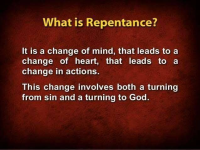
Repentance is a mind Change -----Repentance starts in the mind knowing and stating that you are a sinner and need a Saviour ----

1784933775785.png
 
  • Like
Reactions: 2Christ
Yes, nor is what Jesus taught as recorded in the Gospels separate from what he inspired apostles to teach in the epistles.
By, epistles you mean paul?, not the original 11 that lived with him for 3 years ans saw it all? please explain further I am not certain of what you mean, being first and foremost French speakings, i often misinterpret what people say. please explain further, thank you.
 
The faith that Jesus teaches is His Faith ----and it comes by hearing the Word who is Jesus ----and as 2Christ says here -------- True faith moves, obeys, and produces fruit.------

I say -----there is only one True Faith that produces what the word says it will produce and that is Christ's Faith ----

This Faith has to Be grounded and rooted in Christ-----otherwise it will not produce anything ----

The parable of the sower tells you that -----Christ is your good soil ------


Jesus said -----John 6:44

EXB
The Father is the One who sent me. No one can come to me unless the Father draws him to me, and I will raise that person up on the last day.

I say ----So Repentance and the New Heart come as a Result of us accepting the Draw from the Father to come to Jesus -----and we have free will to accept or reject that drawing ----some accept and some reject

I disagree with this ----
-Sin comes from our nature to sin -----Sin comes from iniquity that is passed on from Generation to Generation the sin nature comes through the blood line -----so we are born with the Nature to sin already ------our hearts are Hardened toward God ----when we accept God the Father's drawing we can then Repent and this repentance leads us to a New Heart that accepts the Gospel that inbirths Christ's Faith in us -----

Repentance is a mind Change -----Repentance starts in the mind knowing and stating that you are a sinner and need a Saviour ----

View attachment 292628
thank you for your comments I agree withmost of what you wrote, however for the part you disagree with I can say that your reply mixes together some biblical ideas with theological conclusions that are not directly stated by Jesus. If your goal is to stay with Christ's own teachings, as is mine, there are several things to note.

First, Jesus repeatedly taught that sin comes from within a person, specifically from the heart.

For from within, out of the heart of men, proceed evil thoughts, fornications, thefts, murders, adulteries, covetings, wickednesses, deceit, lasciviousness, an evil eye, railing, pride, foolishness: all these evil things proceed from within, and defile the man. (Mark 7:21-23, ASV) Jesus did not say sin comes from the bloodline. He said it comes from within the heart.

Likewise: But the things which proceed out of the mouth come forth out of the heart; and they defile the man. For out of the heart come forth evil thoughts, murders, adulteries, fornications, thefts, false witness, railings: these are the things which defile the man. (Matthew 15:18-20, ASV)

I said; "Here we see that sin begins in the heart. This is why repentance must also begin there."

Second, you say repentance is only a "mind change." While the Greek word metanoia does involve a change of mind, Jesus described repentance as much more than merely changing one's thinking. It results in a changed life.

Bring forth therefore fruits worthy of repentance. (Luke 3:8, ASV)

Jesus also warned: I tell you, Nay: but, except ye repent, ye shall all in like manner perish. (Luke 13:3, ASV)

Repentance is not simply admitting, "I am a sinner." It is turning away from sin and turning toward God.

Third, Scripture does teach that humanity has a sinful condition.

Behold, I was brought forth in iniquity; And in sin did my mother conceive me. (Psalm 51:5, ASV)

However, this verse does not say sin is transmitted through the bloodline as a doctrine. Jesus never explained sin that way. Instead, He focused on each person's own heart and choices. And God also makes each person responsible for his own sin:

The soul that sinneth, it shall die: the son shall not bear the iniquity of the father, neither shall the father bear the iniquity of the son; the righteousness of the righteous shall be upon him, and the wickedness of the wicked shall be upon him. (Ezekiel 18:20, ASV)

Jesus taught that repentance begins when a person hears God's word, believes it, and turns to Him. Come unto me, all ye that labor and are heavy laden, and I will give you rest. (Matthew 11:28, ASV)

God certainly draws people to Christ (John 6:44), but Jesus consistently calls each person to repent and obey.
 
First, Jesus repeatedly taught that sin comes from within a person, specifically from the heart.


John 8:34

34 Jesus answered, “I assure you and most solemnly say to you, everyone who practices sin habitually is a slave of sin.


The sin nature is that aspect in humanity that makes us rebellious against God. When we speak of the sin nature, we refer to the fact that we have a natural inclination to sin;
given the choice to do God’s will or our own, we will naturally choose to do our own thing.

Proof of the sin nature abounds.
No one has to teach a child to lie or be selfish; rather, we go to great lengths to teach children to tell the truth and put others first. Sinful behavior comes naturally.

I say -----The Heart is hardened toward God and we rebel against what God wants ---- but at birth we are born with the Twisted Nature to sin ------


Jesus did not say sin comes from the bloodline. He said it comes from within the heart.
Sin is passed down from Adam so it is through the blood line --that iniquity is passed on -----


Psalm 51:5 Amp ---David says -----​

5
I was brought forth in [a state of] wickedness;
In sin my mother conceived me [and from my beginning I, too, was sinful].


I say ------After Adam sinned His Blood was Tainted and this Tainted Blood was passes on to every Generation ----ALL LIFE IS IN THE BLOOD


People also ask
Does the Bible say sin is in the blood?


We can find the answer here in Leviticus 17 and verse 11, and the Bible says: The life of every living thing is in the blood, and that is why the LORD has commanded that all blood be poured out on the altar to take away the people's sins. Blood, which is life, takes away sins.”

I say =======Jesus didn't have to say it as it was already said in the Old Testament -----
 
By, epistles you mean paul?, not the original 11 that lived with him for 3 years ans saw it all? please explain further I am not certain of what you mean, being first and foremost French speakings, i often misinterpret what people say. please explain further, thank you.

Bon jour. One of the most fun days in my life was seeing as much of Paris along the Seine from the Arch to Notre Dame
as we could in 1973.

Epistles include those written by Paul, John and Peter.
IOW, for the best understanding of what Jesus taught a person needs to harmonize the entire New Testament primarily,
and secondarily interpret the entire Old Testament in that light.
Thirdly, jibe that with what creation reveals.
That should about cover it!
:love:
 

John 8:34​

34 Jesus answered, “I assure you and most solemnly say to you, everyone who practices sin habitually is a slave of sin.


The sin nature is that aspect in humanity that makes us rebellious against God. When we speak of the sin nature, we refer to the fact that we have a natural inclination to sin; given the choice to do God’s will or our own, we will naturally choose to do our own thing.

Proof of the sin nature abounds.
No one has to teach a child to lie or be selfish; rather, we go to great lengths to teach children to tell the truth and put others first. Sinful behavior comes naturally.

I say -----The Heart is hardened toward God and we rebel against what God wants ---- but at birth we are born with the Twisted Nature to sin ------


Sin is passed down from Adam so it is through the blood line --that iniquity is passed on -----


Psalm 51:5 Amp ---David says -----​

5
I was brought forth in [a state of] wickedness;
In sin my mother conceived me [and from my beginning I, too, was sinful].


I say ------After Adam sinned His Blood was Tainted and this Tainted Blood was passes on to every Generation ----ALL LIFE IS IN THE BLOOD

People also ask
Does the Bible say sin is in the blood?


We can find the answer here in Leviticus 17 and verse 11,
and the Bible says: The life of every living thing is in the blood, and that is why the LORD has commanded that all blood be poured out on the altar to take away the people's sins. Blood, which is life, takes away sins.”

I say =======Jesus didn't have to say it as it was already said in the Old Testament -----


When you sin - you're the one committing that sin, not the generations before you. You can't blame your ancestors for the sin you commit.

That's why Jesus declared to every individual to repent, for the kingdom of heaven is at hand (Matthew 4:17). He's asking you to repent of the sins you've committed yourself. And that is an integral part of the gospel. You can't leave that out because Jesus and the Bible don't.


🕊️
 
When you sin - you're the one committing that sin, not the generations before you. You can't blame your ancestors for the sin you commit.
God can do what He wants -----

it is not the sin that is passed on ----it is INIQUITY that is passed on ---iniquity is the twisted Evil Nature ---

Greek word for INIQUITY

Lexical Summary
ponéria: Wickedness, evil, malice
Original Word: πονηρία
Part of Speech: Noun, Feminine
Transliteration: ponéria
Pronunciation: po-nay-REE-ah
Phonetic Spelling: (pon-ay-ree'-ah)
KJV: iniquity, wickedness
NASB: wickedness, malice, wicked ways

1. depravity
2. (specially) malice
3. (plural, concretely) plots, sins

Topical Lexicon
Definition and Scope
As used by the New Testament writers, πονηρία denotes the active, aggressive principle of moral evil: willful, malicious wickedness that shapes thought, disposition, and deed. It describes depravity that not only resists the will of God but also seeks to corrupt others.

Jesus lists “wickedness” among the evils that “come from within and defile a man


Deuteronomy 5
I, the Lord your God, am a jealous (impassioned) God [demanding what is rightfully and uniquely mine], visiting (avenging) the iniquity (sin, guilt) of the fathers on the children [that is, calling the children to account for the sins of their fathers], to the third and the fourth generations of those who hate Me


Exodus 20:5

I lay the sins of the parents upon their children; the entire family is affected—even children in the third and fourth generations of those who reject me.
 
God can do what He wants -----

it is not the sin that is passed on ----it is INIQUITY that is passed on ---iniquity is the twisted Evil Nature ---

Greek word for INIQUITY

Lexical Summary
ponéria: Wickedness, evil, malice
Original Word: πονηρία
Part of Speech: Noun, Feminine
Transliteration: ponéria
Pronunciation: po-nay-REE-ah
Phonetic Spelling: (pon-ay-ree'-ah)
KJV: iniquity, wickedness
NASB: wickedness, malice, wicked ways

1. depravity
2. (specially) malice
3. (plural, concretely) plots, sins

Topical Lexicon
Definition and Scope
As used by the New Testament writers, πονηρία denotes the active, aggressive principle of moral evil: willful, malicious wickedness that shapes thought, disposition, and deed. It describes depravity that not only resists the will of God but also seeks to corrupt others.

Jesus lists “wickedness” among the evils that “come from within and defile a man


Deuteronomy 5
I, the Lord your God, am a jealous (impassioned) God [demanding what is rightfully and uniquely mine], visiting (avenging) the iniquity (sin, guilt) of the fathers on the children [that is, calling the children to account for the sins of their fathers], to the third and the fourth generations of those who hate Me


Exodus 20:5

I lay the sins of the parents upon their children; the entire family is affected—even children in the third and fourth generations of those who reject me.


In other words, you don't want to repent for your own sins. Okay....


🕊️
 
  • Like
Reactions: WayneNSO
Your repentance is a mind change -----admitting that your a SINNER in need of a Saviour ----


True repentance inevitably results in a change of behavior.

You can intellectually agree that sin is bad (a mind change) but continue in it. True biblical repentance involves the will, compelling the mind's genuine repentance to drive the body's actions and correct it to either stop and resist the sin or correct any sin of omission.

A good example of true repentance in the Bible is Zacchaeus.

Luke 19:5 When Jesus reached the spot, he looked up and said to him, “Zacchaeus, come down immediately. I must stay at your house today.” 6 So he came down at once and welcomed him gladly.

7 All the people saw this and began to mutter, “He has gone to be the guest of a sinner.”

8 But Zacchaeus stood up and said to the Lord, “Look, Lord! Here and now I give half of my possessions to the poor, and if I have cheated anybody out of anything, I will pay back four times the amount.”

9 Jesus said to him, “Today salvation has come to this house, because this man, too, is a son of Abraham. 10 For the Son of Man came to seek and to save the lost.”

When Zacchaeus repented, he didn't just think differently about his fraud; he immediately promised to repay fourfold what he had stolen (Luke 19:8). His action validated his mental shift. And Jesus saw that, approved and considered Zacchaeus saved!


🕊️
 

Characteristics of True Repentance
Recognition of Sin: True repentance begins with an honest acknowledgment of one's sins and a recognition of their gravity in the sight of a holy God (Psalm 51:3-4).


Yes, ignore Zacchaeus' direct example and that Jesus considered him saved because his repentance proved true by his actions.

But think about it, all that is in Psalm 51, Zacchaeus embodied in a flash when Jesus came along and reached out to him.

It shows that Psalm 51 doesn't take that long for a mind that is changed for repentance --> action that fulfills that repentance.


🕊️
 
  • Like
Reactions: 2Christ
Bon jour. One of the most fun days in my life was seeing as much of Paris along the Seine from the Arch to Notre Dame
as we could in 1973.

Epistles include those written by Paul, John and Peter.
IOW, for the best understanding of what Jesus taught a person needs to harmonize the entire New Testament primarily,
and secondarily interpret the entire Old Testament in that light.
Thirdly, jibe that with what creation reveals.
That should about cover it!
:love:
Bonjour, oui Paris c'est extraordinaire en été comme en hiver toujours beau a visiter.

a very good way to do so, harmonize and I agree but some people just don't understand much of what Paul wrote unfortunately. in 2peter 3, Peter explained Paul writings are difficult to understand and that is true, many twist his words still today.
 
cont. from the O.P.

Knowing God Through Jesus: What Did Jesus Actually Teach?​


About loving others

Belief in Jesus is not only about saying we believe, or knowing His name. Belief in Jesus It is seen in how we treat others every day. Jesus made this very clear. Love is not a small part of faith. It is at the center of it. Without it, everything else loses its meaning.

John 13:34–35 (ASV)
A new commandment I give unto you, that ye love one another; even as I have loved you, that ye also love one another. By this shall all men know that ye are my disciples, if ye have love one to another.”

Jesus says this is how people will know who truly follows Him. Not by words alone, not by knowledge, but by love. And not just any love, but “as I have loved you.” His love was patient, kind, and giving. He helped the weak, He fed the hungry, He showed mercy to sinners, and He did not turn away those who came to Him.

This means love is not only a feeling. It is action. It is helping when someone is in need. It is speaking gently instead of harshly. It is being patient when others are difficult. It is giving time, attention, and care.

Jesus goes even further and calls us to love beyond what feels natural.

Matthew 5:44–45 (ASV)
“But I say unto you, love your enemies, and pray for them that persecute you; that ye may be sons of your Father who is in heaven…”

This kind of love is not easy. To love those who hurt us, to pray for them instead of speaking against them, this goes against the natural heart. But this is the love that shows God’s work in a person.

In daily life, this can be very simple. It can be choosing not to answer anger with anger. It can be helping someone who has not treated you well. It can be praying for someone who speaks against you. It can be showing kindness when you could choose to walk away.

Jesus also gives a warning about love growing cold.

Matthew 24:12 (ASV)
“And because iniquity shall be multiplied, the love of the many shall wax cold.”

This shows that love must be guarded. The world can harden the heart. Sin around us can make us tired and closed. But the believer must hold on to love and not let it fade.
So true belief is seen in love that continues. Not only when it is easy, but also when it is hard. This love shows that a person is walking with God.

About forgiving others

Jesus teaches that forgiveness is not separate from faith. It is part of it. A person who has received mercy must also give mercy. If we hold on to anger and refuse to forgive, it affects our own relationship with God.

Matthew 6:14–15 (ASV)
“For if ye forgive men their trespasses, your heavenly Father will also forgive you.
But if ye forgive not men their trespasses, neither will your Father forgive your trespasses.”


These words are direct and clear. Forgiveness is not optional. It is part of the path. A person cannot ask God for mercy while refusing to show mercy to others.

Peter once asked a question that many people still ask.
“Then came Peter and said to him, Lord, how oft shall my brother sin against me, and I forgive him? until seven times?
Jesus saith unto him, I say not unto thee, Until seven times; but, Until seventy times seven.”
Matthew 18:21–22 (ASV)

Jesus is not giving a number to count. He is showing that forgiveness is a way of life. It is not limited. Just as God is patient, we are called to be patient.
Jesus also gave a parable to explain this more deeply.

Matthew 18:32–33 (ASV)
“Then his lord called him unto him, and saith to him, Thou wicked servant, I forgave thee all that debt, because thou besoughtest me: shouldest not thou also have had mercy on thy fellow-servant, even as I had mercy on thee?”

The message is simple. We forgive because we have been forgiven. When we remember how much mercy we have received, it helps us show mercy to others.

In daily life, forgiveness can be difficult. It can mean letting go of hurt that feels deep. It can mean choosing not to speak badly about someone who wronged you. It can mean refusing to seek revenge, even when you feel justified.
Forgiveness does not mean saying wrong is right. It means not holding hatred in the heart. It means giving the matter to God and choosing peace instead of bitterness.

This is part of true belief. A heart that follows Jesus will learn to forgive again and again.


About humility and becoming like a child

Jesus teaches that belief must be humble. Pride closes the heart, but humility opens it. A proud person trusts in himself. A humble person trusts in God.

Matthew 18:3–4 (ASV)
“And said, Verily I say unto you, Except ye turn, and become as little children, ye shall in no wise enter into the kingdom of heaven. Whosoever therefore shall humble himself as this little child, the same is the greatest in the kingdom of heaven.”

A child is simple. A child trusts, listens, and is ready to learn. Jesus says we must become like this. Not childish, but childlike in heart. Open, trusting, and willing to follow.

He also shows this through a simple example.

Luke 18:10–14 (ASV)
“Two men went up into the temple to pray; the one a Pharisee, and the other a publican.
The Pharisee stood and prayed thus with himself, God, I thank thee, that I am not as the rest of men…
But the publican, standing afar off, would not lift up so much as his eyes unto heaven, but smote his breast, saying, God, be thou merciful to me a sinner. I say unto you, This man went down to his house justified rather than the other: for every one that exalteth himself shall be humbled; but he that humbleth himself shall be exalted.”


This shows the difference between pride and humility. One trusted in himself. The other saw his need and asked for mercy. Jesus says the humble one was accepted.

In daily life, humility shows in simple ways. It is being willing to listen. It is admitting when we are wrong. It is not thinking we are better than others. It is serving instead of seeking to be served.

Jesus also lived this Himself. He served others and did not seek honor from men.
Matthew 23:11–12 (ASV)

“But he that is greatest among you shall be your servant.
And whosoever shall exalt himself shall be humbled; and whosoever shall humble himself shall be exalted.”


So the path is clear. The one who lowers himself will be lifted by God.

When we bring these teachings together, the message stays simple and strong.
Belief in Jesus is seen in love that acts, forgiveness that does not stop, and humility that trusts God.

These are not extra things added to faith. They are the life of faith.
A person who believes will learn to love, even when it is hard.
He will forgive again and again.
He will walk in humility, like a child before God.

This is the kind of heart Jesus is looking for, and this is the path He showed.

to be continued...