Is Knowledge of the Original Languages Necessary for KJV Believers?

  • Christian Chat is a moderated online Christian community allowing Christians around the world to fellowship with each other in real time chat via webcam, voice, and text, with the Christian Chat app. You can also start or participate in a Bible-based discussion here in the Christian Chat Forums, where members can also share with each other their own videos, pictures, or favorite Christian music.

    If you are a Christian and need encouragement and fellowship, we're here for you! If you are not a Christian but interested in knowing more about Jesus our Lord, you're also welcome! Want to know what the Bible says, and how you can apply it to your life? Join us!

    To make new Christian friends now around the world, click here to join Christian Chat.
Hebrew and Greek do not. Translations do
My stated position:

Is the KJV inspired?


No. Only the Hebrew, Aramaic, and Greek words were originally given by inspiration. These inspired words were then copied many times throughout history, and we still have those inspired words with us today in the form of copies of the original-language text. The copies were not newly inspired or re-inspired, but they preserve the words that were originally given by inspiration.

Granted, the KJV is an accurate and error-free 1600s English translation. I regard the KJV as a providential translation and as God's word in 17th-century English for the English-speaking world of our day. God can still speak to us powerfully in our time through a translation written in Jacobean English. The Scriptures say that God has chosen the foolish things of this world to confound the wise.

Which words today are the perfect words of God?

I believe the answer is not the KJV alone, nor the underlying original-language words of the KJV alone, but both together.

Why?

Well, the KJV does not always convey every nuance found in the underlying Hebrew, Aramaic, and Greek. Yet without the KJV, we would not have a reliable touchstone for determining which underlying original-language readings to follow today. The KJV serves as our touchstone for identifying which Hebrew, Aramaic, and Greek words we are to go by.

Therefore, my position is that we have the inspired words of God with us today in the preserved copies of the Hebrew, Aramaic, and Greek text, while the KJV gives us an accurate and providential English translation of those words. Our beloved English translation also helps keep us from going too far beyond what the original-language words can legitimately mean within their broader ranges of definition. I believe the KJV and its underlying original-language text are to be used together rather than separated from one another. If this is not the case, then we risk becoming our own authority by deciding for ourselves which readings and definitions should govern the text.

But why the KJV? Well, it is not simply because of personal preference. The KJV stands upon a long history of the traditional Hebrew and Greek texts, was produced by an extraordinary body of scholars, and has demonstrated remarkable accuracy and enduring usefulness for more than four centuries. Among those familiar with the history of the translation, the extraordinary learning and scholarship of the KJV translators has long been widely recognized. They are commonly regarded as one of the greatest assemblies of biblical scholars and translators who have ever lived.


....
 
  • Like
Reactions: OMC
I am using the BDAG and Thayer unabridged for the most part. And the BDB and Benner's AHLB.

Not so sure I agree with your assessment. Proof please
I should have quoted this post when I replied to you about the lexicons. Sorry about that.

Anyways, as you may be aware, here is my Post #619 addressing that point.

May the Lord Jesus bless you.


....
 
A lot of KJVO believe the KJV English is inspired and without error; thus, no knowledge of the original languages is necessary. KJVO is wacky enough already, but this kind of thinking propels it to a whole new level of crazy.
Research the Elton Anomaly how the KJV bible is 7 to the 7th power: 7x7x7x7x7x7x7
 
Research the Elton Anomaly how the KJV bible is 7 to the 7th power: 7x7x7x7x7x7x7
Research thus far says the “Elton Anomaly” is not a biblical doctrine but a numerological claim circulated in some KJV‑only circles, arguing that the King James Bible displays a supernatural pattern of seven raised to the seventh power (7⁷) — 7×7×7×7×7×7×7 — supposedly proving divine perfection in its structure; the problem is that none of this comes from Scripture, none of it comes from textual history, and none of it reflects how the canon or the KJV translation was actually produced.
Seven is indeed a biblical number of completeness — creation week, sabbatical cycles, Jubilee structure, Revelation’s sevens — but Scripture never teaches that the KJV is mathematically encoded with 7⁷, never assigns divine numerology to a 1611 English translation, and never ties perfection to arithmetic patterns.
The anomaly is essentially post‑hoc pattern hunting, not exegesis: interesting as a curiosity, but not a category of biblical perfection, canon formation, or textual inspiration.
 
Research thus far says the “Elton Anomaly” is not a biblical doctrine but a numerological claim circulated in some KJV‑only circles, arguing that the King James Bible displays a supernatural pattern of seven raised to the seventh power (7⁷) — 7×7×7×7×7×7×7 — supposedly proving divine perfection in its structure; the problem is that none of this comes from Scripture, none of it comes from textual history, and none of it reflects how the canon or the KJV translation was actually produced.
Seven is indeed a biblical number of completeness — creation week, sabbatical cycles, Jubilee structure, Revelation’s sevens — but Scripture never teaches that the KJV is mathematically encoded with 7⁷, never assigns divine numerology to a 1611 English translation, and never ties perfection to arithmetic patterns.
The anomaly is essentially post‑hoc pattern hunting, not exegesis: interesting as a curiosity, but not a category of biblical perfection, canon formation, or textual inspiration.
People accused the miracles of Jesus Christ as being performed by the power of Satan. It is the unforgivable sin.
 
People accused the miracles of Jesus Christ as being performed by the power of Satan. It is the unforgivable sin.
Brother, invoking the unforgivable sin here is a category mistake: blasphemy against the Spirit in Matt 12:24–32 refers to attributing Jesus’ Spirit‑empowered miracles to demonic power while witnessing them directly, not to questioning a numerological claim about the KJV; the Pharisees saw the Spirit’s work with their own eyes and called it satanic — that is the sin Jesus identifies, not disagreement over the Elton Anomaly or any other human‑constructed pattern.
 
My stated position:

Is the KJV inspired?


No. Only the Hebrew, Aramaic, and Greek words were originally given by inspiration. These inspired words were then copied many times throughout history, and we still have those inspired words with us today in the form of copies of the original-language text. The copies were not newly inspired or re-inspired, but they preserve the words that were originally given by inspiration.

Granted, the KJV is an accurate and error-free 1600s English translation. I regard the KJV as a providential translation and as God's word in 17th-century English for the English-speaking world of our day. God can still speak to us powerfully in our time through a translation written in Jacobean English. The Scriptures say that God has chosen the foolish things of this world to confound the wise.
....
While I sincerely appreciate that you hold the first position, I must challenge the second. Either the KJV was (re)inspired or it was not. There is no room for a third option. Calling the KJV a "providential" translation is carefully rejecting the proposition while actually affirming it.

In a sense, every translation is "providential" to some degree. If you hold that the KJV was "special" in some regard then you must also hold that Tyndale was special in the same regard, because significant portions of Tyndale were preserved in the KJV. If two are special, there is no reason to think others aren't. You must hold that Erasmus' third edition is similarly special while the first two weren't because it contains 1 John 5:7 against a mountain of evidence for its exclusion. You must hold that Beza was special because his Revelation 16:5 was the only source for the KJV.

In other words, by assigning the KJV any kind of special status, you actually undermine your position.
 
  • Like
Reactions: DavidLamb
The following translations are contained within the inspired original Greek words:

VerseWord / expression being interpretedBeza 1598 GreekKJV interpretation / translation
Matthew 1:23Emmanuel (Hebrew)Ἐμμανουήλ· ὅ ἐστι, μεθερμηνευόμενον, μεθ᾽ ἡμῶν ὁ Θεός (Bible Hub)“Emmanuel, which being interpreted is, God with us”
Matthew 27:33Golgotha (Aramaic)Γολγοθᾶ, ὅς ἐστι λεγόμενος κρανίου τόπος (Bible Hub)“Golgotha, that is to say, a place of a skull”
Matthew 27:46Eli, Eli, lama sabachthani (Hebrew/Aramaic)Ἡλι, Ἡλὶ, λαμὰ σαβαχθανί; τοῦτ᾽ ἔστι, Θεέ μου, Θεέ μου, ἵνατί με ἐγκατέλιπες; (Bible Hub)“Eli, Eli, lama sabachthani? that is to say, My God, my God, why hast thou forsaken me?”
Mark 3:17Boanerges (Aramaic)Βοανηργές, ὅ ἐστιν υἱοὶ βροντῆς (Bible Hub)“Boanerges, which is, The sons of thunder”
Mark 5:41Talitha cumi (Aramaic)Ταλιθὰ κοῦμ· ὅ ἐστι μεθερμηνευόμενον, Τὸ κοράσιον, (σοὶ λέγω) ἔγειραι (Bible Hub)“Talitha cumi; which is, being interpreted, Damsel, I say unto thee, arise”
Mark 7:34Ephphatha (Aramaic)Ἐφφαθά, ὅ ἐστι διανοίχθητι (Bible Hub)“Ephphatha, that is, Be opened”
Mark 15:22Golgotha (Aramaic)Γολγοθᾶν τόπον, ὅ ἐστι μεθερμηνευόμενον, κρανίου τόπος (Bible Hub)“Golgotha, which is, being interpreted, The place of a skull”
Mark 15:34Eloi, Eloi, lama sabachthani (Aramaic)Ἑλωῒ Ἑλωῒ, λαμμᾶ σαβαχθανί; ὅ ἐστι μεθερμηνευόμενον, Ὁ Θεός μου, ὁ Θεός μου, εἰς τί με ἐγκατέλιπες; (Bible Hub)“Eloi, Eloi, lama sabachthani? which is, being interpreted, My God, my God, why hast thou forsaken me?”
John 1:38Rabbi (Hebrew/Aramaic)Ῥαββί (ὃ λέγεται ἑρμηνευόμενον, διδάσκαλε) (Bible Hub)“Rabbi, (which is to say, being interpreted, Master,)”
John 1:41Messias (Hebrew/Aramaic)Μεσσίαν, ὅ ἐστι μεθερμηνευόμενον, ὁ Χριστός (Bible Hub)“Messias, which is, being interpreted, the Christ”
John 1:42Cephas (Aramaic)Κηφᾶς, ὃ ἑρμηνεύεται Πέτρος (Bible Hub)“Cephas, which is by interpretation, A stone”
John 9:7Siloam (Hebrew)Σιλωάμ. ὃ ἑρμηνεύεται ἀπεσταλμένος (Bible Hub)“Siloam, which is by interpretation, Sent”
Acts 1:19Aceldama (Aramaic)Ἀκελδαμὰ, τουτέστι χωρίον αἵματος (Bible Hub)“Aceldama, that is to say, The field of blood”
Acts 4:36Barnabas (Aramaic)Βαρνάβας ... ὅ ἐστι μεθερμηνευόμενον, υἱὸς παρακλήσεως (Bible Hub)“Barnabas, (which is, being interpreted, The son of consolation,)”
Acts 9:36Tabitha (Aramaic)Ταβιθά, ἣ διερμηνευομένη λέγεται Δορκάς (Bible Hub)“Tabitha, which by interpretation is called Dorcas”
Acts 13:8Elymas (Semitic; exact derivation disputed)Ἐλύμας ὁ μάγος, (οὕτως γὰρ μεθερμηνεύεται τὸ ὄνομα αὐτοῦ) (Bible Hub)“Elymas the sorcerer (for so is his name by interpretation)”
Hebrews 7:2Melchisedec (Hebrew)πρῶτον μὲν ἑρμηνευόμενος βασιλεὺς δικαιοσύνης (Bible Hub)“first being by interpretation King of righteousness”
Hebrews 7:2Salem (Hebrew)βασιλεὺς Σαλήμ, ὅ ἐστι βασιλεὺς εἰρήνης (Bible Hub)“after that also King of Salem, which is, King of peace”
Revelation 9:11Abaddon (Hebrew)ὄνομα αὐτῷ Ἑβραϊστὶ Ἀβαδδών, καὶ ἐν τῇ Ἑλληνικῇ ὄνομα ἔχει Ἀπολλύων (Bible Hub)“whose name in the Hebrew tongue is Abaddon, but in the Greek tongue hath his name Apollyon”

So which one of the translations above are in error?
In other words, my point here is that the Bible itself teaches that a translation can be 100% accurate and trustworthy due to the very fact that they are inspired words of Scripture itself.


....
Galatians 2:16 for one.
 
The following translations are contained within the inspired original Greek words:

VerseWord / expression being interpretedBeza 1598 GreekKJV interpretation / translation
Matthew 1:23Emmanuel (Hebrew)Ἐμμανουήλ· ὅ ἐστι, μεθερμηνευόμενον, μεθ᾽ ἡμῶν ὁ Θεός (Bible Hub)“Emmanuel, which being interpreted is, God with us”
Matthew 27:33Golgotha (Aramaic)Γολγοθᾶ, ὅς ἐστι λεγόμενος κρανίου τόπος (Bible Hub)“Golgotha, that is to say, a place of a skull”
Matthew 27:46Eli, Eli, lama sabachthani (Hebrew/Aramaic)Ἡλι, Ἡλὶ, λαμὰ σαβαχθανί; τοῦτ᾽ ἔστι, Θεέ μου, Θεέ μου, ἵνατί με ἐγκατέλιπες; (Bible Hub)“Eli, Eli, lama sabachthani? that is to say, My God, my God, why hast thou forsaken me?”
Mark 3:17Boanerges (Aramaic)Βοανηργές, ὅ ἐστιν υἱοὶ βροντῆς (Bible Hub)“Boanerges, which is, The sons of thunder”
Mark 5:41Talitha cumi (Aramaic)Ταλιθὰ κοῦμ· ὅ ἐστι μεθερμηνευόμενον, Τὸ κοράσιον, (σοὶ λέγω) ἔγειραι (Bible Hub)“Talitha cumi; which is, being interpreted, Damsel, I say unto thee, arise”
Mark 7:34Ephphatha (Aramaic)Ἐφφαθά, ὅ ἐστι διανοίχθητι (Bible Hub)“Ephphatha, that is, Be opened”
Mark 15:22Golgotha (Aramaic)Γολγοθᾶν τόπον, ὅ ἐστι μεθερμηνευόμενον, κρανίου τόπος (Bible Hub)“Golgotha, which is, being interpreted, The place of a skull”
Mark 15:34Eloi, Eloi, lama sabachthani (Aramaic)Ἑλωῒ Ἑλωῒ, λαμμᾶ σαβαχθανί; ὅ ἐστι μεθερμηνευόμενον, Ὁ Θεός μου, ὁ Θεός μου, εἰς τί με ἐγκατέλιπες; (Bible Hub)“Eloi, Eloi, lama sabachthani? which is, being interpreted, My God, my God, why hast thou forsaken me?”
John 1:38Rabbi (Hebrew/Aramaic)Ῥαββί (ὃ λέγεται ἑρμηνευόμενον, διδάσκαλε) (Bible Hub)“Rabbi, (which is to say, being interpreted, Master,)”
John 1:41Messias (Hebrew/Aramaic)Μεσσίαν, ὅ ἐστι μεθερμηνευόμενον, ὁ Χριστός (Bible Hub)“Messias, which is, being interpreted, the Christ”
John 1:42Cephas (Aramaic)Κηφᾶς, ὃ ἑρμηνεύεται Πέτρος (Bible Hub)“Cephas, which is by interpretation, A stone”
John 9:7Siloam (Hebrew)Σιλωάμ. ὃ ἑρμηνεύεται ἀπεσταλμένος (Bible Hub)“Siloam, which is by interpretation, Sent”
Acts 1:19Aceldama (Aramaic)Ἀκελδαμὰ, τουτέστι χωρίον αἵματος (Bible Hub)“Aceldama, that is to say, The field of blood”
Acts 4:36Barnabas (Aramaic)Βαρνάβας ... ὅ ἐστι μεθερμηνευόμενον, υἱὸς παρακλήσεως (Bible Hub)“Barnabas, (which is, being interpreted, The son of consolation,)”
Acts 9:36Tabitha (Aramaic)Ταβιθά, ἣ διερμηνευομένη λέγεται Δορκάς (Bible Hub)“Tabitha, which by interpretation is called Dorcas”
Acts 13:8Elymas (Semitic; exact derivation disputed)Ἐλύμας ὁ μάγος, (οὕτως γὰρ μεθερμηνεύεται τὸ ὄνομα αὐτοῦ) (Bible Hub)“Elymas the sorcerer (for so is his name by interpretation)”
Hebrews 7:2Melchisedec (Hebrew)πρῶτον μὲν ἑρμηνευόμενος βασιλεὺς δικαιοσύνης (Bible Hub)“first being by interpretation King of righteousness”
Hebrews 7:2Salem (Hebrew)βασιλεὺς Σαλήμ, ὅ ἐστι βασιλεὺς εἰρήνης (Bible Hub)“after that also King of Salem, which is, King of peace”
Revelation 9:11Abaddon (Hebrew)ὄνομα αὐτῷ Ἑβραϊστὶ Ἀβαδδών, καὶ ἐν τῇ Ἑλληνικῇ ὄνομα ἔχει Ἀπολλύων (Bible Hub)“whose name in the Hebrew tongue is Abaddon, but in the Greek tongue hath his name Apollyon”

So which one of the translations above are in error?
In other words, my point here is that the Bible itself teaches that a translation can be 100% accurate and trustworthy due to the very fact that they are inspired words of Scripture itself.


....
You’re drawing the wrong conclusion from your list.
None of those translations are “in error” because they are inspired translations inside Scripture itself — the Holy Spirit is the One interpreting those Hebrew and Aramaic words through Matthew, Mark, John, Luke, and the author of Hebrews.
But that does not prove that modern translations are automatically perfect; it only proves that when God translates inside the biblical text, the translation is infallible.
You’re conflating inspired interpretation with uninspired human translation.
The fact that the Bible contains Spirit‑given explanations like “which being interpreted is…” shows that God can give perfect translations, not that every translation we produce today is perfect.
Your examples prove the inspiration of Scripture, not the infallibility of modern translators.
 
  • Like
Reactions: DavidLamb
To a degree, you are correct, that is what happens in the Modern Bible Movement. The proponents of this movement question the traditional Greek text. However, more specifically, the Critical Text refers to the new adopted Greek text that underlies the Modern Translations such as the NIV, ESV, NASB, CSB, NET, etcetera. The Modern Bible movement that exists today began with Westcott and Hort, when they combined the two Greek manuscripts Vaticanus and Sinaiticus to create their artificial, never-before-seen Greek text in 1881. They used their new Greek text for the English Revised Version, which also came out in 1881. It was supposed to be a KJV update, but that was a lie, of course.

The Westcott and Hort Greek text was later refined and eventually developed into what is now known as the Nestle-Aland Greek text. It is currently in its 29th printed edition. In other words, they do not have a settled Greek text. It continues to change from one edition to another, essentially shape-shifting every few years as new revisions are adopted. This is the text that underlies the Modern translations. The origins of this movement involved unitarians. The text was shaped over the years by liberals, Catholics working on behalf of the Vatican, rainbow people, and a Mormon.

By contrast, the King James Bible that was translated from the traditional Received Greek text (i.e., the Textus Receptus tradition) coincided very closely with the Protestant Reformation and martyrs translating the Bible into English. The KJV was almost destroyed by a super bomb (i.e., the gunpowder plot). It was the Bible that broke denominational barriers, and caused a unity over one English text for hundreds of years. Three of the greatest revivals was the result of the King James Bible. Today, many regard it as God's words in English. Personally, I consider the KJV as a providential English translation that is without error. Although I regard the underlying Hebrew, Aramaic, and Greek of the KJV as the actual inspired words of God. However, both are important in these last days to preach the truth with no filters or corruptions.


....
Good study. Thanks.

Good thing God already ensured accruate translations of His original words, before the MBM came out to corrupt it.

The faith of all the prophets, apostles, and sons of God on earth, is that the God who gave His scriptures on earth, has preserved them the same today:

Psa 93:5
Thy testimonies are very sure: holiness becometh thine house, O LORD, for ever.

Act 14:16
Who in times past suffered all nations to walk in their own ways. Nevertheless he left not himself without witness,

Mat 24:35
Heaven and earth shall pass away, but my words shall not pass away.
 
  • Like
Reactions: Bible_Highlighter
You’re drawing the wrong conclusion from your list.
None of those translations are “in error” because they are inspired translations inside Scripture itself — the Holy Spirit is the One interpreting those Hebrew and Aramaic words through Matthew, Mark, John, Luke, and the author of Hebrews.
But that does not prove that modern translations are automatically perfect; it only proves that when God translates inside the biblical text, the translation is infallible.
You’re conflating inspired interpretation with uninspired human translation.
The fact that the Bible contains Spirit‑given explanations like “which being interpreted is…” shows that God can give perfect translations, not that every translation we produce today is perfect.
Your examples prove the inspiration of Scripture, not the infallibility of modern translators.
I am actually strongly against Modern Versions, and the Modern Bible Movement which began in 1881.

I am for the Received Text, and the King James Bible.

I believe that the perfect words of God exist today in the form of both the KJV + Its Underlying Hebrew, Aramaic, and Greek.

My point was to show that if the inspired Greek shows instances of translation, that means that according to the Bible, we know that a translation can be without error I believe that to be the King James Bible. However, while I believe the KJV is without error and is a providential translation, I believe the Hebrew, Aramaic, and Greek words that underly the King James Bible are the inspired words of God. Granted, the KJV has God's hand upon it, and we still need to always preach from it in churches with great power of the Spirit, I believe the original languages can offer us a depth and meaning that no English translation can fully convey that can bless the body of Christ greatly today.


....
 
  • Like
Reactions: OMC
I am actually strongly against Modern Versions, and the Modern Bible Movement which began in 1881.

I am for the Received Text, and the King James Bible.

I believe that the perfect words of God exist today in the form of both the KJV + Its Underlying Hebrew, Aramaic, and Greek.

My point was to show that if the inspired Greek shows instances of translation, that means that according to the Bible, we know that a translation can be without error I believe that to be the King James Bible. However, while I believe the KJV is without error and is a providential translation, I believe the Hebrew, Aramaic, and Greek words that underly the King James Bible are the inspired words of God. Granted, the KJV has God's hand upon it, and we still need to always preach from it in churches with great power of the Spirit, I believe the original languages can offer us a depth and meaning that no English translation can fully convey that can bless the body of Christ greatly today.


....
Agreed👍😊
 
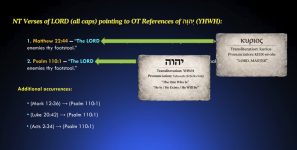
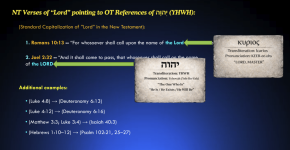
One thing in kjv, it translates YHVH as the Lord. I personally like to keep God's personal name in scripture.
 
One thing in kjv, it translates YHVH as the Lord. I personally like to keep God's personal name in scripture.
Even the original inspired Greek does the same.

YHWH 01.png
YHWH 02.png

Granted, I am not saying that the KJV is inspired or anything. But I do believe the KJV is without error and God's words in English for today for us to preach from. The Hebrew, Aramaic, and Greek words (that underlies the KJV) that we have today are the inspired words of God. These words exist today by the handing down of many copies from the inspired originals, which means the original language words underlying the KJV carry that very same inspiration.

Source for the above two images:
Free E-book: "Is Knowledge of the Original Languages Necessary for KJV Believers?" pp. 53-54. (Author: Bible Highlighter)
www.affectionsabove.com


....
 
While I sincerely appreciate that you hold the first position, I must challenge the second. Either the KJV was (re)inspired or it was not. There is no room for a third option. Calling the KJV a "providential" translation is carefully rejecting the proposition while actually affirming it.

In a sense, every translation is "providential" to some degree. If you hold that the KJV was "special" in some regard then you must also hold that Tyndale was special in the same regard, because significant portions of Tyndale were preserved in the KJV. If two are special, there is no reason to think others aren't. You must hold that Erasmus' third edition is similarly special while the first two weren't because it contains 1 John 5:7 against a mountain of evidence for its exclusion. You must hold that Beza was special because his Revelation 16:5 was the only source for the KJV.

In other words, by assigning the KJV any kind of special status, you actually undermine your position.
Excellent timing for you to be challenged on what you think you know about the Johannine Comma in 1 John 5:7 (KJV). Today at 9:00AM Eastern time starts the Johannine Comma Conference on Nick Sayers (Revolution Debates) YouTube channel (located in his "live" tabs section). There will be nine speakers each speaking approximately an hour and a half.

Johannine Comma Conference.jpeg

1 John 5 vs 7 Conference.png

Online Conference starting today at 9:00AM Eastern Time:
https://www.youtube.com/@NickSayersRevolution/streams

Event: https://www.facebook.com/events/johannine-comma-conference/1022088526844583/

Online discussion will most like take place at Textus Receptus Academy on Facebook unless Nick Sayers states otherwise.

https://www.facebook.com/groups/467217787457422/?sorting_setting=CHRONOLOGICAL


....
 
While I sincerely appreciate that you hold the first position, I must challenge the second. Either the KJV was (re)inspired or it was not. There is no room for a third option. Calling the KJV a "providential" translation is carefully rejecting the proposition while actually affirming it.

In a sense, every translation is "providential" to some degree. If you hold that the KJV was "special" in some regard then you must also hold that Tyndale was special in the same regard, because significant portions of Tyndale were preserved in the KJV. If two are special, there is no reason to think others aren't. You must hold that Erasmus' third edition is similarly special while the first two weren't because it contains 1 John 5:7 against a mountain of evidence for its exclusion. You must hold that Beza was special because his Revelation 16:5 was the only source for the KJV.

In other words, by assigning the KJV any kind of special status, you actually undermine your position.
As for Revelation 16:5, Nick Sayers book is a must read if you want to truly be challenged.

https://www.amazon.com/Revelation-16-Final-Triadic-Declaration/dp/1733331581/

If you do not want to fork over the cheese, his one page article on his 24,000 plus page wiki style website covers the topic.

https://textus-receptus.com/wiki/Revelation_16:5


....
 
While I sincerely appreciate that you hold the first position, I must challenge the second. Either the KJV was (re)inspired or it was not. There is no room for a third option. Calling the KJV a "providential" translation is carefully rejecting the proposition while actually affirming it.

In a sense, every translation is "providential" to some degree. If you hold that the KJV was "special" in some regard then you must also hold that Tyndale was special in the same regard, because significant portions of Tyndale were preserved in the KJV. If two are special, there is no reason to think others aren't. You must hold that Erasmus' third edition is similarly special while the first two weren't because it contains 1 John 5:7 against a mountain of evidence for its exclusion. You must hold that Beza was special because his Revelation 16:5 was the only source for the KJV.

In other words, by assigning the KJV any kind of special status, you actually undermine your position.
My argument for the KJV vs. Modern Bibles is more extensive than your average bear would make.
I not only have 77 changed doctrines that are serious that are changed in Modern versions (with that number easily being higher), I have discovered other good reasons why a Christian would want to stick with the TR/KJV over the others. This would be 100 non-doctrinal reasons, bringing the total to 177 reasons for the King James Bible (which is a future writeup).

My PDF writeup on the 77 changed doctrines is being re-worked currently to align with original languages using the older lexicons, middle English dictionary, early church writers, and more. The reason for this is because my previous "KJV English-only" approach had at times led me to conclude the wrong things on certain verses. So my work will be a form of double or triple confirmation on what the KJV is saying vs. the Modern versions. I take under consideration of how one would read the Bible in Greek vs. say an English translation. So I do try to be fair to the Modern Bible Movement side, even though I do not agree with it.


....
 
All translations of the Bible have mistakes. All not some. We should want to know what they are.
If you mean typos, then correct the book.

If you mean errors, then you now openly preach that translations are untrustworthy, and linguistic scholarship is necessary to know the true gospel and doctrine of Jesus Christ.

Mar 10:14
But when Jesus saw it, he was much displeased, and said unto them, Suffer the little children to come unto me, and forbid them not: for of such is the kingdom of God.

Just not until they learn enough Hebrew/Greek to understand Jesus' words to them.

2Co 3:12
Seeing then that we have such hope, we use great plainness of speech:

God has seen to it that His plain words can be plainly learned in plain English...Spanish, Dutch, German...

Prove every translation has mistakes. Otherwise, you are using an unproven ideological theory to conclude, that they are all untrustworthy.

No Scripture anywhere says, that original languages are necessary to learn and know for certain the words of this life and to come, that are given us freely in the Scriptures of God.

If people prefer a religion that demands oringal language scholarship, then Koran Islam is the choice for them, rather than childhood school grade Bible Christianity.

Most modern Bible 'scholars' are frauds and charlatans, that hear what 'thus saith the Lord' in their own language, and don't do it. Instead they run to Hebrew/Greek to come up with some other way of life in the name of Christ:

2Ti 2:19
Nevertheless the foundation of God standeth sure, having this seal, The Lord knoweth them that are his. And, Let every one that nameth the name of Christ depart from iniquity.

Luk 6:46
And why call ye me, Lord, Lord, and do not the things which I say?
 
If you mean errors, then you now openly preach that translations are untrustworthy, and linguistic scholarship is necessary to know the true gospel and doctrine of Jesus Christ.
The Gospel is clear in most translations but some text are in error
Translations are untrustworthy. The fact that that They disagree in a lot of places is proof of that.

And some are not translations in some text though they claim to be.

Are you a student of the Greek? If so, maybe you can see the error in the text below. Apparently @Bible_Highlighter has not.