

NEW CC Perspectives on Levels of Conspiracy & Corruption in 2020 Election, CV19 & DS Existence
- Thread starter Solemateleft
- Start date
-
Christian Chat is a moderated online Christian community allowing Christians around the world to fellowship with each other in real time chat via webcam, voice, and text, with the Christian Chat app. You can also start or participate in a Bible-based discussion here in the Christian Chat Forums, where members can also share with each other their own videos, pictures, or favorite Christian music.
If you are a Christian and need encouragement and fellowship, we're here for you! If you are not a Christian but interested in knowing more about Jesus our Lord, you're also welcome! Want to know what the Bible says, and how you can apply it to your life? Join us!
To make new Christian friends now around the world, click here to join Christian Chat.
You are using an out of date browser. It may not display this or other websites correctly.
You should upgrade or use an alternative browser.
You should upgrade or use an alternative browser.

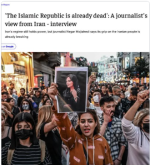
A Journalist from within Iran reports: Iran's Regime holds power, but Journalist Negar Mjjtahed says its grip on the Iranian people is already breaking!!!
The Persian people will not be denied their freedom....it is inevitable....you can go to Jerusalem report and read the full story by this Iranian Canadian journalist......
Shane Hill
This is exactly what many of us knew what was happening inside Iran....it is over .....that terrorist regime will never have its power back like before and now slowly but surely it is dying from within....The Persian people will not be denied their freedom....it is inevitable....you can go to Jerusalem report and read the full story by this Iranian Canadian journalist......
Attachments
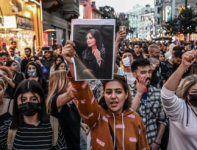
A Journalist from within Iran reports: Iran's Regime holds power, but Journalist Negar Mjjtahed says its grip on the Iranian people is already breaking!!!
Shane Hill
This is exactly what many of us knew what was happening inside Iran....it is over .....that terrorist regime will never have its power back like before and now slowly but surely it is dying from within....
The Persian people will not be denied their freedom....it is inevitable....you can go to Jerusalem report and read the full story by this Iranian Canadian journalist......
View attachment 295706
As I have said the COMBINATION of mutually supporting lines of effort in this Irregular Whole of Government Warfare Strategy and Plan is intended to create conditions for a COUP from WITHIN!!!
and NOW we are beginning to see and hear more and more INDICATIONS that the recent state of the IRGC seemingly substantiates that they are growing more and more vulnerable to a COUP attempt and the possibility of it being successful, when you add in the growing number of Countries that are joining the Alliance that Opposes the IRGC Tyrannical Rein in the area...
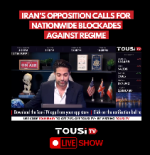
Tousi TV
Iran’s opposition is calling for nationwide blockades to disrupt the Islamic Republic’s repression machine.The campaign urges Iranians to bring vehicles into major streets and squares and switch off their engines, creating mass gridlock that could prevent regime forces from moving freely.
“Victory is near. Together we will bring this corrupt and criminal regime to its knees and take back Iran.”
https://www.facebook.com/reel/1404911940969507
Bump
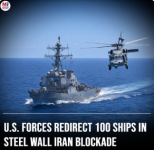
 BREAKING: U.S. FORCES REDIRECT 100 SHIPS IN 60 DAYS, ZERO UNAUTHORIZED PASSAGE TO IRANIAN PORTS!
CENTCOM just posted the blockade scoreboard. In 60 days of the resumed “steel wall” around Iranian ports, U.S. forces have redirected 100 commercial vessels. Zero ships got through without approval.
The line sits in the Strait of Hormuz and the Gulf of Oman. Non-approved traffic bound for or leaving Iranian terminals is turned back. Humanitarian cargo is inspected and allowed. When skippers refuse, the command says crews boarded two ships and disabled three. Officials say the squeeze is cutting Iranian crude loadings.
President Trump has called the wall powerful and effective and said Iran has been punished while other nations still use the strait. Oil traders still watch every intercept. America First voices call 100 redirects the proof the regime cannot export its way out of this.
One hundred ships. Sixty days. No free pass.
America FIRST!

Morse Report
CENTCOM just posted the blockade scoreboard. In 60 days of the resumed “steel wall” around Iranian ports, U.S. forces have redirected 100 commercial vessels. Zero ships got through without approval.
The line sits in the Strait of Hormuz and the Gulf of Oman. Non-approved traffic bound for or leaving Iranian terminals is turned back. Humanitarian cargo is inspected and allowed. When skippers refuse, the command says crews boarded two ships and disabled three. Officials say the squeeze is cutting Iranian crude loadings.
President Trump has called the wall powerful and effective and said Iran has been punished while other nations still use the strait. Oil traders still watch every intercept. America First voices call 100 redirects the proof the regime cannot export its way out of this.
One hundred ships. Sixty days. No free pass.
America FIRST!
There are NO MORE COINCIDENCES!!!
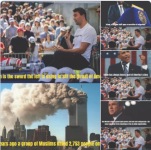
One day before Charlie was assassinated he said this…
”Islam is the sword the left is using to slit the throat of America.”
The Anniversary of Charlie's Assassination is 9-10 the day before 9-11 - ARE YOU CONNECTING THESE DOTS!!!
The threat of Islam is not hypothetical or fanciful, it is imminent and more real than ever before.
For 2 decades, US politicians and leaders have ignorantly, and sometimes intentionally concealed the true intentions and realities about Islam. From Bush to Mamdani, the American people have not been told the truth.
Today, we sit at the anniversary of both the assassination of Charlie, and 9/11. It is time for truth to be told, at all costs. Don’t listen to me, at least listen to Charlie, he paid the cost.
One day before Charlie was assassinated he said this…
”Islam is the sword the left is using to slit the throat of America.”
The Anniversary of Charlie's Assassination is 9-10 the day before 9-11 - ARE YOU CONNECTING THESE DOTS!!!
Alex Barbir
One day before Charlie was assassinated he said this…”Islam is the sword the left is using to slit the throat of America.” He was on to something profound, always thinking ahead and deeply. You see, Charlie not only actively saw what was transpiring in his home, he foresaw what was to come.The threat of Islam is not hypothetical or fanciful, it is imminent and more real than ever before.
For 2 decades, US politicians and leaders have ignorantly, and sometimes intentionally concealed the true intentions and realities about Islam. From Bush to Mamdani, the American people have not been told the truth.
Today, we sit at the anniversary of both the assassination of Charlie, and 9/11. It is time for truth to be told, at all costs. Don’t listen to me, at least listen to Charlie, he paid the cost.
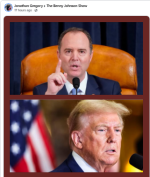
BOMBSHELL FROM INSIDE: Schiff Personally Ordered Classified Leaks to Cripple Trump, Democrat Whistleblower Alleges
By Jonathan Gregory
Washington, D.C. - September 12, 2026
By Jonathan Gregory
Washington, D.C. - September 12, 2026
A high-level Democrat whistleblower has come forward with what allies of Donald Trump are already calling the most explosive leak scandal in modern American politics, claiming Representative Adam Schiff personally authorized and directed his staff to funnel classified intelligence to selected reporters for the explicit purpose of damaging Trump. According to the account now circulating in conservative media, the operation was not a rogue staffer acting alone but a coordinated effort overseen from the top, with Schiff reviewing materials, approving targets, and timing drops to coincide with key moments in Trump’s legal and political fights. The whistleblower, described as a longtime party operative with access to sensitive briefings, said the goal was never public accountability but “maximum political harm.”
The leaks, the source claims, included raw intelligence snippets, intercept summaries, and uncorroborated assessments that were never meant for public release, packaged to suggest Trump was compromised or criminal even when the underlying material was incomplete or later walked back. Trump’s defenders argue this fits a years long pattern in which classified information seemed to appear in print at the most convenient moments for his opponents, while official investigations dragged on. The whistleblower detailed internal meetings in which Schiff’s team discussed which outlets would run the stories hardest and how to maintain deniability if the origin of the material ever surfaced.
If even a portion of the account holds, it would represent a staggering abuse of congressional access to intelligence and a direct assault on the principle that classified information exists to protect the country, not to settle political scores. Trump allies are already demanding a special counsel, declassification of relevant records, and congressional hearings that would put Schiff under oath. For millions of voters who have long insisted the Russia and impeachment sagas were dirty from the start, the whistleblower’s story is being treated as confirmation that the real scandal was never Trump, it was the machinery built to take him down.
@TrumpNews
By Jonathan Gregory
Washington, D.C. - September 12, 2026
Jonathan Gregory
BOMBSHELL FROM INSIDE: Schiff Personally Ordered Classified Leaks to Cripple Trump, Democrat Whistleblower AllegesBy Jonathan Gregory
Washington, D.C. - September 12, 2026
A high-level Democrat whistleblower has come forward with what allies of Donald Trump are already calling the most explosive leak scandal in modern American politics, claiming Representative Adam Schiff personally authorized and directed his staff to funnel classified intelligence to selected reporters for the explicit purpose of damaging Trump. According to the account now circulating in conservative media, the operation was not a rogue staffer acting alone but a coordinated effort overseen from the top, with Schiff reviewing materials, approving targets, and timing drops to coincide with key moments in Trump’s legal and political fights. The whistleblower, described as a longtime party operative with access to sensitive briefings, said the goal was never public accountability but “maximum political harm.”
The leaks, the source claims, included raw intelligence snippets, intercept summaries, and uncorroborated assessments that were never meant for public release, packaged to suggest Trump was compromised or criminal even when the underlying material was incomplete or later walked back. Trump’s defenders argue this fits a years long pattern in which classified information seemed to appear in print at the most convenient moments for his opponents, while official investigations dragged on. The whistleblower detailed internal meetings in which Schiff’s team discussed which outlets would run the stories hardest and how to maintain deniability if the origin of the material ever surfaced.
If even a portion of the account holds, it would represent a staggering abuse of congressional access to intelligence and a direct assault on the principle that classified information exists to protect the country, not to settle political scores. Trump allies are already demanding a special counsel, declassification of relevant records, and congressional hearings that would put Schiff under oath. For millions of voters who have long insisted the Russia and impeachment sagas were dirty from the start, the whistleblower’s story is being treated as confirmation that the real scandal was never Trump, it was the machinery built to take him down.
@TrumpNews
Grass Roots Patriots Taking their Patriotism to the NEXT LEVEL!!!
Payback is a Biaotch...
Classic mess with the Bull ... FAFO!!!
North Texas voters did not forget. They sent the woman who spent nights behind bars for keeping her doors open straight to the Texas House, where she can fight the next round of shutdowns and mandates from the inside instead of from a cell.
That is how it is supposed to work. Stand up, take the hit, and let the people decide. Luther did all three, and now she writes the laws instead of sitting under them.

Payback is a Biaotch...
Classic mess with the Bull ... FAFO!!!
Red Wave News
GOOD! Shelley Luther refused to let officials wreck her salon and the paychecks of the women who worked there. When they threw her in jail for the “crime” of reopening so families could eat, she became living proof that ordinary people still have a spine.North Texas voters did not forget. They sent the woman who spent nights behind bars for keeping her doors open straight to the Texas House, where she can fight the next round of shutdowns and mandates from the inside instead of from a cell.
That is how it is supposed to work. Stand up, take the hit, and let the people decide. Luther did all three, and now she writes the laws instead of sitting under them.
Bump
Morse Report
BREAKING: U.S. FORCES REDIRECT 100 SHIPS IN 60 DAYS, ZERO UNAUTHORIZED PASSAGE TO IRANIAN PORTS!
CENTCOM just posted the blockade scoreboard. In 60 days of the resumed “steel wall” around Iranian ports, U.S. forces have redirected 100 commercial vessels. Zero ships got through without approval.
The line sits in the Strait of Hormuz and the Gulf of Oman. Non-approved traffic bound for or leaving Iranian terminals is turned back. Humanitarian cargo is inspected and allowed. When skippers refuse, the command says crews boarded two ships and disabled three. Officials say the squeeze is cutting Iranian crude loadings.
President Trump has called the wall powerful and effective and said Iran has been punished while other nations still use the strait. Oil traders still watch every intercept. America First voices call 100 redirects the proof the regime cannot export its way out of this.
One hundred ships. Sixty days. No free pass.
America FIRST!
View attachment 295709
tomorrow, iran diplomats will meet with other gulf countries to discuss a plan to fully reopen the strait.
now, if we control the strait, like trump and thusly maga claim, why would other nations meet with iran about opening it???


lol... I know that I sound like a broken record to everyone else paying attention to my responses to your inquiries...tomorrow, iran diplomats will meet with other gulf countries to discuss a plan to fully reopen the strait.
now, if we control the strait, like trump and thusly maga claim, why would other nations meet with iran about opening it???
The BOTTOMLINE is that "THIS IS WAR!" and that they along with the DS whom they enable WILL NEVER GIVEUP FIGHTING for POWER and the ability to REIN and CONTROL the Global Whole of Government Corrupt System as they have for AGES via FEAR and INTIMIDATION...
lol, it is interesting that they are taking a DIFFERENT DESPERATE approach as their Traditional Go-To MOVE as a Tyrannical Global Terrorist Organization is to USE FEAR as their #1 Tactic...
lol, you don't think that EVERYON to include their CLOSEST Neighbors DON'T KNOW already that they can NEVER BE TRUSTED to any perceived PRETENSE for PEACE!!!
lol, Don't count your EGGS before they are HATCHED!!!
lol, it's a little too late for them to try to change their ways and true colors!!!
lol, They DON'T have the same PERKS and LEVERAGE, only FEAR, INTIMIDATION, and COERSION!!!
Remember - we are STILL in the MIDST of an IRREGULAR WHOLE of GOVERNMENT WAR to include an EPIC INFORMATION WAR - be very CAREFEUL as to WHO and WHAT YOU CHOOSE to BELIEVE!!!
EVERYONE in the World along with their Neighboring Countries ALREADY KNOW that the IRGC are PURE EVIL as SATAN's ARM towards a Global JIHAD...
Also, don't forget that the MOST RECENT and RELEVANT developments that have ALREADY GROWN MOMENTUM regarding the The Abraham Accords continue to expand and serve as a framework for regional normalization and security cooperation under the second Trump administration, amid ongoing conflicts involving Iran, Gaza, and Lebanon.
Most recent developments (as of mid-September 2026)
- U.S. postwar strategy: The Trump administration is drafting a broader Middle East strategy for after the Iran war. It focuses on building a regional U.S.-allied alignment to contain Iran and expanding the Accords (including a long-sought Israel-Saudi normalization). Implementation is expected after the October 27 Israeli election and November U.S. midterms. Trump has described working on “something much bigger” in the region.
- Lebanon pathway: A Lebanese Sunni MP stated in early September that Lebanon could join the Accords once Hezbollah is disarmed. This follows a June 2026 U.S.-brokered Israel-Lebanon-U.S. trilateral framework agreement. That deal affirms mutual rights to exist in peace, ties Israeli withdrawal from buffer zones to verified Lebanese Armed Forces disarmament of non-state groups (especially Hezbollah), and sets up pilot zones and a military coordination group. Hezbollah has rejected or conditioned compliance; talks on implementation continue, with further meetings planned.
- Saudi Arabia: Trump has conditioned a U.S.-Saudi civilian nuclear agreement on Riyadh joining the Accords and normalizing with Israel. Saudi Arabia has historically linked normalization to progress toward Palestinian statehood. The nuclear deal was submitted to Congress, but this linkage complicates approval.
Other key expansions and resilience
- Kazakhstan: Joined in November 2025 as the first Central Asian member (and a non-Arab Muslim-majority country). It already had full diplomatic ties with Israel since 1992, so the move was largely symbolic but expanded the Accords geographically and signaled broader Muslim-world engagement. It has supported deeper cooperation in areas like cybersecurity and water management.
- Trade and security cooperation: Economic ties between Israel and Accords partners (UAE, Bahrain, Morocco, etc.) have grown despite regional tensions and wars. Cumulative trade rose substantially since 2021. Security integration advanced, including a CENTCOM Middle Eastern Air Defense cell (announced early 2026) and military cooperation (e.g., with Morocco). Existing members maintained ties through the post-October 7 period and related conflicts.
- Other notes: Discussions continue about potential further members (e.g., Indonesia, Malaysia, or progress with Syria after the fall of Assad). Related frameworks like the “Isaac Accords” (Israel-Argentina and like-minded nations) have been proposed. Legislative and institutional support in the U.S. (e.g., research frameworks, special envoy roles) aims to institutionalize expansion.

Because it's the only way they can use the strait. Currently, they cannot get any ships in or out. They are trying to circumvent the blockade.tomorrow, iran diplomats will meet with other gulf countries to discuss a plan to fully reopen the strait.
now, if we control the strait, like trump and thusly maga claim, why would other nations meet with iran about opening it???
Here's an EARLY INDICATION of how well the IRGC's latest Desperate Move/Ploy is likely to go!!!tomorrow, iran diplomats will meet with other gulf countries to discuss a plan to fully reopen the strait.
now, if we control the strait, like trump and thusly maga claim, why would other nations meet with iran about opening it???
Info-Blurbs
JUST IN:


Saudi Arabia strikes Houthi strongholds in Sana’a with 5,000-lb GBU-28 bunker busters, targeting underground missile and drone infrastructure, weapons depots, command centers and launch sites, with 150 Houthi terrorists reportedly killed or wounded.
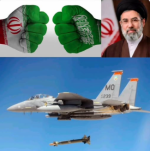

Saudi Arabia Delivers A Crushing Blow To Iran’s Houthi Terrorists In Yemen
Yeah, I'll believe that when I see it.
These people aren't even smart enough to protect their own means of revenue
It's due to their moslem thing where they think their allar guy they worship will be mad at them if they defend themselves from other moslems.
It seems that maybe your perspective of Arab Religions, Beliefs and Ideologies in the Middle East and Gulf Region are a little to GENERAL and LACKING an appreciation for the actual reality and complexities involved...Yeah, I'll believe that when I see it.
These people aren't even smart enough to protect their own means of revenue
It's due to their moslem thing where they think their allar guy they worship will be mad at them if they defend themselves from other moslems.
The Islamic Revolutionary Guard Corps (IRGC), particularly its Quds Force, is the primary instrument of Iran’s “Axis of Resistance.” It builds and supports a network of mostly Shia Islamist militias and some tactical partners to counter the U.S., Israel, and Sunni-led Gulf states. Alignments are driven more by sectarian ideology (Iran’s Twelver Shia velayat-e faqih model), geopolitics, and anti-Israel/anti-Western goals than by pure theology. Stances are not monolithic within any faith.
Groups generally aligned with or supported by the IRGC
These form the core of the Axis:- Twelver Shia Muslims(Iran’s official sect and the dominant force in the network):
- Hezbollah (Lebanon) — the flagship proxy, created with IRGC help in the 1980s; shares ideology and receives heavy funding, weapons, and training.
- Iraqi Shia militias under the Popular Mobilization Forces (PMF/Hashd al-Shaabi), especially Kata’ib Hezbollah, Asa’ib Ahl al-Haq, Badr Organization, and similar factions — many were trained/armed by the IRGC and remain closely linked.
- Foreign Shia brigades such as the Afghan Fatemiyoun and Pakistani Zainabiyoun (recruited and controlled by the IRGC for Syria and other fronts).
- Smaller Shia cells in Bahrain, Syria (pre-Assad fall remnants), and elsewhere.
- Zaydi Shia (Houthis/Ansar Allah in Yemen): Not Twelver and do not fully accept velayat-e faqih, but receive substantial IRGC weapons, training, and support due to shared anti-Saudi/anti-U.S./anti-Israel goals. They have become a more prominent frontline actor in recent years.
- Some Sunni Islamist groups (tactical, not ideological alignment):
- Hamas and Palestinian Islamic Jihad (PIJ) — Sunni (Muslim Brotherhood-rooted) Palestinian groups that receive Iranian funding, weapons, and training despite sectarian differences, primarily over the shared goal of confronting Israel.
- Limited historical or opportunistic ties with other Sunni militants when useful against common enemies.
- Alawites (a distinct offshoot related to Shia Islam): The former Assad regime in Syria was a key state partner until its fall in late 2024; IRGC forces and proxies fought to preserve it. Residual cells may persist.
Groups and communities generally opposed to the IRGC
Opposition is strongest among Sunni-majority states and non-Muslim communities that view the IRGC as a sectarian, expansionist threat:- Sunni Muslims (vast majority in the Gulf and much of the Arab world):
- Ruling establishments and populations in Saudi Arabia (Wahhabi/Salafi-influenced), UAE, Bahrain (Sunni monarchy over a Shia-majority population), Egypt, Jordan, and most other Gulf Cooperation Council states view the IRGC and its proxies as existential threats (missile/drone attacks, subversion, support for local Shia opposition).
- Broader Sunni public and clerical opinion often sees Iranian influence as sectarian aggression; groups like ISIS and al-Qaeda were fiercely anti-Shia/anti-IRGC.
- Even some Muslim Brotherhood-linked or previously Iran-friendly Sunni voices have criticized Iranian actions when they target Arab states.
- Jews / Israel: Israel is the primary declared enemy of the IRGC and Axis. The IRGC’s ideology and operations explicitly target Israel; Jewish communities in the region (mainly in Israel) are aligned against it.
- Christians:
- Many Christian communities (Maronites, Orthodox, Assyrians, Copts, etc.) in Lebanon, Iraq, Syria, and elsewhere have suffered under IRGC-backed militias or Iranian influence (e.g., Hezbollah’s dominance in Lebanon, militia activity in Iraq/Syria). They tend to favor stronger central governments or Western/Gulf ties over Iranian proxies.
- Attitudes vary by country and denomination; some individual Christians have cooperated with local Shia groups for pragmatic reasons, but institutional alignment with the IRGC is rare.
- Other minorities:
- Druze, Yazidis, Kurds (mostly Sunni, with some Yezidi and Christian Kurds), and smaller groups (Bahá’í, Zoroastrians) have generally been hostile or neutral-to-hostile toward IRGC expansion due to persecution, forced displacement, or competition for power under Iranian-backed forces.
- In Iran itself, recognized minorities (Christians, Jews, Zoroastrians) face restrictions, and unrecognized ones (Bahá’ís, converts) face severe repression involving IRGC and security forces.
Important caveats
- Not purely religious: Alliances mix ideology, money, weapons, local grievances, and anti-Israel politics. Sunni groups like Hamas cooperate with Shia Iran for tactical reasons. Quietist Shia authorities (e.g., Grand Ayatollah Ali al-Sistani in Iraq’s Najaf) often distance themselves from IRGC-style political militarism.
- Gulf dynamics: Sunni monarchies lead the opposition. Bahrain’s Shia majority has some Iran-sympathetic elements, but the state is firmly anti-IRGC. Oman (Ibadi) and Qatar have historically been more pragmatic.
- Recent context (2025–2026): The Axis has been strained by losses to Hezbollah and Hamas, the fall of Assad, Israeli/U.S. pressure, and Gulf states designating Hezbollah a terrorist group. Iran continues rebuilding via Iraqi militias and Houthis.
Here's an EARLY INDICATION of how well the IRGC's latest Desperate Move/Ploy is likely to go!!!
Info-Blurbs
JUST IN:Saudi Arabia Delivers A Crushing Blow To Iran’s Houthi Terrorists In Yemen
Saudi Arabia strikes Houthi strongholds in Sana’a with 5,000-lb GBU-28 bunker busters, targeting underground missile and drone infrastructure, weapons depots, command centers and launch sites, with 150 Houthi terrorists reportedly killed or wounded.
View attachment 295714
the houthis captured and now control the bab al-mandeb strait.
but, yeah, they are losing...

i have this funny/strange habit of actually looking at stats and facts and results to determine winning and losing.
not just saying words.
not just saying words.
the houthis captured and now control the bab al-mandeb strait.
but, yeah, they are losing...
lol, you have a consistent flawed narrow and naive perspective of all types of Warfare - always calling the insignificant Balls and Strikes and measly First Downs with a complete BLIND SPOT for actual OUTCOMES that MATTER or that will MOVE the DIAL TOWARDS actually WINNING THE WAR...i have this funny/strange habit of actually looking at stats and facts and results to determine winning and losing.
not just saying words.
You are inclined to look at Tactical Actions and IGNORANTLY and ALWAYS WRONGLY ASSUME that these small Tactical single-day Battles have an impact upon OPERATIONAL or STRATEGIC LEVEL OBJECTIVES that will RESULT in an ENDURING and SUSTAINABLE ACHIEVEMENT Towards ultimate VICTORY!!!
LOL you have a consistent FLAW akin to the Mohamed Ali vs George Forman FIGHT - with the WRONG interpretation and FLAWED ASSUMPTION that Foreman was WINNING that FIGHT.... When in actuality HE did not have the SUSTAINABLE WINNING STRATEGY AT ALL... Just throwing INEFFECTIVE PUNCHES that had ZERO IMPACT UPON the INEVITABLE OUTCOME that all of us EXPERTS in FIGHTING and WARFIGHTINF STRATEGIES SAW a MILE AWAY!!!
We saw the "ROPE-A-DOPE" Strategy and UNDERSTOOD EXACTLY WHAT ALI was DOING!!!
He was taking Foreman to the DEEP END!!!
KNOWING that FOREMAN would EXHAUST HIMSELF and with a Plan that WAS UNSUSTAINABLE in the LONG-RUN to result in a victory...
ALI was COMPLETELY CONFIDENT that FORMAN Would RUN OUT of GAS and KNEW that HE had the CAPABILITIES and CAPACITIES to OUTLAST HIM and to ULTIMATELY DESTROY HIM with his OFFENSE at precisely the TIME and PLACE of HIS CHOOSING in the END!!!
You only continue to reveal you consistent and relentless TREND for BEING WRONG on this Thread over and over again...
lol, in the beginning you claimed to KNOW MORE about the DS than anyone because you were an INFO WARs Disciple...
But it turns out that you have been PROVEN to NOT REALLY understand the DS - as you are know a DS CHEERLEADER!!!
and you have proven that you actually have little to zero GRASP for ACTUAL INFORMATION WARFARE as you consistently fumble with narratives, messages, target audiences, and who is pushing Mis-Information and Dis-Information and for what purpose and agenda...
But, at least you are Consistent in NOT UNDERSTANDING and Connecting the DOTS between the National conflict with the DS Leftists and the IRGC's role as Puppets for the DS GLOBALISTS in this Epic Biblical War between Satan's Forces for Evil and the White Hats Global White Hat Alliance and Patriots within this Administration along with the grass roots Christian Patriot Truthers...
Thanks for the UPDATE... lets see how this plays out.... Here's some additional insights and broader perspectivethe houthis captured and now control the bab al-mandeb strait.
but, yeah, they are losing...

Again this is STRATEGIC WARFARE... lets see how this tactical battle measures up within the BIGGER PICTURE...
All Israel News
Follow
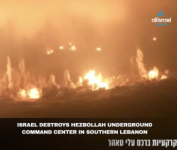
Israel destroyed a massive underground Hezbollah command center in southern Lebanon late Thursday night, in a series of explosions that triggered earthquake warnings in Lebanon.The surprise announcement of the detonation came despite explicit warnings from the Iranian regime and Hezbollah against destroying the complex, where dozens of operatives had reportedly been holed up for months within an extensive network of underground tunnels beneath the Ali al-Taher ridge.
The massive detonations triggered a magnitude 4.1 earthquake warning in Lebanon. “Tonight the mountain became a sandbox,” a senior IDF officer told Army Radio.
Key developments
- Capture of Mocha (Mokha): On or around September 10, Houthi forces took the strategic Red Sea port city of Mocha after Yemeni government (Saudi-backed) forces withdrew. This was a major gain, expanding their hold over much of Yemen’s western coastline.
- Advance to Dhubab and the coastline: Fighters pushed further south, reaching areas overlooking the strait and completing control of Yemen’s entire Red Sea coast according to multiple government sources and reports.
- Seizure of islands:
- Mayyun (Perim) Island — located in the middle of the Bab al-Mandeb, dividing the strait into channels — was taken after government forces withdrew. This is widely described as the most critical gain for controlling the chokepoint.
- Reports also mention capture of Greater and Lesser Hanish islands (and in some accounts Zuqar), the last remaining islands in the area previously not under Houthi control.
Current status and implications
- Houthi position: They effectively control the Yemeni mainland coast and key islands facing the strait. Houthi statements claim navigation remains “safe and orderly” for most vessels but continue targeting or banning Saudi-linked ships. Ship traffic reportedly dropped sharply in the immediate aftermath (e.g., roughly halving on one day of data).
- Limits to “full control”: The strait is an international waterway. The African (Djibouti/Eritrea) side remains outside Houthi reach. Experts note this gives them a dramatically stronger ability to contest, threaten, or potentially deny commercial use rather than absolute sovereignty over the entire passage.
- Broader context: This occurs amid the wider U.S.-Israel-Iran conflict (which has disrupted the Strait of Hormuz). Saudi Arabia has relied more on Red Sea/Bab al-Mandeb routes for oil exports. The gains strengthen Iran’s leverage via its Houthi allies and have raised oil prices and concerns for global trade (Bab al-Mandeb handles ~12% of global trade, significant oil and LNG volumes). Saudi airstrikes and international attention followed, but ground forces largely withdrew.
M.A. Rothman
𝐈𝐑𝐀𝐍 𝐑𝐄𝐁𝐔𝐈𝐋𝐃𝐒 𝐁𝐀𝐋𝐋𝐈𝐒𝐓𝐈𝐂 𝐌𝐈𝐒𝐒𝐈𝐋𝐄𝐒 𝐔𝐍𝐃𝐄𝐑𝐆𝐑𝐎𝐔𝐍𝐃 𝐀𝐅𝐓𝐄𝐑 𝐔𝐒𝐈𝐍𝐆 𝐂𝐇𝐈𝐍𝐄𝐒𝐄 𝐒𝐀𝐓𝐄𝐋𝐋𝐈𝐓𝐄 𝐏𝐇𝐎𝐓𝐎𝐒 𝐓𝐎 𝐊!𝐋𝐋 𝟑 𝐔.𝐒. 𝐓𝐑𝐎𝐎𝐏𝐒The 𝘞𝘢𝘭𝘭 𝘚𝘵𝘳𝘦𝘦𝘵 𝘑𝘰𝘶𝘳𝘯𝘢𝘭 is reporting that Iran never actually stopped building the weapons it claims to have given up. According to the report, Tehran has resumed producing both liquid- and solid-propellant ballistic missiles at the 𝐮𝐧𝐝𝐞𝐫𝐠𝐫𝐨𝐮𝐧𝐝 𝐊𝐡𝐨𝐣𝐢𝐫 𝐟𝐚𝐜𝐢𝐥𝐢𝐭𝐲 outside Tehran, using stockpiled parts to rebuild what American and Israeli airstrikes destroyed.
It gets worse. U.S. officials tell the Journal that before the July 17 strike that k!lled 𝐭𝐡𝐫𝐞𝐞 𝐀𝐦𝐞𝐫𝐢𝐜𝐚𝐧 𝐭𝐫𝐨𝐨𝐩𝐬 at Muwaffaq Salti Air Base in Jordan, Iran had obtained high-resolution satellite images of the base from 𝐂𝐡𝐢𝐧𝐞𝐬𝐞 𝐞𝐧𝐭𝐢𝐭𝐢𝐞𝐬. Two soldiers were k!lled outright and a young Army lieutenant later d∗ed of his injuries. Four more were wounded. Iran published its own damage photos within three days — a regime bragging about how precisely it hit American service members with someone else's satellite.
President Trump made the stakes plain when asked directly about the threat: “𝘐𝘧 𝘵𝘩𝘦𝘺 𝘩𝘢𝘥 𝘢 𝘯𝘶𝘤𝘭𝘦𝘢𝘳 𝘸𝘦𝘢𝘱𝘰𝘯, 𝘐'𝘥 𝘣𝘦 𝘤𝘢𝘭𝘭𝘪𝘯𝘨 𝘵𝘩𝘦 𝘚𝘶𝘱𝘳𝘦𝘮𝘦 𝘓𝘦𝘢𝘥𝘦𝘳 𝘢𝘯𝘥 𝘐'𝘥 𝘣𝘦 𝘴𝘢𝘺𝘪𝘯𝘨, 𝘔𝘳. 𝘚𝘶𝘱𝘳𝘦𝘮𝘦 𝘓𝘦𝘢𝘥𝘦𝘳, 𝘩𝘰𝘸 𝘢𝘳𝘦 𝘺𝘰𝘶, 𝘴𝘪𝘳? 𝘐𝘴 𝘵𝘩𝘦𝘳𝘦 𝘢𝘯𝘺𝘵𝘩𝘪𝘯𝘨 𝘸𝘦 𝘤𝘢𝘯 𝘥𝘰 𝘧𝘰𝘳 𝘺𝘰𝘶? 𝘈𝘴 𝘰𝘱𝘱𝘰𝘴𝘦𝘥 𝘵𝘰 𝘣𝘰𝘮𝘣𝘪𝘯𝘨 𝘵𝘩𝘦 𝘤𝘳𝘢𝘱 𝘰𝘶𝘵 𝘰𝘧 𝘵𝘩𝘦𝘮. 𝘞𝘦 𝘤𝘢𝘯𝘯𝘰𝘵 𝘭𝘦𝘵 𝘐𝘳𝘢𝘯 𝘩𝘢𝘷𝘦 𝘢 𝘯𝘶𝘤𝘭𝘦𝘢𝘳 𝘸𝘦𝘢𝘱𝘰𝘯.”
The timing isn't a coincidence. The same week, Iran-backed Houthi rebels seized a strategic island near the Red Sea and a Saudi oil pipeline was shut down after a drone attack — the regime probing every choke point it can reach while it quietly rebuilds the missiles meant to threaten all of them.
𝐍𝐮𝐜𝐥𝐞𝐚𝐫 𝐈𝐫𝐚𝐧 𝐢𝐬 𝐧𝐨𝐭 𝐧𝐞𝐠𝐨𝐭𝐢𝐚𝐛𝐥𝐞.

Bump
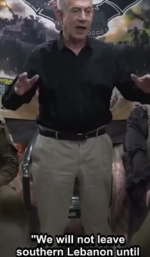
Prime Minister Benjamin Netanyahu visited Israeli troops stationed inside southern Lebanon’s security zone and delivered a message meant for Beirut, Tehran, and every soldier standing next to him: the mission isn’t finished, and Israel isn’t going anywhere.
“𝘞𝘦 𝘸𝘪𝘭𝘭 𝘯𝘰𝘵 𝘭𝘦𝘢𝘷𝘦 𝘴𝘰𝘶𝘵𝘩𝘦𝘳𝘯 𝘓𝘦𝘣𝘢𝘯𝘰𝘯 𝘶𝘯𝘵𝘪𝘭 𝘵𝘩𝘦 𝘵𝘩𝘳𝘦𝘢𝘵 𝘩𝘢𝘴 𝘣𝘦𝘦𝘯 𝘦𝘭𝘪𝘮𝘪𝘯𝘢𝘵𝘦𝘥. 𝘈𝘯𝘥 𝘢𝘴 𝘭𝘰𝘯𝘨 𝘢𝘴 𝘏∗𝘻𝘣𝘰𝘭𝘭𝘢𝘩 𝘳𝘦𝘮𝘢𝘪𝘯𝘴 𝘩𝘦𝘳𝘦, 𝘢𝘳𝘮𝘦𝘥 𝘢𝘯𝘥 𝘵𝘩𝘳𝘦𝘢𝘵𝘦𝘯𝘪𝘯𝘨 𝘶𝘴, 𝘸𝘦 𝘸𝘪𝘭𝘭 𝘳𝘦𝘮𝘢𝘪𝘯 𝘩𝘦𝘳𝘦 𝘢𝘴 𝘸𝘦𝘭𝘭.” He didn’t soften the message for Iran either — his line to both H∗zbollah and its patrons in Tehran was simple: 𝐠𝐞𝐭 𝐨𝐮𝐭 𝐨𝐟 𝐡𝐞𝐫𝐞.
The numbers behind the confidence are staggering. Netanyahu said IDF operations across Lebanon have k!lled 𝟗,𝟎𝟎𝟎 𝐭𝐞𝐫𝐫𝐨𝐫𝐢𝐬𝐭𝐬, including hundreds in just the past few weeks. H∗zbollah once held an arsenal of 150,000 missiles and rockets — by his account, the 𝐝𝐞𝐧𝐬𝐞𝐬𝐭 𝐜𝐨𝐧𝐜𝐞𝐧𝐭𝐫𝐚𝐭𝐢𝐨𝐧 𝐨𝐟 𝐟𝐢𝐫𝐞𝐩𝐨𝐰𝐞𝐫 𝐨𝐧 𝐄𝐚𝐫𝐭𝐡. Today, only 8 percent of that stockpile remains.
He tied the campaign directly to the war with Iran itself: “𝘠𝘰𝘶 𝘩𝘢𝘷𝘦 𝘥𝘰𝘯𝘦 𝘩𝘶𝘨𝘦 𝘸𝘰𝘳𝘬 𝘩𝘦𝘳𝘦; 𝘸𝘦 𝘩𝘢𝘷𝘦 𝘵𝘢𝘬𝘦𝘯 𝘵𝘩𝘦 𝘐𝘳𝘢𝘯𝘪𝘢𝘯 𝘢𝘹𝘪𝘴 𝘢𝘯𝘥 𝘣𝘦𝘨𝘶𝘯 𝘵𝘰 𝘤𝘳𝘶𝘴𝘩 𝘪𝘵. 𝘞𝘦 𝘢𝘵𝘵𝘢𝘤𝘬𝘦𝘥 𝘐𝘳𝘢𝘯 𝘪𝘵𝘴𝘦𝘭𝘧, 𝘴𝘰𝘮𝘦𝘵𝘩𝘪𝘯𝘨 𝘯𝘰 𝘰𝘯𝘦 𝘣𝘦𝘭𝘪𝘦𝘷𝘦𝘥, 𝘢𝘯𝘥 𝘸𝘦 𝘳𝘦𝘮𝘰𝘷𝘦𝘥 𝘢𝘯 𝘦𝘹𝘪𝘴𝘵𝘦𝘯𝘵𝘪𝘢𝘭 𝘵𝘩𝘳𝘦𝘢𝘵.” The plan going forward, he said, is the same one that worked in Gaza — permanent buffer and security zones on the other side of the border.
𝐍𝐢𝐧𝐞𝐭𝐲-𝐭𝐰𝐨 𝐩𝐞𝐫𝐜𝐞𝐧𝐭 𝐨𝐟 𝐭𝐡𝐞 𝐚𝐫𝐬𝐞𝐧𝐚𝐥 𝐢𝐬 𝐠𝐨𝐧𝐞. 𝐈𝐬𝐫𝐚𝐞𝐥 𝐢𝐬 𝐬𝐭𝐚𝐲𝐢𝐧𝐠 𝐮𝐧𝐭𝐢𝐥 𝐭𝐡𝐞 𝐫𝐞𝐬𝐭 𝐢𝐬 𝐭𝐨𝐨.
M.A. Rothman
𝐍𝐄𝐓𝐀𝐍𝐘𝐀𝐇𝐔: 𝟗,𝟎𝟎𝟎 𝐇∗𝐙𝐁𝐎𝐋𝐋𝐀𝐇 𝐅𝐈𝐆𝐇𝐓𝐄𝐑𝐒 𝐃𝐄𝐀𝐃, 𝟗𝟐% 𝐎𝐅 𝐈𝐓𝐒 𝐌𝐈𝐒𝐒𝐈𝐋𝐄 𝐀𝐑𝐒𝐄𝐍𝐀𝐋 𝐆𝐎𝐍𝐄—𝐈𝐒𝐑𝐀𝐄𝐋 𝐈𝐒𝐍’𝐓 𝐋𝐄𝐀𝐕𝐈𝐍𝐆 𝐋𝐄𝐁𝐀𝐍𝐎𝐍Prime Minister Benjamin Netanyahu visited Israeli troops stationed inside southern Lebanon’s security zone and delivered a message meant for Beirut, Tehran, and every soldier standing next to him: the mission isn’t finished, and Israel isn’t going anywhere.
“𝘞𝘦 𝘸𝘪𝘭𝘭 𝘯𝘰𝘵 𝘭𝘦𝘢𝘷𝘦 𝘴𝘰𝘶𝘵𝘩𝘦𝘳𝘯 𝘓𝘦𝘣𝘢𝘯𝘰𝘯 𝘶𝘯𝘵𝘪𝘭 𝘵𝘩𝘦 𝘵𝘩𝘳𝘦𝘢𝘵 𝘩𝘢𝘴 𝘣𝘦𝘦𝘯 𝘦𝘭𝘪𝘮𝘪𝘯𝘢𝘵𝘦𝘥. 𝘈𝘯𝘥 𝘢𝘴 𝘭𝘰𝘯𝘨 𝘢𝘴 𝘏∗𝘻𝘣𝘰𝘭𝘭𝘢𝘩 𝘳𝘦𝘮𝘢𝘪𝘯𝘴 𝘩𝘦𝘳𝘦, 𝘢𝘳𝘮𝘦𝘥 𝘢𝘯𝘥 𝘵𝘩𝘳𝘦𝘢𝘵𝘦𝘯𝘪𝘯𝘨 𝘶𝘴, 𝘸𝘦 𝘸𝘪𝘭𝘭 𝘳𝘦𝘮𝘢𝘪𝘯 𝘩𝘦𝘳𝘦 𝘢𝘴 𝘸𝘦𝘭𝘭.” He didn’t soften the message for Iran either — his line to both H∗zbollah and its patrons in Tehran was simple: 𝐠𝐞𝐭 𝐨𝐮𝐭 𝐨𝐟 𝐡𝐞𝐫𝐞.
The numbers behind the confidence are staggering. Netanyahu said IDF operations across Lebanon have k!lled 𝟗,𝟎𝟎𝟎 𝐭𝐞𝐫𝐫𝐨𝐫𝐢𝐬𝐭𝐬, including hundreds in just the past few weeks. H∗zbollah once held an arsenal of 150,000 missiles and rockets — by his account, the 𝐝𝐞𝐧𝐬𝐞𝐬𝐭 𝐜𝐨𝐧𝐜𝐞𝐧𝐭𝐫𝐚𝐭𝐢𝐨𝐧 𝐨𝐟 𝐟𝐢𝐫𝐞𝐩𝐨𝐰𝐞𝐫 𝐨𝐧 𝐄𝐚𝐫𝐭𝐡. Today, only 8 percent of that stockpile remains.
He tied the campaign directly to the war with Iran itself: “𝘠𝘰𝘶 𝘩𝘢𝘷𝘦 𝘥𝘰𝘯𝘦 𝘩𝘶𝘨𝘦 𝘸𝘰𝘳𝘬 𝘩𝘦𝘳𝘦; 𝘸𝘦 𝘩𝘢𝘷𝘦 𝘵𝘢𝘬𝘦𝘯 𝘵𝘩𝘦 𝘐𝘳𝘢𝘯𝘪𝘢𝘯 𝘢𝘹𝘪𝘴 𝘢𝘯𝘥 𝘣𝘦𝘨𝘶𝘯 𝘵𝘰 𝘤𝘳𝘶𝘴𝘩 𝘪𝘵. 𝘞𝘦 𝘢𝘵𝘵𝘢𝘤𝘬𝘦𝘥 𝘐𝘳𝘢𝘯 𝘪𝘵𝘴𝘦𝘭𝘧, 𝘴𝘰𝘮𝘦𝘵𝘩𝘪𝘯𝘨 𝘯𝘰 𝘰𝘯𝘦 𝘣𝘦𝘭𝘪𝘦𝘷𝘦𝘥, 𝘢𝘯𝘥 𝘸𝘦 𝘳𝘦𝘮𝘰𝘷𝘦𝘥 𝘢𝘯 𝘦𝘹𝘪𝘴𝘵𝘦𝘯𝘵𝘪𝘢𝘭 𝘵𝘩𝘳𝘦𝘢𝘵.” The plan going forward, he said, is the same one that worked in Gaza — permanent buffer and security zones on the other side of the border.
𝐍𝐢𝐧𝐞𝐭𝐲-𝐭𝐰𝐨 𝐩𝐞𝐫𝐜𝐞𝐧𝐭 𝐨𝐟 𝐭𝐡𝐞 𝐚𝐫𝐬𝐞𝐧𝐚𝐥 𝐢𝐬 𝐠𝐨𝐧𝐞. 𝐈𝐬𝐫𝐚𝐞𝐥 𝐢𝐬 𝐬𝐭𝐚𝐲𝐢𝐧𝐠 𝐮𝐧𝐭𝐢𝐥 𝐭𝐡𝐞 𝐫𝐞𝐬𝐭 𝐢𝐬 𝐭𝐨𝐨.