However, you do not have any spiritual discernment to see the larger picture.
One of the first attacks by the serpent (the devil) was that he said, "Yea, hath God said...?"
That is exactly what your Modern Bibles do. They put brackets and double brackets around the text.
It's as if the serpent is hissing in the background when you see these places in the Bible.
Also, the warning in
Revelation 22:18-19 says we are not to add or subtract from God's words.
Even if you wanted this to refer to only Revelation, the problem has not gone away because as you know the ECM makes a nice change in its UBS 6. So Christians can think that is the true reading when it is heresy. You can just say, "That's just manuscript" and that's it. But you need to have spiritual discernment to realize that is a bad reading and should never be adopted unless you simply don't care that the Living Word (second person of the Trinity) has always existed from eternity's past.
Also, the Received Text is not in some kind of continual state of flux and never ending revision like the NA/UBS.
Our text is settled with the KJV and its underlying Hebrew, Aramaic, and Greek.
We are not looking for more words of God that could maybe be true. We have God's words.
Why should we believe that? Have you not read about the purity and preservation of God's words before? I posted a list in this very thread to Dino.
invoking “spiritual discernment,” the serpent’s “Yea, hath God said,” bracketed readings, Revelation 22 warnings, and purity‑of‑text arguments still doesn’t change the basic category mistake:
you’re treating textual criticism as a spiritual warfare narrative instead of a manuscript‑based discipline,
and that collapses the entire argument before it starts.
Brackets aren’t serpents; they’re honesty — they mark places where manuscripts disagree, which is exactly what a truthful edition should do.
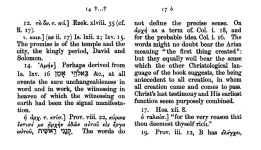
Revelation 22:18–19 warns against deliberate tampering, not against reporting manuscript variation, and the ECM’s Revelation 22:6 decision is a manuscript_variant, not a Christological attack; the reading doesn’t make Jesus “become the I AM,” it reflects how some witnesses phrase the clause.
And the TR is not “settled”; it changed repeatedly — Erasmus, Stephanus, Beza, Elzevir — and the KJV translators themselves corrected the TR against other sources. Saying “our text is settled” is a theological preference, not a textual fact.
Preservation doesn’t mean one printed edition is perfect; it means
God preserved His Word across thousands of manuscripts, so no single scribe, committee, or century could control it.
You’re interpreting manuscript brackets as spiritual danger because your system equates certainty with purity, but Scripture never says God preserved His Word by eliminating textual variation —
He preserved it by overwhelming multiplicity.
What would Jesus say to that?
I don't think He would agree that theology can just set aside to favor some kind of text that can lead others astray into believing falsely about him. How can you not see the problem in this line of thinking you are having here?
False texts lead to false beliefs.
Jesus wouldn’t tell you “ignore theology,” but He also wouldn’t tell you to override manuscripts with fear; He grounded truth in what God actually said, not in which printed edition someone prefers, and the only way to know what God actually said is by weighing manuscript evidence, not by assuming the TR/KJV is the fixed standard.
Saying “false texts lead to false beliefs” is only meaningful if the text is actually false, and the way we determine that is through manuscript_variants, not through instinctive suspicion of any reading outside the TR.
Revelation 22 warns against intentional tampering, not against reporting variation, and brackets aren’t serpents — they’re honesty, marking places where God preserved multiple witnesses, not one perfect stream.
Jesus would oppose deliberate distortion; He would not oppose careful comparison of the words God actually preserved.
See, this is what I am talking about. You did not even look at the 26 Catholic ideas I even had and you are just wiping it away as if it means nothing. I know why. It's because you don't want a settled word of God that you have to be under authority to
I didn’t “wipe away” your 26 Catholic ideas because I’m afraid of a settled Bible or of being under authority; I said they’re interpretive claims, not manuscript evidence, because that’s exactly what they are — theological conclusions you draw from modern translations, not readings in the manuscripts themselves, and textual criticism cannot treat doctrinal patterns as proof of textual corruption any more than it can treat doctrinal agreement as proof of originality.
If you want your list to function as evidence, you have to show that each item corresponds to an actual variant in the Greek witnesses, not to a translation choice, doctrinal inference, or theological trajectory; otherwise you’re arguing theology, not text.
And no, rejecting theological pattern‑arguments is not rejecting authority — it’s refusing to replace manuscript_data with suspicion‑based narratives.
All Scripture is given by inspiration of God and is profitable for doctrine.
How on Earth do you not even know this basic Bible verse?
2 Tim 3:16 tells you what the original, God‑breathed text does once you’ve identified it — it is profitable for doctrine — but it does not tell you how to identify that text among differing manuscript readings; that’s why textual criticism weighs readings, not doctrines, because manuscripts don’t come with inspired labels saying “this variant is the right theology.”
Doctrine flows from the original text; it cannot be used to decide which variant is original without collapsing into circular reasoning. That’s the whole distinction: Scripture is inspired and doctrinally authoritative; manuscripts are witnesses that must be evaluated to recover that inspired text.
You can go to their websites and check it for yourself. It's not under any kind of dispute by Critical Text advocates or anything. Jesus being stabbed by a spear before He gives up the spirit in Codex B, and Aleph is simply a fact. It's a blunder and you will have to either ignore it or deal with it.
The “blunder” isn’t in Codex B or Aleph — it’s in the way you’re reading them; the spear‑thrust appearing before Jesus’ death in those manuscripts is a harmonization pattern found in multiple early witnesses, not a chronological mistake invented by scribes, and textual critics have documented this for over a century.
It’s simply a case where some early copyists aligned John’s sequence with the Synoptic passion pattern, just as the TR has its own harmonizations, expansions, and late adjustments.
The fact that you can “check it on their websites” doesn’t change the category: it’s a variant, not a theological error, and it must be weighed the same way every variant is — by manuscript_evidence, not by whether it fits a preferred narrative of purity or corruption.
Words can affect people. Not sure you have lived on Earth long enough to figure that out yet. A wrong text with false beliefs and doctrines will sometimes lead people to believe those false things. A correct text or set of God's words are spiritual and they are life. God's words are a lamp unto our feet and a light unto our path. How do you not know this?
You’re right that words shape belief — Scripture itself says God’s words give life, light, and direction — but that doesn’t overturn the point you’re missing: doctrine flows from the original text, not from whichever printed edition someone prefers, and the only way to know what God actually said is by weighing manuscript readings, not by assuming the TR/KJV is the fixed standard.
Saying “false texts lead to false beliefs” is only meaningful if the text is actually false, and the way we determine that is through manuscript_evidence, not through suspicion of any reading outside the TR.
God preserved His Word by giving us many witnesses, not one edition, and textual criticism is simply the process of identifying the original wording to which “a lamp unto our feet” applies.