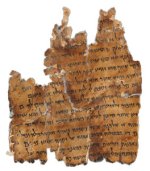
Two different Hebrew calendars in use at the same time — Has anyone here at Christian Chat ever heard of this theory? On the discrepancy between the Synoptics and John on the date of the Crucifixion, some adherents to a strict form of Biblical inerrancy claim that two different calendars were in use in Judea at that time, the official Sadducee calendar and a slightly different Pharisee calendar. This would mean that all four evangelists are correct: the Last Supper was a Passover meal according to one of the two calendars, while in the other calendar it was still the day before Passover (references below).
Frankly this makes no sense to me. The city of Jerusalem was filled with pilgrims every year, bringing their Passover lambs to the Temple to be sacrificed. The Sadducees were in charge of the Temple. Were the Sadducees sufficiently open-minded, sufficiently ecumenical, to conduct their sacrifices twice over, first on one day and then again, for a dissident group of pilgrims, on the next day?
And even if the Passover celebrations in Jerusalem had really followed that rule, surely we would have heard about it by now. It’s something we’d see mentioned in commentaries and even in internet discussions from time to time. But we don’t see anything of that kind, do we? I believe the question is discussed in a book by Roger Beckwith, who was a reputable NT scholar, called Calendar and Chronology, Jewish and Christian, but it doesn’t seem to be available anywhere online.
What we do see mentioned from time to time is something signficantly different. At that time, the beginning of each month was proclaimed after the chief priest had sent an observer (to Mount Scopus, I think, but I’m not sure about that) to watch for the first sliver of the new moon. Of course it would take time for the information to be disseminated among the whole diaspora, with the result that diaspora communities, at least in some places, would observe the holy days twice over, to make sure they weren’t missing out.
That wouldn’t happen every month. There were certain known facts, such as that every calendar month lasts either 29 or 30 days and there can never be three 30-day months in a row nor three 29-day months in a row.
In any case, the argument falls down if someone tries to apply it to the Last Supper question. Pilgrims visiting Jerusalem would always know exactly what day it was. The precaution they took back home in Corinth or Ephesus could be dispensed with in Jerusalem.
Last Supper, references:
Matt 26:17-19, Mark 14:12-16, Luke 22:7-15, John 18:28, 19:14
https://www.amazon.com/Calendar-Chronology-Jewish-Christian-Intertestamental/dp/0391041231
Frankly this makes no sense to me. The city of Jerusalem was filled with pilgrims every year, bringing their Passover lambs to the Temple to be sacrificed. The Sadducees were in charge of the Temple. Were the Sadducees sufficiently open-minded, sufficiently ecumenical, to conduct their sacrifices twice over, first on one day and then again, for a dissident group of pilgrims, on the next day?
And even if the Passover celebrations in Jerusalem had really followed that rule, surely we would have heard about it by now. It’s something we’d see mentioned in commentaries and even in internet discussions from time to time. But we don’t see anything of that kind, do we? I believe the question is discussed in a book by Roger Beckwith, who was a reputable NT scholar, called Calendar and Chronology, Jewish and Christian, but it doesn’t seem to be available anywhere online.
What we do see mentioned from time to time is something signficantly different. At that time, the beginning of each month was proclaimed after the chief priest had sent an observer (to Mount Scopus, I think, but I’m not sure about that) to watch for the first sliver of the new moon. Of course it would take time for the information to be disseminated among the whole diaspora, with the result that diaspora communities, at least in some places, would observe the holy days twice over, to make sure they weren’t missing out.
That wouldn’t happen every month. There were certain known facts, such as that every calendar month lasts either 29 or 30 days and there can never be three 30-day months in a row nor three 29-day months in a row.
In any case, the argument falls down if someone tries to apply it to the Last Supper question. Pilgrims visiting Jerusalem would always know exactly what day it was. The precaution they took back home in Corinth or Ephesus could be dispensed with in Jerusalem.
Last Supper, references:
Matt 26:17-19, Mark 14:12-16, Luke 22:7-15, John 18:28, 19:14
https://www.amazon.com/Calendar-Chronology-Jewish-Christian-Intertestamental/dp/0391041231