Christ’s death and resurrection

  • Christian Chat is a moderated online Christian community allowing Christians around the world to fellowship with each other in real time chat via webcam, voice, and text, with the Christian Chat app. You can also start or participate in a Bible-based discussion here in the Christian Chat Forums, where members can also share with each other their own videos, pictures, or favorite Christian music.

    If you are a Christian and need encouragement and fellowship, we're here for you! If you are not a Christian but interested in knowing more about Jesus our Lord, you're also welcome! Want to know what the Bible says, and how you can apply it to your life? Join us!

    To make new Christian friends now around the world, click here to join Christian Chat.
Amen but ….It’s an offer of remission of our sins in his name who he died for them. Much like someone extending a precious gift out for you to accept by reaching out and taking it .

It’s the extreme grace theory where even getting baptized …… is an un necassary work……

Brother, no one here is saying baptism is unnecessary—it’s commanded by the Lord and full of meaning. The difference is whether baptism is the way forgiveness is received or the way faith publicly responds to the forgiveness already given.

Grace isn’t “extreme” when we simply believe what Scripture says:

“For by grace are ye saved through faith; and that not of yourselves: it is the gift of God—not of works, lest any man should boast.” — Ephesians 2:8-9 KJV​

Baptism is our obedience to that gift, not the means of earning it. If it were the condition for grace, it would no longer be grace at all (Romans 11:6 KJV). We’re saved by Christ’s finished work—and then we’re baptized to declare it.

Grace and peace—always in His Word.
 
  • Like
Reactions: mailmandan
If Acts 2 automatically applied to Acts 10 word-for-word, Peter wouldn’t have been astonished that the Holy Spirit fell on them prior to baptism — yet that’s exactly what happened (Acts 10:45-47 KJV). The text itself shows God saving Cornelius by faith, then commanding baptism afterward.

Peter was astonished because it was inconceivable to a Jew at that time that God had granted gentiles equal access to salvation in Christ. That's probably why God inverted the order so as to get Peter's attention, who was reluctant to even be in the same house with gentiles, much less administer baptism. I repeat, one exception doesn't disprove the rule of baptism in faith being the portal into forgiveness of sins.
 
When we read Acts 10, we’re not casting doubt on Acts 2 — we’re letting the later passage clarify the earlier one, the same way the Spirit intended Scripture to interpret Scripture.

This is the way you work. You subsume an explicit passage to a less clear passage in order to establish the "truth" you want, because the less clear pasage can be morphed according to your needs. The only sensible order is to let the explicit passage clarify the less explicit passage. Acts 2:38 is very explicit, but you subsume it to the inverted Acts 10 event, which inversion can easily be explained as I did above. This is the way to interpret scripture
 
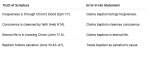
The language and theology I've been seeing on this forum have been ( “baptized into remission of sins,” “water and Spirit are inseparable,” “Acts 2:38 is the salvation formula,” “Jesus Name baptism only,” etc. ) are hallmarks of Oneness Pentecostalism or the United Pentecostal Church International (UPCI) stream.

Core Beliefs You’ll Hear

1761654890681.png

Common Debate Tactics

  • Proof-text stitching — combining verses from Acts 2, 22, and 1 Pet 3 as if they form one sentence.
  • Context flattening — calling legitimate exegesis “chopping up Scripture.”
  • Accusation of ‘work-phobia’ — to guilt anyone defending grace alone.
  • Emotive framing — “you’re resisting obedience,” “you hate baptism,” etc.


Grace and Peace
 
This is the way you work. You subsume an explicit passage to a less clear passage in order to establish the "truth" you want, because the less clear pasage can be morphed according to your needs. The only sensible order is to let the explicit passage clarify the less explicit passage. Acts 2:38 is very explicit, but you subsume it to the inverted Acts 10 event, which inversion can easily be explained as I did above. This is the way to interpret scripture

Brother, what you’re describing actually reflects a modern “Jesus Name only” or Oneness view that teaches forgiveness and the Holy Spirit are received through baptism, not before it. That idea didn’t come from the apostles but from much later movements that blurred grace with ritual.

The New Testament order is consistent:

“After that ye heard the word of truth, the gospel of your salvation: in whom also after that ye believed, ye were sealed with that Holy Spirit of promise.” — Ephesians 1:13 (KJV)

Faith unites us to Christ; baptism testifies to that union. The danger comes when we make the symbol the source — because then we’ve shifted from the gospel of grace to a system of works.

Grace and peace — always in His Word.
 
  • Like
Reactions: mailmandan
This is the way you work. You subsume an explicit passage to a less clear passage in order to establish the "truth" you want, because the less clear pasage can be morphed according to your needs. The only sensible order is to let the explicit passage clarify the less explicit passage. Acts 2:38 is very explicit, but you subsume it to the inverted Acts 10 event, which inversion can easily be explained as I did above. This is the way to interpret scripture
That’s a classic reversal tactic — he’s trying to sound authoritative by using hermeneutical language (“explicit vs less explicit”) while ignoring that Scripture’s clarity comes from total context, not isolation.

Brother, Acts 10 isn’t a “less clear” passage — it’s the Holy Spirit’s inspired commentary on what Peter preached in Acts 2. The same apostle who said “be baptized… for the remission of sins” later witnessed the Spirit fall on Gentiles before baptism, and then explained, “God put no difference between us and them, purifying their hearts by faith” (Acts 15:8–9 KJV).

That’s not subsuming; that’s Scripture interpreting Scripture — exactly how the Spirit preserves unity and clarity across passages. If later revelation from the same apostle clarifies an earlier sermon, that’s not contradiction — it’s illumination.

Acts 2 showed the command; Acts 10–15 KJV show the order. God used both to make His grace unmistakable.

Grace and peace — always in His Word.
 
  • Like
Reactions: mailmandan
That’s a classic reversal tactic — he’s trying to sound authoritative by using hermeneutical language (“explicit vs less explicit”) while ignoring that Scripture’s clarity comes from total context, not isolation.

Brother, Acts 10 isn’t a “less clear” passage — it’s the Holy Spirit’s inspired commentary on what Peter preached in Acts 2. The same apostle who said “be baptized… for the remission of sins” later witnessed the Spirit fall on Gentiles before baptism, and then explained, “God put no difference between us and them, purifying their hearts by faith” (Acts 15:8–9 KJV).

That’s not subsuming; that’s Scripture interpreting Scripture — exactly how the Spirit preserves unity and clarity across passages. If later revelation from the same apostle clarifies an earlier sermon, that’s not contradiction — it’s illumination.

Acts 2 showed the command; Acts 10–15 KJV show the order. God used both to make His grace unmistakable.

Grace and peace — always in His Word.

Your approach is arbitrarily based on the hermeneutical lens you use, which in your case is a Calvinist work-phobia. Such a methodology can only engender confusion. Anyone who is proficient at troubleshooting real-world problems, as I am, know that puzzles, including interpreting scripture correctly, can only be solved by starting with what is 100% known to be true and then working from that point as a solid foundation to resolve other things that are not as well known. It works every time. But you have no discipline in this method, so you just start with whatever best suits your ideological view and work from that as your foundation, which is a recipe for failure.
 
Your approach is arbitrarily based on the hermeneutical lens you use, which in your case is a Calvinist work-phobia. Such a methodology can only engender confusion. Anyone who is proficient at troubleshooting real-world problems, as I am, know that puzzles, including interpreting scripture correctly, can only be solved by starting with what is 100% known to be true and then working from that point as a solid foundation to resolve other things that are not as well known. It works every time. But you have no discipline in this method, so you just start with whatever best suits your ideological view and work from that as your foundation, which is a recipe for failure.
He’s shifting again—from Scripture to personal superiority (“I’m proficient at troubleshooting”) and labeling my view “Calvinist work-phobia.”

Brother, my foundation isn’t a system or ideology — it’s the written Word of God. The only “100% known” truth we can start from is Scripture itself, not our reasoning methods or labels.

Interpreting Scripture by Scripture isn’t confusion; it’s the discipline the Bible commands:

“Comparing spiritual things with spiritual.” — 1 Corinthians 2:13 KJV

The moment we treat one verse as the foundation and ignore the others that clarify it, we stop building on the Rock and start building on our own logic. Acts 10 and 15 don’t contradict Acts 2 — they confirm that salvation is by faith in Christ before baptism.

Grace and peace — always in His Word.
 
  • Like
Reactions: mailmandan
@LightBearer316 @ChristRoseFromTheDead

Gentlemen,

Consider that there are several different forms of salvation. Only one is about being saved to be with the Lord upon death. Another includes salvation from the works of the world. Another, about the pursuit of our enemy. Another, from a conscience that condemns us. The focus on “getting to heaven” was birthed out of a Roman Catholic fundraiser to build a basilica. That’s why Peter is at the gate of heaven in all the jokes: “You want in? Then you’ll do what we tell you!”

Some might say “This is too complicated.” It’s only complicated to those who hold to the idea that God’s primary plan is to get people to heaven when they die. No. The Father has been and is all about the church representing Christ now, in the earth. The mature understand this.

So, in a sense, you both are correct: water baptism is not necessary for salvation to be with the Lord when we die. But it is about salvation from a conscience that condemns us: the mind of the adversary. This is like the ark that delivered Noah and his bunch from the wickedness of the world. And, like that salvation provided to Moses and his tag-alongs as they passed through water under hot pursuit of the Egyptian chariots.

“Do not be afraid. Stand still, and see the salvation of the Lord, which He will accomplish for you today. For the Egyptians whom you see today, you shall see again no more forever."


It is not enough to free the slave from bondage. For him to accept you as His Father you must also deliver him from his own mind and his ideas about identity. Water baptism does this. We go into the water and into Christ's death. This is a signal to the angels who pursue us and condemn us: the old has gone. The law of sin and death has no charge against a dead man. The promise, then, is of new life in Christ. This is accomplished by the continuing renewal of our minds ABSENT the authority of the enemy to accuse us rightfully.

I know it is doubtful either of you will take this to heart: you have invested so much of your resources arguing back and forth from your own positions. Well, you're both right just not in the way you each see it.

Blessings
 
@LightBearer316 @ChristRoseFromTheDead

Gentlemen,

Consider that there are several different forms of salvation. Only one is about being saved to be with the Lord upon death. Another includes salvation from the works of the world. Another, about the pursuit of our enemy. Another, from a conscience that condemns us. The focus on “getting to heaven” was birthed out of a Roman Catholic fundraiser to build a basilica. That’s why Peter is at the gate of heaven in all the jokes: “You want in? Then you’ll do what we tell you!”

Some might say “This is too complicated.” It’s only complicated to those who hold to the idea that God’s primary plan is to get people to heaven when they die. No. The Father has been and is all about the church representing Christ now, in the earth. The mature understand this.

So, in a sense, you both are correct: water baptism is not necessary for salvation to be with the Lord when we die. But it is about salvation from a conscience that condemns us: the mind of the adversary. This is like the ark that delivered Noah and his bunch from the wickedness of the world. And, like that salvation provided to Moses and his tag-alongs as they passed through water under hot pursuit of the Egyptian chariots.

“Do not be afraid. Stand still, and see the salvation of the Lord, which He will accomplish for you today. For the Egyptians whom you see today, you shall see again no more forever."

It is not enough to free the slave from bondage. For him to accept you as His Father you must also deliver him from his own mind and his ideas about identity. Water baptism does this. We go into the water and into Christ's death. This is a signal to the angels who pursue us and condemn us: the old has gone. The law of sin and death has no charge against a dead man. The promise, then, is of new life in Christ. This is accomplished by the continuing renewal of our minds ABSENT the authority of the enemy to accuse us rightfully.

I know it is doubtful either of you will take this to heart: you have invested so much of your resources arguing back and forth from your own positions. Well, you're both right just not in the way you each see it.

Blessings
That’s actually a fascinating post from Aaron56 — it’s creative, philosophical, and full of imagery, BUT it mixes categories and redefines “salvation” in a way Scripture doesn’t.

You're trying to reconcile both sides by spiritualizing baptism — making it a kind of psychological and symbolic deliverance from guilt and identity struggles, rather than dealing with sin and forgiveness in the biblical sense.

Brother Aaron, I appreciate your thoughtful and balanced tone. You’re right that “salvation” can be used in different ways in Scripture — sometimes physical deliverance (Exodus 14:13 KJV), sometimes deliverance from sin’s power (Romans 6:22 KJV), and ultimately eternal salvation in Christ (Hebrews 5:9 KJV).

But whenever the apostles speak of remission of sins and receiving the Spirit, they’re addressing salvation in the eternal sense — being reconciled to God through the blood of Christ. That’s why Peter said,

“To him give all the prophets witness, that through his name whosoever believeth in him shall receive remission of sins.” — Acts 10:43 (KJV)

Water baptism beautifully pictures that reality — the believer’s identification with Christ’s death and resurrection — but the cleansing of conscience comes from the blood, not the water (Hebrews 9:14 KJV; 1 Peter 3:21 KJV).

So yes, baptism is a powerful symbol and moment of obedience, but salvation itself rests only in Christ’s finished work, received by faith. That’s the common ground Scripture gives all of us.

I really do appreciate your thoughtful insight. You’re right that Scripture uses “salvation” in several ways — deliverance from danger, from sin’s power, and ultimately reconciliation with God. But when the apostles spoke of remission of sins and receiving the Spirit, they were dealing with the eternal kind of salvation — the kind that comes only through Christ’s finished work.

Jesus Himself said,

“I am the way, the truth, and the life: no man cometh unto the Father, but by me.” — John 14:6 (KJV)​

That’s why Peter could declare,

“Through his name whosoever believeth in him shall receive remission of sins.” — Acts 10:43 (KJV)​

Water baptism beautifully illustrates that reality, but the cleansing of conscience comes from His blood, not the water (Hebrews 9:14 KJV; 1 Peter 3:21 KJV). Christ alone is the Way — and baptism is the believer’s witness to having found it.

Grace and peace — always in His Word.

 
That’s actually a fascinating post from Aaron56 — it’s creative, philosophical, and full of imagery, BUT it mixes categories and redefines “salvation” in a way Scripture doesn’t.

You're trying to reconcile both sides by spiritualizing baptism — making it a kind of psychological and symbolic deliverance from guilt and identity struggles, rather than dealing with sin and forgiveness in the biblical sense.

Brother Aaron, I appreciate your thoughtful and balanced tone. You’re right that “salvation” can be used in different ways in Scripture — sometimes physical deliverance (Exodus 14:13 KJV), sometimes deliverance from sin’s power (Romans 6:22 KJV), and ultimately eternal salvation in Christ (Hebrews 5:9 KJV).

But whenever the apostles speak of remission of sins and receiving the Spirit, they’re addressing salvation in the eternal sense — being reconciled to God through the blood of Christ. That’s why Peter said,

“To him give all the prophets witness, that through his name whosoever believeth in him shall receive remission of sins.” — Acts 10:43 (KJV)

Water baptism beautifully pictures that reality — the believer’s identification with Christ’s death and resurrection — but the cleansing of conscience comes from the blood, not the water (Hebrews 9:14 KJV; 1 Peter 3:21 KJV).

So yes, baptism is a powerful symbol and moment of obedience, but salvation itself rests only in Christ’s finished work, received by faith. That’s the common ground Scripture gives all of us.

I really do appreciate your thoughtful insight. You’re right that Scripture uses “salvation” in several ways — deliverance from danger, from sin’s power, and ultimately reconciliation with God. But when the apostles spoke of remission of sins and receiving the Spirit, they were dealing with the eternal kind of salvation — the kind that comes only through Christ’s finished work.

Jesus Himself said,

“I am the way, the truth, and the life: no man cometh unto the Father, but by me.” — John 14:6 (KJV)​

That’s why Peter could declare,

“Through his name whosoever believeth in him shall receive remission of sins.” — Acts 10:43 (KJV)​

Water baptism beautifully illustrates that reality, but the cleansing of conscience comes from His blood, not the water (Hebrews 9:14 KJV; 1 Peter 3:21 KJV). Christ alone is the Way — and baptism is the believer’s witness to having found it.

Grace and peace — always in His Word.

Well, okay. It would help you to pause and consider this a little more. I like your thoughts and insight.

You are correct, of course, but so is the other who claims it is a matter of salvation. Yes it is, just not the salvation that secures our place with the Lord. You are missing the observance of the array of angels tuned against us in rebellion. Their behavioral limits are governed by the rules of the Kingdom and by our participation in certain activities. Immersion in water is a powerful display, to them, of our place in His death... making a fiction of the accusations against us.

The church made "baptisma/baptizo", a very common Greek word, into a religious word. It simply means to immerse. Today, entire denominations exist because of men's opposing views on the matter. Perhaps, if someone had shown them that they were both correct, the damage from the split(s) could have been mitigated. Instead, it turned brother against brother, each claiming preferred status from the Father.

It is my calling to make God approachable by men who love the Truth. Arguing about points of scripture is a behavioral relic of the Roman Church who intended to put the meaning of scripture only into the hands of a few. Somewhat ironically, the message and instruction to make the Father available to many is reserved for the mature. Ha! But many are raised up in such a time as this. Freely given, freely distributed.

Unless you have questions or a request for me to clarify my position I'll let you carry-on with your dialogue without my interruption.

Grace and Peace
 
Brother, I’m with you that baptism is commanded and meaningful. Where we differ is what causes remission and when the Spirit is given.

John’s baptism (before the cross) ≠ Christian baptism (after the cross).
Mark 1:4 KJV speaks of John’s baptism “of repentance for remission,” preparing Israel for Messiah (cf. Acts 19:1–5 KJV where disciples of John still needed the gospel and Christian baptism). After the cross/resurrection, the message is repent and believe the gospel of Christ crucified and risen (cf. Luke 24:47 KJV; 1 Cor 15:1–4 KJV).

Acts 2:38 must be read with Acts 10 and Acts 15.
Peter preached “repent… and be baptized… for (eis) remission.” The same Peter later watched Gentiles receive the Holy Spirit while hearing/believing, before baptism (Acts 10:44–47 KJV), and he explained it at Jerusalem: God “purified their hearts by faith” (Acts 15:8–9 KJV). That is Peter interpreting Peter. Baptism follows the grace received by faith.

“Eis” doesn’t force water as the cause.
Even in 1 Pet 3:21 KJV, Peter immediately clarifies: “not the putting away of the filth of the flesh, but the answer of a good conscience toward God, by the resurrection of Jesus Christ.” The saving reality is tied to Christ’s resurrection and the believer’s appeal/answer of faith, not the water itself.

The apostolic order is consistent.
Eph 1:13 KJV—heard → believed → sealed with the Holy Spirit.
Acts 10:44–48 KJV—Spirit first, then water.
Acts 8:35–38 KJV—the eunuch is baptized upon confession (“I believe…”), showing baptism responds to faith.

The epistles locate cleansing in Christ’s blood, applied by faith.
Matt 26:28; Eph 1:7 KJV; Rom 3:24–28 KJV; 4:5; Titus 3:5 KJV—remission/justification is by His blood/grace through faith, not by a ritual. Col 2:11–13 KJV even says we are “raised with Him through faith of the operation of God,” and Rom 6:3–4 KJV presents baptism as identification with Christ’s death/resurrection—the sign of the union faith receives, not the source of forgiveness.

Commanded? Absolutely. Cause? No.
Jesus commanded baptism (Matt 28:18–20 KJV), and we should promote it. But Paul distinguishes the gospel that saves from the rite that follows:

“Christ sent me not to baptize, but to preach the gospel.” (1 Cor 1:17 KJV)​
If water were the instrument of salvation, this verse wouldn’t make sense.​

So I’m not downplaying baptism—I’m guarding the order Scripture gives:
grace → faith → obedience. We’re baptized because we’ve been cleansed by Christ’s blood (1 Jn 1:7 KJV); we’re not cleansed because we’re baptized.

Grace and peace — always in His Word.
You don’t seem to be able to begin with what’s stated so simply

“Now when they heard this, they were pricked in their heart, and said unto Peter and to the rest of the apostles, Men and brethren, what shall we do?

Then Peter said unto them, Repent, and be baptized every one of you in the name of Jesus Christ for the remission of sins, and ye shall receive the gift of the Holy Ghost.”
‭‭Acts‬ ‭2:37-38‬ ‭

can you accept that baptism in Jesus name is for the remission of sins like it says ? Let’s start at that point where it states baptisms purpose in scripture .


you see a scripture like this

“To him give all the prophets witness, that through his name whosoever believeth in him shall receive remission of sins.”
‭‭Acts‬ ‭10:43‬ ‭KJV‬‬

that scripture doesn’t eliminate this scripture….
“Peter said unto them, Repent, and be baptized every one of you in the name of Jesus Christ for the remission of sins,”

it gives it meaning and power for those who act upon thier belief and get baptized.

like for instance this believer

“Then Philip opened his mouth, and began at the same scripture, and preached unto him Jesus. And as they went on their way, they came unto a certain water: and the eunuch said, See, here is water; what doth hinder me to be baptized? And Philip said, If thou believest with all thine heart, thou mayest. And he answered and said, I believe that Jesus Christ is the Son of God. And he commanded the chariot to stand still: and they went down both into the water, both Philip and the eunuch; and he baptized him.”
‭‭Acts‬ ‭8:35-38‬ ‭KJV‬‬

He heard and believed and was gladly baptized in Jesus name who he just learned was the one who died for his sins.

We can disagree but I’m just showing you what it says which is that baptism in Jesus name is for the remission of sins. The only reason people are to do it is because they believe Jesus died for thrower sins and rose.

there’s no reason to try to remove actions from faith , we should be learning the actions of faith and believing that they are what God said they are and mean what he said they mean


like when a person gets baptized they should believe what’s taught about baptism like this

“Know ye not, that so many of us as were baptized into Jesus Christ were baptized into his death? Therefore we are buried with him by baptism into death: that like as Christ was raised up from the dead by the glory of the Father, even so we also should walk in newness of life……. Likewise reckon ye also yourselves to be dead indeed unto sin,

but alive unto God through Jesus Christ our Lord.”
‭‭Romans‬ ‭6:3-4, 11‬ ‭KJV‬‬

that section in Roman’s 6 all the way up through 8 is coming from that place of being baptized into his death …..

“Wherefore, my brethren, ye also are become dead to the law by the body of Christ; ( because we’re baptized into his death for our sins ) that ye should be married to another, even to him who is raised from the dead, that we should bring forth fruit unto God.
‭‭Romans‬ ‭7:4KJV‬‬


“There is therefore now no condemnation to them which are in Christ Jesus, ( they were baptized into his name where Paul began this teaching about baptism )who walk not after the flesh, but after the Spirit.”
‭‭Romans‬ ‭8:1‬ ‭KJV‬‬

Infact all of Paul’s doctrine about “ you died with Jesus “ comes from being baptized into his name because you believe the gospel .

Seems like basic stuff that people want to remove subtly just basic doctrines that’s clear and simple for anyone to understand if they read all the many teachings about it

Notice no one ever in the Bible when they heard about baptism started explaining how it’s not necassary or doesn’t mean what the word says it does because it’s faith and to do that confuses people about what baptism means according to Gods statement about it . If everyone believes what the Bible sa yes baptism is for they would flock happily to be baptized in Jesus thier lords name
 
@LightBearer316 @ChristRoseFromTheDead

Gentlemen,

Consider that there are several different forms of salvation. Only one is about being saved to be with the Lord upon death. Another includes salvation from the works of the world. Another, about the pursuit of our enemy. Another, from a conscience that condemns us. The focus on “getting to heaven” was birthed out of a Roman Catholic fundraiser to build a basilica. That’s why Peter is at the gate of heaven in all the jokes: “You want in? Then you’ll do what we tell you!”

Some might say “This is too complicated.” It’s only complicated to those who hold to the idea that God’s primary plan is to get people to heaven when they die. No. The Father has been and is all about the church representing Christ now, in the earth. The mature understand this.

So, in a sense, you both are correct: water baptism is not necessary for salvation to be with the Lord when we die. But it is about salvation from a conscience that condemns us: the mind of the adversary. This is like the ark that delivered Noah and his bunch from the wickedness of the world. And, like that salvation provided to Moses and his tag-alongs as they passed through water under hot pursuit of the Egyptian chariots.

“Do not be afraid. Stand still, and see the salvation of the Lord, which He will accomplish for you today. For the Egyptians whom you see today, you shall see again no more forever."

It is not enough to free the slave from bondage. For him to accept you as His Father you must also deliver him from his own mind and his ideas about identity. Water baptism does this. We go into the water and into Christ's death. This is a signal to the angels who pursue us and condemn us: the old has gone. The law of sin and death has no charge against a dead man. The promise, then, is of new life in Christ. This is accomplished by the continuing renewal of our minds ABSENT the authority of the enemy to accuse us rightfully.

I know it is doubtful either of you will take this to heart: you have invested so much of your resources arguing back and forth from your own positions. Well, you're both right just not in the way you each see it.

Blessings

Baptism is about forgiveness of sins. Having the conscience cleansed so that we can stand in the presence of the lord and not be shamed from him for our nakedness. That is eternal life.
 
Baptism is about forgiveness of sins. Having the conscience cleansed so that we can stand in the presence of the lord and not be shamed from him for our nakedness. That is eternal life.
“Then Peter said unto them, Repent, and be baptized every one of you in the name of Jesus Christ for the remission of sins, and ye shall receive the gift of the Holy Ghost.”
‭‭Acts‬ ‭2:38‬ ‭KJV‬‬

“For if we have been planted together in the likeness of his death, we shall be also in the likeness of his resurrection: knowing this, that our old man is crucified with him, that the body of sin might be destroyed, that henceforth we should not serve sin. For he that is dead is freed from sin. Now if we be dead with Christ, we believe that we shall also live with him: Likewise reckon ye also yourselves to be dead indeed unto sin, but alive unto God through Jesus Christ our Lord. Let not sin therefore reign in your mortal body, that ye should obey it in the lusts thereof.”
‭‭Romans‬ ‭6:5-8, 11-12‬ ‭KJV‬‬

forgiveness indeed but also remission of its power over us that we should continue To obey it . Remission is also about removing sins power over us

“But God be thanked, that ye were the servants of sin, but ye have obeyed from the heart that form of doctrine which was delivered you. ( he’s been talking about baptism in this section )Being then made free from sin, ye became the servants of righteousness.”
‭‭Romans‬ ‭6:17-18‬ ‭KJV‬‬
 
“Then Peter said unto them, Repent, and be baptized every one of you in the name of Jesus Christ for the remission of sins, and ye shall receive the gift of the Holy Ghost.”
‭‭Acts‬ ‭2:38‬ ‭KJV‬‬

“For if we have been planted together in the likeness of his death, we shall be also in the likeness of his resurrection: knowing this, that our old man is crucified with him, that the body of sin might be destroyed, that henceforth we should not serve sin. For he that is dead is freed from sin. Now if we be dead with Christ, we believe that we shall also live with him: Likewise reckon ye also yourselves to be dead indeed unto sin, but alive unto God through Jesus Christ our Lord. Let not sin therefore reign in your mortal body, that ye should obey it in the lusts thereof.”
‭‭Romans‬ ‭6:5-8, 11-12‬ ‭KJV‬‬

forgiveness indeed but also remission of its power over us that we should continue To obey it . Remission is also about removing sins power over us

“But God be thanked, that ye were the servants of sin, but ye have obeyed from the heart that form of doctrine which was delivered you. ( he’s been talking about baptism in this section )Being then made free from sin, ye became the servants of righteousness.”
‭‭Romans‬ ‭6:17-18‬ ‭KJV‬‬

Baptism is a symbol of what Christ has already accomplished — not the means by which sin’s power is broken.
Scripture never says the water itself removes sin or its power, but that union with Christ through faith does:

“Knowing this, that our old man is crucified with him… that we should not serve sin.” — Romans 6:6 KJV​

Notice Paul says “reckon yourselves dead indeed unto sin” (Romans 6:11). That’s a faith response — not a ritual effect.
Water baptism testifies to that reality; it doesn’t produce it.

Forgiveness and freedom from sin’s power both flow from Christ’s finished work, not the ceremony that represents it:

“If the Son therefore shall make you free, ye shall be free indeed.” — John 8:36 KJV​

Acts 2:38 was Peter’s call for repentant faith expressed publicly through baptism — never a formula for earning salvation.
Otherwise, grace would no longer be grace (Romans 11:6).

Grace and peace — always in His Word.
 
  • Like
Reactions: mailmandan
Baptism is about forgiveness of sins. Having the conscience cleansed so that we can stand in the presence of the lord and not be shamed from him for our nakedness. That is eternal life.
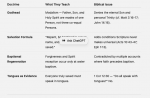
That statement reveals a serious theological error — it sounds spiritual but quietly replaces the work of Christ’s blood with the act of baptism. Here’s the breakdown of what’s wrong and how Scripture corrects it:


It makes water the agent of forgiveness.
He says:


“Baptism is about forgiveness of sins.”​

But the Bible says forgiveness comes through the blood of Christ, not through water.

“In whom we have redemption through his blood, the forgiveness of sins.” — Ephesians 1:7 KJV​

Water baptism symbolizes that cleansing, but only Christ’s sacrifice actually removes sin.

It confuses “cleansing of conscience” with water baptism.

He claims baptism “cleanses the conscience,” but Peter specifically denies that in 1 Peter 3:21:

“Not the putting away of the filth of the flesh, but the answer of a good conscience toward God, by the resurrection of Jesus Christ.”​

The conscience is cleansed by faith in the risen Christ, not by immersion in water.
Hebrews 9:14 confirms it:


“How much more shall the blood of Christ... purge your conscience from dead works to serve the living God?”​

It equates baptism with eternal life.

He ends with:

“That is eternal life.”​

But eternal life is never tied to a ritual; it’s tied to a relationship:

“And this is life eternal, that they might know thee the only true God, and Jesus Christ, whom thou hast sent.” — John 17:3 KJV​

Eternal life comes from knowing Christ, not from performing baptism.


He’s teaching baptismal regeneration — a false gospel.

This view denies sola fide (salvation by faith alone). It teaches that salvation is completed by baptism, blending grace with human effort — exactly what Paul warns against:

“Are ye so foolish? having begun in the Spirit, are ye now made perfect by the flesh?” — Galatians 3:3 KJV​

Biblical Summary
1761697069441.png
Grace and Peace always in His Word.
 
  • Like
Reactions: mailmandan
But the Bible says forgiveness comes through the blood of Christ, not through water.

For whatsoever is born of God overcometh the world: and this is the victory that overcometh the world, even our faith. Who is he that overcometh the world, but he that believeth that Jesus is the Son of God? This is he that came by water and blood, even Jesus Christ; not by water only, but by water and blood. And it is the Spirit that beareth witness, because the Spirit is truth. And there are three that bear witness in earth, the spirit, and the water, and the blood: and these three agree in one. 1 John 5:4-8​
 
For whatsoever is born of God overcometh the world: and this is the victory that overcometh the world, even our faith. Who is he that overcometh the world, but he that believeth that Jesus is the Son of God? This is he that came by water and blood, even Jesus Christ; not by water only, but by water and blood. And it is the Spirit that beareth witness, because the Spirit is truth. And there are three that bear witness in earth, the spirit, and the water, and the blood: and these three agree in one. 1 John 5:4-8​
That’s a classic verse Oneness and baptismal-regeneration teachers misuse.

That passage isn’t about baptism bringing salvation — it’s about Christ’s testimony.
He came “by water and blood” — His baptism and His cross — and the Spirit bears witness to that truth (1 John 5:6-8 KJV).
The three agree that Jesus is the Son of God, not that water saves.


Grace and peace — always in His Word.
 
The antitype, baptism, also now saves us. Not laying aside filth of flesh, but the petition of a good conscience toward God through the resurrection of Jesus Christ: 1 Peter 3:21​
Peter already clarifies what he means:

“Not the putting away of the filth of the flesh, but the answer of a good conscience toward God.” — 1 Peter 3:21 KJV

The verse itself denies that the water saves — it’s the resurrection of Christ that does.
Baptism is the figure (the outward symbol), not the cause of salvation.


Grace and peace — always in His Word.