Christ is the Center, The One Who Saves, Keeps & Finishes

  • Christian Chat is a moderated online Christian community allowing Christians around the world to fellowship with each other in real time chat via webcam, voice, and text, with the Christian Chat app. You can also start or participate in a Bible-based discussion here in the Christian Chat Forums, where members can also share with each other their own videos, pictures, or favorite Christian music.

    If you are a Christian and need encouragement and fellowship, we're here for you! If you are not a Christian but interested in knowing more about Jesus our Lord, you're also welcome! Want to know what the Bible says, and how you can apply it to your life? Join us!

    To make new Christian friends now around the world, click here to join Christian Chat.

FlyingDove

Senior Member
Dec 27, 2017
1,858
911
113
Often I encounter the claim that Christ saves by faith, but then the believer must perform, maintain & preserve what God has already declared finished. Scripture presents Christ, not the believer, as the One who ""saves to the uttermost"" (Heb 7:25). When we shift the weight of salvation back onto human effort, Christ becomes a side note instead of the Savior.

The New Testament insists that Christ is preeminent in all things (Col 1:18). He is preeminent in creation (Jn 1:3,10, Col 1:16, 1 Cor 8:6), in redemption (Gal 3:13, Rev 5:9, Col 1:14, Rom 3:24), in resurrection (Jn 11:25, Acts 4:33, 1 Pet 1:3,21) & in mediation (1 Tim 2:5, Heb 8:6, 9:15, 12:24). He is the center, the beginning & the end. Salvation is His work from start & He performs, maintains & preserves to finish.

Scripture is honest about the reality of sin in a believer's life. Sin can bring painful consequences: broken relationships, loss of joy, discipline, even the removal of protective hedges. It can affect heavenly reward (Heb 12:5–11 & 1 Cor 3:8–14). But none of those consequences include the loss of salvation (1 Cor 3:15). Jesus Himself taught that the only unforgivable sin is dying in unbelief (Jn 8:24). A believer's sin can wound fellowship, but it cannot undo the eternal life Christ gives at conversion. We are saved by grace through faith, ""not of works,"" & not maintained by our works (Eph 2:8–9).

Romans 5:20 declares that where sin increases, grace super abounds. God's grace is greater than any believer's failure. The penalty of sin is death, but Christ bore that penalty once for all (Rom 6:23 & Heb 10:12–14). The love, grace & mercy of our great God & Savior far surpass the power of sin.

Scripture also reminds us that Jesus is the final Judge: The Father judges no one, but has committed all judgment to the Son (Jn 5:22). And the Judge is also our Advocate: If anyone sins, we have an Advocate with the Father, Jesus Christ the righteous (1 Jn 2:1). When your Attorney is the Judge. The sin verdict for the believer is: NOT GUILTY!

Many Christians live under a cloud of self condemnation, holding a mirror up to every failure. But Scripture speaks plainly: There is therefore now no condemnation to those who are in Christ Jesus (Rom 8:1). Trusting Christ produces joy, not doom; confidence, not fear, worship, not anxiety.

The New Testament consistently presents the believer's standing as PERMANENT & ""God secured"". Jesus promises the Holy Spirit will abide with believers FOREVER (Jn 14:16). Paul says we are SEALED until the day of redemption (Eph 1:13–14; 4:30), given the Spirit as God's GRARANTEE (2 Cor 1:22; 5:5). ""Christ has obtained eternal redemption"" (Heb 9:12) & ""perfected forever those He sanctifies"" (Heb 10:14). These are not conditional or probationary terms. If ""eternal redemption"" can be undone, it was never eternal. If the Holy Spirit's SEAL can be broken when one fails, then He word can be broken & He promise it does not last ""until the day of redemption."" If Christ ""perfected forever those He sanctifies"", then ""forever"" cannot mean ""until they stumble""

Paul summarizes the gospel: By the obedience of One shall many be made righteous (Rom 5:19). Salvation rests on His obedience, not ours. We must get over ourselves & stop making salvation about us.

Jesus, our great God & Savior is the Faithful One. He saves to the uttermost because He always lives to intercede (Heb 7:25). He is the faithful witness (Rev 1:5). The Amen, the faithful & true witness (Rev 3:14). The One whose very name is Faithful & True (Rev 19:11). He is faithful & just to forgive (1 Jn 1:9). The Lord is faithful, ""He will establish & guard His people"" (2 Thes 3:3). No one can snatch a believer His from His hand (Jn 10:28–29). He is with His people always, even to the end of the age (Matt 28:20).

Christ is the center. Christ is the keeper. Christ is the beginning & the end & the Faithful One has promised: I will never leave you nor forsake you (Heb 13:5; Deut 31:6,8). Maranatha
 
We are saved by grace through faith, ""not of works,"" & not maintained by our works (Eph 2:8–9).
Eph 2:4-7

4But because of His great love for us, God, who is rich in mercy, 5made us alive with Christ even when we were dead in our trespasses. It is by grace you have been saved! 6And God raised us up with Christ and seated us with Him in the heavenly realms in Christ Jesus, 7in order that in the coming ages He might display the surpassing riches of His grace, demonstrated by His kindness to us in Christ Jesus.

This is the backdrop if you should see me going around and telling everybody to "Sit down!" :D
 
Often I encounter the claim that Christ saves by faith, but then the believer must perform, maintain & preserve what God has already declared finished. Scripture presents Christ, not the believer, as the One who ""saves to the uttermost"" (Heb 7:25). When we shift the weight of salvation back onto human effort, Christ becomes a side note instead of the Savior.

The New Testament insists that Christ is preeminent in all things (Col 1:18). He is preeminent in creation (Jn 1:3,10, Col 1:16, 1 Cor 8:6), in redemption (Gal 3:13, Rev 5:9, Col 1:14, Rom 3:24), in resurrection (Jn 11:25, Acts 4:33, 1 Pet 1:3,21) & in mediation (1 Tim 2:5, Heb 8:6, 9:15, 12:24). He is the center, the beginning & the end. Salvation is His work from start & He performs, maintains & preserves to finish.

Scripture is honest about the reality of sin in a believer's life. Sin can bring painful consequences: broken relationships, loss of joy, discipline, even the removal of protective hedges. It can affect heavenly reward (Heb 12:5–11 & 1 Cor 3:8–14). But none of those consequences include the loss of salvation (1 Cor 3:15). Jesus Himself taught that the only unforgivable sin is dying in unbelief (Jn 8:24). A believer's sin can wound fellowship, but it cannot undo the eternal life Christ gives at conversion. We are saved by grace through faith, ""not of works,"" & not maintained by our works (Eph 2:8–9).

Romans 5:20 declares that where sin increases, grace super abounds. God's grace is greater than any believer's failure. The penalty of sin is death, but Christ bore that penalty once for all (Rom 6:23 & Heb 10:12–14). The love, grace & mercy of our great God & Savior far surpass the power of sin.

Scripture also reminds us that Jesus is the final Judge: The Father judges no one, but has committed all judgment to the Son (Jn 5:22). And the Judge is also our Advocate: If anyone sins, we have an Advocate with the Father, Jesus Christ the righteous (1 Jn 2:1). When your Attorney is the Judge. The sin verdict for the believer is: NOT GUILTY!

Many Christians live under a cloud of self condemnation, holding a mirror up to every failure. But Scripture speaks plainly: There is therefore now no condemnation to those who are in Christ Jesus (Rom 8:1). Trusting Christ produces joy, not doom; confidence, not fear, worship, not anxiety.

The New Testament consistently presents the believer's standing as PERMANENT & ""God secured"". Jesus promises the Holy Spirit will abide with believers FOREVER (Jn 14:16). Paul says we are SEALED until the day of redemption (Eph 1:13–14; 4:30), given the Spirit as God's GRARANTEE (2 Cor 1:22; 5:5). ""Christ has obtained eternal redemption"" (Heb 9:12) & ""perfected forever those He sanctifies"" (Heb 10:14). These are not conditional or probationary terms. If ""eternal redemption"" can be undone, it was never eternal. If the Holy Spirit's SEAL can be broken when one fails, then He word can be broken & He promise it does not last ""until the day of redemption."" If Christ ""perfected forever those He sanctifies"", then ""forever"" cannot mean ""until they stumble""

Paul summarizes the gospel: By the obedience of One shall many be made righteous (Rom 5:19). Salvation rests on His obedience, not ours. We must get over ourselves & stop making salvation about us.

Jesus, our great God & Savior is the Faithful One. He saves to the uttermost because He always lives to intercede (Heb 7:25). He is the faithful witness (Rev 1:5). The Amen, the faithful & true witness (Rev 3:14). The One whose very name is Faithful & True (Rev 19:11). He is faithful & just to forgive (1 Jn 1:9). The Lord is faithful, ""He will establish & guard His people"" (2 Thes 3:3). No one can snatch a believer His from His hand (Jn 10:28–29). He is with His people always, even to the end of the age (Matt 28:20).

Christ is the center. Christ is the keeper. Christ is the beginning & the end & the Faithful One has promised: I will never leave you nor forsake you (Heb 13:5; Deut 31:6,8). Maranatha
Not enough people liking this post. Interesting as to why.
 
Often I encounter the claim that Christ saves by faith, but then the believer must perform, maintain & preserve what God has already declared finished. Scripture presents Christ, not the believer, as the One who ""saves to the uttermost"" (Heb 7:25). When we shift the weight of salvation back onto human effort, Christ becomes a side note instead of the Savior.

The New Testament insists that Christ is preeminent in all things (Col 1:18). He is preeminent in creation (Jn 1:3,10, Col 1:16, 1 Cor 8:6), in redemption (Gal 3:13, Rev 5:9, Col 1:14, Rom 3:24), in resurrection (Jn 11:25, Acts 4:33, 1 Pet 1:3,21) & in mediation (1 Tim 2:5, Heb 8:6, 9:15, 12:24). He is the center, the beginning & the end. Salvation is His work from start & He performs, maintains & preserves to finish.

Scripture is honest about the reality of sin in a believer's life. Sin can bring painful consequences: broken relationships, loss of joy, discipline, even the removal of protective hedges. It can affect heavenly reward (Heb 12:5–11 & 1 Cor 3:8–14). But none of those consequences include the loss of salvation (1 Cor 3:15). Jesus Himself taught that the only unforgivable sin is dying in unbelief (Jn 8:24). A believer's sin can wound fellowship, but it cannot undo the eternal life Christ gives at conversion. We are saved by grace through faith, ""not of works,"" & not maintained by our works (Eph 2:8–9).

Romans 5:20 declares that where sin increases, grace super abounds. God's grace is greater than any believer's failure. The penalty of sin is death, but Christ bore that penalty once for all (Rom 6:23 & Heb 10:12–14). The love, grace & mercy of our great God & Savior far surpass the power of sin.

Scripture also reminds us that Jesus is the final Judge: The Father judges no one, but has committed all judgment to the Son (Jn 5:22). And the Judge is also our Advocate: If anyone sins, we have an Advocate with the Father, Jesus Christ the righteous (1 Jn 2:1). When your Attorney is the Judge. The sin verdict for the believer is: NOT GUILTY!

Many Christians live under a cloud of self condemnation, holding a mirror up to every failure. But Scripture speaks plainly: There is therefore now no condemnation to those who are in Christ Jesus (Rom 8:1). Trusting Christ produces joy, not doom; confidence, not fear, worship, not anxiety.

The New Testament consistently presents the believer's standing as PERMANENT & ""God secured"". Jesus promises the Holy Spirit will abide with believers FOREVER (Jn 14:16). Paul says we are SEALED until the day of redemption (Eph 1:13–14; 4:30), given the Spirit as God's GRARANTEE (2 Cor 1:22; 5:5). ""Christ has obtained eternal redemption"" (Heb 9:12) & ""perfected forever those He sanctifies"" (Heb 10:14). These are not conditional or probationary terms. If ""eternal redemption"" can be undone, it was never eternal. If the Holy Spirit's SEAL can be broken when one fails, then He word can be broken & He promise it does not last ""until the day of redemption."" If Christ ""perfected forever those He sanctifies"", then ""forever"" cannot mean ""until they stumble""

Paul summarizes the gospel: By the obedience of One shall many be made righteous (Rom 5:19). Salvation rests on His obedience, not ours. We must get over ourselves & stop making salvation about us.

Jesus, our great God & Savior is the Faithful One. He saves to the uttermost because He always lives to intercede (Heb 7:25). He is the faithful witness (Rev 1:5). The Amen, the faithful & true witness (Rev 3:14). The One whose very name is Faithful & True (Rev 19:11). He is faithful & just to forgive (1 Jn 1:9). The Lord is faithful, ""He will establish & guard His people"" (2 Thes 3:3). No one can snatch a believer His from His hand (Jn 10:28–29). He is with His people always, even to the end of the age (Matt 28:20).

Christ is the center. Christ is the keeper. Christ is the beginning & the end & the Faithful One has promised: I will never leave you nor forsake you (Heb 13:5; Deut 31:6,8). Maranatha
The net result of conversionless Christianity is that what little relationship with have with Jesus is purely transactional. In our mind, we say we are saved, Jesus gives us eternity in heaven and then we are done with Him. Sure, we sing and perhaps even pray as whatever dogmas we support require. So for a few "good thoughts" and a hope what we believe is true, we get saved. After that we just keep on living our best lives based on whatever seems good to us. We got saved in the eternal transaction so we are free to be whoever and do whatever we damn well choose. I have my eternal claim based on my head nod to a 60 second pulpit prayer. In exchange for saying I believe I get a guarantee of heaven. No matter how evil, predatory, perverted and heinous I become, I signed by eternal life insurance policy in church sometime or other long ago.

IMHO, this dogma, no matter how we craft it, fails totally to be visible in our Christian culture. If you lined up 50 pagans and 50 Christians, mixed them together and
Looked at their phones, their checkbooks, their marriage, families, entertainment, volunteerism, their business practices, their language and perversions, what is the chance you could pick out 5 Christians, 3 Christians, 1 Christian. My guess is that the chance is zero. Christians comprise over 60% of the American population, yet our impact on our culture is virtually zero. If the culture we dominate does not in any way exemplify Jesus, then perhaps Christianity is only about saving souls in the hereafter and thus has no meaning or impact on how we live. Perhaps Christianity is not about saving anybody, just their souls. Based on your theory, anything in this life goes. Have a blast. Jesus paid for turning you loose to total freedom in this life because the next one is in the bag. There are no consequences for sin in this life because they are already forgiven and thus not worth thinking about.
 
The net result of conversionless Christianity is that what little relationship with have with Jesus is purely transactional. In our mind, we say we are saved, Jesus gives us eternity in heaven and then we are done with Him. Sure, we sing and perhaps even pray as whatever dogmas we support require. So for a few "good thoughts" and a hope what we believe is true, we get saved. After that we just keep on living our best lives based on whatever seems good to us. We got saved in the eternal transaction so we are free to be whoever and do whatever we damn well choose. I have my eternal claim based on my head nod to a 60 second pulpit prayer. In exchange for saying I believe I get a guarantee of heaven. No matter how evil, predatory, perverted and heinous I become, I signed by eternal life insurance policy in church sometime or other long ago.

IMHO, this dogma, no matter how we craft it, fails totally to be visible in our Christian culture. If you lined up 50 pagans and 50 Christians, mixed them together and
Looked at their phones, their checkbooks, their marriage, families, entertainment, volunteerism, their business practices, their language and perversions, what is the chance you could pick out 5 Christians, 3 Christians, 1 Christian. My guess is that the chance is zero. Christians comprise over 60% of the American population, yet our impact on our culture is virtually zero. If the culture we dominate does not in any way exemplify Jesus, then perhaps Christianity is only about saving souls in the hereafter and thus has no meaning or impact on how we live. Perhaps Christianity is not about saving anybody, just their souls. Based on your theory, anything in this life goes. Have a blast. Jesus paid for turning you loose to total freedom in this life because the next one is in the bag. There are no consequences for sin in this life because they are already forgiven and thus not worth thinking about.
“Conversionless Christianity” is an oxymoron. Conversion means new birth, new creation, new heart, new Holy Spirit‑indwelt life.

So the phrase ""conversionless Christianity"" literally means: Christianity without conversion.

What you're calling ""conversionless Christianity"" is actually the same accusation Paul faced every time he preached salvation by grace. Human nature resists grace because grace removes control. The law gives people a checklist, a sense of contribution & something to boast in. Grace takes all of that away & puts Christ at the center, WHERE HE BELONGS! That's why Paul’s opponents said the same thing you're saying now.

In Rom 3:8, Paul quotes the charge against him: Let us do evil that good may come. In Rom 6:1, he answers the same accusation: Shall we continue in sin that grace may abound? God forbid. In Gal 5, he's accused of preaching too much freedom. In Acts 21, he's accused of teaching believers to abandon obedience. Every time Paul preached salvation as fully Christ's work, people assumed he was promoting moral chaos. He wasn't. He taught that grace saves & grace transforms, but transformation is the fruit of salvation, not the basis of it.

The issue is not whether believers should live holy lives. Scripture is clear: they should & the Holy Spirit produces that fruit. The issue is whether salvation rests on Christ's obedience (Rom 5:19) or on our ongoing performance. If salvation depends on us, then ""no condemnation"" becomes ""some condemnation,"" ""eternal redemption"" becomes ""temporary redemption,"" & ""sealed until the day of redemption"" becomes ""sealed until you fail."" That is not the gospel Paul's preached.

Paul fought this same battle because the flesh hates grace. But grace is the only message that gives Christ all the glory & actually produces the obedience the law never could.
 
“Conversionless Christianity” is an oxymoron. Conversion means new birth, new creation, new heart, new Holy Spirit‑indwelt life.

So the phrase ""conversionless Christianity"" literally means: Christianity without conversion.

What you're calling ""conversionless Christianity"" is actually the same accusation Paul faced every time he preached salvation by grace. Human nature resists grace because grace removes control. The law gives people a checklist, a sense of contribution & something to boast in. Grace takes all of that away & puts Christ at the center, WHERE HE BELONGS! That's why Paul’s opponents said the same thing you're saying now.

In Rom 3:8, Paul quotes the charge against him: Let us do evil that good may come. In Rom 6:1, he answers the same accusation: Shall we continue in sin that grace may abound? God forbid. In Gal 5, he's accused of preaching too much freedom. In Acts 21, he's accused of teaching believers to abandon obedience. Every time Paul preached salvation as fully Christ's work, people assumed he was promoting moral chaos. He wasn't. He taught that grace saves & grace transforms, but transformation is the fruit of salvation, not the basis of it.

The issue is not whether believers should live holy lives. Scripture is clear: they should & the Holy Spirit produces that fruit. The issue is whether salvation rests on Christ's obedience (Rom 5:19) or on our ongoing performance. If salvation depends on us, then ""no condemnation"" becomes ""some condemnation,"" ""eternal redemption"" becomes ""temporary redemption,"" & ""sealed until the day of redemption"" becomes ""sealed until you fail."" That is not the gospel Paul's preached.

Paul fought this same battle because the flesh hates grace. But grace is the only message that gives Christ all the glory & actually produces the obedience the law never could.
Lovely ideas. Let's look at it from another direction. Jesus said, "If you love me you will keep my commandments." The issue is not if we are called to live "holy lives." The issue is are we to live converted lives, changed lives, obedient lives, loving lives, self-sacrificial lives. Holiness is a bridge too far and because it is impossible, we decide it must not be important as we see no holy lives and would not know one if we say one. Jesus says our salvation is also based on your obedient lives as well.

“When the Son of Man comes in his glory and all the angels with him, then he will sit on his glorious throne. All the nations will be assembled before him, and he will separate people one from another like a shepherd separates the sheep from the goats. He will put the sheep on his right and the goats on his left. Then the king will say to those on his right, ‘Come, you who are blessed by my Father, inherit the kingdom prepared for you from the foundation of the world. For I was hungry and you gave me food, I was thirsty and you gave me something to drink, I was a stranger and you invited me in, I was naked and you gave me clothing, I was sick and you took care of me, I was in prison and you visited me.’ Then the righteous will answer him, ‘Lord, when did we see you hungry and feed you, or thirsty and give you something to drink? When did we see you a stranger and invite you in, or naked and clothe you? When did we see you sick or in prison and visit you?’ And the king will answer them, ‘I tell you the truth, just as you did it for one of the least of these brothers or sisters of mine, you did it for me.’

“Then he will say to those on his left, ‘Depart from me, you accursed, into the eternal fire that has been prepared for the devil and his angels! For I was hungry and you gave me nothing to eat, I was thirsty and you gave me nothing to drink. I was a stranger and you did not receive me as a guest, naked and you did not clothe me, sick and in prison and you did not visit me.’ Then they too will answer, ‘Lord, when did we see you hungry or thirsty or a stranger or naked or sick or in prison, and did not give you whatever you needed?’ Then he will answer them, ‘I tell you the truth, just as you did not do it for one of the least of these, you did not do it for me.’ And these will depart into eternal punishment, but the righteous into eternal life.”

So, if we preach that pure and undefiled religion is all in our heads, then we may be deceiving ourselves.
 
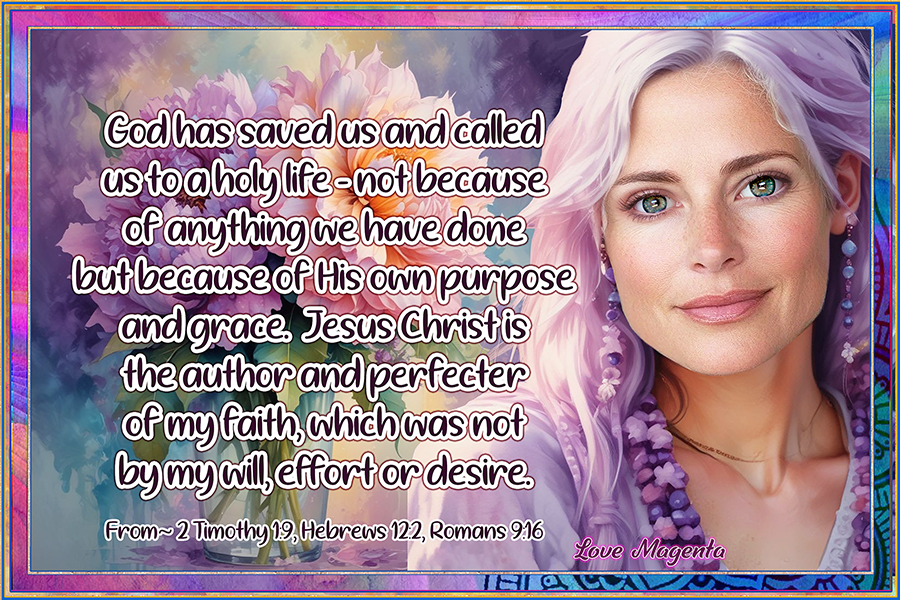
From2-Timothy1-9-Hebrews12-2-Romans9-16.png

God has saved us and called us to a holy life - not because of anything we have done but because of His own purpose and grace. Jesus Christ is the author and perfecter of my faith, which was not by my will, effort or desire.
 
  • Love
Reactions: dkontner
From2-Timothy1-9-Hebrews12-2-Romans9-16.png

God has saved us and called us to a holy life - not because of anything we have done but because of His own purpose and grace. Jesus Christ is the author and perfecter of my faith, which was not by my will, effort or desire.
Beautiful picture. True statements and quotations. The question is not about the source of our faith, but the nature of our "faith." Is faith just an idea, a concept, a nod of the head? If your most beloved claims faith and love for you but makes no effort to live out that claim, does that person actually love you or are their statements of faith all you need? Is our salvation based on what we think or is there any more to it?
 
Beautiful picture. True statements and quotations. The question is not about the source of our faith, but the nature of our "faith." Is faith just an idea, a concept, a nod of the head? If your most beloved claims faith and love for you but makes no effort to live out that claim, does that person actually love you or are their statements of faith all you need? Is our salvation based on what we think or is there any more to it?
We believe in our heart... that is another thing that is discussed and disputed as to the meaning, and quite a few here think their wicked heart can generate faith, essentially denying faith as a gift despite Scripture telling us that all good things originate with God, asserting that man does not even need God in the process of coming to believe, it is simply a matter of choice for the natural man when Scripture plainly states the natural man is hostile to God and can neither receive nor comprehend the Spiritual things of God. Captive to the will of the devil, along with the rest of the world who does not know God, he is blinded to the truth and under the power and influence of Satan, rendered incapable of submitting to or obeying God, craving what is contrary to the Spirit. He suppresses the truth in unrighteousness, refusing to come into the light because he is a slave to sin, a lover of darkness, defined as darkness itself, and his deeds are evil. The gospel is heard as foolishness. Faith comes by hearing, yes? His sheep hear.

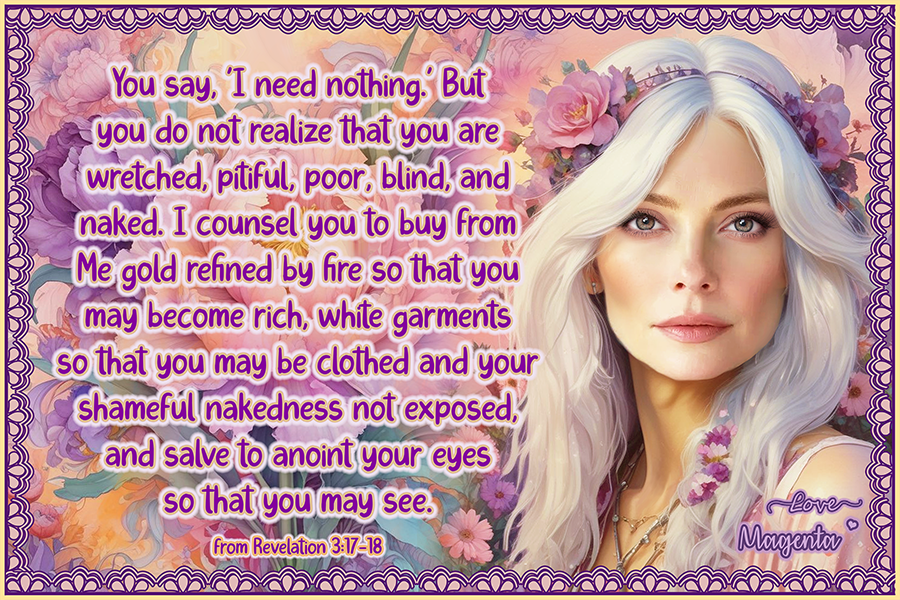
from-Revelation3-17-18.png

from Revelation 3 verse 17-18 ~ You say, ‘I need nothing.’ But you do not realize that you are wretched, pitiful, poor, blind, and naked. I counsel you to buy from Me gold refined by fire so that you may become rich, white garments so that you may be clothed and your shameful nakedness not exposed, and salve to anoint your eyes so that you may see.
 
We believe in our heart... that is another thing that is discussed and disputed as to the meaning, and quite a few here think their wicked heart can generate faith, essentially denying faith as a gift despite Scripture telling us that all good things originate with God, asserting that man does not even need God in the process of coming to believe, it is simply a matter of choice for the natural man when Scripture plainly states the natural man is hostile to God and can neither receive nor comprehend the Spiritual things of God. Captive to the will of the devil, along with the rest of the world who does not know God, he is blinded to the truth and under the power and influence of Satan, rendered incapable of submitting to or obeying God, craving what is contrary to the Spirit. He suppresses the truth in unrighteousness, refusing to come into the light because he is a slave to sin, a lover of darkness, defined as darkness itself, and his deeds are evil. The gospel is heard as foolishness. Faith comes by hearing, yes? His sheep hear.

from-Revelation3-17-18.png

from Revelation 3 verse 17-18 ~ You say, ‘I need nothing.’ But you do not realize that you are wretched, pitiful, poor, blind, and naked. I counsel you to buy from Me gold refined by fire so that you may become rich, white garments so that you may be clothed and your shameful nakedness not exposed, and salve to anoint your eyes so that you may see.
But do His sheep follow.....or just sit and contemplate how heavenly the master's voice is. Then sit in small groups discussing what the Master is like, how much He loves us and how much we trust Him....but we are not going anywhere because hearing the Master's voice is all we need.
 
Lovely ideas. Let's look at it from another direction. Jesus said, "If you love me you will keep my commandments." The issue is not if we are called to live "holy lives." The issue is are we to live converted lives, changed lives, obedient lives, loving lives, self-sacrificial lives. Holiness is a bridge too far and because it is impossible, we decide it must not be important as we see no holy lives and would not know one if we say one. Jesus says our salvation is also based on your obedient lives as well.

“When the Son of Man comes in his glory and all the angels with him, then he will sit on his glorious throne. All the nations will be assembled before him, and he will separate people one from another like a shepherd separates the sheep from the goats. He will put the sheep on his right and the goats on his left. Then the king will say to those on his right, ‘Come, you who are blessed by my Father, inherit the kingdom prepared for you from the foundation of the world. For I was hungry and you gave me food, I was thirsty and you gave me something to drink, I was a stranger and you invited me in, I was naked and you gave me clothing, I was sick and you took care of me, I was in prison and you visited me.’ Then the righteous will answer him, ‘Lord, when did we see you hungry and feed you, or thirsty and give you something to drink? When did we see you a stranger and invite you in, or naked and clothe you? When did we see you sick or in prison and visit you?’ And the king will answer them, ‘I tell you the truth, just as you did it for one of the least of these brothers or sisters of mine, you did it for me.’

“Then he will say to those on his left, ‘Depart from me, you accursed, into the eternal fire that has been prepared for the devil and his angels! For I was hungry and you gave me nothing to eat, I was thirsty and you gave me nothing to drink. I was a stranger and you did not receive me as a guest, naked and you did not clothe me, sick and in prison and you did not visit me.’ Then they too will answer, ‘Lord, when did we see you hungry or thirsty or a stranger or naked or sick or in prison, and did not give you whatever you needed?’ Then he will answer them, ‘I tell you the truth, just as you did not do it for one of the least of these, you did not do it for me.’ And these will depart into eternal punishment, but the righteous into eternal life.”

So, if we preach that pure and undefiled religion is all in our heads, then we may be deceiving ourselves.
You're making the same category mistake Paul spent his entire ministry correcting: confusing the evidence of salvation with the basis of salvation.

Jesus absolutely calls His disciples to obey Him. No disagreement there. The question is what role that obedience plays in salvation. Scripture is consistent from Jesus to Paul to John: Obedience is the fruit of salvation. Faith in Christ is the condition of salvation. If you collapse those two, you don't strengthen holiness-you erase grace.

John 14:15 (If you love Me, keep My commandments) is addressed to disciples, not unbelievers. Jesus is speaking to men who are already clean (Jn 13:10), already His own (Jn 13:1), already chosen (Jn 15:19). He is describing the life of the saved, not the path to becoming saved.

He never says, ""If you keep My commandments, I will love you."" He says, ""If you love Me, you will keep My commandments."" Love produces obedience. Obedience does not produce salvation.

Matthew 25 is not a works‑based salvation passage. The sheep are called ""blessed by My Father"" & told to inherit a kingdom ""prepared... from the foundation of the world."" Inheritance is for family. Preparation ""from the foundation of the world"" is for the elect. Neither of those categories are earned.

The works Jesus lists are evidence, not grounds. The sheep aren't even aware of their works-because fruit is the natural outflow of a changed heart, not a performance to earn entrance. The goats' problem is not ""insufficient works."" Their problem is no relationship (""I never knew you"" in Matt 7, same theme).

If salvation is based on our obedience, then Jesus didn't finish the work. Paul is explicit:

By the obedience of One the many will be made righteous (Rom 5:19). To the one who does not work but believes…his faith is counted as righteousness (Rom 4:5). Not of works, lest any man should boast (Eph 2:9).

If our obedience is part of the salvation equation, then: Christ's obedience is insufficient. Grace is no longer grace. Salvation becomes wages (Rom 4:4). That is the very error Paul calls ""another gospel"" in Galatians.

The New Testament order is always the same: Grace > Faith > Salvation > Obedience. Never once does Scripture reverse that order.

When you make obedience part of the basis of salvation, you turn: ""No condemnation"" into ""conditional condemnation."" ""Eternal redemption"" into ""temporary redemption."" ""Sealed until the day of redemption"" into ""sealed until you fail."" That is not Jesus' gospel & it is not Paul's gospel.

Pure & undefiled religion is not ""all in our heads."" Agreed. But neither is it the basis of salvation. James calls works the evidence of living faith, not the cause of salvation. Paul says the same. sus says the same.

The moment you make obedience part of the requirement for salvation, you've left grace & returned to law. And the law can diagnose sin, but it cannot save, transform, or produce love.
 
You're making the same category mistake Paul spent his entire ministry correcting: confusing the evidence of salvation with the basis of salvation.

Jesus absolutely calls His disciples to obey Him. No disagreement there. The question is what role that obedience plays in salvation. Scripture is consistent from Jesus to Paul to John: Obedience is the fruit of salvation. Faith in Christ is the condition of salvation. If you collapse those two, you don't strengthen holiness-you erase grace.

John 14:15 (If you love Me, keep My commandments) is addressed to disciples, not unbelievers. Jesus is speaking to men who are already clean (Jn 13:10), already His own (Jn 13:1), already chosen (Jn 15:19). He is describing the life of the saved, not the path to becoming saved.

He never says, ""If you keep My commandments, I will love you."" He says, ""If you love Me, you will keep My commandments."" Love produces obedience. Obedience does not produce salvation.

Matthew 25 is not a works‑based salvation passage. The sheep are called ""blessed by My Father"" & told to inherit a kingdom ""prepared... from the foundation of the world."" Inheritance is for family. Preparation ""from the foundation of the world"" is for the elect. Neither of those categories are earned.

The works Jesus lists are evidence, not grounds. The sheep aren't even aware of their works-because fruit is the natural outflow of a changed heart, not a performance to earn entrance. The goats' problem is not ""insufficient works."" Their problem is no relationship (""I never knew you"" in Matt 7, same theme).

If salvation is based on our obedience, then Jesus didn't finish the work. Paul is explicit:

By the obedience of One the many will be made righteous (Rom 5:19). To the one who does not work but believes…his faith is counted as righteousness (Rom 4:5). Not of works, lest any man should boast (Eph 2:9).

If our obedience is part of the salvation equation, then: Christ's obedience is insufficient. Grace is no longer grace. Salvation becomes wages (Rom 4:4). That is the very error Paul calls ""another gospel"" in Galatians.

The New Testament order is always the same: Grace > Faith > Salvation > Obedience. Never once does Scripture reverse that order.

When you make obedience part of the basis of salvation, you turn: ""No condemnation"" into ""conditional condemnation."" ""Eternal redemption"" into ""temporary redemption."" ""Sealed until the day of redemption"" into ""sealed until you fail."" That is not Jesus' gospel & it is not Paul's gospel.

Pure & undefiled religion is not ""all in our heads."" Agreed. But neither is it the basis of salvation. James calls works the evidence of living faith, not the cause of salvation. Paul says the same. sus says the same.

The moment you make obedience part of the requirement for salvation, you've left grace & returned to law. And the law can diagnose sin, but it cannot save, transform, or produce love.
You will note that I never said we are saved without faith. My quandri is what is faith? Is it something you imagine? I think it so it is?
Or is "saving faith" evident in your day to day life? Jesus made it very clear, don't tell me you love me if you are unwilling to take up your cross daily. Perhaps on a good day, in retrospect, we might be able to look back over the last 10 yrs and reflect on our acts of faith i.e. James and Jesus. Or just our mental assertions that we "have it" even if nobody we know could tell.

In your suggested formula, grace>faith etc most would argue that salvation is instantaneous and obedience is to have have faith that the grace of God saves us. (sounds like circular reasoning?) Does your formula include first Corinthians 13 where Paul says if you have enough faith to move mountains but don't have love, you just making noise? So where does love fit into your salvation formula? Exactly who is Paul suggesting we love? When you look at Galatians 5 and look at the fruits of the Spirit and if you have none, does your salvation formula still work? If you totally ignore the needs of the poor, the widows, the orphans, the sick and the imprisoned (in light of Matthew 25) how does that work in your salvation formula.

How does your formula work for Calvinists?
  • Presbyterian & Reformed: Approximately 100% were historically Calvinist, but current estimates suggest some internal shifts toward broader evangelical views.
  • Baptists: Roughly 20% to 30% of Southern Baptist pastors identify their churches as "Reformed," though only about 10% identify as strict five-point Calvinists but Calvinist theology is making a big comeback in the Baptist Church
  • Anglicans/Episcopalians: While historically rooted in Reformed articles, current support for Calvinism is estimated at less than 10%.
  • Non-Denominational: Approximately half or fewer are estimated to hold Calvinist views
Call it 100 million Christians say none of your formula is "biblical." God has already predestined who will and won't be saved and there is absolutely nothing you can do to lose you pre-election and nothing you can do to gain it..ever.
 
You will note that I never said we are saved without faith. My quandri is what is faith? Is it something you imagine? I think it so it is?
Or is "saving faith" evident in your day to day life? Jesus made it very clear, don't tell me you love me if you are unwilling to take up your cross daily. Perhaps on a good day, in retrospect, we might be able to look back over the last 10 yrs and reflect on our acts of faith i.e. James and Jesus. Or just our mental assertions that we "have it" even if nobody we know could tell.

In your suggested formula, grace>faith etc most would argue that salvation is instantaneous and obedience is to have have faith that the grace of God saves us. (sounds like circular reasoning?) Does your formula include first Corinthians 13 where Paul says if you have enough faith to move mountains but don't have love, you just making noise? So where does love fit into your salvation formula? Exactly who is Paul suggesting we love? When you look at Galatians 5 and look at the fruits of the Spirit and if you have none, does your salvation formula still work? If you totally ignore the needs of the poor, the widows, the orphans, the sick and the imprisoned (in light of Matthew 25) how does that work in your salvation formula.

How does your formula work for Calvinists?
  • Presbyterian & Reformed: Approximately 100% were historically Calvinist, but current estimates suggest some internal shifts toward broader evangelical views.
  • Baptists: Roughly 20% to 30% of Southern Baptist pastors identify their churches as "Reformed," though only about 10% identify as strict five-point Calvinists but Calvinist theology is making a big comeback in the Baptist Church
  • Anglicans/Episcopalians: While historically rooted in Reformed articles, current support for Calvinism is estimated at less than 10%.
  • Non-Denominational: Approximately half or fewer are estimated to hold Calvinist views
Call it 100 million Christians say none of your formula is "biblical." God has already predestined who will and won't be saved and there is absolutely nothing you can do to lose you pre-election and nothing you can do to gain it..ever.
I'm not here to argue denominations or statistics-let's stick to Scripture & Scripture is consistent: obedience is the fruit of salvation, not the basis of salvation. Paul defines the order in the NIV's rendering of Romans 1:5: ""the obedience that comes from faith."" He repeats the same phrase in Rom 16:26. That's the bookend of Rom. Obedience flows out of faith, it does not create salvation.

Jesus' call to obey (Jn 14:15) is addressed to men already clean (Jn 13:10), already His (13:1), already chosen (15:19). He's describing the life of the saved, not the path to becoming saved. He never says obedience earns salvation.

Matt 25 fits the same pattern. The sheep inherit a kingdom prepared for them from the foundation of the world-that's not earned. Their works are evidence of relationship, not the grounds of salvation. The goats' problem isn't ""not enough works"", it's no relationship (I never knew you, Matt 7:23).

Gal 5 & James say the same thing Paul says in Rom 1:5: real faith produces real fruit. Fruit is proof, not payment. If fruit becomes the condition for salvation, then grace collapses, Gal collapses & the gospel collapses.

This brings us back to the question you still haven't answered: If obedience is the condition for inheriting eternal life. What is the measurable standard? How much obedience? How often? Which sins disqualify? How many failures are allowed? If you can't define the requirement, you don't have gospel, you have law & uncertainty.

Paul's gospel is clear: By the obedience of One the many will be made righteous (Rom 5:19). Our obedience matters-but as the fruit of salvation, not the basis of it. The New Testament order never changes: Grace > Faith > Salvation > Obedience. Never the reverse.

The moment you make obedience part of the requirement for salvation, you've left grace & returned to law. The law can diagnose sin, but it cannot save, transform, or produce love. Only the Spirit does that through ""the obedience that comes from faith.""
 
  • Like
Reactions: dlw