

Banking System has always rule the world in every form of government. Many Americans are not knowledgeable about the past history of former presidents and banking system. The president does not has power as folks think he does, if people believe that then they believe in pot of gold at the end of the rainbow. Read about Andrew Jackson on the banking industry(system) and folks need to wake up in the Western World.
Abraham Lincoln and John F. Kennedy
Abraham Lincoln and John F. Kennedy
Two great presidents of the United StatesAssassinated for the cause of justice
November 22, 2003 marks the 40th anniversary of the assassination of U.S. President John F. Kennedy, and a majority of Americans still believe that there was a conspiracy behind this assassination. Both Abraham Lincoln and Kennedy were assassinated while they held the high office of President of the United States. Both of these former presidents had also created their own money system to run the United States while they were in office. Is this just a coincidence?
Why assassinate a President? Why must everything be kept so covered up? What are they trying to hide from the American people? The facts will speak for themselves.
Abraham Lincoln
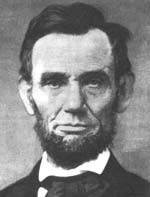 During the Civil War (1861-1865), President Lincoln needed money to finance the War from the North. The Bankers were going to charge him 24% to 36% interest. Lincoln was horrified and went away greatly distressed, for he was a man of principle and would not think of plunging his beloved country into a debt that the country would find impossible to pay back.
Eventually President Lincoln was advised to get Congress to pass a law authorizing the printing of full legal tender Treasury notes to pay for the War effort. Lincoln recognized the great benefits of this issue. At one point he wrote:
“... (we) gave the people of this Republic the greatest blessing they have ever had – their own paper money to pay their own debts...”
The Treasury notes were printed with green ink on the back, so the people called them “Greenbacks”.
Lincoln printed 400 million dollars worth of Greenbacks (the exact amount being $449,338,902), money that he delegated to be created, a debt-free and interest-free money to finance the War. It served as legal tender for all debts, public and private. He printed it, paid it to the soldiers, to the U.S. Civil Service employees, and bought supplies for war.
Shortly after that happened, “The London Times” printed the following: “If that mischievous financial policy, which had its origin in the North American Republic, should become indurated down to a fixture, then that Government will furnish its own money without cost. It will pay off debts and be without a debt. It will have all the money necessary to carry on its commerce. It will become prosperous beyond precedent in the history of the civilized governments of the world. The brains and the wealth of all coun*tries will go to North America. That govern*ment must be destroyed, or it will destroy every monarchy on the globe.”
The Bankers obviously understood. The only thing, I repeat, the only thing that is a threat to their power is sovereign govern*ments printing interest-free and debt-free paper money. They know it would break the power of the international Bankers.
In retaliation
After this was published in "The London Times", the British Government, which was controlled by the London and other European Bankers, moved to support the Confederate South, hoping to defeat Lincoln and the Union, and destroy this government which they said had to be destroyed.
They were stopped by two things. First, Lincoln knew the British people, and he knew that Britain would not support slavery, so he issued the Emancipation Proclamation, which declared that slavery in the United States was abolished. At this point, the London Bankers could not openly support the Confederacy because the British people simply would not stand for their country supporting slavery.
Second, the Czar of Russia sent a portion of the Russian navy to the United States with orders that its admiral would operate under the command of Abraham Lincoln. These ships of the Russian navy then became a threat to the ships of the British navy which had intended to break the blockade and help the South.
The North won the War, and the Union was preserved. America remained as one nation.
Of course, the Bankers were not going to give in that easy, for they were determined to put an end to Lincoln's interest-free, debt-free Greenbacks. He was assassinated by an agent of the Bankers shortly after the War ended.
Thereafter, Congress revoked the Green*back Law and enacted, in its place, the National Banking Act. The national banks were to be privately owned and the national bank notes they issued were to be interest bearing. The Act also provided that the Greenbacks should be retired from circulation as soon as they came back to the Treasury in payment of taxes.
In 1972, the United States Treasury Department was asked to compute the amount of interest that would have been paid if that 400 million dollars would have been borrowed at interest instead of being issued by Abraham Lincoln. They did some computations, and a few weeks later, the United States Treasury Department said the United States Government saved 4 billion dollars in interest because Lincoln had created his own money. So you can about imagine how much the Government has paid and how much we owe solely on the basis of interest.
The Federal Reserve Act
There were changes in the money and banking laws for the next fifty years. Finally, in 1913, the Bankers were able to get their Federal Reserve Act passed through Congress which replaced the National Banking Act that had earlier replaced the Greenback Law. If the Government would have continued the policy of Abraham Lincoln, the warnings given in “The London Times” would have come to pass. America would be a debt-free nation, the most prosperous in the world. And the brains and the wealth of the world would have come to America.
But with this Federal Reserve Act being passed, Congress gave up Its power to create its own money that it was given in the United States Constitution, and gave this power over to private Bankers who called themselves the Federal Reserve. The Bankers had achieved their ultimate goal, for now the United States operated under a central bank that was privately owned. They now had the power to run the country by controlling the creation of the money, and were free to charge the interest they so desired.
As Mayer Anselm Rothschild once said: “Permit me to issue and control the money of a nation, and I care not who makes its laws...”
John F. Kennedy
 No United States president since Abraham Lincoln dared to go against the system and create his own money, as many of these so-called elected presidents were actually only instruments or puppets of the Bankers. That is until President John F. Kennedy came into office.
President Kennedy was not afraid to “buck the system”, for he understood how the Federal Reserve System was being used to destroy the United States. As a just and honorable man, he could not tolerate such a system, for it smelled corruption from A to Z. Certainly he must have known about the Greenbacks which Abraham Lincoln created when he was in office.
On June 4th, 1963, President Kennedy signed a presidential document, called Exec*utive Order 11110, which further amended Executive Order 10289 of September 19th, 1951. This gave Kennedy, as President of the United States, legal clearance to create his own money to run the country, money that would belong to the people, an Interest and debt-free money. He had printed United States Notes, completely ignoring the Federal Reserve Notes from the private banks of the Federal Reserve.
Our records show that Kennedy issued $4,292,893,825 of cash money. It was perfect*ly obvious that Kennedy was out to under*mine the Federal Reserve System of the United States.
But it was only a few months later, In November of 1963, that the world received the shocking news of President Kennedy's assassination. No reason was given, of course, for anyone wanting to commit such an atrocious crime. But for those who knew anything about money and banking, it did — not take long to put the pieces of the puzzle together. For surely, President Kennedy must have had It in mind to repeal the Federal Reserve Act of 1913, and return back to the United States Congress the power to create its own money.
It is interesting to note that, only one day after Kennedy's assassination, all the United States notes, which Kennedy had issued, were called out of circulation. Was this through an executive order of the newly installed president, Lyndon B. Johnson? Was President Johnson afraid of the Bankers? Or was he one of their instruments? At any rate, all of the money President Kennedy had created was destroyed. And not a word was said to the American people.
A lesson to learn
There is much that can be learned from our past history. Here we are in 2003, and the United States is still operating under the Federal Reserve System. It has already plunged this country over six trillion dollars into debt – Federal debt, (the total debt, including that of individuals and corporations, is over 20 trillion) a debt it will never be able to pay, and has been responsible for every kind corruption imaginable. Yet, barely a peep of protest can be heard from the American people.
All the Bankers have to do to keep their power is to get rid of the few politicians who are honestly working for a reform in our economic system, and the people at large remain ignorant and controlled. It is obvious the American people need to be awakened to the truth.
The population at large must be educated on the Federal Reserve, and then unite together to put pressure on the Government to get the Federal Reserve Act of 1913 repealed. Otherwise, it will spell disaster for the United States.
There can be no peace without justice, and there can be no justice without a reform in our economic system, for the financiers are behind all the corruption in our Govern*ment.
Abraham Lincoln and John F. Kennedy both had the courage to stand up for principles and to fight for justice. They have both gone down in history as being true patriots of the United States. But do we, as citizens, have the courage to follow their example?
Melvin Sickler
This article was published in the Oct.-Nov.-December, 2003 issue of “Michael”.
Back to list of articles
[h=1]Andrew Jackson and the Bank War[/h]
by Roberta McCutcheon[h=2]INTRODUCTION[/h]When Alexander Hamilton called for a Bank of the United States in his Report on a National Bank, he envisioned a central bank that would sustain a developing national economy. The bank would, through the creation of bank “notes,” replace some of the gold and silver money in circulation. This would allow for the growth in business activity without the need to rely solely on exports to increase money supply. Additionally, Hamilton argued that the bank would strengthen the national government by lending money to its treasury. As it turned out, the First Bank of the United States brought more stability to the nation’s currency and expansion to the economy than was probably expected even by its strongest promoters. Still, there continued to be considerable opposition to it as an institution. Many congressmen argued that the bank was unconstitutional, possessed a monopoly on money, and favored the commercial North over the agricultural South. In 1811 these opponents refused to renew the charter of the First Bank of the United States.
Facing financial woes and inflation accompanying the War of 1812, Congress sought to revive the central bank. As the charter for the Second Bank of the United States was patterned after the first, it faced the same strenuous scrutiny and a long and difficult fight. Finally, in 1816, economic instability facilitated its recharter for twenty years. Over time the role of the Second Bank in the economy increased. Perhaps most importantly, it became the de facto bank regulator and lender to state banks.
Andrew Jackson’s disaffection with the powerful central bank and its “paper money” can be traced as far back as the First Bank of the US. Jackson lost everything during the time when the market expansion and the availability of western lands should have offered safe opportunities for economic improvement to more and more individuals. Jackson blamed the banking system for his personal financial misfortunes (all involving land speculation and worthless bank notes). With overwhelming support of the masses, Jackson was elected president in 1828 and given power to seek change. In 1829, he warned Congress in his first annual address that “both the constitution and the expediency of the law creating this are well questioned by a large portion of our fellow citizens.” With this statement President Jackson declared war on the Second Bank of the United States.
[h=3]SOURCES[/h]Hofstadter, Richard. The American Political Tradition. New York: Random House, Vintage Books Edition, 1989.
Rockoff, Hugh, and Gary M. Walton. History of the American Economy. Ohio: Thomson South Western, 2005.
[h=2]OBJECTIVES[/h]
Divide the class into six groups. Assign each group one of the following topics:
[h=4]The Market Revolution[/h]Brief definition of the Market Revolution, Prentice Hall
Notes on Charles Sellers’s research on the topic, Mount Holyoke College
[h=4]Biographical Information: Andrew Jackson[/h]Biography, The White House
Politics and Elections, NC State Library
[h=4]Andrew Jackson Quotations[/h]“The bold effort the present (central) bank had made to control the government . . . are but premonitions of the fate that await the American people should they be deluded into a perpetuation of this institution or the establishment of another like it.”
“Gentlemen, I have had men watching you for a long time and I am convinced that you have used the funds of the bank to speculate in the breadstuffs of the country. When you won, you divided the profits amongst you, and when you lost, you charged it to the bank. You tell me that if I take the deposits from the bank and annul its charter, I shall ruin ten thousand families. That may be true, gentlemen, but that is your sin! Should I let you go on, you will ruin fifty thousand families, and that would be my sin! You are a den of vipers and thieves.”
Additional Quotes
[h=4]The First Bank of the United States[/h]Brief description of the First Bank of the US, USHistory.org
Substantive discussion of the First Bank of the United States, Economic History Association
[h=4]The Panic of 1819[/h]A brief description of the Panic of 1819, U-S-History.com
A history of the Panic, Ohio History Central
A history of both banks and the veto, U-S-History.com
[h=4]The Second Bank of the United States[/h]McColloch v. Maryland, Oyez.org
Political battles of the Jacksonian era, Gilder Lehrman Institute
President Jackson’s veto message, Yale University, The Avalon Project
Narrative on Jackson’s opposition to the Second Bank of the United States, NEH
[h=4]Effects of the Veto on the Economy[/h]Brief description of the Panic of 1837, U-S-History.com
Further description of the Panic of 1837, Miller Center
Martin Van Buren’s role following the Panic of 1837, PresidentProfiles.com
[h=3]ACTIVITY TWO: PANEL DISCUSSION ON THE SECOND BANK OF THE UNITED STATES[/h]Select six panelists—three to speak in favor of the Bank and three to speak against it. Select a student moderator as well.
The panelists will:
Citation Guidelines for Online Resources
Abraham Lincoln and John F. Kennedy
Abraham Lincoln and John F. Kennedy
Two great presidents of the United StatesAssassinated for the cause of justice
[SUP][SUP]français[/SUP][/SUP][SUP]
 [/SUP]
by Melvin Sickler
November 22, 2003 marks the 40th anniversary of the assassination of U.S. President John F. Kennedy, and a majority of Americans still believe that there was a conspiracy behind this assassination. Both Abraham Lincoln and Kennedy were assassinated while they held the high office of President of the United States. Both of these former presidents had also created their own money system to run the United States while they were in office. Is this just a coincidence?
Why assassinate a President? Why must everything be kept so covered up? What are they trying to hide from the American people? The facts will speak for themselves.
Abraham Lincoln
Eventually President Lincoln was advised to get Congress to pass a law authorizing the printing of full legal tender Treasury notes to pay for the War effort. Lincoln recognized the great benefits of this issue. At one point he wrote:
“... (we) gave the people of this Republic the greatest blessing they have ever had – their own paper money to pay their own debts...”
The Treasury notes were printed with green ink on the back, so the people called them “Greenbacks”.
Lincoln printed 400 million dollars worth of Greenbacks (the exact amount being $449,338,902), money that he delegated to be created, a debt-free and interest-free money to finance the War. It served as legal tender for all debts, public and private. He printed it, paid it to the soldiers, to the U.S. Civil Service employees, and bought supplies for war.
Shortly after that happened, “The London Times” printed the following: “If that mischievous financial policy, which had its origin in the North American Republic, should become indurated down to a fixture, then that Government will furnish its own money without cost. It will pay off debts and be without a debt. It will have all the money necessary to carry on its commerce. It will become prosperous beyond precedent in the history of the civilized governments of the world. The brains and the wealth of all coun*tries will go to North America. That govern*ment must be destroyed, or it will destroy every monarchy on the globe.”
The Bankers obviously understood. The only thing, I repeat, the only thing that is a threat to their power is sovereign govern*ments printing interest-free and debt-free paper money. They know it would break the power of the international Bankers.
In retaliation
After this was published in "The London Times", the British Government, which was controlled by the London and other European Bankers, moved to support the Confederate South, hoping to defeat Lincoln and the Union, and destroy this government which they said had to be destroyed.
They were stopped by two things. First, Lincoln knew the British people, and he knew that Britain would not support slavery, so he issued the Emancipation Proclamation, which declared that slavery in the United States was abolished. At this point, the London Bankers could not openly support the Confederacy because the British people simply would not stand for their country supporting slavery.
Second, the Czar of Russia sent a portion of the Russian navy to the United States with orders that its admiral would operate under the command of Abraham Lincoln. These ships of the Russian navy then became a threat to the ships of the British navy which had intended to break the blockade and help the South.
The North won the War, and the Union was preserved. America remained as one nation.
Of course, the Bankers were not going to give in that easy, for they were determined to put an end to Lincoln's interest-free, debt-free Greenbacks. He was assassinated by an agent of the Bankers shortly after the War ended.
Thereafter, Congress revoked the Green*back Law and enacted, in its place, the National Banking Act. The national banks were to be privately owned and the national bank notes they issued were to be interest bearing. The Act also provided that the Greenbacks should be retired from circulation as soon as they came back to the Treasury in payment of taxes.
In 1972, the United States Treasury Department was asked to compute the amount of interest that would have been paid if that 400 million dollars would have been borrowed at interest instead of being issued by Abraham Lincoln. They did some computations, and a few weeks later, the United States Treasury Department said the United States Government saved 4 billion dollars in interest because Lincoln had created his own money. So you can about imagine how much the Government has paid and how much we owe solely on the basis of interest.
The Federal Reserve Act
There were changes in the money and banking laws for the next fifty years. Finally, in 1913, the Bankers were able to get their Federal Reserve Act passed through Congress which replaced the National Banking Act that had earlier replaced the Greenback Law. If the Government would have continued the policy of Abraham Lincoln, the warnings given in “The London Times” would have come to pass. America would be a debt-free nation, the most prosperous in the world. And the brains and the wealth of the world would have come to America.
But with this Federal Reserve Act being passed, Congress gave up Its power to create its own money that it was given in the United States Constitution, and gave this power over to private Bankers who called themselves the Federal Reserve. The Bankers had achieved their ultimate goal, for now the United States operated under a central bank that was privately owned. They now had the power to run the country by controlling the creation of the money, and were free to charge the interest they so desired.
As Mayer Anselm Rothschild once said: “Permit me to issue and control the money of a nation, and I care not who makes its laws...”
John F. Kennedy
President Kennedy was not afraid to “buck the system”, for he understood how the Federal Reserve System was being used to destroy the United States. As a just and honorable man, he could not tolerate such a system, for it smelled corruption from A to Z. Certainly he must have known about the Greenbacks which Abraham Lincoln created when he was in office.
On June 4th, 1963, President Kennedy signed a presidential document, called Exec*utive Order 11110, which further amended Executive Order 10289 of September 19th, 1951. This gave Kennedy, as President of the United States, legal clearance to create his own money to run the country, money that would belong to the people, an Interest and debt-free money. He had printed United States Notes, completely ignoring the Federal Reserve Notes from the private banks of the Federal Reserve.
Our records show that Kennedy issued $4,292,893,825 of cash money. It was perfect*ly obvious that Kennedy was out to under*mine the Federal Reserve System of the United States.
But it was only a few months later, In November of 1963, that the world received the shocking news of President Kennedy's assassination. No reason was given, of course, for anyone wanting to commit such an atrocious crime. But for those who knew anything about money and banking, it did — not take long to put the pieces of the puzzle together. For surely, President Kennedy must have had It in mind to repeal the Federal Reserve Act of 1913, and return back to the United States Congress the power to create its own money.
It is interesting to note that, only one day after Kennedy's assassination, all the United States notes, which Kennedy had issued, were called out of circulation. Was this through an executive order of the newly installed president, Lyndon B. Johnson? Was President Johnson afraid of the Bankers? Or was he one of their instruments? At any rate, all of the money President Kennedy had created was destroyed. And not a word was said to the American people.
A lesson to learn
There is much that can be learned from our past history. Here we are in 2003, and the United States is still operating under the Federal Reserve System. It has already plunged this country over six trillion dollars into debt – Federal debt, (the total debt, including that of individuals and corporations, is over 20 trillion) a debt it will never be able to pay, and has been responsible for every kind corruption imaginable. Yet, barely a peep of protest can be heard from the American people.
All the Bankers have to do to keep their power is to get rid of the few politicians who are honestly working for a reform in our economic system, and the people at large remain ignorant and controlled. It is obvious the American people need to be awakened to the truth.
The population at large must be educated on the Federal Reserve, and then unite together to put pressure on the Government to get the Federal Reserve Act of 1913 repealed. Otherwise, it will spell disaster for the United States.
There can be no peace without justice, and there can be no justice without a reform in our economic system, for the financiers are behind all the corruption in our Govern*ment.
Abraham Lincoln and John F. Kennedy both had the courage to stand up for principles and to fight for justice. They have both gone down in history as being true patriots of the United States. But do we, as citizens, have the courage to follow their example?
Melvin Sickler
This article was published in the Oct.-Nov.-December, 2003 issue of “Michael”.
Back to list of articles
[h=1]Andrew Jackson and the Bank War[/h]
by Roberta McCutcheon[h=2]INTRODUCTION[/h]When Alexander Hamilton called for a Bank of the United States in his Report on a National Bank, he envisioned a central bank that would sustain a developing national economy. The bank would, through the creation of bank “notes,” replace some of the gold and silver money in circulation. This would allow for the growth in business activity without the need to rely solely on exports to increase money supply. Additionally, Hamilton argued that the bank would strengthen the national government by lending money to its treasury. As it turned out, the First Bank of the United States brought more stability to the nation’s currency and expansion to the economy than was probably expected even by its strongest promoters. Still, there continued to be considerable opposition to it as an institution. Many congressmen argued that the bank was unconstitutional, possessed a monopoly on money, and favored the commercial North over the agricultural South. In 1811 these opponents refused to renew the charter of the First Bank of the United States.
Facing financial woes and inflation accompanying the War of 1812, Congress sought to revive the central bank. As the charter for the Second Bank of the United States was patterned after the first, it faced the same strenuous scrutiny and a long and difficult fight. Finally, in 1816, economic instability facilitated its recharter for twenty years. Over time the role of the Second Bank in the economy increased. Perhaps most importantly, it became the de facto bank regulator and lender to state banks.
Andrew Jackson’s disaffection with the powerful central bank and its “paper money” can be traced as far back as the First Bank of the US. Jackson lost everything during the time when the market expansion and the availability of western lands should have offered safe opportunities for economic improvement to more and more individuals. Jackson blamed the banking system for his personal financial misfortunes (all involving land speculation and worthless bank notes). With overwhelming support of the masses, Jackson was elected president in 1828 and given power to seek change. In 1829, he warned Congress in his first annual address that “both the constitution and the expediency of the law creating this are well questioned by a large portion of our fellow citizens.” With this statement President Jackson declared war on the Second Bank of the United States.
[h=3]SOURCES[/h]Hofstadter, Richard. The American Political Tradition. New York: Random House, Vintage Books Edition, 1989.
Rockoff, Hugh, and Gary M. Walton. History of the American Economy. Ohio: Thomson South Western, 2005.
[h=2]OBJECTIVES[/h]
- Students will examine primary documents and secondary sources to analyze the life and presidency of Andrew Jackson in the first half of the nineteenth century.
- Students will be able to identify assumptions and biases that they bring to historical analysis.
- Students will be able to identify the major social, political, and economic trends of the first half of the nineteenth century.
- Students will be able to examine the effects of the Market Revolution.
- Students will be engaged in historical research and the critical analysis of documents related to the Market Revolution and the role of the federal government.
- Students will be engaged in historical research and critical analysis of Andrew Jackson.
Divide the class into six groups. Assign each group one of the following topics:
- The Market Revolution
- Biography of Andrew Jackson
- The First Bank of the United States
- The Panic of 1819
- The Second Bank of the United States
- Effects of the veto on the economy
[h=4]The Market Revolution[/h]Brief definition of the Market Revolution, Prentice Hall
Notes on Charles Sellers’s research on the topic, Mount Holyoke College
[h=4]Biographical Information: Andrew Jackson[/h]Biography, The White House
Politics and Elections, NC State Library
[h=4]Andrew Jackson Quotations[/h]“The bold effort the present (central) bank had made to control the government . . . are but premonitions of the fate that await the American people should they be deluded into a perpetuation of this institution or the establishment of another like it.”
“Gentlemen, I have had men watching you for a long time and I am convinced that you have used the funds of the bank to speculate in the breadstuffs of the country. When you won, you divided the profits amongst you, and when you lost, you charged it to the bank. You tell me that if I take the deposits from the bank and annul its charter, I shall ruin ten thousand families. That may be true, gentlemen, but that is your sin! Should I let you go on, you will ruin fifty thousand families, and that would be my sin! You are a den of vipers and thieves.”
Additional Quotes
[h=4]The First Bank of the United States[/h]Brief description of the First Bank of the US, USHistory.org
Substantive discussion of the First Bank of the United States, Economic History Association
[h=4]The Panic of 1819[/h]A brief description of the Panic of 1819, U-S-History.com
A history of the Panic, Ohio History Central
A history of both banks and the veto, U-S-History.com
[h=4]The Second Bank of the United States[/h]McColloch v. Maryland, Oyez.org
Political battles of the Jacksonian era, Gilder Lehrman Institute
President Jackson’s veto message, Yale University, The Avalon Project
Narrative on Jackson’s opposition to the Second Bank of the United States, NEH
[h=4]Effects of the Veto on the Economy[/h]Brief description of the Panic of 1837, U-S-History.com
Further description of the Panic of 1837, Miller Center
Martin Van Buren’s role following the Panic of 1837, PresidentProfiles.com
[h=3]ACTIVITY TWO: PANEL DISCUSSION ON THE SECOND BANK OF THE UNITED STATES[/h]Select six panelists—three to speak in favor of the Bank and three to speak against it. Select a student moderator as well.
The panelists will:
- Prepare an opening speech on the group’s analysis of and position on the Second Bank of the United States. Each of the panelists should participate in the speech. The historical context and the group’s position on the Bank should be included in the speech.
- Respond to questions about the Bank and the contents of their presentation.
- Introduce the issue for the panel discussion.
- Prepare questions for panelists and deliver them after the presentations.
- Direct questions from the audience (all non-panelist members of the class) to the panelists.
Citation Guidelines for Online Resources


