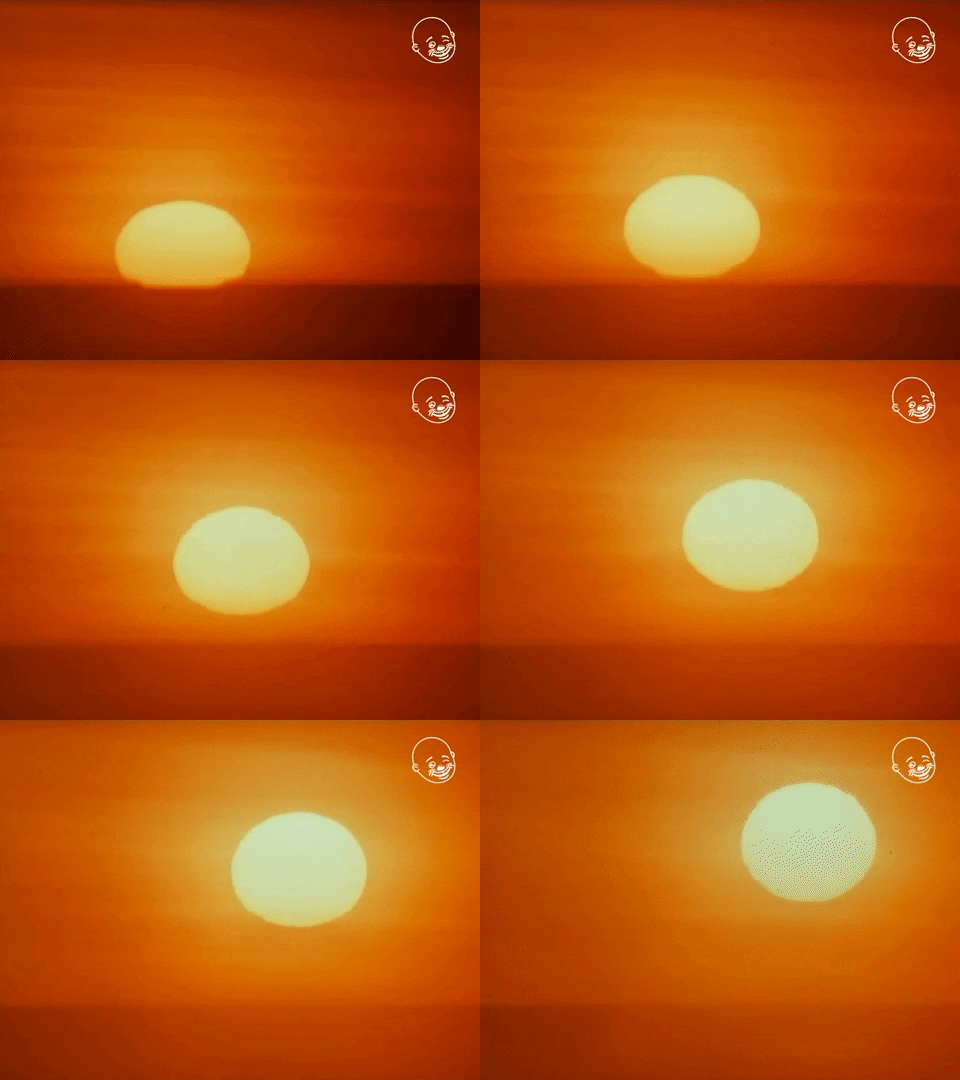
"edge of a ball"...???now, travel to the point of horizon where orbit takes place and watch it roll over like the edge of a ball


"edge of a ball"...???now, travel to the point of horizon where orbit takes place and watch it roll over like the edge of a ball
Of course not. Because, they are not fundamentally different in nature.Would they have been able to ascertain that a planet is fundamentally distinct in nature from a star? Probably not.
Let me ask you a 'fundamental' question - just exactly why does a 'planet' appear as a bright spot?They would have perceived a planet as a bright spot (‘star’) that moves differently than other bright slots do.

yes, they are.Of course not. Because, they are not fundamentally different in nature.
Let me ask you a 'fundamental' question - just exactly why does a 'planet' appear as a bright spot?
And, don't give me the lame answer that it is a reflection of light. A 'reflection' that is as bright as a 'star'? (which gives off its own light)
If that were true, the 1,000,000 candlepower reflection of light from the moon would blind us all. Think about it.
Unless planets are big chrome balls, they cannot possibly reflect enough light such that they appear as a bright spot in the sky.
Come on, man. Think! Don't swallow the propaganda...