“Tetsaveh” (you shall command) EXODUS 27:20-30:10...
In this study, we will see the preparation of the Menorah and the clothing of the priests. The study starts out with preparing olive oil to fill the lamps of the Menorah. The Torah tells us that it was a “permanent light” (Ner Tamid). It would be the only light outside of the “Kadosh Kedoshim” (The HOLY of Holies) where the “Shekinah” illuminated that small area where the only article was the “Aron Ha Kodesh” (The Ark of the Covenant.
The first theme is “Light,” and this would be in the form of the Menorah. But why do we associate “light” with “God”? One reason is that “light” is not so much an object we can touch. One could call “light” an essence. We can’t see “light,” yet we can see the reaction when light beams hit an object. Go inside a dark, dusty room and turn on a flashlight, and you might say, “See, I see a beam of light!” Yet what we are seeing is “light particles reflecting against dust particles,” so, we are seeing the particles of dust, which “are” objects reacting to the “light particles” which are invisible. Shine a flashlight inside a dark yet clean room, and you will see a circle of light on the wall. You see the light reflected against the wall, not the light itself. Light beams or rays are invisible, yet objects will react to those same light beams.
God is invisible in His pure form, yet He radiates light, and we as believers reflect HIS light in our lives as believers, in the forms of mitzvoth (good works), our changed characters and personalities, and how we look at the world and the material things in the world. There are so many scriptures about light and how we as believers should “walk in the light, as HE is in the light.” Let HIS light be seen in us at all times.
Verse 20 states, “And thou shalt command the children of Israel that they bring unto thee pure olive oil beaten for the light, to cause a lamp to burn continually.” In the original Hebrew, this verse has 15 words. The word “Shemen” (oil) is the “eighth” word. It is the “middle word” with 7 words before and after. Is this a coincidence? From the word “Shemen” we get “Shemini” (eighth). What does the number 8 symbolize? It symbolizes a “New Beginning.”
This is a “New Beginning” after their slavery in Egypt. While in Egypt, Pharaoh symbolized the “light of Ra!” Yet now, the “light of Elohim” would be the light of “Yeshuah” (OR YESHUAH), the Light of Salvation. The instrument of light would be the Menorah, which would hold the “shemen,” the “Olive Oil.”
The “Ner Tamid” (eternal Light) also reminds us of Isaiah 60:19, which states; …YHVH shall be unto thee an everlasting light, and thy God thy glory.”
The Menorah was “outside” the curtain, yet still inside the tabernacle. In the same room with the Menorah were the Table of Shewbread, where the 12 loaves of bread were, and the Table of Incense. Here we have a threefold symbolism of Messiah Yeshua. The table of Shew Bread, “Yeshua HaLechem Chaim” (Yeshua the Bread of Life), and the incense altar, where our “Prayers go upward to heaven” and where “Yeshua intercedes on our behalf. The Menorah is “Yeshua HaOr Olam v'ha Or Tamid” (Yeshua the Light of the World and the Eternal Light.
The Menorah was to burn all night, and in the morning, the high priest (Aaron) would come in to trim the wicks and prepare the Menorah for the evening lighting. The Menorah was all about “Light” in the words “from evening to morning” (the lamps of the Menorah were to burn). We can see the Hebrew word “Ad” (ayin and dalet) between those two words.
The word “Ad “means “witness” during the evening, the Shekinah Glory was the outside light, while the lamps were the inside lights. During the day, the Shenika glory, which was above the Mercy Seat of the Aron Ha Kodesh (Ark of the Covenant), was the inner light of the Mishkan (Tabernacle).
There is a difference between light and darkness, Good and Evil, Holiness and Sin, Lost and saved. The olive oil in the lamps symbolizes the anointing of the Holy Spirit, which the wicks can symbolize every believer. If we are to burn bright, we must be in constant contact with the oil; if not, we will “burn out.”
In pagan cultures, darkness was associated with evil, such as demons, etc. In ancient Egypt, their god “Ra” went to sleep at night, so the Egyptians were without protection against the “evils of the night”. Those who ventured out usually took a cat with them, symbolizing “Bastet” goddess of the night, who would protect the person against “evil”. Wow, what if the cat saw a mouse or a dog, and....ran off? Oh, well.
The Menorah that burned during the night symbolized “Elohim” who would be the “light in the evening” as well as in the day. The light was inside the tabernacle, and also, outside in the form of the “column of Fire.” We are blessed by the presence of the Ruach HaKodesh (The Holy Spirit) at all times, in the day and during the night, inside and out. The believer is NEVER alone, the Light of G-d is forever with us.
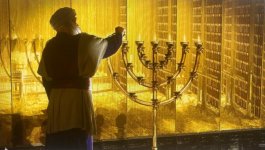
The Menorah had seven branches; it was made of pure gold, and the middle branch was called the “Shamash” or the “helper”. “Seven” is the perfect number of holiness. “Six” branches (six is the number of mankind) are on either side of the Shamash, three on the right and three on the left. Mankind needs the presence of Yeshua, to fulfill his destiny, to get right again, into a right relationship with his creator through Yeshua, through the “New birth” (John 3:3).
In this study, we will see the preparation of the Menorah and the clothing of the priests. The study starts out with preparing olive oil to fill the lamps of the Menorah. The Torah tells us that it was a “permanent light” (Ner Tamid). It would be the only light outside of the “Kadosh Kedoshim” (The HOLY of Holies) where the “Shekinah” illuminated that small area where the only article was the “Aron Ha Kodesh” (The Ark of the Covenant.
The first theme is “Light,” and this would be in the form of the Menorah. But why do we associate “light” with “God”? One reason is that “light” is not so much an object we can touch. One could call “light” an essence. We can’t see “light,” yet we can see the reaction when light beams hit an object. Go inside a dark, dusty room and turn on a flashlight, and you might say, “See, I see a beam of light!” Yet what we are seeing is “light particles reflecting against dust particles,” so, we are seeing the particles of dust, which “are” objects reacting to the “light particles” which are invisible. Shine a flashlight inside a dark yet clean room, and you will see a circle of light on the wall. You see the light reflected against the wall, not the light itself. Light beams or rays are invisible, yet objects will react to those same light beams.
God is invisible in His pure form, yet He radiates light, and we as believers reflect HIS light in our lives as believers, in the forms of mitzvoth (good works), our changed characters and personalities, and how we look at the world and the material things in the world. There are so many scriptures about light and how we as believers should “walk in the light, as HE is in the light.” Let HIS light be seen in us at all times.
Verse 20 states, “And thou shalt command the children of Israel that they bring unto thee pure olive oil beaten for the light, to cause a lamp to burn continually.” In the original Hebrew, this verse has 15 words. The word “Shemen” (oil) is the “eighth” word. It is the “middle word” with 7 words before and after. Is this a coincidence? From the word “Shemen” we get “Shemini” (eighth). What does the number 8 symbolize? It symbolizes a “New Beginning.”
This is a “New Beginning” after their slavery in Egypt. While in Egypt, Pharaoh symbolized the “light of Ra!” Yet now, the “light of Elohim” would be the light of “Yeshuah” (OR YESHUAH), the Light of Salvation. The instrument of light would be the Menorah, which would hold the “shemen,” the “Olive Oil.”
The “Ner Tamid” (eternal Light) also reminds us of Isaiah 60:19, which states; …YHVH shall be unto thee an everlasting light, and thy God thy glory.”
The Menorah was “outside” the curtain, yet still inside the tabernacle. In the same room with the Menorah were the Table of Shewbread, where the 12 loaves of bread were, and the Table of Incense. Here we have a threefold symbolism of Messiah Yeshua. The table of Shew Bread, “Yeshua HaLechem Chaim” (Yeshua the Bread of Life), and the incense altar, where our “Prayers go upward to heaven” and where “Yeshua intercedes on our behalf. The Menorah is “Yeshua HaOr Olam v'ha Or Tamid” (Yeshua the Light of the World and the Eternal Light.
The Menorah was to burn all night, and in the morning, the high priest (Aaron) would come in to trim the wicks and prepare the Menorah for the evening lighting. The Menorah was all about “Light” in the words “from evening to morning” (the lamps of the Menorah were to burn). We can see the Hebrew word “Ad” (ayin and dalet) between those two words.
The word “Ad “means “witness” during the evening, the Shekinah Glory was the outside light, while the lamps were the inside lights. During the day, the Shenika glory, which was above the Mercy Seat of the Aron Ha Kodesh (Ark of the Covenant), was the inner light of the Mishkan (Tabernacle).
There is a difference between light and darkness, Good and Evil, Holiness and Sin, Lost and saved. The olive oil in the lamps symbolizes the anointing of the Holy Spirit, which the wicks can symbolize every believer. If we are to burn bright, we must be in constant contact with the oil; if not, we will “burn out.”
In pagan cultures, darkness was associated with evil, such as demons, etc. In ancient Egypt, their god “Ra” went to sleep at night, so the Egyptians were without protection against the “evils of the night”. Those who ventured out usually took a cat with them, symbolizing “Bastet” goddess of the night, who would protect the person against “evil”. Wow, what if the cat saw a mouse or a dog, and....ran off? Oh, well.
The Menorah that burned during the night symbolized “Elohim” who would be the “light in the evening” as well as in the day. The light was inside the tabernacle, and also, outside in the form of the “column of Fire.” We are blessed by the presence of the Ruach HaKodesh (The Holy Spirit) at all times, in the day and during the night, inside and out. The believer is NEVER alone, the Light of G-d is forever with us.
The Menorah had seven branches; it was made of pure gold, and the middle branch was called the “Shamash” or the “helper”. “Seven” is the perfect number of holiness. “Six” branches (six is the number of mankind) are on either side of the Shamash, three on the right and three on the left. Mankind needs the presence of Yeshua, to fulfill his destiny, to get right again, into a right relationship with his creator through Yeshua, through the “New birth” (John 3:3).