German mass grave records prehistoric warfare - BBC News
A mass grave containing at least 26 skeletons is further evidence of the brutal conflict that appears to have beset central Europe 7,000 years ago.
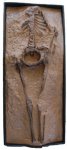
The remains were uncovered at Schöneck-Kilianstädten in central Germany.
Individuals had their heads smashed. Some even had their legs broken, which could indicate they were also tortured.
Scientists tell the PNAS journal that the condition of the burial pit fits an emerging pattern of widespread violence in Early Neolithic times.
Similar mass graves have been unearthed at Talheim, also in Germany, and at Asparn/Schletz in Austria.
The occupants were likely all drawn from agricultural communities whose pottery decoration style has led to them being dubbed the Linear Pottery culture, which translates as Linearbandkeramik (LBK) in German.
This group has left a rich archaeological record, which Christian Meyer and colleagues say highlights the unusualness of the mass graves.
A mass grave containing at least 26 skeletons is further evidence of the brutal conflict that appears to have beset central Europe 7,000 years ago.
The remains were uncovered at Schöneck-Kilianstädten in central Germany.
Individuals had their heads smashed. Some even had their legs broken, which could indicate they were also tortured.
Scientists tell the PNAS journal that the condition of the burial pit fits an emerging pattern of widespread violence in Early Neolithic times.
Similar mass graves have been unearthed at Talheim, also in Germany, and at Asparn/Schletz in Austria.
The occupants were likely all drawn from agricultural communities whose pottery decoration style has led to them being dubbed the Linear Pottery culture, which translates as Linearbandkeramik (LBK) in German.
This group has left a rich archaeological record, which Christian Meyer and colleagues say highlights the unusualness of the mass graves.