Lay Down Your Arms

  • Christian Chat is a moderated online Christian community allowing Christians around the world to fellowship with each other in real time chat via webcam, voice, and text, with the Christian Chat app. You can also start or participate in a Bible-based discussion here in the Christian Chat Forums, where members can also share with each other their own videos, pictures, or favorite Christian music.

    If you are a Christian and need encouragement and fellowship, we're here for you! If you are not a Christian but interested in knowing more about Jesus our Lord, you're also welcome! Want to know what the Bible says, and how you can apply it to your life? Join us!

    To make new Christian friends now around the world, click here to join Christian Chat.

PoxEclipse

Banned
Jul 12, 2013
1,011
11
0
Robert Plant - Other Arms

[video=youtube;xbu9kN5S_rw]http://www.youtube.com/watch?v=xbu9kN5S_rw[/video]

Lay down your arms - now baby, let me sleep at night
Lay down your arms baby - I'll make everything all right
Words you been using, hurting me so
Some day your gonna regret
Your friends are talking - guess you never know
There's not a lately one yet

Lay down your arms, baby - when the deal is done
Lay down your arms, child - used to be your only one
Weapon you're using is hurting me bad
What do you hope to achieve
I said your fighting is leaving me sad
That's not the way it should be

Find a love - find a way
Find a dream - find a way
You know that I will, yes you know

Lay down your arms - please release me, let me go
Lay down your arms, baby - now surrender to me, don't you know

Find a love - find a way
Find a dream - find a way
You know that I, you know that I
You know I will, but you know

Oh, she's gone, she's gone
I'm not a prisoner - I'm the big beret
No I'm not
Oh, oh my baby's gone
Lay down your arms
I don't know where I'm gonna find her
'Cause my baby's gone
Lay down your arms
Is she here, is she there, is she here, yes I know
Oh, I gotta find her
 
PressTV - US moves to deregulate arms export, activists sound alarm

330071_%20cluster%20bombs.jpg


Human rights advocates are warning that a US plan to further deregulate its arms exports would have serious human rights consequences across the globe, according to a new report.

The largest deregulation in the history of US arms exports took place on Tuesday as part of the Barack Obama administration’s export reform initiative, the Inter Press Service reported on Friday.

“We’re seriously concerned that the reforms will open a floodgate of weapons technology and equipment to governments that have bad human rights records,” Adotei Akwei, the managing director for government relations at Amnesty International USA, a global human rights movement, told IPS. “This could further facilitate the commission of human rights abuses around the world."

The plan is part of the Export Control Reform Initiative (ECRI) -- brought forward by the Obama administration in 2010-- to simplify US arms exports through eliminating redundant restrictions and regulations.

Former government officials and human rights activists fear that these extensive export deregulation measures will have serious human rights consequences and negative impact for US foreign policy.

“We in the human rights community have been fighting for the past 30 years to try to bring more oversight and regulation to the global trade in arms because of the link with human rights violations such as killings, displacement of population, and torture,” Akwei told IPS. “And now we see the US stepping back from these commitments. It is extremely alarming.”

The new initiative will transfer the oversight of arms exports from the Department of State to the US Department of Commerce. Critics warn that this change will only increase the risks connected with arms exports.

The new deregulation comes as the US Department of Defense plans to sell missiles and "bunker-buster" bombs to Saudi Arabia and the United Arab Emirates in two separate deals worth $11.8 billion.

In August, the Cluster Munition Coalition denounced the United States for planning to supply cluster bombs to Saudi Arabia.

The United States and its Middle Eastern ally have refused to sign the Convention on Cluster Munitions, which prohibits the production, transfer, use, and stockpiling of cluster munitions.

Saudi Arabia and the US are amongst the twelve countries that have used cluster munitions in the past, with the US using them in multiple locations and Saudi Arabia against Iraq in 1991.
 
PressTV - ‘Russia begins shipping arms to Iraq’

329957_Russia-copter.jpg


Russia has begun shipping arms to Iraq under a historic multi-billion-dollar contract signed between Baghdad and Moscow last year.

Ali al-Musawi, top media advisor to Iraqi Prime Minister Nouri al-Maliki, told Russia Today on Thursday that the agreement “entails primarily weapon shipments to combat terrorism.”

Baghdad and Moscow signed the $4.3-billion contract in October 2012, making Russia Iraq’s largest arms supplier after the US, but Iraqi authorities announced a month later that the deal had been annulled over Maliki's concerns about "corruption" within his own team.

However, Anatoly Isaykin, the director general of Russia’s state-run arms trader Rosoboronexport, said in February that the agreement was not canceled, but it has not come into effect yet.

Musawi went on to say, “We really did have suspicions about this contract,” adding, “But in the end the deal was signed. We have currently started the process of implementing one of the stages of this contract.”
​

The Iraqi official also stated that Baghdad does not have any plan to acquire “offensive weapons” and said, “Bagdad only strives for securing its own sovereignty, defense of its wealth and fight against terrorism.”

Reports at the time of inking the deal indicated that it involved Iraq’s purchase of 30 Mi-28 attack helicopters and 42 Pantsir-S1 surface-to-air missile systems.

Musawi said Iraq was primarily interested in possessing helicopters in an effort to enable its army to hunt down the terrorists staging attacks across the country.

Iraq has been grappling with a spike in bombings and shooting attacks over the past months.
 
Many US Senators Oppose Ratifying UN Arms Trade Treaty

WASHINGTON — Fifty U.S. Senators, half of the Senate’s membership, say they will not ratify a U.N. Arms Trade Treaty signed by the United States. Their opposition to the treaty was expressed in a letter to President Barack Obama.

The legally-binding treaty sets international standards to regulate the import, export and transfer of conventional weapons - from battle tanks, warships and attack helicopters to small arms and light weapons.

Ann MacDonald, head of arms control for the humanitarian group Oxfam, said the treaty also covers ammunition.

“That is really important” she said “because while arms are often recirculated time and time again, and we see this particularly in conflicts in Africa - without ammunition, they are a lot less lethal. We have seen in some conflicts that the supply of ammunition is literally the fuel that keeps the conflict going,” said MacDonald.

The Arms Trade Treaty was passed by the United Nations last April by a vote of 154 to three with 23 abstentions. Only Iran, North Korea and Syria voted against the pact.

Daryl Kimball, head of the Arms Control Association, said the pact tries to plug many holes in the international system regulating the conventional arms trade.

“Many countries don’t have export controls. Many countries that have laws don’t have the ability to enforce. And then there is the illicit trade, the black market that goes below the radar, below these export control systems of the national governments,” said Kimball. “So the treaty is necessary in order to establish global standards that apply to all states, so that irresponsible arms suppliers and buyers can’t exploit the holes in the national laws.”

Oxfam's MacDonald said the treaty has an important human rights provision. “For the first time, it sets up a global system that requires governments to assess every arms transfer that is leaving their country, coming into their country or passing through it,” said MacDonald. “They have to assess that transfer against the risk that arms will be used for human rights violations or violations of humanitarian law. And if those risks are very substantial, they must deny the arms transfer.”

More than 110 countries - including the United States - have signed the treaty since it was open for signature in June. But only a handful [seven] have ratified it.

In the United States, the National Rifle Association - a powerful gun lobby group - has expressed its opposition to the treaty, as well as 50 U.S. Senators, half of the membership of the upper house. For a treaty to be ratified, it must gain the approval of 67 Senators.

Opponents of the pact argue that the Arms Trade Treaty infringes on the rights of Americans to bear arms under the Second Amendment of the U.S. Constitution. It is part of the Bill of Rights guaranteeing individual freedoms.

MacDonald said the treaty is “not about domestic arms control, however, it’s about international transfers. And that’s an important message for Senators to really hear, as well, because sometimes there is misinformation going around that this is a treaty that somehow will have an affect on domestic U.S. gun ownership issues, which it isn’t, because it has to do with international transfers,” she said. “The United States will not need to change its legislation to implement this treaty - the existing U.S. legislation is compatible in many areas with the provisions in the Arms Trade Treaty.”

Daryl Kimball said in the final analysis, U.S. approval of the treaty is not crucial.

“Ratification is something that this treaty deserves, eventually. But U.S. ratification is not essential or even necessary for the treaty to enter into force. It just takes 50 states [countries] - any 50 states - for the treaty to legally enter into force,” he said.

Many analysts say proponents of the treaty will have an uphill battle convincing a majority of U.S. senators to vote for ratification.
 
[video=youtube;mdUyRVXC14s]http://www.youtube.com/watch?v=mdUyRVXC14s[/video]

Satan, your kingdom must come down
I heard the voice of Jesus say
Satan, your kingdom must come down

Gonna pray until they tear your kingdom down
I heard the voice of Jesus say
Satan, your kingdom must come down

Gonna shout until they tear your kingdom down
I heard the voice of Jesus say
Satan, your kingdom must come down
 
Kerry signs UN arms treaty, senators threaten to block it | Fox News

kerry_un_092413.jpg


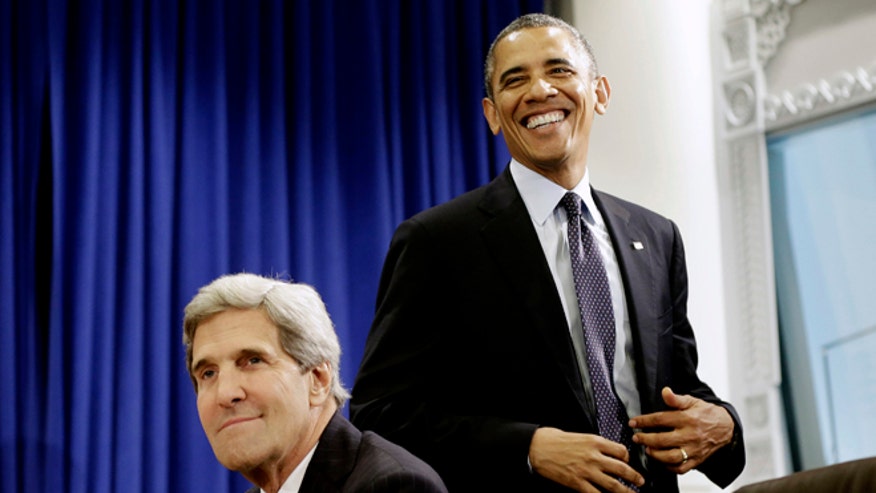
Secretary of State John Kerry on Wednesday signed a controversial U.N. treaty on arms regulation, riling U.S. lawmakers who vow the Senate will not ratify the agreement.

As he signed the document, Kerry called the treaty a "significant step" in addressing illegal gun sales, while claiming it would also protect gun rights.

"This is about keeping weapons out of the hands of terrorists and rogue actors. This is about reducing the risk of international transfers of conventional arms that will be used to carry out the world's worst crimes. This is about keeping Americans safe and keeping America strong," he said. "This treaty will not diminish anyone's freedom. In fact, the treaty recognizes the freedom of both individuals and states to obtain, possess, and use arms for legitimate purposes."

U.S. lawmakers, though, have long claimed the treaty could lead to new gun control measures. They note the U.S. Senate has final say on whether to approve the agreement.

Sen. Bob Corker, R-Tenn., in a letter to President Obama, urged his administration not to take any action to implement the treaty without the consent of the Senate.

He claimed the treaty raises "fundamental issues" concerning "individual rights protected by the Second Amendment of the United States Constitution."

The National Rifle Association blasted the plan, claiming it would impose an "invasive registration scheme" by requiring importing countries to give exporting countries information on "end users."

"The Obama administration is once again demonstrating its contempt for our fundamental, individual Right to Keep and Bear Arms," Chris Cox, executive director of the NRA's Institute for Legislative Action, said in a statement. "These are blatant attacks on the constitutional rights and liberties of every law-abiding American. The NRA will continue to fight this assault on our fundamental freedom."

Sen. Jim Inhofe, R-Okla., one of the most vocal opponents of the treaty, also sent a letter to Kerry declaring the treaty "dead in the water," since a majority of senators has gone on record against the agreement.

"The administration is wasting precious time trying to sign away our laws to the global community and unelected U.N. bureaucrats," he wrote.

Kerry, who is in New York attending the U.N. General Assembly session, announced earlier this year that the administration planned to sign the treaty.

The treaty would require countries that ratify it to establish national regulations to control the transfer of conventional arms and components and to regulate arms brokers, but it will not explicitly control the domestic use of weapons in any country.

Still, gun-rights supporters on Capitol Hill warn the treaty could be used as the basis for additional gun regulations inside the U.S. and have threatened not to ratify.

Over the summer, 130 members of Congress signed a letter to President Obama and Kerry urging them to reject the measure for this and other reasons.

The chance of adoption by the U.S. is slim. A two-thirds majority would be needed in the Senate to ratify.

What impact the treaty will have in curbing the estimated $60 billion global arms trade remains to be seen. The U.N. treaty will take effect after 50 countries ratify it, and a lot will depend on which ones ratify and which ones don't, and how stringently it is implemented.

The Control Arms Coalition, which includes hundreds of non-governmental organizations in more than 100 countries that promoted an Arms Trade Treaty, has said it expects many of the world's top arms exporters -- including Britain, Germany and France -- to sign alongside emerging exporters such as Brazil and Mexico. It said the United States is expected to sign later this year.

The coalition notes that more than 500,000 people are killed by armed violence every year and predicted that "history will be made" when many U.N. members sign the treaty, which it says is designed "to protect millions living in daily fear of armed violence and at risk of rape, assault, displacement and death."

Many violence-wracked countries, including Congo and South Sudan, are also expected to sign. The coalition said their signature -- and ratification -- will make it more difficult for illicit arms to cross borders.

The treaty covers battle tanks, armored combat vehicles, large-caliber artillery systems, combat aircraft, attack helicopters, warships, missiles and missile launchers, and small arms and light weapons.

It prohibits states that ratify it from transferring conventional weapons if they violate arms embargoes or if they promote acts of genocide, crimes against humanity or war crimes. The treaty also prohibits the export of conventional arms if they could be used in attacks on civilians or civilian buildings such as schools and hospitals.

In addition, the treaty requires countries to take measures to prevent the diversion of conventional weapons to the illicit market. This is among the provisions that gun-rights supporters in Congress are concerned about.
 
Explainer: What Is The United Nations Arms Trade Treaty?

EB606523-C40A-498C-B0B4-AE160738EA42_w640_r1_s_cx0_cy6_cw0.jpg


U.S. Secretary of State John Kerry has signed a landmark treaty at the UN General Assembly in New York aimed at regulating the multibillion-dollar global trade in conventional weapons. RFE/RL looks at how the Arms Trade Treaty works and why it is significant that the United States has signed the international accord.

What does the Arms Trade Treaty seek to do?

The UN Arms Trade Treaty (ATT) has the ambitious aim of responding to international concern that the $70 billion a year trade in conventional weapons leaves a trail of atrocities in its wake.

The treaty calls for the international sale of weapons to be linked to the human rights records of buyers.

It requires countries to establish regulations for selling conventional weapons.

It calls for potential arms deals to be evaluated in order to determine whether they might enable buyers to carry out genocide, crimes against humanity, or war crimes.

The treaty also seeks to prevent conventional military weapons from falling into the hands of terrorists or organized criminal groups, and to stop deals that would violate UN arms embargos.

What is the significance of Washington's signature on the treaty?

Experts say that Washington's signature on the document could be the treaty's watershed moment.

The United States is the world's largest arms dealer. So U.S. support and ratification of the accord is essential to its success.

According to Daryl Kimball, executive director of the Washington-based Arms Control Association, formal support from the United States gives the treaty the potential to change the very nature of the global arms trade.

"The United States already has a very robust set of standards and export controls," he says. "This treaty essentially internationalizes the U.S. system and lays down some prohibitions on the transfer of conventional weapons. And this treaty will require all states to establish export laws, to enforce those export laws, and to abide by a common set of standards."

What types of conventional weapons deals does the Arms Trade Treaty seek to regulate?

Conventional weapons covered by the UN Arms Trade Treaty include tanks and other armored combat vehicles, artillery, attack helicopters, naval warships, missiles and missile launchers, and small arms.

It also establishes common international standards for the regulation of the international trade in ammunition, weapons parts, and arms components.

The treaty does not regulate the domestic sale or use of weapons in any country. It also recognizes the legitimacy of the arms trade to enable states to provide for their own security.

What enforcement clauses are contained in the treaty?

There is no clear enforcement mechanism in the UN Arms Trade Treaty. It also remains unclear whether the transfer of conventional weapons in ways other than sales -- for example, such as rental contracts or gifts -- would fall under the treaty.

Nevertheless, arms-control advocates hope the treaty will increase pressure on weapons exporters such as Russia -- which argues that arms sales to Syrian President Bashar al-Assad's regime are permitted because Damascus is not under a UN arms embargo.

The West argues that Russia, a major player in the global arms trade, should stop sending weapons to the Syrian regime because Assad's security forces have used conventional military weaponry to kill tens of thousands of civilians caught up in the civil war.

Who supports the treaty and who doesn't?

The UN General Assembly voted decisively in April to approve the Arms Trade Treaty, ending nearly a decade of negotiations over how strict it should be.

UN members voted 154 to 3 in favor of the accord, with 23 countries abstaining.

Iran, North Korea, and Syria -- long accused of fueling international conflicts through arms shipments -- were the countries to vote against the treaty.

The United States voted in favor of the treaty, despite opposition from influential U.S. gun lobbyists.

The United Kingdom, Germany, France, Italy, Belgium, Netherlands, Spain, and Canada also voted for the treaty.

Former Soviet republics that voted for the treaty were Ukraine, Georgia, Azerbaijan, Moldova, Turkmenistan, Kazakhstan, Kyrgyzstan, and all three Baltic states.

Also voting yes were Pakistan, Afghanistan, Turkey, Bosnia-Herzegovina, Serbia, Macedonia, Slovenia, Romania, Bulgaria, the Czech Republic, and Slovakia.

Russia and China, which are two of the world's leading exporters of conventional weaponry, were among the countries that abstained from the vote.

Others who abstained from the vote include Belarus, Egypt, Saudi Arabia, Yemen, Bahrain, Qatar, Oman, Kuwait, India, Sri Lanka, Indonesia, Cuba, Burma, and Angola.

Several abstaining countries objected on grounds that the human rights criteria in the treaty are not defined clearly enough.

To date, 89 countries have signed the treaty, including the United States, which did so on September 25.

To take effect, it must be ratified by at least 50 UN member states. So far, just five countries have done so.

Italy became the first EU state to ratify the accord after it won parliamentary approval there on September 25.
 
[video=youtube;2G7Kq9UBUGA]http://www.youtube.com/watch?v=2G7Kq9UBUGA[/video]

Little by little, my heart green
Little by little, I call your name
Little by little, my tears fall
Little by little, everything changes

Little by little, the time goes
Little by little, the days pass by
Little by little, the air clears
Little by little, I can breathe again
I can breathe again --

Back at the mirror - your good friend
Talk to the mirror, but play out your game
Sat in the middle, I stop then
Look at the winner, and the price you pay

Close the window - I tremble
Love was a fall that had no end
Now little by little - the air clears
Little by little, I can breathe again
I can breathe again --

I call your name - I call your name
Everything changes - everything changes
I call your name
I can breathe again --

Psalm 99:6
Moses and Aaron were among His priests, And Samuel was among those who called on His name; They called upon the Lord and He answered them.

Zechariah 13:9
“And I will bring the third part through the fire, Refine them as silver is refined, And test them as gold is tested. They will call on My name, And I will answer them; I will say, ‘They are My people,’ And they will say, ‘The Lord is my God.’”

Matthew 13:36-43
[SUP]36 [/SUP]Then He left the crowds and went into the house. And His disciples came to Him and said, “Explain to us the parable of the [SUP][t][/SUP]tares of the field.” [SUP]37 [/SUP]And He said, “The one who sows the good seed is the Son of Man, [SUP]38 [/SUP]and the field is the world; and as for the good seed, these are the sons of the kingdom; and the tares are the sons of the evil one; [SUP]39 [/SUP]and the enemy who sowed them is the devil, and the harvest is the [SUP][u][/SUP]end of the age; and the reapers are angels. [SUP]40 [/SUP]So just as the tares are gathered up and burned with fire, so shall it be at the [SUP][v][/SUP]end of the age. [SUP]41 [/SUP]The Son of Man will send forth His angels, and they will gather out of His kingdom [SUP][w][/SUP]all stumbling blocks, and those who commit lawlessness, [SUP]42 [/SUP]and will throw them into the furnace of fire; in that place there will be weeping and gnashing of teeth. [SUP]43 [/SUP]Then the righteous will shine forth as the sun in the kingdom of their Father. He who has ears, [SUP][x][/SUP]let him hear.
 
[video=youtube;wWrCccvfbhc]http://www.youtube.com/watch?v=wWrCccvfbhc[/video]

Do you remember when we met?
That's the day I knew you were my pet
I wanna tell you how much I love you

Come with me, my love, to the sea
The sea of love
I wanna tell you just how much I love you
Come with me to the sea of love

Do you remember when we met?
Oh, that's the day I knew you were my pet
I wanna tell you, oh, how much I love you

Come with me to the sea of love
Come with me, my love, to the sea
The sea of love
I wanna tell you just how much I love you
I wanna tell you, oh, how much I love you


God Is Love

[SUP]7 [/SUP]Beloved, let us love one another, for love is from God; and everyone who loves is [SUP][a][/SUP]born of God and knows God. [SUP]8 [/SUP]The one who does not love does not know God, for God is love. [SUP]9 [/SUP]By this the love of God was manifested [SUP][b][/SUP]in us, that God has sent His [SUP][c][/SUP]only begotten Son into the world so that we might live through Him. [SUP]10 [/SUP]In this is love, not that we loved God, but that He loved us and sent His Son to be the propitiation for our sins. [SUP]11 [/SUP]Beloved, if God so loved us, we also ought to love one another. [SUP]12 [/SUP]No one has seen God at any time; if we love one another, God abides in us, and His love is perfected in us. [SUP]13 [/SUP]By this we know that we abide in Him and He in us, because He has given us of His Spirit. [SUP]14 [/SUP]We have seen and testify that the Father has sent the Son to be the Savior of the world.
[SUP]
15 [/SUP]Whoever confesses that Jesus is the Son of God, God abides in him, and he in God. [SUP]16 [/SUP]We have come to know and have believed the love which God has [SUP][d][/SUP]for us. God is love, and the one who abides in love abides in God, and God abides in him. [SUP]17 [/SUP]By this, love is perfected with us, so that we may have confidence in the day of judgment; because as He is, so also are we in this world. [SUP]18 [/SUP]There is no fear in love; but perfect love casts out fear, because fear [SUP][e][/SUP]involves punishment, and the one who fears is not perfected in love. [SUP]19 [/SUP]We love, because He first loved us. [SUP]20 [/SUP]If someone says, “I love God,” and hates his brother, he is a liar; for the one who does not love his brother whom he has seen, cannot love God whom he has not seen. [SUP]21 [/SUP]And this commandment we have from Him, that the one who loves God should love his brother also.

Revelation 10

The Angel and the Little Book

10 I saw another strong angel coming down out of heaven, clothed with a cloud; and the rainbow was upon his head, and his face was like the sun, and his feet like pillars of fire; [SUP]2 [/SUP]and he had in his hand a little book which was open. He placed his right foot on the sea and his left on the land; [SUP]3 [/SUP]and he cried out with a loud voice, as when a lion roars; and when he had cried out, the seven peals of thunder [SUP][a][/SUP]uttered their voices. [SUP]4 [/SUP]When the seven peals of thunder had spoken, I was about to write; and I heard a voice from heaven saying, “Seal up the things which the seven peals of thunder have spoken and do not write them.” [SUP]5 [/SUP]Then the angel whom I saw standing on the sea and on the land lifted up his right hand to heaven, [SUP]6 [/SUP]and swore by Him who lives forever and ever, who created heaven and the things in it, and the earth and the things in it, and the sea and the things in it, that there will be delay no longer, [SUP]7 [/SUP]but in the days of the voice of the seventh angel, when he is about to sound, then the mystery of God is finished, as He [SUP][b][/SUP]preached to His servants the prophets.
[SUP]
8 [/SUP]Then the voice which I heard from heaven, I heard again speaking with me, and saying, “Go, take the [SUP][c][/SUP]book which is open in the hand of the angel who stands on the sea and on the land.” [SUP]9 [/SUP]So I went to the angel, telling him to give me the little book. And he *said to me, “Take it and eat it; it will make your stomach bitter, but in your mouth it will be sweet as honey.” [SUP]10 [/SUP]I took the little book out of the angel’s hand and ate it, and in my mouth it was sweet as honey; and when I had eaten it, my stomach was made bitter. [SUP]11 [/SUP]And they *said to me, “You must prophesy again concerning many peoples and nations and tongues and kings.”
 
The Arms Trade Treaty - UN Office for Disarmament Affairs

Significance for the UN

Working to improve lives and livelihoods around the world, the United Nations system is directly confronted with the impact of the absence of regulations or lax controls on the arms trade.

Those suffering most are civilian populations trapped in situations of armed violence in settings of both crime and conflict, often in conditions of poverty, deprivation and extreme inequality, where they are all too frequently on the receiving end of the misuse of arms by State armed and security forces, non-State armed groups and organized criminal groups.

Small arms are the weapons of choice in modern-day intra-State armed conflict and armed violence. But heavier categories of weapons are being used against civilians as well. Therefore, it is important for the United Nations that the Arms Trade Treaty covers all conventional arms, and their ammunition.

A dire consequence of inadequate controls on arms transfers and the ensuing widespread availability and misuse of weapons, is the frequent suspension or delay of life-saving humanitarian and development operations because of attacks against staff of the United Nations and other humanitarian organizations.

Be it in maintaining international peace and security, promoting social and economic development, supporting peacekeeping operations, peacebuilding efforts, monitoring sanctions and arms embargoes, delivering food aid or helping internally displaced persons and refugees, protecting children and civilians, promoting gender equality or fostering the rule of law, the United Nations have faced serious setbacks that ultimately can be traced to the consequences of the poorly regulated arms trade.

That is why the adoption of the Arms Trade Treaty is so significant for the UN system as a whole.

Making ATT implementation possible

State parties to the Arms Trade Treaty (ATT) “may seek assistance” in implementing the Treaty. Each State Party may request, offer or receive assistance through, inter alia, the United Nations. Article 16.3 of the ATT indicates that a voluntary trust fund is to be established by States Parties for that purpose.

In anticipation, the United Nations, in close cooperation with a growing number of States, has launched a trust facility to kick-start advocacy, universalisation and implementation of the ATT. Learn more about the United Nations Trust Facility Supporting Cooperation on Arms Regulation (UNSCAR).

UNSCAR is a multi-donor flexible funding mechanism created to:


  • support the preparation for ratification and implementation of the Arms Trade Treaty, including through South-South cooperation;
  • ensure the complementarities of implementation activities of the United Nations Programme of Action on small arms and light weapons (PoA);
  • improve effectiveness of assistance through better coordination, monitoring and matching of resources;
  • promote increased sustainability through more predictable sources of funding.

Who is eligible for funding?

UN CASA partners, international organizations, NGOs, research institutes, including universities. Governments wishing to apply for funds through the Facility should work with eligible organisations to design and submit project proposals.

Which assistance proposals are eligible for funding?

In principle, proposals for funding should:

  • support the implementation of the ATT and/or support projects focused on implementation of the United Nations Programme of Action to combat the illicit trade in small arms and light weapons, as approved in the UNSCAR annual workplan;
  • align activities with the goals of the United Nations Development Assistance Framework (UNDAF) and the UN country team, where relevant;
  • have a minimum implementation period of one year and a maximum of two years, with the possibility of a one-year extension.
How will assistance proposals be monitored and evaluated?

The United Nations requires all recipients of funds from the Facility to prepare and submit interim and final narrative and financial reports. Projects to be funded by the Facility must have a monitoring and evaluation component included in the proposal.
 
[video=youtube;XBZsyU37cRE]http://www.youtube.com/watch?v=XBZsyU37cRE[/video]

If I were a carpenter, and you were a lady
Would you marry me anyway? would you have my baby?
If a tinker were my trade, would you still find me
Carrying the pots I made - following behind me?
Save my love through loneliness - save my love through sorrow
I give you my only-ness - give me your tomorrow

If I worked my hands in wood, would you still love me?
Answer me, babe: "yes I would - I'd put you above me"
If a miller were my trade, at a mill wheel grinding
Would you miss your colour box - your soft shoes shining
Save my love through loneliness - save my love through sorrow
I give you my only-ness - come give me your tomorrow

If I were a carpenter, and you were a lady
Would you marry me anyway? would you have my baby?


Matthew 13:55

Is not this the carpenter’s son? Is not His mother called Mary, and His brothers, James and Joseph and Simon and Judas?

Matthew 25

Parable of Ten Virgins

25 “Then the kingdom of heaven will be comparable to ten virgins, who took their lamps and went out to meet the bridegroom. [SUP]2 [/SUP]Five of them were foolish, and five were prudent. [SUP]3 [/SUP]For when the foolish took their lamps, they took no oil with them, [SUP]4 [/SUP]but the prudent took oil in flasks along with their lamps. [SUP]5 [/SUP]Now while the bridegroom was delaying, they all got drowsy and began to sleep. [SUP]6 [/SUP]But at midnight there was a shout, ‘Behold, the bridegroom! Come out to meet him.’ [SUP]7 [/SUP]Then all those virgins rose and trimmed their lamps. [SUP]8 [/SUP]The foolish said to the prudent, ‘Give us some of your oil, for our lamps are going out.’ [SUP]9 [/SUP]But the prudent answered, ‘No, there will not be enough for us and you too; go instead to the dealers and buy some for yourselves.’ [SUP]10 [/SUP]And while they were going away to make the purchase, the bridegroom came, and those who were ready went in with him to the wedding feast; and the door was shut. [SUP]11 [/SUP]Later the other virgins also came, saying, ‘Lord, lord, open up for us.’ [SUP]12 [/SUP]But he answered, ‘Truly I say to you, I do not know you.’ [SUP]13 [/SUP]Be on the alert then, for you do not know the day nor the hour.

Revelation 12

The Woman, Israel

12 A great sign appeared in heaven: a woman clothed with the sun, and the moon under her feet, and on her head a crown of twelve stars; [SUP]2 [/SUP]and she was with child; and she *cried out, being in labor and in pain to give birth.

The Red Dragon, Satan


[SUP]3 [/SUP]Then another sign appeared in heaven: and behold, a great red dragon having seven heads and ten horns, and on his heads were seven diadems. [SUP]4 [/SUP]And his tail *swept away a third of the stars of heaven and threw them to the earth. And the dragon stood before the woman who was about to give birth, so that when she gave birth he might devour her child.

The Male Child, Christ


[SUP]5 [/SUP]And she gave birth to a son, a male child, who is to [SUP][a][/SUP]rule all the [SUP][b][/SUP]nations with a rod of iron; and her child was caught up to God and to His throne. [SUP]6 [/SUP]Then the woman fled into the wilderness where she *had a place prepared by God, so that there [SUP][c][/SUP]she would be nourished for one thousand two hundred and sixty days.
 
[video=youtube;Gw9ANFOuMBU]http://www.youtube.com/watch?v=Gw9ANFOuMBU[/video]

Long afloat on shipless oceans
I did all my best to smile
'Til your singing eyes and fingers
Drew me loving to your isle
Sail to me
Sail to me
Let me enfold you
Here I am
Here I am
Waiting to hold you
Did I dream you dreamed about me?
Were you hare when I was fox?
Now my foolish boat is leaning
Broken lovelorn on your rocks
Touch me not, touch me not,
Oh, come back tomorrow;
Oh my heart, oh my heart
Shies from the sorrow

I am puzzled as a newborn baby
I am troubled as the tide
Should I stand amidst the breakers?
Or should I lie with Death my bride?
Swim to me
Swim to me
Oh, come let me enfold you
Here I am
Here I am
Waiting to hold you


Acts 27

Paul Is Sent to Rome

27 When it was decided that we would sail for Italy, they proceeded to deliver Paul and some other prisoners to a centurion of the Augustan [SUP][a][/SUP]cohort named Julius. [SUP]2 [/SUP]And embarking in an Adramyttian ship, which was about to sail to the regions along the coast of [SUP][b][/SUP]Asia, we put out to sea accompanied by Aristarchus, a Macedonian of Thessalonica. [SUP]3 [/SUP]The next day we put in at Sidon; and Julius treated Paul with consideration and allowed him to go to his friends and receive care. [SUP]4 [/SUP]From there we put out to sea and sailed under the shelter of Cyprus because the winds were contrary. [SUP]5 [/SUP]When we had sailed through the sea along the coast of Cilicia and Pamphylia, we landed at Myra in Lycia. [SUP]6 [/SUP]There the centurion found an Alexandrian ship sailing for Italy, and he put us aboard it. [SUP]7 [/SUP]When we had sailed slowly for a good many days, and with difficulty had arrived off Cnidus, since the wind did not permit us to go farther, we sailed under the shelter of Crete, off Salmone; [SUP]8 [/SUP]and with difficulty sailing past it we came to a place called Fair Havens, near which was the city of Lasea.
[SUP]
9 [/SUP]When considerable time had passed and the voyage was now dangerous, since even the [SUP][c][/SUP]fast was already over, Paul began to admonish them, [SUP]10 [/SUP]and said to them, “Men, I perceive that the voyage will certainly be with damage and great loss, not only of the cargo and the ship, but also of our lives.” [SUP]11 [/SUP]But the centurion was more persuaded by the pilot and the [SUP][d][/SUP]captain of the ship than by what was being said by Paul. [SUP]12 [/SUP]Because the harbor was not suitable for wintering, the majority reached a decision to put out to sea from there, if somehow they could reach Phoenix, a harbor of Crete, facing southwest and northwest, and spend the winter there.
[SUP]
13 [/SUP][SUP][e][/SUP]When a moderate south wind came up, supposing that they had attained their purpose, they weighed anchor and began sailing along Crete, close inshore.

Shipwreck

[SUP]14 [/SUP]But before very long there rushed down from [SUP][f][/SUP]the land a violent wind, called [SUP][g][/SUP]Euraquilo; [SUP]15 [/SUP]and when the ship was caught in it and could not face the wind, we gave way to it and let ourselves be driven along. [SUP]16 [/SUP]Running under the shelter of a small island called Clauda, we were scarcely able to get the ship’s [SUP][h][/SUP]boat under control. [SUP]17 [/SUP]After they had hoisted it up, they used [SUP][i][/SUP]supporting cables in undergirding the ship; and fearing that they might run aground on the shallows of Syrtis, they let down the [SUP][j][/SUP]sea anchor and in this way let themselves be driven along. [SUP]18 [/SUP]The next day as we were being violently storm-tossed, [SUP][k][/SUP]they began to jettison the cargo; [SUP]19 [/SUP]and on the third day they threw the ship’s tackle overboard with their own hands. [SUP]20 [/SUP]Since neither sun nor stars appeared for many days, and no small storm was assailing us, from then on all hope of our being saved was gradually abandoned.
[SUP]
21 [/SUP][SUP][l][/SUP]When they had gone a long time without food, then Paul stood up in their midst and said, “Men, you ought to have [SUP][m][/SUP]followed my advice and not to have set sail from Crete and [SUP][n][/SUP]incurred this damage and loss. [SUP]22 [/SUP]Yet now I urge you to keep up your courage, for there will be no loss of life among you, but only of the ship. [SUP]23 [/SUP]For this very night an angel of the God to whom I belong and whom I serve stood before me, [SUP]24 [/SUP]saying, ‘Do not be afraid, Paul; you must stand before Caesar; and behold, God has granted you all those who are sailing with you.’ [SUP]25 [/SUP]Therefore, keep up your courage, men, for I believe God that [SUP][o][/SUP]it will turn out exactly as I have been told. [SUP]26 [/SUP]But we must run aground on a certain island.”
[SUP]
27 [/SUP]But when the fourteenth night came, as we were being driven about in the Adriatic Sea, about midnight the sailors began to surmise that [SUP][p][/SUP]they were approaching some land. [SUP]28 [/SUP]They took soundings and found it to be twenty fathoms; and a little farther on they took another sounding and found it to be fifteen fathoms. [SUP]29 [/SUP]Fearing that we might run aground somewhere on the [SUP][q][/SUP]rocks, they cast four anchors from the stern and [SUP][r][/SUP]wished for daybreak. [SUP]30 [/SUP]But as the sailors were trying to escape from the ship and had let down the ship’s boat into the sea, on the pretense of intending to lay out anchors from the bow, [SUP]31 [/SUP]Paul said to the centurion and to the soldiers, “Unless these men remain in the ship, you yourselves cannot be saved.” [SUP]32 [/SUP]Then the soldiers cut away the ropes of the ship’s boat and let it fall away.
[SUP]
33 [/SUP]Until the day was about to dawn, Paul was encouraging them all to take some food, saying, “Today is the fourteenth day that you have been constantly watching and going without eating, having taken nothing. [SUP]34 [/SUP]Therefore I encourage you to take some food, for this is for your preservation, for not a hair from the head of any of you will perish.” [SUP]35 [/SUP]Having said this, he took bread and gave thanks to God in the presence of all, and he broke it and began to eat. [SUP]36 [/SUP]All of them [SUP][s][/SUP]were encouraged and they themselves also took food. [SUP]37 [/SUP]All of us in the ship were two hundred and seventy-six [SUP][t][/SUP]persons. [SUP]38 [/SUP]When they had eaten enough, they began to lighten the ship by throwing out the wheat into the sea.
[SUP]
39 [/SUP]When day came, they [SUP][u][/SUP]could not recognize the land; but they did observe a bay with a beach, and they resolved to drive the ship onto it if they could. [SUP]40 [/SUP]And casting off the anchors, they left them in the sea while at the same time they were loosening the ropes of the rudders; and hoisting the foresail to the wind, they were heading for the beach. [SUP]41 [/SUP]But striking a [SUP][v][/SUP]reef where two seas met, they ran the vessel aground; and the prow stuck fast and remained immovable, but the stern began to be broken up by the force of the waves. [SUP]42 [/SUP]The soldiers’ plan was to kill the prisoners, so that none of them would swim away and escape; [SUP]43 [/SUP]but the centurion, wanting to bring Paul safely through, kept them from their intention, and commanded that those who could swim should [SUP][w][/SUP]jump overboard first and get to land, [SUP]44 [/SUP]and the rest should follow, some on planks, and others on various things from the ship. And so it happened that they all were brought safely to land.

2 Corinthians 11

But in whatever respect anyone else is bold—I speak in foolishness—I am just as bold myself. [SUP]22 [/SUP]Are they Hebrews? So am I. Are they Israelites? So am I. Are they [SUP][g][/SUP]descendants of Abraham? So am I. [SUP]23 [/SUP]Are they servants of Christ?—I speak as if insane—I more so; in [SUP][h][/SUP]far more labors, in [SUP][i][/SUP]far more imprisonments, [SUP][j][/SUP]beaten times without number, often in danger of death. [SUP]24 [/SUP]Five times I received from the Jews thirty-nine lashes. [SUP]25 [/SUP]Three times I was beaten with rods, once I was stoned, three times I was shipwrecked, a night and a day I have spent in the deep. [SUP]26 [/SUP]I have been on frequent journeys, in dangers from rivers, dangers from robbers, dangers from my countrymen, dangers from the Gentiles, dangers in the city, dangers in the wilderness, dangers on the sea, dangers among false brethren; [SUP]27 [/SUP]I have been in labor and hardship, [SUP][k][/SUP]through many sleepless nights, in hunger and thirst, often without food, in cold and [SUP][l][/SUP]exposure. [SUP]28 [/SUP]Apart from such [SUP][m][/SUP]external things, there is the daily pressure on me of concern for all the churches. [SUP]29 [/SUP]Who is weak without my being weak? Who is [SUP][n][/SUP]led into sin [SUP][o][/SUP]without my intense concern?
 
Can't figure out what you are trying to say, but love Robert Plant's music. Well, I was a Led Zepplin fan a long, time ago, so why not. Love R & B.

I am sick to death of this nonsense of the right to bear arms. It is right up there with propaganda that tobacco is good for you (oh right that was 50 years ago!), Monsanto is going to feed the world, and natural gas and fracking are the future of energy.

The world is ending! I am so sad for my grandchildren that greed has taken over on such a massive scale. Greed has always been with us, but not the destruction it causes on such a grand scale and for so few getting rich.

If the world doesn't blow up, it is definitely going to be destroyed by environmental degradation, esp. our food supply water supply and air supply. I guess that is pretty much everything we need to live!

On the other hand, if I could blow up Congress, which is the home of corporate lobbying and money in the pocket to the tunes of millions, (except for a few brave souls) I would. Oh yes, and contaminating the whole world with corporate greed!

Or not! Christ did not come to destroy and that includes in the name of self defense. We are told to love our enemies. I think this arms regulation is a good beginning. Now if only we could get the "right to bear arms" out of the American constitution, maybe the US could clean up its act and ....

Forget it. The US is not the answer.

Repent and turn to God. That is the answer!
 
Arms Trade Treaty


United States Signs Arms Trade Treaty on September 25, 2013

“Make no mistake, we would never think about supporting a treaty that is inconsistent with the rights of Americans citizens to be able to exercise their guaranteed rights under our constitution.” Secretary John Kerry

Secretary Kerry (Sept. 25): "I am very pleased to have signed this treaty here today. I signed it because President Obama knows that from decades of efforts that at any time that we work with – cooperatively to address the illicit trade in conventional weapons, we make the world a safer place. And this treaty is a significant step in that effort." Full Text» Fact Sheet: The Arms Trade Treaty»

The Arms Trade Treaty (ATT) is a multilateral treaty to regulate the international trade in conventional arms. The Treaty was adopted by the United Nations General Assembly on April 2, 2013 and opened for signature on June 3, 2013. As of July 31, 2013, more than 106 States have signed the Treaty. The United States worked closely with our international partners during the negotiations to secure a treaty that advances global security and respects national sovereignty and the legitimate arms trade. The United States welcomes the opening of the Treaty for signature, and we look forward to signing it as soon as the UN satisfactorily completes the process of conforming the official translations.

KEY U.S. REDLINES IN THE NEGOTIATIONS​

  • The Second Amendment to the Constitution must be upheld.
    • There will be no restrictions on civilian possession or trade of firearms otherwise permitted by law or protected by the U.S. Constitution.
    • There will be no dilution or diminishing of sovereign control over issues involving the private acquisition, ownership, or possession of firearms, which must remain matters of domestic law.
  • The U.S. opposed provisions inconsistent with existing U.S. law or that would unduly interfere with our ability to import, export, or transfer arms in support of our national security and foreign policy interests.
  • The international arms trade is a legitimate commercial activity, and otherwise lawful commercial trade in arms must not be unduly hindered.
  • There will be no requirement for reporting on or marking and tracing of ammunition or explosives.
  • There will be no lowering of current international standards.
  • Existing nonproliferation and export control regimes must not be undermined.
  • The ATT negotiations must have consensus decision making to allow us to protect U.S. equities.
  • There will be no mandate for an international body to enforce an ATT.


Why Did the United States Support the ATT Negotiations?


  • Conventional arms transfers are a crucial national security concern for the United States, and we have always supported effective action based on the highest standards of responsibility to control the international transfer of arms.
  • The United States has in place an extensive and rigorous system of controls that most agree is the “gold standard” of export controls for arms transfers. We engage and assist other states both bilaterally and through multilateral organizations and regimes to raise their standards and to prohibit the transfer or transshipment of capabilities to rogue states, terrorist groups, and groups seeking to unsettle regions.
  • An Arms Trade Treaty initiative conducted on the basis of consensus presents us with the opportunity to promote the same high standards for the entire international community that the United States and other responsible arms exporters already have in place to ensure that weaponry is transferred for legitimate purposes. More information on the ATT»

Elements of an Arms Trade Treaty (ATT)


2012_0305_illegalarms_290_1.jpg
0211_0303_assaultrifles_290_1.jpg


U.S. OBJECTIVE


The United States is prepared to work for strong international standards in the international arms trade, provided that the Conference on the Arms Trade Treaty at the United Nations operates under the rule of consensus decision-making. Consensus is needed to ensure that all countries can be held to standards that will actually improve the global situation by denying arms to those who would abuse them and to avoid loopholes in the Treaty that can be exploited by those wishing to export arms irresponsibly.

SCOPE


  • The ATT should include all advanced conventional weapons, including tanks, armored combat vehicles, artillery systems, military aircraft, military helicopters, naval vessels, missiles, missile launchers, small arms and light weapons, and combat support equipment. It should also include parts, components, and/or technology to manufacture, modify, or repair the covered items.
  • The ATT should be limited to international transfers. Imports, exports, transit, transshipment, or brokering of conventional arms, whether the transfers are state-to-state, state-to-private end-user, commercial sales, leases, or loans/gifts.

PARAMETERS


  • No new international organization should be created to enforce an ATT. Exports will ultimately be a national decision.
  • Controls: Controls must be established on a national basis in accordance with laws and regulations. Governments must be able to control the import, export, transshipment, and brokering of the regulated items, in tangible or intangible form.
  • Criteria. Possible criteria for States Parties to employ in assessing applications for international transfers could include the following:
    • Applicable international law, including the UN Charter, arms embargoes, and other sanctions.
    • The human rights, terrorism, and proliferation record of the recipient and the potential for misuse of the export in question.
    • Appropriateness of the transfer in responding to or satisfying legitimate recipient security needs.
    • Impact on regional stability. The risk of adverse economic or political impacts within the recipient nation and the surrounding region, and the degree to which security needs can be addressed by other means.
  • Monitoring and Enforcement: The ATT should require signatory states to monitor and enforce the controls established, under their own domestic laws.


UN Small Arms Treaty Full Text | Veterans Today

UN Small Arms Treaty Full Text
 
[video=youtube;_stJr70AJC0]http://www.youtube.com/watch?v=_stJr70AJC0[/video]

Tell You a little story and it won't take long,
'Bout a lazy farmer who wouldn't hoe his corn.
The reason why I never could tell,
That young man was always well.

He planted his corn in the month of June.
By July it was up to his eyes.
Come September, came a big frost.
And all the young man's corn was lost.

His courtship had just begun.
Said: "Young man, have you hoed some corn?"
"Well I tried and I tried, and I tried in vain.
"But I don't believe I raised one grain."

He went down town to his neighbour's door.
Where he had often been before.
Sayin': "Pretty little miss, will you marry me?"
"Little miss what do you say?"

"Why do you come for me to wed?
"You, can't even make your own corn grain.
"Single I am, and will remain.
"A lazy man, I won't maintain."

He turned his back and walked away.
Saying: "Little miss, you'll rue the day.
"You'll rue the day that you were born.
"For givin' me the devil 'cos I wouldn't hoe corn."


Hosea 10:12

Sow with a view to righteousness, Reap in accordance with kindness; Break up your fallow ground, For it is time to seek the Lord Until He comes to rain righteousness on you.

2 Corinthians 9:6

Now this I say, he who sows sparingly will also reap sparingly, and he who sows bountifully will also reap bountifully.

Galatians 6

[SUP]6 [/SUP]The one who is taught the word is to share all good things with the one who teaches him. [SUP]7 [/SUP]Do not be deceived, God is not mocked; for whatever a man sows, this he will also reap. [SUP]8 [/SUP]For the one who sows to his own flesh will from the flesh reap corruption, but the one who sows to the Spirit will from the Spirit reap eternal life. [SUP]9 [/SUP]Let us not lose heart in doing good, for in due time we will reap if we do not grow weary. [SUP]10 [/SUP]So then, [SUP][b][/SUP]while we have opportunity, let us do good to all people, and especially to those who are of the household of the faith.

Revelation 2

[SUP]2 [/SUP]‘I know your deeds and your toil and [SUP][b][/SUP]perseverance, and that you cannot tolerate evil men, and you put to the test those who call themselves apostles, and they are not, and you found them to be false; [SUP]3 [/SUP]and you have [SUP][c][/SUP]perseverance and have endured for My name’s sake, and have not grown weary. [SUP]4 [/SUP]But I have this against you, that you have left your first love. [SUP]5 [/SUP]Therefore remember from where you have fallen, and repent and do the [SUP][d][/SUP]deeds you did at first; or else I am coming to you and will remove your lampstand out of its place—unless you repent. [SUP]6 [/SUP]Yet this you do have, that you hate the deeds of the Nicolaitans, which I also hate. [SUP]7 [/SUP]He who has an ear, let him hear what the Spirit says to the churches. To him who overcomes, I will grant to eat of the tree of life which is in the Paradise of God.’
 
I guess you like Robert Plant then........
- The gospel according to Robert Plant........
- - "Now, for our next number, we will see the lyrics to 'Communication Breakdown' to further the O.P.'s claims."
- - - Why don't you just provide a set list.
 
[video=youtube;k9T8GJyA71c]http://www.youtube.com/watch?v=k9T8GJyA71c[/video]

I'm in the mood for a melody
I'm in the mood
I'm in the mood for a melody
I'm in the mood
I'm in the mood for a melody
I'm in the mood

I can make you dance - I can make you sing
If you want me to
I can make you dance - I can make you sing
If you want me to
I can make you dance - I can make you sing
If you want me to

Any little song that you want to sing
Little songs that you want to sing
Any song will do
Any little song that you want to sing
Little songs that you want to sing
It's up to you
Little songs that you want to sing
A little song that you want to sing
You're blue

I'm in the mood, I'm in the mood, I'm in the mood

I can write it on the door - I can put it on the floor
I can do anything that you want me for
If you want me to
I can do it right - I can do it wrong
'Cause a matter of fact it'll turn out to be strong
If you want me to

Ecclesiastes 3:4

A time to weep and a time to laugh; A time to mourn and a time to dance.

Ephesians 5

[SUP]15 [/SUP]Therefore [SUP][j][/SUP]be careful how you walk, not as unwise men but as wise, [SUP]16 [/SUP][SUP][k][/SUP]making the most of your time, because the days are evil. [SUP]17 [/SUP]So then do not be foolish, but understand what the will of the Lord is. [SUP]18 [/SUP]And do not get drunk with wine, [SUP][l][/SUP]for that is dissipation, but be filled with the Spirit, [SUP]19 [/SUP]speaking to [SUP][m][/SUP]one another in psalms and hymns and spiritual songs, singing and making melody with your heart to the Lord; [SUP]20 [/SUP]always giving thanks for all things in the name of our Lord Jesus Christ to [SUP][n][/SUP]God, even the Father; [SUP]21 [/SUP][SUP][o][/SUP]and be subject to one another in the [SUP][p][/SUP]fear of Christ.
 
What the United Nations Arms Trade Treaty Means to You - Guns & Ammo

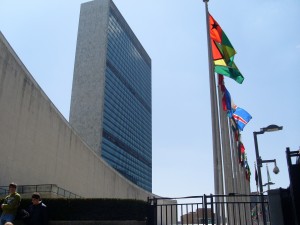
United_Nations_HQ-300x225.jpg


UPDATE (9/27/2013):
Despite heavy opposition from U.S. Senators and civilians, Secretary of State John Kerry signed the controversial United Nations Arms Trade Treaty (ATT) on Sept. 25. The treaty establishes regulations for countries who sell or trade weapons across their borders. Official United Nations documentation would be required for the transaction of all types of weapons, from tanks to small arms.

Kerry and the Obama Administration hope their support will motivate other countries to sign on, but so far only six nations have ratified the treaty. The ATT requires ratification from at least 50 countries to become U.N. policy. China and Russia were among 23 nations who abstained from voting.

Many of the countries who didn’t sign the treaty cited vague language in the document that fails to punish countries who don’t play by the rules.

The new global legislation also threatens the constitutional rights of American citizens.

According to NRA Executive Vice President Wayne LaPierre on NRA News, “The U.N. has consistently refused to recognize the legitimacy of a firearm in any individual citizen’s hands, anywhere in the world, including the United States of America.” LaPierre added, “[The ATT] is nothing more than gun registration by a different name.”

Though Kerry’s signature is a questionable move on the global playing field, international treaties require 2/3 U.S. Senate approval for official ratification. To date, at least 35 of the 100 U.S. Senators have rallied against the ATT, citing the treaty’s infringement of constitutional rights.

Among those opposed, Sen. Bob Corker, R-Tenn., wrote a letter to President Obama, warning him not to take action without senate approval.

Despite the fact that the treaty would make imported firearms unavailable to American consumers, Kerry claims it would actually protect American people.

After signing the document, Kerry said, “This treaty will not diminish anyone’s freedom. In fact, the treaty recognizes the freedom of both individuals and states to obtain, possess, and use arms for legitimate purposes.”

In response to Kerry’s ATT signature, Chris Cox, Executive Director of the NRA-ILA said, “The Obama administration is once again demonstrating its contempt for our fundamental, individual Right to Keep and Bear Arms.”

While it appears treaty ratification is essentially dead in the water, it’s still up to the American people to contact their Senators, and remind them to support their right to bear arms.

Original story below:


Currently there is a frenzy of speculation in the media concerning the Arms Trade Treaty the United Nations is pushing. This is nothing new of course; the United Nations began working on this treaty in 2006. However, delegates are convening this month to “elaborate a legally binding instrument on the highest possible common international standards for the transfer of conventional arms.”

The big change since 2006? Whereas then-President George W. Bush opposed the treaty, President Barack Obama is an ardent supporter of it. Due to this support many, including the Executive Vice President of the NRA Wayne LaPierre and 130 U.S. lawmakers, have spoken out against it saying it would strip Americans of their God given firearm rights guaranteed by the Second Amendment.

Personally, I think the United Nations is a useless organization and I will not vote for President Obama in the upcoming election. Stepping back, however, it’s difficult to cut through what is blatant fear mongering and Washington politics as usual. If we were to believe everything we are being told about this matter, I would expect U.N. blue helmets to be kicking down my door at any moment. Carefully peering out of my bunker though, it appears to be a beautiful sunny day outside with not even an ATF entry team in sight. What gives?

Is it possible perhaps that the NRA is doing what the NRA does best: raising money? As a Life Member of the NRA, I am well aware of the good they do. I have long supported them with my hard-earned blue collar paychecks. But they are a political organization, and everything they say should be taken with a grain of salt. The same can be said for every politician. In the age we live in, none are to be trusted no matter if there’s an “R,” “D” or “I” after the name. Listen to what they say, then verify for yourself. Don’t be anyone’s patsy.

Now, let’s take a brief look at the Arms Trade Treaty itself. This is how the U.N. presents it:

“The global trade in conventional weapons – from warships and battle tanks to fighter jets and machine guns – remains poorly regulated. No set of internationally agreed standards exist to ensure that arms are only transferred for appropriate use.


Many governments have voiced concern about the absence of globally agreed rules for all countries to guide their decisions on arms transfers. That is why they have started negotiating an Arms Trade Treaty.”

​

Basically, they would like to regulate the sale and international transfer of weapons, both large and small. They are doing this to prevent the sale of weapons to groups the international community does not feel should be receiving them. Proponents of the treaty claim experts monitoring the international arms trade have recorded more than 500 violations of U.N. arms embargoes in the past two decades. Of these, only two resulted in trials and convictions. One concerned a Dutch businessman selling components to produce mustard gas to Saddam Hussein’s Iraq. The other concerned two retired Chilean generals, plus seven others, for selling arms to Croatia in 1991.

The problem many have with this treaty is who decides what constitutes “appropriate use.” In many countries, there simply is no appropriate use for firearms and ammunition outside those issued to military and L.E. units. In many others firearms are tightly regulated, with only competition guns or perhaps some hunting models allowed.

The fear is the U.N. — especially with its long track record of failures — would meddle with the rights of American citizens and disrupt the American firearms industry. Many fear the Arms Trade Treaty would be a first step down a very dangerous road that could eventually lead to the disarming of American citizens and the destruction of the U.S. firearms industry. This is especially troubling when you consider the U.N. and the rest of the world give not one whit for the firearm rights of the American citizen.

While the curtailment of U.S. citizens’ firearm rights is certainly a possibility, there is more at stake then just this. The U.S. is the largest arms exporter in the world, and there are very real concerns the Arms Trade Treaty could be utilized to hinder U.S. industry and further damage our economy. Plus, there are very real concerns regarding U.S. foreign policy. The U.S. has long had very close relations with both Israel and Taiwan, and there are concerns the Arms Trade Treaty could be utilized to hinder or halt sales along with the transfer of technology to these two countries in particular. There is also the possibility the U.S. would be hindered in supplying other allies in various places around the world as well. To be frank, there is a lot at stake for the U.S.

Unfortunately for President Obama, the average American firearm owner does not trust him, his administration or his Attorney General. This is especially true with the on-going Fast and Furious scandal and cover-up, which many believe was a False Flag operation with a long-term goal to curtail Americans’ gun rights.

UPDATE (7/30)
: Arms treaty negotiations have failed in the U.N., and according to CBS News, the country to blame — or thank — for the unraveling is the U.S. and the National Rifle Association.
 
Fast and Furious.
Look it up.
The government sanctioned selling of firearms to known criminals.
The A.T.F. pressured gun shops in Arizona to do it.
It took a whistle blower in the operation to uncover it.
Many of the firearms illegally sold have been traced to murders, including that of a border patrol agent.
Yet no prosecutions as of yet.
- No, nor will there ever be.
- It was a program to try to exacerbate the point of guns crossing country borders to be used in crime.
- - Only problem was,....none of them would have been sold without the A.T.F.'s pressuring the dealers to do it.
- - - Gee wiz.....I wonder why they'd do something like that?

See evil, and know it when you see it.
Pure, unadulterated evil. (In the name of doing good) - Sound familiar?