

NEW CC Perspectives on Levels of Conspiracy & Corruption in 2020 Election, CV19 & DS Existence
- Thread starter Solemateleft
- Start date
-
Christian Chat is a moderated online Christian community allowing Christians around the world to fellowship with each other in real time chat via webcam, voice, and text, with the Christian Chat app. You can also start or participate in a Bible-based discussion here in the Christian Chat Forums, where members can also share with each other their own videos, pictures, or favorite Christian music.
If you are a Christian and need encouragement and fellowship, we're here for you! If you are not a Christian but interested in knowing more about Jesus our Lord, you're also welcome! Want to know what the Bible says, and how you can apply it to your life? Join us!
To make new Christian friends now around the world, click here to join Christian Chat.
You are using an out of date browser. It may not display this or other websites correctly.
You should upgrade or use an alternative browser.
You should upgrade or use an alternative browser.
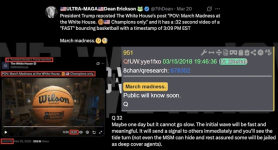
Deal or No Deal....
Typos Matter on the Q Board!!!
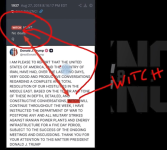
Donald Trump For President ·
Follow
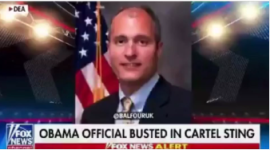
Obama-Era DEA Boss Caught Laundering Millions for Brutal Mexican CartelA high-ranking DEA official from the Obama years has been indicted for allegedly turning on America and helping one of the deadliest cartels flood our streets with poison.
Paul Campo, who served as Deputy Chief of the DEA's Office of Financial Operations, was charged in December 2025 with conspiring to launder around $12 million in drug proceeds for the Jalisco New Generation Cartel (CJNG). This vicious group, labeled a foreign terrorist organization by the U.S., is linked to countless murders and the fentanyl crisis killing Americans daily.
Campo, a 25-year DEA veteran who retired in 2016, stands accused alongside associate Robert Sensi of narco-terrorism, cocaine trafficking conspiracy, providing material support to terrorists, and money laundering. Prosecutors say the pair laundered hundreds of thousands in cash (converted to crypto) and even agreed to facilitate a massive 220-kilogram cocaine deal in New York City worth millions. They discussed sourcing military-grade weapons and explosives for the cartel too.
Campo pleaded not guilty and remains in custody. The sting operation exposed how this insider allegedly used his expertise—gained while supposedly fighting cartels—to betray the country he swore to protect.
This case rips open the ugly truth about corruption in the ranks during the Obama administration. While borders stayed porous and drugs poured in, a top financial ops leader was reportedly cashing in with narco-terrorists. The American people deserve full accountability—no more deep-state cover-ups. Time to drain the swamp for real.
Reality perspective!
For those who lack a grasp for the Strategic Level of this Epic Biblical Warfare between forces for Good vs Evil
M.A. Rothman
𝗧𝗛𝗘 𝗜𝗟𝗟𝗨𝗦𝗜𝗢𝗡 𝗢𝗙 𝗦𝗘𝗖𝗨𝗥𝗜𝗧𝗬 𝗜𝗦 𝗢𝗩𝗘𝗥
Treasury Secretary Scott Bessent just put the Iran war in the clearest terms yet — and every American needs to hear this.
𝘞𝘩𝘢𝘵 𝘸𝘦 𝘩𝘢𝘥 𝘣𝘦𝘧𝘰𝘳𝘦 𝘸𝘢𝘴 𝘵𝘩𝘦 𝘪𝘭𝘭𝘶𝘴𝘪𝘰𝘯 𝘰𝘧 𝘴𝘦𝘤𝘶𝘳𝘪𝘵𝘺.
Give Iran another year or two — just one or two more years — and they would have built out their missile capabilities into a full defensive shield. At that point, 𝗻𝗼𝘁𝗵𝗶𝗻𝗴 𝗰𝗼𝘂𝗹𝗱 𝗵𝗮𝘃𝗲 𝘀𝘁𝗼𝗽𝗽𝗲𝗱 𝘁𝗵𝗲𝗺 𝗳𝗿𝗼𝗺 𝗴𝗲𝘁𝘁𝗶𝗻𝗴 𝗮 𝗻𝘂𝗰𝗹𝗲𝗮𝗿 𝘄𝗲𝗮𝗽𝗼𝗻. Not sanctions. Not diplomacy. Nothing.
The critics calling this reckless have it exactly backwards. 𝗪𝗮𝗶𝘁𝗶𝗻𝗴 𝘄𝗮𝘀 𝘁𝗵𝗲 𝗿𝗲𝗰𝗸𝗹𝗲𝘀𝘀 𝗼𝗽𝘁𝗶𝗼𝗻. Every year of delay was a year Iran spent hardening its position, expanding its proxies, and inching toward the bomb. The "peace" we had wasn't peace — it was a countdown timer dressed up as stability.
President Trump understood something the foreign policy establishment refused to accept: 𝘵𝘩𝘦𝘳𝘦 𝘪𝘴 𝘯𝘰 𝘱𝘳𝘰𝘴𝘱𝘦𝘳𝘪𝘵𝘺 𝘸𝘪𝘵𝘩𝘰𝘶𝘵 𝘴𝘦𝘤𝘶𝘳𝘪𝘵𝘺. He acted. The Iranian regime is being defanged. And the Middle East — for the first time in half a century — has a real chance at lasting peace.
Whether it takes 30 days or 100 days, the world on the other side of this is safer than the world we were living in.
Video link in the first comment.
View attachment 286957
iran has been " 2 weeks away from having a nuke" for over 20 years, but this time they really were close...
o k.


400 kg of enriched Uranium is close. The reason why they've not made a nuke already is the sabotage by Israel including a virus that destroyed the centrifuges needed for enrichment. Mossad assassinated key scientists involved in the program. If Iran had a shred of honesty, they would admit that they are intent on making nuclear weapons. There is no civilian purpose for the uranium that they've enriched.iran has been " 2 weeks away from having a nuke" for over 20 years, but this time they really were close...
o k.
Iran does not have to make a proper nuke. They could pack the highly radioactive material around explosives and detonate it in LA harbour, for example. The harbour would be unusable in effect forever. It's known as a dirty bomb.
In spite of every effort, including the bombing of the facilities, Iran managed to remove the uranium before the attack. 2 weeks, two months or even two years is not the issue. Iran's regime is hell bent on the conquest of the world and will do anything to achieve that aim. They believe it to be their religious duty. You can't reason with people who think death in war is immediate entrance to "heaven".

400 kg of enriched Uranium is close. The reason why they've not made a nuke already is the sabotage by Israel including a virus that destroyed the centrifuges needed for enrichment. Mossad assassinated key scientists involved in the program. If Iran had a shred of honesty, they would admit that they are intent on making nuclear weapons. There is no civilian purpose for the uranium that they've enriched.
Iran does not have to make a proper nuke. They could pack the highly radioactive material around explosives and detonate it in LA harbour, for example. The harbour would be unusable in effect forever. It's known as a dirty bomb.
In spite of every effort, including the bombing of the facilities, Iran managed to remove the uranium before the attack. 2 weeks, two months or even two years is not the issue. Iran's regime is hell bent on the conquest of the world and will do anything to achieve that aim. They believe it to be their religious duty. You can't reason with people who think death in war is immediate entrance to "heaven".
so, we were told last year after the big bombing that their nuclear program had been " totally obliterated".
but, we went back in to " stop them from enriching uraninum"...
so, which one is not true??
because they both cannot be true..
iran has been " 2 weeks away from having a nuke" for over 20 years, but this time they really were close...
o k.
Said from a non-Strategic perspective, a lack of understanding for Global National Security interests, lack of learning from 911, and lack of understanding of Iran's vast irregular warfare capabilities and intentions...so, we were told last year after the big bombing that their nuclear program had been " totally obliterated".
but, we went back in to " stop them from enriching uraninum"...
so, which one is not true??
because they both cannot be true..
Yes! They can BOTH be TRUE!
Operation Midnight Hammer was always an intentional Strategic precursor for Operation Epic Fury - Timing was everything...
In the Aftermath of Operation Midnight Hammer - the US attempted Negotiations with Iran - BUT they PROVED themselves INCAPABLE of relinquishing their pursuit for NUCLEAR Capabilities and UNWILLING to COMPLY to EVER STOP!!!
What part of their five decades of "Death to America" on top of 9-11 DO YOU NOT UNDERSTAND!!!
The DECAPITATION of the Iranian Regime has been PROVEN EFFECTIVE - as the fear of Sleeper Cells within the USA would have been exponentially more had they remained and been given the opportunity to seize the initiative that we simply beat them to the punch!
Iran's threats to national security—primarily referring to U.S. national security, as well as broader regional and international stability—have been multifaceted and persistent for decades. These stem from the Islamic Republic's policies since 1979, including its nuclear ambitions, support for proxy militias, ballistic missile and drone programs, cyber operations, terrorism plots, and efforts to destabilize shipping lanes and allies. U.S. intelligence, law enforcement, and international bodies like the IAEA have documented these as ongoing risks, though assessments of "imminence" have varied, with some viewing them as long-term strategic challenges rather than immediate existential dangers to the U.S. homeland prior to escalations.
1. Nuclear Program and Proliferation Risk
Iran has pursued uranium enrichment far beyond civilian needs, reaching levels close to weapons-grade. Before U.S. and Israeli strikes in 2025–2026, Iran accumulated hundreds of kilograms of uranium enriched to 60% (near the 90% threshold for a bomb), enough potentially for multiple weapons if further processed. The IAEA repeatedly reported undeclared nuclear material and sites, lack of cooperation, and a "breach" of non-proliferation obligations. This raised concerns about a short "breakout" time to produce fissile material and fears of nuclear proliferation triggering a regional arms race. Iran has denied seeking weapons but maintained capabilities that could enable them rapidly. Strikes in June 2025 and later operations significantly damaged enrichment facilities (e.g., Natanz, Fordow), but uncertainties remain about surviving stockpiles and potential covert reconstitution.2. Ballistic Missiles, Drones, and Regional Power Projection
Iran possesses one of the largest ballistic missile arsenals in the Middle East, with ranges covering U.S. forces, Israel, and Gulf allies (up to ~2,000 km demonstrated). It has developed and exported drones (e.g., Shahed-136) used in attacks on shipping, oil infrastructure, and military bases. These capabilities enabled direct and proxy strikes, including over 180 attacks on U.S. positions in 2023–2024 alone. Iran has threatened U.S. warships and bases, and its space-launch technology could theoretically support longer-range systems in the future (though pre-2035 ICBM development was assessed as possible only if pursued aggressively, not imminent). Strikes in 2025–2026 degraded missile production and stockpiles, but remnants and proxies continue posing risks.3. Support for Proxy Militias ("Axis of Resistance")
Iran funds, arms, and directs groups like Hezbollah (Lebanon), Houthis (Yemen), Kataib Hezbollah and other Iraqi Shia militias, Hamas, and Palestinian Islamic Jihad. These proxies have:- Attacked U.S. forces (e.g., 2024 Jordan drone strike killing three Americans; repeated assaults in Iraq/Syria).
- Targeted Israel with rockets and incursions.
- Disrupted global shipping in the Red Sea (Houthis), affecting trade and energy security.
- Conducted attacks on Saudi/UAE oil facilities and Gulf infrastructure.
4. Terrorism, Assassination Plots, and Homeland Threats
The Iranian regime, via the IRGC-Quds Force, has plotted assassinations and kidnappings against U.S. officials (e.g., former officials linked to the 2020 Soleimani strike, including threats to Trump), dissidents, and critics on U.S. soil—often using criminal networks or proxies. The FBI has disrupted multiple plots, including murder-for-hire schemes. Iran has a history of state-sponsored terrorism globally, designated as the leading state sponsor by the U.S. Post-2020 and during escalations, U.S. authorities warned of heightened risks of lone-wolf or inspired attacks in the homeland, though large-scale direct assaults have been thwarted. Iran also targets Jewish and Israeli-linked sites.5. Cyber Attacks and Hybrid Operations
Iranian state-linked actors and hacktivists conduct espionage, disruptive attacks on U.S. critical infrastructure (e.g., networks, OT systems), sanctions evasion, and influence operations. These complement kinetic threats, with low-level DDoS or destructive actions rising during conflicts. The regime procures dual-use technology illicitly to bolster its military and nuclear efforts.6. Threats to Global Energy Security and Allies
Iran has harassed or seized tankers in the Strait of Hormuz, threatened to close it, and enabled proxy attacks on energy infrastructure. This risks oil price spikes and supply disruptions affecting the U.S. and global economy. It also deepens ties with adversaries like Russia (e.g., drones for Ukraine) and China.These threats have driven U.S. policy responses, including sanctions ("maximum pressure"), designations (IRGC as terrorists), and military actions to degrade capabilities. U.S. intelligence has long viewed Iran as a destabilizing actor but assessed it was not actively reconstituting a formal nuclear weapons program post-2003 (while maintaining latency). Escalations in 2025–2026, including strikes killing senior leaders and damaging programs, aimed to neutralize these risks, though Iran vowed retaliation and proxies continued limited operations. The regime's ideology—opposition to the U.S. and Israel—underpins these activities, combined with internal repression that fuels diaspora threats.
Overall, Iran's actions have killed and injured U.S. personnel, raised proliferation fears, and imposed costs on regional stability, though direct homeland attacks remain rare and often disrupted. Assessments evolve with events; post-strike analyses indicate significant degradation but residual asymmetric risks.

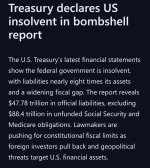
The Treasury just declared the U.S. insolvent. The media missed it | Fortune https://share.google/ecZ97tvNmHDUSXl7j
Interesting article... indeed...The Treasury just declared the U.S. insolvent. The media missed it | Fortune https://share.google/ecZ97tvNmHDUSXl7j

Live X22 Report: Trump Countered [DS] ICE Narrative, Warfare Is Based On Deception, Know Your Enemy, Art Of War
Tuesday, March 24, 2026 19:33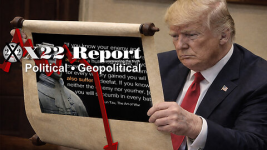
Kinda makes one wonder - why is the media not making a big deal out of this?The Treasury just declared the U.S. insolvent. The media missed it | Fortune https://share.google/ecZ97tvNmHDUSXl7j

Kinda makes one wonder - why is the media not making a big deal out of this?
by the way, a democrat just won a special election in palm beach county, including mar a lago.
over someone back and endorsed by trump.
remember what i said about the deep state dems sweeping back into power in the midterms??


lol, small data point...by the way, a democrat just won a special election in palm beach county, including mar a lago.
over someone back and endorsed by trump.
remember what i said about the deep state dems sweeping back into power in the midterms??
Yep, I remember you being wrong about so many things over the past 5 years... Should we review them again... lol...

Here's Some Perspective:
If the SAVE ACT goes thru - you will be eating some more humble pie...
If the SAVE ACT doesn't go thru - the D's will GET CAUGHT CHEATING during the MID-TERM ELECTIONS...
Either way... If the Filibuster is necessary - The DS Leftist's D Party is TOAST and will NEVER be in POWER again during our lifetimes where it matters in Control of Congress, the White House, or SCOTUS...

Walkin on eggshellsKinda makes one wonder - why is the media not making a big deal out of this?
But if you put some assets like Venezuela oil and silver, and Iranian oil and gas, who knows, perhaps the US can avoid foreclosure, especially if you can put a stop to BRICS offering a gold backed security.
lol, small data point...
Yep, I remember you being wrong about so many things over the past 5 years... Should we review them again... lol...
Here's Some Perspective:
If the SAVE ACT goes thru - you will be eating some more humble pie...
If the SAVE ACT doesn't go thru - the D's will GET CAUGHT CHEATING during the MID-TERM ELECTIONS...
Either way... If the Filibuster is necessary - The DS Leftist's D Party is TOAST and will NEVER be in POWER again during our lifetimes where it matters in Control of Congress, the White House, or SCOTUS...
yes, i have been wrong.
but, when i am wrong, i admit it.
and, i am not being doom and gloom. but, every metric is pointing toward a dem win in the mid-terms, maybe even a landslide.
most trump backed candidates have lost in most elections over the last several months.
that is not a positive trend..
It all depends on "win or lose" this war. If the war is won, IRGC is defeated, and the Save Act is passed, Republicans will have a big win, if those two things do not work out, then it could be catastrophic.yes, i have been wrong.
but, when i am wrong, i admit it.
and, i am not being doom and gloom. but, every metric is pointing toward a dem win in the mid-terms, maybe even a landslide.
most trump backed candidates have lost in most elections over the last several months.
that is not a positive trend..