
Pagan References in Early United States Foundation

  • Thread starter Thread starter Sandor
  • Start date Start date
  • Christian Chat is a moderated online Christian community allowing Christians around the world to fellowship with each other in real time chat via webcam, voice, and text, with the Christian Chat app. You can also start or participate in a Bible-based discussion here in the Christian Chat Forums, where members can also share with each other their own videos, pictures, or favorite Christian music.

    If you are a Christian and need encouragement and fellowship, we're here for you! If you are not a Christian but interested in knowing more about Jesus our Lord, you're also welcome! Want to know what the Bible says, and how you can apply it to your life? Join us!

    To make new Christian friends now around the world, click here to join Christian Chat.
S

Sandor

Guest
Attached is something I wrote and put up at other places.

I was reading something about Narnia and saw someone had commented on pagan, and I thought that weird. Of course, Narnia is a work of fiction and like all other works of fiction of this kind, like Harry Potter, often where the characters use magic, a small number of readers become concerned over whether the story is intended to be some kind of religious statement in favor of magic practices.

I think this is nuts. I don't believe these stories take children's minds from the deep feelings their parents instill in them vis-a-vis their religious worship.

But about this "pagan" thing:

Pagan simply means, "those people out there in the sticks". Most societies have had early pagan practices of some kind, and many still "practice" some kind of pagan ritual, usually very harmless and often covered over with newer practices reflecting the religions we all know in modern times.

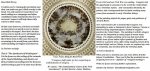
Like many people who saw Rick Perry's ad where he called himself a Christian, I became upset with his gross misunderstanding of our nation's foundation, and the purposeful intention of the United States to not identify itself as tied to a specific religion. So I made the attachment you can see here.

I'm happy to discuss this with anyone interested in this subject.
 

Attachments

  • Perry.jpg
    Perry.jpg
    107.5 KB · Views: 38
I think this is nuts. I don't believe these stories take children's minds from the deep feelings their parents instill in them vis-a-vis their religious worship.


That is why God gave us the word.


Does the Bible support your view?
 
I think it's worth keeping in mind that the Bible itself contains a number of pagan references. Any educated person, and the authors of the Bible were relatively educated simply by virtue of their literacy, may choose to allude to the prevailing mythology and vocabulary without necessarily taking it seriously.

For instance, "hell" is often the Greek hades, but nobody reading the scriptures thought Hades would preside over their souls. References to Babylonian mythology are scattered through the Hebrew scriptures, but nobody thought YHWH was Marduk. The Proverbs personify Wisdom to the extent that later Gnostics even taught that such a being in fact existed. Apotheosis is in fact also a Christian concept, which in my experience is downplayed or simply unknown in Protestant circles. You might enjoy reading this.

I'm trying to say that nothing he painted was particularly provocative from a general Christian perspective. It follows the general trend of borrowing mythologies from the neighborhood to communicate new truths in old forms. When we recognize that Brumidi was an Italian painter who'd worked in the Vatican, this allegorical style makes more sense. Greek and Roman mythological figures are all over European churches, but nobody bats an eyelash.

Keep in mind also that painting mythological figures was more acceptable to some than painting saints, as the former was considered art while the latter was iconography at best or simple idolatry.
 
mori, thank you for your insights.

loveme1, not all fiction needs to be placed against the bible as the standard of its worth. most doesn't and shouldn't. that's why it's called fiction. i don't believe writers should have to think, "Okay . . . I'm writing this detective story that takes place in the 1940's; am I sure this story is in line with the bible?
 
When it comes to 'magic' in fiction, like in most things, i try to have a balanced approach to it. If the story's emphasis is on the magic, on spells, etc.. then i avoid it. Such as Harry Potter. The nature of the story, whether intended to or not, still encourages the use of magic. Some people deny that it has this effect on anyone, but thats just plain denial. Plenty of children have become enamored with the idea of magic, witches etc through the series.
On the other hand, if the magic is more incidental to the story, such as Narnia, or LOTR, i can find this a reasonable balance. Actually the magicians in LOTR, for example, are often among the less popular of the characters.
So you will hear of children carrying wands and painting lightening scars on their faces while reciting 'spells', as in HP, but you don't hear of children grabbing long staves and wearing long white beards pretending to be Gandalf. The magic was not 'taught' and emphasized, just helped carry the story.
 
Well I stand by the Bible, God did not ask us to interpret it to suit the world, but to listen to him.

Jesus is my Saviour, when he died on the cross it was not so we would continue listening to man made lies.
He is our sacrifice, God is willing to forgive us but we must listen to what he is telling us.

Reading the Bible from a worldly man prospective is not going to help anyone, read it from God's prospective.

The word is telling us all we need to know, read the Bible for the reward of eternal life, not for a job promotion.


Actually, much of how the American government works today was based on the writings of William Penn, Quaker and founder of the state of Pennsylvania. Early Quakers were devote Christians who were known and respected for their honesty in all matters of life.
 
When it comes to 'magic' in fiction, like in most things, i try to have a balanced approach to it. If the story's emphasis is on the magic, on spells, etc.. then i avoid it. Such as Harry Potter. The nature of the story, whether intended to or not, still encourages the use of magic. Some people deny that it has this effect on anyone, but thats just plain denial. Plenty of children have become enamored with the idea of magic, witches etc through the series.
On the other hand, if the magic is more incidental to the story, such as Narnia, or LOTR, i can find this a reasonable balance. Actually the magicians in LOTR, for example, are often among the less popular of the characters.
So you will hear of children carrying wands and painting lightening scars on their faces while reciting 'spells', as in HP, but you don't hear of children grabbing long staves and wearing long white beards pretending to be Gandalf. The magic was not 'taught' and emphasized, just helped carry the story.

*tries to imagine herself grabbing a long stave and a fake white beard pretending to be Gandalf* Hmm...I just don't see it. lol Lord of the Rings is pretty awesome...and I do think Gandalf is a pretty cool character!