

Stunts, Extreme Sports, Crazy Stuff
- Thread starter HealthAndHappiness
- Start date
-
Christian Chat is a moderated online Christian community allowing Christians around the world to fellowship with each other in real time chat via webcam, voice, and text, with the Christian Chat app. You can also start or participate in a Bible-based discussion here in the Christian Chat Forums, where members can also share with each other their own videos, pictures, or favorite Christian music.
If you are a Christian and need encouragement and fellowship, we're here for you! If you are not a Christian but interested in knowing more about Jesus our Lord, you're also welcome! Want to know what the Bible says, and how you can apply it to your life? Join us!
To make new Christian friends now around the world, click here to join Christian Chat.
You are using an out of date browser. It may not display this or other websites correctly.
You should upgrade or use an alternative browser.
You should upgrade or use an alternative browser.

@Charlesiii,
Here's what I call a living dinosaur. It's a documentary about Ponco who nursed a young croc back to health and raised him for 20 years. No obligation to watch it. It is an exceptional story and photography of a wild animal interacting with a man.
I can't prove it from the Bible, but hope that Jesus recreates the extinct animals to populate the renewed Earth when that time begins of His reign.
Here's what I call a living dinosaur. It's a documentary about Ponco who nursed a young croc back to health and raised him for 20 years. No obligation to watch it. It is an exceptional story and photography of a wild animal interacting with a man.
I can't prove it from the Bible, but hope that Jesus recreates the extinct animals to populate the renewed Earth when that time begins of His reign.

I won't watch the movie, but appreciate your summary of it!@Charlesiii,
Here's what I call a living dinosaur. It's a documentary about Ponco who nursed a young croc back to health and raised him for 20 years. No obligation to watch it. It is an exceptional story and photography of a wild animal interacting with a man.
I can't prove it from the Bible, but hope that Jesus recreates the extinct animals to populate the renewed Earth when that time begins of His reign.

I won't watch the movie, but appreciate your summary of it!
Poncho is the man who rescued a young American crocodile that was shot in the head. He tended it's wound, nursed it back to health and fed it until it recovered. The crocodile formed what seemed to be an emotional bond to Poncho. For the next twenty years, the fascinating documentary interviews with Poncho and the community the unlikely touching life of this relationship between man and, what I call, a living dinosaur.

I'm sure they'll all come back. The great auk is a pengin species that was just driven to extenction by humans in the 19th century.@Charlesiii,
Here's what I call a living dinosaur. It's a documentary about Ponco who nursed a young croc back to health and raised him for 20 years. No obligation to watch it. It is an exceptional story and photography of a wild animal interacting with a man.
I can't prove it from the Bible, but hope that Jesus recreates the extinct animals to populate the renewed Earth when that time begins of His reign.
And there's going to be new animals that weren't known before, too.
A thing I've wondered is what's going to happen to all the sea creatures, since it's written that there'll no more sea. But I imagine that in the next life, just as animals who were once carnivores will eat grass, saltwater and freshwater animals will swim together.
I've also been given to imagine buildings like the houses we have now, where the structure in itself is an aquarium; all the walls, floors, and ceilings are made of glass, and there're all like a tank of water where fish around swim in, and beneath the floor are structures like coral reefs, and floors of sand.
I've wondered the same thing about the marine life.I'm sure they'll all come back. The great auk is a pengin species that was just driven to extenction by humans in the 19th century.
And there's going to be new animals that weren't known before, too.
A thing I've wondered is what's going to happen to all the sea creatures, since it's written that there'll no more sea. But I imagine that in the next life, just as animals who were once carnivores will eat grass, saltwater and freshwater animals will swim together.
That would be really cool if there would be a bunch of lakes and rivers full of exotic fish, whales and dolphins.
If Jesus makes extinct creatures again, they wouldn't pose a threat to people. The Bible talks about wolves lying down with lambs and children playing with what are today venomous snakes.
Have you ever been to a big aquarium?I've also been given to imagine buildings like the houses we have now, where the structure in itself is an aquarium; all the walls, floors, and ceilings are made of glass, and there're all like a tank of water where fish around swim in, and beneath the floor are structures like coral reefs, and floors of sand.
That's about as close as you can get to that without diving.
I have only faint memories of going to some when I was a lot younger. I also went to sea world for a school feild trip, and saw the orca show.Have you ever been to a big aquarium?
That's about as close as you can get to that without diving.
If you ever get a chance, I recommend it. Sea world would be considered a big aquarium. I faintly recall my awesome Mom taking me to the one in Ohio when I was a little boy.I have only faint memories of going to some when I was a lot younger. I also went to sea world for a school feild trip, and saw the orca show.
The last one I went to was in Baltimore Maryland. That was impressive. We set up a group that signed up with a modest payment we chartered a bus. Nobody had to drive and we got group rates for the aquarium.
If that interests you,
Look into that possibility if you live near a city. Ask the Program Director of Recreation Commission. They might take that idea to heart since they are constantly looking for ideas for community activities.
Oh wow!I have only faint memories of going to some when I was a lot younger. I also went to sea world for a school feild trip, and saw the orca show.
Look what just showed up for the latest short video of one of my subscriptions!
Here's what happens when you mount a giant anti-submarine cannon to a tank..
That's a major weapon!Here's what happens when you mount a giant anti-submarine cannon to a tank..
It's hard to believe that it had the range of 6,000m out of that short barrel.
A fantasy place like this is a good reference for what I imagineI've also been given to imagine buildings like the houses we have now, where the structure in itself is an aquarium; all the walls, floors, and ceilings are made of glass, and there're all like a tank of water where fish around swim in, and beneath the floor are structures like coral reefs, and floors of sand.
The rounds were so heavy, they had to be rocket propelled; they didn't fly purely by kinetic force, like typical ammuntion.That's a major weapon!
It's hard to believe that it had the range of 6,000m out of that short barrel.
You see those holes around the inside of the barrel? Those had to be there to releive the extreme pressure those bombs generated from being fired.
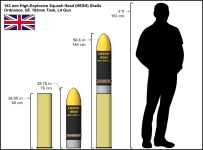
Another giant gun is the 183mm L4, designed for the british FV4005 to completely decomission modern soviet heavy tanks in the early days of the cold war. It unfortunately never saw real combat.



That makes sense now.A fantasy place like this is a good reference for what I imagine
The rounds were so heavy, they had to be rocket propelled; they didn't fly purely by kinetic force, like typical ammuntion.
You see those holes around the inside of the barrel? Those had to be there to releive the extreme pressure those bombs generated from being fired.
Another giant gun is the 183mm L4, designed for the british FV4005 to completely decomission modern soviet heavy tanks in the early days of the cold war. It unfortunately never saw real combat.
View attachment 289844
View attachment 289843
View attachment 289842
View attachment 289845
They were mortars, like rockets.
God just gave me a breakthrough in ideas:
How about physical stadiums of simulated battefeilds, which function as maps for people playing an online war simulation game.
As they're playing in the game, all their activity is percicely being recreated by holograms in the physical site, and anyone there can walk around and spectate the battle as if it were real.
How about physical stadiums of simulated battefeilds, which function as maps for people playing an online war simulation game.
As they're playing in the game, all their activity is percicely being recreated by holograms in the physical site, and anyone there can walk around and spectate the battle as if it were real.
God just gave me a breakthrough in ideas:
How about physical stadiums of simulated battefeilds, which function as maps for people playing an online war simulation game.
As they're playing in the game, all their activity is percicely being recreated by holograms in the physical site, and anyone there can walk around and spectate the battle as if it were real.
I think that might already exist in terms of the same sensors in gloves and body electrodes similar to Wi sports. Then they have goggles and toy rifles with simulated recoil.
Do you know who designed the first battlefield video games?
God just gave me a breakthrough in ideas:
How about physical stadiums of simulated battefeilds, which function as maps for people playing an online war simulation game.
As they're playing in the game, all their activity is percicely being recreated by holograms in the physical site, and anyone there can walk around and spectate the battle as if it were real.
I asked because it might be interesting to know.
I was surprised when I learned that the US military commissioned war games to help their infantry aim at their targets. Most soldiers were missing on purpose until they became field hardened. They got new recruits after basic training to be more inclined to actually kill the opposition after completing video game training.
This took off in the civilian market, but had military roots.
Your specific idea about a stadium battlefield might just be a new idea with that format.
The closest thing I'm aware of is SCA festivals and competitions like The Arnolds where multiple martial arts compete.
Not further more than 'Electronic Arts' and 'Digital Illisions CE', and I haven't looked further into where those companies sprang from.Do you know who designed the first battlefield video games?
Forgive me, I go to bed without telling

That sounds like a reasonably effective way at training soldiers. Hearing the circumstances on real-life battleilds make it out to be a total nightmare. While someone's giving an artillery barrage, there's someone receiving that artillery barrage. There's no assurance of life at any second; and there are gruesome deaths present as much as swift ones.I asked because it might be interesting to know.
I was surprised when I learned that the US military commissioned war games to help their infantry aim at their targets. Most soldiers were missing on purpose until they became field hardened. They got new recruits after basic training to be more inclined to actually kill the opposition after completing video game training.
This took off in the civilian market, but had military roots.
Your specific idea about a stadium battlefield might just be a new idea with that format.
The closest thing I'm aware of is SCA festivals and competitions like The Arnolds where multiple martial arts compete.
A man sees the warfare with his eyes, senses what could happen to his body through them and nopes out. I think video game training is less about inclining to kill, and more about preparing for what's about to be faced. Suprise grenades, landmines, and geurilla ambushes. We had to read 'The things they carried' in high school, a vivid description of the horrors draftees faced in veitnam.
I feel civilian war video games don't hold much of a candle to that experince, in fact it's a little romanticised because of all the points and means to respawn, and all the other magical video game logic. Less adrenneline and fearing for your life, more frustration that you're not winning.
The way I see my idea is: The battlefeilds in the game are real vast open places you can physically visit in real life. When random players across the world are running the game on their computers, and they queue up for a match, There are projectors in those places which direcly project everything that's happening in the game onto those real-life places. Anyone in those places can harmlessly observe how the battle is going in that arena as if they were in the middle of it, but the random players playing around the world don't see the spectators, they just see their game.
Not further more than 'Electronic Arts' and 'Digital Illisions CE', and I haven't looked further into where those companies sprang from.
Forgive me, I go to bed without telling
That sounds like a reasonably effective way at training soldiers. Hearing the circumstances on real-life battleilds make it out to be a total nightmare. While someone's giving an artillery barrage, there's someone receiving that artillery barrage. There's no assurance of life at any second; and there are gruesome deaths present as much as swift ones.
A man sees the warfare with his eyes, senses what could happen to his body through them and nopes out. I think video game training is less about inclining to kill, and more about preparing for what's about to be faced. Suprise grenades, landmines, and geurilla ambushes. We had to read 'The things they carried' in high school, a vivid description of the horrors draftees faced in veitnam.
I feel civilian war video games don't hold much of a candle to that experince, in fact it's a little romanticised because of all the points and means to respawn, and all the other magical video game logic. Less adrenneline and fearing for your life, more frustration that you're not winning.
The way I see my idea is: The battlefeilds in the game are real vast open places you can physically visit in real life. When random players across the world are running the game on their computers, and they queue up for a match, There are projectors in those places which direcly project everything that's happening in the game onto those real-life places. Anyone in those places can harmlessly observe how the battle is going in that arena as if they were in the middle of it, but the random players playing around the world don't see the spectators, they just see their game.
Very well put!