

In ancient Rome the "centurion" meant "captain of 100", and the Roman centurion was captain over 100 foot soldiers in a legion. The centurion was loyal and courageous, beginning as a soldier in the army and working their way up the ranks. They were noticed by the general for their skill and courage in battle, and were made officers.
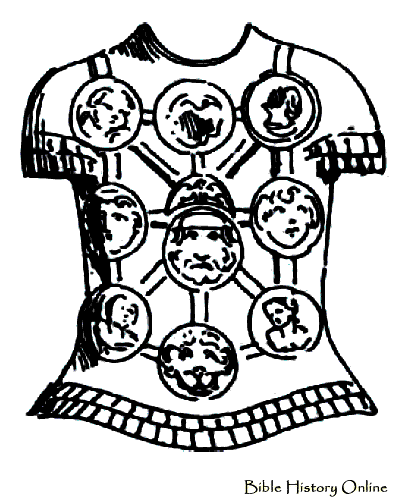

Cuirass Of A Roman Centurion Ornamented with 9 silver phalerae (medallions or acts of bravery)[TABLE="width: 80%"]
[TR]
[TD]Heart Message It's not Easy to Shake a Centurion
[/TR]
[/TABLE]
The Roman Army
The Army of Rome consisted of three types of soldiers: The Praetorian Guard (Caesar's bodyguard), The Legionaries (infantry soldiers and officers made up of citizens), and The Auxiliaries (non-citizen troops).
The Centurion
The backbone of the Roman army were the centurions. The centurions were legionaries and they were clearly noticed because they wore a special helmet, and a more ornate harness of much better quality. They carried a short vinewood staff as a symbol of rank. They worked their way up the ranks as soldiers, and were promoted for their dedication and courage. They were the veteran soldiers who commanded 100 men each, within a legion of 6,000. There were thus 60 centuries in a legion, each under the command of a centurion. During the time of Augustus there were 28 legions.
The centurion received pay that amounted to more than 20 times the ordinary soldiers pay, about 5,000 denarii per year. There were actually five senior centurions in a legion who received 10,000 denarii per year, and the chief centurion (the first javelin) received 20,000 denarii in pay annually. The common soldier received around 200-300 denarii per year.
During the time of Jesus the headquarters of the Roman army in Judea was located at Caesarea, on the Mediterranean coast.
Centurion in the Bible Encyclopedia - ISBE
sen-tu'-ri-un: As the name implies, hekatontarches or hekatontarchos, kenturion, Latin centurio, was the commander of a hundred men, more or less, in a Roman legion. Matthew and Luke use the Greek word while Mark prefers the Latin form, as he does in the case of other words, seeing that he wrote primarily for Roman readers. The number of centurions in a legion was 60, that being at all epochs the number of centuries, although the number varied in the cohort or speira. The ordinary duties of the centurion were to drill his men, inspect their arms, food and clothing, and to command them in the camp and in the field. Centurions were sometimes employed on detached service the conditions of which in the provinces are somewhat obscure. Men like Cornelius and Julius (Acts 10:1; 27:1) may have been separated from the legion to which they properly belonged for the discharge of special duties. They and other centurions mentioned in the Gospels and the Acts (Mt 8:5; Mk 15:39, 44, 45; Lk 23:47) are represented by the sacred writers in a favorable light. Read Full Article
sen-tu'-ri-un: As the name implies, hekatontarches or hekatontarchos, kenturion, Latin centurio, was the commander of a hundred men, more or less, in a Roman legion. Matthew and Luke use the Greek word while Mark prefers the Latin form, as he does in the case of other words, seeing that he wrote primarily for Roman readers. The number of centurions in a legion was 60, that being at all epochs the number of centuries, although the number varied in the cohort or speira. The ordinary duties of the centurion were to drill his men, inspect their arms, food and clothing, and to command them in the camp and in the field. Centurions were sometimes employed on detached service the conditions of which in the provinces are somewhat obscure. Men like Cornelius and Julius (Acts 10:1; 27:1) may have been separated from the legion to which they properly belonged for the discharge of special duties. They and other centurions mentioned in the Gospels and the Acts (Mt 8:5; Mk 15:39, 44, 45; Lk 23:47) are represented by the sacred writers in a favorable light. Read Full Article
Centurion in Easton's Bible Dictionary
A Roman officer in command of a hundred men (Mark 15:39, 44, 45). Cornelius, the first Gentile convert, was a centurion (Acts 10:1, 22). Other centurions are mentioned in Matt. 8:5, 8, 13; Luke 7:2, 6; Acts 21:32; 22:25, 26; 23:17, 23; 24:23; 27:1, 6, 11, 31, 43; 28:16. A centurion watched the crucifixion of our Lord (Matt. 27:54; Luke 23:47), and when he saw the wonders attending it, exclaimed, "Truly this man was the Son of God." "The centurions mentioned in the New Testament are uniformly spoken of in terms of praise, whether in the Gospels or in the Acts. It is interesting to compare this with the statement of Polybius (vi. 24), that the centurions were chosen by merit, and so were men remarkable not so much for their daring courage as for their deliberation, constancy, and strength of mind.", Dr. Maclear's N. T. Hist. Read Full Article
A Roman officer in command of a hundred men (Mark 15:39, 44, 45). Cornelius, the first Gentile convert, was a centurion (Acts 10:1, 22). Other centurions are mentioned in Matt. 8:5, 8, 13; Luke 7:2, 6; Acts 21:32; 22:25, 26; 23:17, 23; 24:23; 27:1, 6, 11, 31, 43; 28:16. A centurion watched the crucifixion of our Lord (Matt. 27:54; Luke 23:47), and when he saw the wonders attending it, exclaimed, "Truly this man was the Son of God." "The centurions mentioned in the New Testament are uniformly spoken of in terms of praise, whether in the Gospels or in the Acts. It is interesting to compare this with the statement of Polybius (vi. 24), that the centurions were chosen by merit, and so were men remarkable not so much for their daring courage as for their deliberation, constancy, and strength of mind.", Dr. Maclear's N. T. Hist. Read Full Article
Biblical Definition of Centurion in Fausset's Bible Dictionary
It is a propriety in the New Testament that centurions are so often favorably noticed. Good conduct was generally the cause of their promotion to the command of a century (properly 100 men). Truthful straightforwardness would make them open to conviction. For instance, the one whose faith Jesus so commends in Matthew 8; Cornelius, whom Peter was by vision sent to, and who is described as "devout, fearing God with all his house, giving much alms to the people, and praying to God always" (Acts 10); Julius, the centurion of Augustus' band, who entreated Paul courteously and saved his life when threatened by the soldiers (Acts 27:1; Acts 27:3-42; Acts 27:43). In Acts 24:23 translate "the centurion," namely, the commander of the horse who had conveyed Paul to Caesarea after the other of the two centurions had come back with the infantry (compare Acts 23:23; Acts 23:32). The centurion at the Lord's crucifixion uttered the testimony so remarkable from a Gentile: "certainly this was a righteous man"; Luke's explanation (Luke 23:47) of what a Gentile would mean by saying, "Truly this was the Son of God" (Matthew 27:54). Read Full Article
It is a propriety in the New Testament that centurions are so often favorably noticed. Good conduct was generally the cause of their promotion to the command of a century (properly 100 men). Truthful straightforwardness would make them open to conviction. For instance, the one whose faith Jesus so commends in Matthew 8; Cornelius, whom Peter was by vision sent to, and who is described as "devout, fearing God with all his house, giving much alms to the people, and praying to God always" (Acts 10); Julius, the centurion of Augustus' band, who entreated Paul courteously and saved his life when threatened by the soldiers (Acts 27:1; Acts 27:3-42; Acts 27:43). In Acts 24:23 translate "the centurion," namely, the commander of the horse who had conveyed Paul to Caesarea after the other of the two centurions had come back with the infantry (compare Acts 23:23; Acts 23:32). The centurion at the Lord's crucifixion uttered the testimony so remarkable from a Gentile: "certainly this was a righteous man"; Luke's explanation (Luke 23:47) of what a Gentile would mean by saying, "Truly this was the Son of God" (Matthew 27:54). Read Full Article
Roman Army in Smith's Bible Dictionary
The Roman army was divided into legions, the number of which varied considerably (from 3000 to 6000), each under six tribuni ("chief captains,")
Ac 21:31 who commanded by turns. The legion was subdivided into ten cohorts ("band,") Ac 10:1 the cohort into three maniples, and the maniple into two centuries, containing originally 100 men, as the name implies, but subsequently from 50 to 100 men, according to the strength of the legion. There were thus 60 centuries in a legion, each under the command of a centurion. Ac 10:1,22; Mt 8:5; 27:54 In addition to the legionary cohorts, independent cohorts of volunteers served under the Roman standards. One of these cohorts was named the Italian, Ac 10:1 as consisting of volunteers from Italy. The headquarters of the Roman forces in Judea were at Caesarea. Read Full Article
The Roman army was divided into legions, the number of which varied considerably (from 3000 to 6000), each under six tribuni ("chief captains,")
Ac 21:31 who commanded by turns. The legion was subdivided into ten cohorts ("band,") Ac 10:1 the cohort into three maniples, and the maniple into two centuries, containing originally 100 men, as the name implies, but subsequently from 50 to 100 men, according to the strength of the legion. There were thus 60 centuries in a legion, each under the command of a centurion. Ac 10:1,22; Mt 8:5; 27:54 In addition to the legionary cohorts, independent cohorts of volunteers served under the Roman standards. One of these cohorts was named the Italian, Ac 10:1 as consisting of volunteers from Italy. The headquarters of the Roman forces in Judea were at Caesarea. Read Full Article
Also See:
Cuirass Of A Roman Centurion Ornamented with 9 silver phalerae (medallions or acts of bravery)
[TR]
[TD]Heart Message It's not Easy to Shake a Centurion
And when Jesus had cried out again in a loud voice, he gave up his spirit. At that moment the curtain of the temple was torn in two from top to bottom. The earth shook and the rocks split. The tombs broke open and the bodies of many holy people who had died were raised to life. They came out of the tombs, and after Jesus' resurrection they went into the holy city and appeared to many people. When the centurion and those with him who were guarding Jesus saw the earthquake and all that had happened, they were terrified, and exclaimed, "Surely he was the Son of God!" Matthew 28:50-54
[/TD]
[/TR]
[/TABLE]