Traditions of Men

  • Christian Chat is a moderated online Christian community allowing Christians around the world to fellowship with each other in real time chat via webcam, voice, and text, with the Christian Chat app. You can also start or participate in a Bible-based discussion here in the Christian Chat Forums, where members can also share with each other their own videos, pictures, or favorite Christian music.

    If you are a Christian and need encouragement and fellowship, we're here for you! If you are not a Christian but interested in knowing more about Jesus our Lord, you're also welcome! Want to know what the Bible says, and how you can apply it to your life? Join us!

    To make new Christian friends now around the world, click here to join Christian Chat.
Thank you. That makes sense

What about making the sign of the cross, making prostrations, hierarchies things that aren't in the scripture but are defended by oral traditions or apostolic successions.

 
Yeah, what about the tradtion of smacking lips with cement figures, and other religions books, and big daddy's gold ring?
 
Baptising a child? A Tradition.

bussantabautizos170g.jpg


bautizo-14680_406x226.jpg


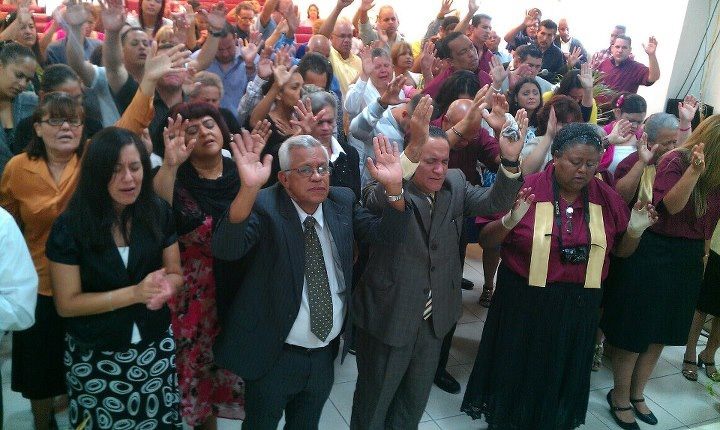
The way people ought to be dressed on Sundays, wearing a tie, a suit or the female fashion? A tradition.

pastores_samoa.jpg


cuidando-nuestro-atavio-21.jpg


pentecostales-puerto-rico-fajardo.jpg

That is a culture in Hawaii so look it up to understand not every culture is Western(Anglo Saxon/European).
 
The real Peter didnt have a gold ring

Acts 3:6 Then Peter said, Silver and gold have I none;
but such as (like real power) I have give I thee:
In the name of Jesus Christ of Nazareth rise up and walk.

Peter was always telling folks to rise up and walk (whether through miraculous thing or just plain telling folks not to be kissing the dirt before him).

These other Peter's chair pushers all want folks to bow down and kiss their gold stuff

Peter wasnt like that either

Acts 10:25
And as Peter was coming in,
Cornelius met him, and fell down at his feet, and worshipped
him.
But Peter took him up, saying,(Dude) Stand up; I myself also am a man.

But what if he were an angel?

Even the angels were cool

Rev 22:8
And I John saw these things, and heard them.
And when I had heard and seen,
I fell down to worship before the feet of the angel which shewed me these things.

Rev 22:9
Then saith he unto me, (dude)
See thou do it
not: for I am thy fellowservant,
and of thy brethren the prophets,
and of them which keep the sayings of this book: worship God.

Even the tradition of dead folks supposedly healing living folks moreso then living ones do. I dont even know how that gets called in, but it seems like someone must call in a miracle (in whosever name was called upon) and from some town (or remote village) in the middle of nowhere where a team of vatican invesitigators seek out the validity of these invisible miracle workers.

That seems to be a tradition in certain sects, isnt it?


Admitting doubt is a great sign of faith. Belonging to Jesus is not a simple task. It is exhausting and takes full dedication.
He was/is fully dedicated. I don't think he's exhausted.
 
Thanks for the reply. I used baptism to make a point, bad example.

Ive seen some liturgical worship recently and people call that in the same sense as traditions of men.
Ah! Gotcha. Been a while since I could go to church, so I forget how drill-like it can get. I knew I was missing something. :D
 
Jesus said this about following him:

Matt 11.30:
For My yoke is [SUP][a][/SUP]easy and My burden is light.”

If you are exhausted in your walk, then it means you are working for God and not working with him.

He was/is fully dedicated. I don't think he's exhausted.

If you you think Jesus' life, ministry, crucification was or is easy you are mistaken. As King of both heaven and earth it is His job to bring the two into one. Defeating sin once and for all.....far from easy.

Ill tell you some prophetic secrets that you' be wise to believe. Sin can not be destroyed by ignoring it, but only by exposing it. The written "Word" or the bible is a double edged sword. It is meant to confuse the weak and give a false sense of power to the Devil. The bible is pure prophesy and within the scriptures are guidlines on how to defeat evil, and its by loving the Truth and considering all reason and correction

"Live by the sword, die by the sword".

The devil is being baited by carefully worded contradictions. The weak in Christ are slaves to different doctorines because it takes REAL emotional work to break down the barriers needed to even begin to understand the Truth. Jesus Christ is smarter than Satan as He will soon show. Those of you who understand will help to defeat sin as layed out in the Book of Revelation. Those who are weak will be saved and those who do evil will be exposed, to either the baptism of repentance or eternal damnation. All will have the chance to choose. Do not fear death, brothers and sisters for that is the foothold of the devil. Only a mustard seed of faith is needed to secure eternal life nothing can take away Christs promise., but dont think it will come easy or at no cost. The CHANCE to be saved from sin into eternal life is a free Gift from God, but getting there, requires more. Faith must be proven to God. So get to work! Peace.
 
If you you think Jesus' life, ministry, crucification was or is easy you are mistaken. As King of both heaven and earth it is His job to bring the two into one. Defeating sin once and for all.....far from easy.

Ill tell you some prophetic secrets that you' be wise to believe. Sin can not be destroyed by ignoring it, but only by exposing it. The written "Word" or the bible is a double edged sword. It is meant to confuse the weak and give a false sense of power to the Devil. The bible is pure prophesy and within the scriptures are guidlines on how to defeat evil, and its by loving the Truth and considering all reason and correction

"Live by the sword, die by the sword".

The devil is being baited by carefully worded contradictions. The weak in Christ are slaves to different doctorines because it takes REAL emotional work to break down the barriers needed to even begin to understand the Truth. Jesus Christ is smarter than Satan as He will soon show. Those of you who understand will help to defeat sin as layed out in the Book of Revelation. Those who are weak will be saved and those who do evil will be exposed, to either the baptism of repentance or eternal damnation. All will have the chance to choose. Do not fear death, brothers and sisters for that is the foothold of the devil. Only a mustard seed of faith is needed to secure eternal life nothing can take away Christs promise., but dont think it will come easy or at no cost. The CHANCE to be saved from sin into eternal life is a free Gift from God, but getting there, requires more. Faith must be proven to God. So get to work! Peace.

Who was talking about Jesus destiny? I just brought to your remembrance that Jesus said about following him

Be careful wiht your "prophetic secrets" They are know by most who study the word.
 
"All the ways of a man are clean in his own eyes; but the LORD weigheth the spirits." Proverbs 16:2
 
Jesus said this about following him:

Matt 11.30:
For My yoke is [SUP][a][/SUP]easy and My burden is light.”

If you are exhausted in your walk, then it means you are working for God and not working with him.

"All the ways of a man are clean in his own eyes; but the LORD weigheth the spirits." Proverbs 16:2

This Proverb was fullfilled with Christs 1st coming. The problem today is many Christians lack the courage to stand for what is right. Often admiting their own faults while withholding others' due to fear.
 
Did not Paul teach all young pastors to follow the (traditions) that have been laid out by the apostles? Some traditions are biblical...some are not so biblical......I suppose at the end of the day if the follwoing take place then it is wrong...

1. Whne the traditions of men become the (laws) of God
2. When the traditions of men corrupt the word of God
3. When the traditions of me usurp the word of God

Etc.
 
One aspect seemingly not addressed in the above, is the meaning of "tradition"

Strongs concordance clearly states that "paradosis" means " a handing down" - when Paul refers to "tradition" he is not just referring to established ritual, the implication of most of the posts above - but the fundamental mechanism by which faith was passed on from the apostles.

Many modern christian denominations seem to have historical amnesia, the presumption that Jesus handed a bible as the basis for the faith.

He did not. He gave us apostles, nowhere did he say "write this" he said "do this" as the new covenant, and few of the apostles wrote anything we have today.

Indeed early christianity handed on "tradition" the faith "by word of mouth and letter" as Paul states. The new testament was some centuries in the making, indeed books were hand written VERY expensive, and the scripture was used in liturgy, not as the prime vehicle for christians to learn their faith.

Only the advent of the printing press, and the wages of modern society increasing has allowed "ordinary people" to own a bible and study it , which is a comparatively recent phenomenon. And only at that time did the battle cry of the reformation "sola scriptura" become even possible.

For that reason it is not surprising that the bible itself says "the pillar and foundation of truth is the church" NOT the bible. The essential handing on of faith, by liturgy and word of mouth, the point is the MEANING of scripture was passed on as well as the substance, the Canon decided because it was consistent with the understood meaning of scripture. Many books rejected because they did not line up with the belief set of the councils. Clearly inspired decisions, since the bible used today was decided way back then in those councils..

So tradition actually means "handing down" the basis of the faith, not just the gospels , but also the meaning.

That is why it is important to study what the early christians thought it meant, because for example from Polycarp, Ireanaus, Justin Martyr and so on all believed in the "real presence in the eucharist" None of them in millenia said it was just "spiritual" or "symbolic". They all refer to flesh and blood, with reverence.

So tradition is context in which to understand the bible - the handing down of meaning not just words.

Without tradition, and the (biblically and logically unsupportable) dogma of "sola scriptura" people are free to decide endless combinations of different interpretations, which is the reason protestantism has fragmented into 10000 pieces. Luther despaired of this monster he created at the end of his life, saying every milkmaid now claimed the right to their own doctrine and interpretation. He opened Pandoras box, which became impossible to close.

So tradition is the answer to the questions of faith. What did the apostles think it meant - not just what it says. And that needs reading in the context of history. Why were the disciples at capernaum so upset they all left? because jewish tradition said that eating flesh and blood was wrong, and Jesus refused to say "its OK guys, it is only a symbol, an allegory" - he simply asked Peter whether he would go too?

So tradition is needed for understanding scripture.


.
 
Did not Paul teach all young pastors to follow the (traditions) that have been laid out by the apostles? Some traditions are biblical...some are not so biblical......I suppose at the end of the day if the following take place then it is wrong...

1. When the traditions of men become the (laws) of God
2. When the traditions of men corrupt the word of God
3. When the traditions of me usurp the word of God

Etc.

Those 3 points you mentioned reminded me well those traditions of the RCC. Never in my life I knew the amount of things those guys believed and followed, according to their "holy" traditions, and no doubt, at least for me, many usurped God's, particularly in the area of IDOLATRY, their ways to interpret what it is written in the Scripture, to make their "laws".
 
Those 3 points you mentioned reminded me well those traditions of the RCC. Never in my life I knew the amount of things those guys believed and followed, according to their "holy" traditions, and no doubt, at least for me, many usurped God's, particularly in the area of IDOLATRY, their ways to interpret what it is written in the Scripture, to make their "laws".

Sad, you never understood what RCC actually believes before reject it or speak out against it. It certainly does not believe in Idolatry, much as its enemies (most of whom are illinformed, some are actually malicious) present false witness against it. If you want to know what it actually believes , read the catechism and discover idolatry has no place in it.

As a mainstream protestant, turned evangelical, ultimately became RCC because of study of history, I can only conclude much of the criticism of RCC stems from the inability of protestants to agree on ANYTHING ELSE at all doctrinally, so instead they unite on the only thing they can - which is attack on RCC. But being against something is not the basis for any proper creed, despite the feeling of unity in attacking something else.
 
Perhaps! Perhaps!

But I have been there [video=youtube;nR8f22NAOCY]https://www.youtube.com/watch?feature=player_detailpage&v=nR8f22NAOCY[/video]


and I still see what they do, what they "understand" and what they've added to the things the Bible teaches (their Catechism) and I'm spending a couple of months with a man who is highly involved in something they called "an apostolate" in that church and, the more I hear his teachings, the more I know I will not worship idols neither what they believe.
 
Last edited:
Perhaps! Perhaps!


and I still see what they do, what they "understand" and what they've added to the things the Bible teaches (their Catechism) and I'm spending a couple of months with a man who is highly involved in something they called "an apostolate" in that church and, the more I hear his teachings, the more I know I will not worship idols neither what they believe.

"they" do not worship idols either. So we are in agreement on that.

And as for adding to the bible, read my post on tradition. The "pillar and foundation of truth" is the church " (notice the bible does not say the pillar of truth is the bible, nor claim it contains "all truth" - where in the bible does it say it has to be in the bible to be true?). "tradition" is how the faith was handed down from the earliest christians in meaning not just the scripture The new testament only came later

.
 
Last edited:
One aspect seemingly not addressed in the above, is the meaning of "tradition"

Strongs concordance clearly states that "paradosis" means " a handing down" - when Paul refers to "tradition" he is not just referring to established ritual, the implication of most of the posts above - but the fundamental mechanism by which faith was passed on from the apostles.

The Scriptures ARE the traditions handed down. All else is unprovable fabrication. We stand firm on what the Apostles taught. If anything is not in the Scriptures it is not sound tradition. It is the additions of men whose histories if you read them are as unlike those of the Apostles as it is possible to be.


Many modern christian denominations seem to have historical amnesia, the presumption that Jesus handed a bible as the basis for the faith.

But basically He did. For He gave to the Apostles the unique gift of receiving and understanding 'all truth'. There are no grounds for thinking that that gift was passed on apart from the false claims of men who seek to glorify their own position.

He did not. He gave us apostles, nowhere did he say "write this" he said "do this" as the new covenant, and few of the apostles wrote anything we have today.

Few was enough. Matthew and John wrote their Gospels, Peter and Paul were behind Mark and Luke. Are you denying that He told them to pass on what He had taught them? and that the only safe way of doing so was by writing it down? Otherwise what was passed on would become distorted more and more as sinful men started to proclaim their own ideas, and persecuted those who disagreed, a true picture of what did happen..

And they all appealed to Scripture to support their ideas.

Indeed when the church at Rome tried to assert its authority it was firmly put down, and reminded that it was a junior church.

Indeed early christianity handed on "tradition" the faith "by word of mouth and letter" as Paul states. The new testament was some centuries in the making, indeed books were hand written VERY expensive, and the scripture was used in liturgy, not as the prime vehicle for christians to learn their faith.

And what use is word of mouth once the speakers are dead and their words cannot be verified? It was what was written down that was important. That was why so many forgeries arose.

The New Testament was not hundreds of years in the making. All the books in it were written in 1st century AD and the churches knew who had written them almost all of them from the start, and accepted them as Scripture (e,g. 2 Pet 3.16). The four Gospels, Acts, Paul's letters, Peter, John and Jude were acknowledged by all immediately and constantly cited as authorities. A few of the minor books were simply not circulated, but they were accepted by those to whom they had been written. The only question that later arose was that some to whom they were unknown had to be proved as of apostolic authorship, demonstrating that the early church looked to Scripture as the final authority..

Books were expensive, as with the Torah among the Jews, but they were available for reading in the churches. And as the Jews did they would learn them by heart. Of course it was the prime basis for their understanding of truth. They were constantly appealed to by writers. They seemingly did not find it difficult to consult them. Your church as usual exaggerates the difficulties.


Only the advent of the printing press, and the wages of modern society increasing has allowed "ordinary people" to own a bible and study it , which is a comparatively recent phenomenon. And only at that time did the battle cry of the reformation "sola scriptura" become even possible.

whilst the Roman Catholic church did its utmost to prevent the Scriptures being available and being read, burning them and murdering those who dared to produce them..

In view of the reliance on Scripture of the early fathers it is simply ABSURD to suggest that sola Scriptura had not arisen. Without its later Latin title of course. The Jews had relied on Scripture for hundreds of years before New Testament days without the printing press. One is reminded of what Jesus said to the Scribes, 'you blind fools'.
 
The Scriptures ARE the traditions handed down. All else is unprovable fabrication. We stand firm on what the Apostles taught. If anything is not in the Scriptures it is not sound tradition. It is the additions of men whose histories if you read them are as unlike those of the Apostles as it is possible to be.


But basically He did. For He gave to the Apostles the unique gift of receiving and understanding 'all truth'. There are no grounds for thinking that that gift was passed on apart from the false claims of men who seek to glorify their own position.


Few was enough. Matthew and John wrote their Gospels, Peter and Paul were behind Mark and Luke. Are you denying that He told them to pass on what He had taught them? and that the only safe way of doing so was by writing it down? Otherwise what was passed on would become distorted more and more as sinful men started to proclaim their own ideas, and persecuted those who disagreed, a true picture of what did happen..

And they all appealed to Scripture to support their ideas.

Indeed when the church at Rome tried to assert its authority it was firmly put down, and reminded that it was a junior church.


And what use is word of mouth once the speakers are dead and their words cannot be verified? It was what was written down that was important. That was why so many forgeries arose.

The New Testament was not hundreds of years in the making. All the books in it were written in 1st century AD and the churches knew who had written them almost all of them from the start, and accepted them as Scripture (e,g. 2 Pet 3.16). The four Gospels, Acts, Paul's letters, Peter, John and Jude were acknowledged by all immediately and constantly cited as authorities. A few of the minor books were simply not circulated, but they were accepted by those to whom they had been written. The only question that later arose was that some to whom they were unknown had to be proved as of apostolic authorship, demonstrating that the early church looked to Scripture as the final authority..

Books were expensive, as with the Torah among the Jews, but they were available for reading in the churches. And as the Jews did they would learn them by heart. Of course it was the prime basis for their understanding of truth. They were constantly appealed to by writers. They seemingly did not find it difficult to consult them. Your church as usual exaggerates the difficulties.


whilst the Roman Catholic church did its utmost to prevent the Scriptures being available and being read, burning them and murdering those who dared to produce them..

In view of the reliance on Scripture of the early fathers it is simply ABSURD to suggest that sola Scriptura had not arisen. Without its later Latin title of course. The Jews had relied on Scripture for hundreds of years before New Testament days without the printing press. One is reminded of what Jesus said to the Scribes, 'you blind fools'.


All bunk. Study history. How meaning was passed on, eg real presence, not spiritual, not symbolic, because nowhere does tradition say that, only those who post reformation sought to sever scripture from its own history. There were many books in circulation, the councils decided which were inspired and which were not on the basis of what those councils believed was the truth, the pillar of truth was the church, and the truth passed on as Paul said by word of mouth, not least because for a couple of centuries Christianity was persecuted, and scriptures were burned when found. As Luther said, you are endebted to the catholic councils for the New Testament you now have.

Sola scriptura is not historical, biblical or logical.