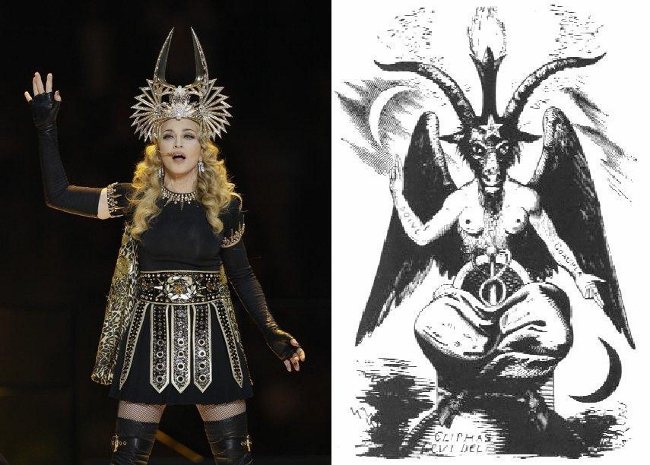
“The Assassinations of King Philip IV and Pope Clement V by The Blood Order of the Bafomet”
This account is taken from a paper presented to Le Société Pour la Recherche Historique in Paris in 1933. The author’s identity is unknown. (Translated from the French in 1954)
The first assassinations committed by the Blood Order of the Bafomet were those of King Philip IV of France and Pope Clement V. These were de l’ordre, meaning assignments originating within the Order. In this case, the Grand Hassan of the Hamburg Bafomerium dictated the deaths in revenge for the arrests and executions of the Knights Templar on October 13, 1307, known to history as The Great Purge of the Knights Templar. The Great Purge had been ordered by the king and sanctioned by the pope out of fear of the growing power and influence of the Knights Templar.
The Eighteenth Century historian Jean-Paul Gourges wrote, in a private letter, that the assassinations of both men were ordered during the Bafometters’ formative ceremony in Magdeburg, Germany, on January 14, 1308. The six-year gap between this date and the year in which the men were assassinated has never been explained, but it was perhaps due to the time needed for the Order to reorganize and re-establish itself after The Great Purge.
Although little is known of the pope’s assassination, details of King Philip IV’s assassination have been reported by those who claim to have seen an “assassination report” submitted by the man assigned to carry it out, a member of the Marseilles Bafomerium. According to a contemporary source, an undated letter sent from the Vizier of that Bafomerium, a Jew known as Silas Montevert, to a woman named Madame Claire LeBourger—probably the Maaj, or magician, of that Bafomerium—indicated that the assassination would take place during an upcoming hunting trip.
At the time, the Duke of Bourgogne maintained a luxurious hunting lodge at Roquemaure-sur-Rhône. He invited the king and a number of other noblemen to the lodge for an extended hunting trip. The king’s entourage arrived by coach on the evening of the 17th of November, 1314. The king, weary from the long ride, ate a light supper and retired early. Someone had passed the details of his arrival and stay at the lodge to the Hassan (leader) of the Marseilles Bafomerium.
The man who actually carried out the assignment was known as Abdullah Al Sayf, which in Arabic means “Abdullah of the Sword” (the Knights of the Bafomet use Arabic pseudonyms within their Bafomeria). A Frenchman, he had lost an eye in the Battle of Acre in 1291, and was described as “a small, dark man who never smiles.” He is reputed to have been one of the principal authors of the Bafometters’ “handbook” of assassination, Le Precis d’Armes. Al Sayf somehow inserted himself into the staff of one of the noblemen at the hunting party; there were several dukes and earls also there, and his notes on the assignment indicate that he was able to take advantage of the confusion caused by so many servants and attendants present.
Al Sayf used this assassination as a textbook example of the “coup douce” (“sweet strike”) technique, which the Bafometters attribute to the teachings of Rashid Ad-Din Sinan, the “Master Assassin” who led the assassins of Hassan-ibn-al-Sabbah. It has been established that some—as many as a dozen—Bafometters had survived ten years of captivity by Hassan after a failed attempt to assassinate him. They became some of Hassan’s most skilled assassins, led by Sinan and operating out of Hassan’s infamous mountaintop castle, The Alamut, in what is now Iran. They finally earned their freedom and returned to France. Their teachings remain a valuable part of Bafometter lore and practice today.
The most important of Sinan’s teachings was the use of subterfuge and deceit to frame or present as assassination as a natural or accidental death. In this case, Al Sayf chose the “tastahlikuh min almawt” (Pinprick of Death), a technique mentioned by Sinan in his autobiography and refined by Emil Cherchaud, a Fourteenth Century Bafometter assassin. This technique uses a wire with a wooden handle, like a curved ice pick, called a dadigger—a corruption of the Arabic word daghdigha (“tickler”)—to pierce the target’s eardrum and reach around inside the skull to puncture the medulla oblongata.
It was said that Cherchaud could cause a “stroke” on the right or left side of the target’s body, or even a specific degree of impairment, by manipulating the wire inside the brain. The manual recommends pressing a tiny ball of wax into the target’s ear to conceal the puncture. In fact, there are several “Pinprick of Death” methods reportedly detailed in the Precis d’Armes, including one that uses a wire as fine as a human hair to puncture a target’s kidney. The manual describes the skill necessary to insert such a thin and flexible wire into the human body as “difficult to achieve” and recommends practicing on slabs of bacon. The manual also claims that, because the target’s death may come weeks or even months after the attack, the insertion wound will have healed and will almost certainly be overlooked in a port-mortem examination.
Al Sayf’s assassination report to the Grand Hassan (the head of the Hamburg Bafomerium and the leader of all Bafometters) mentions that the king was reprimé (“suppressed”) before the insertion of the dadigger, and it may be that Al Sayf, in his guise as a servant or attendant, was able to administer a sedative, probably an opiate, to the king during supper. His attendants later told his doctor that he’d appeared unsteady while preparing for bed, which they had attributed to exhaustion. However, a whole chapter of the Precis d’Armes reportedly deals with “Poisons and Opiates”, including the use of opiates in sedating a target.
The next morning, on the 18th of November, the king was found unresponsive in his bed, and was judged by his personal doctor to have suffered a stroke. He died eleven days later, on the 29th of November, 1314. In what has been considered a “tribute” to Al Sayf’s precision in the use of the dadigger, his report, dated the 22nd of November, states that the wound would cause the king’s death “within a fortnight” (two weeks) of the attack.
Less is known about the assassination of Pope Clement earlier in the same year, on April 20, 1314, as no assassination report has ever surfaced, but it is reputed among the Bafometters that he was poisoned by an assassin from the Paris Bafomerium. The bizarre “accidental” cremation of his body while lying in state at Fountainbleu, France—supposedly by a freak lightning strike—is also assumed to have been done by the Bafometters, perhaps to conceal the cause of death.