
-
Christian Chat is a moderated online Christian community allowing Christians around the world to fellowship with each other in real time chat via webcam, voice, and text, with the Christian Chat app. You can also start or participate in a Bible-based discussion here in the Christian Chat Forums, where members can also share with each other their own videos, pictures, or favorite Christian music.
If you are a Christian and need encouragement and fellowship, we're here for you! If you are not a Christian but interested in knowing more about Jesus our Lord, you're also welcome! Want to know what the Bible says, and how you can apply it to your life? Join us!
To make new Christian friends now around the world, click here to join Christian Chat.
You are using an out of date browser. It may not display this or other websites correctly.
You should upgrade or use an alternative browser.
You should upgrade or use an alternative browser.

S
Scribe
Guest
When thou sittest to eat with a ruler, consider diligently what is before thee:
2And put a knife to thy throat, if thou be a man given to appetite.
3Be not desirous of his dainties: for they are deceitful meat.
4Labour not to be rich: cease from thine own wisdom.
5Wilt thou set thine eyes upon that which is not? for riches certainly make themselves wings; they fly away as an eagle toward heaven.
6Eat thou not the bread of him that hath an evil eye, neither desire thou his dainty meats:
7For as he thinketh in his heart, so is he: Eat and drink, saith he to thee; but his heart is not with thee.
8The morsel which thou hast eaten shalt thou vomit up, and lose thy sweet words.
Do you think Solomon intended to say that if you think you will be successful in your new business that you will?
2And put a knife to thy throat, if thou be a man given to appetite.
3Be not desirous of his dainties: for they are deceitful meat.
4Labour not to be rich: cease from thine own wisdom.
5Wilt thou set thine eyes upon that which is not? for riches certainly make themselves wings; they fly away as an eagle toward heaven.
6Eat thou not the bread of him that hath an evil eye, neither desire thou his dainty meats:
7For as he thinketh in his heart, so is he: Eat and drink, saith he to thee; but his heart is not with thee.
8The morsel which thou hast eaten shalt thou vomit up, and lose thy sweet words.
Do you think Solomon intended to say that if you think you will be successful in your new business that you will?

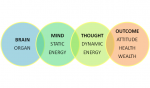
YOU ARE YOUR THOUGHTS.What do you believe is the meaning of "For as he thinketh in his heart, so is he"?
S
Scribe
Guest
But is that what the context is talking about?
Proverbs 23
When thou sittest to eat with a ruler, consider diligently what is before thee:
2And put a knife to thy throat, if thou be a man given to appetite.
3Be not desirous of his dainties: for they are deceitful meat.
4Labour not to be rich: cease from thine own wisdom.
5Wilt thou set thine eyes upon that which is not? for riches certainly make themselves wings; they fly away as an eagle toward heaven.
6Eat thou not the bread of him that hath an evil eye, neither desire thou his dainty meats:
7For as he thinketh in his heart, so is he: Eat and drink, saith he to thee; but his heart is not with thee.
8The morsel which thou hast eaten shalt thou vomit up, and lose thy sweet words.
It is not exactly the context (which does illustrate the principle) but it is the general principle which is stated in the Bible, as also noted here: A merry heart maketh a cheerful countenance: but by sorrow of the heart the spirit is broken. (Prov 15:13)But is that what the context is talking about?
The "heart" is a metaphor for the soul, and the soul has three components: (1) the mind, (2) the heart (emotions), and (3) the will. If the mind if focused on the negatives, the man becomes negative. If the mind is focused on the positive, the mind becomes positive. And the one thing we can all control is what we think. This is confirmed by Paul in Philippians 4:8:
Finally, brethren, whatsoever things are true, whatsoever things are honest, whatsoever things are just, whatsoever things are pure, whatsoever things are lovely, whatsoever things are of good report; ifthere be any virtue, and if there be any praise, think on these things.

Hi Scribe. A person's heart is where he truly desires and those who trust in material wealth don't have your welfare in mind.
When thou sittest to eat with a ruler, consider diligently what is before thee:
2And put a knife to thy throat, if thou be a man given to appetite.
3Be not desirous of his dainties: for they are deceitful meat.
4Labour not to be rich: cease from thine own wisdom.
5Wilt thou set thine eyes upon that which is not? for riches certainly make themselves wings; they fly away as an eagle toward heaven.
6Eat thou not the bread of him that hath an evil eye, neither desire thou his dainty meats:
7For as he thinketh in his heart, so is he: Eat and drink, saith he to thee; but his heart is not with thee.
8The morsel which thou hast eaten shalt thou vomit up, and lose thy sweet words.
Do you think Solomon intended to say that if you think you will be successful in your new business that you will?
I would say motives and sincerity are involved here. Some predatory natured humans can put on a front of benevolence but have ulterior motives. Solomon in Proverbs 23 I believe is warning us not to be fooled by and to avoid hypocritical hospitality i.e. One who apparently gives something freely but is expecting something back in return. One inviting you in a hearty manner but keeping account.
By partaking of such a person’s food and particularly if you crave their tasty dishes so as to desire and enjoy them again, you place yourself to some extent under their power.
You may find it hard to refuse their offers in future and as a result get involved in some difficult situation. Afterwards you would regret, even feel sick, you had eaten with such a person. The pleasant words you had expressed hoping to promote friendship would have been wasted.
L
Locoponydirtman
Guest
Arch principles, many people claim to a thing but its lip service, because they really think something completely different.
This is an example; all the climate alarmists, who go about protesting and making speeches, and then ride on a private jet, or leave a huge mess where they camped out to protest. It's cognitive dissonance.
This is an example; all the climate alarmists, who go about protesting and making speeches, and then ride on a private jet, or leave a huge mess where they camped out to protest. It's cognitive dissonance.
S
Scribe
Guest
Amen! And so when we hear it preached that "As we think in our hearts so are we" or some such rendering and then explained as a postive message about having positive thoughts about ourselves we can easily see by the context that is not the message intended at all. As a matter of fact... in many cases, (not all) when it is preached from a prosperity preacher he might be the one that is speaking positive feel good messages to you but inwardly he is expecting a big offering from your "feel good" vibes and he knows that he has taken this verse out of context but it suits his purpose so he will do it anyway without shame, and I would say THAT IS WHO HE REALLY IS, a charlatan, a trickster, a manipulater, a false teacher, For as he thinketh in his heart, so is he That is who he really is, not the image he is trying to present. He does not have your best interest in mind, but his own. I know this because no holy man of God would take that phrase out of the context and use it for something that Solomon and the Holy Spirit never intended unless he was honestly mistaken by hearing the phrase used that way and not having done a study on the context. But then he is still at fault for preaching from a text without reading context and will be convicted and repent when he sees his mistake. The others that use it for their own gain and know that they are grossly violating the context of the phrase in the way they are using it are not godly men. They are not fearing God or they would not adulterate the scriptures like that. It is ironic isn't it? Preaching "as a man thinketh in his heart so is he" and being guilty of the evil hearted man in the context and not even comprehending it? What can explain that but 1) pure evil, 2) having been given over to a lying spirit 3) irresponsible approach to preaching without knowing the context of your text.I would say motives and sincerity are involved here. Some predatory natured humans can put on a front of benevolence but have ulterior motives. Solomon in Proverbs 23 I believe is warning us not to be fooled by and to avoid hypocritical hospitality i.e. One who apparently gives something freely but is expecting something back in return. One inviting you in a hearty manner but keeping account.
By partaking of such a person’s food and particularly if you crave their tasty dishes so as to desire and enjoy them again, you place yourself to some extent under their power.
You may find it hard to refuse their offers in future and as a result get involved in some difficult situation. Afterwards you would regret, even feel sick, you had eaten with such a person. The pleasant words you had expressed hoping to promote friendship would have been wasted.
Amen! And so when we hear it preached that "As we think in our hearts so are we" or some such rendering and then explained as a postive message about having positive thoughts about ourselves we can easily see by the context that is not the message intended at all. As a matter of fact... in many cases, (not all) when it is preached from a prosperity preacher he might be the one that is speaking positive feel good messages to you but inwardly he is expecting a big offering from your "feel good" vibes and he knows that he has taken this verse out of context but it suits his purpose so he will do it anyway without shame, and I would say THAT IS WHO HE REALLY IS, a charlatan, a trickster, a manipulater, a false teacher, For as he thinketh in his heart, so is he That is who he really is, not the image he is trying to present. He does not have your best interest in mind, but his own. I know this because no holy man of God would take that phrase out of the context and use it for something that Solomon and the Holy Spirit never intended unless he was honestly mistaken by hearing the phrase used that way and not having done a study on the context. But then he is still at fault for preaching from a text without reading context and will be convicted and repent when he sees his mistake. The others that use it for their own gain and know that they are grossly violating the context of the phrase in the way they are using it are not godly men. They are not fearing God or they would not adulterate the scriptures like that. It is ironic isn't it? Preaching "as a man thinketh in his heart so is he" and being guilty of the evil hearted man in the context and not even comprehending it? What can explain that but 1) pure evil, 2) having been given over to a lying spirit 3) irresponsible approach to preaching without knowing the context of your text.
Any preacher that knowingly takes scripture out of context such as you describe and teaches a doctrine to mislead others for their own gain, would certainly be one to avoid in line with the wise words of Solomon at Proverbs 23. It also emphasises the importance for any preacher of fully understanding scripture and its context, before they endeavour to preach it to others.
"Scribe, post: 4343344, member:
Amen! And so when we hear it preached that "As we think in our hearts so are we" or some such rendering and then explained as a postive message about having positive thoughts about ourselves we can easily see by the context that is not the message intended at all. As a matter of fact... in many cases, (not all) when it is preached from a prosperity preacher he might be the one that is speaking positive feel good messages to you but inwardly he is expecting a big offering from your "feel good" vibes and he knows that he has taken this verse out of context but it suits his purpose so he will do it anyway without shame, and I would say THAT IS WHO HE REALLY IS, a charlatan, a trickster, a manipulater, a false teacher, For as he thinketh in his heart, so is he That is who he really is, not the image he is trying to present. He does not have your best interest in mind, but his own. I know this because no holy man of God would take that phrase out of the context and use it for something that Solomon and the Holy Spirit never intended unless he was honestly mistaken by hearing the phrase used that way and not having done a study on the context. But then he is still at fault for preaching from a text without reading context and will be convicted and repent when he sees his mistake. The others that use it for their own gain and know that they are grossly violating the context of the phrase in the way they are using it are not godly men. They are not fearing God or they would not adulterate the scriptures like that. It is ironic isn't it? Preaching "as a man thinketh in his heart so is he" and being guilty of the evil hearted man in the context and not even comprehending it? What can explain that but 1) pure evil, 2) having been given over to a lying spirit 3) irresponsible approach to preaching without knowing the context of your text.
The meaning of "For as he thinketh in his heart, so is he" should not be restricted to the interpretation you have given it, from Solomon"s perspective. I think it can be broadened. I agree with Nehemiah6 that our thoughts have a great deal to do with who and what we become in life though I do not agree with his process chart.
Some supporting scriptures include
1. Mathew 15:11, Jesus says that what defiles the body is that which comes from the heart, for out of the heart proceeds evil thoughts ----
2. MK 11:23 Jesus says, " whatsoever we believe without having any doubt in our hearts will come to pass"-- This is so because whatsoever we strongly believe in and dwell passionately upon, in our thoughts comes to play itself out in our lives. It drives our actions
3 Philippians 4:8 as noted by Nehemiah6 in his post
4. 2 Corinthians 10:5, the scripture tells us to bring into captivity every thought to the obedience of Christ. (for obvious reasons)
While your meaning gives caution on how we should deal with a hypocrite, the expanded version cautions on how we should deal with our own hearts. For me, the latter should take more precedence than the former because it puts us in a better position to deal with the guile person.
"
Amen! And so when we hear it preached that "As we think in our hearts so are we" or some such rendering and then explained as a postive message about having positive thoughts about ourselves we can easily see by the context that is not the message intended at all. As a matter of fact... in many cases, (not all) when it is preached from a prosperity preacher he might be the one that is speaking positive feel good messages to you but inwardly he is expecting a big offering from your "feel good" vibes and he knows that he has taken this verse out of context but it suits his purpose so he will do it anyway without shame, and I would say THAT IS WHO HE REALLY IS, a charlatan, a trickster, a manipulater, a false teacher, For as he thinketh in his heart, so is he That is who he really is, not the image he is trying to present. He does not have your best interest in mind, but his own. I know this because no holy man of God would take that phrase out of the context and use it for something that Solomon and the Holy Spirit never intended unless he was honestly mistaken by hearing the phrase used that way and not having done a study on the context. But then he is still at fault for preaching from a text without reading context and will be convicted and repent when he sees his mistake. The others that use it for their own gain and know that they are grossly violating the context of the phrase in the way they are using it are not godly men. They are not fearing God or they would not adulterate the scriptures like that. It is ironic isn't it? Preaching "as a man thinketh in his heart so is he" and being guilty of the evil hearted man in the context and not even comprehending it? What can explain that but 1) pure evil, 2) having been given over to a lying spirit 3) irresponsible approach to preaching without knowing the context of your text.
The meaning of "For as he thinketh in his heart, so is he" should not be restricted to the interpretation you have given it, from Solomon"s perspective. I think it can be broadened. I agree with Nehemiah6 that our thoughts have a great deal to do with who and what we become in life though I do not agree with his process chart.
Some supporting scriptures include
1. Mathew 15:11, Jesus says that what defiles the body is that which comes from the heart, for out of the heart proceeds evil thoughts ----
2. MK 11:23 Jesus says, " whatsoever we believe without having any doubt in our hearts will come to pass"-- This is so because whatsoever we strongly believe in and dwell passionately upon, in our thoughts comes to play itself out in our lives. It drives our actions
3 Philippians 4:8 as noted by Nehemiah6 in his post
4. 2 Corinthians 10:5, the scripture tells us to bring into captivity every thought to the obedience of Christ. (for obvious reasons)
While your meaning gives caution on how we should deal with a hypocrite, the expanded version cautions on how we should deal with our own hearts. For me, the latter should take more precedence than the former because it puts us in a better position to deal with the guile person.
"

This should be fun and educational.
What do you believe is the meaning of "For as he thinketh in his heart, so is he"?
And how would you teach this in a sermon in your church?
did you know that the heart has tens of thousands of neuron cells of its own?
that it literally 'thinketh' independently of the brain?
useful info to the topic

S
Scribe
Guest
The meaning of "For as he thinketh in his heart, so is he" should not be restricted to the interpretation you have given it, from Solomon"s perspective. I think it can be broadened. I agree with Nehemiah6 that our thoughts have a great deal to do with who and what we become in life though I do not agree with his process chart.
Some supporting scriptures include
1. Mathew 15:11, Jesus says that what defiles the body is that which comes from the heart, for out of the heart proceeds evil thoughts ----
2. MK 11:23 Jesus says, " whatsoever we believe without having any doubt in our hearts will come to pass"-- This is so because whatsoever we strongly believe in and dwell passionately upon, in our thoughts comes to play itself out in our lives. It drives our actions
3 Philippians 4:8 as noted by Nehemiah6 in his post
4. 2 Corinthians 10:5, the scripture tells us to bring into captivity every thought to the obedience of Christ. (for obvious reasons)
While your meaning gives caution on how we should deal with a hypocrite, the expanded version cautions on how we should deal with our own hearts. For me, the latter should take more precedence than the former because it puts us in a better position to deal with the guile person.
"
Agreed. It does mean that the motives of a man's heart is who he really is. And as in so many proverbs it is about relationship with other people. Therefore our motives for doing something will out us eventually. Our motive for setting up shop and becoming successful is more important to God. If we think in our hearts that we will be successful what is this to God? Why do we want to be successful. Have we prayed and heard from God that this is His will? Are we ok with it if God changes our plans? We can think ourselves successful but that is not who we are. We are the WHY we are trying to be successful. Are we devoted to advancing the kingdom of God and we believe God has given us an idea to make money that we can use not only for our own needs but to help others and to support our local church that is also involved in advancing the kingdom of God? If so we ARE as we think in our hearts. Are we thinking we will get rich and buy lots of things to consume on our own lusts and desires with no thought to supporting our local church then we ARE THAT person. We are as we think in our hearts.
"Scribe, posted
Agreed. It does mean that the motives of a man's heart is who he really is. And as in so many proverbs it is about relationship with other people. Therefore our motives for doing something will out us eventually. Our motive for setting up shop and becoming successful is more important to God. If we think in our hearts that we will be successful what is this to God? Why do we want to be successful. Have we prayed and heard from God that this is His will? Are we ok with it if God changes our plans? We can think ourselves successful but that is not who we are. We are the WHY we are trying to be successful. Are we devoted to advancing the kingdom of God and we believe God has given us an idea to make money that we can use not only for our own needs but to help others and to support our local church that is also involved in advancing the kingdom of God? If so we ARE as we think in our hearts. Are we thinking we will get rich and buy lots of things to consume on our own lusts and desires with no thought to supporting our local church then we ARE THAT person. We are as we think in our hearts.
Agreed with your position. The motive shows how sincere or otherwise the heart is in walking with God.
I believe too that we should not define or quantify the glory of God in our lives in material terms the way the prosperity preachers preach. Our focus I think should be to endeavor to live and continue to operate in the environment of God by living according to his word. His provisions are sure as the bible tells us. It is written, I know the thoughts I think for you, they are thoughts of peace to give you an expected end says the Lord. And we know and believe that it is only good that comes from him. Hence, we should follow the footsteps of our Lord Jesus to say. not my will but your will be done, while hoping in his glory.
Agreed. It does mean that the motives of a man's heart is who he really is. And as in so many proverbs it is about relationship with other people. Therefore our motives for doing something will out us eventually. Our motive for setting up shop and becoming successful is more important to God. If we think in our hearts that we will be successful what is this to God? Why do we want to be successful. Have we prayed and heard from God that this is His will? Are we ok with it if God changes our plans? We can think ourselves successful but that is not who we are. We are the WHY we are trying to be successful. Are we devoted to advancing the kingdom of God and we believe God has given us an idea to make money that we can use not only for our own needs but to help others and to support our local church that is also involved in advancing the kingdom of God? If so we ARE as we think in our hearts. Are we thinking we will get rich and buy lots of things to consume on our own lusts and desires with no thought to supporting our local church then we ARE THAT person. We are as we think in our hearts.
Agreed with your position. The motive shows how sincere or otherwise the heart is in walking with God.
I believe too that we should not define or quantify the glory of God in our lives in material terms the way the prosperity preachers preach. Our focus I think should be to endeavor to live and continue to operate in the environment of God by living according to his word. His provisions are sure as the bible tells us. It is written, I know the thoughts I think for you, they are thoughts of peace to give you an expected end says the Lord. And we know and believe that it is only good that comes from him. Hence, we should follow the footsteps of our Lord Jesus to say. not my will but your will be done, while hoping in his glory.

Thanks for this, no I didn't know. It is amazing that God is truth, always.did you know that the heart has tens of thousands of neuron cells of its own?
that it literally 'thinketh' independently of the brain?
useful info to the topic
Did you know that the function of the mind was thought to be in the heart until well after Christ?
Our thoughts and emotions come before any of our actions, and our actions are a result of our thoughts. Our thoughts result in our heart, or emotions.Agreed. It does mean that the motives of a man's heart is who he really is. And as in so many proverbs it is about relationship with other people. Therefore our motives for doing something will out us eventually. Our motive for setting up shop and becoming successful is more important to God. If we think in our hearts that we will be successful what is this to God? Why do we want to be successful. Have we prayed and heard from God that this is His will? Are we ok with it if God changes our plans? We can think ourselves successful but that is not who we are. We are the WHY we are trying to be successful. Are we devoted to advancing the kingdom of God and we believe God has given us an idea to make money that we can use not only for our own needs but to help others and to support our local church that is also involved in advancing the kingdom of God? If so we ARE as we think in our hearts. Are we thinking we will get rich and buy lots of things to consume on our own lusts and desires with no thought to supporting our local church then we ARE THAT person. We are as we think in our hearts.
It takes a very mature Christian to get the truth of our physical actions and our spiritual understanding in sync. It is not true that we are to disconnect the spiritual from the physical, either way. God is a balance and extremes in any direction is not from the Lord. Our spiritual understanding should result in physical actions.
This should be fun and educational.
What do you believe is the meaning of "For as he thinketh in his heart, so is he"?
And how would you teach this in a sermon in your church?
Since we have the mind of Christ The old .. What would Jesus do ?(WWJD) comes to mind. What did he do when the will of the father worked in him to both will and do the good pleasure . . softening the heart of the Son of man .. he did not murmur as some.

Dont drink the kool-aid.
Or in the case, the fancy food. You can be wined and dined and bribed that way.
The proverbs have nothing to do with being successful in business. Its warning about being wary of coveting what you dont have, because rich people dont always have your best interests at heart when they offer you things.
Or in the case, the fancy food. You can be wined and dined and bribed that way.
The proverbs have nothing to do with being successful in business. Its warning about being wary of coveting what you dont have, because rich people dont always have your best interests at heart when they offer you things.
A lot of people gain wealth by deceit. I was just reading a bio by Richard Branson.
In his early days of building up his brand empire, he used all sorts of trickery and deceit to get capital. He was actually arested for illegally importing records and selling them at profit. He then branched out to record stores and recording studios. He would then leverage his success from the artists he could exploit to make money for his business. This is how the music industry makes money.
In his early days of building up his brand empire, he used all sorts of trickery and deceit to get capital. He was actually arested for illegally importing records and selling them at profit. He then branched out to record stores and recording studios. He would then leverage his success from the artists he could exploit to make money for his business. This is how the music industry makes money.
Simply put, the heart is the seat of the true motive, purpose and intent of all actions. When the new nature, given by God at conversion, is coupled with the truth of God's word, then the heart is changed so as to discipline the bodily appetites. This state of the heart weather good or bad, is revealed by it's "fruit".