Loss of salvation???

  • Christian Chat is a moderated online Christian community allowing Christians around the world to fellowship with each other in real time chat via webcam, voice, and text, with the Christian Chat app. You can also start or participate in a Bible-based discussion here in the Christian Chat Forums, where members can also share with each other their own videos, pictures, or favorite Christian music.

    If you are a Christian and need encouragement and fellowship, we're here for you! If you are not a Christian but interested in knowing more about Jesus our Lord, you're also welcome! Want to know what the Bible says, and how you can apply it to your life? Join us!

    To make new Christian friends now around the world, click here to join Christian Chat.
If I was forced to pick, maybe esoteric knowledge.

But you would have to really trust the source.

What would you pick?

Or do you have another option?
Pretty much the same since you've clarified esoteric with trusting the source which means we're not talking about some concept of Gnostic or deterministic elitism.

BTW, every time I read your chosen identity I think about it being the best I've seen.
 
Show me the words, "lost salvation" in Scripture.
How about [lost] faith - belief becoming unbelief - [being with God] vs. withdrawing from God - enduring in faith vs. being timid and withdrawing into destruction - how about the Father removing the unproductive and their being thrown into fire and burned, and burning and cursing unproductive land - how about language that says currently saved but doesn't say forever saved - how about....???

How about letting God say and mean all of what He says and realizing we're not that smart and are dealing with an infinite mind and perfect judge who can deal with every circumstance and possibility of every blend of personality and reasoning of every person that ever exists - individually, collectively, no matter?

How about shedding denominationalism and thinking in unity based up all the above and whatever else in humble submission to Him may result in...

Surely this proof-texting pitting one of God's thoughts against another of God's thoughts is not working.
 
Here's why Journey man:

Because they do not mean what you THINK they mean.

However, replying to all of them means I'd have to sit here for quite a long time.

I DID request that you choose one or two and post them and we'll discuss.

Do you not care to do this?
OK, I agree it's not a good idea to tackle to many verses at a time. So I'll just mention the first one in that list, which was;
1 John 2:19 "They went out from us, but they were not of us; for if they had been of us, they would have continued with us. But they went out, that it might be plain that they all are not of us."

Most commentators that I have heard, interpret this verse to mean that "those who went out from them, were false converts to begin with" . The text does support this view, it even says "if they were of us, they would have remained with us".

I have seen examples of false converts in my Church, one of our Deacons left his wife and three small children to run off with his much younger secretary. He never repented so we excommunicated him and now we consider him an infidel.

There are many "false Christians", the Lord Jesus spoke about the in Revelation, where He declares to them, "I never knew you, depart from Me"

I don't know of any example in the bible, where a saved person loses their salvation. But there are plenty of examples where people like Judas "a falsely professing Christian" , supposedly (losing their salvation). But he was never saved to begin with.
 
  • Like
Reactions: markss and PennEd
Show me the words, "lost salvation" in scripture.
Really?
Where's the word TRINITY in the NT?

You don't believe in the Trinity anymore now?....
since the word is not in the NT....


To the contrary:

To the contrary?

You reject and ignore what JESUS taught?

Your reply is to post some verses you think imply eternal security?

Why don't you explain the verses I gave to you instead?

They're from Jesus Himself....

Here they are again...


Jesus taught that salvation can be lost....


Luke 8:13
13 "Those on the rocky soil are those who, when they hear, receive the word with joy; and these have no firm root; they believe for a while, and in time of temptation fall away
.


1. They HEAR (in Greek to hear means to understand and even to accept) and receive the word with joy.
THEY RECEIVE THE WORD.
They have accepted God.
They are born again.


2. BUT
they believe only FOR A WHILE.
THEY BELIEVE....they are born again.


BUT ONLY FOR A WHILE.


3. Then, Jesus said, due to temptation
THEY FALL AWAY.


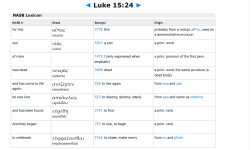
Luke 15:24
24 for this son of mine was dead and has
come to life again; he was lost and has been found.' And they began to celebrate.


1. The prodigal son has come to life AGAIN.
This means he was
saved
lost
saved again.


2. AGAIN means the son was somewhere,,,
then left...
then was somewhere AGAIN...
he went back to being saved.


John 15:2
2 "Every branch in Me that does not bear fruit, He takes away; d


1. Notice that the branch is IN JESUS.
It is a saved person.
The saved person does not bear fruit.
He (God) takes away the branch.


Jesus taught that it is possible to lose our salvation.


1 of 3
 

Attachments

  • 1773752274644.png
    1773752274644.png
    138.7 KB · Views: 3
  • 1773752344133.png
    1773752344133.png
    103.8 KB · Views: 2
2 of 3


John 6:37 - Everything that the Father gives Me will come to Me, and the one who comes to Me I certainly will not cast out.

This is true.
NO ONE will ever be refused by Jesus.
It will always be the believer that refuses Jesus.

A person could deny God....at any point, as the above scripture shows.

Matthew 10:33
33But whoever denies me before men, I also will deny before my Father who is in heaven.


38 For I have come down from heaven, not to do My own will, but the will of Him who sent Me. 39 And this is the will of Him who sent Me, that of everything that He has given Me I will lose nothing, but will raise it up on the last day.

Yes sir.
The will of the Father is that Jesus lose NOTHING of that which Father has sent Him to do.
And what is that NOTHING?
Why was Jesus sent?
This is from Benson's commentary and is the best explanation I've found:


that of all which he hath given me, I should lose nothing —

It is the will of my Father that every thing necessary be done, both for the conversion of sinners and for the preservation of those in the paths of righteousness who are already converted.

We must be converted and on the path of righeusness.

He even willeth all men to be saved, yea, eternally saved; and in order thereto, to come to the knowledge of the truth, and to persevere therein.

We must come to the truth

and
persevere .......


But he willeth these things conditionally, and not absolutely:

There are conditions.....you'll remember John 15:2 which you refuse to believe...even though Jesus Himself spoke it.
We must bear fruit and obey.


men through his grace must repent, and bring forth fruit worthy of repentance: they must believe in Christ, and in the truths and promises of his gospel, with a faith that worketh by love: they must resist the devil, steadfast in the faith; overcome the world, and crucify the flesh: they must endure unto the end, believing, loving, and obeying; must be faithful unto death, and then they shall receive the crown of life.

Man must:

REPENT
BRING FORTH FRUIT
BELIEVE IN THE TRUTHS TAUGHT BY JESUS
RESIST THE DEVIL
BE STEADFAST IN HIS FAITH
OVERCOME THE WORLD
CRUCIFY THE FLESH
ENDURE TILL THE END

THEN they will receive the crown of life.


And this is likewise the will of him that sent me — This also he wills conditionally; that every one which seeth the Son — Seeth the character and mission of the Son in the miracles which he works, and in the other evidences wherewith his mission is attended: as in John 6:36; or who recognises the Son, views him with an attentive mind; as θεωραω seems evidently to imply; that sees him so as to know him; and in consequence of that knowledge, cordially believeth on him — Receiving him by faith, and trusting in him as an all-sufficient Saviour; may have everlasting life —


It is the fixed determination of the Father, to bestow everlasting life on all who persevere in this faith; and therefore, in execution of my Father’s will; I will raise all such up at the last day — I will make them completely happy, both in soul and body, in the enjoyment of a glorious immortality: nor are there any purposes or decrees of God inconsistent with this. Thus did Jesus place the character of the Messiah in a light very different from that in which his hearers had been accustomed to view it; and taught them, that instead of temporal blessings, which they expected from him, they were to receive none but such as were spiritual.


Those defined above

are those that will be raised in the last day...
together with EVERYTHING Jesus came to accomplish.


John 10:27 -
My sheep hear My voice, and I know them, and they follow Me. 28 And I give them eternal life, and they shall never perish; neither shall anyone snatch them out of My hand.
Agreed.
Jesus sheep,,,,those who HEAR his voice and FOLLOW HIM....
will certainly have eternal life.
No doubt about this.
 
3 of 3


Context and Hermeneutics.

You took it too far. In regard to Luke 8:13, the seed fell into rocky soil, which resulted in a shallow, temporary belief that had no root, produceed no fruit and withered away. Salvation never took root so there was no loss of salvation. In CONTRAST with the 4th soil, where the seed fell on good ground which represents those who heard the word with an honest and good heart, and hold it fast, and bear fruit with perseverance (Luke 8:15).
When does a person become saved?
If a person BELIEVES, is he not saved?
JESUS said that the person FELL AWAY due to temptation. Luke 8:13
What did the person fall away from?


If a person FALLS AWAY, it means he was someplace before where he no longer is now.

You took it too far.


You deny the very method for salvation in order to eisegete verses.


Context. All three parables in Luke 15 were in rebuke to the Pharisees and scribes who complained, saying, “This Man receives sinners and eats with them." (vs. 2) Eternal IN-securists will try to use the parable of the prodigal son to prove that believers can lose their salvation by arguing that the prodigal son was spiritually alive, then spiritually died (lost his salvation) and was spiritually alive again (regained his salvation) from Luke 15:32 based on certain translations which read: ..thy brother was dead, and is alive AGAIN (KJV) ..for your brother was dead and is alive AGAIN (NKJV) ..this brother of yours was dead and is alive AGAIN (NIV)

Yet others will argue that in this parable, being made "alive AGAIN" foreshadows the "born AGAIN" experience that Jesus spoke of in John 3:3. Of course Jesus wasn't talking about being born again spiritually again and again. We are born once physically and born "again" once spiritually.

Apparently Jesus does not agree with you.
You're going to change the language now?

Jesus said the son had come to life AGAIN.

What does AGAIN mean Dan?

If a person is sick AGAIN.....
what does it mean?

Use intellectual honesty.

He was SICK
He was cured
He was sick AGAIN

The person went back to their original state.

In the case of the Prodigal Son,,,
the original state was SALVATION.

The son lost salvation...he abandoned the Father.
The son became saved AGAIN....when he returned to the Father.

SAVED
LOST
SAVED AGAIN


I find it interesting that certain translations of Luke 15:32 simply say your brother was dead, and is alive; he was lost, and is found (ESV); your brother was dead, but now he is alive. He was lost, but now he is found (NCV); this brother of yours was dead and has come to life; he was lost and has been found (NRS); this brother of yours was dead and has begun to live and was lost and has been found (NASB).
I use the NASB...it says AGAIN.

You grasp on to straw.

If this were the only verse re forfeiture,,,we could discuss...
it is NOT.....it is only confirming MANY passages that confirm that salvation is conditional on continuing faith and obedience.


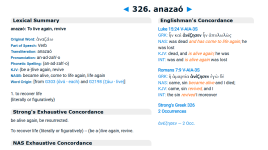
You like "the Greek"...let's take a look:


Strong's no. 326

View attachment 286707


View attachment 286708


And this is from Thayer's:


24 For this my son was dead, and is alive again; he was lost, and is found. And they began to be merry.


In John 15:2-6, the branches that bear fruit and remain are genuine believers (like the remaining 11 disciples). The self-attached branches that bear no fruit and do not remain are not genuine believers (like Judas Iscariot). In John 15:2, Jesus mentions branches that bear no fruit and branches that bear fruit but Jesus says nothing about branches that bear fruit but then later stop bearing fruit.

You are adding to what Jesus stated.
Here is what Jesus said:


John 15:2
2 "Every branch in Me that does not bear fruit, He takes away;


Jesus stated that every branch IN HIM that does not bear fruit...God will take away.

Again,,,you are changing the method for salvation.
Are we saved IN JESUS or not??

If we are IN JESUS we are saved.

The saved person IN JESUS will be removed from the vine IF he does not bear fruit.


It even goes on to say that those that DO BEAR FRUIT...
will be pruned so as to PRODUCE EVEN MORE FRUIT.


Believers that DO NOT BEAR FRUIT...will be removed from the vine.

Because they are not doing THE WILL OF THE FATHER.
Not those that cry LORD LORD,,,
but those that do the will of the Father will enter into heaven.
Matthew 7:21


Greek scholar AT Robertson points out that there are two kinds of connections with Christ as the vine (the merely cosmic which bears no fruit, the spiritual and vital which bears fruit). Probably (Bernard) Jesus here refers to Judas.
I don't see any talk here about Judas.

How desperate are you?

Read John 15.2 again until you understand what Jesus is saying.


John 15 - Robertson's Word Pictures in the New Testament - Bible Commentaries - StudyLight.org

When Jesus spoke these words in John 15, how many people at that time, prior to Him being glorified, had received the Holy Spirit and were baptized by one Spirit into one body? - "the body of Christ?" (1 Corinthians 12:13) -- NONE.

John 7:38 - He who believes in Me, as the Scripture has said, out of his heart will flow rivers of living water. 39 But this He spoke concerning the Spirit, whom those believing in Him would receive; for the Holy Spirit was not yet given, because Jesus was not yet glorified.

So "in me" is part of the metaphor of the vine (in the vine) and not in the body of Christ under the new covenant which was not yet fully established. Without that vital union with Christ, there can be no spiritual life and no productivity. Those who profess to know Christ but whose relationship to Him is self-attached, Christ neither saved them, nor sustains them. Eventually, the dead self-attached fruitless branches are cut off.

Most interesting.
So, IOW, we can ignore everything Jesus said until after the resurrection.

Can I ASSUME that you also include in this
John 6:37-44?? (which YOU posted above).


Here's what I believe to be true:

You'll be judged by Jesus.

NOT by AT Robertson.


According to your eisegesis, YES but according to Scripture, NO.
YOU eisegete and twist everything Jesus taught to suit your own
believe system.



 
OK, I agree it's not a good idea to tackle to many verses at a time. So I'll just mention the first one in that list, which was;
1 John 2:19 "They went out from us, but they were not of us; for if they had been of us, they would have continued with us. But they went out, that it might be plain that they all are not of us."

Most commentators that I have heard, interpret this verse to mean that "those who went out from them, were false converts to begin with" . The text does support this view, it even says "if they were of us, they would have remained with us".

I have seen examples of false converts in my Church, one of our Deacons left his wife and three small children to run off with his much younger secretary. He never repented so we excommunicated him and now we consider him an infidel.

There are many "false Christians", the Lord Jesus spoke about the in Revelation, where He declares to them, "I never knew you, depart from Me"

I don't know of any example in the bible, where a saved person loses their salvation. But there are plenty of examples where people like Judas "a falsely professing Christian" , supposedly (losing their salvation). But he was never saved to begin with.
I agree with what you've posted.
And I disagree.

I agree that those that left in 1 John 2 were never Christian.
They were gnostics that had infiltrated the church and were never, what we would call, saved.
I leave their eternal soul to God for judgment.
John lived to an old age and had seen this happan...
he witnessed persons and cults that attempted to use the Christian religion and even change it.
He witnessed heresies.

So I agree.

I do not agree that this is a good verse to use to show that a Christian could never become lost again.

They were never Christian to begin with.
 
  • Like
Reactions: studier
I'm not sure what is at stake here, but the antecedent of the pronouns they/them is "my sheep."

Now, the existential question you might be raising is, "How do I know that I am one of Jesus sheep such that I will receive eternal life?"

The simple answer to that question, as @Night Twister points out, is that the Holy Spirit lets us know.
Correct and thank you for answering such a simple question of grammar.

The they/them are those who are His sheep. The pronouns are not directed at individual persons but a group.

This is the error of OSAS, they see the pronouns applying to them personally. As does all heretical groups.

Now on the issue of the Holy Spirit personally letting us know our status, whether we are sheep or not.

Is this knowledge physical or metaphysical?
 
  • Like
Reactions: studier and Toknow
Correct and thank you for answering such a simple question of grammar.

The they/them are those who are His sheep. The pronouns are not directed at individual persons but a group.

This is the error of OSAS, they see the pronouns applying to them personally. As does all heretical groups.

Now on the issue of the Holy Spirit personally letting us know our status, whether we are sheep or not.

Is this knowledge physical or metaphysical?
Sheep does indeed refer to the fold....
those that are IN that fold are Jesus' sheep.

I do give importance, however, to the fact that those in the fold....
must HEAR and FOLLOW Jesus.

They are sheep because they hear and follow.
Anyone could be a member of the fold IF they hear and follow.

Would you agree?
 
  • Like
Reactions: studier
No, you will be a forever partaker if you hold fast to the end.
That's not the grammar.

As best as I can tell, you've got the end in mind, and are forumlating the interpretation to suit that.

You have become a partaker - have, already happened - IF you hold your confidence to the end. If you don't, it didn't happen for you.

Clear as can be, yet you argue against it.

Much love!
 
No, the conditional clause is forward looking, not backward. If the condition is not met, then the present state is not retained. If you'd like, I'm happy to post instruction from Wallace and/or Robertson to explain how the Greek 3rd-class condition works - in this case an intensified 3rd-class condition.

NKJ Hebrews 3:12 Beware, brethren, lest there be in any of you an evil heart of unbelief in departing from the living God;
  • You decide what you think "brothers" mean here
  • Brothers are being warned - actually commanded - to pay close attention, to watch, to be aware
  • The condition of an evil heart of unbelief - an evil unbelieving heart - is something they are commanded not to have in the future
  • The phrase 'in the departure/withdrawal/revolt' is an articular infinitive with a governing preposition - it's telling us that this is contemporaneous in time with the potential future unbelieving heart or the means by which it take place.
  • This is context for Heb3:14:
    • 'Brothers' as I read Hebrews is talking about Christian brothers - mainly Jewish Christian brothers.
    • They are being warned to watch-out, to pay close attention
    • They are being warned so their currently believing hearts do not become evil, unbelieving hearts in the future
    • The potential for their hearts to be evil, unbelieving hearts
      • Is either caused by withdrawing/revolting from the living God
      • or more likely, while departing from the living God - denoting a process
      • or these 2 things combined
  • This is what most who see loss of faith in apostasy are talking about
    • It's not the silly 'how man sins' must we do - the dumb 'what's the dividing line'
    • It's about turning from belief to unbelief that happens as a process while/by withdrawing from God until it is complete as He may determine.
NKJ Hebrews 3:13 but exhort one another daily, while it is called "Today," lest any of you be hardened through the deceitfulness of sin.
  • Rather than going from belief to unbelief in departing from God,
    • brothers are commanded to exhort/encourage one another each day - while it is called "today"
      • (remember this for Heb3:14 "until the end")
      • for this purpose: so none of them are hardened by deceitfulness of the sin
        • the hardening is the evil heart of unbelief
        • 'sin' is articular and likely referring back to the deceitfulness of the sin of departing from God which seems from the language above to be a process - deception will be involved in the departing - the hardening - the believing heart becoming an evil, unbelieving heart.
NKJ Hebrews 3:14 For we have become partakers of Christ if we hold the beginning of our confidence steadfast to the end,
  • This begins with "for" - it is explaining the 2 prior verses
  • We have become and are nowChrist's metachoi
    • Note the author includes himself
    • Note he has been commanding 'brothers'
    • Note they are commanded so their hearts in the future not be evil, unbelieving - hardened
    • Note this is speaking about withdrawing (from where they are now0
    • The perfect tense is focused on their present state of being:
      • brothers
      • not having evil, unbelieving hearts
      • being with God
      • being Christ's metachoi
      • This is their current reality
    • The conditional clause is forward-looking - not backward
      • It says a future condition will exist if the condition is met
        • It does not say the currently existing reality will be undone retroactively
        • It says the current reality will not be the future reality if the condition is not met
    • The condition of holding fast/adhering firmly to/maintaining possession of what they had in persistence in the beginning until the end
      • Men don't hold fast what they never had
      • what they had in the beginning trends back to the past aspect of the perfect tense when they became Christ's metachoi - they believed - they became 'with God' (not departed from God) - and there is a marker here which the NKJ translates as "steadfast" and I just noted as "persistence" - so it seems to be speaking not just about initial belief, but also an initial, persistent belief.
      • "until the end" ties back to "while it is called today" - telling us that in the end it will no longer be called 'today' and the potential for becoming unbelieving and for withdrawing from the living God will be over.
At first we were discussing the morphology of the perfect verb tense.

Now I have laid out some of the syntax and have explained some more of the grammar and meaning of words and phrases.

As I offered, I'm happy to provide more excerpts from Wallace and some from Robertson that discuss the forward-looking and contingent meaning of the 3rd-class condition.

From what I see you doing, you are misinterpreting not only the perfect tense present reality at the time of writing, but now you are also misinterpreting the conditional statement. It does not undo the a current reality in the past - it says the future is contingent, which ties perfectly to the author warning brothers of not moving from belief to hardened unbelief - of not departing from currently being with God - of not holding in possession what they had and currently have.
Use AI much?
 
Sheep does indeed refer to the fold....
those that are IN that fold are Jesus' sheep.

I do give importance, however, to the fact that those in the fold....
must HEAR and FOLLOW Jesus.

They are sheep because they hear and follow.
Anyone could be a member of the fold IF they hear and follow.

Would you agree?
Agreed.

They are sheep while they are hearing and following.

Not if they once heard or followed.
 
No, the conditional clause is forward looking, not backward. If the condition is not met, then the present state is not retained. If you'd like, I'm happy to post instruction from Wallace and/or Robertson to explain how the Greek 3rd-class condition works - in this case an intensified 3rd-class condition.
This is why I stopped making arguments from grammar. They are so arbitrary. Here is my frustration that a lot of thoughtful interpreters feel but rarely articulate: grammatical categories in Greek can start to feel like they’re floating in mid‑air, as though the grammar book is telling you what the text “must” mean, when in reality the grammar book is just describing patterns that interpreters have already decided are significant.

The core issue is that Greek grammatical categories are descriptive conventions, not divinely sanctioned rules, yet they’re often treated as if they carry interpretive authority. Grammarians label patterns they observe in the language, but applying those labels to a specific passage is already an act of interpretation. So when someone argues, “This is a third‑class conditional, therefore it must mean X,” they’re smuggling in two layers of judgment—first that the construction fits the category, and second that the category has a fixed meaning. The result is that grammar can be used to shut down interpretation rather than guide it, giving an illusion of objectivity where there is actually interpretive choice.
 
  • Like
Reactions: rogerg
Correct and thank you for answering such a simple question of grammar.

The they/them are those who are His sheep. The pronouns are not directed at individual persons but a group.

This is the error of OSAS, they see the pronouns applying to them personally. As does all heretical groups.

Now on the issue of the Holy Spirit personally letting us know our status, whether we are sheep or not.

Is this knowledge physical or metaphysical?
I don't know what you mean, so let me answer it this way. There are two fundamental sources of knowledge: 1) what we learn from others, and 2) what we learn by experience. For instance, my school teacher says that Paris is the Capital of France. If I trust the teacher, then I take his or her word for it. On the other hand, I can also look up the information on a map, or I might go there on vacation to see for myself.

God gives us firsthand knowledge about our status and our destiny. We know we are sheep after God tests our faith to the limit of our endurance, and when we endure, this is proof that our faith will never fail.
 
I don't know what you mean, so let me answer it this way. There are two fundamental sources of knowledge: 1) what we learn from others, and 2) what we learn by experience. For instance, my school teacher says that Paris is the Capital of France. If I trust the teacher, then I take his or her word for it. On the other hand, I can also look up the information on a map, or I might go there on vacation to see for myself.

God gives us firsthand knowledge about our status and our destiny. We know we are sheep after God tests our faith to the limit of our endurance, and when we endure, this is proof that our faith will never fail.
I have been crucified with Christ, and I no longer live, but Christ lives in me. And that which I now live in the flesh, I live through faith from the Son of God, the One having loved me and having given up Himself for me. (Galatians 2:20)

(Berean Literal) If the faith from Jesus can fail, we are all in big trouble.
 
Correct and thank you for answering such a simple question of grammar.

The they/them are those who are His sheep. The pronouns are not directed at individual persons but a group.

This is the error of OSAS, they see the pronouns applying to them personally. As does all heretical groups.

Now on the issue of the Holy Spirit personally letting us know our status, whether we are sheep or not.

Is this knowledge physical or metaphysical?
You're trying to dodge the force of Jesus' words in John 10 by turning His personal promises into vague group statements, but the text won't let you. Jesus doesn't say ""the group of sheep hears My voice,"" He says MY SHEEP hear MY voice, I KNOW THEM & THEY follow Me, & I GIVE THEM eternal life & THEY shall NEVER perish & NO ONE will snatch THEM out of My hand (Jn 10:27–28).

Those are personal pronouns, tied to individuals, not abstractions &Jesus destroys your entire ""they become sheep by hearing & following"" theory when He says, ""You do NOT believe BECAUSE you are NOT My sheep"" (Jn 10:26).

Your order is backwards. Jesus' order is: identity produces response - sheep hear & follow because they ALREADY belong to Him (Jn 10:3–4, 14). You're trying to make hearing & following the cause of becoming a sheep, but Jesus says they are the evidence of ALREADY being one & your ANYONE can be in the fold IF they hear & follow, collapses under Jesus' own teaching that the Father gives the sheep to the Son (Jn 10:29, 17:2, 6, 9).

The Shepherd doesn't wait to see who will follow, He calls His own sheep by name & they follow because they are His (Jn 10:3–4). Your interpretation doesn't just miss the grammar; it reverses the gospel. Jesus' promises are not corporate, conditional, or probationary, they are personal, effectual & irreversible for every individual sheep the Father has given Him.

If SHEEP is just a group & not actual people, then Jesus gave eternal life to a collective category instead of individual believers, which means your interpretation doesn't just break the grammar of John 10, it breaks the gospel itself.
 
You're trying to dodge the force of Jesus' words in John 10 by turning His personal promises into vague group statements, but the text won't let you. Jesus doesn't say ""the group of sheep hears My voice,"" He says MY SHEEP hear MY voice, I KNOW THEM & THEY follow Me, & I GIVE THEM eternal life & THEY shall NEVER perish & NO ONE will snatch THEM out of My hand (Jn 10:27–28).

Those are personal pronouns, tied to individuals, not abstractions &Jesus destroys your entire ""they become sheep by hearing & following"" theory when He says, ""You do NOT believe BECAUSE you are NOT My sheep"" (Jn 10:26).

Your order is backwards. Jesus' order is: identity produces response - sheep hear & follow because they ALREADY belong to Him (Jn 10:3–4, 14). You're trying to make hearing & following the cause of becoming a sheep, but Jesus says they are the evidence of ALREADY being one & your ANYONE can be in the fold IF they hear & follow, collapses under Jesus' own teaching that the Father gives the sheep to the Son (Jn 10:29, 17:2, 6, 9).

The Shepherd doesn't wait to see who will follow, He calls His own sheep by name & they follow because they are His (Jn 10:3–4). Your interpretation doesn't just miss the grammar; it reverses the gospel. Jesus' promises are not corporate, conditional, or probationary, they are personal, effectual & irreversible for every individual sheep the Father has given Him.

If SHEEP is just a group & not actual people, then Jesus gave eternal life to a collective category instead of individual believers, which means your interpretation doesn't just break the grammar of John 10, it breaks the gospel itself.
Well said, in my opinion
 
If the faith from Jesus can fail, we are all in big trouble.

God has made Himself guarantor that it doesn't

[1Pe 1:1-5 KJV]
1 Peter, an apostle of Jesus Christ, to the strangers scattered throughout Pontus, Galatia, Cappadocia, Asia, and Bithynia,
2 Elect according to the foreknowledge of God the Father, through sanctification of the Spirit, unto obedience and sprinkling of the blood of Jesus Christ: Grace unto you, and peace, be multiplied.
3 Blessed [be] the God and Father of our Lord Jesus Christ, which according to his abundant mercy hath begotten us again unto a lively hope by the resurrection of Jesus Christ from the dead,
4 To an inheritance incorruptible, and undefiled, and that fadeth not away, reserved in heaven for you,
5 Who are kept by the power of God through faith unto salvation ready to be revealed in the last time.
 
Agreed.

They are sheep while they are hearing and following.

Not if they once heard or followed.
In John 10:27-28, we read - My sheep hear My voice, (not some of them hear His voice and some of them don't hear His voice) and I know them, (not some of them He knows and some of them He doesn't know) and they follow Me. (not some of them follow Him and some of them don't follow Him) And I give them eternal life, (not some of them He gives eternal life and some of them He doesn't give eternal life) and they shall never perish; (not some of them will never perish and some of them will perish) neither shall anyone snatch them out of My hand. (not some of them will never be snatched out of His hand and some of them will be snatched out of His hand)
 
Use AI much?
Meaning what, pray tell - that I'm unable to analyze the language apart from using AI?

That was just some bullet-pointed observations with a little morphology and real syntax instead of your bluffing syntax while discussing morphology, coupled with an offer to provide scholarly references if you'd like to actually learn something.

Honestly, I've been doing this for about 25 years. You'll need to look up timing for AI availability and even availability of online resources for Greek exegesis. I wish I'd had such resources 25 years ago!

You do realize you just issued a white flag via a few fallacious arguments, don't you? Once the ad hominem begins it's basically all over.

It's also interesting to note who's agreeing with your failed arguments.