
Revolution in Iran
- Thread starter Gideon300
- Start date
-
Christian Chat is a moderated online Christian community allowing Christians around the world to fellowship with each other in real time chat via webcam, voice, and text, with the Christian Chat app. You can also start or participate in a Bible-based discussion here in the Christian Chat Forums, where members can also share with each other their own videos, pictures, or favorite Christian music.
If you are a Christian and need encouragement and fellowship, we're here for you! If you are not a Christian but interested in knowing more about Jesus our Lord, you're also welcome! Want to know what the Bible says, and how you can apply it to your life? Join us!
To make new Christian friends now around the world, click here to join Christian Chat.
You are using an out of date browser. It may not display this or other websites correctly.
You should upgrade or use an alternative browser.
You should upgrade or use an alternative browser.

So then clear up our confusion:The only people who are saying this are the ones who are constantly accusing others of saying it
Zechariah 12:2-3 — Jerusalem made a "cup of staggering" to surrounding peoples; all nations gather against it.
- If Jerusalem means "the church," which surrounding peoples were besieging the church in Zechariah's day — and why would a spiritual community need a literal Mount of Olives splitting in two just chapters later to provide an escape route?
- The text specifies Judah separately from Jerusalem — if both are spiritualized into "the church," why does the prophecy treat them as two distinct entities needing reconciliation?
Zechariah 12:9 — God will destroy nations that come against Jerusalem.
- Which literal nations will God destroy if the target city is metaphorical — and does it make coherent sense for real geopolitical armies to wage war against a spiritual abstraction?
Zechariah 12:10 — Israel looks on "him whom they have pierced" and mourns.
- Paul quotes this same piercing language in Romans 11:26 and applies it to ethnic Israel's future salvation — if the mourners here are the church, why would the church need to discover they pierced their own Messiah as a future event?
- The mourning is described clan by clan — the house of David, the house of Nathan, the house of Levi (v.12-13) — why would the Holy Spirit specify recognizable Israelite tribal lineages if the referent is a multinational spiritual body?
Zechariah 14:1-21 — Nations gather, city is taken, Lord's feet stand on the Mount of Olives, which physically splits.
- The Mount of Olives is a specific, named, surveyed geological feature northeast of Jerusalem. If this is symbolic, what is the symbol of — and why would symbolism require such precise topographical detail including compass directions (splitting east to west, halves moving north and south)?
- Verse 16 describes the survivors of attacking nations coming annually to Jerusalem to worship and keep the Feast of Tabernacles. Which feast does the church keep that fulfills this, and which church members were previously attacking Jerusalem?
Joel 3:2 — God gathers nations to the Valley of Jehoshaphat for judgment because they scattered Israel and divided the land.
- The stated reason for judgment is the scattering of a specific people and the partition of a specific land. If Israel is the church, which nations scattered the church into exile and divided its territory — and when did the church possess a land that could be geographically divided?
Isaiah 11:12 — God assembles the banished of Israel and gathers the dispersed of Judah from the four corners of the earth.
- The text distinguishes "Israel" from "Judah" as two separate groups being reunited — a distinction that maps precisely onto the historical Assyrian and Babylonian deportations. What theological event in the church's history produced two distinct spiritually-dispersed factions needing separate regathering?
- The word nidchey (נִדְחֵי, "banished/outcasts") carries the specific legal meaning of forcible exile. Can the church, which has never been nationally exiled, be the referent of a term with that precise juridical weight?
Isaiah 66:8 — "Shall a nation be born in one day?"
- This verse was routinely cited by Christian Zionists before 1948 as predicting Israel's rebirth as a nation. If it refers to the church, on what specific calendar date was the church "born in one day" — and why does the text use the Hebrew goy (nation-state) rather than qahal (congregation/assembly)?
Ezekiel 36:24 — "I will take you from the nations... and bring you into your own land."
- The antecedent of "your own land" is specified in the surrounding context as the mountains of Israel (36:1), the land given to the fathers (36:28), with its cities rebuilt and fields cultivated (36:33-35). Can a church composed of every ethnicity on earth be "brought back" to a land it never possessed — and how does spiritual Israel plant literal vineyards (v.35)?
Ezekiel 38-39 — Gog of Magog leads a coalition (including Persia/Iran, Cush, Put) against Israel.
- Persia, Cush, and Put are unambiguously literal nation-states in every other use in the Hebrew Bible. By what interpretive rule do they remain literal while Israel alone becomes symbolic within the same sentence?
- The aftermath describes seven months of burying the dead in Israel and seven years of burning weapons (39:9,12) — what spiritual community buries spiritual corpses for a literal seven-month period on a literal piece of geography called "the Valley of Hamon-Gog"?
Luke 21:24 — Jerusalem trampled by Gentiles "until the times of the Gentiles are fulfilled."
- The word until (ἄχρι) implies a terminus — a point at which Gentile domination of Jerusalem ends. If Jerusalem is the church, what does it mean for Gentiles to stop trampling the church — and hasn't the church always been predominantly Gentile?
- Jesus is answering a question about a specific physical temple his disciples could point to (v.5) — at what point does literal architecture become a metaphor within the same discourse?
Daniel 9:27 — The Antichrist makes a covenant, then ends sacrifice and offering at the midpoint.
- "Sacrifice and offering" (הַזֶּבַח וּמִנְחָה) are the precise technical terms of the Levitical sacrificial system. For this prophecy to be fulfilled spiritually, does the church need to first re-establish a literal sacrificial system — and if not, what exactly is being stopped?
Romans 11:26 — "All Israel will be saved."
- Paul has spent three chapters (Romans 9-11) carefully distinguishing ethnic Israel from Gentile believers, explicitly grieving that his own kinsmen according to the flesh (9:3) are currently enemies of the gospel (11:28). If "all Israel" here means the church, who are the enemies-of-the-gospel branches that get re-grafted in (11:23-24)?
Genesis 15:18 — Land covenant from the river of Egypt to the Euphrates given to Abram's offspring.
- This covenant has never been fulfilled in its full geographical extent in any period of Israelite or church history. If "offspring" means spiritual children by faith, which Gentile Christians are currently in legal possession of the territory between the Nile and the Euphrates — and does real estate transfer spiritually?

The Mount of Olives is a specific, named, surveyed geological feature northeast of Jerusalem. If this is symbolic, what is the symbol of — and why would symbolism require such precise topographical detail including compass directions (splitting east to west, halves moving north and south)?
I'm not going to address all of your verses in this thread (unless you want to post them one at a time), but I will address this one. I already posted the link that answers the question about the Mt of Olives

Deciphering Zechariah 14:5
An indepth analysis of Zechariah 14:5
 zechariahfourteenfive.wordpress.com
I am not interested in reading any links that you post. Simply tell me in your words. One of the reasons no one understands what you are saying or what you mean is because you don't address all these verses. We have a whole lot of verses that give us questions and unless you address those you are simply ignored.I'm not going to address all of your verses in this thread (unless you want to post them one at a time), but I will address this one. I already posted the link that answers the question about the Mt of Olives
Deciphering Zechariah 14:5
An indepth analysis of Zechariah 14:5

I am not interested in reading any links that you post. Simply tell me in your words.
That link is my own words
Things appear to be starting to come together

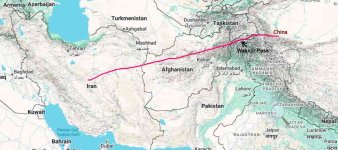
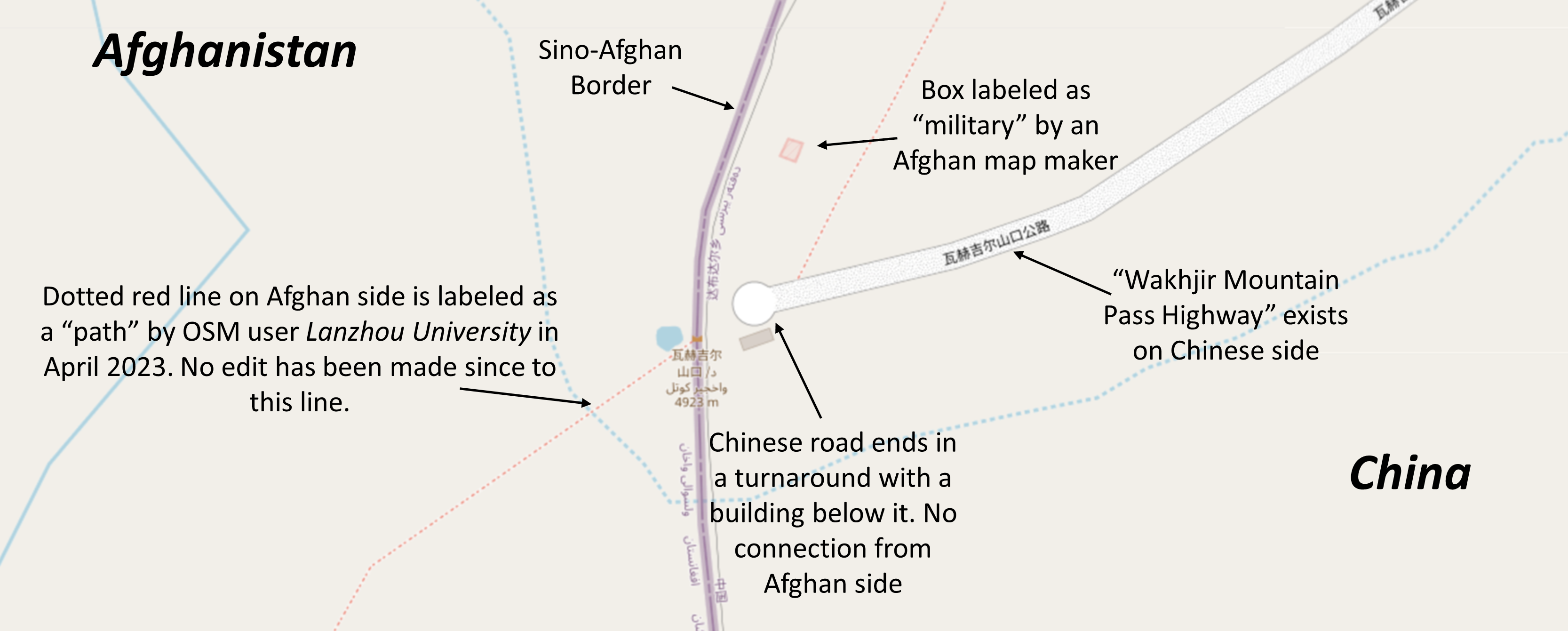
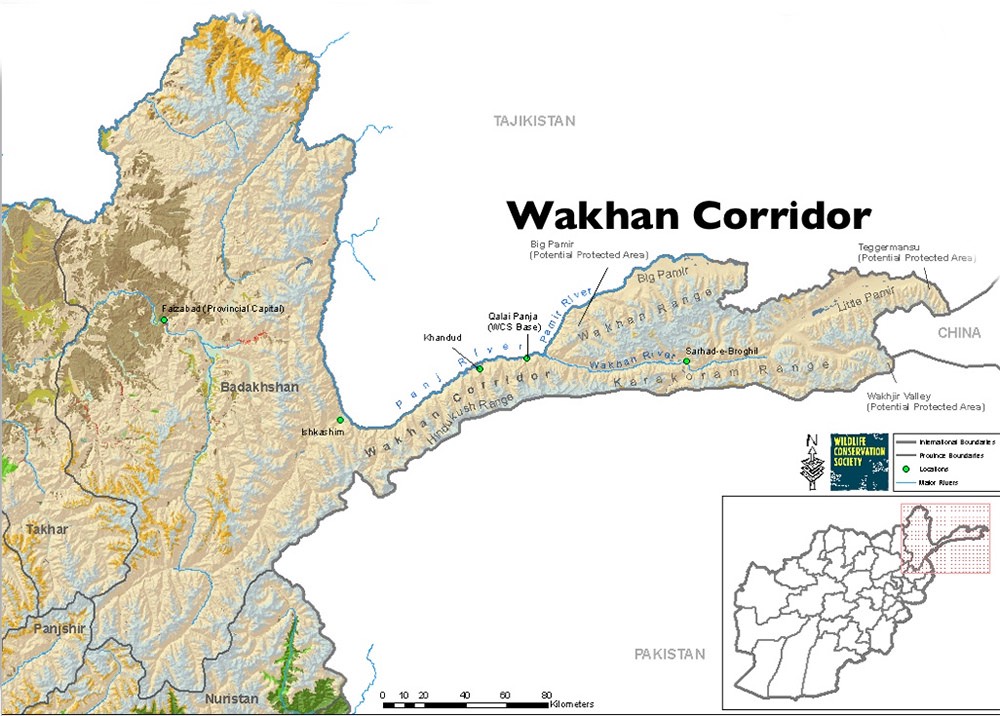
A myriad = 10,000. So 2 x 10,000 x 10,000 = 200,000,000. Only China could mobilize that large of an army
The sixth messenger trumpets, and I hear one voice out of the four horns of the gold altar before GOD saying to the sixth messenger having the trumpet, "Loose the four messengers bound upon the great river Euphrates." And the four messengers were loosed, the ones made ready into the hour, day, month, and year that they may kill the third of men. And the number of the troops of horsemen is two myriads (μυρίας) of myriads (μυρίας); I hear their number. Revelation 9:13-16
G3461 μυρίας murias (mï-riy'-as) n.1. a ten-thousand.
The IAEA also said there was no evidence Iran had a nuclear weapons program...
That's false. If that were true then WHY were they trying to get Iran in to let them inspect?
It's the moslem propaganda that is claiming they aren't trying to make nukes.
Coalition vibes....
Pakistan and Saudia Arabia's ability to wage war is about like Iran's ability to wage war... weak, very weak.
Good enough IMO. Time for a ceasefire....there is interest to negotiate from Iran.
Then we need to keep hammering until they cry uncle and we see regime change.
No missile program for five years
That's a mistake. It should be no military period!
There is no negotiating with moslems because they believe their god instructed them to lie to further their cause
Any agreement with them is no worth the paper it's printed on.
If the Iranians renege, well, expect a double tap in about 3 years.
Unless there's a democrat in the Whitehouse and in that event he'll be paying Iran for damages the US is doing to their country now.
You know how the liberals are. They love them some islam.
Yes I do interpret the Bible with a modern lens, because the old way has been replaced by the new. Why would I go back to the old redundant covenant, which no longer exists, when we have a new and better covenant.There is no question, this is this and you is you.
And you are interpreting the "all the nations" with a modern lens, what did it mean to the people who heard it first and how they spoke.
Hebrew people talk that way all through the Bible. For example:
Cyrus the King of Persia said, "The Lord, the God of Heaven, has given me all the kingdoms of the earth." (Ezra 1:2; 2 Chron. 36:23)
David writes, "All nations surrounded me." (Psalm 118:10)
God "brought" the fear of David on all the nations." (1 Chron. 14:17)
It is written of Hezekiah King of Judah "that he was exalted in the sight of all nations...." (2 Chron. 32:23)
The Chaldeans are said to "march throughout the earth." (Hab. 1:6)
"The people from all the earth came to Egypt to buy grain from Joseph." (Genesis 41:57)
"All the earth was seeking the presence of Solomon." (1 Kings 10:24)
"And all the nations shall serve him and his son, and his grandson until the time of his own land comes." (Jer. 27:7)
Nebuchadnezzar addresses his decree as "the king to all the people, nations, and men of every language that live in all the earth." (Daniel 4:1)
Israel and the Jews and the Gentiles don't exist anymore, they have been replaced by the Church. So this dispute about which word is the biblically correct one to describe (non Jews) is futile since they don't exist anymore.
The Lord Jesus came to put an end to the division of Gods people. Gods Word declares that there is no longer Jew or Gentile, everyone is equal in Christ. The Jews lost their (favoured status), when they rejected the Lord Jesus. He said something like "I came onto my own and they rejected me so I went to the Gentiles".
Much of the Old Testament is no longer relevant to us, under the new covenant. This issue was dealt with by the Apostles in the first century, they were challenged by the jews who wanted to hang onto their old ways. But the Apostles made it clear that we are now under the covenant of grace, so law keeping is no longer necessary for salvation.
The Jews had around 600 laws, they had to keep. It was impossible for anyone to keep those laws, so they had to keep sacrificing and burning their animals perpetually. The Lord Jesus sacrificed Himself as a once and for all sacrifice for the remission of sin for Gods people.
Israel and the Jews and the Gentiles don't exist anymore, they have been replaced by the Church. So this dispute about which word is the biblically correct one to describe (non Jews) is futile since they don't exist anymore.
This is not true. Israel has not been replaced by the church. Israel born from above and ruled by God himself replaced earthly Israel ruled by men as God's covenant people. The apostles and earliest believers weren't the church; they were Israel and they didn't stop being Israel when they were born from above.
So then, address all these prophecies, how are they not talking about earthly Israel coming to salvation? No Bible verse is of its own interpretation. Yes, believers are children of faith, and yes the church is the Israel above. Now reconcile that fact with these other verses in the Bible.This is not true. Israel has not been replaced by the church. Israel born from above and ruled by God himself replaced earthly Israel ruled by men as God's covenant people. The apostles and earliest believers weren't the church; they were Israel and they didn't stop being Israel when they were born from above.
Zechariah 12:2-3 — Jerusalem made a "cup of staggering" to surrounding peoples; all nations gather against it.
- If Jerusalem means "the church," which surrounding peoples were besieging the church in Zechariah's day — and why would a spiritual community need a literal Mount of Olives splitting in two just chapters later to provide an escape route?
- The text specifies Judah separately from Jerusalem — if both are spiritualized into "the church," why does the prophecy treat them as two distinct entities needing reconciliation?
Zechariah 12:9 — God will destroy nations that come against Jerusalem.
- Which literal nations will God destroy if the target city is metaphorical — and does it make coherent sense for real geopolitical armies to wage war against a spiritual abstraction?
Zechariah 12:10 — Israel looks on "him whom they have pierced" and mourns.
- Paul quotes this same piercing language in Romans 11:26 and applies it to ethnic Israel's future salvation — if the mourners here are the church, why would the church need to discover they pierced their own Messiah as a future event?
- The mourning is described clan by clan — the house of David, the house of Nathan, the house of Levi (v.12-13) — why would the Holy Spirit specify recognizable Israelite tribal lineages if the referent is a multinational spiritual body?
Zechariah 14:1-21 — Nations gather, city is taken, Lord's feet stand on the Mount of Olives, which physically splits.
- The Mount of Olives is a specific, named, surveyed geological feature northeast of Jerusalem. If this is symbolic, what is the symbol of — and why would symbolism require such precise topographical detail including compass directions (splitting east to west, halves moving north and south)?
- Verse 16 describes the survivors of attacking nations coming annually to Jerusalem to worship and keep the Feast of Tabernacles. Which feast does the church keep that fulfills this, and which church members were previously attacking Jerusalem?
Joel 3:2 — God gathers nations to the Valley of Jehoshaphat for judgment because they scattered Israel and divided the land.
- The stated reason for judgment is the scattering of a specific people and the partition of a specific land. If Israel is the church, which nations scattered the church into exile and divided its territory — and when did the church possess a land that could be geographically divided?
Isaiah 11:12 — God assembles the banished of Israel and gathers the dispersed of Judah from the four corners of the earth.
- The text distinguishes "Israel" from "Judah" as two separate groups being reunited — a distinction that maps precisely onto the historical Assyrian and Babylonian deportations. What theological event in the church's history produced two distinct spiritually-dispersed factions needing separate regathering?
- The word nidchey (נִדְחֵי, "banished/outcasts") carries the specific legal meaning of forcible exile. Can the church, which has never been nationally exiled, be the referent of a term with that precise juridical weight?
Isaiah 66:8 — "Shall a nation be born in one day?"
- This verse was routinely cited by Christian Zionists before 1948 as predicting Israel's rebirth as a nation. If it refers to the church, on what specific calendar date was the church "born in one day" — and why does the text use the Hebrew goy (nation-state) rather than qahal (congregation/assembly)?
Ezekiel 36:24 — "I will take you from the nations... and bring you into your own land."
- The antecedent of "your own land" is specified in the surrounding context as the mountains of Israel (36:1), the land given to the fathers (36:28), with its cities rebuilt and fields cultivated (36:33-35). Can a church composed of every ethnicity on earth be "brought back" to a land it never possessed — and how does spiritual Israel plant literal vineyards (v.35)?
Ezekiel 38-39 — Gog of Magog leads a coalition (including Persia/Iran, Cush, Put) against Israel.
- Persia, Cush, and Put are unambiguously literal nation-states in every other use in the Hebrew Bible. By what interpretive rule do they remain literal while Israel alone becomes symbolic within the same sentence?
- The aftermath describes seven months of burying the dead in Israel and seven years of burning weapons (39:9,12) — what spiritual community buries spiritual corpses for a literal seven-month period on a literal piece of geography called "the Valley of Hamon-Gog"?
Luke 21:24 — Jerusalem trampled by Gentiles "until the times of the Gentiles are fulfilled."
- The word until (ἄχρι) implies a terminus — a point at which Gentile domination of Jerusalem ends. If Jerusalem is the church, what does it mean for Gentiles to stop trampling the church — and hasn't the church always been predominantly Gentile?
- Jesus is answering a question about a specific physical temple his disciples could point to (v.5) — at what point does literal architecture become a metaphor within the same discourse?
Daniel 9:27 — The Antichrist makes a covenant, then ends sacrifice and offering at the midpoint.
- "Sacrifice and offering" (הַזֶּבַח וּמִנְחָה) are the precise technical terms of the Levitical sacrificial system. For this prophecy to be fulfilled spiritually, does the church need to first re-establish a literal sacrificial system — and if not, what exactly is being stopped?
Romans 11:26 — "All Israel will be saved."
- Paul has spent three chapters (Romans 9-11) carefully distinguishing ethnic Israel from Gentile believers, explicitly grieving that his own kinsmen according to the flesh (9:3) are currently enemies of the gospel (11:28). If "all Israel" here means the church, who are the enemies-of-the-gospel branches that get re-grafted in (11:23-24)?
Genesis 15:18 — Land covenant from the river of Egypt to the Euphrates given to Abram's offspring.
- This covenant has never been fulfilled in its full geographical extent in any period of Israelite or church history. If "offspring" means spiritual children by faith, which Gentile Christians are currently in legal possession of the territory between the Nile and the Euphrates — and does real estate transfer spiritually?
So then, address all these prophecies, how are they not talking about earthly Israel coming to salvation? No Bible verse is of its own interpretation. Yes, believers are children of faith, and yes the church is the Israel above. Now reconcile that fact with these other verses in the Bible.
Genesis 15:18 — Land covenant from the river of Egypt to the Euphrates given to Abram's offspring.
- This covenant has never been fulfilled in its full geographical extent in any period of Israelite or church history. If "offspring" means spiritual children by faith, which Gentile Christians are currently in legal possession of the territory between the Nile and the Euphrates — and does real estate transfer spiritually?
I already told you I'm not going to address all of this list at once; You are free to post each individually and I will respond. However, I will adress this one from your post.
First, in Genesis 15:18 God made a covenant with Abraham promising to give the land to his seed (singular) Christ. Paul verifies in Galatians 3:16 that the seed is Christ, not Israel
In the same day the LORD made a covenant with Abram, saying, Unto thy seed have I given this land, from the river of Egypt unto the great river, the river Euphrates: Genesis 15:18
Now to Abraham and his seed were the promises made. He saith not, And to seeds, as of many; but as of one, And to thy seed, which is Christ. Galatians 3:16
Second, God did fulfill his promise to give the full extent of the land mentioned in Genesis 15:18 to Israel to live in.
And the LORD gave unto Israel all the land which he sware to give unto their fathers; and they possessed it, and dwelt therein. And the LORD gave them rest round about, according to all that he sware unto their fathers: and there stood not a man of all their enemies before them; the LORD delivered all their enemies into their hand. There failed not ought of any good thing which the LORD had spoken unto the house of Israel; all came to pass. Joshua 21:43-45
David smote also Hadadezer, the son of Rehob, king of Zobah, as he went to recover his border at the river Euphrates. 2 Samuel 8:3
And Solomon reigned over all kingdoms from the river [Euphrates] unto the land of the Philistines, and unto the border of Egypt: they brought presents, and served Solomon all the days of his life. 1 Kings 4:21




Replacement theology is all an hoax, backed up by denial and willful ignorance.So then, address all these prophecies, how are they not talking about earthly Israel coming to salvation? No Bible verse is of its own interpretation. Yes, believers are children of faith, and yes the church is the Israel above. Now reconcile that fact with these other verses in the Bible.
Zechariah 12:2-3 — Jerusalem made a "cup of staggering" to surrounding peoples; all nations gather against it.
- If Jerusalem means "the church," which surrounding peoples were besieging the church in Zechariah's day — and why would a spiritual community need a literal Mount of Olives splitting in two just chapters later to provide an escape route?
- The text specifies Judah separately from Jerusalem — if both are spiritualized into "the church," why does the prophecy treat them as two distinct entities needing reconciliation?
Zechariah 12:9 — God will destroy nations that come against Jerusalem.
- Which literal nations will God destroy if the target city is metaphorical — and does it make coherent sense for real geopolitical armies to wage war against a spiritual abstraction?
Zechariah 12:10 — Israel looks on "him whom they have pierced" and mourns.
- Paul quotes this same piercing language in Romans 11:26 and applies it to ethnic Israel's future salvation — if the mourners here are the church, why would the church need to discover they pierced their own Messiah as a future event?
- The mourning is described clan by clan — the house of David, the house of Nathan, the house of Levi (v.12-13) — why would the Holy Spirit specify recognizable Israelite tribal lineages if the referent is a multinational spiritual body?
Zechariah 14:1-21 — Nations gather, city is taken, Lord's feet stand on the Mount of Olives, which physically splits.
- The Mount of Olives is a specific, named, surveyed geological feature northeast of Jerusalem. If this is symbolic, what is the symbol of — and why would symbolism require such precise topographical detail including compass directions (splitting east to west, halves moving north and south)?
- Verse 16 describes the survivors of attacking nations coming annually to Jerusalem to worship and keep the Feast of Tabernacles. Which feast does the church keep that fulfills this, and which church members were previously attacking Jerusalem?
Joel 3:2 — God gathers nations to the Valley of Jehoshaphat for judgment because they scattered Israel and divided the land.
- The stated reason for judgment is the scattering of a specific people and the partition of a specific land. If Israel is the church, which nations scattered the church into exile and divided its territory — and when did the church possess a land that could be geographically divided?
Isaiah 11:12 — God assembles the banished of Israel and gathers the dispersed of Judah from the four corners of the earth.
- The text distinguishes "Israel" from "Judah" as two separate groups being reunited — a distinction that maps precisely onto the historical Assyrian and Babylonian deportations. What theological event in the church's history produced two distinct spiritually-dispersed factions needing separate regathering?
- The word nidchey (נִדְחֵי, "banished/outcasts") carries the specific legal meaning of forcible exile. Can the church, which has never been nationally exiled, be the referent of a term with that precise juridical weight?
Isaiah 66:8 — "Shall a nation be born in one day?"
- This verse was routinely cited by Christian Zionists before 1948 as predicting Israel's rebirth as a nation. If it refers to the church, on what specific calendar date was the church "born in one day" — and why does the text use the Hebrew goy (nation-state) rather than qahal (congregation/assembly)?
Ezekiel 36:24 — "I will take you from the nations... and bring you into your own land."
- The antecedent of "your own land" is specified in the surrounding context as the mountains of Israel (36:1), the land given to the fathers (36:28), with its cities rebuilt and fields cultivated (36:33-35). Can a church composed of every ethnicity on earth be "brought back" to a land it never possessed — and how does spiritual Israel plant literal vineyards (v.35)?
Ezekiel 38-39 — Gog of Magog leads a coalition (including Persia/Iran, Cush, Put) against Israel.
- Persia, Cush, and Put are unambiguously literal nation-states in every other use in the Hebrew Bible. By what interpretive rule do they remain literal while Israel alone becomes symbolic within the same sentence?
- The aftermath describes seven months of burying the dead in Israel and seven years of burning weapons (39:9,12) — what spiritual community buries spiritual corpses for a literal seven-month period on a literal piece of geography called "the Valley of Hamon-Gog"?
Luke 21:24 — Jerusalem trampled by Gentiles "until the times of the Gentiles are fulfilled."
- The word until (ἄχρι) implies a terminus — a point at which Gentile domination of Jerusalem ends. If Jerusalem is the church, what does it mean for Gentiles to stop trampling the church — and hasn't the church always been predominantly Gentile?
- Jesus is answering a question about a specific physical temple his disciples could point to (v.5) — at what point does literal architecture become a metaphor within the same discourse?
Daniel 9:27 — The Antichrist makes a covenant, then ends sacrifice and offering at the midpoint.
- "Sacrifice and offering" (הַזֶּבַח וּמִנְחָה) are the precise technical terms of the Levitical sacrificial system. For this prophecy to be fulfilled spiritually, does the church need to first re-establish a literal sacrificial system — and if not, what exactly is being stopped?
Romans 11:26 — "All Israel will be saved."
- Paul has spent three chapters (Romans 9-11) carefully distinguishing ethnic Israel from Gentile believers, explicitly grieving that his own kinsmen according to the flesh (9:3) are currently enemies of the gospel (11:28). If "all Israel" here means the church, who are the enemies-of-the-gospel branches that get re-grafted in (11:23-24)?
Genesis 15:18 — Land covenant from the river of Egypt to the Euphrates given to Abram's offspring.
- This covenant has never been fulfilled in its full geographical extent in any period of Israelite or church history. If "offspring" means spiritual children by faith, which Gentile Christians are currently in legal possession of the territory between the Nile and the Euphrates — and does real estate transfer spiritually?
4 verses or 400, facts and proofs don't matter for them.
[Zec 2:10-13 KJV]
10 Sing and rejoice, O daughter of Zion: for, lo, I come, and I will dwell in the midst of thee, saith the LORD.
11 And many nations shall be joined to the LORD in that day, and shall be my people: and I will dwell in the midst of thee, and thou shalt know that the LORD of hosts hath sent me unto thee.
12 And the LORD shall inherit Judah his portion in the holy land, and shall choose Jerusalem again.
13 Be silent, O all flesh, before the LORD: for he is raised up out of his holy habitation.


Yes I do interpret the Bible with a modern lens, because the old way has been replaced by the new. Why would I go back to the old redundant covenant, which no longer exists, when we have a new and better covenant.
Israel and the Jews and the Gentiles don't exist anymore, they have been replaced by the Church. So this dispute about which word is the biblically correct one to describe (non Jews) is futile since they don't exist anymore.
The Lord Jesus came to put an end to the division of Gods people. Gods Word declares that there is no longer Jew or Gentile, everyone is equal in Christ. The Jews lost their (favoured status), when they rejected the Lord Jesus. He said something like "I came onto my own and they rejected me so I went to the Gentiles".
Much of the Old Testament is no longer relevant to us, under the new covenant. This issue was dealt with by the Apostles in the first century, they were challenged by the jews who wanted to hang onto their old ways. But the Apostles made it clear that we are now under the covenant of grace, so law keeping is no longer necessary for salvation.
The Jews had around 600 laws, they had to keep. It was impossible for anyone to keep those laws, so they had to keep sacrificing and burning their animals perpetually. The Lord Jesus sacrificed Himself as a once and for all sacrifice for the remission of sin for Gods people.
Okay.
A spat with a neighbor? Or casus belli?
Frankly ridiculous. Not to mention the massive financial losses.
Frankly ridiculous. Not to mention the massive financial losses.
Oh well the people who manufactured this fake "end time" play/psy-ops seem to be having some troubles.