Is Knowledge of the Original Languages Necessary for KJV Believers?

  • Christian Chat is a moderated online Christian community allowing Christians around the world to fellowship with each other in real time chat via webcam, voice, and text, with the Christian Chat app. You can also start or participate in a Bible-based discussion here in the Christian Chat Forums, where members can also share with each other their own videos, pictures, or favorite Christian music.

    If you are a Christian and need encouragement and fellowship, we're here for you! If you are not a Christian but interested in knowing more about Jesus our Lord, you're also welcome! Want to know what the Bible says, and how you can apply it to your life? Join us!

    To make new Christian friends now around the world, click here to join Christian Chat.
Would you mind proofreading your posts and correcting typos and misspellings before you post it. This post is atrocious. If English is not your native language, use the Google Translator and have an English friend read your post before you post it. That person can refine it to be accurate. An occasional typo or misspelling is to be expected, but this post is to difficult to read and comprehend.
I’m doing my best partner
 
  • Like
Reactions: tourist
How about you list 3 of them that are the most serious and I will respond to them. I want to deal with the actual text, not some hearsay.
I have a life to live and I am very busy with other TR/KJV projects.
The information is there in my 77 Changed Doctrines PDF on my website.
Just keep in mind that I do need to do a major overhaul on looking to these words again with the original languages in some places.

Bible Highlighter said:
From new age ideas, to Catholic ideas, and more.
Sheer poppycock. You seem to think it is ok to make blanket statements without giving real citations.
As for my statement: "From new age ideas, to Catholic ideas, and more.":

We are not living in the 1980s anymore. We have this thing called the internet and AI, and you can get those sources. But if you really don't know what I believe is just common knowledge, you can check out my 77 Changed Doctrines PDF on my website for the proof (www.affectionsabove.com). Just go to the Table of Contents and you can find both sections easily.​

As for my statement: "Do you know that the Westcott & Hort movement basically influenced by German Rationalism?"
Check out this video here:


He goes over the deeply researched info from WayofLife.org.​
Granted, if you don't believe him, just ask AI for various sources to back it up.​

As for my statement: "The Modern Lexicons have expanded definitions that go beyond its historic usage when you compare them to the older classic lexicons. before the 1700s (such as Buxtorf, and Stephanus' lexicons, etc.).":

Well, I have 17 on my list so far that I need to double confirm the lexicons more. But monogenes appears to be a solid one that is redefined. The KJVER translation (while not a lexicon) does redefine the word "sodomite" as male cult prostitute, which is absolutely ridiculous. I also highlight a change in a modern lexicon in my PDF that has the animated water in the background on my site.​

As for "Modern scholarship is well known among TR advocates that they make up lies and stories about Erasmus.":

This comes from various TR defenders and not just one Textus Receptus with a grudge on their shoulder.​
Granted, I could source this, but I do have a life.​
How about you research it and get back to me on it?​

Bible Highlighter said:
When Modern scholars say how many Greek MSS make up the Textus Receptus Greek, they just make up whatever number comes up in their head in most cases because that number fluctuates even among that same person.
The actual manuscripts the committee used are a matter of public record.
Uh, I was talking about Modern scholars when they refer to how many manuscripts Erasmus used for his Textus Receptus editions.
They are notorious for making up different numbers that come into their head.
They are not saying this by any kind of heavy research that they did on the matter.
Why would they? The TR/KJV is their enemy text.


The standard Bible used was the Latin Vulgate since the 4th century. You keep referring to English Translations/Versions and not the Greek Text.
Why because the Catholic Church is a cult and massacred more Christians in human history than any other organization. So I fail to see why they are even on your radar.

The Bible started to be read and spread and changed people lives like no other with the King James Bible. Three of the greatest revivals was a result of the KJV. Unity and memorization of one text by various Protestant denominations was by a King James Bible. Pubic schools used to teach from the King James Bible and it helped shaped the laws in the United States and influence other countries in ways that cannot be calculated.

Yes, there is also the Greek text. I am a huge proponent for the underlying Greek of the KJV, which is primarily the Beza 1598 (except for 25 translatable differences). I fight against many KJV English only Christians all the time in trying to get them to study the original languages or at least do word studies. But they are suspicious of the original language words for some odd reason.


....
 
Short answer - no.
Is Acts 14:12 referring literally to "Jupiter" or to "Zeus"?
Keep in mind I do not think the KJV is in error here because of Interpretation Romana.
But the underlying Greek here is Dia (Which is a form of Zeus in the Greek).
There are no Greek manuscripts that read "Jupiter."


....
 
It's all Greek to me. :)
Imagine if your child refused to learn his own native tongue in English and kept making excuses for why he did not want to learn.

What would you say to him? Would you say, ‘Don’t worry about it’?
Would you tell him never to learn anything if he does not feel like it?

In some ways, I understand the hesitation. If you are a KJV believer and you have run into Modern Bible believing Christians who appealed to Hebrew and Greek while defending corrupt readings found in Modern English Bibles, I can understand why skepticism exists. If that has been your experience, hesitation makes sense. Too often original language arguments are employed in a way that places trust in questionable readings or expanded modern definitions instead of the historic text and older lexical understanding that existed before later rationalistic influences.

I am not defending the Critical Text, nor am I saying the KJV is in error as some do. I believe the KJV is God’s word in English. However, the KJV is preserved in 1600s English, and there are original language words that can convey deeper layers of meaning not always fully seen in the English alone.

I make my case for this in my free PDF at www.AffectionsAbove.com. It is the PDF with the animated ocean depths background.


....


....
 
  • Like
Reactions: tourist
It's all Greek to me. :)
Some with a few more years { to become expert language scholars } than
you and I brother, may "have at it", but for us simpletons "our own language"
is good enough for the short time we have left, eh? Even God's Good News Said:

""Now when this was noised abroad, the multitude came together, and were​
confounded, because that every man heard them speak in his own language.​
And they were all amazed and marvelled, saying one to another, Behold, are​
not all these which speak Galilæans? And how hear we every man in our own
tongue, wherein we were born? (Acts 2:6-8 AV)​
Plus, I have never hear a Command From Him "to be a language scholar" to
understand His Word Of Truth To me, But The Holy Spirit Helps me understand It
(1 Corinthians 2:12-13 AV)? Amen?

Scholars may be "fighting with others" about this idea, but not with us, eh?

Grace And Peace, precious friend...
 
  • Like
Reactions: tourist
Some with a few more years { to become expert language scholars } than
you and I brother, may "have at it", but for us simpletons "our own language"
is good enough for the short time we have left, eh? Even God's Good News Said:

""Now when this was noised abroad, the multitude came together, and were​
confounded, because that every man heard them speak in his own language.​
And they were all amazed and marvelled, saying one to another, Behold, are​
not all these which speak Galilæans? And how hear we every man in our own
tongue, wherein we were born? (Acts 2:6-8 AV)​
Plus, I have never hear a Command From Him "to be a language scholar" to
understand His Word Of Truth To me, But The Holy Spirit Helps me understand It
(1 Corinthians 2:12-13 AV)? Amen?

Scholars may be "fighting with others" about this idea, but not with us, eh?

Grace And Peace, precious friend...
Grace And Peace to you as well, precious friend.
 
We are not living in the 1980s anymore. We have this thing called the internet and AI, and you can get those sources. But if you really don't know what I believe is just common knowledge, you can check out my 77 Changed Doctrines PDF on my website for the proof (www.affectionsabove.com). Just go to the Table of Contents and you can find both sections easily.


...
B_H, All the changes I saw were no problem. I think you were just seeing problems that were not there. Calling Jesus the unique God is what is in the modern texts, which is more reverent than the KJV. Have you read the reasons why some changes were made? I really think you need to spend your time studying the whole counsel of God so you are not a one dimensional reader. Put that KJV study away for a while, can go on to the meat of the word.
 
B_H, All the changes I saw were no problem. I think you were just seeing problems that were not there. Calling Jesus the unique God is what is in the modern texts, which is more reverent than the KJV. Have you read the reasons why some changes were made? I really think you need to spend your time studying the whole counsel of God so you are not a one dimensional reader. Put that KJV study away for a while, can go on to the meat of the word.
Here is the problem with your approach. You are defending a team (as if you were rooting for a football team), and you are not going by the standard historic meaning and usage of that word. You are not following the evidence where it may lead, but you are defending your Critical Text group as if they were offering absolute truth. If so, then they should be consistent with the truth and not deceive or lie or do things that would make me question the bad fruit in their own Movement. I see patterns of evidence for the worse with Modern Bibles and the Modern scholars' bad approach to translation. You have hundreds of Bibles, and they all differ from one another, and it all leads to confusion. There is no memorization or unity over one text that is believed to be God’s very words. You have a Critical Text that keeps shape shifting and changing slightly every few years. Your text was shaped by liberals, Unitarians, and Catholics. That does not sound like they are even qualified to handle Scripture, let alone understand it. If we take the “let's create a new non-historic meaning to original language words” approach to every Greek and Hebrew word, the consequences can be extremely devastating. God warns not to add to or take away from His word. Imagine, if these Modern scholars are breaking the command in Revelation that if they take away from God’s words, He will take their name out of the book of life? Imagine the possibility that their demand to eliminate the Johannine Comma in 1 John 5:7 and the longer ending in Mark will cost them their salvation when they face Jesus on Judgment Day? I believe it will. Now, does it mean that every believer in the Modern Bible Movement is not saved? No, I am not saying that. Many are simply ignorant of Bible history.

Also, we are not talking about just one change in Modern Bibles here. But many changes create a pattern that cannot be denied. Sure, you may say that I can just look at monogenes differently, but you're not offering a case for a meaning that would stand under any kind of scrutiny of historical usage. We are not talking about the testicles or legs of the Behemoth here, or something minor, either. This is really important. If one interprets the idea that Jesus is the begotten God, one can think He did not exist eternally; they have a different view of God that is false. I have run into Christians who think this way, and I am sure they love the NASB 95 rendering. So you say I can just look at this one differently, but I have catalogued approximately 21 places in Scripture that water down the deity of Jesus Christ. That’s no small number and when you add in the 25 Catholic ideas I found, and the numerous new age ideas and the 18 verses that alter Scripture to attack the Communicated Word whereby you would trust that His words are pure and preserved rather than trusting that only the cardinal doctrines, ideas, and general stories are preserved, then one has to reach a conclusion that your team is simply fighting a lost cause that is not rooted in the truth of God’s word. See, you are not putting together these evidences like a good detective would do. You have to ignore all the heretics in your movement who shaped your text, and ignore the deceptions, ignore the tons of patterns of bad doctrine. So when you say, “Oh, you can just look at this one differently,” you cannot employ that tactic with all the other ones that create really bad patterns that make it obvious that the Modernist Critical Text and its scholarship are horribly corrupt. I have yet to encounter any kind of rebuttal from your side that can explain the heretics, the many changed doctrines, the lack of memorization, unity, and reverence for Scripture. How can you reverence Scripture when your teammates are treating it like a piece of meat to be chopped up like at a butcher shop? It’s madness. It’s confusion. I encourage you to look at both sides of Bible history from a real, objective standpoint. I say this because many have fallen away from the faith within your movement because they have no settled word of God or text that they can 100% trust. We walk by faith and not by sight. Granted, the TR/KJV is not 100% blind faith. If you look at the Middle English dictionary and the older lexicons, you will see that places like “God forbid” and “penny” are not what you may think. But because your side attacks the TR and the King James Bible and shoehorns in that they also love it (which is contradictory), then they will have to explain to Jesus why they attacked His word (If indeed it does turn out that we are right about the TR/KJV being his perfect and preserved words today). Note: I believe the TR/KJV are his preserved words for today for many reasons.

Jesus says, "Believe me that I am in the Father, and the Father in me: or else believe me for the very works' sake." (John 14:11).

In other words, I would like you to do a fruit test.

Be as objective and unbiased as you can.

The work or fruit of your movement vs. the fruit or work of the movement of the TR/KJV.

Our movement was a part of the Reformation. Martin Luther used one of Erasmus' editions.
In fact, I am sure you heard the phrase, Erasmus was the egg that Luther hatched.

Our text has been soaked with the blood of the saints. People who helped spread our text in its early beginnings were Bible translators. They were helping to spread the word to English-speaking people, and they were martyred for their faith.

Our text was saved by a miraculous event (i.e., the gunpowder plot).

Our text had a scholarship unlike any other in human history. Not only was Erasmus recognised as one of the top Greek linguists, with him translating into Greek tons of poems, etc. and other works, but the KJV translators knew the original languages on a level that no group of scholars before them or after has ever been able to match. Just look into Sir Lancelot Andrews. Nobody alive today or since his time has come into existence who has worked on translating the Bible.

Our text (the KJV) has led to three of the greatest revivals in human history.

Our text has led to the unity and memorization of God's word.

Our text was once in public schools for centuries.

Compare that to the fruit of German Rationalism, which influenced Westcott and Hort and their movement, which exists today?

There is no real comparison.

One is good, and the other is counterfeit.


....
 
  • Heart
Reactions: dkontner
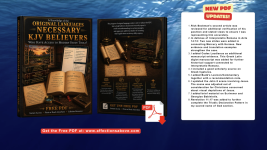
001_Original_Languages_6.png

Is Knowledge of the Original Languages Necessary for KJV Believers? (New Updates):

Updates for my 2nd Edition:


#1. Rick Beckman’s position and stated views were reviewed to ensure accurate representation. In my investigation, I discovered that in Rick's second article on the topic, he acknowledged that one must appeal to the original Hebrew and Greek to resolve differences between KJV editions, although Rick's first article did not make this clarification.

#2. In defense of Interpretatio Romana in Acts 14:12, two additional points were added connecting Mercury with Hermes.• A Greek stone inscription was added as additional historical evidence.• Additional evidence was added showing that the KJV translators translated the same Greek word as "Mercurius" (Mercury) in Acts 14:12, and "Hermes" in Romans 16:14, further strengthening the case for Interpretatio Romana.

#3. In defense of Interpretatio Romana in Acts 14:12: Codex Laudianus, a 6th-7th century Greek-Latin diglot manuscript of Acts, provides an early witness to the Interpretatio Romana practice of rendering Zeus as Jupiter. With Latin in one column and Greek in the other, this manuscript naturally displays the Greek-Latin correspondence between Zeus and Jupiter.

#4. A documented source on Greek ligatures was added. This is important because knowing how to read ligatures is particularly useful when reading or studying the Beza 1598. The Beza 1598 is the Greek Textus Receptus edition that primarily underlies the KJV New Testament, except for approximately 25 translatable differences.

#5. Budé's Lexicon/Commentary was included along with a brief recommendation note. Budé's Lexicon/Commentary is useful in looking at how ancient Greek authors understood and applied words across historical contexts.

#6. The John 8 scene involving Jesus was adjusted out of consideration for Christians concerned about visual depictions of Jesus. So I reworked the scene to no longer show any feet or legs of Jesus.

#7. Brief material on Scrivener and Georgios Babiniotis is included. Additional material shows that Scrivener argued against the Johannine Comma as early as 1861, years before publishing his Cambridge Paragraph Bible in 1873. A subpoint covers Professor Georgios Babiniotis' grammatical analysis of syntactic parallelism in 1 John 5:7-8, explaining how the neuter nouns in verse 8 fall under the masculine construction of verse 7 through the governing influence of the personified subjects, rather than ordinary gender agreement alone.

#8. Revelation 11:17 was added to further complete the Triadic Declaration Pattern in my sacred name of God section.


Check out the new updates in my 2nd Edition of my free PDF at www.affectionsabove.com


....
 
People don't need to worry about original languages, they need to worry about Gods will.
Whether I'm greek, hebrew, etheopian, or chaldean, I can discern that Gods word is telling me that I aught to be honest and kind, hopeful and faithful to the Words of the Lord, if I want to be righteous.
 
I think people who limit their scope to ideas like 'kjv only' make their world very small, because it disregards everyone who can't read english, and people who aren't literate enough in english to easily comprehend the KJV.
 
  • Like
Reactions: pinebeach
I think people who limit their scope to ideas like 'kjv only' make their world very small, because it disregards everyone who can't read english, and people who aren't literate enough in english to easily comprehend the KJV.
With the Modern Bible Movement approach, people have fallen away from the faith before because there is no set standard on what is and what is not the precise words of God. When God cannot perfectly preserve His words, it does not breed confidence in what He says is true even on the most important parts of His word. The original languages does not make any sense in the Modern Bible Movement, but in the TR/KJV Bible line (Which is God's preserved words), I believe it necessary because it helps you to know truth and God's will more fully and precisely.

Jesus cared about jots and tittles, and yet most today do not agree with Him on this point.
Most are happy to chop up God's word like it is a piece of meat at a butcher shop. That's where we are at today.


....
 
  • Love
Reactions: dkontner
With the Modern Bible Movement approach, people have fallen away from the faith before because there is no set standard on what is and what is not the precise words of God.
I don't know what all these 'movements' are that you guys talk about, or where they come from.
If someone's saying something that goes against the heart of the scriptures, rebuke and help their misunderstanding.
We have more than enough resources to prove what's based on what now.
 
  • Like
Reactions: DavidLamb
When God cannot perfectly preserve His words, it does not breed confidence in what He says is true even on the most important parts of His word. The original languages does not make any sense in the Modern Bible Movement, but in the TR/KJV Bible line (Which is God's preserved words), I believe it necessary because it helps you to know truth and God's will more fully and precisely.
What about the Johannine Comma?
And look up how many omissions and alterations are made in the TR to Revelation, the book that strictly warns not to add or remove to its words, from the Byzantine MT.
 
I don't know what all these 'movements' are that you guys talk about, or where they come from.
If someone's saying something that goes against the heart of the scriptures, rebuke and help their misunderstanding.
We have more than enough resources to prove what's based on what now.
You said you don’t know what all these “movements” are. Let me clarify. I was not referring to many movements. I was referring to one movement only: what I call the Modern Bible Movement.

By movement, I mean an organized shift in thinking, methods, and influence that gains momentum over time. We use this kind of language regularly. People speak of movements such as the Protestant Reformation, the Civil Rights Movement, or movements in theology.

A movement can be good or bad. The determining factor is whether that movement aligns with Scripture or departs from it. If a movement remains faithful to God's Word, it is good. If a movement undermines biblical truth, certainty, doctrine, or confidence in God's preservation of His words, believers should carefully examine it in light of Scripture.

In my view, the Modern Bible Movement represents a newer textual approach that became widely influential in modern times.

By German Rationalism, I mean intellectual movements that arose particularly in Germany during the eighteenth and nineteenth centuries which elevated human reason and historical criticism as central tools for evaluating religious truth and Scripture.

Some associated with these rationalistic movements questioned or denied supernatural elements of Scripture, including miracles, and approached the Bible more as a human document to be critically analyzed rather than beginning from faith in God's supernatural inspiration and preservation of Scripture.

German Rationalism itself is not the Modern Bible Movement. However, in my view, it helped shape ideas and scholarly approaches that later influenced modern textual criticism and modern biblical scholarship. In my understanding, these developments contributed to scholarly trends that later influenced Westcott and Hort and subsequent textual approaches that followed. From my perspective, those later developments ultimately helped shape what today is known as the Modern Bible Movement.

I trace much of the Modern Bible Movement historically to Westcott and Hort’s 1881 Greek text work and the English Revised Version of 1881. However, in my view, this newer Bible line developed through phases of influence. Earlier translations associated with critical textual scholarship existed beforehand, but I believe this newer textual approach did not become broadly influential among everyday Bible readers until the enormous success of the NIV in 1978 and the rise of later modern Bible translations.

While there are differences among modern textual scholars and modern Bible translations, I believe modern critical approaches place greater weight upon manuscripts such as Vaticanus and Sinaiticus, whereas the traditional textual line follows the Received Text tradition, commonly known as the Textus Receptus.

From my perspective, the differences extend beyond manuscript preference alone. They also involve doctrinal changes, newer lexicons that sometimes offer expanded definitions which I believe are not sufficiently grounded in historic usage, and translation theories that I believe are flawed because they are not rooted in trusting God's promises regarding the preservation of His words.

Scripture teaches that God's words are pure (Psalm 12:6), preserved (Psalm 12:7), and that believers can have certainty regarding the words of truth (Proverbs 22:20–21). Scripture also teaches that God's Word does not return void (Isaiah 55:11). Because of this, I believe translation philosophy and textual methodology should begin from trust in God's preservation rather than uncertainty regarding whether His words have been faithfully preserved.

While influence is important, I do not believe influence alone determines the true text. Rather, I believe history, Scripture's teaching regarding preservation, and God's providential hand working through history together help identify the true text. Lasting historical influence and positive spiritual impact are important considerations, but they are not the only considerations.

While history serves as a guide, I believe God's true Word would ultimately bear lasting fruit and influence throughout history, even if there are periods where that influence appears smaller or faces opposition.

Because of this, I believe God's preserved Word would ultimately leave a lasting witness upon history, producing lasting historical influence and positive spiritual impact over time.

In my view, smaller textual positions may exist historically without developing broad influence. For example, positions such as Byzantine Priority or Majority Text advocacy exist, but I do not view them as having exercised the same degree of historical impact as the Textus Receptus tradition and the King James Bible.

From my perspective, the two major Bible lines with broad influence today are the traditional Textus Receptus / King James Bible line and the newer Modern Bible Movement.

From my perspective, one line preserves what I believe to be the true historic text preserved through the traditional Received Text line, culminating in the Greek text tradition underlying the King James Bible, especially Beza 1598, except for approximately 25 translatable differences. The other line is represented by the newer Modern Bible Movement that follows a different textual philosophy and manuscript priority.

I personally see the Modern Bible Movement as corrupt. However, that does not mean people cannot be saved within that movement, nor does it mean believers within it cannot pursue holiness and sincerely love the Lord.

At the same time, I believe there are elements within Modern Bibles and Modern Scholarship that can be spiritually harmful. In my view, teachings that deny the certainty of God's preserved words, or promote the idea that no Bible can be perfect, can create doubt regarding biblical authority and preservation.

I believe such ideas have the potential to weaken confidence in Scripture and, in some cases, contribute to people falling away from the faith. For this reason, believers should carefully examine teachings, translation philosophies, and textual methods in light of Scripture and hold firmly to the certainty of the words of truth.

Overall, I see the Modern Bible Movement as a movement that introduces unnecessary obstacles for believers to navigate, particularly regarding certainty, preservation, and confidence in God's words.

So when I use the phrase Modern Bible Movement, I am not referring to many movements. I am referring to one modern textual trend that, in my understanding, stands in contrast to the traditional received text line.

That is why, from my perspective, this is not merely a discussion about preferences in Bible translation. It is a discussion about preservation, authority, textual philosophy, doctrinal certainty, and whether believers today can truly possess a preserved and certain Word of God. For those reasons, I believe the traditional received text line represents God's preserved words, whereas the newer modern movement represents a departure from that historic path.


....

 
You said you don’t know what all these “movements” are. Let me clarify. I was not referring to many movements. I was referring to one movement only: what I call the Modern Bible Movement.

By movement, I mean an organized shift in thinking, methods, and influence that gains momentum over time. We use this kind of language regularly. People speak of movements such as the Protestant Reformation, the Civil Rights Movement, or movements in theology.

A movement can be good or bad. The determining factor is whether that movement aligns with Scripture or departs from it. If a movement remains faithful to God's Word, it is good. If a movement undermines biblical truth, certainty, doctrine, or confidence in God's preservation of His words, believers should carefully examine it in light of Scripture.

In my view, the Modern Bible Movement represents a newer textual approach that became widely influential in modern times.

By German Rationalism, I mean intellectual movements that arose particularly in Germany during the eighteenth and nineteenth centuries which elevated human reason and historical criticism as central tools for evaluating religious truth and Scripture.

Some associated with these rationalistic movements questioned or denied supernatural elements of Scripture, including miracles, and approached the Bible more as a human document to be critically analyzed rather than beginning from faith in God's supernatural inspiration and preservation of Scripture.

German Rationalism itself is not the Modern Bible Movement. However, in my view, it helped shape ideas and scholarly approaches that later influenced modern textual criticism and modern biblical scholarship. In my understanding, these developments contributed to scholarly trends that later influenced Westcott and Hort and subsequent textual approaches that followed. From my perspective, those later developments ultimately helped shape what today is known as the Modern Bible Movement.

I trace much of the Modern Bible Movement historically to Westcott and Hort’s 1881 Greek text work and the English Revised Version of 1881. However, in my view, this newer Bible line developed through phases of influence. Earlier translations associated with critical textual scholarship existed beforehand, but I believe this newer textual approach did not become broadly influential among everyday Bible readers until the enormous success of the NIV in 1978 and the rise of later modern Bible translations.

While there are differences among modern textual scholars and modern Bible translations, I believe modern critical approaches place greater weight upon manuscripts such as Vaticanus and Sinaiticus, whereas the traditional textual line follows the Received Text tradition, commonly known as the Textus Receptus.

From my perspective, the differences extend beyond manuscript preference alone. They also involve doctrinal changes, newer lexicons that sometimes offer expanded definitions which I believe are not sufficiently grounded in historic usage, and translation theories that I believe are flawed because they are not rooted in trusting God's promises regarding the preservation of His words.

Scripture teaches that God's words are pure (Psalm 12:6), preserved (Psalm 12:7), and that believers can have certainty regarding the words of truth (Proverbs 22:20–21). Scripture also teaches that God's Word does not return void (Isaiah 55:11). Because of this, I believe translation philosophy and textual methodology should begin from trust in God's preservation rather than uncertainty regarding whether His words have been faithfully preserved.

While influence is important, I do not believe influence alone determines the true text. Rather, I believe history, Scripture's teaching regarding preservation, and God's providential hand working through history together help identify the true text. Lasting historical influence and positive spiritual impact are important considerations, but they are not the only considerations.

While history serves as a guide, I believe God's true Word would ultimately bear lasting fruit and influence throughout history, even if there are periods where that influence appears smaller or faces opposition.

Because of this, I believe God's preserved Word would ultimately leave a lasting witness upon history, producing lasting historical influence and positive spiritual impact over time.

In my view, smaller textual positions may exist historically without developing broad influence. For example, positions such as Byzantine Priority or Majority Text advocacy exist, but I do not view them as having exercised the same degree of historical impact as the Textus Receptus tradition and the King James Bible.

From my perspective, the two major Bible lines with broad influence today are the traditional Textus Receptus / King James Bible line and the newer Modern Bible Movement.

From my perspective, one line preserves what I believe to be the true historic text preserved through the traditional Received Text line, culminating in the Greek text tradition underlying the King James Bible, especially Beza 1598, except for approximately 25 translatable differences. The other line is represented by the newer Modern Bible Movement that follows a different textual philosophy and manuscript priority.

I personally see the Modern Bible Movement as corrupt. However, that does not mean people cannot be saved within that movement, nor does it mean believers within it cannot pursue holiness and sincerely love the Lord.

At the same time, I believe there are elements within Modern Bibles and Modern Scholarship that can be spiritually harmful. In my view, teachings that deny the certainty of God's preserved words, or promote the idea that no Bible can be perfect, can create doubt regarding biblical authority and preservation.

I believe such ideas have the potential to weaken confidence in Scripture and, in some cases, contribute to people falling away from the faith. For this reason, believers should carefully examine teachings, translation philosophies, and textual methods in light of Scripture and hold firmly to the certainty of the words of truth.

Overall, I see the Modern Bible Movement as a movement that introduces unnecessary obstacles for believers to navigate, particularly regarding certainty, preservation, and confidence in God's words.

So when I use the phrase Modern Bible Movement, I am not referring to many movements. I am referring to one modern textual trend that, in my understanding, stands in contrast to the traditional received text line.

That is why, from my perspective, this is not merely a discussion about preferences in Bible translation. It is a discussion about preservation, authority, textual philosophy, doctrinal certainty, and whether believers today can truly possess a preserved and certain Word of God. For those reasons, I believe the traditional received text line represents God's preserved words, whereas the newer modern movement represents a departure from that historic path.


....
Come on man, it's either inspired by God, or it's not.
There are good english translations that aren't the KJV. If the message it gives creates believers and causes them to bear good fruit to God, then there's no sense in condemning it.
 
  • Sad
Reactions: dkontner
I don't know what all these 'movements' are that you guys talk about, or where they come from.
It's a conspiracy theory that took off in 1993 with the publication of Gail Riplinger's book New Age Bible Versions. It may have been around before that, but her book is what really fueled the fire. It claims there's a vast network of people trying to replace the KJV with modern translations that are Satanic and New Age. I agree there are those who are trying to move people away from the KJV; but it's not because they're Satanic, it's because the KJV is archaic and needs to be replaced. So KJV only isn't so much a preference as a crusade against Satan.