Calvinism is Gospel !

  • Christian Chat is a moderated online Christian community allowing Christians around the world to fellowship with each other in real time chat via webcam, voice, and text, with the Christian Chat app. You can also start or participate in a Bible-based discussion here in the Christian Chat Forums, where members can also share with each other their own videos, pictures, or favorite Christian music.

    If you are a Christian and need encouragement and fellowship, we're here for you! If you are not a Christian but interested in knowing more about Jesus our Lord, you're also welcome! Want to know what the Bible says, and how you can apply it to your life? Join us!

    To make new Christian friends now around the world, click here to join Christian Chat.
Status
Not open for further replies.
If you're suggesting that everyone is born with the ability freely choose to believe the gospel, prior to being converted, then you need to show me where the Bible supports this idea.
That is exactly what she teaches, as she says inability does not exist regardless of the FACT that it does and has been put in front of her eyes multiple times. She does not have eyes to see. She goes even further and says divine intervention (God) is not required in the process of someone coming to believe, which is about as far from Scripture truth as one can get.
 
  • Pray
Reactions: Journey_man
Your Romans 8 quote is out of context - those he foreknew were Israel whom he had a covenant relationship with.

Romans 11:1 say then, Hath God cast away his people? God forbid. For I also am an Israelite, of the seed of Abraham, of the tribe of Benjamin.
2 God hath not cast away his people which he foreknew. . .
God chose to save elect individuals, not the nation of Israel as a whole. He chose the ethnic nation of Israel as a whole to be a light to the world, to receive the Law, and to act as the bloodline for the Messiah. However, this corporate election granted earthly and covenantal privileges, not automatic eternal life.
From eternity past, God unconditionally chose specific, individual people out of fallen humanity (both Jews and Gentiles) to receive saving grace, faith, and eternal life.
Paul states in Romans 9:6 that "they are not all Israel who are of Israel." This means there is a faithful, saving "remnant" within ethnic Israel. God's choice is based purely on His sovereign mercy (as seen in choosing Jacob over Esau before they had done anything good or bad), not on national identity or human effort.

There is one "Olive Tree", rather than two completely separate plans, God's people as one continuous entity, often called the "Israel of God." In Romans 11, Paul uses the illustration of an olive tree to explain this. Unbelieving, non-elect Israelites are "broken off" the tree for their lack of faith.
Therefore, the ultimate chosen people of God—the Church—consists of the total number of the elect from all generations, regardless of their ethnic background.

 
  • Like
Reactions: rogerg
Paul states in Romans 9:6 that "they are not all Israel who are of Israel."
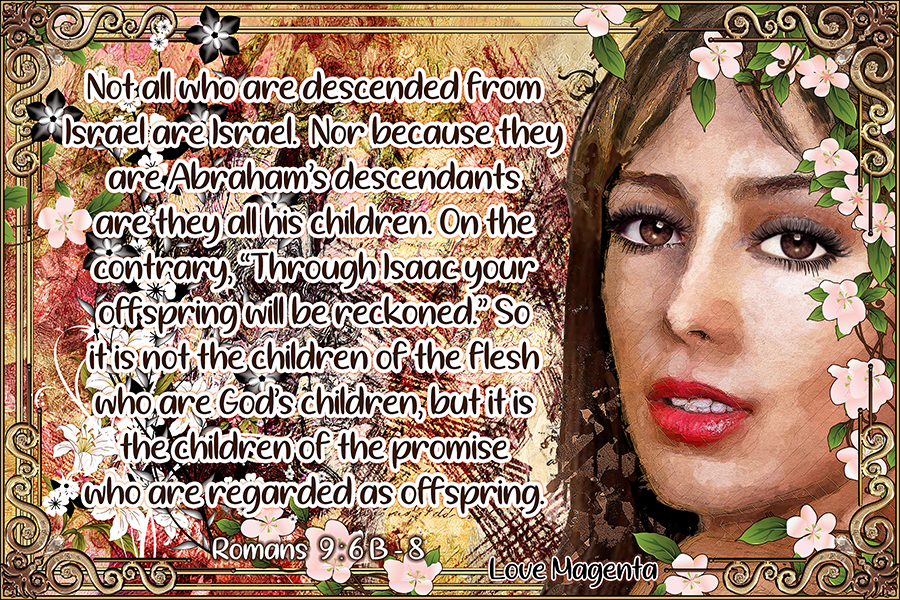
Romans9-6b-8s.png

Romans 9 verses 6b-8 Not all who are descended from Israel are Israel... It is the children of promise who are regarded as offspring.
 
  • Like
Reactions: Churchgoer
Why would He want a light for the world if He already decided who He would save and who He wouldnt?
So people would not be stumbling around in the darkness awaiting the True Light of the world?

You do realize thousands of years of history passed between the first child of promise and the incarnation?
 
How is being "drawn" equal to being regenerated?
Good question. I understand why we should stick to the terminology that the Bible presents. Obviously, "drawn" isn't the same thing as "regenerated." But I am trying to understand what Jesus means by his reflection that the only people who are interested in his message are those whom the Father has drawn.

In the immediate context, John describes a miracle in which Jesus feeds people by multiplying loaves and fish. The next day, the people follow him to the other side of the lake, seeking to see whether Jesus would feed them again. Was this God drawing people to Jesus? Jesus himself admitted as much, claiming that he was like the manna that God called down from heaven. God was certainly drawing people to Jesus with the miraculous bread.

We should also note that Jesus used the event as an opportunity to awaken his people to a real choice. Do they desire actual bread more than what Jesus has to offer? Did they come to Jesus to be fed physically, or to receive the life he is prepared to grant? Will it be physical bread over spiritual bread?

John notes that some were skeptical and grumbled among themselves, while others accepted Jesus and his teaching. In that context, Jesus declares that he will grant eternal life to those the Father has given him. Many were drawn to Jesus because he was handing out free bread. But others believed what Jesus said about himself. These are the ones God gave to Jesus.

What distinguishes those whom the Father gave to Jesus from those whom he didn't? I want to understand what it means for the Father to give someone to Jesus. At the least, it must indicate that we don't give ourselves to Jesus. Later in the chapter, Jesus gives us a hint by contrasting Peter with Judas. Both of the men betrayed Jesus, but one repented while the other committed suicide. Which of these men did God give to Jesus?
 
Why would He want a light for the world if He already decided who He would save and who He wouldnt?
Perhaps world doesn't mean every single individual throughout history. Perhaps it means what is spoken of in Revelation 7:9...of all nations, and kindreds, and people, and tongues...

In other words, individuals out of every people group. Salvation being not just of the Jews, but for all peoples.
 
  • Like
Reactions: DavidLamb
Yes the life, crucifixion/death, burial and resurrection all happened in real life and time right here on planet earth. So it wasn't solely a spiritual event. I'm not sure where you're going with this, but I hope you're not suggesting that I'm only spiritualising the gospel message.

I already showed where the Bible describes all mankind as being born without the ability to believe the gospel. 1 Corinthians 2:14 The natural man does not receive the things of the Spirit of God, for they are foolishness to him; nor can he know them, because they are spiritually discerned.

"The natural man" refers to everyone who is born and not yet converted/regenerated/born again. If you're suggesting that everyone is born with the ability freely choose to believe the gospel, prior to being converted, then you need to show me where the Bible supports this idea.

See you guys just pull out proof texts but never really deal with the verses in context, exegetic, hermeneutics.

Please exegete 1 Cor. 2:14 according to the full context of letters, are you able to do that?

The fact that all of your proof texts have each and everyone have been debunked completely over and over again for years now

informs me that man is not BORN unable to Believe IN /Trust IN the good faith offer of Christ Jesus for salvation.
 
God chose to save elect individuals, not the nation of Israel as a whole. He chose the ethnic nation of Israel as a whole to be a light to the world, to receive the Law, and to act as the bloodline for the Messiah. However, this corporate election granted earthly and covenantal privileges, not automatic eternal life.
From eternity past, God unconditionally chose specific, individual people out of fallen humanity (both Jews and Gentiles) to receive saving grace, faith, and eternal life.
Paul states in Romans 9:6 that "they are not all Israel who are of Israel." This means there is a faithful, saving "remnant" within ethnic Israel. God's choice is based purely on His sovereign mercy (as seen in choosing Jacob over Esau before they had done anything good or bad), not on national identity or human effort.

There is one "Olive Tree", rather than two completely separate plans, God's people as one continuous entity, often called the "Israel of God." In Romans 11, Paul uses the illustration of an olive tree to explain this. Unbelieving, non-elect Israelites are "broken off" the tree for their lack of faith.
Therefore, the ultimate chosen people of God—the Church—consists of the total number of the elect from all generations, regardless of their ethnic background.
You mix up the house of Judah and the house of Israel. Joseph, the house of Israel had the birth right, The house of Judah was to bring about the Messiah. The house of Israel had long ago been divorced and became nations under different names, but God had not forsaken them, they were predestined to received the promises of Abraham. This is something the majority of the church is blind to in the scriptures, and so more than two thirds of the whole bible is closed to them understanding wise.
 
Good question. I understand why we should stick to the terminology that the Bible presents. Obviously, "drawn" isn't the same thing as "regenerated." But I am trying to understand what Jesus means by his reflection that the only people who are interested in his message are those whom the Father has drawn.

In the immediate context, John describes a miracle in which Jesus feeds people by multiplying loaves and fish. The next day, the people follow him to the other side of the lake, seeking to see whether Jesus would feed them again. Was this God drawing people to Jesus? Jesus himself admitted as much, claiming that he was like the manna that God called down from heaven. God was certainly drawing people to Jesus with the miraculous bread.

We should also note that Jesus used the event as an opportunity to awaken his people to a real choice. Do they desire actual bread more than what Jesus has to offer? Did they come to Jesus to be fed physically, or to receive the life he is prepared to grant? Will it be physical bread over spiritual bread?

John notes that some were skeptical and grumbled among themselves, while others accepted Jesus and his teaching. In that context, Jesus declares that he will grant eternal life to those the Father has given him. Many were drawn to Jesus because he was handing out free bread. But others believed what Jesus said about himself. These are the ones God gave to Jesus.

What distinguishes those whom the Father gave to Jesus from those whom he didn't? I want to understand what it means for the Father to give someone to Jesus. At the least, it must indicate that we don't give ourselves to Jesus. Later in the chapter, Jesus gives us a hint by contrasting Peter with Judas. Both of the men betrayed Jesus, but one repented while the other committed suicide. Which of these men did God give to Jesus?

Since you are a full on determinist (which your other posts seem to be supporting)....... such that God is the author of every evil, every rape, murder and every other imaginable evil is done by God being in full control, I doubt we have any common ground to build any kind of consensus.
 
You mix up the house of Judah and the house of Israel. Joseph, the house of Israel had the birth right, The house of Judah was to bring about the Messiah. The house of Israel had long ago been divorced and became nations under different names, but God had not forsaken them, they were predestined to received the promises of Abraham. This is something the majority of the church is blind to in the scriptures, and so more than two thirds of the whole bible is closed to them understanding wise.
2/3 of the Bible is about the differences between the houses of Israel and Judah?

I think you are confused.
 
God chose to save elect individuals, not the nation of Israel as a whole. He chose the ethnic nation of Israel as a whole to be a light to the world, to receive the Law, and to act as the bloodline for the Messiah. However, this corporate election granted earthly and covenantal privileges, not automatic eternal life.
From eternity past, God unconditionally chose specific, individual people out of fallen humanity (both Jews and Gentiles) to receive saving grace, faith, and eternal life.
Paul states in Romans 9:6 that "they are not all Israel who are of Israel." This means there is a faithful, saving "remnant" within ethnic Israel. God's choice is based purely on His sovereign mercy (as seen in choosing Jacob over Esau before they had done anything good or bad), not on national identity or human effort.

There is one "Olive Tree", rather than two completely separate plans, God's people as one continuous entity, often called the "Israel of God." In Romans 11, Paul uses the illustration of an olive tree to explain this. Unbelieving, non-elect Israelites are "broken off" the tree for their lack of faith.
Therefore, the ultimate chosen people of God—the Church—consists of the total number of the elect from all generations, regardless of their ethnic background.
All true, but remember, Israel will be grafted back onto her own tree.
 
2/3 of the Bible is about the differences between the houses of Israel and Judah?

I think you are confused.
As in when it mentions Israel and Judah you do not know who is being addressed and lump everything on Judah as if they represent all the tribes of Israel. So the history in the bible is distorted and prophecy is not understood. So yeah - Id say a bog chunk of the Bible is unavailable without that understanding
 
  • Like
Reactions: HeIsHere
Since you are a full on determinist (which your other posts seem to be supporting)....... such that God is the author of every evil, every rape, murder and every other imaginable evil is done by God being in full control, I doubt we have any common ground to build any kind of consensus.
Why did you focus on evil and leave out the part about God creating good?
 
Good question. I understand why we should stick to the terminology that the Bible presents. Obviously, "drawn" isn't the same thing as "regenerated." But I am trying to understand what Jesus means by his reflection that the only people who are interested in his message are those whom the Father has drawn.

In the immediate context, John describes a miracle in which Jesus feeds people by multiplying loaves and fish. The next day, the people follow him to the other side of the lake, seeking to see whether Jesus would feed them again. Was this God drawing people to Jesus? Jesus himself admitted as much, claiming that he was like the manna that God called down from heaven. God was certainly drawing people to Jesus with the miraculous bread.

We should also note that Jesus used the event as an opportunity to awaken his people to a real choice. Do they desire actual bread more than what Jesus has to offer? Did they come to Jesus to be fed physically, or to receive the life he is prepared to grant? Will it be physical bread over spiritual bread?

John notes that some were skeptical and grumbled among themselves, while others accepted Jesus and his teaching. In that context, Jesus declares that he will grant eternal life to those the Father has given him. Many were drawn to Jesus because he was handing out free bread. But others believed what Jesus said about himself. These are the ones God gave to Jesus.

What distinguishes those whom the Father gave to Jesus from those whom he didn't? I want to understand what it means for the Father to give someone to Jesus. At the least, it must indicate that we don't give ourselves to Jesus. Later in the chapter, Jesus gives us a hint by contrasting Peter with Judas. Both of the men betrayed Jesus, but one repented while the other committed suicide. Which of these men did God give to Jesus?
There is also the difference between being drawn and being called.

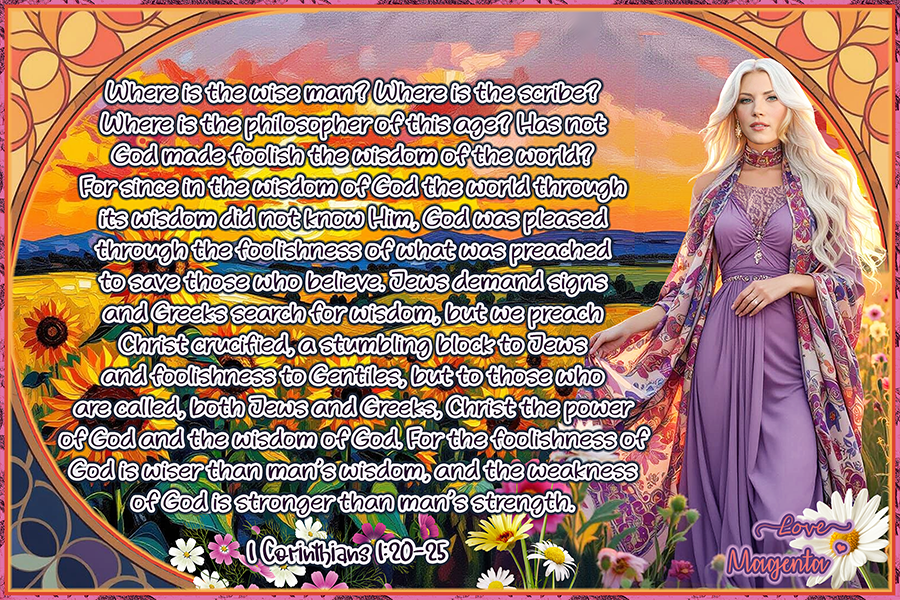
1-Corinthians1-20-25.png

1 Corinthians 1 v 20-25 Where is the wise man? Where is the scribe? Where is the philosopher of this age? Has not God made foolish the wisdom of the world? For since in the wisdom of God the world through its wisdom did not know Him, God was pleased through the foolishness of what was preached to save those who believe. Jews demand signs and Greeks search for wisdom, but we preach Christ crucified, a stumbling block to Jews and foolishness to Gentiles, but to those who are called, both Jews and Greeks, Christ the power of God and the wisdom of God. For the foolishness of God is wiser than man’s wisdom, and the weakness of God is stronger than man’s strength.
 
  • Like
Reactions: Roger316
But this is off subject I know - I only point it out to correct the out of context quoting of Romans 8, it might have your favourite words of foreknew and predestined, but it isn't saying what you are trying to make it say
 
  • Like
Reactions: HeIsHere
As in when it mentions Israel and Judah you do not know who is being addressed and lump everything on Judah as if they represent all the tribes of Israel. So the history in the bible is distorted and prophecy is not understood. So yeah - Id say a bog chunk of the Bible is unavailable without that understanding
Can you show me where I have done this? I think you are confused.
 
  • Heart
Reactions: dkontner
Status
Not open for further replies.