Iran CRIPPLED the US War Machine — Russia Sees Its Opening | Scott Ritter
Here's a summary of this panel discussion (appears to be a Judge Napolitano-hosted show with Scott Ritter, Larry Johnson, and Pepe Escobar):
IDF/CIA intelligence-sharing bill: The panel discusses a Tom Cotton-backed, White House-endorsed proposal to merge US and Israeli intelligence and military structures. Ritter calls it an existential threat to American sovereignty, arguing Israel is classified by US counterintelligence as a critical espionage threat, citing the Jonathan Pollard case as evidence Israel has previously sold US secrets to adversaries. Johnson frames the growing pro/anti-Zionist split within the Republican Party as comparable to the slavery-driven split of the Whig Party in 1854, citing a conversation with a former Trump campaign figure now disillusioned over Israel policy.
Strait of Hormuz: Escobar reports that a near-final Iran-Oman technical agreement would give Iran's IRGC Navy jurisdiction over incoming shipping traffic and roughly half of outgoing traffic through the Strait. He plays a clip of a senior Iranian military adviser demanding full US withdrawal from the Persian Gulf as a precondition for ending hostilities. Ritter speculates Trump could seek a face-saving deal with Oman for partial US involvement in strait security, allowing him to claim credit rather than admit defeat.
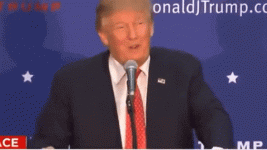
US military depletion: Ritter argues US munitions stockpiles for Middle East operations are nearly exhausted, forcing draw-downs from Pacific and European theaters, and claims commanders are warning this weakens deterrence against China and Russia. He asserts this is driving a shift toward earlier potential use of tactical nuclear weapons in a future conflict. Johnson pushes back on blaming Defense Secretary Hegseth alone, noting that roughly 78% of key US weapons systems depend on rare-earth minerals controlled by China, making rapid rearmament structurally difficult regardless of funding. A Trump press clip is shown in which he denies munitions shortages while acknowledging some systems are "tighter" than others.
Iran's strategic position: Escobar says Iranian leadership closely studies US political and economic pressures and is confident in its position, citing exhausted US stockpiles, strained Gulf basing, and looming fuel-reserve constraints.
Ukraine/Russia: Ritter and Johnson describe major Russian gains, including cutting off Ukrainian Black Sea ports, expanded strikes on infrastructure, and a new front near Chernihiv, characterizing this as decisive momentum toward Ukraine's collapse as a functioning state.
Iran-Ukraine incident: Escobar recounts Ukraine apologizing after allegedly striking an Iranian vessel in the Caspian, and describes Russia signaling it would handle any future Ukrainian escalation there itself.