Is Knowledge of the Original Languages Necessary for KJV Believers?

  • Christian Chat is a moderated online Christian community allowing Christians around the world to fellowship with each other in real time chat via webcam, voice, and text, with the Christian Chat app. You can also start or participate in a Bible-based discussion here in the Christian Chat Forums, where members can also share with each other their own videos, pictures, or favorite Christian music.

    If you are a Christian and need encouragement and fellowship, we're here for you! If you are not a Christian but interested in knowing more about Jesus our Lord, you're also welcome! Want to know what the Bible says, and how you can apply it to your life? Join us!

    To make new Christian friends now around the world, click here to join Christian Chat.
Again, we come right back to Jesus' own words. Jesus cared about the jots and tittles in the Hebrew text! We are talking about the smallest letters and strokes that make up the Hebrew writing. So, if God cared about even the smallest details of His Word back then, why would He suddenly become a radically different God today and give us some unhealthy McDonald's version of the Bible?

Granted, I do enjoy a Filet-O-Fish every now and then (especially when it comes fresh out of the fryer), but I certainly wouldn't want to live on that stuff! I know that a steady diet of such food would hardly be good for my physical health. And if I am that concerned about what goes into my physical body, how much more concerned should I be about what I am feeding myself spiritually? After all, Jesus said that man shall live "by every word that proceedeth out of the mouth of God" (Matthew 4:4).

But with Modern Bibles, I would argue that we are dealing with something even worse than spiritual fast food. We are talking about McDumpsters! Some of their readings are so bad and so dark that I cannot even bring myself to read them anymore, unless it is for the purpose of exposing their errors.
....
I agree with you on one point: if Jesus cared about the smallest details of God's Word, then we shouldn't be casual about textual questions.

Where I still hesitate is in the next step of the argument.

Jesus' statement about the jot and tittle was made concerning the divine authority and enduring nature of God's Word.
What I'm still trying to establish is how that statement demonstrates that one particular English translation, produced in 1611, must be the final and exclusive form of that preservation.

For example, believers before 1611 loved God's Word, memorized it, preached it, died for it, and were held accountable to it.
So preservation must have been operating before the KJV appeared.
The question then becomes: what exactly did God promise to preserve, and how did He preserve it?

I do appreciate your concern about confusion.
Nobody wants a situation where every reader becomes his own final authority.
But at the same time, I don't think the existence of textual discussions automatically means we have no trustworthy Bible.

I suppose what I'm still examining is whether the evidence leads to: "God preserved His Word."
or "God preserved His Word exclusively in the TR/KJV tradition."
I completely agree with the first statement.
The second is where I'm still asking questions.
And honestly, brother, that's one reason I prefer looking carefully at individual passages.
If the doctrine is truly as different as you believe it is, then those differences should be demonstrable from the texts themselves. That's where the discussion becomes the most fruitful for me.
 
Isaiah 34:16 definitely speaks of a preserved and authoritative word from God, but I don't immediately see the passage identifying a particular language, translation, or printed edition.
What does resonate with me is your larger concern.
If God intends to hold His people accountable to His words, then those words must be accessible, knowable, and trustworthy.
That's a fair theological point and one worth wrestling with.
I suppose my question would be: does Isaiah 34:16 establish that God preserves His word, or does it establish which specific text tradition represents that preservation?
Those seem to be two separate conclusions.
Either way, I appreciate that you're trying to make a biblical argument rather than merely a historical one.
That's always a stronger place to start.
I think you are overlooking the main point I was making from Isaiah 34:16. I was not suggesting that this verse explicitly identifies a particular English translation or printed edition (Although I personally do believe it will be the KJV and possibly along with its underlying original languages). I was trying to get you to see first the significance about the wording itself.

Isaiah 34:16 says, "Seek ye out of the book of the LORD, and read." Now, notice that God does not say "books" (plural), but "book" (singular). The Hebrew expression is סֵפֶר יְהוָֹה (sēpher YHWH), meaning "the book of the LORD." The Hebrew word סֵפֶר (sēpher) is a masculine singular noun in the construct state. The plural would be סְפָרִים (sephārîm), meaning "books." But that is NOT what the Hebrew says here! You can verify this yourself by examining the Hebrew grammatical analysis here: https://biblehub.com/text/isaiah/34-16.htm.

Now, why is this important? Because Scripture directs us to seek out "the book of the LORD", not a collection of competing textual variations in which one reading says something and another says something entirely different. The command is to seek out and read what God has written in a book (or a singular collective written work)!

Granted, the singular word "book" does not, by itself, identify which particular textual tradition faithfully preserves those words. That requires further examination. But neither should we overlook the fact that the passage presents a singular book belonging to the LORD as the object of this command.

So my point concerns something more basic or foundational here. If God commands us to seek out His book and read it, then we ought to be able to identify what that book actually says. Otherwise, how could we confidently distinguish between God's words and the conflicting readings introduced by men? This is precisely why the question of which text faithfully preserves God's words is so fundamentally important.


....
 
I agree with you on one point: if Jesus cared about the smallest details of God's Word, then we shouldn't be casual about textual questions.

Where I still hesitate is in the next step of the argument.

Jesus' statement about the jot and tittle was made concerning the divine authority and enduring nature of God's Word.
What I'm still trying to establish is how that statement demonstrates that one particular English translation, produced in 1611, must be the final and exclusive form of that preservation.

For example, believers before 1611 loved God's Word, memorized it, preached it, died for it, and were held accountable to it.
So preservation must have been operating before the KJV appeared.
The question then becomes: what exactly did God promise to preserve, and how did He preserve it?

I do appreciate your concern about confusion.
Nobody wants a situation where every reader becomes his own final authority.
But at the same time, I don't think the existence of textual discussions automatically means we have no trustworthy Bible.

I suppose what I'm still examining is whether the evidence leads to: "God preserved His Word."
or "God preserved His Word exclusively in the TR/KJV tradition."
I completely agree with the first statement.
The second is where I'm still asking questions.
And honestly, brother, that's one reason I prefer looking carefully at individual passages.
If the doctrine is truly as different as you believe it is, then those differences should be demonstrable from the texts themselves. That's where the discussion becomes the most fruitful for me.
Matthew 5:18 (KJV) — Jesus Christ said:

"For verily I say unto you, Till heaven and earth pass, one jot or one tittle shall in no wise pass from the law, till all be fulfilled."​

I believe this is the Hebrew being preserved today.
This would be the Hebrew underlying the KJV, which is the Ben Chayyim Masoretic.

For the Greek, it is the Beza 1598 + 50 or so translatable differences that can be found in either previous TR editions, the Complutensian Polyglot, and other Greek witnesses.

The original languages is what I would see as the inspired words of God that are perfectly preserved and we have an accurate (error-free) English translation that can help aid in understanding the original language texts we have today (in the form of copies). Granted, the KJV does not convey every nuance of the Hebrew, and Greek, but nevertheless, it still is the English Bible that should be preached from in English speaking churches.

People with Modern Bibles do not even know sometimes which Bible to bring because the pastor may use multiple versions.


....
 
Just when I began entering into my conversion experience to become a full time Christian I attended Bible studies of various persuasions.

On one occasion a friend of a relative handed me a pocket Bible.
It was a King James NT version.

I kept it and placed in a drawer in my room.
Needless to say, at that time in my life I was experiencing a great deal of inner pain and and a deep sense of detachment from life.

At times I would take that KJV out the drawer to start to read it.

What it made me think was that Christianity is an outdated religion.
Meant for a people from a different time which was not relevant for today.
It made me believe that back then (King James era) people were religious on a primitive level of thinking.
I could read it only for a minute before feeling discouraged and placing it back in the drawer.

A few years later my niece handed me a soft cover of a NT in what was at that time the current edition for the NIV...

I would sit there and read it.
To my pleasant surprise I became totally absorbed in how it communicated to me.
I soon began devouring it like a starving man.
Things about Jesus were for the first time making sense.
And, I also began to feel highly encouraged.

Then I moved to Bible college where the KJV was the main staple.
I kept my NIV with me and used it for all activities and classes.
And, I am happy to say, years later I graduated with honors.

While in school I listened to teachers using the KJV.
At times totally missing what was being said in the KJV because it's ancient worded way.
In church and classes I sat their with my NIV seeing how some teaching was totally missing what was meant because of anachronism.
But the hearers in the congregation accepted what they were told to believe.

So much for that.
 
Last edited:
Just when I began entering into my conversion experience to become a full time Christian I attended Bible studies of various persuasions.

On one occasion a friend of a relative handed me a pocket Bible.
It was a King James NT version.

I kept it and placed in a drawer in my room.
Needless to say, at that time in my life I was experiencing a great deal of inner pain and and a deep sense of detachment from life.

At times I would take that KJV out the drawer to start to read it.

What it made me think was that Christianity is an outdated religion.
Meant for a people from a different time which was not relevant for today.
It made me believe that back then (King James era) people were religious on a primitive level of thinking.
I could read it only for a minute before feeling discouraged and placing it back in the drawer.

A few years later my niece handed me a soft cover of a NT in what was at that time the current edition for the NIV...

I would sit there and read it.
To my pleasant surprise I became totally absorbed in how it communicated to me.
I soon began devouring it like a starving man.
Things about Jesus were for the first time making sense.
And, I also began to feel highly encouraged.

Then I moved to Bible college where the KJV was the main staple.
I kept my NIV with me and used it for all activities and classes.
And, I am happy to say, years later I graduated with honors.

While in school I listened to teachers using the KJV.
At times totally missing what was being said in the KJV because it's ancient worded way.
In church and classes I sat their with my NIV seeing how some teaching was totally missing what was meant because of anachronism. But the hearers in the congregation accepted what they were told to believe.

So much for that.
Our life experience should not define the truth of things. Sometimes God can talk to us through life experience, and sometimes this is not the case. In my life experience with God, I experienced the exact opposite than you involving the King James Bible and the Modern Versions. I believe the Lord showed me the purity and accuracy of the KJV while seeing the corruptions in Modern Bibles.

This is because I care about truth and understand that there can only be one Bible and not many.


.....
 
Just when I began entering into my conversion experience to become a full time Christian I attended Bible studies of various persuasions.

On one occasion a friend of a relative handed me a pocket Bible.
It was a King James NT version.

I kept it and placed in a drawer in my room.
Needless to say, at that time in my life I was experiencing a great deal of inner pain and and a deep sense of detachment from life.

At times I would take that KJV out the drawer to start to read it.

What it made me think was that Christianity is an outdated religion.
Meant for a people from a different time which was not relevant for today.
It made me believe that back then (King James era) people were religious on a primitive level of thinking.
I could read it only for a minute before feeling discouraged and placing it back in the drawer.

A few years later my niece handed me a soft cover of a NT in what was at that time the current edition for the NIV...

I would sit there and read it.
To my pleasant surprise I became totally absorbed in how it communicated to me.
I soon began devouring it like a starving man.
Things about Jesus were for the first time making sense.
And, I also began to feel highly encouraged.

Then I moved to Bible college where the KJV was the main staple.
I kept my NIV with me and used it for all activities and classes.
And, I am happy to say, years later I graduated with honors.

While in school I listened to teachers using the KJV.
At times totally missing what was being said in the KJV because it's ancient worded way.
In church and classes I sat their with my NIV seeing how some teaching was totally missing what was meant because of anachronism.
But the hearers in the congregation accepted what they were told to believe.

So much for that.
Readability is not the issue with truth, either.
Jesus spoke in parables and said many things that were not understood right away.
Even Peter said that the apostle Paul was hard to understand.


.....
 
So you don’t care that John 1:18 in the NASB 95 teaches Arianism?
So you don’t care that Modern versions tell you to marry your rapist?
What? How is that Arianism?

NASB 95... John 1:18 says this.

No one has seen God at any time; the only begotten God who is in the bosom of the Father, ​
He has explained Him.​


What you are not aware of is that the Greek that was translated "explained Him."
I learned the following from another pastor who taught from the original languages.
" explained Him" Is the same Greek word commanded of pastors to exegete the Word of God to their congregation.

In other words?
Jesus takes God who we can not naturally perceive.

And?
He exegetes God to us in "human speak" via His humanity which is working together with His Deity.

Arianism? How?
 
QT, the Greek word itself already conveys the idea of keeping something in memory! The KJV translators were not adding some foreign meaning to the text when they translated κατέχετε (katechete) as "keep in memory" (1 Corinthians 15:2). This is an established meaning of the Greek verb κατέχω (katechō).
Where?
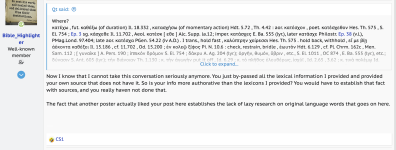
κατέχω , fut. καθέξω (of duration) Il. 18.332 , κατασχήσω (of momentary action) Hdt. 5.72 , Th. 4.42 : aor. κατέσχον , poet. κατέσχεθον Hes. Th. 575 , S. El. 754 ; Ep. 3 sg. κάσχεθε Il. 11.702 , Aeol. κατέσκ [ εθε ] Alc. Supp. la.12; imper. κατάσχες E. Ba. 555 (lyr.), later κατάσχε Philostr. Ep. 38 (v.l.), PMag.Lond. 97.404; late aor. κατέσχα PGen. 54.22 (iv A.D.) . I trans., hold fast , καλύπτρην χείρεσσι Hes. Th. 575 . hold back, withhold , εἴ με βίῃ ἀέκοντα καθέξει Il. 15.186 , cf. 11.702 , Od. 15.200 ; ἐν κολεῷ ξίφος Pi. N. 10.6 : check, restrain, bridle , ἑωυτόν Hdt. 6.129 , cf. Pl. Chrm. 162c , Men. Sam. 112 ; [ γυναῖκε ] A. Pers. 190 ; ἱππικὸν δρόμον S. El. 754 ; δάκρυ A. Ag. 204 (lyr.); ὀργήν, θυμόν, ὕβριν , etc., S. El. 1011 , OC 874 , E. Ba. 555 (lyr.), etc.; δύνασιν S. Ant. 605 (lyr.); τὴν διάνοιαν Th. 1.130 ; κ. τὴν ἀγωγήν put it off , Id. 6.29 ; κ. τὸ πλῆθος ἐλευθέρως, ἰσχύϊ , Id. 2.65 , 3.62 ; κ. τινὰ πολέμῳ Id. 1.103 ; τὰ δάκρυα Pl. Phd. 117d , al.; τὸν γέλωτα X. Cyr. 2.2.5 , Pl. La. 184a , Thphr. Char. 2.4 ; οὖρον hold in , Gal. 8.407 (but - όμενα [οὖρα ] as a disease, Hp. Prorrh. 1.59 , cf. Gal. 16.639); ἑαυτὸν κατέχει μὴ ἐπιπηδᾶν restrains himself from . . , Pl. Phdr. 254a : — Pass. , to be held down , γλῶσσα κατείχετο Hp. Epid. 5.50 ; ἐπιθυμίας -ομένας Pl. R. 554c ; to be bound , ὁρκίοισι μεγάλοισι Hdt. 1.29 ; ὑποσχέσει PAmh. 2.97.17 (ii A.D.) ; τοῖς τινων ὀφειλήμασιν PRyl. 117.13 (iii A.D.) ; of a nation, to be kept under (by tyrants), Hdt. 1.59 . detain , κ. [αὐτοὺς] ἐνιαυτόν Id. 6.128 , cf. 8.57 , Th. 8.100 ; κ. [αὐτοὺς] ὥστε μὴ ἀπιέναι X. Mem. 2.6.11 : — Pass. , to be detained, stay , Hdt. 8.117 , S. Tr. 249 ; περὶ Κρήτην Th. 2.86 , etc. in imprecations, inhibit (cf. καταδέω (A) 111 ), Tab.Defix.Aud. 50.11 (iv B.C.) , PMag.Par. 1.2077; Μανῆν καταδῶ καὶ κατέχω Tab.Defix. 109 . place under arrest, PFlor. 61.60 (i A.D.) , etc. keep an oath, ὅρκον SIG 526.39 (Itanos, iii B.C. ).
2. c.gen., gain possession of, be master of , τῶν ἐπιστημῶν μὴ πάνυ κ. Arist. Cat. 9a6 ; τῆς ὀργῆς Philem. 185 codd. Stob. ; τῆς παραποταμίας βίᾳ κατέσχον D.S. 12.82 , cf. Plb. 14.1.9 ; τῆς Ἀσίας ἐθνῶν App. Praef. 9 ; control , τινων LXX 1 Ma. 6.27 ; ἑαυτῶν Erot.s.v. προπετής; μηκέτι κατέχων ἑαυτοῦ Hdn. 1.15.1 , cf. 1.7.3 ; cling to , τῶν κεράτων τοῦ θυσιαστηρίου LXX 3 Ki. 1.51 . II possess, occupy , esp.of rulers, A. Th. 732 (lyr.), E. Hec. 81 (anap.); σῴζειν ἅπερ ἃν ἅπαξ κατάσχωσι whatever they have got , Isoc. 12.242 ; esp. of property. enjoy possession of, PTeb. 5.47 (ii B.C.) , etc. (but also, sequestrate, PLille 3.16 ( Pass. , iii B.C. ), etc.); ὡς μηδὲν ἔχοντες καὶ πάντα κατέχοντες 2 Ep.Cor. 6.10 . dwell in, occupy , Ὀλύμπου αἴγλαν S. Ant. 609 (lyr.); esp. of tutelary gods, Παρνασίαν ὃς κ. πέτραν , of Dionysus, Ar. Nu. 603 (lyr.), cf. X. Cyr. 2.1.1 , SIG 662.10 (Delos, ii B.C. ), Luc. Alex. 10 ; of a place, μέσον ὀμφαλὸν γᾶς Φοίβου κ. δόμος E. Ion 223 (lyr.); of the dead. θήκας Ἰλιάδος γᾶς . . κατέχουσι occupy , A. Ag. 454 (lyr.), cf. S. Aj. 1167 (anap.).
2. of sound, fill , οἱ δ' ἀλαλητῷ πᾶν πεδίον κατέχουσι Il. 16.79 ; κ. στρατόπεδον δυσφημίαις fill it with his grievous cries, S. Ph. 10 ; οἰμωγὴ . . κατεῖχε πελαγίαν ἅλα A. Pers. 427 , cf. E. Hipp. 1133 (lyr.): — Pass. , οἶκος κλαυθμῷ κατείχετο Hdt. 1.111 .
3. πανδάκρυτον βιοτὰν κ. continue to live a life . . , S. Ph. 690 (lyr.).
4. to be spread over, cover , νὺξ . . δνοφερὴ κάτεχ' οὐρανόν Od. 13.269 ; ἡμέρα πᾶσαν κατέσχε γαῖαν A. Pers. 387 , cf. Ar. Nu. 572 (lyr.); τίνες αὖ πόντον κατέχουσ' αὖραι ; Cratin. 138 ; ὀσμὴ . . κατὰ πᾶν ἔχει δῶ Hermipp. 82.9 : — Pass. , σελήνη . . κατείχετο . . νεφέεσσιν Od. 9.145 , cf. Il. 17.368 , 644 : — Med. , Ep. aor. , κατέσχετο χερσὶ πρόσωπα Od. 19.361 ; κατασχομένη ἑανῷ having covered her face , Il. 3.419 .
5. of the grave, confine, cover , τοὺς δ' ἤδη κάτεχεν φυσίζοος αἶα 3.243 , cf. Od. 11.301 , Orac. ap. Hdt. 1.67 ; as a threat, πάρος τινὰ γαῖα καθέξει sooner shall earth cover many a one, Il. 16.629 , cf. Od. 13.427 , etc.
6. of circumstances, etc., hold fast, have one in their power , μιν κατὰ γῆρας ἔχει χεῖράς τε πόδας τε Od. 11.497 ; ὃν θάνατος δακρυόεις καθέχει (sic) IG 12.987; ἐχθρὰ Φάλαριν κ. φάτις Pi. P. 1.96 ; τινὰ . . λάθα κ. Id. N. 8.24 ; [ φθορὰ] κ. τὸν σὸν δόμον S. OC 370 ; τύχη, πόλεμος κ. τινά , Pl. Hp.Ma. 304c , Ep. 317a ; κ. κίνδυνος Σικελίαν ib. 355d ; συνέβη λοιμώδη νόσον κατασχεῖν τὴν Ἰταλίαν Hdn. 1.12.1 : — Pass. , ὑπὸ μεγάλης ἀνάγκης κατεχόμενοι Pl. Lg. 858a : rarely in good sense, ὁ δ' ὄλβιος, ὃν φᾶμαι κατέχοντ' ἀγαθαί Pi. O. 7.10 ; μεγάλαι κ. τύχαι γένος ὀρνίθων Ar. Av. 1726 (lyr.); εὐμοιρίας -εχούσης τὸν βίον Hdn. 2.5.1 . of circumstances, etc., prevail, prevail among, engage , ἄλλα τῶν κατεχόντων πρηγμάτων χαλεπώτερα Hdt. 6.40 , cf. 1.65 ; μεγάλοι θόρυβοι κατέχουσ' ἡμᾶς murmurs are rife among us, S. Aj. 142 (anap.); φήμης ἀθρόας -σχούσης τὸ Ἑλληνικόν a sudden rumour having overspread Greece, Philostr. VA 8.15 .
7. seize, occupy , in right of conquest , τὸ Καδμείων πέδον dub. in S. OC 381 ; esp. in histor. writers, - σχήσειν [τὴν ἀκρόπολιν ] Hdt. 5.72 ; τὰ πρήγματα Id. 3.143 ; τὰ ἐχυρά X. Cyr. 3.1.27 ; τὰ κύκλῳ τῆς Ἀττικῆς ἁρμοσταῖς D. 18.96 ; φρουραῖς τὰς πόλεις Plu. 2.177d .
8. achieve, effect an object, Isoc. 2.25 ; πρᾶξιν Arist. Pol. 1312a33 .
9. master, understand , οὐ κατέχω τί βούλει φράζειν Pl. Phlb. 26c , cf. Men. 72d , Ceb. 34 ; περὶ φύσεως κ. πάντας τοὺς λόγους Sosip. 1.17 , cf. 33 ; κ. νοῦν στίχων grasp the sense of . . , Puchstein Epigr.Gr. p.9. keep in mind, remember , χρήσιμον καὶ τοῦτο κατασχεῖν τὸ στοιχεῖον Epicur. Ep. 1p.10U. , cf. Thphr. Char. 26.2 , Men. Epit. 109 ; κ. τινὰ ὀψοφάγον Chrysipp.Tyan. ap. Ath. 1.5e ; κ. ὅτι, διότι , PCair.Zen. 60.10 (iii B.C.) , Phld. Herc. 1251.15: — Pass. , Epicur. Ep. 1p.31U.
10. possess , of a god, εἰ θεός ἐστιν ὁ σὰς κατέχων φρένας PLit.Lond. 52.12 ; τοιοῦτος ἔρως κατεῖχε τὴν ἄνθρωπον she was so infatuated , Plu. Alc. 23 ; of an actor, κ. τὸ θέατρον held the audience spellbound , Plu. Dem. 29 (but, kept the audience waiting, Phoc. 19 ); of poets, μύθοις [τοὺς ἀκούοντας] κ. Luc. JTr. 39 (v.l. κατηχοῦσι ): — mostly in Pass. , of persons, to be possessed, inspired , Pl. Ion 533e ; ἐξ Ὁμήρου ib. 536b ; ἐκ θεῶν X. Smp. 1.10 ; κάρῳ Phld. D. 1.18 ; τὸ θέατρον κατείχετο the audience was spellbound , Eun. Hist. p.247 D. ; of hydrophobia patients, Philum. Ven. 4.11 ; of a lover, τῷ αὐτῷ θεῷ (sc. Ἔρωτι ) κατέσχημαι Luc. DMort. 19.1 : — also in aor. Med. , Pl. Phdr. 244e . III follow close upon, press hard , X. Cyr. 1.4.22 (dub.l.), Cyn. 6.22 : — Pass. , ib. 9.20 . bring a ship to land , Hdt. 6.101 , 7.59 , Plu. 2.162a. intr., 1 (sc. ἑαυτόν ) control oneself , S. OT 782 ; οὐκέτι καθέξω Men. Pk. 394 ; εἶπεν οὖν μὴ κατασχών Plu. Art. 15 ; οὐ κατέσχεν App. BC 3.43 : c. inf. , κ. τὸ μὴ δακρύειν Pl. Phd. 117c . stop, cease , of the wind, Ar. Pax 944 (lyr.).
2. come from the high sea to shore, put in (v. supr. IV), νηΐ Θορικόνδε h.Cer. 126 ; τῆς Μαγνησίης χώρης ἐς τὸν αἰγιαλόν Hdt. 7.188 , cf. 6.101 , Plb. 1.25.7 , Plu. Thes. 21 ; τίνες ποτ' ἐς γῆν τήνδε . . κατέσχετε ; S. Ph. 221 , cf. 270 , E. Heracl. 83 (lyr.), Antipho 5.21 , etc.: c. acc. loci, E. Hel. 1206 , Cyc. 223 ; of a journey by land, rest , προξένων δ' ἔν του κατέσχες ; Id. Ion 551 , cf. Plb. 5.71.2 : metaph., εὖ κατασχήσει shall come safe to land , S. El. 503 (lyr.).
3. prevail , ὁ λόγος κ. the report prevails , Th. 1.10 ; κληδὼν ἐν ἁπάσῃ τῇ πόλει κατεῖχεν And. 1.130 ; σεισμῶν -εχόντων Th. 3.89 ; ὁ βορέας κατεῖχεν Arist. Mete. 345a1 , cf. 360b33 , Thphr. CP 1.5.1 .
4. gain the upper hand , παρά τινι Thgn. 262 ; gain one's purpose , Lys. 3.42 ; ὁ δὲ κατεῖχε τῇ βοῇ Ar. Ec. 434 ; νομίζοντες ῥᾳδίως κατασχήσειν Arist. Pol. 1307b10 . Med. , keep back for oneself, embezzle , [ τὰ χρήματα ] Hdt. 7.164 .
2. cover oneself , v. supr. A. 11.4.
3. hold, contain , Plb. 9.26a . 7 . II aor. Med. , = κατέχω B. 2, Od. 3.284 .
2. in pass. sense, τεαῖς ῥιπαῖσι κατασχόμενος subdued , Pi. P. 1.10 ; καρδίαν κατέσχετο ἔρωτι was seized with, possessed by , E. Hipp. 27 ; v. supr. A. 11.10.

Nowhere.

 
  • Like
Reactions: Genez
What? How is that Arianism?

NASB 95... John 1:18 says this.

No one has seen God at any time; the only begotten God who is in the bosom of the Father, ​
He has explained Him.​


What you are not aware of is that the Greek that was translated "explained Him."
I learned the following from another pastor who taught from the original languages.
" explained Him" Is the same Greek word commanded of pastors to exegete the Word of God to their congregation.

In other words?
Jesus takes God who we can not naturally perceive.

And?
He exegetes God to us in "human speak" via His humanity which is working together with His Deity.

Arianism? How?
Uh, it’s kind of obvious.
Well, maybe you don’t know what “begotten” means because you are going by a modern lexicon.
Begotten when it refers to humans always includes the sense of “to father a child”; Meaning, to provide seed whereby a woman becomes pregnant and has a child. So Jesus is the begotten Son in that His physical human body was born as a man through the Virgin Mary. Thus, the KJV has the correct reading here in John 1:18. Yet, in the Critical Text (Nestle and Aland Greek), or the NASB 95, it is saying Jesus is came into existence as God at a certain point in time because it is saying He is a God who is begotten. It is saying that Jesus did not exist as the living Word (second person of the Trinity) from eternity's past (i.e., Arianism). Even if you could read it as how God was begotten in the sense of the Incarnation, it still can equally be read the wrong way easily by Arians.

Even the ECM has made a change in the UBS6 that says that Jesus will become the I AM in Revelation.
Micah 5:2 says that the Messiah is not from everlasting (KJV) but He is from ancient days in Modern Bibles.

The NIV had added a variant saying that Jesus was angry when he healed a man.
There was no cause or reason for Jesus to be angry in the scene whatsoever.


….
 
Where?
κατέχω , fut. καθέξω (of duration) Il. 18.332 , κατασχήσω (of momentary action) Hdt. 5.72 , Th. 4.42 : aor. κατέσχον , poet. κατέσχεθον Hes. Th. 575 , S. El. 754 ; Ep. 3 sg. κάσχεθε Il. 11.702 , Aeol. κατέσκ [ εθε ] Alc. Supp. la.12; imper. κατάσχες E. Ba. 555 (lyr.), later κατάσχε Philostr. Ep. 38 (v.l.), PMag.Lond. 97.404; late aor. κατέσχα PGen. 54.22 (iv A.D.) . I trans., hold fast , καλύπτρην χείρεσσι Hes. Th. 575 . hold back, withhold , εἴ με βίῃ ἀέκοντα καθέξει Il. 15.186 , cf. 11.702 , Od. 15.200 ; ἐν κολεῷ ξίφος Pi. N. 10.6 : check, restrain, bridle , ἑωυτόν Hdt. 6.129 , cf. Pl. Chrm. 162c , Men. Sam. 112 ; [ γυναῖκε ] A. Pers. 190 ; ἱππικὸν δρόμον S. El. 754 ; δάκρυ A. Ag. 204 (lyr.); ὀργήν, θυμόν, ὕβριν , etc., S. El. 1011 , OC 874 , E. Ba. 555 (lyr.), etc.; δύνασιν S. Ant. 605 (lyr.); τὴν διάνοιαν Th. 1.130 ; κ. τὴν ἀγωγήν put it off , Id. 6.29 ; κ. τὸ πλῆθος ἐλευθέρως, ἰσχύϊ , Id. 2.65 , 3.62 ; κ. τινὰ πολέμῳ Id. 1.103 ; τὰ δάκρυα Pl. Phd. 117d , al.; τὸν γέλωτα X. Cyr. 2.2.5 , Pl. La. 184a , Thphr. Char. 2.4 ; οὖρον hold in , Gal. 8.407 (but - όμενα [οὖρα ] as a disease, Hp. Prorrh. 1.59 , cf. Gal. 16.639); ἑαυτὸν κατέχει μὴ ἐπιπηδᾶν restrains himself from . . , Pl. Phdr. 254a : — Pass. , to be held down , γλῶσσα κατείχετο Hp. Epid. 5.50 ; ἐπιθυμίας -ομένας Pl. R. 554c ; to be bound , ὁρκίοισι μεγάλοισι Hdt. 1.29 ; ὑποσχέσει PAmh. 2.97.17 (ii A.D.) ; τοῖς τινων ὀφειλήμασιν PRyl. 117.13 (iii A.D.) ; of a nation, to be kept under (by tyrants), Hdt. 1.59 . detain , κ. [αὐτοὺς] ἐνιαυτόν Id. 6.128 , cf. 8.57 , Th. 8.100 ; κ. [αὐτοὺς] ὥστε μὴ ἀπιέναι X. Mem. 2.6.11 : — Pass. , to be detained, stay , Hdt. 8.117 , S. Tr. 249 ; περὶ Κρήτην Th. 2.86 , etc. in imprecations, inhibit (cf. καταδέω (A) 111 ), Tab.Defix.Aud. 50.11 (iv B.C.) , PMag.Par. 1.2077; Μανῆν καταδῶ καὶ κατέχω Tab.Defix. 109 . place under arrest, PFlor. 61.60 (i A.D.) , etc. keep an oath, ὅρκον SIG 526.39 (Itanos, iii B.C. ).
2. c.gen., gain possession of, be master of , τῶν ἐπιστημῶν μὴ πάνυ κ. Arist. Cat. 9a6 ; τῆς ὀργῆς Philem. 185 codd. Stob. ; τῆς παραποταμίας βίᾳ κατέσχον D.S. 12.82 , cf. Plb. 14.1.9 ; τῆς Ἀσίας ἐθνῶν App. Praef. 9 ; control , τινων LXX 1 Ma. 6.27 ; ἑαυτῶν Erot.s.v. προπετής; μηκέτι κατέχων ἑαυτοῦ Hdn. 1.15.1 , cf. 1.7.3 ; cling to , τῶν κεράτων τοῦ θυσιαστηρίου LXX 3 Ki. 1.51 . II possess, occupy , esp.of rulers, A. Th. 732 (lyr.), E. Hec. 81 (anap.); σῴζειν ἅπερ ἃν ἅπαξ κατάσχωσι whatever they have got , Isoc. 12.242 ; esp. of property. enjoy possession of, PTeb. 5.47 (ii B.C.) , etc. (but also, sequestrate, PLille 3.16 ( Pass. , iii B.C. ), etc.); ὡς μηδὲν ἔχοντες καὶ πάντα κατέχοντες 2 Ep.Cor. 6.10 . dwell in, occupy , Ὀλύμπου αἴγλαν S. Ant. 609 (lyr.); esp. of tutelary gods, Παρνασίαν ὃς κ. πέτραν , of Dionysus, Ar. Nu. 603 (lyr.), cf. X. Cyr. 2.1.1 , SIG 662.10 (Delos, ii B.C. ), Luc. Alex. 10 ; of a place, μέσον ὀμφαλὸν γᾶς Φοίβου κ. δόμος E. Ion 223 (lyr.); of the dead. θήκας Ἰλιάδος γᾶς . . κατέχουσι occupy , A. Ag. 454 (lyr.), cf. S. Aj. 1167 (anap.).
2. of sound, fill , οἱ δ' ἀλαλητῷ πᾶν πεδίον κατέχουσι Il. 16.79 ; κ. στρατόπεδον δυσφημίαις fill it with his grievous cries, S. Ph. 10 ; οἰμωγὴ . . κατεῖχε πελαγίαν ἅλα A. Pers. 427 , cf. E. Hipp. 1133 (lyr.): — Pass. , οἶκος κλαυθμῷ κατείχετο Hdt. 1.111 .
3. πανδάκρυτον βιοτὰν κ. continue to live a life . . , S. Ph. 690 (lyr.).
4. to be spread over, cover , νὺξ . . δνοφερὴ κάτεχ' οὐρανόν Od. 13.269 ; ἡμέρα πᾶσαν κατέσχε γαῖαν A. Pers. 387 , cf. Ar. Nu. 572 (lyr.); τίνες αὖ πόντον κατέχουσ' αὖραι ; Cratin. 138 ; ὀσμὴ . . κατὰ πᾶν ἔχει δῶ Hermipp. 82.9 : — Pass. , σελήνη . . κατείχετο . . νεφέεσσιν Od. 9.145 , cf. Il. 17.368 , 644 : — Med. , Ep. aor. , κατέσχετο χερσὶ πρόσωπα Od. 19.361 ; κατασχομένη ἑανῷ having covered her face , Il. 3.419 .
5. of the grave, confine, cover , τοὺς δ' ἤδη κάτεχεν φυσίζοος αἶα 3.243 , cf. Od. 11.301 , Orac. ap. Hdt. 1.67 ; as a threat, πάρος τινὰ γαῖα καθέξει sooner shall earth cover many a one, Il. 16.629 , cf. Od. 13.427 , etc.
6. of circumstances, etc., hold fast, have one in their power , μιν κατὰ γῆρας ἔχει χεῖράς τε πόδας τε Od. 11.497 ; ὃν θάνατος δακρυόεις καθέχει (sic) IG 12.987; ἐχθρὰ Φάλαριν κ. φάτις Pi. P. 1.96 ; τινὰ . . λάθα κ. Id. N. 8.24 ; [ φθορὰ] κ. τὸν σὸν δόμον S. OC 370 ; τύχη, πόλεμος κ. τινά , Pl. Hp.Ma. 304c , Ep. 317a ; κ. κίνδυνος Σικελίαν ib. 355d ; συνέβη λοιμώδη νόσον κατασχεῖν τὴν Ἰταλίαν Hdn. 1.12.1 : — Pass. , ὑπὸ μεγάλης ἀνάγκης κατεχόμενοι Pl. Lg. 858a : rarely in good sense, ὁ δ' ὄλβιος, ὃν φᾶμαι κατέχοντ' ἀγαθαί Pi. O. 7.10 ; μεγάλαι κ. τύχαι γένος ὀρνίθων Ar. Av. 1726 (lyr.); εὐμοιρίας -εχούσης τὸν βίον Hdn. 2.5.1 . of circumstances, etc., prevail, prevail among, engage , ἄλλα τῶν κατεχόντων πρηγμάτων χαλεπώτερα Hdt. 6.40 , cf. 1.65 ; μεγάλοι θόρυβοι κατέχουσ' ἡμᾶς murmurs are rife among us, S. Aj. 142 (anap.); φήμης ἀθρόας -σχούσης τὸ Ἑλληνικόν a sudden rumour having overspread Greece, Philostr. VA 8.15 .
7. seize, occupy , in right of conquest , τὸ Καδμείων πέδον dub. in S. OC 381 ; esp. in histor. writers, - σχήσειν [τὴν ἀκρόπολιν ] Hdt. 5.72 ; τὰ πρήγματα Id. 3.143 ; τὰ ἐχυρά X. Cyr. 3.1.27 ; τὰ κύκλῳ τῆς Ἀττικῆς ἁρμοσταῖς D. 18.96 ; φρουραῖς τὰς πόλεις Plu. 2.177d .
8. achieve, effect an object, Isoc. 2.25 ; πρᾶξιν Arist. Pol. 1312a33 .
9. master, understand , οὐ κατέχω τί βούλει φράζειν Pl. Phlb. 26c , cf. Men. 72d , Ceb. 34 ; περὶ φύσεως κ. πάντας τοὺς λόγους Sosip. 1.17 , cf. 33 ; κ. νοῦν στίχων grasp the sense of . . , Puchstein Epigr.Gr. p.9. keep in mind, remember , χρήσιμον καὶ τοῦτο κατασχεῖν τὸ στοιχεῖον Epicur. Ep. 1p.10U. , cf. Thphr. Char. 26.2 , Men. Epit. 109 ; κ. τινὰ ὀψοφάγον Chrysipp.Tyan. ap. Ath. 1.5e ; κ. ὅτι, διότι , PCair.Zen. 60.10 (iii B.C.) , Phld. Herc. 1251.15: — Pass. , Epicur. Ep. 1p.31U.
10. possess , of a god, εἰ θεός ἐστιν ὁ σὰς κατέχων φρένας PLit.Lond. 52.12 ; τοιοῦτος ἔρως κατεῖχε τὴν ἄνθρωπον she was so infatuated , Plu. Alc. 23 ; of an actor, κ. τὸ θέατρον held the audience spellbound , Plu. Dem. 29 (but, kept the audience waiting, Phoc. 19 ); of poets, μύθοις [τοὺς ἀκούοντας] κ. Luc. JTr. 39 (v.l. κατηχοῦσι ): — mostly in Pass. , of persons, to be possessed, inspired , Pl. Ion 533e ; ἐξ Ὁμήρου ib. 536b ; ἐκ θεῶν X. Smp. 1.10 ; κάρῳ Phld. D. 1.18 ; τὸ θέατρον κατείχετο the audience was spellbound , Eun. Hist. p.247 D. ; of hydrophobia patients, Philum. Ven. 4.11 ; of a lover, τῷ αὐτῷ θεῷ (sc. Ἔρωτι ) κατέσχημαι Luc. DMort. 19.1 : — also in aor. Med. , Pl. Phdr. 244e . III follow close upon, press hard , X. Cyr. 1.4.22 (dub.l.), Cyn. 6.22 : — Pass. , ib. 9.20 . bring a ship to land , Hdt. 6.101 , 7.59 , Plu. 2.162a. intr., 1 (sc. ἑαυτόν ) control oneself , S. OT 782 ; οὐκέτι καθέξω Men. Pk. 394 ; εἶπεν οὖν μὴ κατασχών Plu. Art. 15 ; οὐ κατέσχεν App. BC 3.43 : c. inf. , κ. τὸ μὴ δακρύειν Pl. Phd. 117c . stop, cease , of the wind, Ar. Pax 944 (lyr.).
2. come from the high sea to shore, put in (v. supr. IV), νηΐ Θορικόνδε h.Cer. 126 ; τῆς Μαγνησίης χώρης ἐς τὸν αἰγιαλόν Hdt. 7.188 , cf. 6.101 , Plb. 1.25.7 , Plu. Thes. 21 ; τίνες ποτ' ἐς γῆν τήνδε . . κατέσχετε ; S. Ph. 221 , cf. 270 , E. Heracl. 83 (lyr.), Antipho 5.21 , etc.: c. acc. loci, E. Hel. 1206 , Cyc. 223 ; of a journey by land, rest , προξένων δ' ἔν του κατέσχες ; Id. Ion 551 , cf. Plb. 5.71.2 : metaph., εὖ κατασχήσει shall come safe to land , S. El. 503 (lyr.).
3. prevail , ὁ λόγος κ. the report prevails , Th. 1.10 ; κληδὼν ἐν ἁπάσῃ τῇ πόλει κατεῖχεν And. 1.130 ; σεισμῶν -εχόντων Th. 3.89 ; ὁ βορέας κατεῖχεν Arist. Mete. 345a1 , cf. 360b33 , Thphr. CP 1.5.1 .
4. gain the upper hand , παρά τινι Thgn. 262 ; gain one's purpose , Lys. 3.42 ; ὁ δὲ κατεῖχε τῇ βοῇ Ar. Ec. 434 ; νομίζοντες ῥᾳδίως κατασχήσειν Arist. Pol. 1307b10 . Med. , keep back for oneself, embezzle , [ τὰ χρήματα ] Hdt. 7.164 .
2. cover oneself , v. supr. A. 11.4.
3. hold, contain , Plb. 9.26a . 7 . II aor. Med. , = κατέχω B. 2, Od. 3.284 .
2. in pass. sense, τεαῖς ῥιπαῖσι κατασχόμενος subdued , Pi. P. 1.10 ; καρδίαν κατέσχετο ἔρωτι was seized with, possessed by , E. Hipp. 27 ; v. supr. A. 11.10.

Nowhere.
Now I know that I cannot take this conversation seriously anymore. You just by-passed all the lexical information I provided and provided your own source that does not have it. So is your info more authorative than the lexicons I provided? You would have to establish that fact with sources, and you really haven not done that.

The fact that another poster actually liked your post here establishes the lack of lazy research on original language words that goes on here.


…..
 
  • Haha
Reactions: CS1
That is why it says....

Enter through the narrow gate. For wide is the gate and broad is the road ​
that leads to destruction, and many enter through it. But small is the gate ​
and narrow the road that leads to life, and only a few find it.​
​
Matthew 7:13-14​


And those he predestined, he also called; those he called, he also justified; ​
those he justified, he also glorified.​
​
Romans 8:30​

Many are saved. Only a few will make it to maturity.

Why?

The broad and wide leads to the destruction of the spiritual life God wants all Christians to walk in.
Only a few find it that leads to life. "Life more abundantly."

​
For the time will come when people will not put up with sound doctrine. ​
Instead, to suit their own desires, they will gather around them a great number ​
of teachers (broad and wide) to say what their itching ears want to hear. 2 Timothy 4:3​

Congratulations. You have found what suites your own desire.
Why, because I disagreed with my own pastor, a disciple of Col. Theime?
I just read the end of A Matter of Life & Death.
Does that sound familiar?
The colonel emphasizes free will over and over again. So now you apply that passage you quoted to reaching maturity.
I suppose that means agreeing with the Colonels particular translation and peculiar complex vocabulary interspersed with military acronyms? 🤔

I read a lot of his books and heard him teach a number of times at Pittsburgh Pennsylvania.
I'm not your enemy.
The Col. Theime preaches the right gospel and so I give him credit where do, as I have Knapp.

One issue I have with knapp at least, is his practice of getting on an issue like the origin of life and dying on that hill. The church was wondering if he flipped from a conservative pro life (we assumed) pastor to a libturd heretic that stood for mass murder! It was a legitimate question that included listeners on the AM station he taught on too.
About all the church it seemed gave him more then benefit of the many doubts.
Eventually it appeared that he was basing a major doctrine upon a stretch of an E X P A N D E D and m0d!F!€d interpretation of John 3:3.
Whatever rules of interpretation he used seemed like that of the rationalists German critics. If I remember correctly that was right around the time I should have left because he was going through a transformation and undercutting the faith of the simple by finding much fault in the Traditional text.
I was just wondering if he was influenced to do this by Theime?
 
Uh, it’s kind of obvious.
Well, maybe you don’t know what “begotten” means because you are going by a modern lexicon.
Begotten when it refers to humans always includes the sense of “to father a child”; Meaning, to provide seed whereby a woman becomes pregnant and has a child. So Jesus is the begotten Son in that His physical human body was born as a man through the Virgin Mary. Thus, the KJV has the correct reading here in John 1:18. Yet, in the Critical Text (Nestle and Aland Greek), or the NASB 95, it is saying Jesus is came into existence as God at a certain point in time because it is saying He is a God who is begotten. It is saying that Jesus did not exist as the living Word (second person of the Trinity) from eternity's past (i.e., Arianism). Even if you could read it as how God was begotten in the sense of the Incarnation, it still can equally be read the wrong way easily by Arians.

Even the ECM has made a change in the UBS6 that says that Jesus will become the I AM in Revelation.
Micah 5:2 says that the Messiah is not from everlasting (KJV) but He is from ancient days in Modern Bibles.

The NIV had added a variant saying that Jesus was angry when he healed a man.
There was no cause or reason for Jesus to be angry in the scene whatsoever.
All things created were created through him.
Nothing that has been made has been made except through him.
So?
How could he be created?

Begotten has to take on a different meaning then.
The OT holds the answer to that mystery.
 
Matthew 5:18 (KJV) — Jesus Christ said:

"For verily I say unto you, Till heaven and earth pass, one jot or one tittle shall in no wise pass from the law, till all be fulfilled."
I believe this is the Hebrew being preserved today.
This would be the Hebrew underlying the KJV, which is the Ben Chayyim Masoretic.

For the Greek, it is the Beza 1598 + 50 or so translatable differences that can be found in either previous TR editions, the Complutensian Polyglot, and other Greek witnesses.

The original languages is what I would see as the inspired words of God that are perfectly preserved and we have an accurate (error-free) English translation that can help aid in understanding the original language texts we have today (in the form of copies). Granted, the KJV does not convey every nuance of the Hebrew, and Greek, but nevertheless, it still is the English Bible that should be preached from in English speaking churches.

People with Modern Bibles do not even know sometimes which Bible to bring because the pastor may use multiple versions.
I can agree with all of these statements:
God preserved His Word.
Every word matters.
Christians should care about textual accuracy.

The Hebrew and Greek text should not be treated casually.
What I'm still examining is whether those truths necessarily lead to the conclusion that the Ben Chayyim Masoretic Text and Beza 1598 TR are the uniquely preserved forms of Scripture.

I do appreciate your concern about confusion.
I've been in churches where the pastor jumped between multiple translations and the congregation struggled to follow along.
There is certainly value in having a stable text that people can read, memorize, and study together.

I guess my question remains the same: does the doctrine of preservation itself identify the TR/KJV, or does that conclusion require additional historical and textual arguments?

That's not me dismissing your view.
It's simply the point where I'm still weighing the evidence.
We agree that God preserved His words.
We're still discussing how that preservation is best recognized.
 
Why, because I disagreed with my own pastor, a disciple of Col. Theime?
I just read the end of A Matter of Life & Death.
Does that sound familiar?
The colonel emphasizes free will over and over again. So now you apply that passage you quoted to reaching maturity.
I suppose that means agreeing with the Colonels particular translation and peculiar complex vocabulary interspersed with military acronyms? 🤔

I read a lot of his books and heard him teach a number of times at Pittsburgh Pennsylvania.
I'm not your enemy.
The Col. Theime preaches the right gospel and so I give him credit where do, as I have Knapp.

One issue I have with knapp at least, is his practice of getting on an issue like the origin of life and dying on that hill. The church was wondering if he flipped from a conservative pro life (we assumed) pastor to a libturd heretic that stood for mass murder! It was a legitimate question that included listeners on the AM station he taught on too.
About all the church it seemed gave him more then benefit of the many doubts.
Eventually it appeared that he was basing a major doctrine upon a stretch of an E X P A N D E D and m0d!F!€d interpretation of John 3:3.
Whatever rules of interpretation he used seemed like that of the rationalists German critics. If I remember correctly that was right around the time I should have left because he was going through a transformation and undercutting the faith of the simple by finding much fault in the Traditional text.
I was just wondering if he was influenced to do this by Theime?
He would not be the same Knapp who is associated with George Sodini is he?

In an LA Fitness Gym in Pennsylvania on August 4, 2009, a man named George Sodini fired 50 rounds into an aerobic class before turning the gun on himself. The shooting resulted four deaths (including Sodini himself) and nine injured. George Sodini was a member of the Tetelestai Church where he sat quietly for many years, listening to the teachings of his preacher. Talking about the pastor of his Church, Sodini wrote in his blog dated Dec. 31, 2008,

“this guy” (Alan “Rick” Knapp) “teaches (and convinced me) you can commit mass murder then still go to heaven. Ask him.”​

And in a post dated August 3, 2009, Sodini said;

“Maybe soon, I will see God and Jesus. At least that is what I was told. Eternal life does NOT depend on works. If it did, we will all be in hell. Christ paid for every sin, so how can I or you be judged by GOD for a sin when the penalty was already paid. People judge but that does not matter. I was reading the Bible and The Integrity of God beginning yesterday, because soon I will see them.”​

After the horrible incident in Pennsylvania, Pastor Knapp’s deacon, Jack Rickard commented on Sodini’s death and said;

“George is going to heaven, but he’s not going to get his rewards,”​

If so, then he is not a true believer. Jesus and His followers never taught such darkness.
Jude warns against those who turn God's grace into lasciviousness (Jude 1:4 KJV).

(Note on “lasciviousness”: In older English, “lascivious” was not limited to sexual sin. Thomas Cooper’s Thesaurus (1565) defines the Latin lascivus as “Wanton in behauiour, or with women: lecherous in liuing or wordes: dishonest: that speaketh or doth thinges folishly and toyingly, without regard of vertue and honesty.” Henry Cockeram’s English Dictionarie (1623), printed only twelve years after the KJV, defines “Lasciuious” simply as “Wanton, dishonest.” In that period “wanton” had a wide range of meaning. The Middle English Dictionary lists its first senses as undisciplined and inclined to recklessness, then rebellious, willful, and insolent, then extravagant and given to excessive pleasure-seeking. The sexual sense is only one of several. The Greek agrees. Liddell-Scott-Jones (LSJ) gives the first meaning of ἀσέλγεια as “licentiousness, wanton violence,” citing Plato, Isaeus, and Demosthenes, and notes it is joined with ὕβρις (outrageous insolence) and used for “insolence” as the opposite of flattery, and for the conduct of demagogues. Only in its second sense does LSJ restrict it to “licentiousness” in bodily desires. So when the KJV speaks of “lasciviousness,” it covers unrestrained, shameless, insolent behavior in general, with sexual sin as one major part of it.

Article source:
General news source of the incident:
 
All things created were created through him.
Nothing that has been made has been made except through him.
So?
How could he be created?

Begotten has to take on a different meaning then.
The OT holds the answer to that mystery.
While you could be referring to another passage, many in the Modern Bible Movement bring up Abraham and Isaac.

Hebrews 11:17
By faith Abraham, when he was tried, offered up Isaac: and he that had received the promises offered up his only begotten son,

Genesis 22:2
And he said, Take now thy son, thine only son Isaac, whom thou lovest, and get thee into the land of Moriah; and offer him there for a burnt offering upon one of the mountains which I will tell thee of.

Genesis 22:12
And he said, Lay not thine hand upon the lad, neither do thou any thing unto him: for now I know that thou fearest God, seeing thou hast not withheld thy son, thine only son from me.

Genesis 22:16
And said, By myself have I sworn, saith the LORD, for because thou hast done this thing, and hast not withheld thy son, thine only son:

Note: Heb 11:17 (Beza 1598): Πίστει προσενήνοχεν Ἀβραὰμ τὸν Ἰσαὰκ πειραζόμενος, καὶ τὸν μονογενῆ προσέφερεν ὁ τὰς ἐπαγγελίας ἀναδεξάμενος, The inflected form μονογενῆ (monogenē) of the headword monogenēs (μονογενής) appears here in Hebrews 11:17.

But this is in context to the child of promise and its not talking in absolute terms:

Hebrews 11:17-19 (the immediate context)
17 By faith Abraham, when he was tried, offered up Isaac: and he that had received the promises offered up his only begotten son,
18 Of whom it was said, That in Isaac shall thy seed be called:
19 Accounting that God was able to raise him up, even from the dead; from whence also he received him in a figure.

Hebrews 11:11 (earlier in the same chapter)
Through faith also Sara herself received strength to conceive seed, and was delivered of a child when she was past age, because she judged him faithful who had promised.

Genesis 17:19, 21
19 And God said, Sarah thy wife shall bear thee a son indeed; and thou shalt call his name Isaac: and I will establish my covenant with him for an everlasting covenant, and with his seed after him.
21 But my covenant will I establish with Isaac, which Sarah shall bear unto thee at this set time in the next year.

Genesis 21:12
And God said unto Abraham, Let it not be grievous in thy sight because of the lad, and because of thy bondwoman; in all that Sarah hath said unto thee, hearken unto her voice; for in Isaac shall thy seed be called.

Romans 9:7-9
7 Neither, because they are the seed of Abraham, are they all children: but, In Isaac shall thy seed be called.
8 That is, They which are the children of the flesh, these are not the children of God: but the children of the promise are counted for the seed.
9 For this is the word of promise, At this time will I come, and Sara shall have a son.

Galatians 4:23, 28
23 But he who was of the bondwoman was born after the flesh; but he of the freewoman was by promise.
28 Now we, brethren, as Isaac was, are the children of promise.

So Isaac is Abraham’s only begotten son in the sense of him being the child of promise. Ishmael was born after the flesh, but Isaac was begotten by God’s promise and power when Abraham and Sarah were past age. Notice that Hebrews 11:18 explains verse 17 right on the spot: “in Isaac shall thy seed be called.” The writer is not saying Abraham had no other children. He is telling us which son was the begotten heir of the promise. That does not erase the meaning of “begotten.” It actually highlights it, since the whole chapter stresses Sarah receiving strength to “conceive seed.”


....
 
All things created were created through him.
Nothing that has been made has been made except through him.
So?
How could he be created?

Begotten has to take on a different meaning then.
The OT holds the answer to that mystery.
Many in the Modern Bible Movement rely on modern lexicons without realizing monogenēs (μονογενής) has been stretched beyond its historical usage. In these lexicons, monogenēs (μονογενής) is given an expanded definition of “unique” or “one of a kind.” What they do not tell you is where that idea comes from. It rests on a handful of non-human examples, such as Plato describing the universe, or the phoenix, a bird that was said to live five hundred years. Even these examples do not help their case. Plato says the universe came into being, and the phoenix was said to be brought forth from its parent alone. Both involve something being begotten or generated.

When monogenēs is used of a person, it refers to an only child. Luke uses it of the widow’s only son (Luke 7:12), Jairus’ only daughter (Luke 8:42), and the man’s only child (Luke 9:38). Hebrews 11:17 is no exception, because verse 18 tells us in what sense Isaac was Abraham’s only begotten: “in Isaac shall thy seed be called.” He was the only son begotten according to the promise.

Why do they do it?
Why do they redefine the meaning of this Greek word in the Modern lexicons?
Why will you not find this definition in older pre-1700 lexicons?

Because of their bias towards the Critical Text.
Their Critical Text in Greek says Jesus is the begotten God and so they have to give you a definition that supports their modern Bibles.
They want you to believe it can mean unique or one and only without any begotten sense.
This is just one of several changes in Modern Lexicons that cannot be justified historically.

In other words, when you looked into this a long time ago, I highly doubt you knew of any of the information of what I am talking about here. I have discovered 77 changed doctrines in Modern Bibles, and I bet you probably are not aware of them all. The number can easily be higher, as well (Seeing I put many verses under one point or reason involving my doctrinal changes I found in Modern versions). So again, I don't think you really know much about this topic as you claim.


....
 
Screenshot 2026-10-15 at 10.26.34 PM.png
@CS1

Please feel free to point out how the lexicons I posted in post #1,129 are wrong.

The fact that your laughing at my reply here means either:

(1) you are immature, and unlearned,​
(2) you dropped out of high school,​
(3) you have a reading disorder,​
(4) English is not your primary language,​
(5) you select only those parts of the Bible you like and you are repulsed of the idea of doing word studies.​
(6) some other crazy reason I have not thought of.​

Any person can click on the links I have given and see that what I said is true.
This guy is gaslighting us to act like no such information exists even when I had just given such information to him.
He is dishonest and wrong to even reply like that. But Jesus sees everything. He will not be happy about such lies come Judgment day, unless He repents. The fact that you are all acting like a pack of hyenas or high-fiving such nonsense is truly sad.
Sorry. No thumbs ups or laughing emoticons is going to erase the lexical facts I presented.

If you don't believe me, click on the link here (to see my post), and check out the links for the lexicons. Use that keyboard of yours by doing a word find search. It's command + F on a Mac, and its control + F on a PC. Go there right now. Look at the links for those lexicons. Find the key words on the page. If not, then have a nice life and laugh yourself into oblivion. It matters not. The Lord Jesus sees through such nonsense.

If you click on the links and feel like an idiot, a simple apology would be appreciated.


....
 
He would not be the same Knapp who is associated with George Sodini is he?

In an LA Fitness Gym in Pennsylvania on August 4, 2009, a man named George Sodini fired 50 rounds into an aerobic class before turning the gun on himself. The shooting resulted four deaths (including Sodini himself) and nine injured. George Sodini was a member of the Tetelestai Church where he sat quietly for many years, listening to the teachings of his preacher. Talking about the pastor of his Church, Sodini wrote in his blog dated Dec. 31, 2008,

“this guy” (Alan “Rick” Knapp) “teaches (and convinced me) you can commit mass murder then still go to heaven. Ask him.”​

And in a post dated August 3, 2009, Sodini said;

“Maybe soon, I will see God and Jesus. At least that is what I was told. Eternal life does NOT depend on works. If it did, we will all be in hell. Christ paid for every sin, so how can I or you be judged by GOD for a sin when the penalty was already paid. People judge but that does not matter. I was reading the Bible and The Integrity of God beginning yesterday, because soon I will see them.”​

After the horrible incident in Pennsylvania, Pastor Knapp’s deacon, Jack Rickard commented on Sodini’s death and said;

“George is going to heaven, but he’s not going to get his rewards,”​

If so, then he is not a true believer. Jesus and His followers never taught such darkness.
Jude warns against those who turn God's grace into lasciviousness (Jude 1:4 KJV).

(Note on “lasciviousness”: In older English, “lascivious” was not limited to sexual sin. Thomas Cooper’s Thesaurus (1565) defines the Latin lascivus as “Wanton in behauiour, or with women: lecherous in liuing or wordes: dishonest: that speaketh or doth thinges folishly and toyingly, without regard of vertue and honesty.” Henry Cockeram’s English Dictionarie (1623), printed only twelve years after the KJV, defines “Lasciuious” simply as “Wanton, dishonest.” In that period “wanton” had a wide range of meaning. The Middle English Dictionary lists its first senses as undisciplined and inclined to recklessness, then rebellious, willful, and insolent, then extravagant and given to excessive pleasure-seeking. The sexual sense is only one of several. The Greek agrees. Liddell-Scott-Jones (LSJ) gives the first meaning of ἀσέλγεια as “licentiousness, wanton violence,” citing Plato, Isaeus, and Demosthenes, and notes it is joined with ὕβρις (outrageous insolence) and used for “insolence” as the opposite of flattery, and for the conduct of demagogues. Only in its second sense does LSJ restrict it to “licentiousness” in bodily desires. So when the KJV speaks of “lasciviousness,” it covers unrestrained, shameless, insolent behavior in general, with sexual sin as one major part of it.

Article source:
General news source of the incident:

That was years after I left the church. I never met either of those guys. I remember a midget who was on staff who was violent and had an arrogant attitude. The pastor used to brag on him.
The guy sucker punched me out of the blue while I was sitting reading my Bible and waiting for the pastor to get there. Did Not see it coming.
👺🤜Bop!😄📖
You can't win no matter what you do.
If you defend yourself and hit him back, it's like You hit a midget!
I just realized it was one of those if he strikes you on the left, offer the right moments.


I was surprised to find about that dirt bag, the mass murder not the little pickle.
I couldn't find any response from Pastor Knapp, could you?