Ive dealt with all that error.
I posted that for Truthseekers on this thread.

Ive dealt with all that error.
lol okay. Direct them to my posts and threads then.I posted that for Truthseekers on this thread.

but does God know all of those who will believe? do you believe God knows the future exhaustively? if He does, then you already believe everything has been predestined from the day God chose to create knowing all this would happen. if you say foreknowledge is not causation, it kind of is if you created everything and know exactly how it will go. by choosing to create God has effectively decreed all that comes to pass.Only per your tulip pretzel. All means everyone.
Your perverse redefinition (a la Augustine) corrupts the Gospel:
God is gracious, omniloving and just; He loves the world, wants everyone to be saved, and does not show favoritism
(per GW in John 3:16, 1Tim. 2:3-4 and Rom. 2:11). To contradict this truth is anti-Gospel heresy; believe at your own risk (Gal. 1:6-9)!

Thats false. By nature with our carnal mind in the flesh, the mind is enmity against God Rom 8:7-8
7 Because the carnal mind is enmity against God: for it is not subject to the law of God, neither indeed can be.
8 So then they that are in the flesh cannot please God.
That word enmity in the original is echthra :
ἔχθρα échthra, ekh'-thrah; feminine of G2190; hostility; by implication, a reason for opposition:—enmity, hatred.
Its translated hatred here Gal 5:20
Idolatry, witchcraft, hatred, variance, emulations, wrath, strife, seditions, heresies,
So thats a false statement you just made !
No those verses are not about believers, its about they which are unregenerate in the flesh among believers. Believers have the Spirit in them and consequently they are not in the flesh says Vs 97 For the mind that is set on the flesh is hostile to God, for it does not submit to God’s law; indeed, it cannot. 8 Those who are in the flesh cannot please God.

You don't believe in inability, but do you believe in unwillingness? Does Jesus talk about those who are unwilling to believe?

You did not prove that my statement was false. You simply misunderstood what Paul said. You should learn to follow Paul's argument as he builds it. In his language, the carnal mind is not a type of mind, i.e. one MADE of flesh. A carnal mind is a mind SET ON the flesh. He doesn't argue that the faculty of human thought is deficient. The carnal mind is fully capable of reading and understanding the Bible. Instead, he argues that the carnal mind is set on the flesh and is not subject to the Law of God. In other words, Paul is not arguing for the privation of the mind; he is arguing that the mind set on the flesh is not a mind set on the Spirit.Thats false. By nature with our carnal mind in the flesh, the mind is enmity against God Rom 8:7-8
7 Because the carnal mind is enmity against God: for it is not subject to the law of God, neither indeed can be.
8 So then they that are in the flesh cannot please God.
That word enmity in the original is echthra :
ἔχθρα échthra, ekh'-thrah; feminine of G2190; hostility; by implication, a reason for opposition:—enmity, hatred.
Its translated hatred here Gal 5:20
Idolatry, witchcraft, hatred, variance, emulations, wrath, strife, seditions, heresies,
So thats a false statement you just made !
I did to them that have understanding. Man by nature has enmity against God, the True God that is Rom 8:7-8You did not prove that my statement was false.
Well, I understand. I showed you from the passage that it was not. So how am I to understand your insistence that it was based on TULIP when I showed that it wasn't? Seems like you are forcing me into a box.IMO your interpretation is due to TULIP, not GW.
I agree that God loves the world, desires all to be saved, and shows no favoritism. But the passages you cite speak about all kinds of people, not a denial of God’s electing work. Election does not contradict God’s love; it expresses His gracious initiative in salvation. The Bible teaches both God’s universal love and God’s sovereign choice, and we should affirm both without forcing one to cancel the other.In 1Tim. 2:3-4 Paul reveals God's concern for both all people and all kinds of people, including kings.
Ditto re Tit. 2:11 and 1Cor. 12:13.
Denying this truth makes God hate each and every individual excluded by your definition of omnilove
and a shower of favoritism for the few you include with your warped definition of just.
God's gracious nature is precisely why He offers salvation to all.
Isn't loving the light a miracle of God?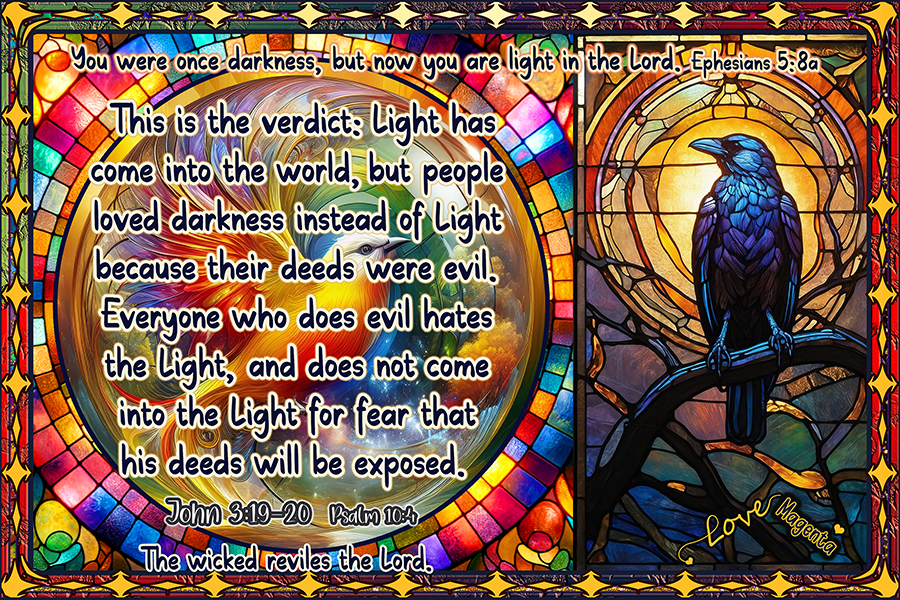
John 3 verses 19-20 and from Psalm 10 verse 4 This is the verdict: Light has come into the world, but people loved darkness instead of Light because their deeds were evil. Everyone who does evil hates the Light, and does not come into the Light for fear that his deeds will be exposed. The wicked reviles the Lord

So you have a secret club with your special language that only you understand? You expect me to believe that?I did to them that have understanding. Man by nature has enmity against God, the True God that is Rom 8:7-8
Your objection completely fails to understand the difference between natural ability and moral inability, and your lion analogy actually completely destroys your own position. Let’s look at the text and basic logic:You did not prove that my statement was false. You simply misunderstood what Paul said. You should learn to follow Paul's argument as he builds it. In his language, the carnal mind is not a type of mind, i.e. one MADE of flesh. A carnal mind is a mind SET ON the flesh. He doesn't argue that the faculty of human thought is deficient. The carnal mind is fully capable of reading and understanding the Bible. Instead, he argues that the carnal mind is set on the flesh and is not subject to the Law of God. In other words, Paul is not arguing for the privation of the mind; he is arguing that the mind set on the flesh is not a mind set on the Spirit.
If man is unable to decide to do good, then he is not culpable for doing wrong. If he is constitutionally unable to choose to have faith in Jesus Christ, then no one can blame them. No one can blame a lion for eating the gazelle. That's just what lions do. That is who they are. If man is unable, by nature, to believe in Jesus, then no one can blame him because that's just what unregenerate people do. That is who they are.
Do you want to argue that God will judge people based on what they are?
No. I agree with you. God wouldn't warn Cain if it was impossible for him to heed the warning.God tried to reason with Cain...
Would God do that if it were impossible to become wiling?
Rom 8:7-8 is right there. The carnal mind is enmity against God, hatred against God.So you have a secret club with your special language that only you understand? You expect me to believe that?
No that is not what I argued and neither did Paul. He is not arguing metaphysical inability in Romans 8; he is describing a mindset. When he says those “in the flesh” cannot submit to God, he explains the reason in the surrounding verses: their minds are set on the flesh, meaning they are oriented toward external, ethnic, and ritual markers—circumcision, lineage, food laws, sacrifices—not toward the things of the Spirit. The issue is not that they lack the metaphysical capacity to respond to God, but that their religious posture is misdirected. They don’t submit because they won’t submit; their confidence is invested in the wrong things. Paul’s contrast between flesh and Spirit is not about ontological inability but about covenantal orientation. Those who cling to the fleshly markers of the old age cannot please God as long as they persist in that mindset. The moment they turn to Christ, they move from flesh to Spirit. In other words, Paul is diagnosing misplaced trust, not asserting total inability.Your objection completely fails to understand the difference between natural ability and moral inability, and your lion analogy actually completely destroys your own position. Let’s look at the text and basic logic:
1. The Contradiction of Your Definition
You claim that a "carnal mind" is simply a mind set on the flesh, and that the faculty of human thought is not deficient. High Calvinism agrees!
- We do not teach that a fallen sinner loses his brain cells or his capacity to read the text of the Bible.
- But look at the text you are trying to dodge. Paul does not merely say the carnal mind refuses to be subject to God; he explicitly declares that it "NEITHER INDEED CAN BE" (Romans 8:7).
- That is the literal definition of absolute moral inability. If a mind cannot be subject to the law of God, then it cannot perform the spiritual good of choosing, loving, or submitting to Christ. You are claiming that a mind which "cannot please God" (Romans 8:8) can somehow perform the ultimate god-pleasing act of generating saving faith on its own. That is a flat-out logical contradiction.
Your analogy actually proves too much, because it tries to have it both ways. You shift from innate inability to moral inability as though that solves the problem, but it doesn’t. If a person “cannot choose Christ” because his nature fixes his desires, then his choices are not really choices—they are simply the mechanical outworking of his nature. That’s exactly the trap Edwards fell into: once you say a person always and only chooses according to his nature, you eliminate genuine agency. The lion analogy exposes the contradiction. You say the lion is “physically able” to eat grass but “morally unable” because of its nature. But if its nature determines its desires and its desires determine its choices, then the lion is not choosing at all—it is merely behaving according to internal programming. The same would be true of the sinner. If his “carnal mind” makes choosing Christ impossible, then he is not morally responsible for rejecting Christ; he is simply acting out what he is. In other words, your argument collapses human responsibility into determinism. You can’t claim that sinners are responsible for their choices while also claiming their nature makes any other choice impossible. If my choices do not reflect who I could be, only who I must be, then they are not my choices.2. The Lion Analogy Destroys Your Position
You write: "No one can blame a lion for eating the gazelle. That's just what lions do... If man is unable, by nature, to believe in Jesus, then no one can blame him."
You have perfectly illustrated the Calvinist view of nature while completely missing the point of moral accountability.
- Why does a lion eat a gazelle? Because it has a lion nature and it desires meat. It is physically able to eat grass, but it morally cannot choose to eat grass because eating grass goes entirely against its nature.
- Fallen man has a corrupt, sinful nature in Adam. He is physically capable of reading the Bible and walking into a church, but he morally cannot choose Christ because his carnal mind hates the light and loves the darkness (John 3:19).
Right.3. Do You Want to Argue That God Will Judge People Based on What They Are?
You ask this question as if it’s a trap. The answer is an absolute, resounding YES! God absolutely judges people based on what they are!
And I told you that the carnal mind is not a type of mind; it is a mindset.Rom 8:7-8 is right there. The carnal mind is enmity against God, hatred against God.
Thats the mind we have by nature.And I told you that the carnal mind is not a type of mind; it is a mindset.
but does God know all of those who will believe? do you believe God knows the future exhaustively? if He does, then you already believe everything has been predestined from the day God chose to create knowing all this would happen. if you say foreknowledge is not causation, it kind of is if you created everything and know exactly how it will go. by choosing to create God has effectively decreed all that comes to pass.
this is where i say this isnt a calvinist problem. everyone who believes God has exhaustive foreknowledge can have the same accusation thrown at them. the answer is secondary causes
Well, I understand. I showed you from the passage that it was not. So how am I to understand your insistence that it was based on TULIP when I showed that it wasn't? Seems like you are forcing me into a box.
I agree that God loves the world, desires all to be saved, and shows no favoritism. But the passages you cite speak about all kinds of people, not a denial of God’s electing work. Election does not contradict God’s love; it expresses His gracious initiative in salvation. The Bible teaches both God’s universal love and God’s sovereign choice, and we should affirm both without forcing one to cancel the other.
The doctrine of God’s sovereignty actually magnifies His love, because it shows that salvation is not a transaction but an act of sheer mercy. If salvation rests on human free will—I give God the belief He wants, and He gives me eternal life—then salvation becomes a matter of justice and human contribution. But the New Testament consistently frames salvation as mercy, grace, and forgiveness—gifts given to people who do not deserve them. God’s sovereign election highlights this truth: He blesses the elect with eternal life contrary to what they deserve. We are not receiving justice; we are receiving what justice would never grant. Sovereignty protects the gospel from becoming a human bargain and preserves it as a divine rescue grounded entirely in God’s gracious initiative.
Apart from God’s grace, no one would be saved. That’s the starting point of the entire New Testament. Human beings do not climb their way to God; God descends in mercy to rescue people who would never and could never save themselves. This is why sovereignty is not a cold doctrine—it is the warm, beating heart of divine love. If salvation were grounded in human free will, it would become a transaction: I supply the belief, and God supplies eternal life. But Scripture frames salvation as grace, mercy, and forgiveness—gifts given to people who deserve judgment, not life. Sovereignty protects this truth by insisting that salvation begins with God’s initiative, not human contribution. We are not saved because we chose well; we are saved because God was merciful. We are not receiving what we deserve; we are receiving what only grace can give.

He does indeed:You don't believe in inability, but do you believe in unwillingness? Does Jesus talk about those who are unwilling to believe?

