Is Knowledge of the Original Languages Necessary for KJV Believers?

  • Christian Chat is a moderated online Christian community allowing Christians around the world to fellowship with each other in real time chat via webcam, voice, and text, with the Christian Chat app. You can also start or participate in a Bible-based discussion here in the Christian Chat Forums, where members can also share with each other their own videos, pictures, or favorite Christian music.

    If you are a Christian and need encouragement and fellowship, we're here for you! If you are not a Christian but interested in knowing more about Jesus our Lord, you're also welcome! Want to know what the Bible says, and how you can apply it to your life? Join us!

    To make new Christian friends now around the world, click here to join Christian Chat.
It is the LSJ to which you said backed up the KJV translation. It obviously doesn't. Here is the BDAG. It doesn't either.

κατέχω impf. κατεῖχον; fut. καθέξω LXX, 3 pl. κατασχήσουσι (JosAs 16 [p. 64, 18 Bat. and cod. A]); 2 aor. κατέσχον. Pass.: fut. 2 pl. κατασχεθήσεσθε Ruth 1:13; aor. 3 sg. κατεσχέθη LXX (s. ἔχω; Hom.+). Trans. in all mngs. below, except 7.
to prevent the doing of someth. or cause to be ineffective, prevent, hinder, restrain
to hold someone back from going away hold back, hinder, prevent from going away (Hom. et al.; BGU 1205, 27 [28 B.C.]; 37, 6 [50 A.D.];

PFay 109, 11; Gen 24:56; cp. Jos., Ant. 7, 76; Just., A I, 45, 1) Hs 9, 11, 6. ὃν ἐβουλόμην πρὸς ἐμαυτὸν κ. whom I wished to keep with me Phlm 13. Foll. by gen. of the inf. w. article (B-D-F §400, 4) οἱ ὄχλοι κατεῖχον αὐτὸν τοῦ μὴ πορεύεσθαι ἀπ᾿ αὐτῶν Lk 4:42.
hold down, suppress τὶ someth. (γέλωτα X., Cyr. 2, 2, 1; Chariton 3, 7, 4 τ. λύπην; WCrum, Coptic Ostraca p. 4, 522=Dssm., LO 260 [LAE 306]=PGM II 233, no. O 1, 1–3 Κρόνος, ὁ κατέχων τὸν θυμὸν ὅλων τ. ἀνθρώπων, κάτεχε τ. θυμὸν Ὡρι; cp. II, 7, 935f, p 41; Jos., Vi. 233 τ. ὀργήν) τ. ἀλήθειαν ἐν ἀδικίᾳ stifle the truth by unrighteousness/ wickedness Ro 1:18 (cp. JFitzmyer, Ro [AB], ’93, 278; but s. 6 below).
to prevent someone from exercising power, restrain, check (Thu. 6, 29, 3; Appian, Bell. Civ. 2, 149 §622 τοῦ δαίμονος κατέχοντος τὸ πέλαγος=divine power held the sea back until Alexander reached the other shore; PGiss 70, 3 [II A.D.] ἡ ἀναγραφὴ κατέσχεν ἡμᾶς μέχρι ὥρας ἕκτης) ἵνα μὴ κατέξω τ̣ὰ [προσ]|τεταγμένα καὶ ἐπεικίμ̣[εν]α so that I might not delay (carrying out) the instructions and orders AcPl Ha 7, 14f. τὸ κατέχον (Themistocl., Ep. 13, 4) 2 Th 2:6 and ὁ κατέχων vs. 7 mean that which restrains and one who restrains, i.e. what prevents God’s adversary fr. coming out in open opposition to God, for the time being. In an effort to define κ. more specifically here, many interpreters have followed the exegesis of the ancient church (Tertullian) and taken τὸ κ. to be the Roman Empire and ὁ κ. the Emperor (OBetz, NTS 9, ’63, 276–91). An alternative view, as old as Theodore of Mops., but without sustained acceptance, would make τὸ κ. the preaching of Christian missionaries and ὁ κ. the apostle Paul (so OCullmann, Dodd Festschr. ’56, 409–21). These and other attempts to limit more precisely the mng. of these terms in 2 Th invite skepticism because of insufficient textual data (vs. 5 appears to imply in-house information). The concept of the temporary restraining of the forces of hell (cp. Rtzst., Poim. 27 late Egyptian prayer 6, 4 Horus as κατέχων δράκοντα=PGM 4, 994f; cp. 2770 Μιχαὴλ … κατέχων, ὃν καλέουσι δράκοντα μέγαν) does not appear to play any role here.—WBousset, D. Antichrist 1895; NFreese, StKr 93, 1921, 73–77; VHartl, ZKT 45, 1921, 455–75; WSchröder, D. 2. Thess. 1929, 8–15; DBuzy, RSR 24, ’34, 402–31; OCullmann, RThAM 1, ’38, 26–61; JSchmid, TQ 129, ’49, 323–43; OBetz, NTS 9, ’63, 276–91. Difft. CGiblin, Threat to Faith ’67, 167–242, a hostile power. S. also JTownsend, SBLSP 19, ’80, 233–46; RAus, JBL 96, ’77, 537–53; New Docs 3, 28.
to hold back with design hold back τὶ someth. κ. ἐν μυστηρίῳ τὴν σοφὴν αὐτοῦ βουλήν hold back his wise plan as a secret Dg 8:10.
to adhere firmly to traditions, convictions, or beliefs, hold to, hold fast (cp. the lit. sense λαμπάδας ἐν ταῖς χερσίν ParJer 3:2)
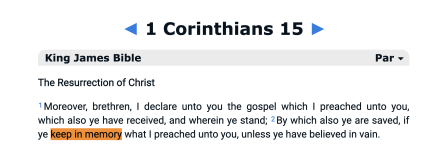
keep in one’s memory (Theophr., Char. 26, 2, a word of Homer) εἰ κατέχετε if you hold it fast 1 Cor 15:2.
hold fast, retain faithfully (X., Symp. 8, 26 τ. φιλίαν; TestJud 26:1 τ. ὁδούς) τὸν λόγον Lk 8:15. τὰς παραδόσεις guard the traditions 1 Cor 11:2. τὸ καλόν hold fast what is good 1 Th 5:21; Agr 11. τὴν παρρησίαν βεβαίαν κ. keep the confidence firm Hb 3:6; cp. vs. 14. κ. τὴν ὁμολογίαν ἀκλινῆ 10:23.
to keep in one’s possession, possess (Ps.-Aristot., Mirabilia 159; 160; Polyb. 1, 2, 3; IMagnMai 105, 51 [II B.C.] ἵνα ἔχωσιν κατέχωσίν τε καρπίζωνταί τε; Ezk 33:24; Da 7:18, 22; Ath. 8:3) τὶ someth. Mt 21:38 v.l.; ὡς μηδὲν ἔχοντες καὶ πάντα κατέχοντες 2 Cor 6:10 (DMealand [ZNW 67, ’76, 277–79] cites Ps.-Crates Ep. 7 Hercher=p. 58 no. 7, 8 Malherbe: ἔχοντες μηδὲν πάντ᾿ ἔχομεν, ὑμεῖς δὲ πάντ᾿ ἔχοντες οὐδὲν ἔχετε). Abs. 1 Cor 7:30.
to keep within limits in a confining manner, confine
in prison keep, confine (PFlor 61, 60; BGU 372 I, 16; Gen 39:20; Philo, Leg. All. 3, 21) pass. Χριστιανοὶ κατέχονται ὡς ἐν φρουρᾷ τῷ κόσμῳ they are confined in the world as in a prison Dg 6:7.
by law: ἀποθανόντες ἐν ᾧ κατειχόμεθα having died to that by which we were bound Ro 7:6 (cp. PAmh 97, 17 οὐ κατασχεθήσομαι τῇ ὑποσχέσει; PRyl 117, 13).
by disease (Diod. S. 4, 14, 5; Philo, Op. M. 71, Congr. Erud. Grat. 138; PSI 299, 3 κατεσχέθην νόσῳ; act., Jer 13:21; Jos., Vi. 48) Lk 4:38 D; J 5:4 v.l.
to have a place as one’s own, take into one’s possession, occupy (Hdt. 5, 72 et al.; PAmh 30, 26 [II B.C.] τὴν οἰκίαν) τὸν ἔσχατον τόπον Lk 14:9 (cp. Philosoph. Max. 491, 69 τὸν κάλλιστον κατέχουσι τόπον; Jos., Ant. 8, 104). Cp. GPt 5:15.—AcPl Ha 5, 28 [κατ]ε̣ῖ̣χεν αὐτὰς ἔκστασις perh. means astonishment overcame them.
lay claim to, legal t.t. Ro 1:18 (the point is that a claim is made for truth, which is denied in practice, cp. vss. 22f; s. FDanker, in Gingrich Festschr. 93. For a difft. interpr. see 1b above).
hold course, nautical t.t., intr. (Hdt. 7, 188 κατέσχε ἐς τὸν αἰγιαλόν; Dicaearchus, fgm. 85 W. εἰς Δῆλον κατέσχε; Polyb. 1, 25, 7; Philostrat., Vi. Apoll. 4, 13 p. 133, 5; 5, 18 p. 178, 13; cp. Jos., Ant. 1, 204) κατεῖχον εἰς τὸν αἰγιαλόν they headed for the beach Ac 27:40.
Perh. in the sense of determine (cp. προσέχω 2c) κατεχόντων εἰ ἄρα ἀληθῶς ἀπέθανεν AcPt Ox 849, 2f; s. ed.’s notes.—M-M. EDNT. TW. Spicq.

I can keep going. There are more.

Incidentally you say more than you ought. Maybe keep your subjective comments about people out of it. It does nothing to exhort or edify.
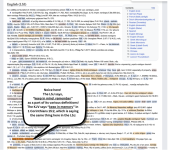
You obviously did not bother to read the entire entry at LSJ.

LSJ 01.png

I zoomed in on the entry for you to see here:

LSJ 02.png

Here it is in the KJV:

KJV 01.png

Don't believe the screenshots?
Just click on the links below to check them out!

Sources:

Side Note: I also provided an older lexicon which you did not verify or check either.
Anyone can simply go back and see it for themselves and see that your research on basic facts cannot be trusted.


....
 
I believe in New Testament non-violence because of Scripture (Matthew 5:39; Romans 12:17-21, KJV). I believe in praying for my enemies and doing good unto them according to Scripture (Matthew 5:44; Luke 6:27-28, KJV). So don't count any hurtful acts of violence on my part or my endorsement of any other believer that may do so (1 Thessalonians 5:15; 1 Peter 3:9, KJV). When I attack what I believe is false according to the Bible, that does not mean I do not care for their souls (Ephesians 4:15; 2 Timothy 2:24-25, KJV).

As for the presentation of truth:

Well, there are some points that are very important you did not answer. If you cared about truth, then why hide it? Why not acknowledge the overwhelming evidence in favor of the TR/KJV Bible line?
You are a propagandist.

I found the KJV a terrible way to try to learn God's Word.
Its wording and way of expression is like getting caught in a time machine that leaves one to wonder about what should have
been an everyday thought and communication.

And, despite your hatred for modern translations?
I can get more from some of them that is good than I can ever from the archaic King James.

Here is what you miss. The King James Version in our day is a great tool to get believers to think they are learning God's Word without really knowing what was said. Yet, you tell them it is more accurate!

To perpetrate upon others that it is a perfect translation is ludicrous. For it would take an expert exegetical teacher to explain
what the intent was sometimes an hour for what took ten seconds to read. You are a promoter of a false sense of security for the naive and well-intentioned believer.

And that's your niche. Your purpose.

You have a lot of truth to learn if you ever humble yourself.
But that is how some lives go.
 
You are a propagandist.

I found the KJV a terrible way to try to learn God's Word.
Its wording and way of expression is like getting caught in a time machine that leaves one to wonder about what should have
been an everyday thought and communication.

And, despite your hatred for modern translations?
I can get more from some of them that is good than I can ever from the archaic King James.

Here is what you miss. The King James Version in our day is a great tool to get believers to think they are learning God's Word without really knowing what was said. Yet, you tell them it is more accurate!

To perpetrate upon others that it is a perfect translation is ludicrous. For it would take an expert exegetical teacher to explain
what the intent was sometimes an hour for what took ten seconds to read. You are a promoter of a false sense of security for the naive and well-intentioned believer.

And that's your niche. Your purpose.

You have a lot of truth to learn if you ever humble yourself.
But that is how some lives go.
Now your playing the Mark Ward card.
Sorry that does not work.
If you ever recall in your readings of the Bible, Jesus spoke in parables, and said things that others did not even understand many times. I mean, are you even aware that the Bible teaches that a good major of His disciples were leaving Him because they misunderstood Jesus' words?

Did Jesus chase after them and say the following words?

"Hey guys, wait, wait, come back! I was speaking figuratively!" ​
"I was not saying for you to literally eat of my flesh and drink of my blood!" ​

Did Jesus clarify with the Jews when He referred to the destruction of the temple as a reference to his body?

Obviously the answer to these questions would be... "No."

God has chosen the foolish things of this world to confound the wise (See: 1 Corinthians 1:27 KJV).

In fact, I mentioned these things to Mark Ward while talking to him in the comments section of one of his YouTube videos, and he was all crickets and unable to say anything of any kind of substance with the Bible in reply.


....
 
Now your playing the Mark Ward card.

What I said is truth.

You just tried to flip me off like a card.

Say "Mark Ward" ten times.
It means nothing.

In the mean time.
I said truth.

If you ever recall in your readings of the Bible, Jesus spoke in parables, and said things that others did not even understand.

The parables were for the ears of unbelievers. But to his disciples he gave them truth.
You keep giving the wrong person parables.

When they were alone, the people around Jesus, along with the Twelve, asked him about the parables. He said to them, “The secret of God’s kingdom has been given to you, but to those who are outside everything comes in parables. This is so that they can look and see but have no insight, and they can hear but not understand.
Mark 4:10-11
 
Did Jesus chase after them and say the following words?

"Hey guys, wait, wait, come back! I was speaking figuratively!" ​
"I was not saying for you to literally eat of my flesh and drink of my blood!" ​

Did Jesus clarify with the Jews when He referred to the destruction of the temple as a reference to his body?

Obviously the answer to these questions would be... "No."

So if it was not his literal physical blood, we are to drink?

Let's find out what the "blood of Christ" really means.

See your problem.
 
You are a propagandist.

I found the KJV a terrible way to try to learn God's Word.
Its wording and way of expression is like getting caught in a time machine that leaves one to wonder about what should have
been an everyday thought and communication.

And, despite your hatred for modern translations?
I can get more from some of them that is good than I can ever from the archaic King James.

Here is what you miss. The King James Version in our day is a great tool to get believers to think they are learning God's Word without really knowing what was said. Yet, you tell them it is more accurate!

To perpetrate upon others that it is a perfect translation is ludicrous. For it would take an expert exegetical teacher to explain
what the intent was sometimes an hour for what took ten seconds to read. You are a promoter of a false sense of security for the naive and well-intentioned believer.

And that's your niche. Your purpose.

You have a lot of truth to learn if you ever humble yourself.
But that is how some lives go.
You are also ignoring the fact of all the bad doctrines that are in Modern Bibles, as well.
So there is no propaganda going on.

All it takes is a few seconds. That's right. We are not living in the 1980s anymore.
Right now, you or some other person can go to ChatGPT, or Claude, and ask for 100 of the best bad doctrines that are changed in popular Modern Bibles like the NASB, NIV, ESV, LSB, CSB, etcetera.

But seeing that the Modern Bible Movement just likes to gaslight us into believing false narratives, you are the one who needs to look in the mirror in being the propagandist.

Anyone with an internet connection and AI, can verify this for themselves.
They can even ask AI for all the liberals, and unitarians involved in the Modern Bible Movement.
Within seconds they can get these answers with verified links confirming the truth for themselves.
Are you even aware that the 27th edition of the Nestle and Aland was supervised by the Vatican?
Are you even aware that a Mormon worked on the OT critical text?

Do a search on Google for Donald Parry byu.
Carlo Maria Martini who was a liberal Catholic and was in line to be a pope and was working on behalf of the Vatican. He worked on the Nestle and Aland editions. But changes in the Westcott/Hort / Nestle and Aland texts over the years already was making changes before Carlo Maria Marini. I have documented 25 Catholic ideas in Modern Bibles that have slowly been added since the Revised Version by Westcott and Hort.

Do you care?

Most likely not.


.....


.....
 
What I said is truth.

You just tried to flip me off like a card.

Say "Mark Ward" ten times.
It means nothing.

In the mean time.
I said truth.


The parables were for the ears of unbelievers. But to his disciples he gave them truth.
You keep giving the wrong person parables.

When they were alone, the people around Jesus, along with the Twelve, asked him about the parables. He said to them, “The secret of God’s kingdom has been given to you, but to those who are outside everything comes in parables. This is so that they can look and see but have no insight, and they can hear but not understand.
Mark 4:10-11
Again, you missed the point I was trying to make. EVEN the disciples misunderstood Jesus!!! How can you not know this? How long have you been reading the Bible? Jesus spoke of His resurrection with them before the cross and they did not understand it. Many of HIS disciples stopped following Him because they did not understand His words. Jesus then basically said to His close disciples, do you want to leave, too?


....
 
So if it was not his literal physical blood, we are to drink?

Let's find out what the "blood of Christ" really means.

See your problem.
Your missing the point I was making. Its like a plane flying over your head.
The point I was making that you are trying to escape is that they misunderstood Jesus and they were disciples that stopped following Jesus. It was their misunderstanding of his words that led them to leave Jesus. Then Jesus challenged his close disciples and asked if they wanted to leave, too. Meaning, not everything God says is going to read like a child's book as your falsely claiming.

So if God did preserve His words in 1600s Jacobean English that is hard to understand at times (which I believe He did), then it would be consistent with His character that we read about in Scripture.

Scripture says God has chosen the foolish things of this world to confound the wise.


,,,,
 
You are also ignoring the fact of all the bad doctrines that are in Modern Bibles, as well.
So there is no propaganda going on.

All it takes is a few seconds. That's right. We are not living in the 1980s anymore.
Right now, you or some other person can go to ChatGPT, or Claude, and ask for 100 of the best bad doctrines that are changed in popular Modern Bibles like the NASB, NIV, ESV, LSB, CSB, etcetera.

But seeing that the Modern Bible Movement just likes to gaslight us into believing false narratives, you are the one who needs to look in the mirror in being the propagandist.

Anyone with an internet connection and AI, can verify this for themselves.
They can even ask AI for all the liberals, and unitarians involved in the Modern Bible Movement.
Within seconds they can get these answers with verified links confirming the truth for themselves.
Are you even aware that the 27th edition of the Nestle and Aland was supervised by the Vatican?
Are you even aware that a Mormon worked on the OT critical text?

Do a search on Google for Donald Parry byu.
Carlo Maria Martini who was a liberal Catholic and was in line to be a pope and was working on behalf of the Vatican. He worked on the Nestle and Aland editions. But changes in the Westcott/Hort / Nestle and Aland texts over the years already was making changes before Carlo Maria Marini. I have documented 25 Catholic ideas in Modern Bibles that have slowly been added since the Revised Version by Westcott and Hort.

Do you care?

Most likely not.

In the end?

Who will end up with more truth?

A person reading a translation with some errors that is only for a person who is a performer for Shakespeare and Company?
Or one that you will comprehend much more truth in plain English with some error?

If anything?
We need a new translation that is in plain English, which is accurate in line with the Greek and Hebrew.

I have sitting to my left a Williams New Testament and Kenneth Wuest's expanded translation.
Is the King James still more accurate than these?
 
No bible translation is perfect, language evolves and corrupts over time, including the vocabulary used in the KJV. For example, "gay" used to be effervescently happy, "queer" used to be odd, weird, "diet" used to mean the kinds of food you or an animal eat, instead of a restriction of what you're allowed to eat; and a more relevant example, "ass" for donkey, not buttocks. This inevitably affects your understanding of the text.

Also, the bible is full of references - scriptural references, cultural references, historical references. If you're obsessing over the literal meaning of words, you may not be able to see the forest for the trees.
Readability is one of the reasons why many attack the KJV.
But by doing so, there is a large part of the story that you are leaving out in the process.

The Critical Text/Modern Bibles are the new kids on the block and it is filled with heretics, liberals, bad doctrines, etcetera. The fruit of this movement has not been unity (despite so called easier to understand versions). You cannot even memorize the Bible in this movement because there is no settled text. You say all Bibles have errors, which then means everyone must slice and dice God's word to their liking.

The Received Text was born within the time of the Reformation, and has culminated in the KJV that has led to the three greatest revivals, and became the standard English Bible among Christians for hundreds of years. It was the Bible that brought unity over one text and memorization of God's word in English. It's positive impact on history cannot be fully calculated.

So I would rather have words that are harder to study and have all the correct words of God between two covers than have a Bible full of errors and bad doctrines, and that is tied to liberals and heretics that came later in history.


Side Note:

The Modern Bible also tries to gaslight the public Christian world by saying that the TR is based on entirely late manuscripts. Just go to my website www.affectionsabove.com and you will see that is a lie.


.....


.....
 
You are also ignoring the fact of all the bad doctrines that are in Modern Bibles, as well.
So there is no propaganda going on.

All it takes is a few seconds. That's right. We are not living in the 1980s anymore.
Right now, you or some other person can go to ChatGPT, or Claude, and ask for 100 of the best bad doctrines that are changed in popular Modern Bibles like the NASB, NIV, ESV, LSB, CSB, etcetera.

But seeing that the Modern Bible Movement just likes to gaslight us into believing false narratives, you are the one who needs to look in the mirror in being the propagandist.

Anyone with an internet connection and AI, can verify this for themselves.
They can even ask AI for all the liberals, and unitarians involved in the Modern Bible Movement.
Within seconds they can get these answers with verified links confirming the truth for themselves.
Are you even aware that the 27th edition of the Nestle and Aland was supervised by the Vatican?
Are you even aware that a Mormon worked on the OT critical text?

Do a search on Google for Donald Parry byu.
Carlo Maria Martini who was a liberal Catholic and was in line to be a pope and was working on behalf of the Vatican. He worked on the Nestle and Aland editions. But changes in the Westcott/Hort / Nestle and Aland texts over the years already was making changes before Carlo Maria Marini. I have documented 25 Catholic ideas in Modern Bibles that have slowly been added since the Revised Version by Westcott and Hort.

A Bible translation is only a tool.
A tool to be used as a point of reference to be publicly corrected when need be and to be expounded upon.

What we really need are good teachers.
Not Bibles with a perfect translation that no one would understand without a good teacher to explain it.

Sometimes a bad translation in the hands of a good teacher can be used to bring out points of truth that may have otherwise been overlooked. Romans 8:28!
 
Your missing the point I was making. Its like a plane flying over your head.
The point I was making that you are trying to escape is that they misunderstood Jesus and they were disciples that stopped following Jesus. It was their misunderstanding of his words that led them to leave Jesus. Then Jesus challenged his close disciples and asked if they wanted to leave, too. Meaning, not everything God says is going to read like a child's book as your falsely claiming.

So if God did preserve His words in 1600s Jacobean English that is hard to understand at times (which I believe He did), then it would be consistent with His character that we read about in Scripture.

Scripture says God has chosen the foolish things of this world to confound the wise.

Rationalization 101.

We need a good translation that communicates to us in our way of thinking.

Stop your BS.

.....
 
Before Pentecost they did!
Before they were given the indwelling Holy Spirit to guide them into all truth.

Get your timeline right.
Your basic knowledge of the Bible is extremely poor.

New Testament Examples of Christians Who Lacked Understanding or Needed Further Instruction After Pentecost:

1. Peter did not initially understand the meaning of his vision. — Acts 10:17, 28. "Now while Peter doubted in himself what this vision which he had seen should mean..."​
​
2. Jewish believers did not initially understand God's acceptance of the Gentiles. — Acts 11:2–18.​
​
3. Certain Christian Pharisees believed Gentile converts needed circumcision and obedience to the law of Moses. — Acts 15:1–11.​
​
4. Apollos needed a fuller understanding of God's way, despite being mighty in the Scriptures. — Acts 18:24–26. Aquila and Priscilla "expounded unto him the way of God more perfectly."​
​
5. Certain Jewish believers misunderstood Paul's teachings concerning Moses and circumcision. — Acts 21:20–25.​
​
6. Peter and Barnabas failed to act according to the truth of the gospel concerning Gentile believers. — Galatians 2:11–14.​
​
7. The Galatian believers were confused about the relationship between faith, the Spirit, and the law. — Galatians 3:1–5; 5:1–4.​
​
8. Some Christians lacked a proper understanding concerning dietary practices and the observing of days. — Romans 14:1–6, 14–23.​
​
9. Paul did not want the Roman Christians to remain ignorant concerning the mystery of Israel's partial blindness. — Romans 11:25.​
​
10. The Corinthian Christians were spiritually immature and could not receive certain teachings. — 1 Corinthians 3:1–3. "I...could not speak unto you as unto spiritual, but as unto carnal, even as unto babes in Christ."​
​
11. Not all Christians possessed the same knowledge concerning idols and things offered unto idols. — 1 Corinthians 8:7. "Howbeit there is not in every man that knowledge..."​
​
12. Certain Corinthian believers lacked proper understanding concerning the Lord's supper. — 1 Corinthians 11:17–22, 27–30.​
​
13. The Corinthian believers needed further instruction concerning spiritual gifts. — 1 Corinthians 12:1; 14:20.​
​
14. Some Corinthian Christians denied the resurrection of the dead. — 1 Corinthians 15:12–19. "How say some among you that there is no resurrection of the dead?"​
​
15. The Thessalonian believers needed further understanding concerning Christians who had died and the resurrection. — 1 Thessalonians 4:13–18. "But I would not have you to be ignorant, brethren, concerning them which are asleep..."​
​
16. Some Thessalonian Christians were troubled and confused concerning the day of Christ. — 2 Thessalonians 2:1–5.​
​
17. The Hebrew Christians were spiritually immature and needed to be taught fundamental biblical truths again. — Hebrews 5:11–14. "For when for the time ye ought to be teachers, ye have need that one teach you again..."​
​
18. Paul acknowledged that some spiritually mature believers might not yet understand matters alike. — Philippians 3:15. "And if in any thing ye be otherwise minded, God shall reveal even this unto you."​
​
19. Peter acknowledged that some things in Paul's epistles were difficult to understand and were being distorted by the unlearned and unstable. — 2 Peter 3:15–16. "In which are some things hard to be understood..." (The passage does not specifically identify those distorting the writings as genuine Christians.)​
​
20. The Laodicean church did not recognize its true spiritual condition. — Revelation 3:14–19. "And knowest not that thou art wretched, and miserable, and poor, and blind, and naked."​

A particularly important observation: These passages establish that receiving the Holy Ghost after Pentecost did not automatically mean that every Christian immediately possessed a complete or perfect understanding of all spiritual truths. Even Peter, Barnabas, and other believers needed correction, instruction, or further understanding.

How long have you been reading and studying the Bible?
How can you not know these things?


...
 
Rationalization 101.

We need a good translation that communicates to us in our way of thinking.

Stop your BS.

.....
You mean translations that keep shape shifting with each new edition and translations that do not all agree with what they say among each other? You mean a Greek Critical Text that keeps shape-shifting and is even offering us new heretical teaching that Jesus will become the I AM in the new UBS6?

Sorry, your propaganda is not going to work with anyone who has an internet connection and an AI giving them links to confirm things.


....
 
Before Pentecost they did!
Before they were given the indwelling Holy Spirit to guide them into all truth.

Get your timeline right.
2 Peter 3:15–16 (KJV)

15 "And account that the longsuffering of our Lord is salvation; even as our beloved brother Paul also according to the wisdom given unto him hath written unto you;​
16 As also in all his epistles, speaking in them of these things; in which are some things hard to be understood, which they that are unlearned and unstable wrest, as they do also the other scriptures, unto their own destruction."​
​
How can you not know this?


....
 
A Bible translation is only a tool.
A tool to be used as a point of reference to be publicly corrected when need be and to be expounded upon.

What we really need are good teachers.
Not Bibles with a perfect translation that no one would understand without a good teacher to explain it.

Sometimes a bad translation in the hands of a good teacher can be used to bring out points of truth that may have otherwise been overlooked. Romans 8:28!
A bad translation that has corrupt doctrines can potentially lead them to believe those false doctrines.
Then again I highly doubt you ever really considered that they teach false doctrines.
You said you looked into the KJV vs. Modern Bible issue a long time ago, but I am not convinced that you truly have done a deep dive study on the matter. Why? Because you like the multi-versionist approach (Even though in the real world such an application does not really work when it comes to important life decisions). For example: You would not test fly a plane that was built on conflicting schematics, and you would not buy a house that was based on multiple contradictory contracts.


.....