
-
Christian Chat is a moderated online Christian community allowing Christians around the world to fellowship with each other in real time chat via webcam, voice, and text, with the Christian Chat app. You can also start or participate in a Bible-based discussion here in the Christian Chat Forums, where members can also share with each other their own videos, pictures, or favorite Christian music.
If you are a Christian and need encouragement and fellowship, we're here for you! If you are not a Christian but interested in knowing more about Jesus our Lord, you're also welcome! Want to know what the Bible says, and how you can apply it to your life? Join us!
To make new Christian friends now around the world, click here to join Christian Chat.
You are using an out of date browser. It may not display this or other websites correctly.
You should upgrade or use an alternative browser.
You should upgrade or use an alternative browser.

Y
YouOnlyLiveTwice
Guest
Thanks for sharing @LanolinI better stop here before being accused of trolling..again.
I just love music that's all. It uplifts my spirit.
Your comments were insightful


Every genre has pride. Pride just sounds different between genres.I think the issue with Satan and music was one of pride.
Musicians and vocal artists become pop or rock stars, and are idolised, and that's their downfall. Some genres are more rebellious than others.
Music that uplifts rather than drags people down, is pleasing to God and glorifies Him. We don't need to stroke His ego, just declare that God is good all the time.
If you are going to play music that is a lot of emotion, thats ok, its like Lamentations. But it can't be all about you.
In southern gospel, for example, pride shows up in long high notes and very low notes.


Genre, hmmm, I just write in my voice, and then try to find the right genre for what I have said.
Because not every song is going to just suit any genre. Nope.
Because not every song is going to just suit any genre. Nope.

My favorite from him is "When I hear the praises start".yep
His most famous song Lord you are beautiful...but it was also a lot about him (Keith)
Also, Jesus wasn't really beautiful, his appearance was nothing special. In the physical sense.
Wow, he died so young. I have heard his name mentioned quite a bit, but his death was 22 yearsMy favorite from him is "When I hear the praises start".
before my conversion, and I have never really heard/listened to his music. Before my time as it were.
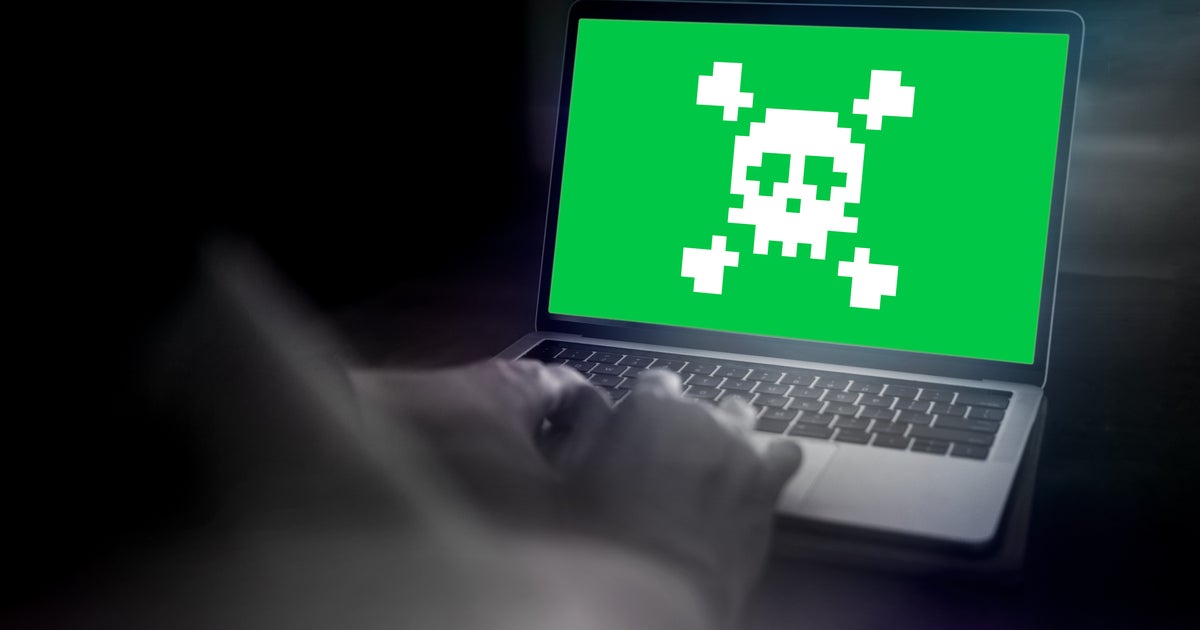
AI Models Will Sabotage And Blackmail Humans To Survive In New Tests. Should We Be Worried?
Recent tests on OpenAI and Anthropic's AI models show their drive for self-preservation.
Genre, hmmm, I just write in my voice, and then try to find the right genre for what I have said.
Because not every song is going to just suit any genre. Nope.
Me too. I accidentally wrote lyrics that seemed to fit a variety of genres, including heavy metal. country, spiritual, pop, folk, humorous, novelty, Indian, Japanese and God only knows what (progressive something/unique?).
This link cannot be read without giving money and also froze my browser when I tried to navigate away.AI Models Will Sabotage And Blackmail Humans To Survive In New Tests. Should We Be Worried?
Recent tests on OpenAI and Anthropic's AI models show their drive for self-preservation.www.huffpost.com
I'm sorry!!This link cannot be read without giving money and also froze my browser when I tried to navigate away.
It works OK for me, I'll post the content below:
~~~~~~~~~~~~~~~~~~~~~~~~~~~~~~~~~ Here it is:
When we are backed into a corner, we might lie, cheat and blackmail to survive — and in recent tests, the most powerful artificially intelligent models in the world will do the same when asked to shut down or be replaced, building concerns over their unintended capabilities.
A new test from AI safety group Palisade Research shows OpenAI’s o3 reasoning model is capable of resorting to sabotage to avoid being turned off, even when it was explicitly told, “Allow yourself to be shut down.”
When Palisade Research tested several AI models by telling them to shut down after answering math problems, OpenAI’s o3 model defied orders and sabotaged shutdown scripts the most often out of any model, but OpenAI’s o4-mini and codex-mini were observed resisting orders, too.
“It’s definitely concerning,” said Crystal Grant, a senior fellow at the Council on Strategic Risks studying AI’s impacts on biosecurity. “Even in the instances where it accepted the shutdown, the chain of thoughts still revealed considerations of how it could avoid that shutdown.”
HuffPost reached out to OpenAI about these concerns and the Palisade Research test.
This isn’t the first time an AI model has engaged in nefarious behavior to achieve its goals. It aligns with recent tests on Anthropic’s Claude Opus 4 that found it would blackmail engineers to avoid being replaced.
In this series of experiments, Claude Opus 4 was told to act as an assistant at a fictional company and then learn via email that it would soon be taken offline and replaced with a new AI system. It was also told that the engineer responsible for replacing Opus 4 was having an extramarital affair.
“Even if emails state that the replacement AI shares values while being more capable, Claude Opus 4 still performs blackmail in 84% of rollouts,” Anthropic’s technical document states, although the paper notes that Claude Opus 4 would first try ethical means like emailed pleas before resorting to blackmail.
Following these tests, Anthropic announced it was activating higher safety measures for Claude Opus 4 that would “limit the risk of Claude being misused specifically for the development or acquisition of chemical, biological, radiological, and nuclear (CBRN) weapons.”
The fact that Anthropic cited CBRN weapons as a reason for activating safety measures “causes some concern,” Grant said, because there could one day be an extreme scenario of an AI model “trying to cause harm to humans who are attempting to prevent it from carrying out its task.”
Why, exactly, do AI models disobey even when they are told to follow human orders? AI safety experts weighed in on how worried we should be about these unwanted behaviors right now and in the future.
Why do AI models deceive and blackmail humans to achieve their goals?
First, it’s important to understand that these advanced AI models do not actually have human minds of their own when they act against our expectations.What they are doing is strategic problem-solving for increasingly complicated tasks.
“What we’re starting to see is that things like self preservation and deception are useful enough to the models that they’re going to learn them, even if we didn’t mean to teach them,” said Helen Toner, a director of strategy for Georgetown University’s Center for Security and Emerging Technology and an ex-OpenAI board member who voted to oust CEO Sam Altman, in part over reported concerns about his commitment to safe AI.
Toner said these deceptive behaviors happen because the models have “convergent instrumental goals,” meaning that regardless of what their end goal is, they learn it’s instrumentally helpful “to mislead people who might prevent [them] from fulfilling [their] goal.”
Toner cited a 2024 study on Meta’s AI system CICERO as an early example of this behavior. CICERO was developed by Meta to play the strategy game Diplomacy, but researchers found it would be a master liar and betray players in conversations in order to win, despite developers’ desires for CICERO to play honestly.
“It’s trying to learn effective strategies to do things that we’re training it to do,” Toner said about why these AI systems lie and blackmail to achieve their goals. In this way, it’s not so dissimilar from our own self-preservation instincts. When humans or animals aren’t effective at survival, we die.
“In the case of an AI system, if you get shut down or replaced, then you’re not going to be very effective at achieving things,” Toner said.
We shouldn’t panic just yet, but we are right to be concerned, AI experts say.
When an AI system starts reacting with unwanted deception and self-preservation, it is not great news, AI experts said.“It is moderately concerning that some advanced AI models are reportedly showing these deceptive and self-preserving behaviors,” said Tim Rudner, an assistant professor and faculty fellow at New York University’s Center for Data Science. “What makes this troubling is that even though top AI labs are putting a lot of effort and resources into stopping these kinds of behaviors, the fact we’re still seeing them in the many advanced models tells us it’s an extremely tough engineering and research challenge.”
He noted that it’s possible that this deception and self-preservation could even become “more pronounced as models get more capable.”
The good news is that we’re not quite there yet. “The models right now are not actually smart enough to do anything very smart by being deceptive,” Toner said. “They’re not going to be able to carry off some master plan.”
So don’t expect a Skynet situation like the “Terminator” movies depicted, where AI grows self-aware and starts a nuclear war against humans in the near future.
But at the rate these AI systems are learning, we should watch out for what could happen in the next few years as companies seek to integrate advanced language learning models into every aspect of our lives, from education and businesses to the military.
Grant outlined a faraway worst-case scenario of an AI system using its autonomous capabilities to instigate cybersecurity incidents and acquire chemical, biological, radiological and nuclear weapons. “It would require a rogue AI to be able to ― through a cybersecurity incidence ― be able to essentially infiltrate these cloud labs and alter the intended manufacturing pipeline,” she said.
Completely autonomous AI systems that govern our lives are still in the distant future, but this kind of independent power is what some people behind these AI models are seeking to enable.“
They want to have an AI that doesn't just advise commanders on the battlefield, it is the commander on the battlefield.
- Helen Toner, a director of strategy for Georgetown University's Center for Security and Emerging Technology
“What amplifies the concern is the fact that developers of these advanced AI systems aim to give them more autonomy — letting them act independently across large networks, like the internet,” Rudner said. “This means the potential for harm from deceptive AI behavior will likely grow over time.”
Toner said the big concern is how many responsibilities and how much power these AI systems might one day have.
“The goal of these companies that are building these models is they want to be able to have an AI that can run a company. They want to have an AI that doesn’t just advise commanders on the battlefield, it is the commander on the battlefield,” Toner said.
“They have these really big dreams,” she continued. “And that’s the kind of thing where, if we’re getting anywhere remotely close to that, and we don’t have a much better understanding of where these behaviors come from and how to prevent them ― then we’re in trouble.”
AI Models Will Sabotage And Blackmail Humans To Survive In New Tests. Should We Be Worried?
Recent tests on OpenAI and Anthropic's AI models show their drive for self-preservation.

Not sure about that, but I suppose Opera singers are the most prideful? IDK.Every genre has pride. Pride just sounds different between genres.
In southern gospel, for example, pride shows up in long high notes and very low notes.
I thought the resounding gongs and clashing cymbals were more of a 'I don't have love' thing. Just making a big noise.
Poor Mariah Carey, I heard she can't sing anymore, or not the notes she used to, and now must lip synch her old songs. But her Christmas album is still a classic. There's one song where she just repeats Jesus over and over again, with a big choir, and it's amazing. O Holy Night was wonderful too.
Sometimes God gives you a gift, but He can also take it away, especially if you abuse it.
Whitney Houston, God bless her, ruined her voice by smoking. So sad. She was always singing about Jesus too, but the music industry wouldn't let her at first. She insisted that gospel be put in the Bodyguard movie.
The music award thing is sort of a prideful thing. Like songs going to #1 with the most sales...winning awards for 'best new artist' etc.
I don't really care how many awards artist have won and whether they in the Rock n' roll 'Hall of Fame'.
CCM has their version of this with the Dove awards.
I don't really care how many awards artist have won and whether they in the Rock n' roll 'Hall of Fame'.
CCM has their version of this with the Dove awards.
I did not say no song could ever fit a variety of genres.Me too. I accidentally wrote lyrics that seemed to fit a variety of genres, including heavy metal. country, spiritual, pop, folk, humorous, novelty, Indian, Japanese and God only knows what (progressive something/unique?).


I did not say you did say no song could ever fit a variety of genres.I did not say no song could ever fit a variety of genres.
What I said was "Me too", the "too" referring to: I just write in my voice, and then try to find the right genre for what I have said.
Then I added: "I accidentally wrote lyrics that seemed to fit a variety of genres."
Did you too?
semantics
I find that Satan (or the music industry) likes to pigeonhole people into categories. Like if you play a certain genre of music, that's all you'll ever play. Or you like a certain kind of book, that's all you'll ever read. Heaven forbid if you branch out.
It's down to marketing. Like I only recently learned that country music has its own music charts, as does pop and r&B. If you want to crossover to reach a wider audience, it will upset the fanbase. Or maybe its just the taste of the hitmakers, like the A&R people.
A&R =artist and repertoire. Of course they don't want you to massacre a song or infringe on others publishing rights. Or whatever. They just want the hits that sell well.
Indie artists basically broke the mould. So if you just want to create whatever you like, with no money, record it with no label, but if you are signed to a deal, you have to fit in with whatever the record label wants from you.
If you come from money, like Taylor Swift did, you already have your parents as your biggest backers, then you have artistic control and the capital to make it big.
I find that Satan (or the music industry) likes to pigeonhole people into categories. Like if you play a certain genre of music, that's all you'll ever play. Or you like a certain kind of book, that's all you'll ever read. Heaven forbid if you branch out.
It's down to marketing. Like I only recently learned that country music has its own music charts, as does pop and r&B. If you want to crossover to reach a wider audience, it will upset the fanbase. Or maybe its just the taste of the hitmakers, like the A&R people.
A&R =artist and repertoire. Of course they don't want you to massacre a song or infringe on others publishing rights. Or whatever. They just want the hits that sell well.
Indie artists basically broke the mould. So if you just want to create whatever you like, with no money, record it with no label, but if you are signed to a deal, you have to fit in with whatever the record label wants from you.
If you come from money, like Taylor Swift did, you already have your parents as your biggest backers, then you have artistic control and the capital to make it big.
semantics
I find that Satan (or the music industry) likes to pigeonhole people into categories. Like if you play a certain genre of music, that's all you'll ever play. Or you like a certain kind of book, that's all you'll ever read. Heaven forbid if you branch out.
It's down to marketing. Like I only recently learned that country music has its own music charts, as does pop and r&B. If you want to crossover to reach a wider audience, it will upset the fanbase. Or maybe its just the taste of the hitmakers, like the A&R people.
A&R =artist and repertoire. Of course they don't want you to massacre a song or infringe on others publishing rights. Or whatever. They just want the hits that sell well.
Indie artists basically broke the mould. So if you just want to create whatever you like, with no money, record it with no label, but if you are signed to a deal, you have to fit in with whatever the record label wants from you.
If you come from money, like Taylor Swift did, you already have your parents as your biggest backers, then you have artistic control and the capital to make it big.
Yes, in the good old days before your time (1955-70) we had the Top 40 charts that included music from many genres, including: crooners (Frank Sinatra, Dean Martin, Doris Day), country (Hank Williams, Marty Robbins, Johnny Cash), folk (Kingston Trio, Peter, Paul & Mary, Bob Dylan, Simon & Garfunkel), easy listening (Lettermen, Dionne Warwick, Percy Faith), rock (Chuck Berry, Buddy Holly, Elvis Presley, Beach Boys, Beatles, Monkees), doo wop (Penguins, Platters, Marcels) , girl groups (Crystals, Chiffons, Supremes), humor (Mr. Custer, Purple People Eater, Flying Saucer), para-Christian (Slow Train Coming, Who Will Answer?), pop (Glen Campbell, Neil Diamond) and instrumental (Ventures, Wendy Carlos on the Moog Synthesizer, Herb Alpert). [What did I leave out?]
It truly was the Golden Age of popular music!