Saved by faith alone?

  • Christian Chat is a moderated online Christian community allowing Christians around the world to fellowship with each other in real time chat via webcam, voice, and text, with the Christian Chat app. You can also start or participate in a Bible-based discussion here in the Christian Chat Forums, where members can also share with each other their own videos, pictures, or favorite Christian music.

    If you are a Christian and need encouragement and fellowship, we're here for you! If you are not a Christian but interested in knowing more about Jesus our Lord, you're also welcome! Want to know what the Bible says, and how you can apply it to your life? Join us!

    To make new Christian friends now around the world, click here to join Christian Chat.
Do you understand the difference between water baptism/H20 that reaches the flesh (John 4:1-2) and living water that reaches the heart? (John 4:10-14)
Do you understand the difference between the command for water baptism and the analogy of living waters at the well.

The analogy of living waters does not negate the need for baptism.
 
While Apollos was at Corinth, Paul took the road through the interior and arrived at Ephesus.
There he found some disciples and asked them, “Did you receive the Holy Spirit when you believed?”
They answered, “No, we have not even heard that there is a Holy Spirit.”


So Paul asked, “Then what baptism did you receive?”
“John’s baptism,” they replied.
Paul said, “John’s baptism was a baptism of repentance.
He told the people to believe in the one coming after him, that is, in Jesus.”
Acts 19:1-4

Water baptisms were used for telling people to believe in the one coming after John the Baptist.
The ritual carried over into the early days of the Church because it became the habitual way prior to the Cross.

When Pentecost took place?
There was NO NEW TESTAMENT SCRIPTURES YET!

There was nothing in writing to learn about the NEW Church age life from.
So, the temporary gifts God used as proof of an actual reality. One that had yet to be defined.

Once the NT Scriptures were complete?
The need for the gifts were no longer the same.
I see no purpose in this discussion if you are not willing to answer my question after I answered your question.
 
Luke 24:47 reveals that repentance and remission of sin would be preached in Jesus' name in all nations and would begin in Jerusalem. This prophecy concerned the NT water baptism. John's baptism introduced what was later modified to include the NAME of Jesus in association with His sacrifice as revealed at Pentecost.

"Therefore let all the house of Israel know assuredly, that God hath made the same Jesus, whom ye have crucified, both Lord and Christ.
Now when they heard this, they were pricked in their heart, and said unto Peter and to the rest of the apostles, Men and brethren, what shall we do?

Then Peter said unto them, Repent, and be baptized every one of you in the name of Jesus Christ for the remission of sins, and ye shall receive the gift of the Holy Ghost.

For the promise is unto you, and to your children, and to all that are afar off, even as many as the Lord our God shall call.
And with many other words did he testify and exhort, saying, Save yourselves from this untoward generation.

Then they that gladly received his word were baptized: and the same day there were added unto them about three thousand souls.
And they continued stedfastly in the apostles' doctrine
and fellowship, and in breaking of bread, and in prayers." Acts 2:36-42
Luke 3:16
John answered and said to them all, “As for me, I baptize you with water; but One is coming who is mightier than I,
and I am not fit to untie the thong of His sandals; He will baptize you with the Holy Spirit and fire."

It is so obvious.

Tradition rules Christianity regardless of what the scripture plainly states.

Repentance, John's water baptism, and some of the sacraments, that is modern Christianity.

Who needs the Holy Spirit?
 
Do you understand the difference between the command for water baptism and the analogy of living waters at the well.

The analogy of living waters does not negate the need for baptism.
The command to get water baptized is for believers. (Acts 10:43-47) The analogy of living water negates water baptism as the means of spiritual cleansing.
 
  • Like
Reactions: Inquisitor
Hey! If an enemy ever invades our land?
Make sure to keep a loaded musket and your powder dry.
And, please, keep your horse well-fed and rested.

That is how some see our present day spiritual warfare situation.
Because when they read what the pioneers of the Church age did, and want to do likewise.
Or you could opt for a witch trial.

The most severe witch hunts occurred between 1450 and 1750, peaking between 1560 and 1630.

Historians estimate that up to 100,000 people were prosecuted in Europe and British America, resulting in 40,000 to 60,000 executions.

Theological Framework
The trials were fueled by passages in the Old Testament (e.g., Exodus 22:18: "Thou shalt not suffer a witch to live") and
the belief that witches were in league with the Devil.

The Malleus Maleficarum
In 1486, a German inquisitor published the Malleus Maleficarum, a highly influential book that detailed how to identify,
interrogate, and prosecute witches, which became a standard guide for many Christian witch hunters.

Religious Upheaval
Witch trials were particularly intense where Catholic and Protestant rivalries were strongest, such as in the Holy Roman Empire (modern-day Germany) and Scotland.

Notable Examples European Witch Craze
Germany saw roughly 40% of all witchcraft prosecutions. In 1590, the North Berwick witch trials in Scotland, personally
overseen by King James VI, resulted in the torture and execution of numerous individuals for allegedly plotting against the King.

The Salem Witch Trials (1692)
In Puritan Massachusetts, mass hysteria and accusations of witchcraft led to the execution of 19 people by hanging and the
death of several others in prison. The trials are widely regarded as a tragic miscarriage of justice resulting from flawed legal
systems and community panic.

Did Jesus tell us to love our enemies?
 
Jesus does not mention Spirit.
It was about water baptism.

Jesus was prophesying for what was to take place in the soon-to-be made know church age!

Peter the Apostle knew!

Peter answered them, “All of you must turn to God and change the way you think and act, and each of you must be baptized in the name of Jesus Christ so that your sins will be forgiven. Then you will receive the Holy Spirit as a gift.

Learn from Peter!
Water baptism leads to the Gift of the Holy Spirit.
You mentioned a prophecy that Jesus gave.

You also know that prophecy was common in the first century.

This is what the scripture states

1 Corinthians 14:37
If anyone thinks he is a prophet or spiritual, let him recognize that the things which I write to you are the Lord’s commandment.

1 Corinthians 14:1
Pursue love, yet desire earnestly spiritual gifts, but especially that you may prophesy.

You partially quote from the scripture but strictly follow a form of traditional Christianity.

Why do you ignore what Jesus was telling us in 1 Corinthians 12, 13, 14?

Revelation is progressive in the NT.
 
No.

You are like many here, you answer questions with questions or simply ignore the question because your answer would be silly.

Jesus often responded to questions with questions to provoke deeper thought and reflection.
This method encouraged his listeners to consider their beliefs and the implications of their inquiries.
navigators.org Wikipedia

Jesus' Method of Teaching​

Engaging Through Questions​

Jesus frequently employed a unique teaching style by responding to questions with questions.
This approach served multiple purposes:
  • Encouraged Reflection: By asking questions, Jesus prompted his listeners to think critically about their beliefs and the implications of their inquiries.
  • Provoked Deeper Understanding: His questions often led to deeper insights, challenging individuals to explore their own thoughts and motivations.

Examples of Jesus' Questions​

Here are a few notable instances where Jesus answered questions with questions:
SituationQuestion AskedJesus' Response
Disciples' Fasting"Why do your disciples not fast?""How can the guests of the bridegroom mourn while he is with them?" (Matthew 9:14-15)
Pharisees' Traditions"Why do your disciples break the tradition of the elders?""And why do you break the command of God for the sake of your tradition?" (Matthew 15:1-3)
Greatest Commandment"Which is the greatest commandment?""What is written in the Law? How do you read it?" (Luke 10:26)

Impact on Discipleship​

This method of questioning not only engaged his audience but also fostered a deeper relationship between Jesus and his followers. It encouraged them to become active participants in their learning rather than passive recipients of information. By focusing on the right questions, Jesus aimed to cultivate a mindset of discipleship that emphasized understanding and personal growth.
 
Of course it's for believers!!!

My my.

The discussion at the well negates the command of Jesus for baptism?


View attachment 291602
I never said that living water negates the command of Jesus for believers to get water baptized. That is a straw man argument.

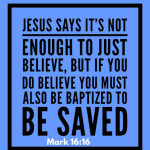
In Mark 16:16, Jesus said - He who believes and is baptized will be saved (general cases without making a qualification for the unusual case of someone who believes but is not baptized) but he who does not believe will be condemned.

The omission of baptized with "does not believe" shows that Jesus does not make baptism absolutely necessary salvation. Condemnation rests on unbelief, not on a lack of baptism. So salvation rests on belief. *NOWHERE did Jesus say, "whoever is not baptized will be condemned."

If water baptism is absolutely required for salvation, then why did Jesus not mention it in the following verses? (3:15,16,18; 5:24; 6:29,40,47; 11:25,26). What is the ONE requirement that Jesus mentions 9 different times in each of these complete statements? BELIEVES. *What happened to baptism? *Hermeneutics.

*John 3:18 - He who believes in Him is not condemned; but he who (is not water baptized? - NO) does not believe is condemned already, because he has not (been water baptized? - NO) because he has not believed in the name of the only begotten Son of God.
 
Of course it's for believers!!!

My my.

The discussion at the well negates the command of Jesus for baptism?


View attachment 291602

Have you ever read (in a plain English translation) the following?

Acts 10:43-47


All the prophets testify about him that everyone who believes in him receives forgiveness of sins
through his name.”
While Peter was still speaking these words, the Holy Spirit came on all who heard the message.
The circumcised believers who had come with Peter were astonished that the gift of the Holy Spirit
had been poured out even on Gentiles. For they heard them speaking in tongues and praising God.
Then Peter said, “Surely no one can stand in the way of their being baptized with water.
They have received the Holy Spirit just as we have.”

Those Gentiles were saved before anyone was given water baptism.

The Jewish believers were still not straight in their thinking
They were still thinking like they had been before the Church age began.

“Surely no one can stand in the way of their being baptized with water.
They have received the Holy Spirit just as we have.”
They were already saved and filled with the Spirit.
Yet? Peter still insisted upon water baptism for them.

There were dummies back then, who later repented and became wise.
Their mistakes were recorded in the Bible for our benefit for when we make the same mistake.


.......
 
Romans 5:1 - Therefore, having been justified by faith, (what happened to baptism?) we have peace with God through our Lord Jesus Christ, 2 through whom also we have access by faith into this grace (what happened to baptism?) in which we stand, and rejoice in hope of the glory of God.

Ephesians 2:8 - For by grace you have been saved through faith, (what happened to baptism?) and that not of yourselves; it is the gift of God, 9 not of works, lest anyone should boast.

In regard to the word "water" in John 3:5, there are those who would argue that the natural sense of the passage parallels water with being born out of a mother’s womb and with flesh based on the answer of Nicodemus to Jesus. Simply stated in that case, two births are necessary. The first is a physical, literal, "flesh" birth accompanied by amniotic "water" and the second is Spirit.

There are also those who would argue that Jesus mentions "living water" in John 4:10, 14; 7:37-39 and in John 7:38-39, we read - "He who believes in Me, as the Scripture has said, out of his heart will flow rivers of living water. But this He spoke concerning the Spirit. The Holy Spirit is the source of living water and spiritual cleansing.

Now if "water" is defined as baptism, then we could just as justifiably say, "Out of his heart will flow rivers of living baptism" in John 7:38. If this sounds ridiculous, it is no more so than the idea that water baptism is the source or the means of becoming born again. So, to automatically read "baptism" into John 3:5 simply because it mentions "water" is unwarranted.

Yet there are still others who would argue that "water" is used in the Bible as an emblem of the word of God, and in such uses it is associated with cleansing or washing. (John 15:3; Ephesians 5:26) When we are born again, the Holy Spirit begets new life, and we are said to become "partakers of the divine nature." (2 Peter 1:4) The new birth is brought to pass through "incorruptible seed, by the word of God, which lives and abides forever" (I Peter 1:23) and the Holy Spirit accomplishes the washing of regeneration. (Titus 3:5)
baptism is included in the christian faith as the fathers and church has taght

in the case of a new disciple they present themselves to the apostles or apostolic church "the faith community" receive instruction in the faith and make a profession of faith with baptism receiving the grace of justification, with the grace of God that gives union, the supernatural gifts of faith hope and charity with the Spirit!

thks
 
Romans 5:1 - Therefore, having been justified by faith, (what happened to baptism?) we have peace with God through our Lord Jesus Christ, 2 through whom also we have access by faith into this grace (what happened to baptism?) in which we stand, and rejoice in hope of the glory of God.

Ephesians 2:8 - For by grace you have been saved through faith, (what happened to baptism?) and that not of yourselves; it is the gift of God, 9 not of works, lest anyone should boast.

In regard to the word "water" in John 3:5, there are those who would argue that the natural sense of the passage parallels water with being born out of a mother’s womb and with flesh based on the answer of Nicodemus to Jesus. Simply stated in that case, two births are necessary. The first is a physical, literal, "flesh" birth accompanied by amniotic "water" and the second is Spirit.

There are also those who would argue that Jesus mentions "living water" in John 4:10, 14; 7:37-39 and in John 7:38-39, we read - "He who believes in Me, as the Scripture has said, out of his heart will flow rivers of living water. But this He spoke concerning the Spirit. The Holy Spirit is the source of living water and spiritual cleansing.

Now if "water" is defined as baptism, then we could just as justifiably say, "Out of his heart will flow rivers of living baptism" in John 7:38. If this sounds ridiculous, it is no more so than the idea that water baptism is the source or the means of becoming born again. So, to automatically read "baptism" into John 3:5 simply because it mentions "water" is unwarranted.

Yet there are still others who would argue that "water" is used in the Bible as an emblem of the word of God, and in such uses it is associated with cleansing or washing. (John 15:3; Ephesians 5:26) When we are born again, the Holy Spirit begets new life, and we are said to become "partakers of the divine nature." (2 Peter 1:4) The new birth is brought to pass through "incorruptible seed, by the word of God, which lives and abides forever" (I Peter 1:23) and the Holy Spirit accomplishes the washing of regeneration. (Titus 3:5)
Jn 3:5 by both water and the spirit

Jn 3:22 they went about preaching the reformation and faith alone, ooopps! sorry

Jn 3:22 After these things came Jesus and his disciples into the land of Judaea; and there he tarried with them, and baptized.

ez 36:25-27 baptism
mk 16:16 faith and baptism
mt 28:19 faith and baptism
Jn 1 prepared by baptism
Jn 2 waters of purification
Jn 3:5 born again by baptism
Jn 4 baptism
acts 2 baptism
acts 8 baptism
1 cor 12:13 baptism
gal 3:27 baptism
eph 4:5 baptism
1 pet 3:20-21 baptism

thks
 
Romans 5:1 - Therefore, having been justified by faith, (what happened to baptism?) we have peace with God through our Lord Jesus Christ, 2 through whom also we have access by faith into this grace (what happened to baptism?) in which we stand, and rejoice in hope of the glory of God.

Ephesians 2:8 - For by grace you have been saved through faith, (what happened to baptism?) and that not of yourselves; it is the gift of God, 9 not of works, lest anyone should boast.

In regard to the word "water" in John 3:5, there are those who would argue that the natural sense of the passage parallels water with being born out of a mother’s womb and with flesh based on the answer of Nicodemus to Jesus. Simply stated in that case, two births are necessary. The first is a physical, literal, "flesh" birth accompanied by amniotic "water" and the second is Spirit.

There are also those who would argue that Jesus mentions "living water" in John 4:10, 14; 7:37-39 and in John 7:38-39, we read - "He who believes in Me, as the Scripture has said, out of his heart will flow rivers of living water. But this He spoke concerning the Spirit. The Holy Spirit is the source of living water and spiritual cleansing.

Now if "water" is defined as baptism, then we could just as justifiably say, "Out of his heart will flow rivers of living baptism" in John 7:38. If this sounds ridiculous, it is no more so than the idea that water baptism is the source or the means of becoming born again. So, to automatically read "baptism" into John 3:5 simply because it mentions "water" is unwarranted.

Yet there are still others who would argue that "water" is used in the Bible as an emblem of the word of God, and in such uses it is associated with cleansing or washing. (John 15:3; Ephesians 5:26) When we are born again, the Holy Spirit begets new life, and we are said to become "partakers of the divine nature." (2 Peter 1:4) The new birth is brought to pass through "incorruptible seed, by the word of God, which lives and abides forever" (I Peter 1:23) and the Holy Spirit accomplishes the washing of regeneration. (Titus 3:5)
Jn 3:5 cannot enter!

how do we enter?

thks
 
baptism is included in the christian faith as the fathers and church has taght

in the case of a new disciple they present themselves to the apostles or apostolic church "the faith community" receive instruction in the faith and make a profession of faith with baptism receiving the grace of justification, with the grace of God that gives union, the supernatural gifts of faith hope and charity with the Spirit!

thks
Are you a Roman Catholic?
 
Luke 3:16
John answered and said to them all, “As for me, I baptize you with water; but One is coming who is mightier than I,
and I am not fit to untie the thong of His sandals; He will baptize you with the Holy Spirit and fire."

It is so obvious.

Tradition rules Christianity regardless of what the scripture plainly states.

Repentance, John's water baptism, and some of the sacraments, that is modern Christianity.

Who needs the Holy Spirit?

"Obvious"...doesn't work with some here.

Just as Jesus was obviously the Messiah, but some could/would not see.

Sometimes I believe God allows us to be tested by frustrated souls to test our soul.
To see if we have enough sense to know when we are to simply let go.

Warn a divisive person once, and then warn them a second time.
After that, have nothing to do with them. You may be sure that
such people are warped and sinful; they are self-condemned. Titus 3:10-11​

I am done with them personally. I have no hope of them repenting.
I will simply continue to show what I know to help others who may still not know what they are dealing with.

grace and peace .......
 
  • Like
Reactions: Inquisitor
Jn 3:5 cannot enter!

how do we enter?

thks
Learn this for once...
Jesus answered, “Very truly I tell you, no one can enter the kingdom of God
unless they are born of water and the Spirit. John 3:5​

What was Jesus discussing?
About the second birth.

So?
What is being born of water?
Our first birth.
For a mother breaks water when as child is being born.

It is time more of us learned about this.
Check link!


.......
 
I believe it does.

Properly understood, yes, because there is no qualitative difference between faith that accepts God’s saving grace at conversion and faith that accepts God’s working grace while walking/living (Eph. 2:8-10, 1Cor. 15:10, 2Cor. 5:7, Rom. 1:17), but only a quantitative difference as each additional moment passes–and of course faith remains non-meritorious during the saint’s entire lifetime.
 
baptism is included in the christian faith as the fathers and church has taght

in the case of a new disciple they present themselves to the apostles or apostolic church "the faith community" receive instruction in the faith and make a profession of faith with baptism receiving the grace of justification, with the grace of God that gives union, the supernatural gifts of faith hope and charity with the Spirit!

thks
The church also has taught witch trials.

The church has conducted Inquisitions.

The church has also executed heretics.

The church has promoted war.

The Crusades (1095–1291)
A series of eight major military campaigns sanctioned by the Catholic Church aimed at reclaiming the Holy Land
from Muslim control.

The Thirty Years' War (1618–1648)
One of the most destructive conflicts in European history, primarily fought between Catholic and Protestant alliances
in the Holy Roman Empire, eventually drawing in most of Europe.

The French Wars of Religion (1562–1598)
A prolonged period of civil infighting, massacres, and military operations primarily between French Catholics and Huguenots (Protestants).

The Hussite Wars (1419–1434)
A series of military conflicts fought by the followers of Bohemian reformer Jan Hus against armies loyal to the Catholic
Church and the Holy Roman Emperor.