~This side of the 'glass'~

  • Christian Chat is a moderated online Christian community allowing Christians around the world to fellowship with each other in real time chat via webcam, voice, and text, with the Christian Chat app. You can also start or participate in a Bible-based discussion here in the Christian Chat Forums, where members can also share with each other their own videos, pictures, or favorite Christian music.

    If you are a Christian and need encouragement and fellowship, we're here for you! If you are not a Christian but interested in knowing more about Jesus our Lord, you're also welcome! Want to know what the Bible says, and how you can apply it to your life? Join us!

    To make new Christian friends now around the world, click here to join Christian Chat.
View attachment 277297 View attachment 277298

**Spiritual homework refers to practices and assignments that promote personal growth, self-awareness, and a deeper connection with one's inner self and/or a higher power. It's not about fulfilling requirements or achieving a specific outcome,
But rather about embarking on a journey of self-discovery and spiritual growth.

Self-reflection and introspection:
Spiritual homework often involves activities such as journaling, meditation, and self-assessment to gain
a deeper understanding of one's beliefs, values, and behavioral patterns.


Seeking knowledge and understanding:
This can involve exploring different spiritual traditions, philosophies, or teachings that resonate with the individual.


Practicing mindfulness and presence:
Engaging in activities that cultivate awareness of the present moment and foster a sense of connection with
oneself and the world around.


Developing a deeper connection with a higher power:
This could involve prayer, connecting with nature, or engaging in practices that foster a sense of faith and trust.


Putting spiritual principles into action:
This involves applying spiritual teachings to daily life, such as through acts of service, kindness, and compassion.


Embracing challenges and learning from experiences:
Spiritual homework is not about avoiding difficulties, but rather about using them as opportunities for growth and transformation.
Essentially, spiritual homework is a personal and ongoing process of self-discovery, growth, and connection, with the aim of living a more meaningful and fulfilling life.


**(Intended solely as informative and subjects to reflect on.
Spiritual maturity and growth depend on the measure of one's intent. )


'Conceivably, faith and trust are most likely present when a spiritual heart is in action by one's conduct.
Vacant of a spiritual heart, the Holy Spirit surely is not present. Sadly, many appear blind and deaf to the truth.


View attachment 277300
 
360_F_195365048_5WMfbAEiwdXtESNzT2AmVNMFVP6Uenaa - Copy.jpg GOD'S WORK BEEN DONE.jpg

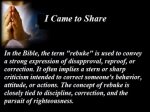
**Misinterpreting the Bible can occur when a verse is taken out of context, used to support a personal bias, or not fully understood.
For example, Matthew 7:1, "Judge not, that you be not judged," is often misinterpreted as meaning one should never make judgments, when Jesus is actually warning against hypocrisy and judging others without being willing to be judged oneself.
Another example is Romans 8:28, which states, "And we know that in all things God works for the good of those who love him," which is sometimes interpreted as a guarantee of material prosperity, when it actually speaks to the overall well-being of believers in Christ.

Ignoring context:
A verse can be misinterpreted if it's read without understanding the surrounding text and the historical, cultural, and literary context in which it was written.


Using verses to justify personal beliefs:
Individuals may selectively choose Bible verses to support their own biases or opinions, rather than seeking to understand the text's full meaning.


Confusing literal and figurative language:
Some passages are meant to be understood figuratively, such as parables or prophetic speeches, and these are sometimes taken literally.


Using verses to prove a point without understanding the original meaning:
For example, some may use verses about "not judging" to excuse all forms of discernment, rather than understanding the verse's context.


Ignoring the historical and cultural context:
Understanding the customs, beliefs, and social structures of the time when a book or verse was written is crucial for accurate interpretation.


Applying Old Testament laws to New Testament believers:
Many Old Testament laws are no longer applicable to Christians, and these can be misinterpreted when applied to modern-day situations.


Misunderstanding the nature of God:
Some passages are misinterpreted to portray God as vindictive or cruel, when the Bible consistently presents God as loving and merciful.


**(Intended solely as informative and subjects to reflect on.
Spiritual maturity and growth
depend on the measure of one's intent. )

Different articles shared on this thread are intended solely as informative, in the hope that it is understood
The significance of needing spiritual enlightenment to gainfully comprehend the intent of spiritually inspired scripture.
Scripture surely becomes disoriented when in the wrong hands.


Individuals can experience "spiritual disorientation," feeling lost or confused in their faith, especially during difficult times.
In such states, individuals may struggle to understand or apply Scripture, feeling a disconnect from God and His guidance.
The Bible acknowledges such experiences, describing individuals as being "plunged into darkness" or unable to "see to put one foot in front of the other," when disoriented.


56bc6e0ba935a_Serenity-Copy(8)-Copy-Copy-Copy-Copy-Copy-Copy-Copy-Copy-Copy-Copy-Copy-Copy_jpg...jpg8681-gettyimages-yorihirokawa - Copy - Copy (6) - Copy.jpg
 
426137663_2549966698497176_4064306650372611268_n - Copy - Copy (2).jpg 360_F_195365048_5WMfbAEiwdXtESNzT2AmVNMFVP6Uenaa - Copy (2) - Copy.jpg

**In discussing scripture, especially texts like the Bible, the statement "scripture is mostly metaphor" reflects the idea that, while containing historical accounts, it also frequently employs symbolic language, figurative speech, and stories with deeper meaning to convey spiritual truths and ideas that are otherwise difficult to grasp.

Metaphor as a literary device:
A metaphor is a literary device that uses an implied comparison between two unlike things to help explain or expound upon an idea. In scripture, metaphors can be used to describe God, His nature, and His ways in a way that resonates with human understanding.

Transcendent Truths and Ideas:
Metaphors help authors convey complex, often "uncommon or transcendent truths and ideas" that might be hard to grasp literally. For example, the description of "The Lord is my shepherd" uses a familiar concept (a shepherd caring for sheep) to illustrate God's loving guidance and provision for His people.


Beyond Literal Meaning:
Some people interpret parts of scripture, particularly stories or visions, as having a "surplus of meaning" or symbolic significance beyond their literal interpretation. This perspective acknowledges that the authors may have employed metaphorical language to communicate profound spiritual concepts.


The Bible includes many examples of metaphors, such as Jesus describing himself as "the light of the world", or "the true vine", and the Holy Spirit's work being likened to "the fruit of the Spirit". These examples are not meant to be taken literally but offer a metaphorical understanding of these concepts.

It is important to note that the extent to which scripture is considered metaphorical varies among different interpreters and theological perspectives. While some passages are clearly poetic or figurative, others are generally understood as historical accounts. Interpreting scripture involves carefully considering the context, literary devices used, and seeking to understand the author's intent.

In essence, saying "scripture is mostly metaphor" highlights the recognition that a significant portion of sacred texts employs symbolic language to convey profound spiritual meanings that transcend a purely literal reading.

**(Intended solely as informative and subjects to reflect on.
Spiritual maturity and growth depend on the measure of one's intent. )


d569b1a6fe1ab2e4ca17563e705679c4 - Copy (3) - Copy - Copy.jpg
 
426137663_2549966698497176_4064306650372611268_n - Copy - Copy (2).jpg 2764 (1) - Copy.png 240_F_165783601_SldoyeH9oxlbTMlEqwjCoFa2XpPDVTJn - Copy (8) - Copy - Copy - Copy - Copy - Copy...jpg

**Spiritual nurturing, as seen in the Bible, involves cultivating a deeper relationship with God and fostering spiritual growth through various practices and attitudes. This includes engaging with scripture, prayer, worship, and service to others, all while striving to live by God's will. It's about nurturing the whole person – mind, body, and spirit – through a variety of activities.

Spiritual nurturing in the Bible:
The Bible is seen as a source of spiritual nourishment, providing guidance, wisdom, and a deeper understanding of God's character and will.


Prayer:
Prayer is a vital form of communication with God, allowing for both expressing needs and seeking guidance.


Worship:
Worship, both personal and communal, expresses adoration and gratitude to God.


Serving Others:
Acts of service, like showing love, compassion, and kindness to others, are considered expressions of faith and contribute to spiritual growth.


Nurturing Spiritual Gifts:
Recognizing, developing, and using spiritual gifts for the benefit of the church and the wider community is encouraged.


Living in the Spirit:
Allowing the Holy Spirit to guide and empower believers in their daily lives, leading to the development of spiritual fruit like love, joy, peace, etc., according to Galatians 5:22-23.


Fostering Community:
Being part of a supportive community of believers provides encouragement, accountability, and opportunities for mutual growth.


Nurturing in the Bible:
Proverbs 22:6:

"Train up a child in the way he should go; even when he is old, he will not depart from it." This verse emphasizes the significance of early spiritual training and its enduring influence.

Ephesians 4:32:
"Be kind and compassionate to one another, forgiving each other, just as in Christ God forgave you." This verse emphasizes the importance of forgiveness and compassion in nurturing relationships.

1 Peter 2:2:
"Like newborn babies, crave pure spiritual milk, so that by it you may grow up in your salvation." This verse uses the imagery of a baby's natural desire for milk to illustrate the believer's need for spiritual nourishment.

1 Corinthians 12:4-7:
"Now there are diversities of gifts, but the same Spirit. There are differences in administrations, but the same Lord. And there are diversities of operations, but it is the same God which worketh all in all." This passage highlights the variety of spiritual gifts and the importance of using them for the common good.

1 Peter 4:10:
"As each has received a gift, use it to serve one another, as good stewards of God's varied grace." This verse emphasizes the responsibility believers have to use their gifts to serve others and build up the church.

240_F_165783601_SldoyeH9oxlbTMlEqwjCoFa2XpPDVTJn - Copy (5) - Copy - Copy - Copy - Copy - Copy.jpg

**(Intended solely as informative and subjects to reflect on.
Spiritual maturity and growth depend on the measure of one's intent. )
 
240_F_165783601_SldoyeH9oxlbTMlEqwjCoFa2XpPDVTJn - Copy (5) - Copy - Copy - Copy.jpg 240_F_165783601_SldoyeH9oxlbTMlEqwjCoFa2XpPDVTJn - Copy (5) - Copy - Copy - Copy - Copy - Copy.jpg

**Yes, prayer is often described as a conversation with God. It's a way of communicating with a higher power, expressing thoughts, feelings, and seeking guidance or comfort. While it can involve talking to God, it also encompasses listening for His response, whether through internal thoughts, scripture, or other means.

Two-way communication:
Prayer is not a one-way monologue; it's a dialogue where believers both speak to God and listen for His guidance or response.

Building a relationship:
Prayer is a way to build a deeper connection with God, much like relationships are nurtured through open communication.


Expressing a range of emotions:
Prayer allows individuals to share their joys, sorrows, doubts, and concerns with God.

Different forms of prayer:
Prayer can take many forms, including talking aloud, meditating, journaling, or simply being still and listening.


Hearing God's voice:
While some may feel God's presence directly, others may hear His voice through scripture, reflection, or the
guidance of the Holy Spirit.


Examples in scripture:
Many examples in the Bible show prayers as conversations with God, demonstrating the importance of both speaking and listening.


**Intended solely as informative and subjects to reflect on.
Spiritual maturity and growth depend on the measure of one's intent. )


'I believe it is conceivable that if more emphasis were placed on one's personal time in prayer,
that a needed spiritual enlightenment would surely be forthcoming. Thereby, perhaps much worldly foolishness
would be put aside, for the good of all, especially for the one who, hopefully, finds enlightenment.


56bc6e0ba935a_Serenity-Copy(8)-Copy-Copy-Copy-Copy-Copy-Copy-Copy-Copy-Copy-Copy-Copy-Copy_jpg...jpg
 
360_F_195365048_5WMfbAEiwdXtESNzT2AmVNMFVP6Uenaa - Copy.jpgd569b1a6fe1ab2e4ca17563e705679c4 - Copy (3) - Copy - Copy.jpg

**Christian mysticism is a path within Christianity focused on experiencing a direct and transformative presence of God. It involves cultivating an intimate, personal relationship with God through practices like contemplation, prayer, and meditation, often leading to a sense of union with the divine. This mystical experience is not limited to a select few but is considered a potential path for all Christians, though some may experience extraordinary graces or signs.

Aspects of Christian mysticism:

Direct Experience of God:
Mysticism emphasizes a personal, experiential knowledge of God, rather than relying solely on doctrine or intellectual understanding.

Spiritual Transformation:
It aims for a profound, transformative encounter with God that leads to a deeper relationship and a more Christ-like life.


Stages of Spiritual Development:
Mystical practices often involve stages of spiritual growth, such as purification (the purging of sin), illumination (growth in virtue), and union (experiencing oneness with God).


Diverse Practices:
Christian mystics utilize various practices, including meditation, contemplation, prayer, fasting, and engagement with scripture, to foster a deeper connection with God.


Not Limited to Extraordinary Experiences:
While some mystics have experienced extraordinary phenomena like visions, Christian mysticism is not solely defined by these experiences. It also encompasses the cultivation of a deeper, more intimate relationship with God through ordinary practices.


Interfaith Dialogue:
Mystical traditions have historically fostered interfaith dialogue and understanding by emphasizing shared spiritual experiences and a common search for the divine.


**Intended solely as informative and subjects to reflect on.
Spiritual maturity and growth depend on the measure of one's intent. )


360_F_195365048_5WMfbAEiwdXtESNzT2AmVNMFVP6Uenaa - Copy.jpg
 
human-raised-hands-while-praying-god-with-black-background_9083-5140 - Copy.jpg
**The definition of inspired scripture emphasizes instruction and teaching, 'rather than proving anything.'
This requires understanding the concept of "inspiration" and the Bible's purpose:

Theological Concept of Inspiration:
Christians believe God influenced the 'Bible's human authors,' making their writings "the word of God. " In 2 Timothy 3:16, 'inspired ' means 'God-breathed'. This suggests the Scriptures came directly from God, not solely from human effort.

Focus on Instruction and Teaching:
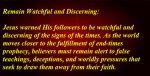
The Bible guides and instructs believers. 2 Timothy 3:16 states, "All Scripture is God-breathed and is useful for teaching, rebuking, correcting and training in righteousness". The Bible equips believers for righteous living, not necessarily to provide scientific or historical proofs. Scripture leads people to faith, nurtures faith, and leads them to 'spiritual maturity.' It gives knowledge of God, deepens faith, fosters love for God and others, and assures hope.

Distinction from "Proving Things":
The Bible's primary function isn't to serve as a textbook for proving scientific or historical claims, even though it contains historical accounts. Approaching scripture to "prove things" can lead to misinterpretations, including "proof-texting," where verses are taken out of context to support a specific viewpoint. The Bible's authority and purpose come from its divine origin and its capacity to reveal God's truth and transform lives.


In short, the definition of "inspired scripture" highlights that the Bible is a divinely originated text. Its purpose is to reveal God's character, guide believers in their faith and lives, and lead them to salvation and maturity in Christ, rather than being a source for proving external facts or scientific theories.

**Intended solely as informative and subjects to reflect on.
Spiritual maturity and growth depend on the measure of one's intent. )


240_F_165783601_SldoyeH9oxlbTMlEqwjCoFa2XpPDVTJn - Copy (6) - Copy - Copy - Copy - Copy.jpg

Spiritual maturity refers to the ongoing process of growth in one's faith and relationship with God, characterized by increased understanding, wisdom, and Christ-like character. It's not just about acquiring knowledge, but about actively applying spiritual principles to one's life and developing virtues like love, patience, and kindness. Ultimately, spiritual maturity involves a deeper reliance on and trust in God, and a desire to live according to His will.
 
human-raised-hands-while-praying-god-with-black-background_9083-5140 - Copy.jpg 2764 (1) - Copy.png2764 (1) - Copy.png2764 (1) - Copy.png tenor9IYMK91O (1) - Copy.gif

**Scripture, particularly the Bible, remains relevant today because its core themes of love, redemption, and justice resonate with fundamental human experiences and address enduring questions about life's meaning and purpose. ** Its teachings offer guidance on moral decision-making, provide a framework for understanding the world, and offer hope amidst uncertainty.

Scripture remains relevant:

Timeless Truths:
Scripture addresses fundamental aspects of the human condition, such as love, forgiveness, and the search for meaning, which remain relevant across cultures and time periods.

Moral Compass:
Biblical teachings offer guidance on ethical behavior, relationships, and personal conduct, providing a framework for navigating complex moral dilemmas in modern society.

Source of Hope and Wisdom:
In a world often marked by uncertainty and challenges, scripture provides comfort, wisdom, and hope, offering insights into overcoming adversity and finding purpose.


Cultural Influence:
Scripture has profoundly shaped art, literature, and social activism throughout history, and its influence continues to be felt in various aspects of modern culture.


Personal Transformation:
The Bible's message can inspire personal growth, encourage introspection, and foster a deeper connection with God, leading to positive life changes.


Guidance in Decision-Making:
Scripture can offer principles and insights that inform choices in various areas of life, from personal relationships to career decisions.


Connection to the Divine:
For believers, scripture provides a way to understand God's character, connect with His will, and find meaning in their relationship with Him.


Relevant scriptures:
Matthew 22:37-39:

Love God and love your neighbor. This highlights the importance of love as a foundational principle in all relationships.

Proverbs 3:5-6:
Trust in the Lord with all your heart and lean not on your own understanding. This encourages reliance on God's guidance.


Isaiah 40:8:
The grass withers, the flower fades, but the word of our God will stand forever.
This emphasizes the enduring nature of God's word.

Romans 6:23:
For the wages of sin is death, but the gift of God is eternal life in Christ Jesus our Lord.
This verse points to the core Christian message of salvation.

**(Intended solely as informative and subjects to reflect on.
Spiritual maturity and growth depend on the measure of one's intent. )


316082338_2242895909204258_7604774210114589549_n.jpg being-spiritual - Copy - Copy (2) - Copy - Copy.jpg

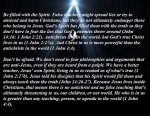
-The significance and profoundness of the truth within these words surely should be carefully pondered.
It is conceivable that until these truths are focused on and taken seriously, the intellectual ego and stubborn
personalities will surely continue to desecrate the meaningful purpose of the inspired spiritual wholeness
of the Divine intended purpose.
 
426137663_2549966698497176_4064306650372611268_n - Copy - Copy.jpg2764 (1) - Copy.png2764 (1) - Copy.png2764 (1) - Copy.png426612982_2551902068303639_1540955414992328127_n.jpg

**In essence, there's no true substitute for spiritual integrity because it underpins the authenticity of a person's faith and actions.

(Spiritual integrity is irreplaceable)

Authenticity and Alignment:
-It ensures that your inner beliefs and outward actions are consistent and true to your spiritual values.

Living with integrity means your walk matches your talk, regardless of external circumstances.

Trust and Reliability:
When you demonstrate spiritual integrity, you build trust and become a reliable source of guidance and support for others.

Deepening Relationships:
Living with spiritual integrity fosters deeper and more meaningful relationships, both with God (or a higher power) and with other individuals, according to Christianity Now.


Inner Peace and Security:
Spiritual integrity provides a foundation of inner peace and security, knowing you are living in alignment
with your true self and a higher purpose.

Ethical Decision-Making:

It helps navigate difficult decisions by aligning choices with your core values and ethical standards, even when it's challenging or unpopular.

In short, spiritual integrity is not merely a desirable trait, but the very essence of living a life that is true, whole, and impactful, both for yourself and for those around you.

**(Intended solely as informative and subjects to reflect on.
Spiritual maturity and growth depend on the measure of one's intent. )


56bc6e0ba935a_Serenity-Copy(8)-Copy-Copy-Copy-Copy-Copy-Copy-Copy-Copy-Copy-Copy-Copy-Copy_jpg...jpg

Spiritual integrity is not a shortcut or a temporary solution; it is a fundamental aspect of a meaningful life.
While challenges exist in maintaining it in a world that often encourages compromise, the benefits – authenticity, inner peace, ethical conduct, and strong relationships – are invaluable and contribute to both personal and collective well-being.
'Amen'
 
240_F_165783601_SldoyeH9oxlbTMlEqwjCoFa2XpPDVTJn - Copy (5) - Copy - Copy.jpg d569b1a6fe1ab2e4ca17563e705679c4 - Copy (3) - Copy - Copy.jpg

**The Bible generally discourages speculation, especially when it comes to matters of faith and doctrine. While the Bible doesn't explicitly forbid all speculation, it warns against it in several contexts, emphasizing the importance of sticking to revealed truth and avoiding conjecture that leads to confusion or departure from sound teaching.

Biblical Warnings Against Speculation:

Departure from Sound Doctrine:
The Bible encourages believers to hold firmly to trustworthy messages and sound teaching, rather than engaging
in speculative ideas that contradict established truths.


Foolish and Ignorant Questions:
(2 Timothy 2:23) Specifically advises believers to "reject foolish and ignorant speculations, knowing that they breed quarrels".

Focus on What is Revealed:
(Deuteronomy 29:29) states that the secret things belong to God, while the revealed things belong to us. This suggests a need to be content with what God has disclosed and avoid venturing into areas beyond what He has made known.

Potential for Deception:
The example of Eve in the Garden of Eden, who was deceived by speculation, highlights the potential dangers of ungrounded ideas.


End Times Speculation:
While prophecy is part of the Bible, the Bible also cautions against excessive speculation about the end times, emphasizing that we know only in part and should avoid dogmatic assertions about unrevealed details.

Matters of Faith and Doctrine:
Speculating beyond the clear teachings of Scripture can lead to error and division within the church.


Uncertainties about the Future:
While the Bible provides guidance, it also acknowledges that we don't have all the answers about the future. According to bibletools.org, "We understand in part, meaning we have a vague-to-rough idea of the course of events because of our insight into God's plan, but we cannot honestly be dogmatic about any speculative scenarios we devise," says Enjoying the Journey.

Summary:
The Bible encourages believers to focus on revealed truth, grounded in Scripture, and to avoid speculation that can lead to error, confusion, or division. While some level of contemplation is natural, it should not stray into areas beyond what God has clearly revealed, especially in matters of faith and doctrine.


**(Intended solely as informative and subjects to reflect on.
Spiritual maturity and growth depend on the measure of one's intent. )


360_F_195365048_5WMfbAEiwdXtESNzT2AmVNMFVP6Uenaa - Copy.jpg

'In all probability, until the truth of these words is adhered to and taken seriously,
The Inspired Divine words will surely continue to be "worldly" manipulated, bringing about
more confusion, separation, and leaving lost souls in bewilderment.


'Man's intellectual ego has the potential to destroy and may surely render the truth to be
abandoned, bringing forth continued Christian division and separation. When "worldliness"
prevails, so prevails the adversary.


442501187_2615337188626793_3015011649663013599_n.png 426137663_2549966698497176_4064306650372611268_n - Copy - Copy.jpg

**Christians can be deceitful

People, including those who identify as Christian, can engage in deceitful actions
.

Human Nature and Sin:
The Bible describes a human tendency towards sin and dishonesty, a tendency that can affect anyone, regardless of their religious beliefs.


Self-Deception:
Individuals can deceive themselves about their actions or motivations, believing they are acting righteously when their deeds suggest otherwise.


Hypocrisy:
Religious hypocrisy involves professing certain beliefs or moral standards while acting in ways that contradict them. This disconnect can involve deceitful actions.


The Problem of Generalizing:
It's important to remember that judging an entire group based on the actions of some individuals is a form of stereotyping. Not all Christians are deceitful.


Biblical Teachings on Honesty:
The Bible strongly condemns lying and deception, promoting honesty and integrity as core Christian values.


Transformation and Growth:
Christianity emphasizes spiritual transformation and growth, which involves striving to align one's actions with God's will and moral principles.


In short, while the Christian faith values honesty and truthfulness, individuals who identify as Christian can, like anyone else, be susceptible to deceitful behavior.


**(Intended solely as informative and subjects to reflect on.
Spiritual maturity and growth depend on the measure of one's intent. )


d569b1a6fe1ab2e4ca17563e705679c4 - Copy (3) - Copy - Copy.jpgistockphoto-1267497817-612x612 - Copy.jpg

Being watchful and discerning should be considered of great importance, often those within
a Christian community may go to any lengths to "snare" others into believing they have divine
power to experience spiritual "events". Often, examples are contradictory to being likely, as certain Spiritual
"Events" do not need to be explained, as spiritual revelations are part of one's personal growth and God awareness
that likely no explanation would suffice and/or be necessary.
 
being-spiritual - Copy - Copy (2) - Copy - Copy.jpg

**Spiritual deficiency, in a general sense, refers to a lack or absence of spiritual well-being, connection, or strength. It can manifest as a feeling of emptiness, disconnection from one's faith or higher power, or a lack of purpose or meaning in life. In various contexts of Christianity, spiritual deficiency can be linked to specific concepts such as a lack of faith, spiritual integrity, or shortcomings in religious rituals.

Lack of Spiritual Connection:
This can involve a diminished relationship with a higher power, a feeling of being disconnected from one's faith, or a lack of spiritual purpose in life.


Absence of Spiritual Qualities:
This can include a lack of faith, hope, love, or other virtues that are considered important for spiritual well-being.


Negative Impact on Life:
Spiritual deficiency can affect various aspects of life, including mental and emotional health, relationships, and overall sense of purpose and fulfillment.


In Christianity, spiritual deficiency might be described as a lack of the Holy Spirit's presence, prayerlessness, or a failure to study the Bible.
Essentially, spiritual deficiency highlights a state where an individual is not experiencing the positive aspects of spirituality, or where there is a noticeable lack of spiritual growth or fulfillment.

**(Intended solely as informative and subjects to reflect on.
Spiritual maturity and growth depend on the measure of one's intent. )


SPIRITUALLY CENTERED.jpg
-Never doubt the significance of one's spiritual health, as it is profoundly necessary
in any hope of achieving a sound God awareness in all of one's coming and going, here in the now.


-A worthy God awareness is acquired through a healthy spiritual existence, and requires
daily practice of acting upon and applying God's "inspired" wisdom. A Christian "ego"
in attempting to explain the mysteries of God's wisdom often desecrates the Divine purpose, violating its sanctity.
 
human-raised-hands-while-praying-god-with-black-background_9083-5140 - Copy.jpg

** In Christian theology, the "Spirit of the Living God" refers to the Holy Spirit, the third person of the Trinity, who is believed to be the active, life-giving presence of God. It signifies God's power and presence in the lives of believers, inspiring and guiding them.
Here's a more detailed explanation:


The Holy Spirit:
The term "Spirit of the Living God" is often used interchangeably with "Holy Spirit," which is understood as the divine essence that empowers and enables believers to live in accordance with God's will.

Active Presence:
The Spirit is not a passive force but an active presence that works within individuals and the church. This includes inspiring, comforting, guiding, and empowering believer
s.

Life-Giving Force:
The Spirit is also seen as a life-giving force, enabling spiritual growth and transformation in believers.


Guidance and Conviction:
The Spirit guides believers in their decisions, convicts them of sin, and empowers them to live righteously.


Fulfilling God's Will:
Ultimately, the Spirit empowers believers to fulfill God's purpose and will in their lives.


Connection to Jesus:
The Spirit is also closely connected to Jesus, as it is the Spirit of God's Son sent to dwell in believers, according to some interpretations.


**(Intended solely as informative and subjects to reflect on.
Spiritual maturity and growth depend on the measure of one's intent. )


EA7p1q - Copy - Copy (15) - Copy - Copy - Copy - Copy - Copy - Copy - Copy - Copy - Copy - Cop...jpg

The truth and soundness of these words should surely be taken seriously, here in the now.
Words put on a page often display more worldliness than the behavior of being filled with the Spirit of Christ.
 
240_F_165783601_SldoyeH9oxlbTMlEqwjCoFa2XpPDVTJn - Copy (5) - Copy - Copy - Copy - Copy - Copy.jpg426137663_2549966698497176_4064306650372611268_n - Copy - Copy (2).jpg

**The saying "the answers to all things are found within" suggests that wisdom, truth, and solutions to life's questions ultimately reside within each individual, and can be accessed through introspection and self-discovery.

This idea encompasses:

- Introspection and Self-Awareness:
According to Psychology Today, it encourages turning inward to examine your thoughts, feelings, and experiences, thereby gaining a deeper understanding of yourself.


Intuition and Inner Guidance:
The answers within are often associated with intuition or an inner knowing that guides individuals towards the right path for them.

Unique Solutions:
It emphasizes that relying solely on external advice might not always be the best approach because each individual is unique, and what works for one person might not work for another.

Personal Growth and Healing:

"Finding the answers within" is frequently linked to a journey of personal development, healing, and becoming more in tune with one's true self and purpose.

-In essence, this concept encourages individuals to cultivate self-reliance and trust their inner wisdom in navigating life's challenges and finding their way forward.


**(Intended solely as informative and subjects to reflect on.
Spiritual maturity and growth depend on the measure of one's intent. )


8681-gettyimages-yorihirokawa - Copy - Copy (6) - Copy.jpg

It is surely conceivable that if this wisdom were applied and acted upon that perhaps there
would be fewer divisions and bickering over non-essential issues that go nowhere, in the hope
to encourage and bring the cause of lost souls to find Christ in one's life.


-But then it appears for some that the focus is on attempting to persuade others to one's own
rendition of scripture to be the only correct version.
 
240_F_165783601_SldoyeH9oxlbTMlEqwjCoFa2XpPDVTJn - Copy (5) - Copy - Copy.jpg 426137663_2549966698497176_4064306650372611268_n - Copy - Copy (2).jpg

**The Bible can be challenging to understand for several reasons, including its ancient origins, diverse languages, historical and cultural contexts, and varying interpretations. These factors can create barriers to comprehension for modern readers unfamiliar with the historical and cultural context of the text.

(Detailed breakdown:)

Language Barriers: The Bible was originally written in Hebrew, Aramaic, and Greek, and translations, while helpful, can lose nuances of the original languages. For example, subtle differences in word meanings or cultural idioms can be difficult to fully convey in another language.

Historical and Cultural Context: The Bible was written in a vastly different time and place than our own. Understanding the historical and cultural context of the Bible is crucial for interpreting its meaning. For instance, understanding ancient farming practices, social customs, and political systems of the time can shed light on passages that might otherwise seem obscure.

Literary Genres: The Bible contains various literary genres, including historical narratives, poetry, prophecy, and letters. Each genre requires a different approach to interpretation. A historical narrative, for example, should be read with attention to the sequence of events, while poetry may employ symbolism and figurative language
.

Varying Interpretations: Different individuals and groups have developed diverse interpretations of the Bible, which can lead to confusion and disagreement. Some interpretations may focus on literal meanings, while others may emphasize allegorical, symbolic, or spiritual meanings.

Personal Factors: Factors like individual reading skills, familiarity with biblical themes, and willingness to engage with the text can also impact understanding. For example, some readers may struggle with the Bible's length and complexity, while others may find it challenging to reconcile seemingly contradictory passages.

Lack of Guidance: Many people who read the Bible for the first time may not have access to resources like study Bibles, commentaries, or knowledgeable guides who can help them navigate the text.

In conclusion, understanding the Bible requires more than just reading the words on the page. It requires an awareness of the historical, cultural, and literary context, as well as a willingness to engage with diverse interpretations and personal reflection.

**(Intended solely as informative and subjects to reflect on.
Spiritual maturity and growth depend on the measure of one's intent. )


360_F_195365048_5WMfbAEiwdXtESNzT2AmVNMFVP6Uenaa - Copy (2) - Copy.jpg 360_F_195365048_5WMfbAEiwdXtESNzT2AmVNMFVP6Uenaa - Copy.jpg

Perhaps when the Bible is left to its purpose, and 'Christians' refrain from bending and twisting it
to suit their own worldly agendas, taking away and adding to has surely desecrated the spiritual reality.
 
human-raised-hands-while-praying-god-with-black-background_9083-5140 - Copy.jpg2764 (1).png2764 (1).png2764 (1).png8681-gettyimages-yorihirokawa - Copy - Copy (6) - Copy.jpg

**The concept of "heaven and hell being here on Earth" suggests that our experiences and actions in this life, both positive and negative, can be seen as reflections of these spiritual states. It implies that we can find both joy and suffering, and that our choices influence the quality of our earthly existence, with some experiencing what could be described as "heavenly" while others endure "hellish" conditions. This perspective often emphasizes personal responsibility and the impact of our choices on our own lives and the lives of others.

Heaven and hell as states of consciousness:
This view suggests that heaven and hell aren't necessarily physical locations, but rather states of mind or levels of spiritual awareness. Living in love, kindness, and happiness could be seen as "heavenly," while living in fear, pain, and regret could be considered "hellish".

Personal responsibility and choices:
This perspective highlights that our choices have consequences and that we have the power to create a more positive experience for ourselves and others by making choices aligned with love, compassion, and goodness.


The influence of environment:
Some interpret the idea to mean that our surroundings and the way we interact with the world can create environments that feel either heavenly or hellish. For example, living in a society with high levels of inequality and conflict can be perceived as more "hellish" than one with greater social harmony and justice.


Spiritual growth and learning:
The concept can also be interpreted as a framework for spiritual growth, where earthly experiences, both positive and negative, offer opportunities for learning and evolving. It suggests that we are constantly learning and growing, and that our actions and choices contribute to our spiritual development.


A call to action:
By recognizing the potential for heaven and hell on Earth, we can be inspired to act with more intention and to work towards creating a more positive and compassionate world for ourselves and others. This could involve acts of kindness, service, and working to alleviate suffering and injustice.


**(Intended solely as informative and subjects to reflect on.
Spiritual maturity and growth depend on the measure of one's intent. )


56bc6e0ba935a_Serenity-Copy(8)-Copy-Copy-Copy-Copy-Copy-Copy-Copy-Copy-Copy-Copy-Copy-Copy_jpg...jpg

The above analysis should be carefully pondered! For it is precisely here in the now that
is surely the time for spiritual growth and preparation. And when carried out according to
the "inspired teachings" of Jesus Christ, an abundant life of 'heavenly bliss' may be experienced
here on earth.


Rejecting and/or simply ignoring the spiritual truth, it is conceivable that many may surely experience
periods of "hellish" consequences in many forms of 'anguish'. Thus leaving the soul apart from God.

A state of separation from divine grace
. This separation can be understood as a loss of connection with
the divine source of life, meaning, and purpose.
 
being-spiritual - Copy - Copy (2) - Copy - Copy.jpg

https://christianchat.com/profile-posts/68250/
https://christianchat.com/profile-posts/68203/
https://christianchat.com/threads/this-side-of-the-glass.182929/post-5527412

https://christianchat.com/threads/this-side-of-the-glass.182929/post-5495087

**The saying "live in the now, not what one expects in heaven" suggests that true fulfillment and happiness are found in the present moment, rather than solely anticipating future rewards or an afterlife.
. It encourages us to engage fully with our current experiences and appreciate the present moment, rather than constantly dwelling on the past or worrying about the future.


Mindfulness: Focusing your attention on the present moment without judgment, observing your thoughts, feelings, and sensations as they arise.

Presence:
Actively engaging with your current activity and surroundings, rather than letting your mind wander to past regrets or future anxieties.

Acceptance: Embracing life as it is now, rather than how you wish it could be or might be in the future. This can involve accepting your thoughts and feelings without judging them.

Savoring:
Taking the time to appreciate and fully experience the small pleasures of life, engaging all your senses in the process.
'Living in the present moment can offer several benefits, including reduced stress and anxiety by minimizing negative thought patterns. It can also improve relationships by fostering deeper connections through being fully present in interactions. Enhanced focus and productivity are possible by improving concentration. Additionally, it can lead to greater self-awareness, allowing for more conscious decisions and increased emotional resilience by helping to process emotions without judgment. There are also potential physical health benefits, such as lower blood pressure and improved sleep.

Living in the now is about recognizing that the present moment is what truly matters. It encourages finding joy and meaning in the present journey of life instead of delaying happiness for a future possibility. While setting future goals is natural, they are essentially "excuses to go on journeys," and the real value lies in the experience of living and creating those journeys in the present.

**(Intended solely as informative and subjects to reflect on.
Spiritual maturity and growth depend on the measure of one's intent. )


rebuke.jpg

Surely there is a need for "spiritual enlightenment" for those who appear
unable to fully grasp the concept of a "spiritual realm" being outside of the worldly realm,
an unknown that needs not to be tampered with, as it surely will cause delusional thoughts.
 
( Ponder this)... A parable, or an allegory story
designed to illustrate or teach a Biblical Principle...to convey a
meaning indirectly by use of comparison.)
"Ponder these words carefully."........The Divine words tell
us precisely...what you see is not what is meant...'They look
and look, but do not see.'
This is a truth that has confused and bewildered the world.
Many comprehend not their understanding, man's imagination
has polluted God's 'inspiration' of...in Spirit and Truth."
'Praise God'

I changed two words in your quote to what I feel convers a slightly more accurate idea of what you are saying.

That's exactly what parables are for. To teach biblical principles and biblical truths.to the reader. I have to laugh when people argue about whether or not Lazarus and the rich man is a parable or not, because it shows they missed the point entirely. Point of that parable being, we reap what we sow. The rich guy prolly thought he was a good man because he didn't have to rob people or rape women or anything because he could buy what he wanted, so he ended up on the wrong side of the chasm. Can you cool my tongue just a bit? That side. But Lazarus had nothing in his life and was invalid and a begger, so he was clinging to the Lord for much of his entire life I suppose. So he made it to the right side of the chasm! And people want to debate if it's a parable or not because the rich man isn't named, lol! So though seeing, they do not see.

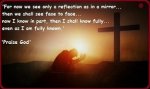
We see as through a glass darkly. (1 Corinthians 13:12). I like the way the NLT words it.

1 Corinthians 13:12
12 Now we see things imperfectly, like puzzling reflections in a mirror, but then we will see everything with perfect clarity. All that I know now is partial and incomplete, but then I will know everything completely, just as God now knows me completely.../NLT

So we can't see everything. (Not much at all in fact!). Man can look backwards into time, but not forward in time. Through the Red Shifts and so forth. So it's kind of like since God is not subject to time as we know it, He is sitting in the past (let's say at the Creation), and God is looking forward through a telescope...and we are on the other end of the telescope looking backwards to find God. The backwards view through is distorted, it looks way waaayyyy out there and has distortion too, so there is our glass darkly that we see through.

So we don't understand everything about God and what He says. So, we have to go on faith and trust! No way around it. Lot's of people read the bible and love to go online and debate everything doctrinal. What they are saying is that, they don't trust God or His word. I think that, if a man is going to go to the Lord in repentance and ask forgiveness through the sinners prayer, then it becomes foundational at that point to begin reading His word and certainly trusting it as absolute truth. It's either true or it isn't, and if it is, then it's all true. Our first two instructions are, Study to Show Thyself Approved. and, Pray Unceasingly...so if a man can't even decide if he believes the Word is true and accurate, he is doomed to wallow and stagnate and not grow. You have to obey what it says in the book, and we are guaranteed to not understand all of it. But it did not say, if you pass the test, it said study to show yourself approved which translates to, you have to make an effort and press into it. (Don't worry, it get easier and much more interesting real quick!) God wants to see them in their own heart making a serious effort to learn it. But He only seems to feed us truths a morsel at a time! So it's not about if you pass the test. It's about if you made a good effort to obey and study or not.

And I can tell you by experience that truths do not come before the effort is made, so of course they through a glass darkly and wont understand.

Wow, I got all that out of your first post!