~This side of the 'glass'~

  • Christian Chat is a moderated online Christian community allowing Christians around the world to fellowship with each other in real time chat via webcam, voice, and text, with the Christian Chat app. You can also start or participate in a Bible-based discussion here in the Christian Chat Forums, where members can also share with each other their own videos, pictures, or favorite Christian music.

    If you are a Christian and need encouragement and fellowship, we're here for you! If you are not a Christian but interested in knowing more about Jesus our Lord, you're also welcome! Want to know what the Bible says, and how you can apply it to your life? Join us!

    To make new Christian friends now around the world, click here to join Christian Chat.
"Mirror Mirror on the wall, what is it that You see. And...from this side of the 'glass'...
a personal extraordinary experience 'happening'....~9/27/99~forever has changed my life....believe it.
No explanation would suffice to explain...to those in the know...no explanation is necessary."
"Today, in our society and our daily lives, the characteristics of the spiritual and physical world are very far apart. We live our lives based on physical world, negative characteristics,... and not the positive spiritual world characteristics."

~As for other matters, brothers and sisters, we instructed you how to live in order to please God, as in fact you are living. Now we ask you and urge you in the LORD Jesus to do this more and more.~*
GI*

'Praise God'
Bless you for this thread.

Row,row,row your boat,gently down the stream. Merilly,merilly,merrilly,merrily, life is but a dream. :love::giggle:

:coffee:
 
being-spiritual - Copy - Copy (2) - Copy - Copy.jpg

**In the Bible, "like-minded" (from the Greek homophrones) means to have unity in spirit, purpose, and core beliefs, focusing on the essentials of faith rather than secondary matters. It involves humility, selflessness, and a willingness to put others first, acting in a spirit of love, compassion, and cooperation to advance the Gospel and God's glory. This doesn't mean abandoning individual tastes but rather uniting in a shared devotion to Jesus and seeking the interests of others above one's own.

Aspects of Being Like-Minded in the Bible

-Unity in Essentials: Like-mindedness is centered on sharing the same core beliefs and values regarding Jesus Christ and the essentials of faith.

-Humility: A crucial component is humility, including being gentle, patient, and not thinking too highly of oneself.
Selflessness and Consideration for Others: Believers are called to not only look out for their own interests but to also consider the interests of others, putting them ahead of their own.


-Love and Compassion: Like-mindedness includes having genuine love, affection, and mercy for other believers, fostering an environment of encouragement and mutual building up.

-Shared Purpose: There is a shared focus on advancing the cause of the Gospel, helping believers become more
like Christ, and glorifying God.


-Cooperation and Accord: It involves being of one accord, working together in a cooperative spirit to achieve common goals.

What It Is NOT

-Agreeing on Every Detail: It's not about having the same opinion on every single issue or secondary matter in life.

-Suppressing Individuality: Believers are encouraged to live out their faith in their unique ways, as God has shaped them.

-Selfish Ambition or Conceit: The opposite of like-mindedness is acting out of selfish ambition or vain conceit, which corrodes unity.

Scripture Examples

Philippians 2:2-4: Paul encourages believers to agree, have the same love, and be of one spirit, but in humility, each should count others more significant than themselves.

Romans 12:16: Paul instructs believers to live in harmony with one another, agree, and not be haughty
or wise in their own estimation.


**(Intended solely as informative and subjects to reflect on. ®
Spiritual maturity and growth depend on the measure of one's intent. )


240_F_165783601_SldoyeH9oxlbTMlEqwjCoFa2XpPDVTJn - Copy (5) - Copy - Copy.jpg

'Truth realities are meant to hopefully guide those who surely are away from
the Holy Spirit's guidance. Mentioned often (Holy Spirit) but seemingly only for the sake of
presenting a "Christian likeness".
 
human-raised-hands-while-praying-god-with-black-background_9083-5140 - Copy.jpg

**To be closer to God's spirit in prayer means to engage in heartfelt, honest conversation with God, not just with words, but from the depth of your inner being. It involves an awakened faith, deep sincerity, and a willing openness to His guidance and will, allowing you to experience His love, presence, and guidance on a profound, personal level.

Sincerity and Openness: True prayer originates from the heart, representing your entire inner life, desires, and feelings.
It requires honesty and vulnerability with God, acknowledging your hopes and fears.

Communion and Relationality: Your heart is the organ of your relationship with God. Praying with your heart means cultivating this closeness, like a deep, personal engagement with God, moving from thoughts to feelings and experiences of His presence.

Trust and Surrender: You must trust in God's will and plans, even if they seem difficult or contradict your own desires.
This trust fosters deeper faith and a stronger connection.


Alignment with God's Spirit: Praying in this manner means inviting the Holy Spirit into the deepest parts of your life,
allowing Him to lead you into truth and reveal God's ways to you.


Experiencing God's Presence: When you truly pray from your heart in the Spirit, you experience God's love, mercy, and grace
in a more personal and profound way, feeling His presence with you.

Listening and Responding: It also involves listening for the Spirit's guidance, not just speaking, and aligning your
prayers and life with the Word of God.


**(Intended solely as informative and subjects to reflect on. ®
Spiritual maturity and growth depend on the measure of one's intent. )


65359-humility.800w.tn - Copy (4) - Copy - Copy - Copy.jpg

Many things shared are as much for my benefit as for the reader,
if not more so, for the simple fact that the truth of reality helps to stay spiritually
grounded in reality and not to be misled by the ever-increasing worldly jargon dialogue
that bends and twists scripture to the point of "nothingness" of spiritual value.


'Conceivably, if more time were spent in earnest prayer reflection with God's Spirit
of love and wisdom, a sound guidance, spiritual integrity could possibly flourish to a degree
of some tolerance for those who continue to desecrate the Divine "readings".


'To desecrate means to treat something sacred or hallowed with sacrilegious disrespect or irreverence.
 
images - Copy (4).jpg

Misunderstanding and adding or taking away from scripture
distorts spiritual wholeness and integrity.
 
442501187_2615337188626793_3015011649663013599_n.png

**Defining the Rapture as a metaphor reflects a theological interpretation, primarily found in some non-evangelical or alternative Christian traditions.
. This view contrasts with the literal interpretation, popular in American evangelicalism, which holds that believers will be physically "caught up" to heaven.


Rapture as a metaphor
In this interpretation, the events of the rapture described in 1 Thessalonians 4:16-17 are not a literal, physical ascent into the sky. Instead, the imagery conveys a spiritual truth through symbolic language.


Metaphorical interpretations


Symbolic union with Christ: The "catching up" represents the ultimate and complete spiritual union
of the faithful with Christ. In this view, the event occurs on a spiritual level rather than a physical one.

Transformation of consciousness:
In mystical or esoteric traditions, rapture can signify a personal or collective "ascension" into a heightened state of spiritual awareness or "bliss". It is an internal shift, not an external, physical removal.

Escape from responsibility: In a more critical interpretation, the popular, literal rapture doctrine is seen as a psychological or social metaphor for avoiding accountability for earthly problems. This perspective suggests that the desire for a sudden, dramatic escape from the world allows some to ignore complicity in social and environmental issues.


The literal interpretation
This view, which sees the rapture as a literal, physical event, is a relatively recent development in Christian theology.


Historical context

19th-century origin: The modern, secret pretribulation rapture doctrine was popularized by theologian John Nelson Darby in the 1830s. It holds that Jesus will secretly return to snatch believers away before seven years of tribulation on Earth.

Dispensationalism: Darby's view is part of a larger theological system called dispensationalism, which divides history into distinct eras. It became widespread in American evangelical and fundamentalist circles through media like the Scofield Reference Bible and the Left Behind novels.


Contrasting viewpoints in reality
In reality, the concept of the rapture exists in a state of deep interpretive division within Christianity.

Not universally accepted: A majority of Christian denominations, including Catholic, Orthodox, and mainline

Protestant traditions do not subscribe to the literal "secret rapture" theology.

Interpretive diversity: The "Is Rapture a Metaphor" question highlights the broader differences in how Christians read and interpret apocalyptic texts. It is a point of contention between those who rely on a literal reading of scripture and those who favor symbolic, metaphorical, and historically contextual interpretations.


**(Intended solely as informative and subjects to reflect on. ®
Spiritual maturity and growth depend on the measure of one's intent. )


360_F_195365048_5WMfbAEiwdXtESNzT2AmVNMFVP6Uenaa - Copy.jpg

'Precisely, and it surely is upon each individual to believe whatsoever
one so chooses to believe. Absolutely nothing of value is gained by thrashing
it over for a personal agenda and/or attempting to change another person's thoughts.
Live with your belief, be glad in it. No more, no less.
 
c25c6e20-206b-42c5-a031-d4c81ade2bff.jpg 442501187_2615337188626793_3015011649663013599_n.png

**"I once was lost, but now am found" is a famous line from the hymn "Amazing Grace" by John Newton, which describes the spiritual transformation of a person who was once separated from God but is now united with Him through Christ's saving grace and forgiveness. It signifies a personal journey from spiritual confusion or sinfulness to finding clarity, purpose, and salvation, often through a process of repentance and acceptance of a higher power.

Amazing Grace: The phrase is best known from the hymn written by English clergyman John Newton in 1779.

Biblical Allusion: It alludes to parables found in the Gospels of Luke 15, where Jesus speaks of a lost sheep, a lost coin, and the prodigal son, all of whom were found and rejoiced over.

Meaning of the Metaphor

Spiritual Journey: The phrase represents a spiritual awakening and a profound transformation from a state of being lost (in confusion, sin, or a lack of direction) to being found (in clarity, purpose, or enlightenment).

Divine Pursuit: It suggests that God actively seeks out and rescues individuals from their lost state, just as the
shepherd searches for the lost sheep, or the woman searches for the lost coin.

Repentance and Redemption: The transition from being lost to being found often involves repentance, a turning away
from sin, and finding redemption through the mercy and grace of God.

Significance for Believers

Gratitude: The line inspires deep gratitude in believers for God's love and grace in finding their lost and sinful souls.

Hope and Purpose: It offers assurance of hope, reminding people that they can find renewed purpose and
a stronger connection to a higher power, even after experiencing life's challenges.

Personal Testimony: For many, it serves as a personal testimony of their own journey of faith and transformation through Christ.

**(Intended solely as informative and subjects to reflect on. ®
Spiritual maturity and growth depend on the measure of one's intent. )


240_F_165783601_SldoyeH9oxlbTMlEqwjCoFa2XpPDVTJn - Copy (6) - Copy - Copy - Copy - Copy - Copy.jpg
'Amen'
animated-dove-gif-8.gif
 
240_F_165783601_SldoyeH9oxlbTMlEqwjCoFa2XpPDVTJn - Copy (10) - Copy - Copy - Copy - Copy - Cop...jpg

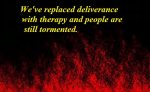
'Disturbing as it is, community discord continues unabated. Loss of
Spiritual equilibrium is surely prevalent and appears to be growing.


'A loss of spiritual equilibrium is a disruption in one's spiritual life, leading to a state of
imbalance, inner conflict, and a disconnection from one's beliefs, values, or a higher power.
It manifests as a feeling of spiritual instability, loss of direction, inner confusion, emotional distress
like guilt or hopelessness, and a diminished sense of peace or meaning in life.

'No more, no less.


442501187_2615337188626793_3015011649663013599_n - Copy.png

**Achieving a God-inspired spiritual life "here in the now" means consciously living in the present moment with humility and gratitude, allowing one's daily actions to be guided by the Holy Spirit. It requires intentionally seeking God's will and purpose for your life, rather than being controlled by worries about the future or regrets about the past. This perspective allows all of life's moments—both the routine and the profound—to become sacred opportunities for a deeper connection with the Divine.

Principles of a God-inspired life in the present

Surrender and obedience. This involves deliberately turning away from selfish appetites, pride, and earthly distractions
to allow God to shape your life. In the now, this means trusting in God's plan rather than relying on your own strength or control.

Mindfulness of God's presence. The practice of being present and aware, much like the practice of mindfulness in other traditions, enables a deeper connection to God in everyday life. This means recognizing that God is at work in your immediate circumstances, no matter how small or trivial they may seem.


Reliance on the Holy Spirit. A God-inspired life is not lived by human effort alone but by relying on the power of the Holy Spirit for guidance and strength. This requires asking for the Spirit's help through prayer and focusing on developing godly character.

The primacy of love. Mature spirituality is shown through an increasing capacity to love both God and others, as Christ commanded. The "now" is the only time this love can be expressed through compassionate words and actions toward the people around you.

Steadfast focus on Christ. It is vital to keep your life centered on Christ, resisting the temptation to compartmentalize your faith into specific areas of your life. The goal is to remain focused on God's path for you, rather than comparing yourself to others.

Cultivating spiritual disciplines. These include consistent prayer, reading and meditating on Scripture, and fellowship with other believers. These habits strengthen your spiritual resolve and help you remain grounded in the present moment.
Living in the now involves daily choices and intentional practices.


Seek and learn: Build your relationship with God by studying the Bible and learning from reputable teachers. This "intake" of God's Word informs every other discipline.

Act and apply: Listen to Jesus's teachings and apply them to your life. Obedience is a key indicator of spiritual maturity.

Pray and communicate: Maintain a continuous conversation with God through prayer, not only for asking, but for praise, confession, and thanksgiving.

Connect with others: Fellowship with other Christians for accountability, support, and strength. You also express your spiritual purpose by sharing your faith and serving others.

Reflect and trust: Take time for rest and reflection to allow God to restore your soul. In doing so, you can put your
full weight on God, trusting that he will never let you down.


**(Intended solely as informative and subjects to reflect on. ®
Spiritual maturity and growth depend on the measure of one's intent. )


240_F_165783601_SldoyeH9oxlbTMlEqwjCoFa2XpPDVTJn - Copy (7) - Copy - Copy - Copy - Copy - Copy.jpg
 
images - Copy (6).jpg
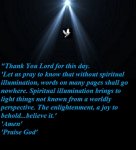
'A new era of new things surely is "here in the now".
Ponder the significance of these words!
 
new - Copy - Copy - Copy - Copy (10) - Copy - Copy - Copy - Copy - Copy - Copy - Copy - Copy.jpgc25c6e20-206b-42c5-a031-d4c81ade2bff - Copy.jpg

**To be "Spirit-filled brings new things to light"", meaning that an individual, guided and controlled by the
Holy Spirit, gains new spiritual and divine understanding that was previously hidden.

-This concept draws on the biblical idea that the Holy Spirit acts as a revealer of truth, providing believers with
profound insights into God's will and nature that go beyond normal human comprehension.


Spirit-filled: This term refers to a Christian who is continuously influenced and directed by the Holy Spirit, not just in a one-time event but as an ongoing way of life. It is often contrasted with being controlled by one's sinful nature.

Brings new things to light: The idiom "to bring to light" means to reveal or disclose something previously hidden or secret. In a spiritual context, this refers to receiving new, divine revelation or a deeper understanding of God and Scripture that was not previously known.

Spiritual transformation: The new things brought to light are not just abstract information. This divine enlightenment leads to a deeper spiritual awareness, transforming the believer's mind and heart. This includes:

Deeper understanding of Scripture: The Holy Spirit illuminates the Word of God, helping believers to grasp its full
meaning and apply it to their lives.


Conviction of sin: A heightened awareness of God's holiness shines a brighter light on one's own shortcomings,
leading to a greater hatred of sin and a desire for righteousness.


Fresh perspective on circumstances: The Holy Spirit guides believers to see their lives and the world from a divine perspective.
viewpoint, giving them faith and purpose even in difficult situations.


Guidance for the future: As "the Spirit of truth," the Holy Spirit can reveal future events and help believers
to make sense of what is to come.


In essence, a spirit-filled life is one of continual discovery. Through the guidance of the Holy Spirit, a believer is taken on a journey of deeper and sometimes entirely new understanding of God's truth. The path is marked by revelation that changes one's perspective, values, and actions, leading to a profound spiritual transformation.

**(Intended solely as informative and subjects to reflect on. ®
Spiritual maturity and growth depend on the measure of one's intent. )


tenor9IYMK91O (1) - Copy.gif1759569945288.gif

-The Holy Spirit indwells a person's life upon genuine faith in Jesus Christ.
Those who have not turned from sin and accepted Jesus Christ as their Savior would therefore not have the
Holy Spirit's indwelling presence.

-As the Bible states, "the person without the Spirit does not accept the things that come from the Spirit of God" and "cannot understand them because they are discerned only through the Spirit" (1 Corinthians 2:14).


-The idea that the Holy Spirit is "vacant" or less active in a person's life without a spiritual awakening is accurate.
A "spiritual awakening," also known as being born again, marks the beginning of a believer's relationship with the Holy Spirit.
While the Spirit works in the world to draw people to God, he indwells and fills believers after their conversion.
 
images - Copy (6) - Copy.jpg

-Honest sincerity of the heart surely to be conceived from a spiritual heart.
 
442501187_2615337188626793_3015011649663013599_n - Copy.png

**To state that "reading scripture is good, but applying the instructions and lessons is what counts" means that spiritual growth comes not merely from intellectual knowledge of religious texts but from actively living out their teachings.
. Reading is a vital first step, but true faith is demonstrated through righteous actions and transformed behavior. This is a central theme in many biblical traditions.


Reading and knowing scripture

Source of truth and wisdom: Reading scripture helps believers learn about God, gain wisdom, and understand
what is true and what is wrong.


Foundation for action: A person cannot apply what they do not know. Reading and studying God's word are
essential for discerning how to live a life that pleases God.


Inspiration for relationship: For many, the act of reading scripture is a way to deepen their personal relationship
with God by seeing His character and love revealed.

Necessity of application and action

The sentiment that "application is what counts" is echoed throughout the Bible, emphasizing that faith without action is empty.

"Doers of the word": The book of James draws a clear distinction between merely hearing the word and acting on it.

It warns against deceiving yourself by listening to a teaching without putting it into practice.

Building on a solid foundation: Jesus' parable of the wise and foolish builders teaches that those who hear
His words and do them are building their lives on a solid rock, while those who only listen are building on shifting sand.

Faith is proven by deeds: Your actions are the evidence of your faith. The book of James also states
that "faith by itself, if it does not have works, is dead".


Spiritual transformation: Applying scriptural teachings is a process of internal change, guided by the Holy Spirit.
This transformation affects not only how you act but also how you think and feel.

Outcome of a life of applied faith

When a person moves from simply reading to actively applying scripture, the teachings shift from
abstract concepts to a practical, living guide for every aspect of life, from relationships and finances to daily choices.

Wisdom for daily living: The Bible, especially books like Proverbs, provides practical guidance that can lead
to a purposeful and fulfilling life.


Maturity and discernment: Consistently living out God's word strengthens one's faith, making it more resilient
during trials and enabling better discernment.


Glory and praise to God: The ultimate goal of applying scripture is not personal gain but to honor God
and please Him through a life of joyful obedience.


**(Intended solely as informative and subjects to reflect on. ®
Spiritual maturity and growth depend on the measure of one's intent. )


56bc6e0ba935a_Serenity-Copy(8)-Copy-Copy-Copy-Copy-Copy-Copy-Copy-Copy-Copy-Copy-Copy-Copy_jpg...jpg

Stubbornness, contempt, and complacency shall continue to hinder
the acceptance of truth. Grounded in these hindrances surely eliminates the
opportunity of being guided by the Holy Spirit.


No more, no less.
 
11.jpg...........................11.jpg


DIVIDED HOUSE.jpg

**(Intended solely as informative and subjects to reflect on. ®
Spiritual maturity and growth depend on the measure of one's intent. )


360_F_195365048_5WMfbAEiwdXtESNzT2AmVNMFVP6Uenaa - Copy (3) - Copy - Copy.jpg

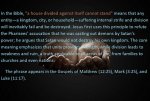
-The profound reality of "a house divided against itself cannot stand" is that
any entity—be it a nation, family, organization, or even an individual—will inevitably weaken
and collapse when plagued by severe internal conflict and a lack of unity. This truth is based on the principle
that internal division, particularly over fundamental issues, erodes cooperation and strength from within,
making a stable existence impossible.


-A disturbing reality is being witnessed across the land, and the Christian atmosphere surely
is no exception.


-The assertion "Christian atmosphere surely bears its own malady" is a valid interpretation of the negative
aspects and potential harms that can emerge within certain Christian environments and cultures.
. While Christianity offers many people comfort and a sense of community, a "Christian atmosphere" can also

produce psychological, social, and spiritual maladies, often through hypocrisy, pressure, and dogma.

-Willing to change requires precisely that, but obviously, many appear not willing and have no intentions.
"Egotistic egos" is a tautology, as an "ego" refers to one's sense of self, and being "egotistical" means having

an inflated and excessive sense of one's own importance, so you are describing a person with a large sense of self.
An egotist often boasts, takes excessive interest in themselves, and may be arrogant and selfish, believing they
are superior to others.


(Intended solely as informative and subjects to reflect on. ®
Spiritual maturity and growth depend on the measure of one's intent. )
 
GLASS TODAY.jpg

-Actions that demonstrate surely should be significant enough to leave no doubt.
No more, no less.
 
GOOD IMAGE TO SHARE TODAY.jpg DOVE.gif

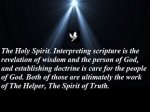
-The Holy Spirit is sent by the Father and the Son, with the Father sending the Spirit in the Son's name at Jesus' request.
This sending occurs through the power of God's Spirit, who descended at Jesus' baptism, and was given to believers
when Jesus breathed on them after his resurrection. The Spirit then empowers believers to share the good news
and live by God's will, acting as a Helper, Comforter, and Guide into all truth.


-Ponder this carefully!