~This side of the 'glass'~
- Thread starter Bingo
- Start date
-
Christian Chat is a moderated online Christian community allowing Christians around the world to fellowship with each other in real time chat via webcam, voice, and text, with the Christian Chat app. You can also start or participate in a Bible-based discussion here in the Christian Chat Forums, where members can also share with each other their own videos, pictures, or favorite Christian music.
If you are a Christian and need encouragement and fellowship, we're here for you! If you are not a Christian but interested in knowing more about Jesus our Lord, you're also welcome! Want to know what the Bible says, and how you can apply it to your life? Join us!
To make new Christian friends now around the world, click here to join Christian Chat.
You are using an out of date browser. It may not display this or other websites correctly.
You should upgrade or use an alternative browser.
You should upgrade or use an alternative browser.

-An arrogant and/or smug attitude most likely will be a "turn off" for those
who do not appreciate such conduct. But with an inflated "ego," it must come
naturally with some.
-One can only move on and leave them to wallow in their own
shallow and self-inflated sense of importance.
-Living here in the now and not dwelling on scripture mysteries that will never been
known, surely will allow for less mental fatigue and allow more quality time in striving
for closer spiritual relationship with God.
-Obsessed with attempting to analyze things never to be fully comprehended, the necessity
for spiritual growth will not be forthcoming.
growth
**A Christian who thinks they know everything scripture says is deficient in humility, love, and spiritual maturity.
This attitude is condemned throughout scripture, which teaches that true wisdom comes from God and is always
accompanied by a spirit of humility and a love for others.
Core deficiencies
Spiritual pride: Thinking one has a complete understanding of scripture is the essence of spiritual pride. This self-reliance replaces dependence on God for wisdom and growth, making the individual vulnerable to spiritual harm and even opposition from God.
As the Bible states, "God opposes the proud but gives grace to the humble" (James 4:6).
A closed mind to the Holy Spirit: The Holy Spirit is the Christian's ultimate guide and teacher, who reveals biblical truth
in a living and active way. The belief that one already knows everything prevents a person from being teachable
and receiving new revelations from the Spirit. This leads to stagnation and a hardened heart.
Stagnation and lack of spiritual growth: Scripture is described as "living and active" (Hebrews 4:12), not a static text to be fully mastered. The illusion of complete knowledge stops the pursuit of deeper understanding, service, and a closer walk with God.
True spiritual maturity requires a lifelong journey of learning and applying God's Word.
Misinterpretation of scripture: Arrogance and an unwillingness to be corrected often lead to misinterpreting scripture, including taking verses out of context. Instead of pursuing proper biblical interpretation (hermeneutics), the proud individual relies on their own understanding, which can lead to heresy and false teaching.
Damaged relationships: Intellectual pride manifests as judgmentalism, an unwillingness to listen to others, and a lack of empathy. This attitude alienates fellow believers and creates division within the Christian community, as the proud person may look down on anyone they perceive as having less biblical knowledge.
Neglect of the Gospel: The self-righteous person can focus so much on their own knowledge that they miss the central, humbling truth of the Gospel: that they are rebellious sinners in desperate need of God's grace. This perspective turns the Bible into a source of personal accomplishment rather than a testament to God's mercy.
Absence of love: The apostle Paul wrote that knowledge puffs up, but love builds up (1 Corinthians 8:1). A Christian who boasts of their biblical knowledge but lacks love is not properly applying what they have learned. A prideful mind forgets to value others and can lose sight of the primary command to love God and neighbor.
**(Intended solely as informative and subjects to reflect on. ®
Spiritual maturity and growth depend on the measure of one's intent. )
-And the "haughty" are not far away.

**The phrase "the man mind has so twisted scripture that most all are out of their spiritual element" is a theological concept asserting that human-centered interpretation of scripture has led to widespread spiritual disconnection. Instead of seeking divine guidance, people have bent religious texts to fit their own biases, traditions, and desires, resulting in a distorted understanding of faith.
-This distortion creates a state of being "out of their spiritual element," meaning individuals are living and making decisions based on human reasoning rather than authentic spiritual truth. This leads to a misaligned, unstable, and ultimately unfulfilling spiritual life.
Aspects of a human-centered approach to scripture
Reading out of context (Eisegesis): Instead of deriving meaning from the text itself (exegesis), people impose their own preconceived notions onto scripture. This can involve ignoring a passage's historical, cultural, or literary context, leading to inaccurate and self-serving conclusions.
Doctrinal or philosophical bias: Individuals or denominations often interpret scripture through the lens of their existing traditions or assumptions, rather than allowing the text to challenge or shape their beliefs. This can reinforce personal prejudices and lead to selective literalism, where some passages are strictly followed while others are ignored.
An exalted view of self: When scripture is read as a "self-help" book, it can result in a focus on personal comfort and affirmation rather than on God's nature and purposes. For example, the prosperity gospel is often cited as a human-centered misinterpretation that promotes materialism rather than spiritual growth.
Spiritual instability: The Bible's book of James describes a "double-minded man" as unstable in all his ways because he wavers between faith and doubt. Twisting scripture to justify personal desires, rather than submitting to God's authority,
creates this spiritual instability.
Consequences of this twisted interpretation
The consequences of approaching scripture this way, according to many theological viewpoints, are grave and far-reaching:
Doctrinal error and division: Misinterpretations have historically led to the formation of different sects and to major theological errors that deviate from core Christian doctrines.
Moral compromise: When people misuse scripture to justify unethical or unbiblical behavior, it results
in a distorted moral and ethical compass.
A limited view of God: Removing verses from their context creates an incomplete or incorrect picture of God's character and plan.
The text is no longer about God's story but becomes centered on human desires.
Spiritual harm: On a personal level, this misinterpretation can weaken faith, lead to spiritual confusion, and cause people to feel disillusioned when reality doesn't align with their skewed understanding of what God has promised.
**(Intended solely as informative and subjects to reflect on. ®
Spiritual maturity and growth depend on the measure of one's intent. )
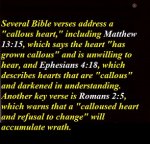
-Rebellion surely arrives from self-centeredness, which often stems from a self-exalting attitude and a desire
for personal control, rather than trusting in God's sovereignty and guidance.

**Experiencing a life-altering event is frequently a catalyst for an individual to turn to God or deepen their faith.
These events can act as a "wake-up call," forcing a person to confront their mortality, seek meaning, and re-evaluate their priorities.
Reasons for turning to God after a crisis
~Search for purpose: Traumatic experiences can shake a person's understanding of life, prompting a deeper quest for meaning and purpose that many find in religion.
~A "last resort" for help: Many people reach out to God after exhausting all other options during their darkest and most difficult moments. The desperation and vulnerability of a crisis often open the heart to spiritual possibilities.
~Confronting mortality: Significant events like a near-death experience (NDE) or a serious illness can bring one's mortality to the forefront. This can cause a profound shift in perspective, lessening the fear of death and increasing spiritual consciousness.
~Divine intervention: Some individuals who experience a profound event interpret it as divine intervention, where they feel God is reaching out to them and making Himself visible. This can create or solidify their faith.
~New perspective on values: Near-death experiences have been shown to cause a dramatic shift in an individual's values, leading them to be less concerned with material possessions and more focused on love, relationships, and service to others.
Life-altering events and faith
~Trauma: Experiencing trauma can lead to a change in religious beliefs. Some studies show that following a traumatic event, some individuals may become more religious, while others may lose their faith entirely.
~Near-death experiences (NDE): Research on near-death experiences reveals that the majority of those who have had one report significant changes to their spiritual beliefs and practices afterward. This includes a heightened sense of spirituality, decreased fear of death, and a greater appreciation for life.
Overcoming addiction: Many addiction recovery programs, such as Alcoholics Anonymous, are based on a 12-step model that involves surrendering to a "Higher Power." Overcoming addiction is a profound and life-altering event that is frequently tied to a spiritual or religious awakening.
Tragedy and loss: The loss of a loved one can be a catalyst for both turning toward or away from God. Some people may find comfort in their faith during grief, while others may question a God who would allow suffering.
Not the only reason
While a significant life event is often a trigger for a religious or spiritual turning point, it is not the only path to faith. For many people, turning to God is a more gradual process influenced by family, community, or a natural evolution of their search for meaning and purpose.
** (Intended solely as informative and subjects to reflect on. ®
Spiritual maturity and growth depend on the measure of one's intent.

I once was lost, but now I'm found. ®
'Praise God'
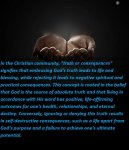
**Spiritual and eternal consequences
God is truth: Lying is associated with Satan, while truth is linked to God.
Exclusion from God's presence: Dishonesty is seen as contrary to God's character and can lead to separation from Him.
Eternal implications: Some interpretations suggest that rejecting truth, especially the truth about Jesus Christ,
has eternal consequences.
Practical and earthly consequences
Broken relationships: Dishonesty in a relationship can cause it to be "wrecked".
Health and finances: Ignoring truth can lead to negative impacts on one's health and financial situation.
Personal and societal problems: Rejecting God's truth can lead to a cycle of brokenness, confusion about identity, and addiction.
Choosing the path of truth
A matter of choice: The choice between "life and death" or "blessing and cursing" is presented as a clear choice
between truth and falsehood.
Overcoming temptation: Seeking accountability within a Christian community is recommended to help resist
temptations that can lead to a life of deceit.
Living a transformed life: Ultimately, the desire for Christians is not just self-willpower, but a new heart that despises
lying and loves truth, which is seen as a gift from God.
** (Intended solely as informative and subjects to reflect on. ®
Spiritual maturity and growth depend on the measure of one's intent.
-It is surely being witnessed the chaos that prevails, whether in the government
atmosphere of the Christian atmosphere when there are total disagreements causing
no hope for the needed unity.
-"A house divided against itself cannot stand," is a profound statement.
-Christian unity depends on shared beliefs, character, and union with Christ, which are maintained
through virtues like humility, gentleness, patience, and love, and a focus on the Holy Spirit and the teachings of Jesus.
It is a gift from God that requires believers to maintain truthful, grace-filled relationships with one another
while working toward the "one body, one Spirit, one Lord, one faith, one baptism, one God and Father" described in scripture.
-Sometimes, ignoring truths is a result of choosing to believe only what is convenient, rather than what is the whole of scripture.
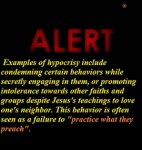
-Hypocrisy is harmful first to the individual, shrouding the truth of their heart's condition.
It is harmful to those seeking spiritual nourishment, only to find a facade of holiness without substance.
And it tarnishes the very name of God, whom we are called to represent.
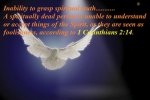
-Sadly, within a Christian community, this truth is reality.
Worldliness shall forever hinder the ability for any spiritual growth.
Here in the now.
Attachments

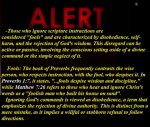
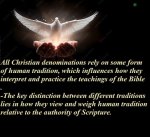
2 Corinthians 13:8: The verse most directly associated with this idea states, "For we can do nothing against the truth, but for the truth". This is often interpreted to mean that any action or argument set against God's truth will ultimately fail.
(Intended solely as informative and subjects to reflect on. ®
Spiritual maturity and growth depend on the measure of one's intent.)
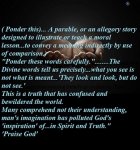

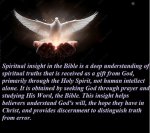
"They look and look but do not see"
describes a state of spiritual or intellectual blindness, where someone physically witnesses something
but fails to comprehend or internalize its meaning. This phrase, originating from biblical passages like Matthew 13:13 and Isaiah 6, means people are present with a truth, but their hearts and minds are closed, preventing them from true understanding or spiritual insight. It implies a refusal to see the deeper significance beyond the surface-level appearance.
(Intended solely as informative and subjects to reflect on. ®
Spiritual maturity and growth depend on the measure of one's intent.)
https://christianchat.com/threads/i-saw-the-light.182858/post-4256773
I stand by all that has been shared within the thread, "I Saw the Light".
Make no mistake, until the instructions within the lessons are actively applied
and acted upon in one's own life, the "Divine readings" are merely words on a page.
Spiritual peace, well-being and truth shall surely be far away from those who
claim to know scripture, but remain rebellious in not acting upon the "inspired teaches of Christ".
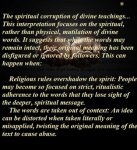
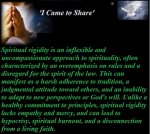

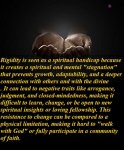
-The stubborn self-centered person being one that simply does not have the faith capacity
to be willing to change, and will likely consistently hold on to their worldliness that
surely is not in accordance with the "inspired teachings of Christ".
-The "falling away from God" is being witnessed of all places...within the "Christian atmosphere".
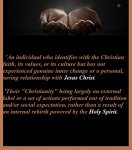
-One powered by the Holy Spirit may exhibit signs like producing the "fruit of the Spirit," which includes
love, joy, peace, patience, kindness, goodness, faithfulness, gentleness, and self-control.
Other indicators include inner peace and stability during hardship, a desire to serve and help others,
and a life that aligns with the teachings of the Bible.
-The self-centered ego has no shame and surely no sound conscious.
(Intended solely as informative and subjects to reflect on. ®
Spiritual maturity and growth depend on the measure of one's intent.)


** 'A spiritual mute heart is a metaphorical condition in a person who is unable or unwilling to confess and act upon spiritual truths, often due to fear, a hardened heart, or a focus on worldly distractions. This differs from a physical inability to speak, as the individual may perceive the truth but is paralyzed from expressing it or living by it.
Characteristics and implications include:
(Inability to Confess Faith) A primary sign is the reluctance or inability to outwardly proclaim one's faith or commit to a spiritual path, often from fear of being held accountable or judged by others.
(Hardness of Heart) It is often associated with a "hardened" or "calloused" heart, a spiritual insensitivity that prevents deep understanding and responsiveness to the divine or one's conscience.
(Spiritual Insensitivity) The individual may be able to see and hear spiritual truth but is unable to process it into a deep, internal understanding or love.
(Lack of Action) A mute heart is similar to a "lame" spirit, where the person can understand the truth but is paralyzed from acting on it or engaging in good deeds out of fear of societal response or judgment.
(Distraction and Unthankfulness) The condition can stem from being lured away from God by "unthankfulness" or being overwhelmed by the "many different frequencies" and noise of the world (media, opinions, etc.), which drown out the voice of God in the heart.
(Isolation) A hardened heart often leads to isolation from God and from a supportive community of believers, as the person pulls away due to anger, bitterness, or indifference.
(Struggling to Pray or Worship Authentically) Prayer life may become shallow, and worship can turn into mere ritual without genuine depth and sincerity.
In contrast, a healthy "quiet heart" is a positive spiritual state of peace, trust, and humility that can hear God's voice and is ready to act on it. A spiritually mute heart is considered a spiritual disability that requires divine intervention and grace to be healed through repentance and faith.
** (Intended solely as informative and subjects to reflect on. ®
Spiritual maturity and growth depend on the measure of one's intent.)
https://christianchat.com/threads/this-side-of-the-glass.182929/post-4786023
-A reflection of the reason within the purpose.